
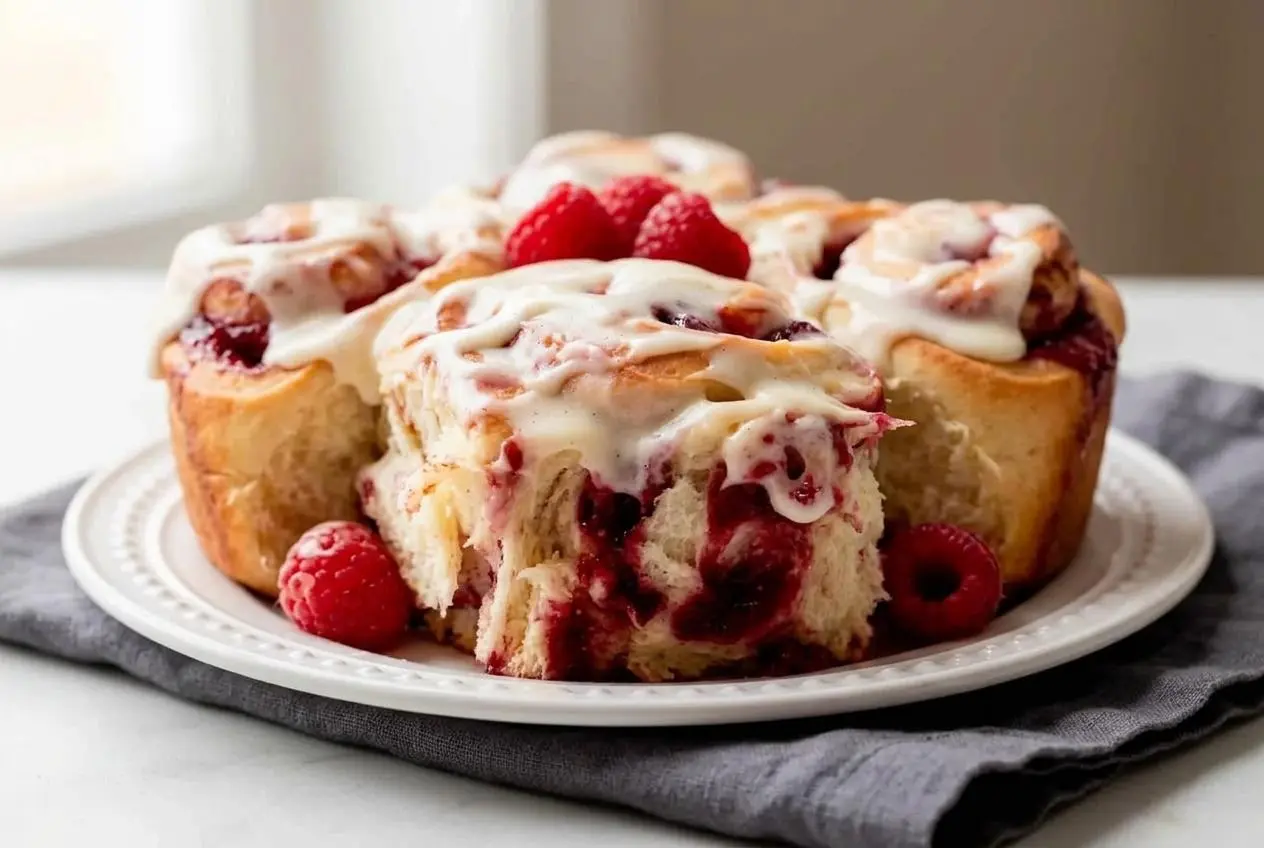
For soft raspberry sweet rolls with a filling that stays put, use warm milk to wake up the yeast, knead until the dough is tacky and elastic, and fill with frozen raspberries tossed in sugar and cornstarch before baking at 350°F.
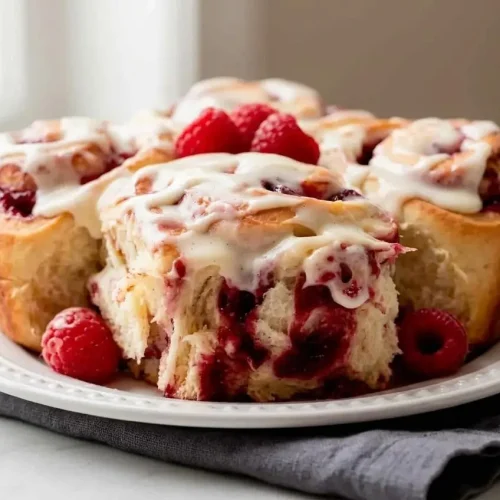
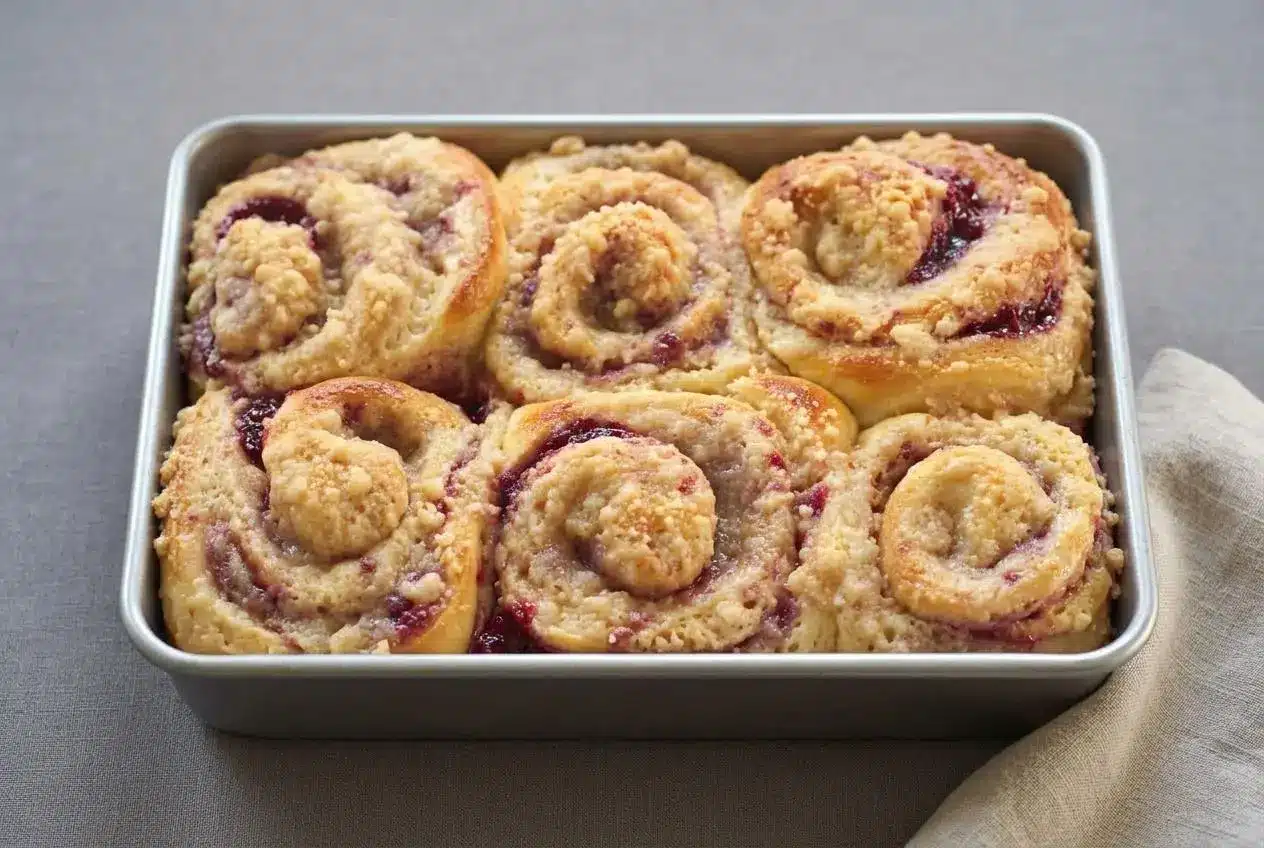
Raspberry sweet rolls are tender yeast rolls swirled with tart berries and finished with cream cheese icing. They bake up buttery, pillowy, and bright, with enough structure to hold the fruit without turning into a jammy mess.
The combination feels bakery-worthy, but the method is very doable at home once you know what to watch for. The best part is the contrast between the soft crumb and those ruby streaks of fruit.
Keep the raspberries frozen until the moment you scatter them over the dough.
The Secret to Soft Sweet Roll Dough
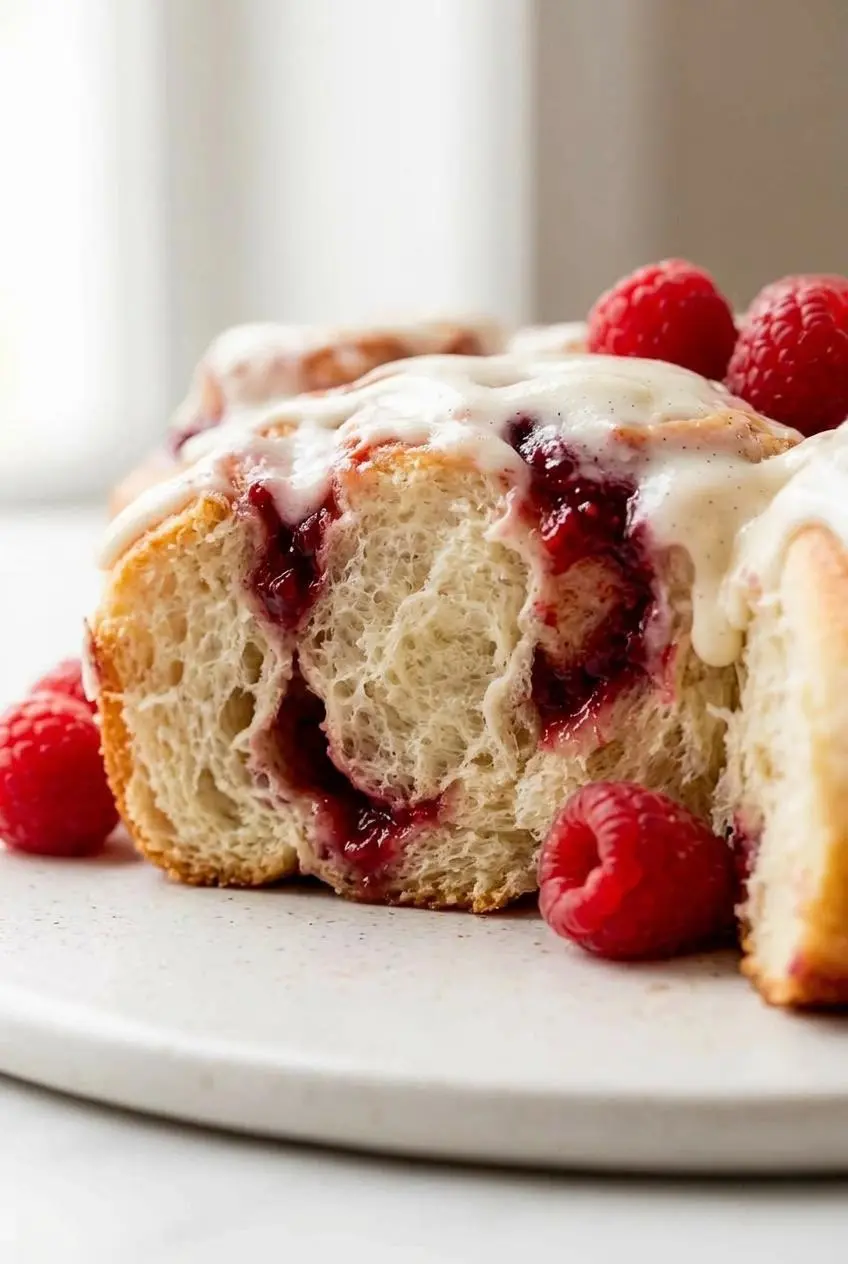
Great sweet rolls start with an enriched dough that is soft enough to stay tender, but strong enough to carry fruit. That balance comes from proper yeast activation, enough kneading, and a warm rise that encourages steady lift instead of a sluggish proof.
Start with milk that feels warm, not hot. For yeast, the sweet spot here is 100°F to 110°F. Cooler than that, and the yeast may wake up slowly. Hotter than that, and the yeast can weaken or stop working.
Once the flour goes in, the dough should shift from shaggy to smooth and supple. A well-kneaded dough for these rolls feels tacky but not sticky. It may cling lightly to your finger, but it should not smear across your hand like paste or leave wet streaks on the counter.
The dough hook helps develop gluten evenly, but hand kneading works too. What matters is the end point. Stretch a small piece of dough gently between your fingers. If it thins into a translucent sheet before tearing, it passes the windowpane test and has enough strength to trap gas and support the berry filling.
Rise time matters just as much as kneading. Yeast dough tends to rise best in a cozy kitchen spot around 75°F to 80°F. If your room is chilly, the dough may still rise, but it will move more slowly and can feel dense when baked.
If you enjoy fruit-filled enriched doughs, strawberry cheesecake rolls use a similar soft-roll approach with a different filling profile.
Essential Ingredients and Their Roles
Each ingredient does a real job here, from building a stretchy dough to balancing tart fruit and smooth icing.
Dough
- 1 cup (240ml) whole milk, warmed to about 100°F (38°C)
- 2/3 cup (135g) granulated sugar, divided
- 1 and 1/2 Tablespoons (14g) Platinum Yeast from Red Star (2 standard-size packets)
- 1/2 cup (113g) unsalted butter, softened to room temperature and cut into 4 pieces
- 2 large eggs, at room temperature
- 1/2 teaspoon pure vanilla extract or vanilla bean paste
- 1/2 teaspoon salt
- 4 and 1/2 cups (563g) all-purpose flour or bread flour (spooned & leveled), plus more as needed
- 2 teaspoons canola, vegetable, or olive oil for bowl (or use nonstick spray)
Filling
- one 10-oz. package (about 2.5 cups or 300g) frozen raspberries (do not thaw)
- 1/3 cup (67g) granulated sugar
- 1 teaspoon cornstarch
Cream Cheese Icing
- 4 ounces (113g) full-fat brick cream cheese, softened to room temperature
- 1 cup (120g) confectioners’ sugar
- 1 Tablespoon (30ml) whole milk or heavy cream
- 1/2 teaspoon pure vanilla extract or vanilla bean paste
Whole milk gives the dough a richer crumb because its fat softens the interior and keeps the rolls plush instead of bready. Butter adds flavor and tenderness, eggs bring color and structure, and sugar feeds the yeast early on while also sweetening the dough.
Flour provides the framework, while salt keeps the sweetness balanced and helps the dough taste rounded instead of flat. The frozen raspberries bring tartness and bright flavor, and the cornstarch is small but important because it thickens the fruit juices as they heat, which helps prevent leaking and soggy layers.
I always use full-fat brick cream cheese for the icing because it gives the smoothest tangy finish and doesn’t turn runny as easily as spreadable tubs.
If you love the raspberry and cream cheese combination in a flakier pastry, raspberry cheese danish is a good next bake.
Understanding Yeast Activation
This step tells you right away whether the dough is set up for success. When the warm milk, a little sugar, and yeast sit together for 5 minutes, the surface should look foamy and slightly puffed, and the mixture should smell pleasantly earthy and yeasty.
If nothing happens, stop there and start over before adding the rest of the ingredients. The usual culprits are milk that was too hot or yeast that has expired. Testing it first is much better than waiting hours for a dough that never rises.
If you only have active dry yeast, it can work, but it often takes a bit longer to get moving than instant yeast. Keep an eye on the dough itself rather than racing the clock.
Choosing Your Raspberries Fresh vs. Frozen
Frozen raspberries are the better choice for this recipe because they stay firmer while you roll the dough and release their juices more gradually in the oven. That means cleaner spirals and less chance of a wet bottom layer in the pan.
Fresh raspberries can still work when they are your best option. Handle them gently, toss them with an extra 1/2 teaspoon of cornstarch, and roll the dough carefully so they do not crush too much. Avoid warm berries, since they soften fast and bleed more readily into the dough.
The cornstarch matters more with fresh fruit because the berries start giving off juice the second they are mixed with sugar. With frozen berries, you get a little more time and a tidier fill.
How to Make Sweet Yeast Dough and Filling
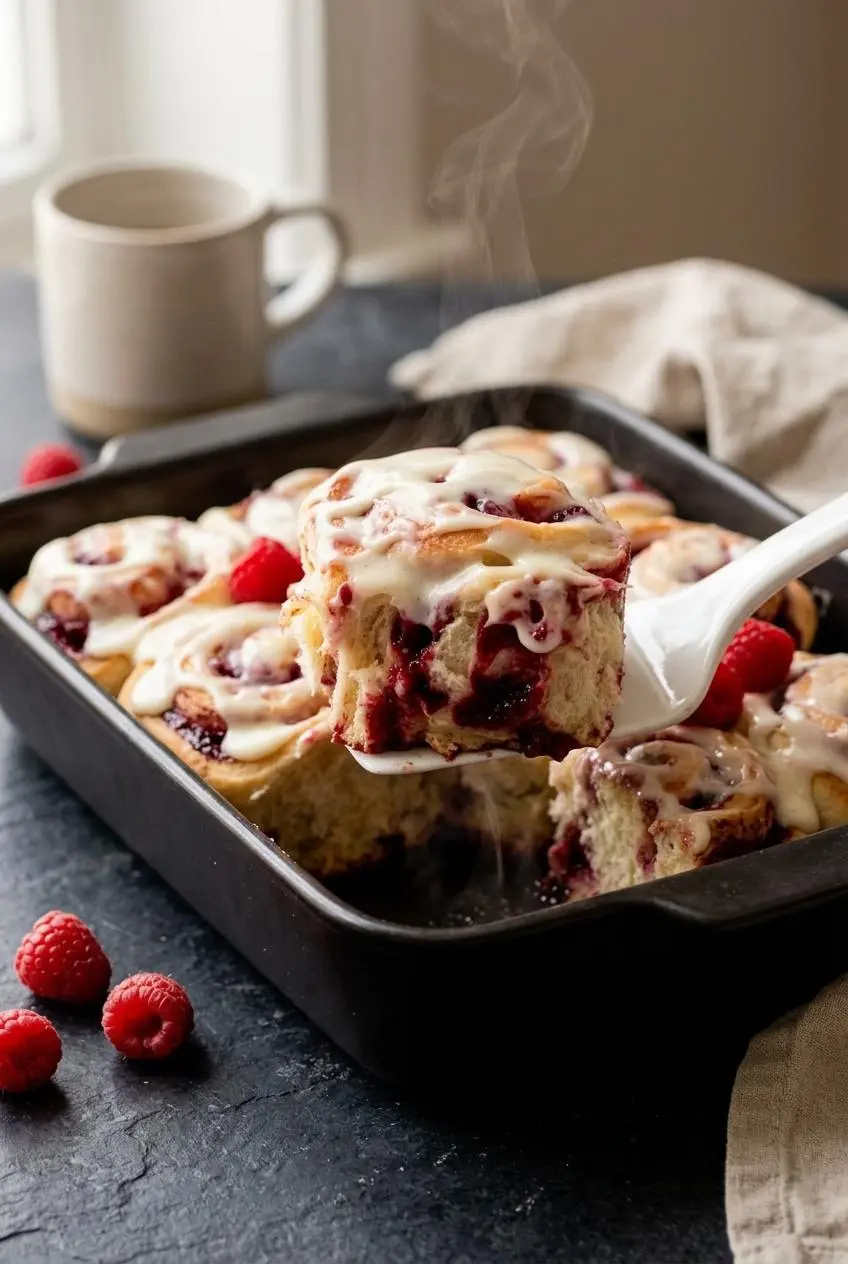
This is the part where a few small cues make a big difference. Follow the order closely, watch the dough texture, and resist the urge to thaw the berries.
Preparation
- Whisk the warm milk, 2 tablespoons sugar, and yeast together in the bowl of a stand mixer, then cover and leave it for 5 minutes.
The mixture should turn foamy on top and smell lightly yeasty, which shows the yeast is active. - Add the remaining sugar and the softened butter, then mix in the eggs, vanilla, and salt on medium speed until the mixture comes together.
It may look a little curdled at first from the butter, but it should smooth out as it blends. - Reduce the mixer to low and add the flour gradually, about 1 cup at a time, until a dough forms.
Stop adding once the dough gathers and begins pulling away from the sides of the bowl. - Knead with the dough hook for 5 minutes, or knead by hand for 5 minutes on a lightly floured surface.
The finished dough should feel soft, smooth, and slightly tacky rather than sticky. - Transfer the dough to a greased bowl, cover it, and let it rise in a warm place for 2 hours.
It should look noticeably puffed and roughly doubled in size by the end of the first rise. - Deflate the dough gently and roll it on a floured surface into a 12×18-inch rectangle.
Keep the thickness even so the rolls bake at the same rate from edge to center. - Mix the frozen raspberries with the sugar and cornstarch, then spread the filling evenly over the dough.
The berries should stay cold and lightly coated, which helps the juices thicken as they bake. - Roll the dough up tightly from the long side to make an 18-inch log, then cut it into 12 equal pieces and place them in a greased 9×13-inch pan.
A snug roll gives you neat spirals and helps keep the filling from slipping out. - Cover the pan and let the rolls rise for 90 minutes while you preheat the oven to 350°F (177°C).
When they are ready, the rolls should look puffy, and a gentle poke should leave a slight indentation that slowly springs back. - Bake the rolls for 28 to 32 minutes, covering loosely with foil halfway through if the tops are browning too fast.
They should come out golden and set, with the centers looking risen rather than wet or doughy. - Cool the pan on a rack for 10 minutes, then beat the cream cheese until smooth and mix in the confectioners’ sugar, milk, and vanilla before spreading it over the warm rolls.
The icing should be creamy and spreadable, melting slightly into the swirls without disappearing.
For a citrusy variation, you can knead a little fresh lemon zest into the dough or spread a thin layer of raspberry preserves under the berries before rolling. Keep both changes optional so the soft dough and fruit balance stay the main event.
How to Cut Sweet Rolls Cleanly
If you’ve ever flattened a beautiful log with a knife, you are not alone. The cleanest method is unflavored dental floss or clean sewing thread.
Slide the floss under the dough log where you want to cut, bring the ends up, cross them over the top, and pull firmly. That quick crossing motion slices straight through without pressing the spiral out of shape.
A serrated knife still works, especially if you saw gently instead of pushing down, but floss usually gives neater sides and keeps more berries tucked inside the roll.
Overnight and Freezing Instructions
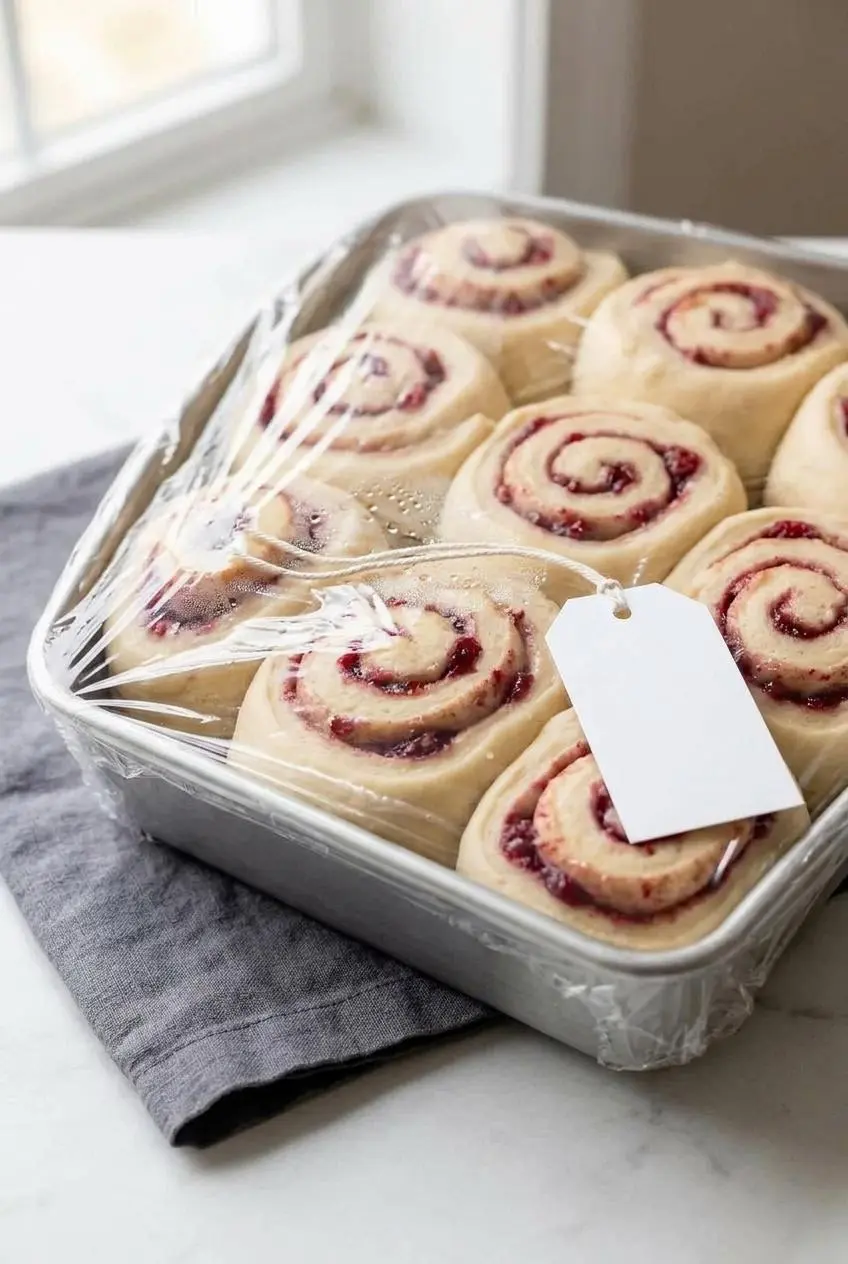
If you want these ready for breakfast or brunch, you can break the process into stages without changing the recipe. The most useful pause point is after shaping the rolls and placing them in the pan.
For overnight prep, cover the shaped rolls tightly in the pan and refrigerate them for up to 16 hours. Before baking, let them sit out until they lose their chill and look puffy again, which usually takes about 45 to 60 minutes depending on your kitchen.
If make-ahead yeast baking is your thing, overnight cinnamon rolls are another good way to get comfortable with refrigerated proofing.
You can also freeze the baked rolls before adding the icing. Wrap them well once cooled, thaw them overnight in the refrigerator, warm them gently, and spread the icing on fresh so it stays creamy instead of soaking into the rolls too early.
Troubleshooting Dry or Soggy Rolls
Most sweet roll problems come down to dough texture, berry moisture, or baking just a little too long. These fixes help before the pan ever hits the table.
- If the dough feels too sticky to roll, dust the counter and rolling pin lightly with flour and keep moving. Add just enough flour to handle it, because too much can make the baked rolls dry.
- If the filling starts sliding around, the berries may have softened. Use frozen raspberries straight from the freezer and mix them with sugar and cornstarch right before spreading.
- If the rolls bake up dense, the yeast may have been weak or the dough may not have risen in a warm enough spot. Look for foam during activation and aim for a cozy proofing area.
- If the centers seem doughy, bake until the middle rolls look set and spring back lightly when touched. Pale, wet-looking swirls usually need more oven time.
- If the tops darken too fast, tent the pan with foil halfway through baking. That protects the surface while the center finishes cooking.
- If the baked rolls seem dry, the dough may have picked up too much extra flour during shaping or stayed in the oven a bit too long. Soft dough and golden tops are the target.
- If the second rise seems done too early or too late, use the poke test instead of the clock alone. A gentle press should leave a slight dent that slowly eases back.
Dietary Adaptations and Vegan Swaps
You can make a vegan version of these rolls with a few targeted swaps. Use soy milk or almond milk in place of whole milk, choose plant-based butter sticks instead of dairy butter, and finish with a dairy-free cream cheese alternative for the icing.
The texture may be a touch different depending on the milk and butter you use, but the soft-roll method still works. Soy milk is usually the closest match if you want a richer dough.
Conclusion
These rolls are all about contrast: soft buttery dough, tart raspberries, and creamy icing that melts into the swirls. When the yeast is active and the berries stay frozen, the whole bake feels much easier to control.
Take your time with the rises, trust the tacky dough texture, and keep the fruit cold. A warm pan of these on the counter makes any morning feel a little more special.
Frequently Asked Questions
Can I Use Fresh Raspberries Instead of Frozen?
Yes, but fresh berries release moisture faster and can make the filling looser. Toss them gently with an extra 1/2 teaspoon of cornstarch to help bind the juices. Roll the dough carefully so the berries do not crush and bleed too much.
How Do I Make These Sweet Rolls Overnight?
Shape the rolls, place them in the pan, cover tightly, and refrigerate for up to 16 hours. Before baking, let them sit on the counter until they warm slightly and puff up again. That final rise usually takes about 45 to 60 minutes, depending on room temperature.
Why Didn’t My Yeast Dough Rise?
The milk may have been too hot, which can weaken the yeast. Old yeast is another common reason, especially if it never foamed in the first step. Use milk between 100°F and 110°F and look for a foamy surface before moving on.
Can I Freeze Sweet Rolls After Baking?
Yes, these freeze best after baking and before icing. Wrap the cooled rolls tightly and freeze them for up to 3 months. Thaw them overnight in the refrigerator, warm them gently, and add fresh icing before serving.
Raspberry Sweet Rolls

Equipment
- Stand mixer with dough hook
- 9×13 inch baking pan
- Rolling Pin
- Sharp knife or dental floss
Ingredients
Dough
- 1 cup (240ml) whole milk, warmed to about 100°F (38°C)
- 2/3 cup (135g) granulated sugar, divided
- 1 1/2 Tablespoons (14g) Platinum Yeast from Red Star (2 standard-size packets)
- 1/2 cup (113g) unsalted butter, softened to room temperature and cut into 4 pieces
- 2 large eggs, at room temperature
- 1/2 teaspoon pure vanilla extract or vanilla bean paste
- 1/2 teaspoon salt
- 4 1/2 cups (563g) all-purpose flour or bread flour (spooned & leveled), plus more as needed
- 2 teaspoons canola, vegetable, or olive oil for bowl (or use nonstick spray)
Filling
- 1 10-oz. package frozen raspberries (do not thaw) about 2.5 cups or 300g
- 1/3 cup (67g) granulated sugar
- 1 teaspoon cornstarch
Cream Cheese Icing
- 4 ounces (113g) full-fat brick cream cheese, softened to room temperature
- 1 cup (120g) confectioners’ sugar
- 1 Tablespoon (30ml) whole milk or heavy cream
- 1/2 teaspoon pure vanilla extract or vanilla bean paste
Instructions
Preparation
- Whisk warm milk, 2 tablespoons sugar, and yeast in a stand mixer bowl. Cover and let sit 5 minutes until foamy.
- Beat in remaining sugar and softened butter. Add eggs, vanilla, and salt. Beat on medium until combined.
- Switch to low speed and gradually add flour 1 cup at a time. Beat until dough pulls away from the bowl.
- Knead dough with dough hook for 5 minutes (or 5 minutes by hand) until soft, smooth, and slightly tacky.
- Place dough in a greased bowl, cover, and let rise in a warm spot for 2 hours or until doubled in size.
- Punch down dough, roll on a floured surface into a 12×18-inch rectangle.
- Toss frozen raspberries with sugar and cornstarch. Spread evenly over the dough.
- Roll up tightly into an 18-inch log and cut into 12 even rolls. Arrange in a greased 9×13-inch pan.
- Cover and let rise for 90 minutes until puffy. Preheat oven to 350°F (177°C).
- Bake for 28 to 32 minutes until golden, tenting with foil halfway through. Cool on rack for 10 minutes.
- Beat cream cheese until smooth, then beat in confectioners’ sugar, milk, and vanilla. Spread over warm rolls.



1 thought on “Raspberry Sweet Rolls”