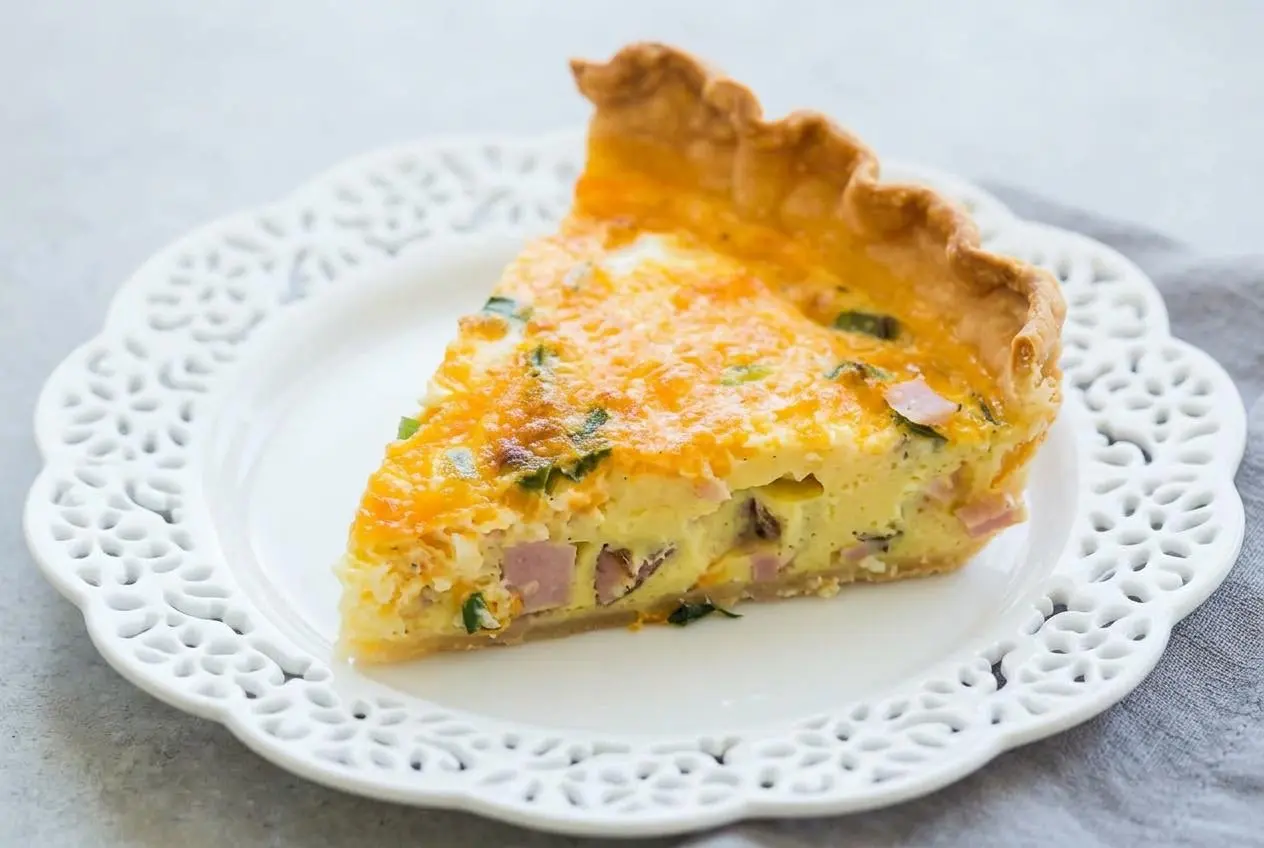
A classic quiche combines a pastry crust with an egg and dairy custard, then bakes at 375°F until the filling is gently set and the edges are golden.
This quiche recipe delivers savory ham, melted cheddar, and green onions in a tender custard that slices neatly after a brief rest.
When the pastry and cheese start to toast, the kitchen smells like brunch is already underway. The center jiggle is the part to watch.
Set the 9-inch pie plate on the center oven rack so heat can brown the bottom crust without pushing the top too quickly.
Essential Ingredients for This Quiche Recipe
Each ingredient earns its place: the crust provides structure, eggs set the custard, dairy softens it, and ham, cheddar, and green onions build savory flavor and freshness.
- 1 single pie crust (unbaked)
- 6 large eggs
- ¾ cup milk (or cream)
- ¾ teaspoon salt
- ¼ teaspoon black pepper
- 1 cup cubed cooked ham
- 1 ½ cups shredded cheddar cheese (divided)
- 3 tablespoons sliced green onions
The pie crust holds the custard and gives every slice a crisp, buttery contrast. Six eggs give this filling enough structure to lift and set without becoming dense. Ham brings salty, smoky depth, while cheddar melts into pockets of richness. Green onions cut through that richness with a mild, fresh bite.
I whisk the eggs, dairy, salt, and pepper until the mixture is completely smooth, because streaks of egg white can bake into uneven patches of custard.
The Custard Base: Eggs, Milk, and Seasonings
This recipe uses 6 eggs with ¾ cup milk or cream, making a firm, rich custard for a 9-inch pie plate. As a general guide for other quiches, use about 1 large egg for every ½ cup dairy, then adjust for the depth of the dish and the amount of fillings.
Whole milk makes a lighter, softer slice. Half-and-half lands in the middle with a fuller texture, while heavy cream creates a richer, more bistro-style custard. Skim milk is less dependable here because the filling can separate more easily as it bakes.
Salt sharpens the ham and cheese, and black pepper adds warmth without taking over. Keep the seasoning measured, since cooked ham and cheddar already contribute salt.
Choosing the Right Cheeses and Add-Ins
Firm, flavorful cheeses that melt smoothly work best in quiche. Sharp cheddar gives this version a bold, familiar flavor. Gruyere and Swiss are good optional swaps when you want a nuttier, more savory profile.
Put the ham, most of the cheese, and green onions in the crust before adding the custard. Solid fillings stay distributed more evenly this way instead of floating upward and crowding the surface. Save the remaining cheddar for the top so it forms a lightly browned finish.
How to Make Quiche Step by Step
Build the quiche in the pie plate, then bake it until the outer custard is set and the center moves with a small, soft wobble when the dish is nudged.
- Heat the oven to 375°F.
Give the oven time to reach temperature so the crust and custard begin cooking evenly. - Fit the unbaked pie crust into a 9-inch pie plate, pressing it gently into the bottom and sides; crimp the rim if desired.
The crust should sit snugly against the dish with a raised edge ready to hold the filling. - Whisk the eggs, milk or cream, salt, and black pepper together in a large bowl.
Stop when the mixture looks uniform and lightly foamy, with no visible strands of egg white. - Scatter the ham, 1 cup of cheese, and green onions over the crust, then pour in the egg mixture and finish with the remaining ½ cup cheese.
The filling should sit below the rim of the crust, with cheese spread across the top. - Bake for 35 to 40 minutes, then rest the quiche for 5 to 10 minutes before cutting.
Look for golden edges and a center that is mostly set with a subtle gelatinous wobble; it firms as it rests.
A thermometer removes the guesswork when your quiche is especially deep or heavily filled. Egg dishes such as quiche should reach 160°F at the center; avoid baking far beyond that point, since overcooked egg custard can turn grainy and release liquid.
Key Secrets for Flaky Crust and Velvety Filling
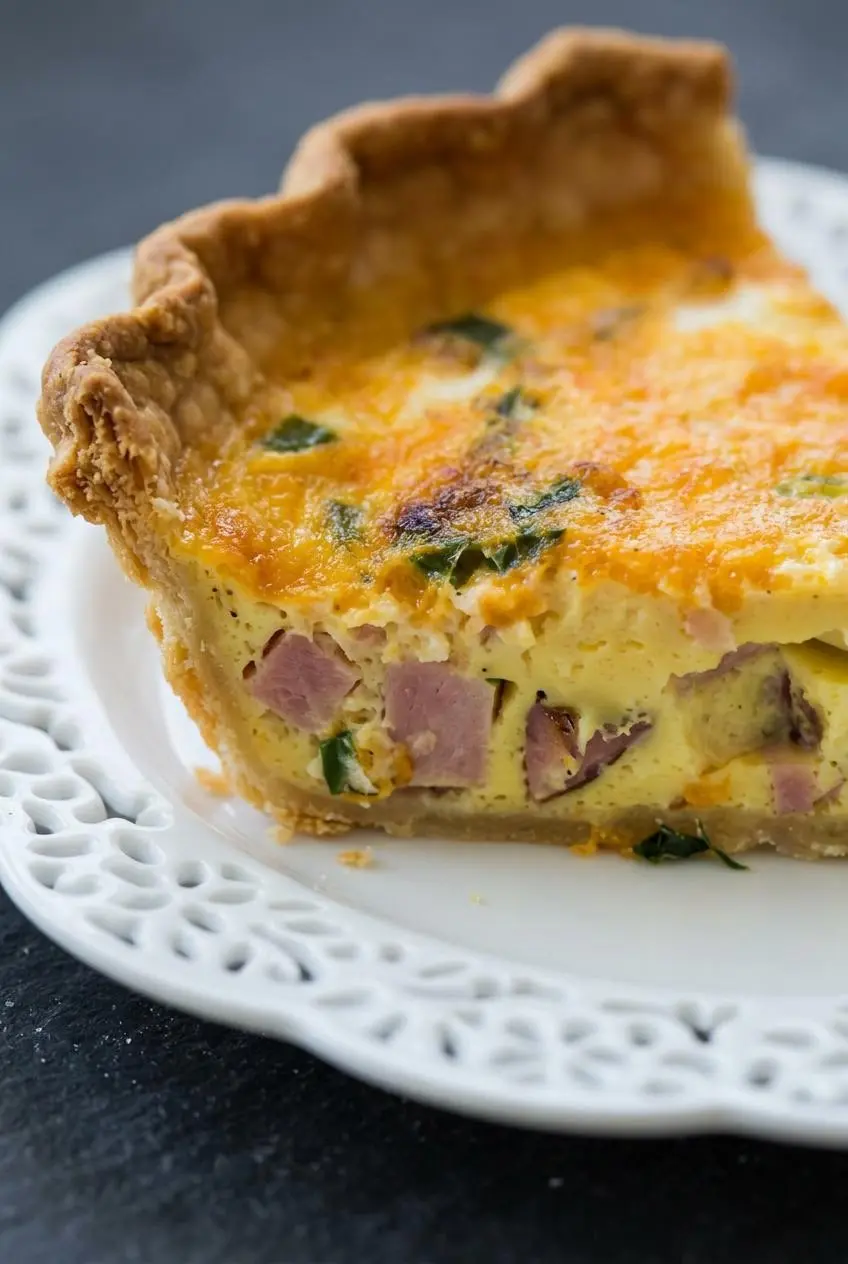
The biggest quiche problems come down to moisture and heat. Protect the crust from wet filling, keep add-ins dry, and stop baking before the custard tightens enough to crack.
Blind Baking for a Crisp Bottom
For the crispiest pastry base, blind bake the unbaked crust before filling it. Line the dough with parchment paper, fill it with pie weights or dried beans, and bake at 375°F for 10 to 15 minutes. Remove the parchment and weights once the dough looks dry, matte, and pale golden.
This early bake gives the pastry a head start against the moisture in the egg custard. It is especially helpful when using a deep pie plate or adding vegetables. Let the crust cool briefly before filling so the dough stays in place.
Managing Moisture in Mix-Ins and Crust Protection
- Soggy bottom: Blind bake the crust and use cooked, well-drained fillings. Raw spinach, mushrooms, zucchini, and onions release too much water as they bake.
- Watery center: Sauté moisture-rich vegetables first, then squeeze spinach dry or let mushrooms cook until their pan liquid evaporates.
- Cracked or weeping custard: Pull the quiche when the middle still gives a gentle wobble. A completely rigid center often means it has gone too far.
- Dark crust edge: Place a foil ring or crust shield over the rim partway through baking if it browns faster than the filling sets.
Small cheese cubes melt into distinct pockets, while shredded cheese spreads more evenly through the custard. Either can work, but shredded cheddar suits this ham quiche especially well.
Popular Quiche Variations and Substitutions
Once you understand the custard and moisture rules, you can change the fillings without losing the texture that makes quiche satisfying. Keep all meats cooked and all vegetables well drained before they go into the dish.
Classic Quiche Lorraine
For a French bistro-style direction, replace the ham with crisp crumbled bacon and use shredded Gruyere or Swiss in place of cheddar. The bacon adds a deeper smoky flavor, while Gruyere brings a nutty finish. For a more traditional version, try this classic Quiche Lorraine.
Spinach and Mushroom Vegetarian Quiche
Skip the ham and use sautéed cremini mushrooms, thoroughly drained chopped spinach, and crumbled feta. A little garlic powder can round out the earthy mushroom flavor. Cook the mushrooms until their moisture has cooked away, then cool the vegetables before assembling so they do not loosen the custard.
For another vegetable-forward option, a broccoli cheese quiche offers a similarly hearty filling with a different flavor profile.
Easy Crustless Quiche Adaptation
For a low-carb or gluten-free option, generously butter a 9-inch pie plate and layer the fillings directly in the dish before adding the custard. Bake at 350°F until the surface is golden and the center is set with a slight wobble. Without pastry, the custard is the star, so draining vegetables matters even more.
If you prefer a dedicated no-pastry version, this easy crustless quiche is a useful starting point.
Storage and Reheating Guide
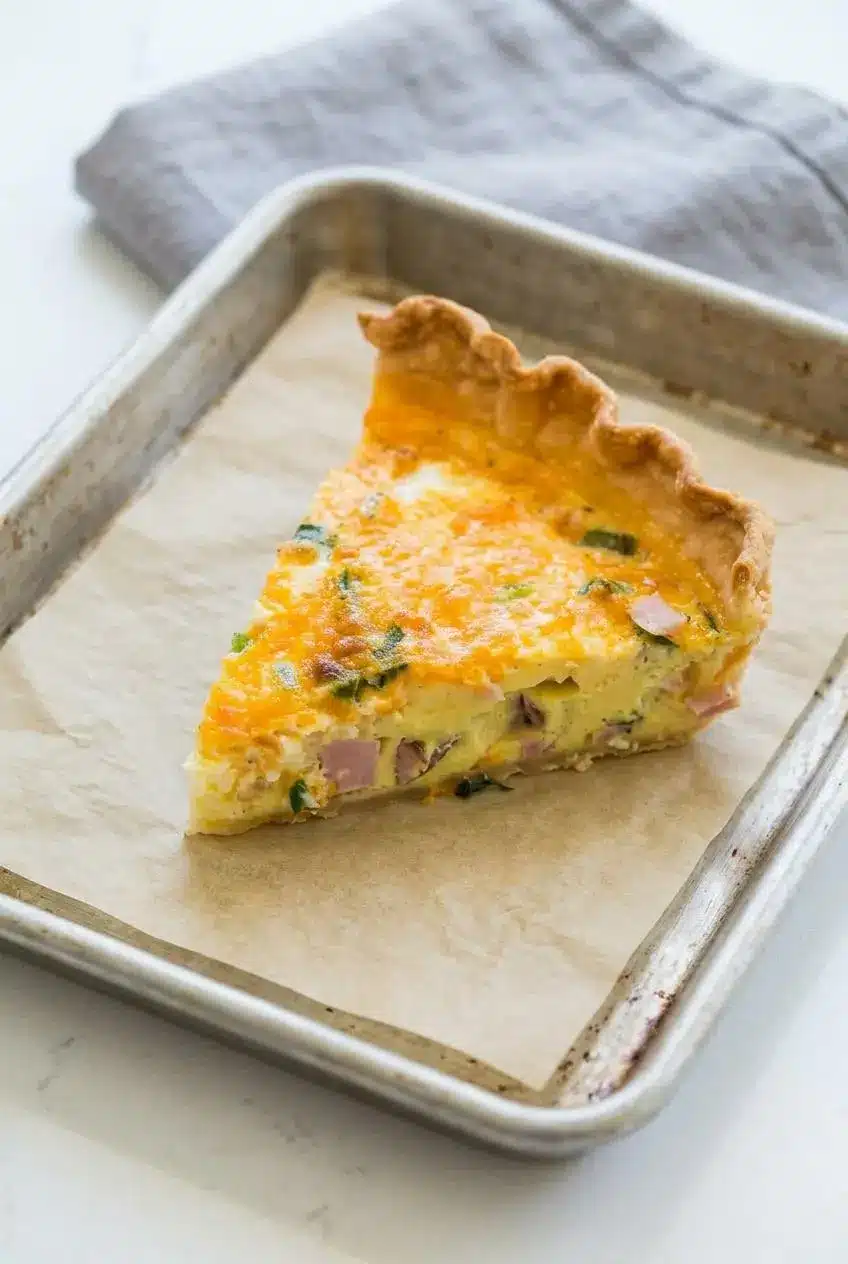
Cool baked quiche completely before covering and refrigerating it. Keeping it uncovered while hot prevents trapped steam from softening the crust. Once chilled, cover it tightly so the filling stays protected from refrigerator odors and drying.
Keeping Quiche for Later
For make-ahead brunches, bake the quiche, let it cool fully, and refrigerate it until you are ready to warm and serve. You can also assemble cooked, dry fillings and the shredded cheese in advance, then whisk and add the custard shortly before baking for the freshest texture.
Keep any leftover slices covered and chilled. If the crust matters most, reheat only the portions you plan to serve rather than warming the whole pie repeatedly.
Reheating to Keep the Crust Crisp
Warm leftover slices on a baking sheet in a moderate oven, loosely covered with foil at first. Remove the foil near the end if the top needs a little more color. The oven keeps the pastry firmer than a microwave, which can soften the crust and make the custard release moisture.
A toaster oven works well for a single slice. Let the quiche stand briefly after warming so the custard settles before you lift it from the pan.
Delicious Side Dishes for Quiche
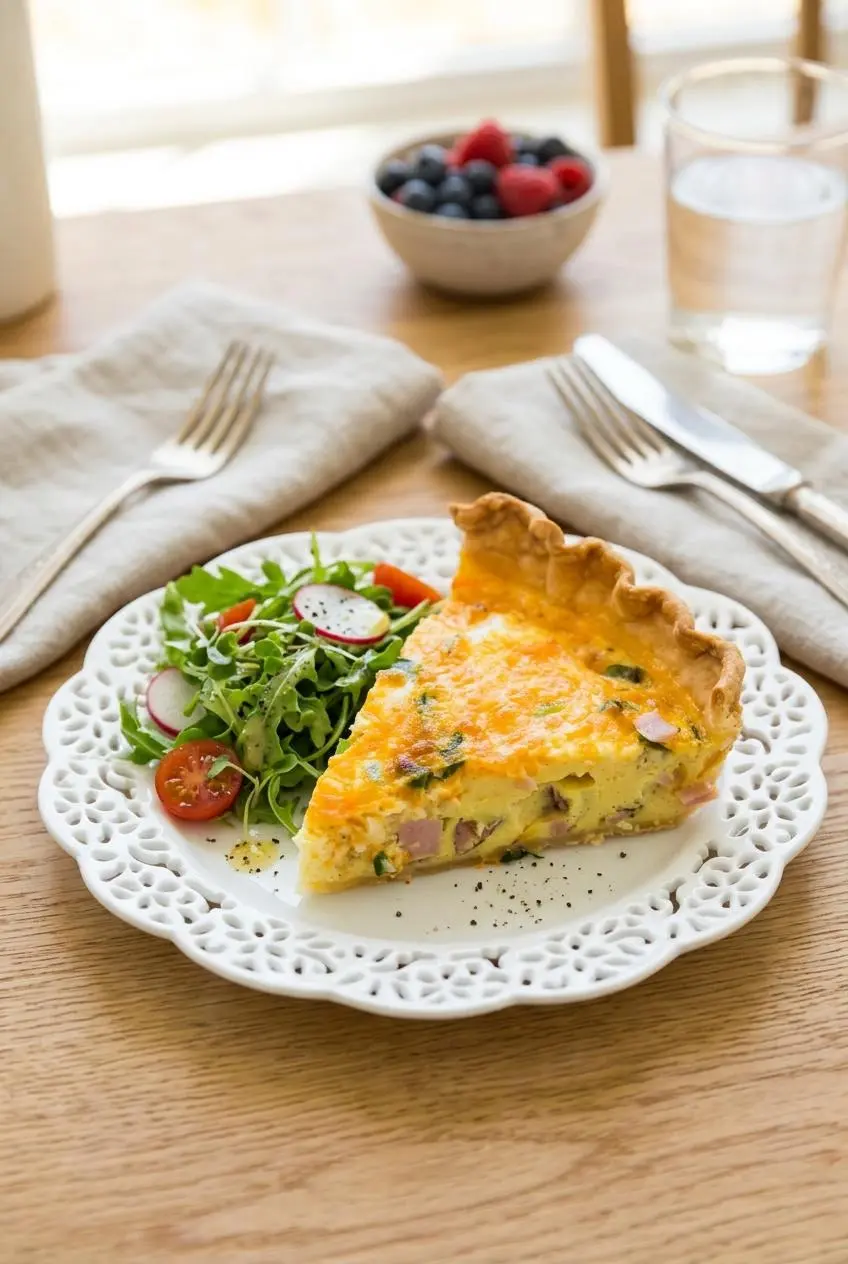
A rich slice of quiche benefits from something crisp, bright, or lightly savory alongside it. Choose a side based on the meal you are serving.
- Toss arugula and mixed greens with a lemon-Dijon vinaigrette for a sharp, fresh contrast.
- Serve seasonal berries or sliced fruit for an easy brunch plate with sweetness and color.
- Add roasted baby potatoes with rosemary when quiche is standing in for dinner.
- A crisp Greek salad brings briny vegetables and a refreshing crunch beside warm cheddar custard.
Conclusion
This quiche balances a golden pastry crust with a velvety ham, cheddar, and green onion custard. Give the filling a short rest, and each slice holds together cleanly without losing its tender center.
Once the egg-to-dairy balance feels familiar, seasonal vegetables, cooked meats, and different cheeses become easy ways to make the dish your own. Start dry, bake gently, and enjoy the golden edges.
Frequently Asked Questions
What Is the Secret to a Good Quiche?
Blind bake the crust for a crisp bottom, then keep the egg-to-dairy balance steady so the custard sets creamy rather than rubbery. Use dry, cooked fillings and remove the quiche when the center has a small, gentle wobble. Resting before slicing helps the custard finish setting.
How Many Eggs Should Go in a Quiche?
A standard 9-inch quiche commonly uses 4 to 6 large eggs with about ¾ to 1½ cups dairy. This recipe uses 6 eggs and ¾ cup milk or cream for a firmer, rich filling that supports ham and cheddar.
Why Is My Quiche Watery in the Center?
Watery quiche usually comes from wet vegetables, dairy that is too lean, or overbaking. Sauté vegetables such as mushrooms first, squeeze spinach very dry, and pull the pie when the center still has a soft wobble instead of waiting for it to become fully rigid.
How Do You Reheat Leftover Quiche Without Getting a Soggy Crust?
Use an oven or toaster oven rather than a microwave. Warm slices on a baking sheet and cover loosely at first, then uncover near the end if the crust needs to regain some firmness. Let each slice stand briefly before serving.

Quiche Recipe

Equipment
- 9-inch pie plate
- Large Mixing Bowl
- Whisk
Ingredients
- 1 single pie crust (unbaked)
- 6 large eggs
- ¾ cup milk (or cream)
- ¾ teaspoon salt
- ¼ teaspoon black pepper
- 1 cup cubed cooked ham
- 1 ½ cups shredded cheddar cheese (divided)
- 3 tablespoons sliced green onions
Instructions
- Heat the oven to 375°F. Give the oven time to reach temperature so the crust and custard begin cooking evenly.
- Fit the unbaked pie crust into a 9-inch pie plate, pressing it gently into the bottom and sides; crimp the rim if desired. The crust should sit snugly against the dish with a raised edge ready to hold the filling.
- Whisk the eggs, milk or cream, salt, and black pepper together in a large bowl. Stop when the mixture looks uniform and lightly foamy, with no visible strands of egg white.
- Scatter the ham, 1 cup of cheese, and green onions over the crust, then pour in the egg mixture and finish with the remaining ½ cup cheese. The filling should sit below the rim of the crust, with cheese spread across the top.
- Bake for 35 to 40 minutes, then rest the quiche for 5 to 10 minutes before cutting. Look for golden edges and a center that is mostly set with a subtle gelatinous wobble; it firms as it rests.