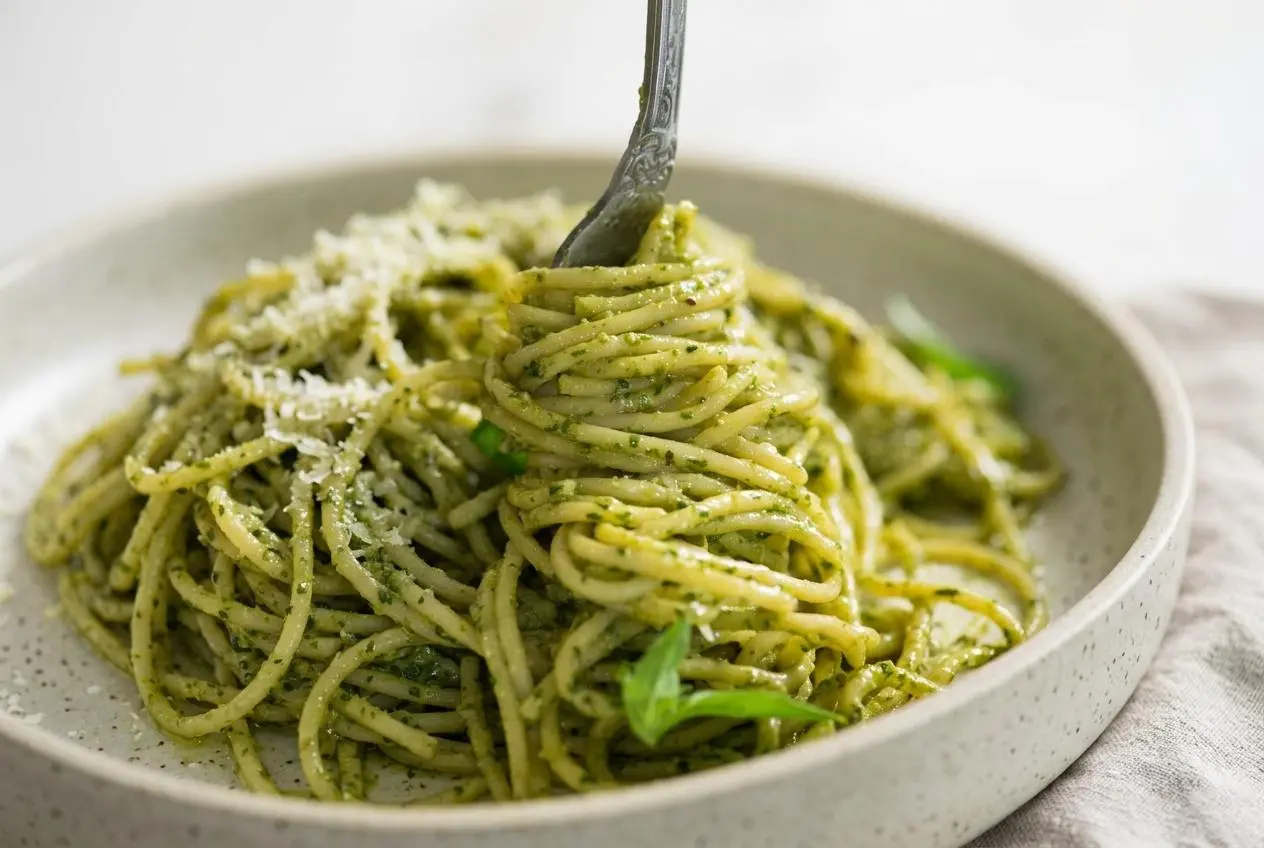
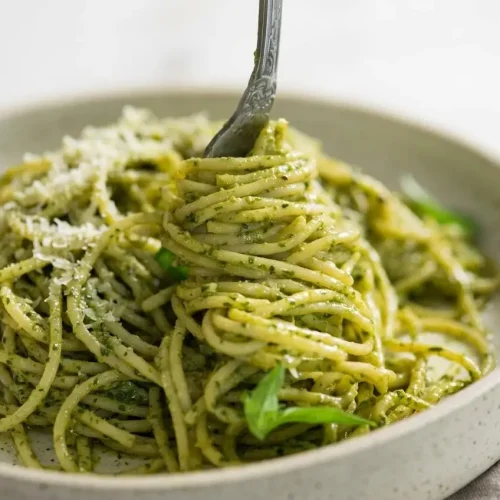
Toss warm al dente pasta with pesto and reserved starchy cooking water completely off the heat. This creates a glossy sauce that coats every noodle while keeping the basil bright and aromatic.
This pesto pasta recipe turns fragrant basil, garlic, cheese, and olive oil into a fast weeknight dinner with a silky, clinging finish.
As the warm noodles meet the pesto, the kitchen fills with fresh herb and garlic aroma. The trick is in the toss.
Set a heatproof bowl near the stove before draining the pasta so you can move quickly while the noodles are still hot.
Essential Ingredients for Pesto Pasta
Each ingredient has a job: pesto brings herbal richness, pasta provides structure, salted water seasons the noodles, and cooking water gives the sauce its glossy texture.
- 1 quantity homemade pesto
- 300 – 350 g / 10 – 12 oz pasta of choice
- 2 tsp salt
- 3/4 cup pasta cooking water
- Parmesan, for serving
Good pesto starts with aromatic Genovese basil, pine nuts, garlic, Parmigiano Reggiano, and peppery extra virgin olive oil. The cheese brings savory depth, while the oil carries the herb flavor through the pasta. Salt the cooking water well so the noodles taste seasoned before the sauce ever touches them.
I prefer finely grated Parmigiano Reggiano here because it melts into the warm pasta more smoothly than larger shreds.
Fresh Basil Pesto vs Store-Bought Jars
Fresh homemade pesto usually tastes brighter and has a looser, more fragrant texture. Jarred pesto can be thicker, saltier, and more concentrated, so it benefits from extra pasta water to help it coat the noodles instead of sitting in heavy clumps.
For 12 oz of pasta, use about 1/3 to 1/2 cup of jarred pesto, then loosen it gradually with hot cooking water. A squeeze of fresh lemon juice can lift a dense jarred pesto, especially when it tastes rich but muted. Finish with extra grated Parmesan if it needs more savory depth.
How to Make Pesto Pasta
- Bring a large pot of water and the 2 tsp salt to a full boil.
The water should bubble steadily before the pasta goes in. - Add the pasta and cook it for the time listed on the package.
Start checking near the end so the center stays pleasantly firm rather than soft. - Before draining, scoop out 1 cup of the cloudy cooking water.
This starchy water is the key to a sauce that looks glossy rather than oily. - Drain the pasta in a colander and let it stand for 1 minute.
The noodles should remain hot and lightly damp, with no rinse under running water. - Tip the pasta into a large bowl instead of returning it to the hot pot.
Moving it away from direct heat protects the pesto’s fresh green color and delicate aroma. - Add the pesto and 1/4 cup of the reserved pasta water, then toss vigorously.
Add more water as needed until the pasta makes a gentle wet sloshing sound and wears a silky sheen. - Taste the pasta and adjust with more salt and pepper if desired.
The sauce should cling to the noodles instead of collecting at the bottom of the bowl. - Serve immediately with fresh Parmesan.
Steam should carry the scent of basil, garlic, and cheese as the pasta reaches the table.
Choosing the Best Pasta Shape
Choose a shape that gives the pesto plenty of surface to cling to. Twisted and ridged pasta are especially good at catching the herb sauce in every groove.
- Trofie: its tight twists hold pesto beautifully and give each bite a textured, sauce-filled finish.
- Fusilli: the spirals grab the glossy sauce and work well for both warm pasta and room-temperature leftovers.
- Penne: ridges and hollow centers catch pesto, making it a sturdy choice for a quick dinner.
- Spaghetti: long strands offer a classic, elegant feel, especially when tossed until every strand is evenly coated.
Do not rinse the pasta after draining. The thin layer of starch on its surface helps the pesto and cooking water bind into a sauce that stays on the noodles.
Mastering the Glossy Pesto Emulsion
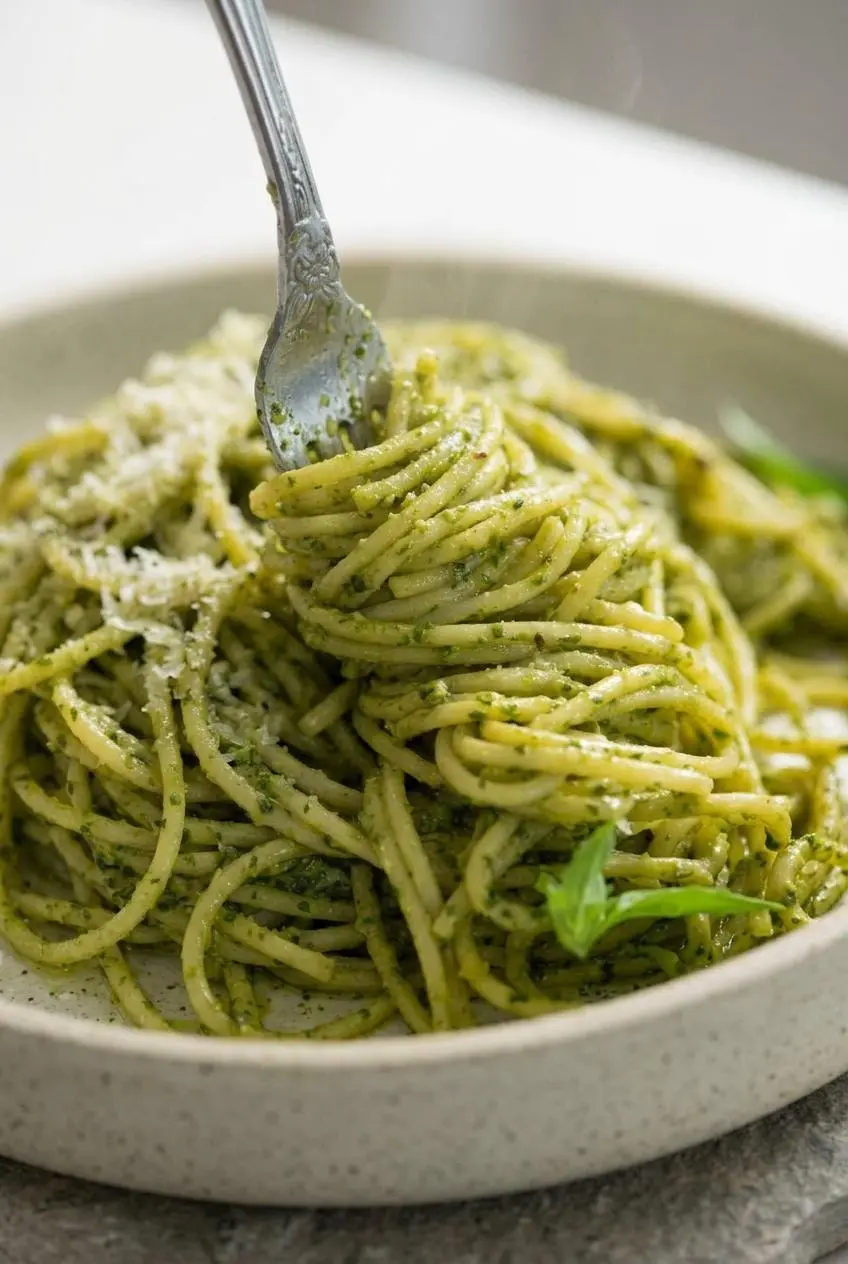
The best pesto pasta does more than mix pesto with noodles. It brings together olive oil, cheese, pesto, and starchy water into a smooth coating that stays silky from bowl to plate.
Why Heat Is the Enemy of Basil
Keep the pesto away from a hot pan or burner. Direct heat can quickly dull basil’s green color and flatten its fresh, garlicky aroma. Warm pasta supplies enough residual heat to soften the cheese and wake up the pesto without aggressively cooking it.
Use a large bowl for tossing. The pasta should be hot, but the vessel should not be scorching. If the sauce begins to look dark, greasy, or dry, move it away from heat and add a little more warm pasta water.
The Science of Starchy Pasta Water
Pasta water looks cloudy because it carries starch released during cooking. When you toss that water with oil-rich pesto, it helps the fat and moisture come together into a sauce that coats the pasta instead of breaking into a puddle.
Add the water in stages rather than all at once. The right texture looks loose in the bowl because the noodles continue absorbing moisture for a moment after tossing. Stop when the sauce is shiny, fluid, and clinging, not dry or swimming in oil.
Troubleshooting Common Pesto Pasta Mistakes
- Dry or sticky noodles: The pasta absorbed too much sauce before serving. Toss in another small splash of warm reserved pasta water until the coating loosens and shines again.
- An oily puddle at the bottom: The sauce has separated or did not get enough starchy water. Take the pasta off heat, add warm pasta water, and toss firmly until the oil reincorporates.
- Dull, heavy jarred pesto: Concentrated pesto often needs brightness. Add lemon zest or a few drops of lemon juice, then taste before adding more cheese or salt.
- Bland pasta despite flavorful pesto: The noodles may not have absorbed enough salt while cooking. Finish with a small pinch of salt and plenty of finely grated Parmesan.
- Soft pasta: The noodles cooked past al dente. Next time, begin checking earlier and drain while the center still has a gentle bite.
Delicious Additions and Variations
Keep the core pasta as written, then build on it with optional additions that suit the meal. Add any extras after the pesto has coated the noodles so the basil remains the main flavor.
Fresh lemon zest and toasted pine nuts make a particularly good finish, bringing brightness and a light crunch. For a heartier variation with spinach and chicken, try this creamy chicken pesto pasta.
Rich Creamy Pesto Variation
For a richer finish, fold heavy cream or mascarpone into the warm, dressed pasta off the heat along with the starchy water. The result is velvety and mellow, while the basil still tastes fresh. Keep tossing until the cream disappears into the sauce rather than sitting in streaks.
Adding Seared Chicken or Sauteed Shrimp
Cook seasoned chicken breast cubes or shrimp in a separate skillet, then add them only after they are fully cooked. Gently fold the protein through the dressed pasta just before serving so it stays tender and the pesto does not spend extra time over heat.
Fresh Summer Vegetables and Mix-Ins
- Halved cherry tomatoes: Fold them in at the end for juicy sweetness and a fresh contrast to the savory cheese.
- Baby spinach: Stir it through the warm pasta until just wilted for a soft, leafy addition.
- Grilled asparagus: Add spears or bite-size pieces for smoky edges and a little snap.
Storing and Reheating Leftover Pesto Pasta
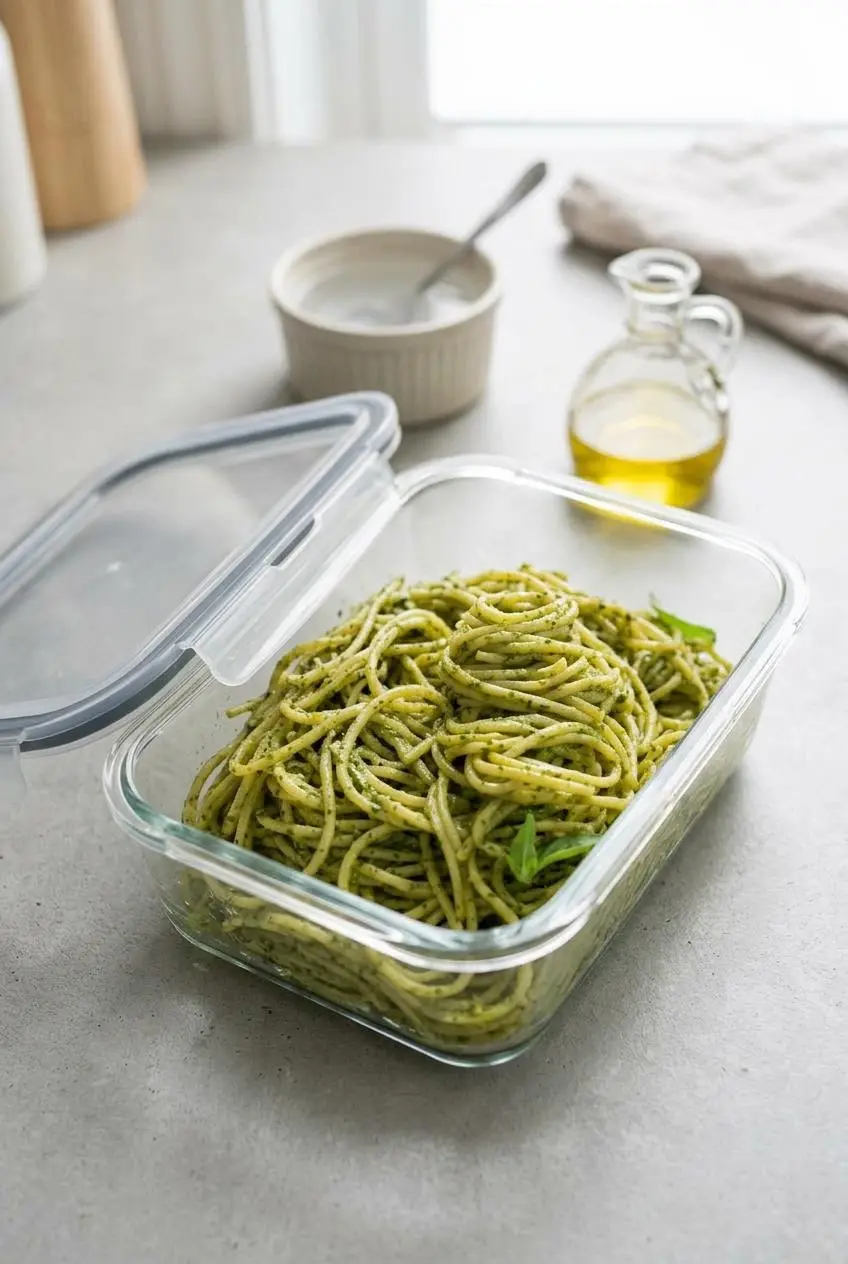
Cool leftover pasta, transfer it to an airtight container, and keep it chilled. Pesto pasta is at its best when enjoyed before the basil loses its bright flavor and the noodles become too firm.
For the best texture, let the pasta lose its refrigerator chill before serving, then loosen it with a splash of warm water and a drizzle of olive oil. If warming is needed, use very low heat and stir gently just until the pasta is supple. High microwave heat can make the oil separate and leave the basil tasting flat.
What to Serve with Pesto Pasta
Pesto pasta has plenty of richness, so pair it with sides that add crispness, acidity, or gentle char.
- A tomato caprese salad brings juicy tomatoes and creamy mozzarella to the plate.
- Warm garlic bread is ideal for catching any pesto left in the bowl.
- Roasted seasonal vegetables, such as zucchini, green beans, or asparagus, add color and a savory edge without competing with the basil.
Conclusion
A silky bowl of pesto pasta comes down to one reliable move: toss warm al dente noodles with pesto and starchy cooking water away from direct heat.
Once the sauce turns glossy and clings to every piece of pasta, serve it right away with Parmesan and enjoy that fresh basil aroma while it is at its brightest.
Frequently Asked Questions
Should You Cook or Heat Pesto Before Adding It to Pasta?
No. Toss pesto with warm pasta off the burner rather than cooking it in a hot pan. Direct heat can darken the basil and soften its fresh herb aroma. The heat from the noodles is enough to warm the sauce gently.
How Do You Keep Pesto Pasta from Drying Out?
Reserve starchy pasta water before draining, then add it gradually as you toss. Begin with 1/4 cup and keep adding small splashes until the sauce looks glossy and loose. If the pasta sits before plating, revive it with another splash of warm water.
Can You Make Pesto Pasta Using Jarred Store-Bought Pesto?
Yes. Jarred pesto works well when you thin it with hot starchy pasta water. Use about 1/3 to 1/2 cup for 12 oz of pasta, then brighten the flavor with lemon juice or extra grated Parmesan if needed.
What Is the Best Way to Store and Reheat Leftover Pesto Pasta?
Keep leftovers chilled in an airtight container. For the best flavor and texture, bring the pasta closer to room temperature before serving, then loosen it with warm water and a little olive oil. If reheating, use low heat rather than blasting it in the microwave.
Pesto Pasta Recipe

Equipment
- Colander
- large bowl
Ingredients
- 1 quantity homemade pesto
- 300 – 350 g pasta of choice 10 – 12 oz
- 2 tsp salt
- 3/4 cup pasta cooking water
- Parmesan for serving
Instructions
- Bring a large pot of water and the 2 tsp salt to a full boil. The water should bubble steadily before the pasta goes in.
- Add the pasta and cook it for the time listed on the package. Start checking near the end so the center stays pleasantly firm rather than soft.
- Before draining, scoop out 1 cup of the cloudy cooking water. This starchy water is the key to a sauce that looks glossy rather than oily.
- Drain the pasta in a colander and let it stand for 1 minute. The noodles should remain hot and lightly damp, with no rinse under running water.
- Tip the pasta into a large bowl instead of returning it to the hot pot. Moving it away from direct heat protects the pesto’s fresh green color and delicate aroma.
- Add the pesto and 1/4 cup of the reserved pasta water, then toss vigorously. Add more water as needed until the pasta makes a gentle wet sloshing sound and wears a silky sheen.
- Taste the pasta and adjust with more salt and pepper if desired. The sauce should cling to the noodles instead of collecting at the bottom of the bowl.
- Serve immediately with fresh Parmesan. Steam should carry the scent of basil, garlic, and cheese as the pasta reaches the table.