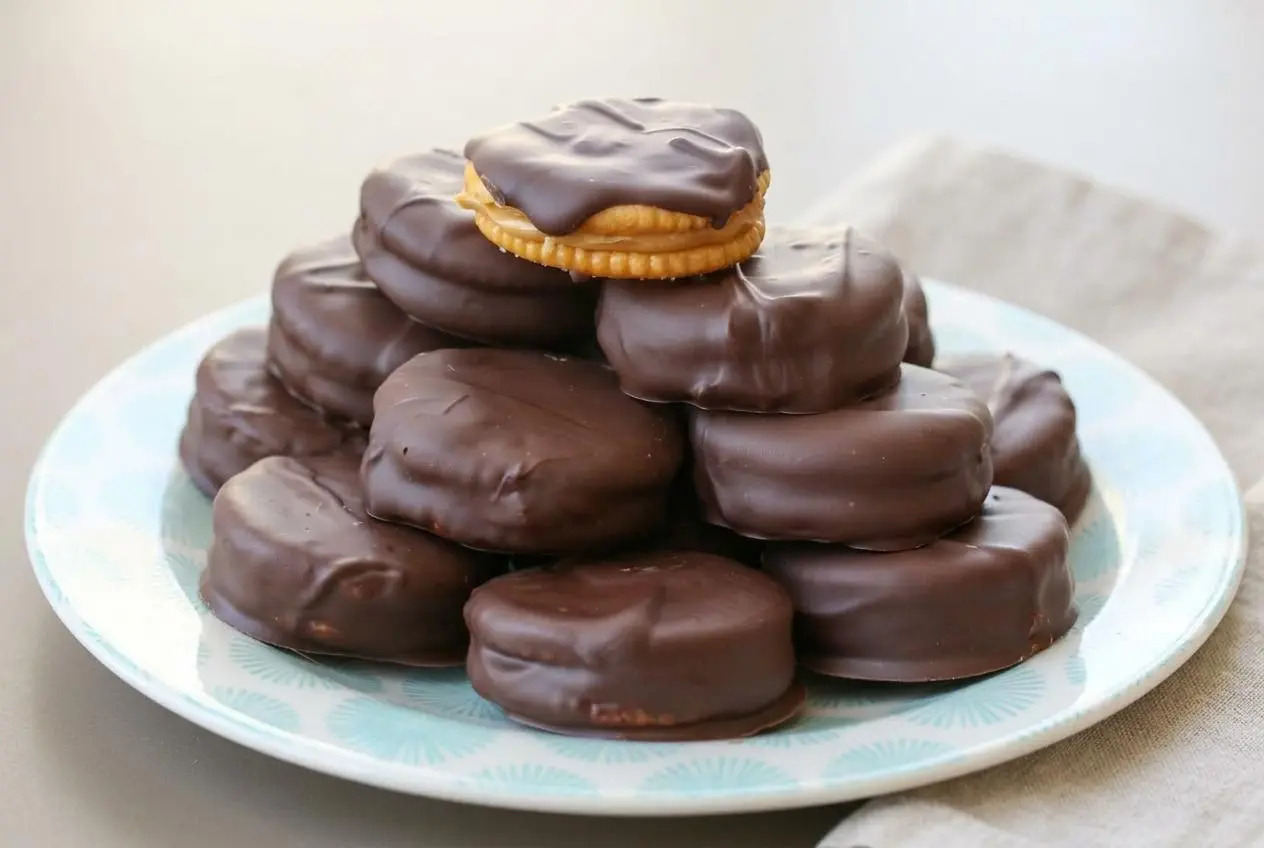
Every spring, my kitchen turns into a little candy shop, the kind that would have made my childhood Easter basket jealous. These peanut butter eggs hit that sweet spot between nostalgic and genuinely impressive, creamy in the middle, with a chocolate shell that snaps when you bite.
The trick that makes them feel “grown-up” is a whisper of malt, a toasty dairy note that keeps the filling from tasting like plain powdered sugar. If you’ve ever wanted a Reese’s copycat that’s smoother, saltier, and less cloying, this is the batch to make.
Why You’ll Love This Recipe
The Malted Secret: In my kitchen, 2 tablespoons of Malted Milk Powder changed everything, it adds a toasted, almost caramel-like depth that balances confectioners’ sugar beautifully.
Superior Texture: You get that candy-store contrast, a crisp chocolate “snap” outside, and a melt-in-your-mouth center of creamy peanut butter inside.
Gourmet Profile: The malt gives a confectioner’s vibe, the kind of layered flavor you notice in better chocolate bars, not just a sweet no-bake dessert.
No-Bake Ease: No oven, no thermometer, no fuss, just a bowl, parchment paper, and a quick double boiler moment.
Same Craving, Better Payoff: If you love the salty-sweet hit of peanut butter brownies, these deliver that comfort in candy form.
Ingredients and Substitutions

These ingredients build a sturdy peanut butter center and a glossy chocolate coating. Keep everything measured as written, and the eggs will hold their shape and dip like a dream.
Ingredients
- 1 (16 ounce) package confectioners’ sugar
- 1 cup creamy peanut butter
- 1/4 cup unsalted butter, softened
- 1 tablespoon milk
- 8 (1 ounce) squares semisweet chocolate, cut into 1/2-inch chunks
- 1 tablespoon shortening
Ingredient Notes & Substitutions
Chef’s twist, Malted Milk Powder: I add 2 tablespoons Malted Milk Powder to the filling, even though it’s not on the base list. It brings a toasted dairy depth that reins in the sweetness and makes the peanut butter taste more “rounded.”
Peanut butter choice: Processed creamy peanut butter is the most reliable because it’s emulsified, so the filling stays plush and shapes cleanly. “Natural” peanut butter that separates tends to leak oil, and the eggs slump or feel greasy.
Chocolate types: Semisweet squares melt smoother than many chips, and they’re great for dipping. If you have couverture chocolate, the higher cocoa butter can give an even cleaner snap and shine.
Dairy-free ideas: For a dairy-free version, use a dairy-free milk for the moisture and a dairy-free semisweet chocolate for dipping. The technique stays the same, but keep the centers extra cold before coating.
Denser, “healthier” style: Some cooks swap in oat flour and maple syrup for a more fibrous, less sweet center. It won’t taste like classic Easter candy, but it makes a hearty, snackable version.
How to make peanut butter eggs
Cream the filling and dial in the texture
- In a large bowl, beat together the confectioners’ sugar, creamy peanut butter, and softened butter until the mixture looks like a thick, smooth dough. When I add 2 tablespoons Malted Milk Powder here, the bowl smells faintly toasty, like malted shakes, and it instantly deepens the nutty aroma.
- If the dough seems dry or won’t come together, mix in the milk a little at a time until it holds when you pinch it. If it feels tacky and wants to cling to your fingers, chill it for 30 minutes so it firms up and becomes easy to shape.
Shape, then freeze until firm
- Divide the mixture in half and shape each portion into a large egg, or make smaller eggs if you like. I keep a piece of parchment paper nearby and lightly press and smooth the surface until it looks neat, not cracked.
- Set the eggs on a wax paper-lined plate and freeze until firm, about 1 hour. They should feel solid to the touch, because a soft center will melt the second it meets warm chocolate.
Melt the chocolate gently with the double boiler
- When the eggs are almost ready, combine the chocolate chunks and shortening in the top of a double boiler over simmering water. Keep the heat at medium and stir often, watching for a glossy, fluid texture that looks like satin.
- Scrape down the sides with a rubber spatula and keep stirring frequently so nothing scorches, the chocolate should melt completely in about 5 minutes. If chocolate ever turns grainy, a tiny bit of moisture is often the culprit, and the science of chocolate seizing explains why it happens.
Dip for a smooth shell
- Pull the eggs from the freezer right before dipping, and work one at a time. Stick a long-tined fork into the top, lower it into the melted chocolate, and spoon a little over any bare spots until fully coated.
- Lift the egg and tap the fork gently against the bowl to shake off excess chocolate, this is how you get that thin, professional finish. Slide the coated egg back onto the wax paper, and decorate as desired before the shell sets.
The Science of the Perfect Chocolate Snap

That satisfying snap comes from a thin, even chocolate layer setting quickly around a very cold center. The shortening helps the chocolate flow smoothly, so you don’t end up with a thick coat that bites waxy.
White streaks, often called blooming, usually show up when chocolate goes through temperature swings or sets too slowly. Keeping the centers frozen and letting the chocolate cool briefly if it’s steaming reduces that shock and helps it set clean.
My favorite little trick is the toothpick slide, especially for pretty eggs. After tapping off extra chocolate, nudge the egg off the fork with a toothpick so the surface stays smooth and you don’t leave fork tracks.
The malt logic is simple and delicious. Malted milk powder brings gentle roasted dairy notes that cut sugar intensity, so the filling tastes closer to a high-end confection than a one-note sweet paste.
Pro Tips & Troubleshooting
Pro Tips
- Keep the eggs in the freezer until the exact moment you dip, cold centers keep their shape and help the shell set fast.
- Let the melted chocolate sit 5 to 10 minutes if it’s steaming, chocolate that’s too hot can soften the filling on contact.
- Tap the fork against the bowl after dipping, that simple move gives a smoother, thinner coating.
- A tiny bit of coconut oil can make the shell thinner and snappier, but don’t add so much that it turns soft.
- For a crunchy version, fold in crushed pretzels or use extra crunchy peanut butter for texture contrast.
- If you’ve ever rolled peanut butter balls, the same “cold dough, quick hands” rule applies here.
Common Mistakes to Avoid
- Using natural peanut butter that separates, the extra oil makes the eggs slump and feel greasy.
- Dipping while chocolate is still steaming, the coating looks rough and the center can melt.
- Skipping wax paper or parchment paper, the eggs stick and the bottoms tear when you lift them.
- Rushing the freeze, the centers need about 1 hour to be truly firm.
Serving & Storage

Serving Ideas
For that candy-shop look, tuck each egg into a mini cupcake liner, then pile them high on a platter. Once the chocolate sets, a little royal icing piping turns them into personalized place cards.
A dessert table feels extra festive when these sit beside strawberries or a rich slice of ooey gooey cake, the mix of textures makes the peanut butter pop.
For gift boxes, I like pairing them with a few buttery cookies for contrast. A holiday tin feels complete alongside strawberry kiss cookies, because you get chocolate, peanut butter, and a fruity bite in one bundle.
Shipping is all about temperature control. Use a sturdy container, pack the eggs snug so they cannot rattle, and include a cold pack when the weather is warm.
Storage & Make-Ahead
Refrigerate the eggs to keep the shell snappy and the filling firm. They hold well in an airtight container for up to 2 weeks, and the flavor actually tastes more “blended” after a day.
For longer storage, freeze them for up to 3 months in an airtight container. I separate layers with wax paper so the shells do not scuff, and I thaw in the fridge to avoid condensation.

Malted Peanut Butter Eggs

Equipment
- large bowl
- Double Boiler
- Parchment Paper
- Fork
Ingredients
- 1 (16 ounce )package confectioners’ sugar
- 1 cup creamy peanut butter
- 1/4 cup unsalted butter softened
- 1 tablespoon milk
- 8 (1 ounce) squares semisweet chocolate cut into 1/2-inch chunks
- 1 tablespoon shortening
Instructions
Cream the filling and dial in the texture
- In a large bowl, beat together the confectioners’ sugar, creamy peanut butter, and softened butter until the mixture looks like a thick, smooth dough.
- If the dough seems dry or won’t come together, mix in the milk a little at a time until it holds when you pinch it. If it feels tacky, chill it for 30 minutes to firm up.
Shape, then freeze until firm
- Divide the mixture and shape each portion into an egg shape. Use parchment paper to lightly press and smooth the surface until neat.
- Set the eggs on a wax paper-lined plate and freeze until solid to the touch, about 1 hour.
Melt the chocolate gently with the double boiler
- Combine the chocolate chunks and shortening in the top of a double boiler over simmering water. Keep the heat at medium and stir often until the texture looks like satin, about 5 minutes.
Dip for a smooth shell
- Pull the eggs from the freezer one at a time. Stick a long-tined fork into the top, lower it into the melted chocolate, and spoon chocolate over any bare spots.
- Lift the egg and tap the fork gently against the bowl to shake off excess chocolate for a thin finish. Slide the coated egg back onto wax paper and decorate as desired.
Notes
Nutrition
Conclusion
These peanut butter eggs are what I wish every Easter candy tasted like, creamy, salty-sweet, and finished with a clean chocolate snap. The malted milk powder is the quiet upgrade that makes people pause mid-bite and ask what you did.
Keep them cold, use the toothpick trick, and don’t be afraid to play with a crunchy pretzel version once you nail the classic. If peanut butter candy is your love language, my peanut butter balls are another no-bake favorite for the same reason.