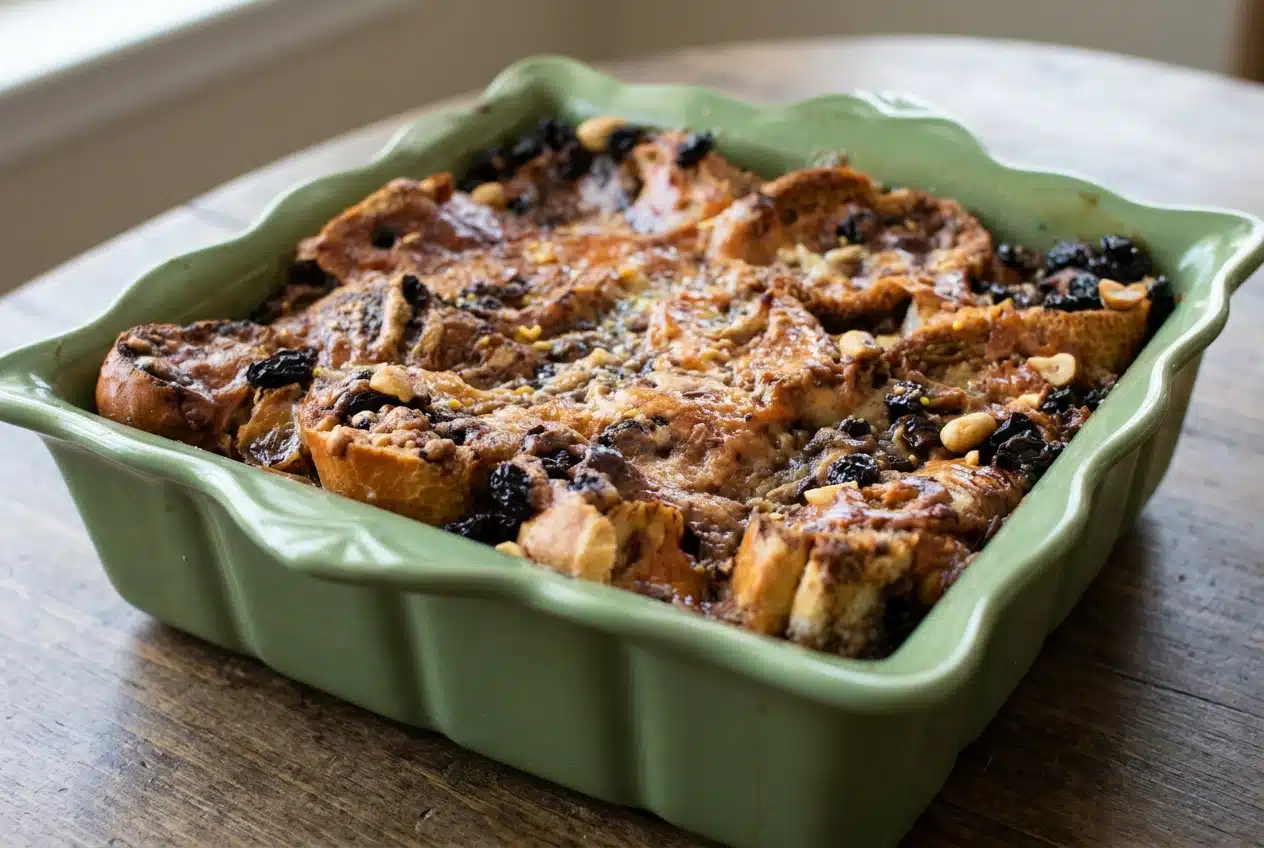
This capirotada recipe makes a sweet-savory Mexican bread pudding traditionally enjoyed during Lent. Toasted bolillo, raisins, peanuts, and cheese soak up cinnamon-clove piloncillo syrup, then bake into soft, spiced layers with golden, crisp edges.
Unlike custard bread pudding, this version gets its moisture from a water-based brown sugar syrup. Monterey Jack melts between the bread slices, balancing the sweetness with a mild, savory richness.
The appeal is in the contrast: chewy raisins, roasted peanuts, soft bread, and lightly crunchy corners. Start with well-toasted bread, and each layer keeps its character. Those golden edges are worth watching.
Check the bread before assembling: the surface should feel dry and crisp, not soft and springy.
Key Ingredients and Traditional Substitutions
Bread gives the pudding structure, while water and piloncillo create its sweet soaking syrup. Cinnamon and cloves add fragrance, raisins bring chew, peanuts supply crunch, and Monterey Jack balances the sweetness with creamy, savory richness.
- 6 cups of water
- 3 Piloncillo cones
- 3 Mexican cinnamon sticks
- 3 whole cloves
- 1 cup raisins
- 1/2 cup roasted, salted peanuts
- 12 thick slices of bolillo or French bread (see note below)
- 2 cups of shredded Monterey Jack Cheese
Bread: Bolillos are crusty, oblong Mexican rolls with an interior that absorbs syrup well. French bread also works. Slightly stale bread offers a useful head start, but still toast it so the slices can soften without immediately falling apart. Telera rolls are another optional choice.
Piloncillo and spices: Piloncillo is unrefined cane sugar with a deep, molasses-like flavor. Mexican cinnamon, also called canela, brings a fragrant sweetness, while cloves add a stronger spicy note. Let the sugar dissolve completely rather than judging the syrup by color alone.
Fruit, nuts, and cheese: Raisins add concentrated sweetness and chew; salted roasted peanuts interrupt the soft layers with crunch. Monterey Jack melts smoothly without overpowering the syrup. Optional cheese alternatives appear below.
For substitutions, dark brown sugar offers a similar flavor direction to piloncillo, though it isn’t identical. Cone sizes vary, so a cone count isn’t a dependable cup-for-cup substitution guide. Dried cranberries can replace raisins for tartness; pecans, walnuts, or almonds offer different kinds of crunch.
I favor a mild melting cheese here so the cinnamon and piloncillo stay at the center of each bite.
How to Make Classic Capirotada
The key stages are dissolving the spiced syrup, drying the bread, building the layers, and baking until golden. Keep the bread intact as you assemble it, and distribute the syrup carefully rather than flooding one spot.
Prep: 25 minutes · Cook: 40 minutes · Total: 1 hour 5 minutes · Servings: 8
- Set the oven to 350°F before beginning the syrup.
The oven will also toast the bread before the assembled pudding goes in. - Heat the water, piloncillo, cinnamon sticks, and cloves together in a medium-sized stockpot over medium-high heat for about 10 to 15 minutes.
Continue until no solid sugar remains and the syrup thickens slightly, lightly coating the back of a spoon. - Cut the bolillos into slices about 1/3 inch thick, spread them on a baking sheet, and toast for about 15 to 20 minutes.
Look for dry surfaces and golden-tan edges rather than dark browning. - Coat the bottom of a deep 9×9-inch baking dish with cooking spray.
A light, even coating will help the bottom layer release. - Build alternating layers of toasted bread, raisins, peanuts, and cheese until the dish is full, finishing with extra cheese and raisins.
Distribute the fillings across the bread so each portion has sweetness, crunch, and cheese. - Ladle the syrup gradually over the assembled layers, moving across the whole dish until every bread slice is moist.
Check exposed corners and lower layers for dry patches instead of concentrating the syrup in the center. - Transfer the dish to the oven and bake for 40 minutes.
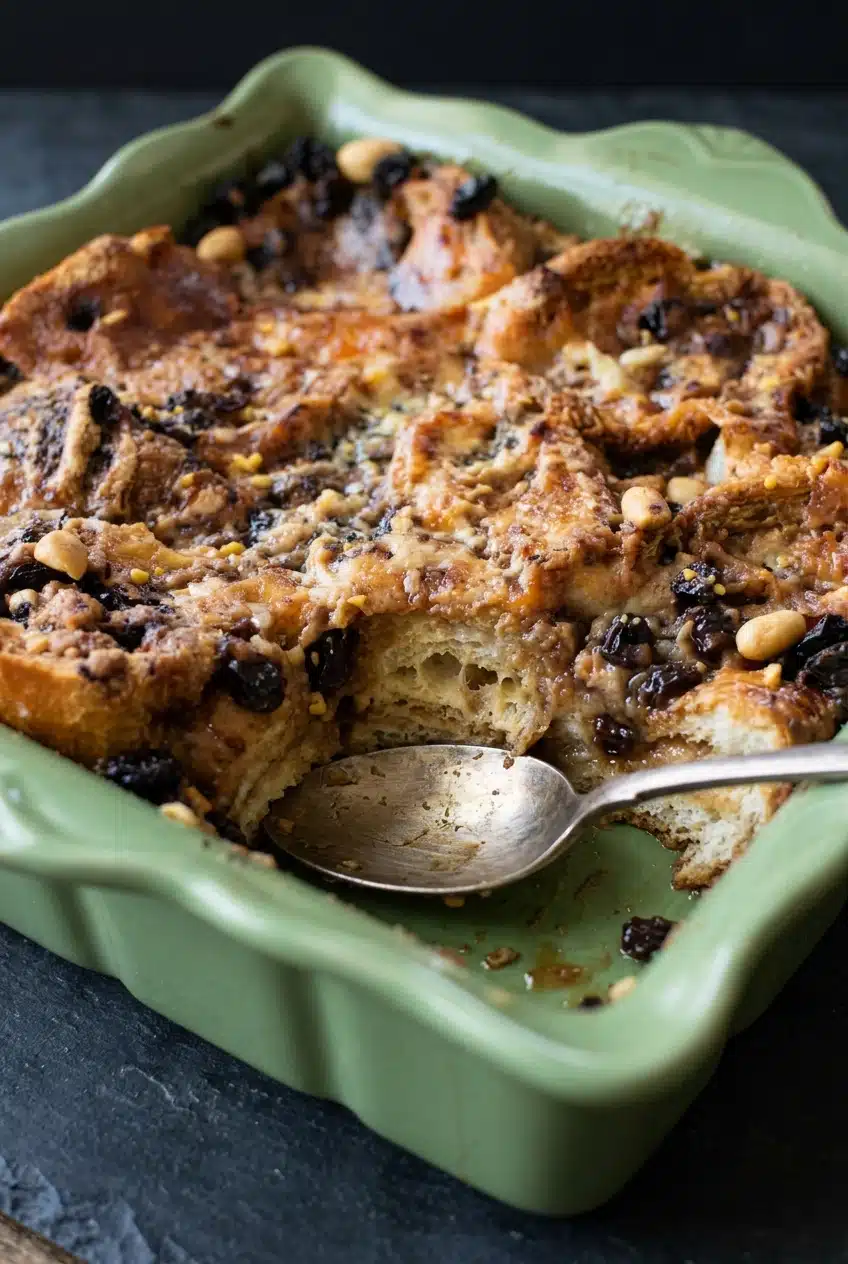
The finished pudding should look golden brown, with melted cheese and bubbling edges. - Portion the capirotada while warm.
The center will be soft and spoonable beneath the lightly crisp top.
Expert Tips and Common Mistakes to Avoid
Most texture problems start with the bread or uneven syrup distribution. Use these checks to keep the interior moist without losing all its structure.
- Bread collapses: Fresh, insufficiently toasted slices soften quickly; toast until dry throughout, not merely colored at the edges.
- Bitter edges: Deeply browned toast can taste scorched after baking; stop at golden-tan rather than dark brown.
- Gritty sweetness: Undissolved piloncillo leaves uneven pockets of sugar; check the bottom of the pot before assembling.
- Dry lower layers: Syrup poured into one area may not reach every slice; spoon it broadly and check the sides of the dish. As an optional assembly variation, distribute syrup between layers.
- Whole spices in a bite: Cloves and cinnamon fragments are unpleasant to chew; optionally strain the finished syrup before ladling it over the bread.
- Dry top during baking: If the edges brown before the center softens, loosely shield the dish with foil, then uncover toward the finish if you want more crunch.
- Overly moist center: Avoid adding more syrup and let the pudding settle before portioning; don’t keep baking solely to make a hot, soft center slice neatly.
Regional and Flavor Variations
This water-and-piloncillo version is capirotada de agua. Mexican households prepare capirotada in different ways, so treat the following as optional directions rather than additions required for this version.
Capirotada de Leche (Milk or Custard Style)
Capirotada de leche uses milk for a creamier result. Some versions include evaporated milk, condensed milk, or an egg custard. These change both sweetness and structure, so use a recipe designed for that style rather than replacing the water casually.
Regional Cheese Swaps (Queso Fresco, Cotija, Oaxaca, Cheddar)
Choose an optional cheese swap based on whether you want melted strands, gentle crumbles, or a sharper salty contrast.
- Oaxaca: Gives the layers a stretchy melt and mild flavor.
- Mild cheddar: Melts well and adds a more noticeable savory tang.
- Queso fresco: Leaves soft, mild crumbles rather than a smooth melted layer.
- Cotija or queso añejo: Adds a firmer, saltier accent that stands out against the syrup.
Fruit, Nut, and Festive Sprinkle Additions
Keep optional additions focused so the spiced syrup still comes through.
- Dried cranberries or prunes: Bring tartness or deeper dried-fruit sweetness.
- Dried figs or apricots: Add chewy texture and a different fruit flavor.
- Pecans, walnuts, or slivered almonds: Offer alternatives to the roasted peanut crunch.
- Sliced bananas or diced apples: Introduce softer fruit pockets.
- Shredded coconut or guava paste: Adds a tropical direction and extra sweetness.
- Star anise: Offers a licorice-like spice note.
- Colorful grajeas: Nonpareil sprinkles give the finished dish a festive touch.
Pan-Fried vs. Oven-Toasted Bread
Some preparations use bread pan-fried in butter for richer flavor and browned surfaces. Oven-toasting keeps the bread preparation less rich and lets the piloncillo syrup lead. These are alternative approaches, not consecutive steps.
How to Serve Capirotada
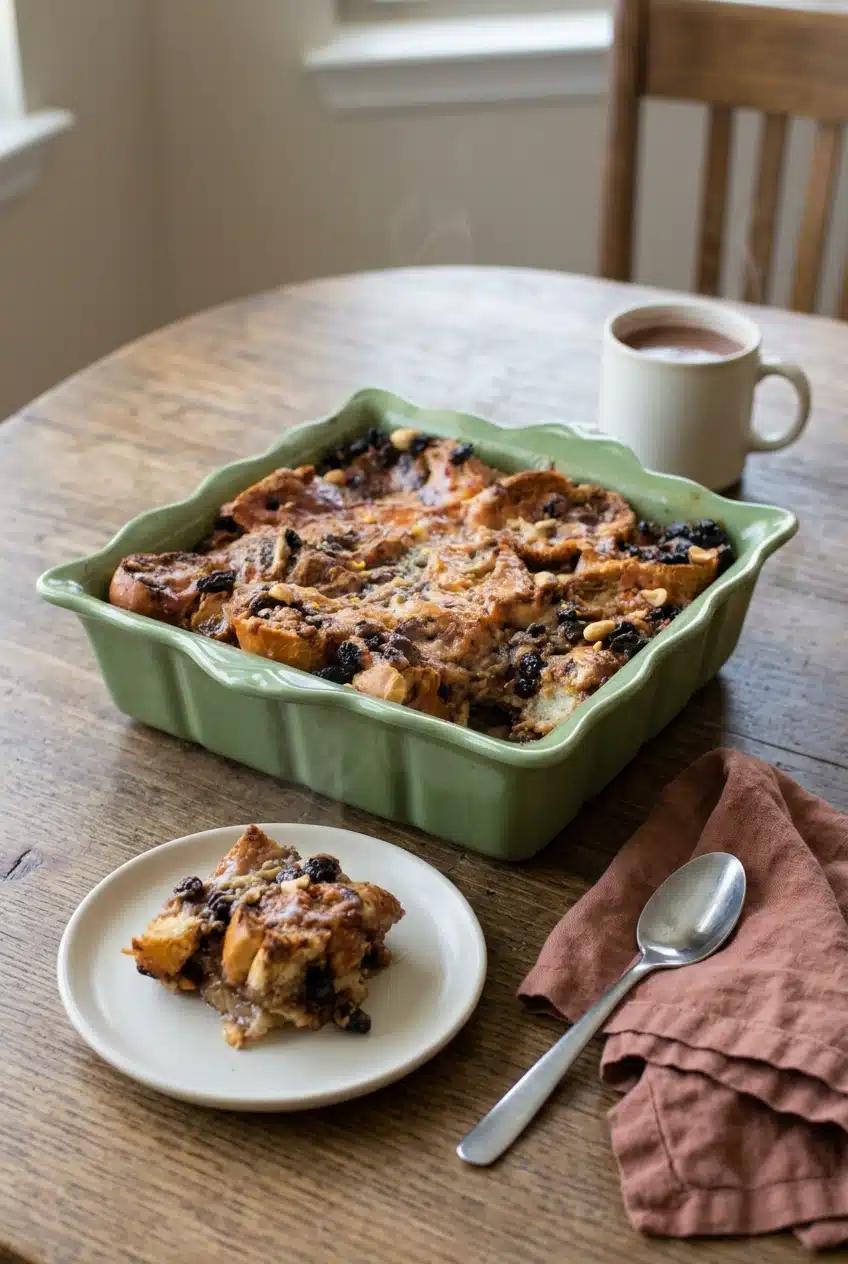
Serve it warm when you want soft spoonfuls and melted cheese. At room temperature or chilled, the layers become firmer and easier to portion neatly.
Optional grajeas or extra toasted nuts add color or crunch. Mexican hot chocolate or spiced coffee makes a fitting accompaniment after a Lenten meal; smaller portions also work well on a dessert table.
Make-Ahead, Storage, and Reheating Tips
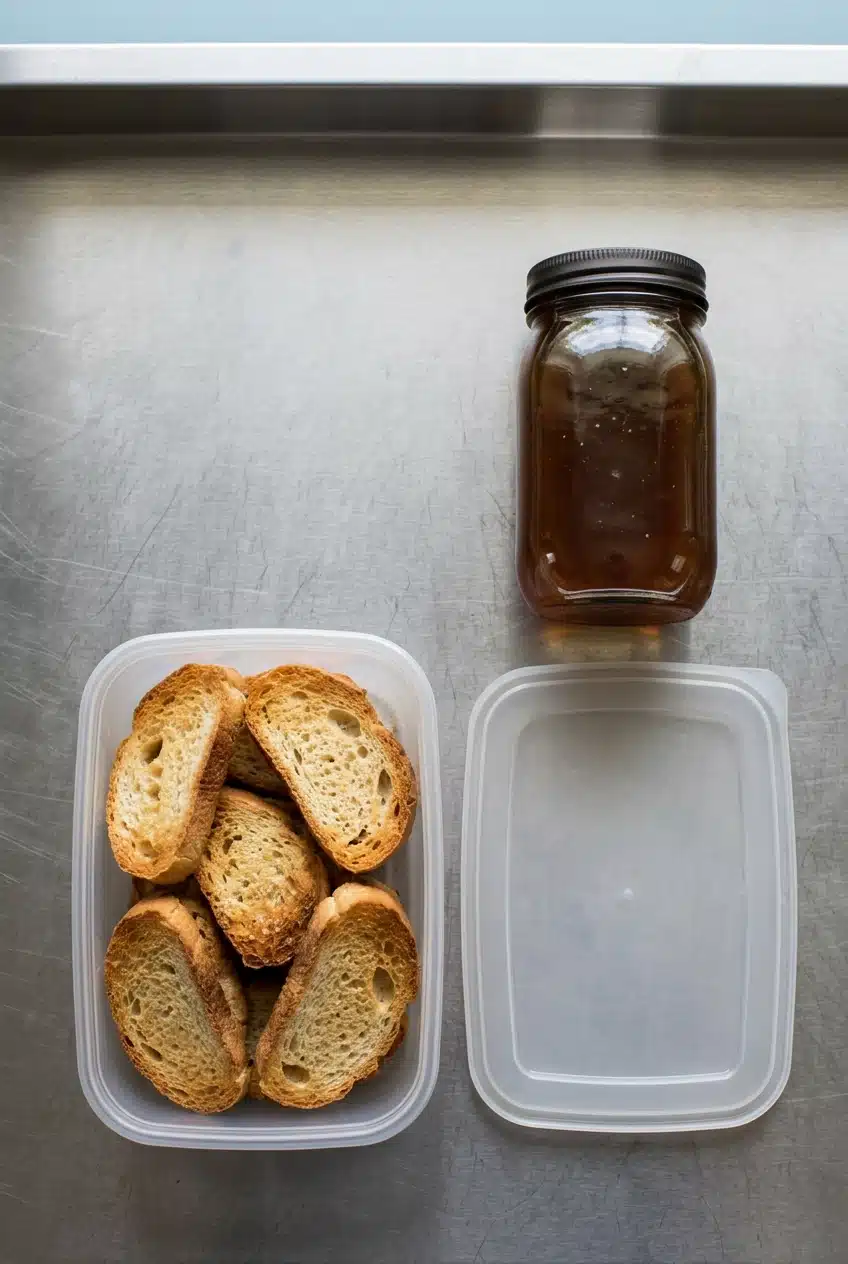
Keep the bread and syrup separate until assembly to protect the toasted texture.
Prepping Components Ahead of Time
For advance preparation, toast the bread and make the syrup separately. Let the bread cool before covering it so trapped steam doesn’t soften the slices. Keep it dry, and refrigerate the cooled syrup separately until you’re ready to assemble.
Refrigerating and Reheating Leftovers
Refrigerate leftovers promptly in covered, shallow containers rather than leaving the baking dish out to cool completely. Keep the pudding chilled between servings.
For texture, reheat a portion gently in the microwave, or cover it loosely in the oven to limit drying. Check as it warms so the cheese softens without scorching the sugary edges. Microwave reheating will soften the crisp top more than oven reheating.
Final Thoughts on This Lenten Classic
Capirotada brings toasted bread, fragrant piloncillo, chewy fruit, crunchy nuts, and savory cheese into one warm dish. Dry, golden toast gives those soft layers a sturdy start.
Begin with the classic combination, then explore a different cheese or festive topping if you like. Keep the sweet-savory balance, and let the cinnamon-scented syrup tie it together.
Frequently Asked Questions
How Do You Pronounce Capirotada?
Say kah-pee-roh-TAH-dah. Place the emphasis on “TAH.”
What Is the Famous Mexican Bread Called?
The traditional roll used here is bolillo, a crusty, oblong Mexican bread. French bread or telera rolls are optional substitutes; toast them thoroughly before assembly.
Why Do Mexicans Eat Capirotada During Lent?
It is a traditional meatless dish that makes use of leftover bread. In common Catholic interpretations, cinnamon represents the cross, cloves the nails, raisins tears, and cheese the shroud; symbolism varies by household.
What Kind of Cheese Goes Into Capirotada?
This version uses Monterey Jack for a mild, creamy melt. Optional alternatives include Oaxaca or mild cheddar for melting, and queso fresco, cotija, or queso añejo for a crumbly contrast.
How Do You Store Leftover Capirotada Safely?
Refrigerate leftovers promptly in covered, shallow containers. Keep them chilled between servings and follow the reheating approach above.
Can You Substitute Brown Sugar for Piloncillo?
Yes, dark brown sugar is an optional substitute with a similar molasses-like flavor. Piloncillo cones vary in size, so don’t assume a fixed cup measure equals a cone.
Capirotada Recipe

Equipment
- Medium-sized stockpot
- Baking Sheet
- 9×9-inch baking dish
Ingredients
- 6 cups of water
- 3 Piloncillo cones
- 3 Mexican cinnamon sticks
- 3 whole cloves
- 1 cup raisins
- 1/2 cup roasted, salted peanuts
- 12 thick slices of bolillo or French bread (see note below)
- 2 cups of shredded Monterey Jack Cheese
Instructions
- Set the oven to 350°F before beginning the syrup. The oven will also toast the bread before the assembled pudding goes in.
- Heat the water, piloncillo, cinnamon sticks, and cloves together in a medium-sized stockpot over medium-high heat for about 10 to 15 minutes. Continue until no solid sugar remains and the syrup thickens slightly, lightly coating the back of a spoon.
- Cut the bolillos into slices about 1/3 inch thick, spread them on a baking sheet, and toast for about 15 to 20 minutes. Look for dry surfaces and golden-tan edges rather than dark browning.
- Coat the bottom of a deep 9×9-inch baking dish with cooking spray. A light, even coating will help the bottom layer release.
- Build alternating layers of toasted bread, raisins, peanuts, and cheese until the dish is full, finishing with extra cheese and raisins. Distribute the fillings across the bread so each portion has sweetness, crunch, and cheese.
- Ladle the syrup gradually over the assembled layers, moving across the whole dish until every bread slice is moist. Check exposed corners and lower layers for dry patches instead of concentrating the syrup in the center.
- Transfer the dish to the oven and bake for 40 minutes. The finished pudding should look golden brown, with melted cheese and bubbling edges.
- Portion the capirotada while warm. The center will be soft and spoonable beneath the lightly crisp top.