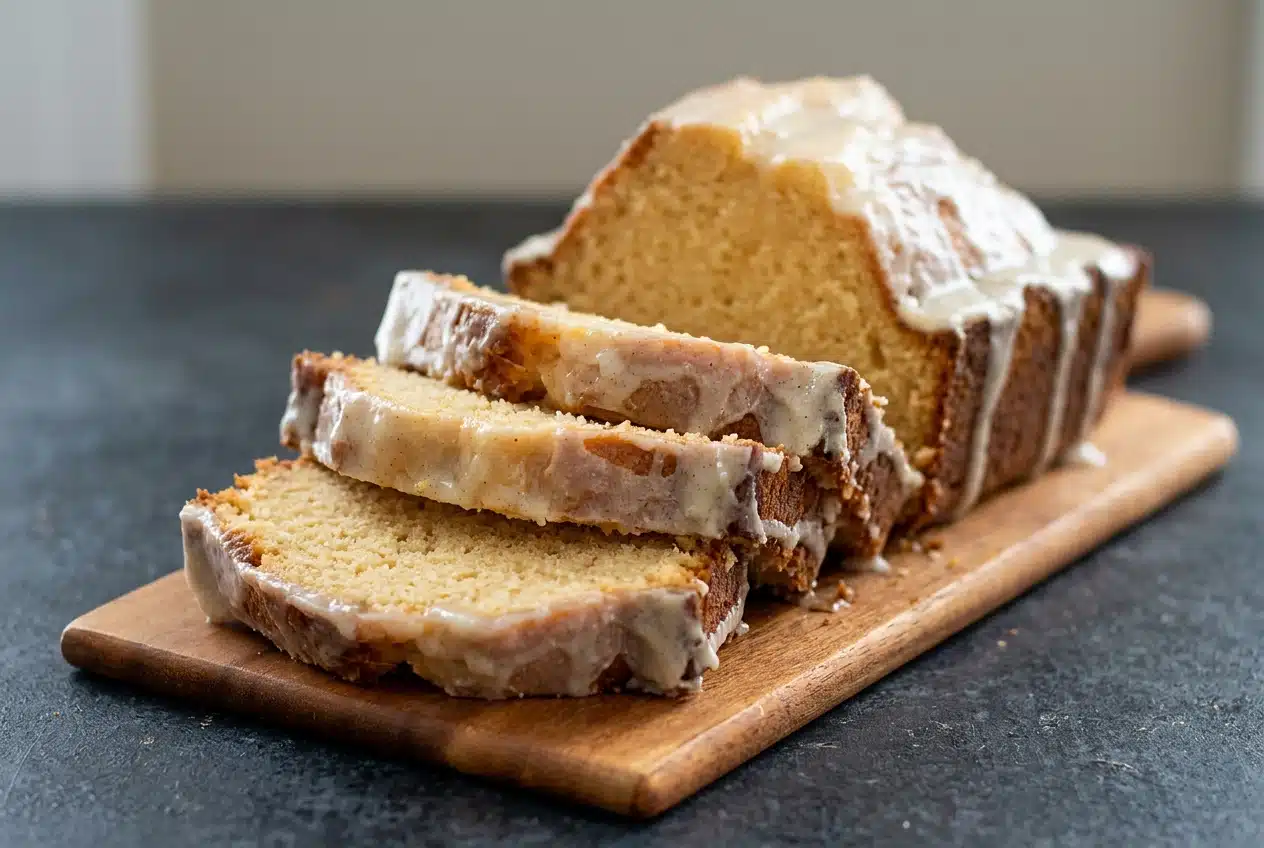
Eggnog bread is a moist, cake-like holiday quick bread made with eggnog, nutmeg, cinnamon, and vanilla, then finished with a sweet eggnog glaze. No yeast or rising time is needed. Mix gently for a tender crumb and bake until a center tester comes out clean.
This eggnog bread brings the creamy flavor of the holiday drink into a sliceable loaf, with eggnog in both the batter and glaze. Rum extract adds a familiar bakery-style aroma alongside the warm spices.
It fits a Christmas brunch table just as comfortably as an afternoon coffee break. The batter comes together by hand, and the glaze adds a sweet finish without frosting or decorating. Watch for that slow ribbon of glaze.
Measure the flour before mixing, and keep your whisk handy so you can stop as soon as the batter is evenly moistened.
Ingredients and Flavor Building Blocks
Eggnog and oil provide moisture, flour and eggs build structure, and leaveners lift the batter. Sugar adds sweetness, salt balances it, and the spices and extracts supply aroma. The powdered sugar glaze carries another layer of eggnog flavor.
- 2 1/2 cups all purpose flour
- 2 tsp baking powder
- 1/2 tsp baking soda
- 1/2 tsp salt
- 1/2 tsp ground nutmeg
- 1/4 tsp cinnamon
- 1 1/4 cup whole fat eggnog
- 1 cup granulated sugar
- 1/2 cup vegetable oil
- 2 tsp pure vanilla extract
- 1 tsp rum extract
- 2 large eggs
- Eggnog Glaze:
- 1 cup powdered sugar
- 1 tsp vanilla extract
- 1/8 tsp ground nutmeg
- 2-4 Tbsp eggnog
Full-fat eggnog gives the batter richness and carries the nutmeg flavor into the glaze. Vegetable oil contributes a soft crumb without the firmer texture that butter can develop when chilled; keep the oil for the texture intended here.
All-purpose flour supplies the loaf’s framework, while eggs help hold it together. Baking powder and baking soda provide lift. Whisking them evenly through the flour prevents concentrated pockets of leavener.
Nutmeg leads the spice flavor, with cinnamon in the background. Vanilla rounds out the sweetness, and rum extract adds depth to the batter. In the glaze, powdered sugar supplies body while eggnog controls how easily it drizzles.
How to Make Eggnog Bread
Combine the wet and dry mixtures separately before bringing them together. This distributes the ingredients thoroughly without requiring prolonged mixing once the flour gets wet.
Prep: 10 minutes. Cook: 60 minutes. Total: 3 hours 10 minutes, including cooling and finishing. Yield: 12 servings.
- Heat the oven to 350°F and coat a 9×5-inch or 10-inch loaf pan with butter and flour, or use baking spray.
Cover the bottom, corners, and sides evenly to help the baked loaf release. - Combine the flour, baking powder, baking soda, salt, nutmeg, and cinnamon in a medium mixing bowl, using a whisk to break up clumps and distribute everything.
The dry mixture should look uniform, without visible streaks of spice. - Whisk the eggnog, sugar, oil, vanilla extract, rum extract, and eggs in another bowl, then gently incorporate this mixture into the dry ingredients.
Stop when the batter is evenly moistened and pourable, with no dry flour pockets. - Transfer the batter to the prepared pan, distribute it evenly, and bake for 50–60 minutes.
Look for a golden-brown top and a toothpick or cake tester that emerges clean from the center. - Leave the loaf in its pan for 20 minutes before turning it out onto a cooling rack.
Let it reach room temperature so the crumb firms up for cleaner slicing. - Whisk the powdered sugar, vanilla extract, nutmeg, and enough of the measured eggnog in a small bowl to make a drizzle, then slowly apply all the glaze over the loaf in repeated passes.
The glaze should fall in a ribbon and cling to the surface rather than immediately running off. - Refrigerate the bread in an airtight container or enclosed in plastic wrap.
Keep the wrapping snug or the lid firmly closed to protect the crumb from drying out.
Baking Tips and Troubleshooting Common Quick Bread Issues
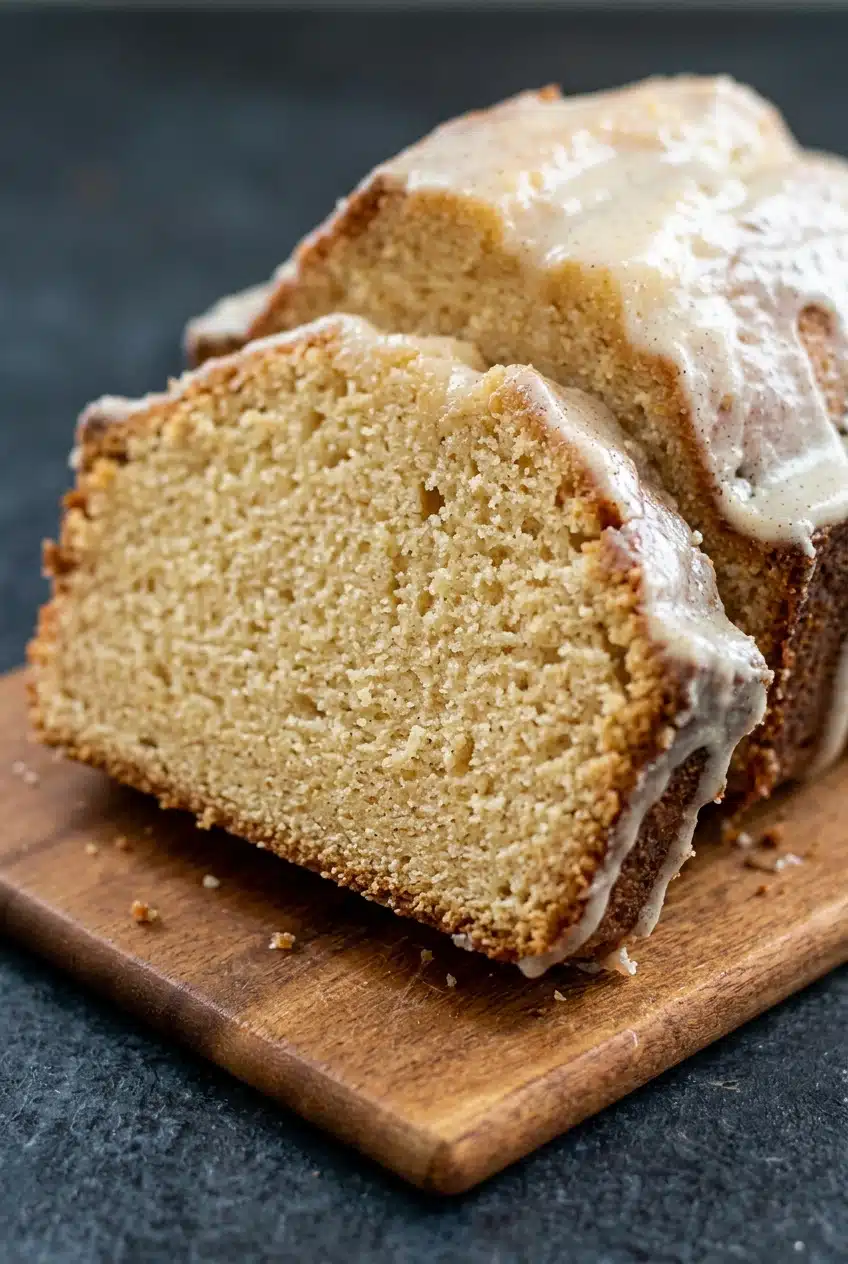
Flour measuring, mixing, and center doneness have the biggest effect on this loaf’s texture. A browned top alone doesn’t tell you whether the middle has finished baking.
Measuring Flour and Mixing Without Overworking
- Dry or heavy crumb: Scooping directly with the measuring cup can pack in excess flour; spoon flour into the cup and level the surface without pressing it down.
- Tough texture or tunnels: Extended beating after adding flour develops more gluten; mix gently by hand and stop when the dry pockets disappear.
- Uneven rise: Poorly distributed leaveners can create an irregular crumb; thoroughly whisk the dry mixture before adding the liquids.
I prefer a hand whisk here because it makes the stopping point easier to judge: evenly moistened batter, not batter beaten perfectly smooth.
Fixing Glaze Consistency and Checking Center Doneness
- Glaze sits in thick blobs: It needs more liquid; gradually work in eggnog until it flows slowly from the whisk.
- Glaze runs straight off: It is too thin, or the loaf is too warm; add powdered sugar gradually and let the bread cool before trying again.
- Brown top but wet center: The crust has colored before the interior finished; continue baking and check the center rather than relying on the edges.
- Drips across the counter: Place the cooling rack over a lined baking sheet before glazing to catch the excess.
A domed top or a crack along the loaf can be normal. Check inside that central area with the tester; wet batter means the loaf needs more baking.
Variations and Pan Options
Keep these ideas separate from the measured recipe above. Pan changes affect doneness checks, while add-ins can change the crumb and flavor balance.
Mini Loaves for Holiday Gifting
Mini loaf pans make convenient individual gifts, but they need earlier doneness checks than a full-size loaf. Pan capacities vary, so don’t assume a fixed loaf count or use the full-size baking time unchanged. Look for the same golden surface and clean center tester.
Nuts, Citrus Zest, and Instant Pudding Variations
- Chopped pecans or walnuts: Either adds crunch against the soft, cake-like crumb.
- Orange zest: Citrus aroma brings a bright contrast to the creamy eggnog flavor.
- Pumpkin pie spice: This optional direction creates a broader spice profile, similar in spirit to spiced pumpkin bread.
- Instant French vanilla pudding: Pudding-enriched versions use a different formulation; don’t add a package to this batter without a recipe developed for it.
Flavor Swaps and Dietary Considerations
Choose substitutions for the flavor or dietary requirement you actually need to address. A different extract changes aroma, while a different eggnog can also affect batter consistency.
Vanilla or Brandy Extract Swaps
Additional vanilla or brandy extract offers an optional alternative when you don’t have rum extract. Vanilla gives a softer flavor; brandy extract provides a different warm aromatic note.
For an alcohol-free requirement, choose flavorings and eggnog specifically labeled alcohol-free. The words “vanilla extract,” “rum extract,” or “brandy extract” alone don’t establish that a product meets that requirement. Real rum is not a direct substitute for concentrated extract here.
Dairy and Allergen Considerations
This loaf contains dairy from eggnog, eggs, and wheat flour. Lactose-free eggnog or plant-based holiday beverages are possible experiments, but their fat, sweetness, and thickness vary, so the finished texture may differ.
Changing the eggnog alone does not address every ingredient in the loaf. Check all product labels against your needs rather than treating a beverage swap as an allergen-free adaptation.
Serving Ideas and Holiday Gifting
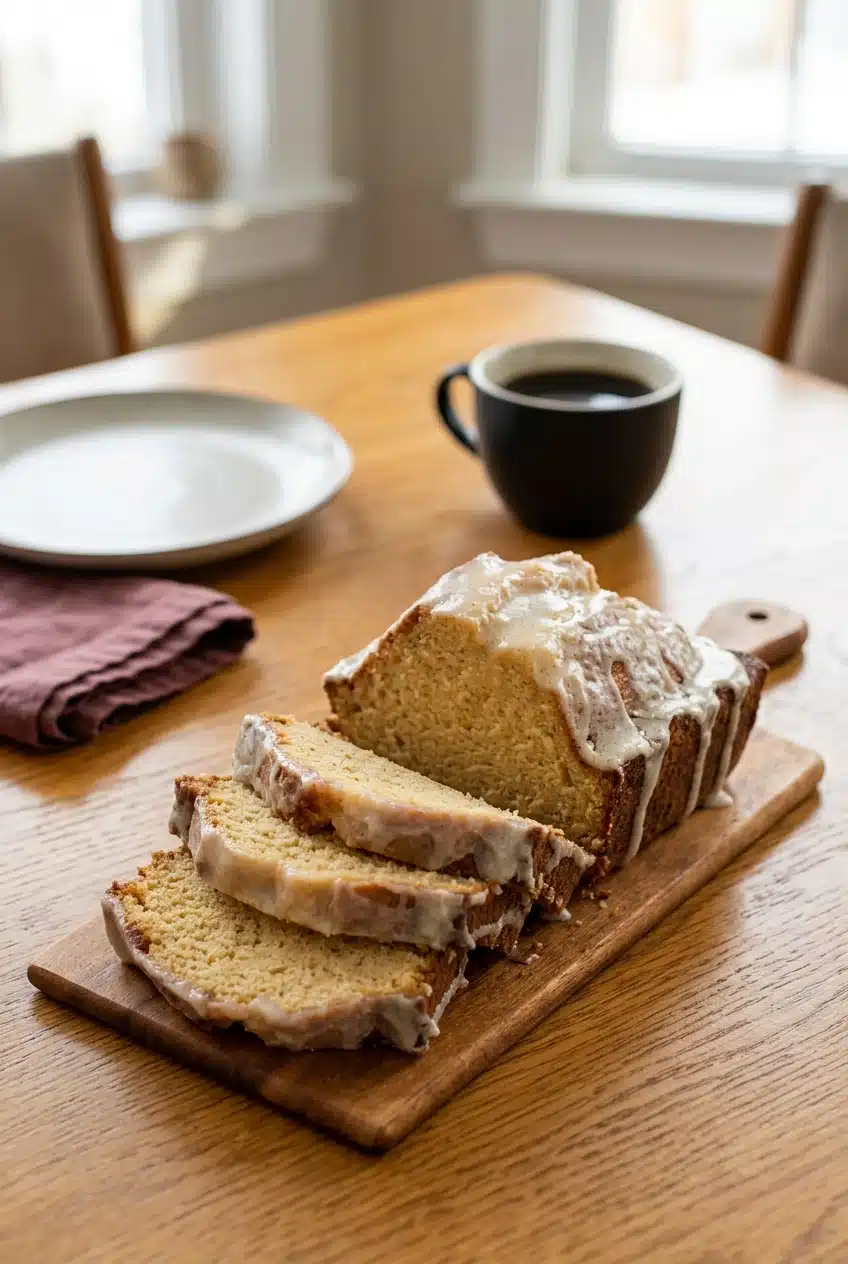
Serve slices at room temperature or slightly warm with morning coffee, hot tea, or spiced cider. For a holiday brunch assortment, cranberry orange bread offers a bright contrast to the creamy spice flavor.
For gifting, let the loaf cool and the glaze set before wrapping it in parchment or a cellophane bag with twine. A lightly crusted glaze smears less, and a fully cooled crumb slices more neatly. Include a reminder to keep the bread chilled.
Storing and Protecting the Glazed Loaf
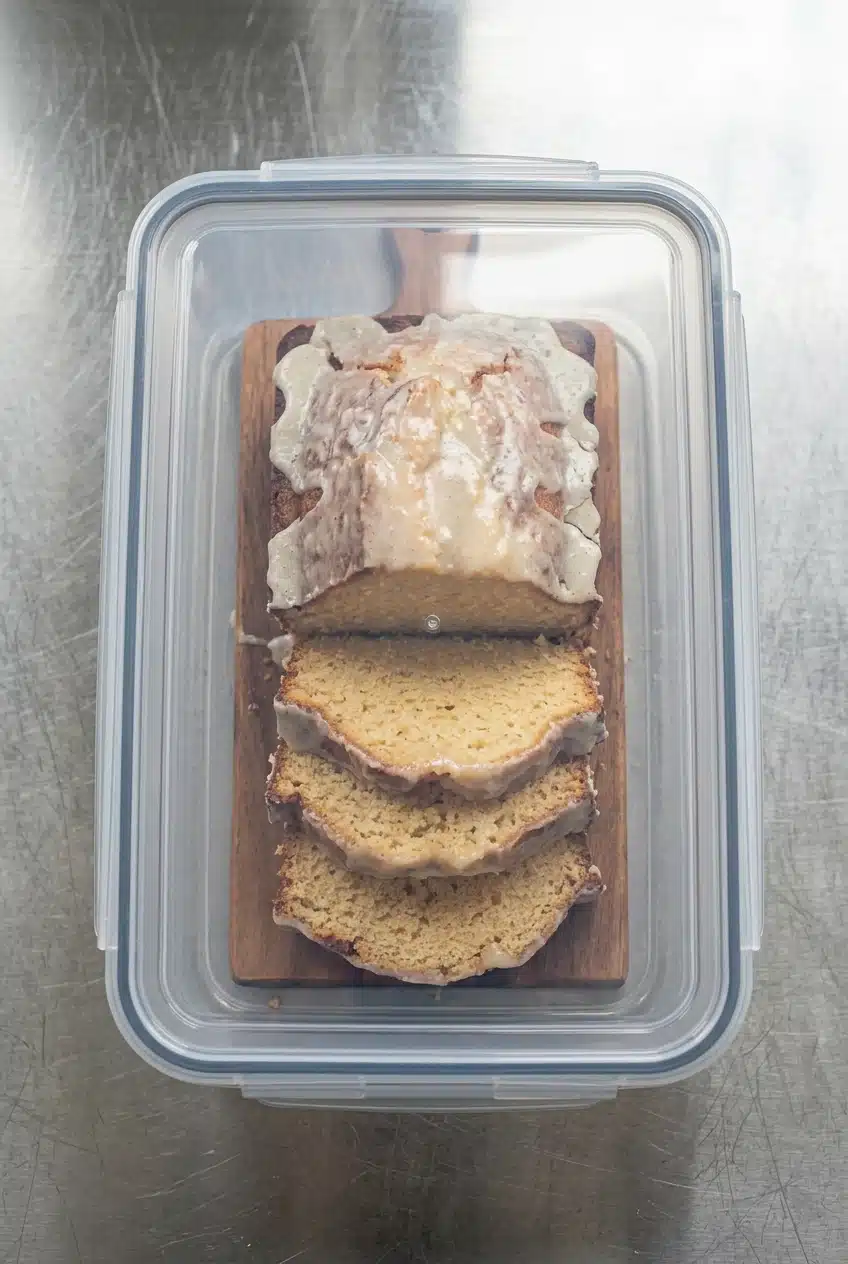
Keep the finished bread refrigerated in an airtight container or wrapped in plastic wrap. Protect exposed cut surfaces so they don’t dry out, and avoid pressing wrapping directly into soft glaze.
Let the glaze set before packing the loaf. For a neat presentation, use a container with enough clearance above the top rather than tight wrapping that pulls away the icing.
Final Thoughts on Baking This Holiday Quick Bread
A tender, spiced crumb and sweet eggnog glaze give this loaf its holiday character. Gentle mixing and a clean center tester matter more than a perfectly smooth batter or an uncracked top.
Follow the measured ingredients and baking schedule above, then give the loaf time to cool before finishing it. Let the glaze fall slowly, set cleanly, and make the first slice worth waiting for.
Frequently Asked Questions
How Do I Make Eggnog Bread Stay Moist?
Spoon and level the flour rather than packing it into the measuring cup, and use the full-fat eggnog listed. Mix only until moistened and remove the loaf when the center tester comes out clean rather than extending baking unnecessarily.
What Can I Substitute for Rum Extract in Eggnog Bread?
Additional vanilla or brandy extract offers an optional flavor alternative. If you need an alcohol-free result, select products labeled for that requirement.
Can I Bake Eggnog Bread in Mini Loaf Pans Instead of a Standard Pan?
Yes, mini loaves are an optional gifting format. Check them earlier than the full-size loaf and use a clean center tester to judge doneness.
Should Leftover Glazed Eggnog Bread Be Refrigerated?
Keep leftover glazed bread refrigerated in an airtight container or wrapped in plastic wrap. Allow the glaze to set before packing so the covering doesn’t smear the finish.
What Mix-Ins or Toppings Work Well With Eggnog Quick Bread?
Optional chopped pecans or walnuts add crunch, while orange zest adds citrus aroma. The eggnog and nutmeg glaze provides a sweet finish that echoes the loaf’s flavor.
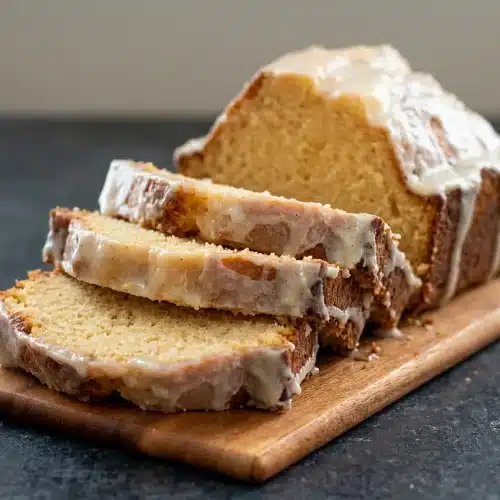
Eggnog Bread

Equipment
- 9×5-inch or 10-inch loaf pan
- Mixing Bowls
- Whisk
- Cooling Rack
Ingredients
- 2 1/2 cups all purpose flour
- 2 tsp baking powder
- 1/2 tsp baking soda
- 1/2 tsp salt
- 1/2 tsp ground nutmeg
- 1/4 tsp cinnamon
- 1 1/4 cup whole fat eggnog
- 1 cup granulated sugar
- 1/2 cup vegetable oil
- 2 tsp pure vanilla extract
- 1 tsp rum extract
- 2 large eggs
Eggnog Glaze
- 1 cup powdered sugar
- 1 tsp vanilla extract
- 1/8 tsp ground nutmeg
- 2-4 Tbsp eggnog
Instructions
- Heat the oven to 350°F and coat a 9×5-inch or 10-inch loaf pan with butter and flour, or use baking spray. Cover the bottom, corners, and sides evenly to help the baked loaf release.
- Combine the flour, baking powder, baking soda, salt, nutmeg, and cinnamon in a medium mixing bowl, using a whisk to break up clumps and distribute everything. The dry mixture should look uniform, without visible streaks of spice.
- Whisk the eggnog, sugar, oil, vanilla extract, rum extract, and eggs in another bowl, then gently incorporate this mixture into the dry ingredients. Stop when the batter is evenly moistened and pourable, with no dry flour pockets.
- Transfer the batter to the prepared pan, distribute it evenly, and bake for 50–60 minutes. Look for a golden-brown top and a toothpick or cake tester that emerges clean from the center.
- Leave the loaf in its pan for 20 minutes before turning it out onto a cooling rack. Let it reach room temperature so the crumb firms up for cleaner slicing.
- Whisk the powdered sugar, vanilla extract, nutmeg, and enough of the measured eggnog in a small bowl to make a drizzle, then slowly apply all the glaze over the loaf in repeated passes. The glaze should fall in a ribbon and cling to the surface rather than immediately running off.
- Refrigerate the bread in an airtight container or enclosed in plastic wrap. Keep the wrapping snug or the lid firmly closed to protect the crumb from drying out.