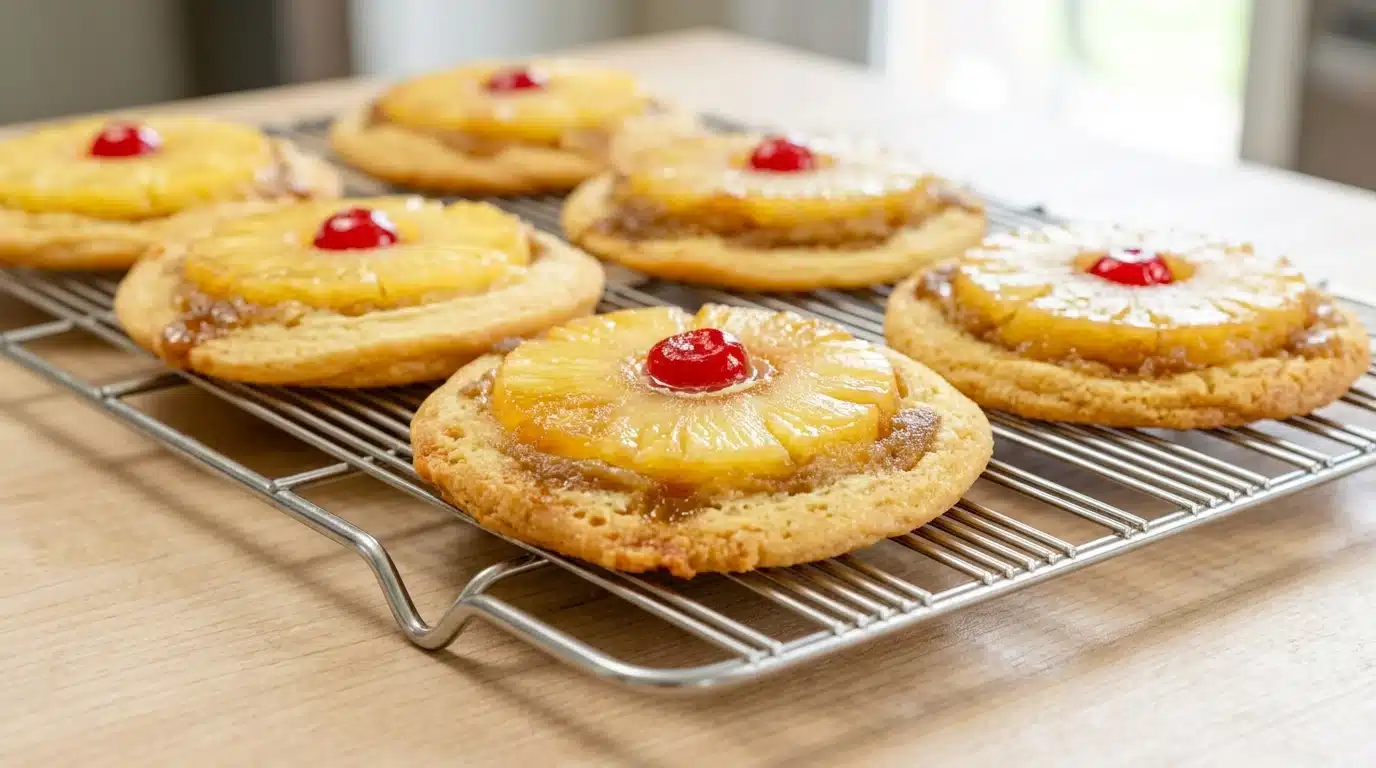
Pineapple upside down cookies bake soft sugar cookie dough over buttery brown sugar, pineapple rings, and maraschino cherries, then flip fruit-side up. Blotting the fruit and sealing the dough edges helps keep the cookie beneath that caramelized topping tender rather than soggy.
These pineapple upside down cookies turn a familiar pineapple-and-cherry dessert into individual treats. Each cookie has a golden perimeter, a soft vanilla center, and a glossy fruit topping that needs no frosting.
The assembly takes a little care, especially when drying the fruit and fitting the dough into the pan. Those details make the difference between a tidy cookie and a loose, syrupy topping. Start with the fruit.
Set paper towels beside your drained pineapple and cherries so you can blot both before filling the pan.
Ingredients You Need
Butter and brown sugar create the rich fruit topping, while flour, egg, fats, sugars, and leaveners build a soft cookie underneath. Vanilla adds aroma, pineapple brings tart sweetness, and the cherry gives each cookie its familiar colorful center.
- ½ cup Butter Softened
- ½ cup Granulated Sugar (100g)
- 1 Egg (Large)
- 1 teaspoon Vanilla Extract
- ½ cup Powdered Sugar (65g)
- ¼ cup Vegetable Oil
- ½ teaspoon Baking Soda
- ½ teaspoon Cream of Tartar
- 2 cups All Purpose Flour (240g)
- Pineapple Rings (Drained)
- Maraschino Cherries (Drained)
- 6 tablespoons Butter (Melted)
- 1 cup Brown Sugar (214g)
The topping: Melted butter moistens the brown sugar, creating the buttery layer that coats the pineapple after the flip. Use the melted butter amount listed above for this mixture; the softened butter belongs in the dough.
The cookie: Softened butter and granulated sugar form the creamed foundation. Vegetable oil and powdered sugar contribute tenderness, egg binds the dough, and flour provides structure. Baking soda and cream of tartar supply the leavening, while vanilla rounds out the flavor.
The fruit: Canned pineapple rings offer a consistent shape, and maraschino cherries fit neatly into their centers. Draining removes the packing liquid, but blotting removes the surface moisture that can otherwise soak into the cookie.
How to Make Pineapple Upside Down Cookies
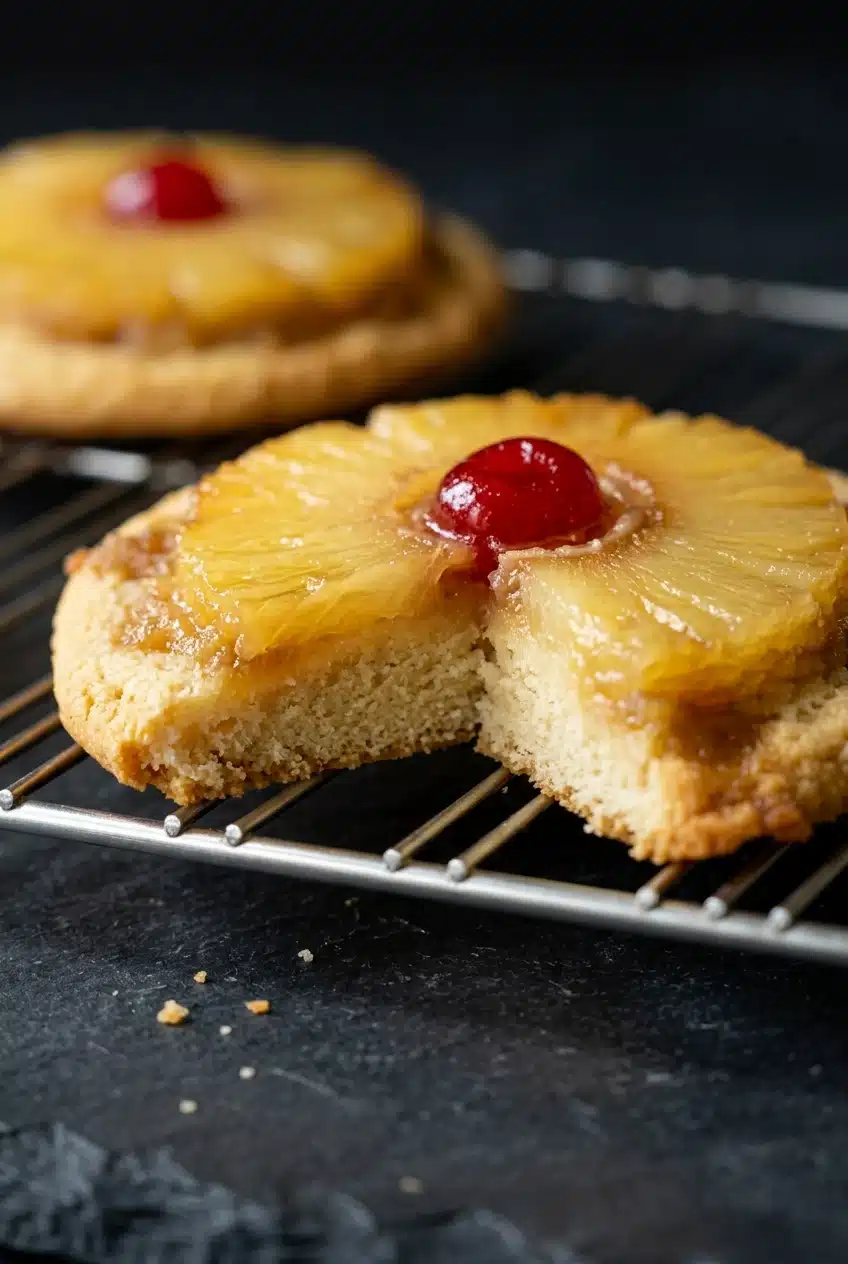
Build the fruit layer first, then cover it with evenly flattened dough. Keep the measurements above and the baking guidance below handy so you can concentrate on the dough’s texture and the fit around each ring.
Pan Preparations
- Set the oven to 350°F.
Let it reach temperature before the assembled cookies go in. - Stir the listed melted butter and brown sugar together in a small bowl.
The sugar should look evenly moistened, with no dry pockets. - Drain the pineapple rings and cherries, then blot their surfaces with paper towels.
The fruit should no longer drip packing liquid into the pan. - Portion 1 tablespoon of the butter and brown sugar mixture into each well you plan to fill, then cover it with a pineapple ring and place a cherry in the opening.
The fruit should sit directly over the sugar layer. - Leave space between occupied wells by staggering their positions across the pan.
Empty neighboring wells give the spreading dough room to stay separate.
Cookie Dough Directions
- Beat the softened butter with the granulated sugar, scraping the bowl as necessary.
Stop when the mixture looks aerated and feels creamy rather than dense. - Beat in the egg and vanilla for 2–3 minutes.
The mixture should look evenly blended without streaks of egg. - Work in the vegetable oil and powdered sugar gradually while continuing to beat.
Look for a smooth, creamy mixture with a pale yellow color. - Mix in the flour, baking soda, and cream of tartar until incorporated.
No loose flour should remain around the bowl or through the dough. - Portion the dough with a #24 cookie scoop and flatten each portion in your palm into a disc about 3 inches across.
A consistent thickness helps the cookies bake at a similar pace. - Cover each fruit-filled well with a dough disc and press its perimeter down along the inside edges.
The dough should surround the pineapple with a continuous seal rather than leaving open gaps. - Bake at 350°F for 8–10 minutes, checking the exposed dough for doneness.
The edges should show light golden browning, and the center should look matte instead of shiny. - Using oven mitts, carefully invert the hot pan onto a parchment-lined cookie sheet.
The released cookies should have their pineapple-and-cherry topping facing upward. - Leave the cookies to cool before serving.
The soft cookie and buttery topping will firm as they lose heat.
Baking Tips and How to Prevent Soggy Cookies
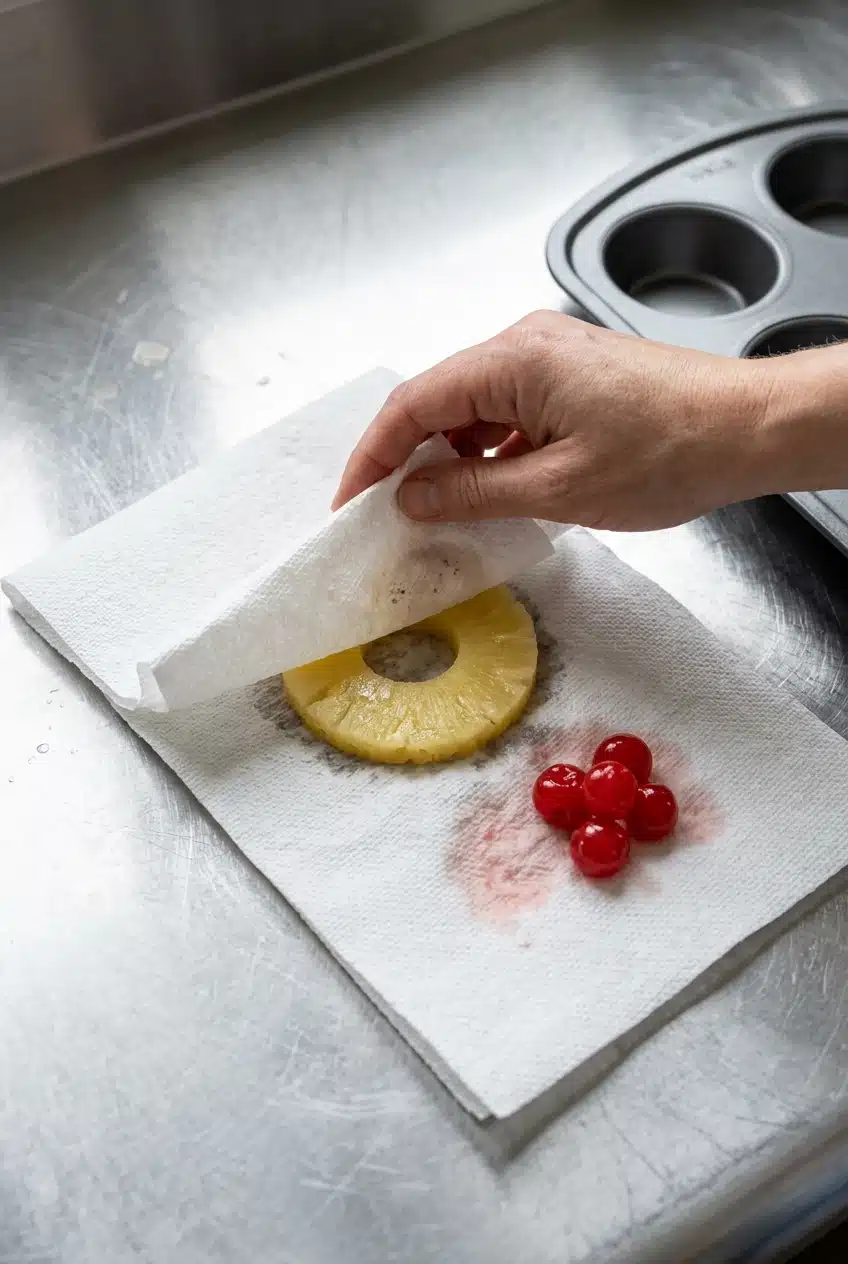
Moisture, pan shape, and dough thickness all affect how neatly these cookies bake and release. Check those details before extending the baking time to fix a texture problem.
Blotting Fruit for Better Texture
- Wet cookie beneath the fruit: Packing liquid may remain on drained rings, so blot both sides between paper towels before assembly.
- A damp patch near the center: Cherries carry syrup too, so dry them rather than focusing only on the pineapple.
- Loose topping after flipping: Gaps around the dough can weaken the cookie’s connection to the fruit, so tuck the perimeter evenly into the well.
I’d give the cherries the same attention as the pineapple: that little pocket of syrup in the center is easy to overlook.
Pan Options and Spacing
A shallow, nonstick muffin-top pan is the most straightforward choice because it supports the ring without surrounding the cookie with deep sides. Check that your pineapple fits the wells before assembling the topping.
- Standard muffin tin: Deeper wells make fitting full rings and inverting the cookies less convenient, so check the fit first rather than forcing the fruit into place.
- Flat baking sheet: Without wells, the butter and brown sugar can spread away from the fruit, making this a less predictable substitute for the upside-down method.
- Cookies merging at the edges: Crowded wells leave little room for spreading, so stagger the filled positions.
- Dry or bulky dough: Packed flour can change the texture, so weigh it or gently spoon it into the measuring cup and level it.
If a deep muffin tin is your only option, mini upside down cakes offer a related dessert better suited to taller individual portions.
Oven Accuracy and Doneness Cues
Use the baking window in the method as your starting point, then check the cookie itself. A glossy center needs more attention even if the perimeter has begun to color; a matte center and lightly golden edges signal the intended finish.
If your oven regularly browns baked goods unevenly, check its temperature with an oven thermometer. A small initial batch can also reveal spreading or browning issues before you fill the remaining pan wells.
Easy Variations: Cake Mix, Fresh Fruit, and Lighter Swaps
Keep these options separate from the scratch dough above. Each changes the flavor or structure, so the same baking window may not apply.
For a full-size version of the buttery fruit topping, try pineapple upside down cake rather than adapting the cookie dough into a larger pan.
Cake Mix Pineapple Upside Down Cookies
Yellow cake mix offers a vanilla-forward shortcut, while pineapple cake mix leans further into the fruit flavor. Use a dedicated cake-mix cookie dough formula, not the cake batter directions on the box, when exploring this option.
The prepared mix replaces the scratch cookie dough, not just the flour. Expect a different crumb and sweetness level, and don’t assume its dough will spread or bake exactly like this one.
Fresh Pineapple Swap
Fresh pineapple can bring a brighter, sometimes less sweet flavor than canned rings, though ripeness makes a difference. Its thickness and moisture also vary more, which affects how neatly it fits beneath the dough.
Choose slices that fit your pan and give their surfaces the same blotting attention as canned fruit. Fresh pineapple is still juicy, even without packing syrup.
Frosted Sugar Cookie Style
- Choose a frosted sugar cookie interpretation when you want the pineapple-and-cherry look without an upside-down fruit layer.
- Use pineapple-flavored icing for the tropical flavor.
- Finish with a cherry in the center for the familiar presentation.
Lighter or Reduced-Sugar Considerations
Reducing sugar or changing the fats affects more than sweetness. These ingredients influence spreading, tenderness, browning, and the fruit topping’s consistency. Use a formula developed for your preferred substitutions rather than expecting direct swaps to produce the same cookie, and avoid treating the variation as a promised health benefit.
Storage and Serving Prep
Let the cookies cool completely before closing them in an airtight container. Trapping warmth adds condensation to an already moist fruit topping.
Arrange them fruit-side up and avoid pressing other cookies onto the topping. The cookie beneath the pineapple can soften as it sits, so serving after cooling gives you the clearest contrast between the tender dough and caramelized fruit.
For leftovers, keep the container covered and refrigerate as a cautious choice rather than assuming these keep like plain, dry cookies. Add powdered sugar or whipped cream only when you’re ready to serve.
How to Serve These Cookies
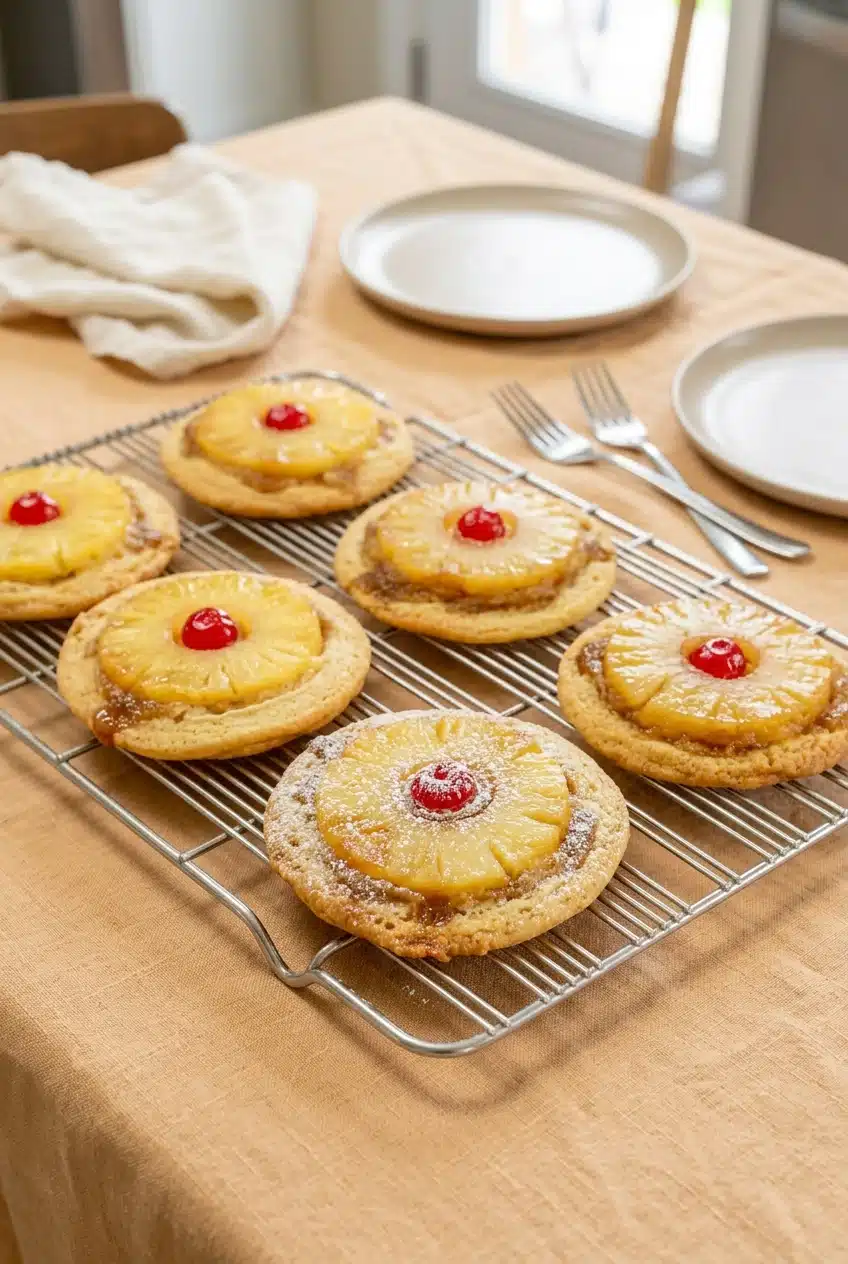
Serve the cookies fruit-side up so the pineapple rings and cherry centers stay intact. They’re easy to arrange individually for a brunch, summer barbecue, potluck, or birthday dessert platter.
- For a light finish: Dust cooled cookies with powdered sugar just before plating.
- For a plated dessert: Add a dollop of whipped cream at serving time.
- For a larger dessert spread: Pair them with pineapple bliss bars for another pineapple treat in a different format.
Final Thoughts
The upside-down flip gives these soft cookies their buttery pineapple topping and bright cherry center. Thorough fruit blotting and an even dough seal do most of the work toward keeping each cookie together.
Check the ingredient amounts and baking window before starting, then watch for golden edges and a matte center. Give the cookies time to cool, and let that fruit topping take the spotlight.
Frequently Asked Questions
How Do I Prevent Pineapple Upside Down Cookies From Getting Soggy?
Drain and blot both the pineapple rings and maraschino cherries. Seal the flattened dough around the fruit instead of leaving gaps at the edges. Cool the cookies completely before covering them.
What Pan Should I Use if I Do Not Own a Muffin-Top Pan?
A standard muffin tin is an option only if the fruit fits comfortably, though its deeper wells make assembly and release less convenient. A flat sheet does not contain the buttery topping like a well does, so don’t expect an identical result.
How Do I Know When Pineapple Upside Down Cookies Are Finished Baking?
Look for lightly golden edges and a center that no longer looks glossy. Use the baking window in the method alongside those cues rather than relying on the clock alone.
Can I Make Pineapple Upside Down Cookies Using Cake Mix?
Yes, yellow or pineapple cake mix can provide an optional shortcut dough. Follow a dedicated cake-mix cookie formula rather than adding dry mix to the scratch dough above.
Do Pineapple Upside Down Cookies Need to Be Refrigerated?
For leftovers, refrigeration is a cautious choice for these moist, fruit-topped cookies. Let them cool completely, keep them covered, and follow the texture-protection tips above.
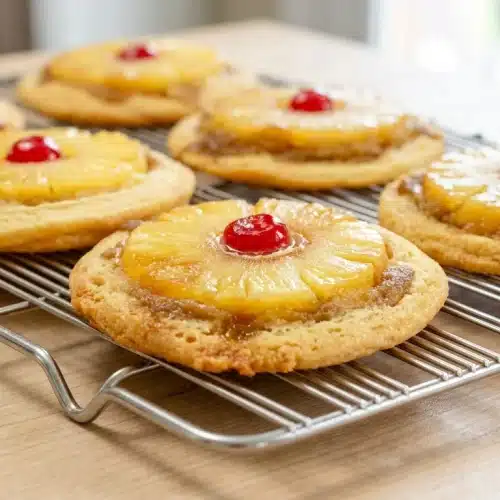
Pineapple Upside Down Cookies

Equipment
- Muffin-top pan
- Mixing Bowls
- #24 cookie scoop
- Cookie sheet
- Parchment Paper
Ingredients
- ½ cup Butter Softened
- ½ cup Granulated Sugar (100g)
- 1 Egg (Large)
- 1 teaspoon Vanilla Extract
- ½ cup Powdered Sugar (65g)
- ¼ cup Vegetable Oil
- ½ teaspoon Baking Soda
- ½ teaspoon Cream of Tartar
- 2 cups All Purpose Flour (240g)
- Pineapple Rings (Drained)
- Maraschino Cherries (Drained)
- 6 tablespoons Butter (Melted)
- 1 cup Brown Sugar (214g)
Instructions
Pan Preparations
- Set the oven to 350°F. Let it reach temperature before the assembled cookies go in.
- Stir the listed melted butter and brown sugar together in a small bowl. The sugar should look evenly moistened, with no dry pockets.
- Drain the pineapple rings and cherries, then blot their surfaces with paper towels. The fruit should no longer drip packing liquid into the pan.
- Portion 1 tablespoon of the butter and brown sugar mixture into each well you plan to fill, then cover it with a pineapple ring and place a cherry in the opening. The fruit should sit directly over the sugar layer.
- Leave space between occupied wells by staggering their positions across the pan. Empty neighboring wells give the spreading dough room to stay separate.
Cookie Dough Directions
- Beat the softened butter with the granulated sugar, scraping the bowl as necessary. Stop when the mixture looks aerated and feels creamy rather than dense.
- Beat in the egg and vanilla for 2–3 minutes. The mixture should look evenly blended without streaks of egg.
- Work in the vegetable oil and powdered sugar gradually while continuing to beat. Look for a smooth, creamy mixture with a pale yellow color.
- Mix in the flour, baking soda, and cream of tartar until incorporated. No loose flour should remain around the bowl or through the dough.
- Portion the dough with a #24 cookie scoop and flatten each portion in your palm into a disc about 3 inches across. A consistent thickness helps the cookies bake at a similar pace.
- Cover each fruit-filled well with a dough disc and press its perimeter down along the inside edges. The dough should surround the pineapple with a continuous seal rather than leaving open gaps.
- Bake at 350°F for 8–10 minutes, checking the exposed dough for doneness. The edges should show light golden browning, and the center should look matte instead of shiny.
- Using oven mitts, carefully invert the hot pan onto a parchment-lined cookie sheet. The released cookies should have their pineapple-and-cherry topping facing upward.
- Leave the cookies to cool before serving. The soft cookie and buttery topping will firm as they lose heat.