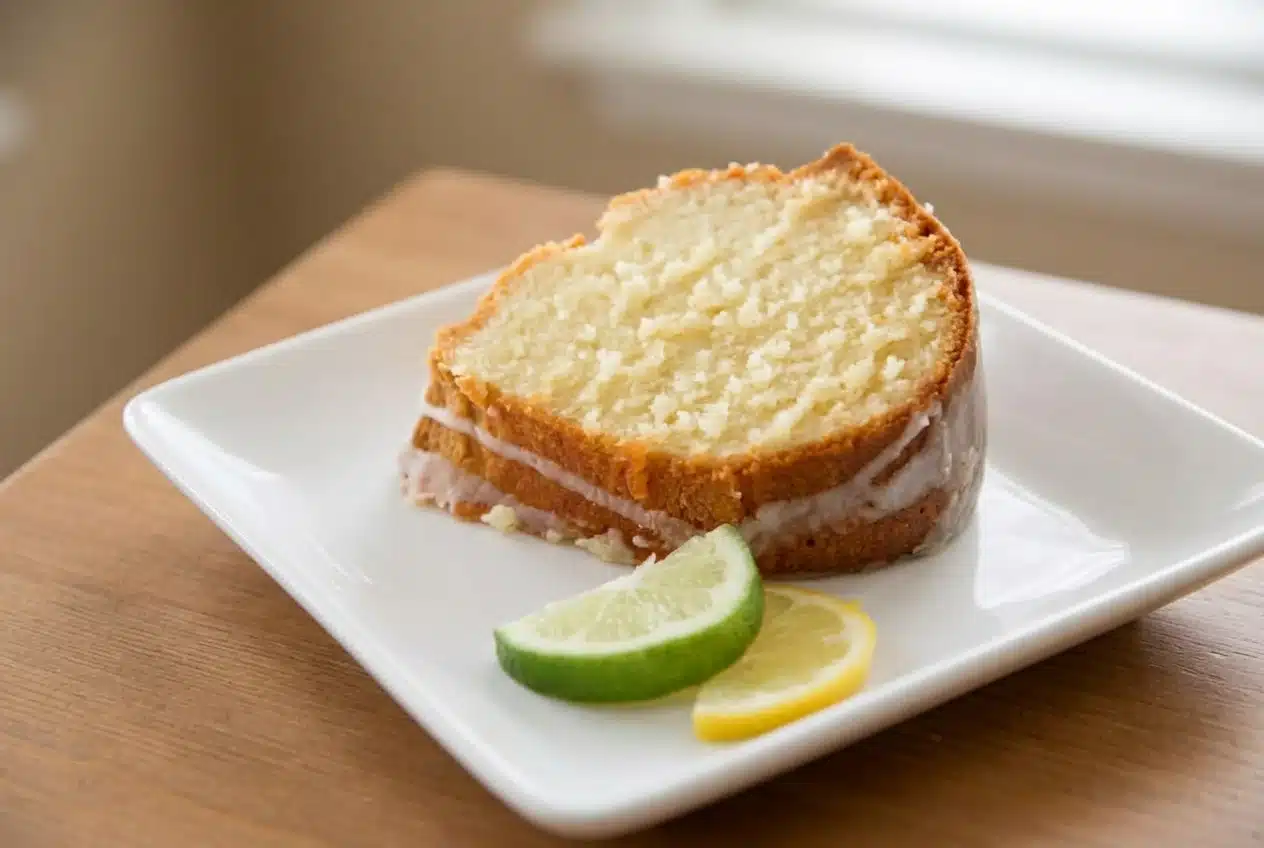
Make Southern 7-Up pound cake by creaming butter, shortening, and sugar, adding eggs and citrus, then alternating flour with soda and cream. Bake in a prepared Bundt pan, cool completely, and drizzle with citrus glaze for a velvety, buttery crumb.
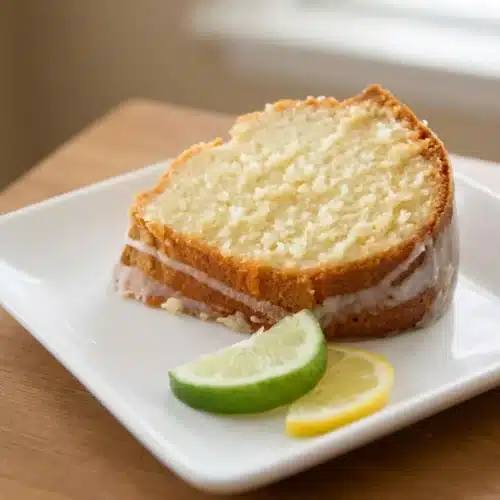
This 7up pound cake recipe is a from-scratch lemon-lime Bundt cake with heavy whipping cream, fresh zest, and a sweet soda glaze. It has the close, rich crumb you expect from pound cake, with citrus to balance the butter.
The mixing method matters more than fancy finishing. Patient creaming and gentle flour mixing build the texture, while the glaze settles into the cake’s ridges. Those citrus ribbons are worth the wait.
I look for softened butter that yields to gentle pressure but still holds its shape, rather than butter with shiny, melted edges.
Key Ingredients for Old-Fashioned 7-Up Pound Cake
Each ingredient contributes to the cake’s structure, moisture, or flavor: flour and eggs support the crumb, fats add richness, soda and cream supply moisture, and citrus brightens both batter and glaze.
- 3 cups all-purpose flour (sifted)
- ½ teaspoon salt
- 1 cup unsalted butter (softened)
- ½ cup butter-flavored shortening
- 3 cups granulated sugar
- 5 large eggs (room temperature)
- 1 teaspoon vanilla extract
- 1 teaspoon lemon extract
- 1 teaspoon lime extract ((optional))
- Zest of 1 lemon
- Zest of 1 lime
- 1 cup 7-Up soda ( (room temperature))
- ¼ cup heavy whipping cream ((room temperature))
- 1 cup powdered sugar
- 2 tablespoons 7-up
- ⅛ teaspoon vanilla extract ((optional))
- ⅛ teaspoon lemon extract ((optional))
- ⅛ teaspoon lime extract ((optional))
- salt ((generous pinch))
- lemon zest
- lime zest
7-Up: The carbonated lemon-lime soda contributes moisture, sweetness, citrus flavor, and bubbles that can assist aeration. It doesn’t replace careful creaming. This batter contains no baking powder or baking soda.
Butter, shortening, and cream: Butter brings dairy flavor, shortening supports tenderness, and heavy cream adds richness for a velvety bite. Room-temperature eggs, cream, and soda blend more smoothly with softened fat than cold ingredients do.
Flour, eggs, and citrus: Sifted all-purpose flour supplies structure, while eggs help bind and set the batter. Zest adds fragrant citrus oils; extracts reinforce the flavor without adding much liquid. Keep the optional lime extract optional.
The powdered sugar begins the glaze portion of the list. Use the soda, optional extracts, and generous pinch of salt listed after it for the glaze; reserve the final lemon and lime zest for the optional garnish.
How to Make 7-Up Pound Cake from Scratch
Follow the mixing order so the batter builds volume before the flour goes in. The finished batter should look fluffy and evenly blended, not beaten until thin.
- Set the oven to 325 °F and coat a 12-cup Bundt pan generously with grease, followed by a light flour dusting.
The coating should reach the center tube and every fluted recess. - Distribute the salt through the sifted flour with a whisk in a large bowl, then reserve the mixture.
The dry mixture should look uniform, without visible pockets of salt. - Beat the softened butter with the shortening in another large bowl.
Continue until the fats form one whipped, evenly textured mixture. - Add the granulated sugar and beat at low to low-medium speed for 3 minutes.
The mixture should become noticeably paler and fluffier. - Incorporate each egg separately, fully blending it before adding another.
Look for an even mixture after every addition rather than loose streaks of egg. - Blend in the vanilla and lemon extracts, plus the optional lime extract, then fold through both citrus zests.
Small flecks of zest should spread throughout the mixture. - Work the flour mixture into the creamed mixture in alternating additions with the 7-Up and heavy whipping cream, stopping once combined.
The batter should appear fluffy and uniform, with no dry flour remaining. - Distribute the batter around the prepared Bundt pan using a spoon.
Keep the depth even around the center tube. - Bake for 1 hour and 10–15 minutes, beginning the doneness check at 1 hour.
A toothpick inserted into the thickest part of the cake should emerge clean. - Rest the cake in its pan for about 10 minutes before checking whether it is ready to release.
The pan should feel warm rather than hot to the touch. - Turn the cake out onto a cooling rack and allow it to cool completely.
No warmth should remain before you add the glaze. - Stir the powdered sugar, glaze soda, optional glaze extracts, and generous pinch of salt into a smooth glaze, then drizzle it over the cooled cake and add the final citrus zests if desired.
The glaze should fall in ribbons that cling to the crust.
Expert Tips and Troubleshooting for a Tender, Moist Crumb
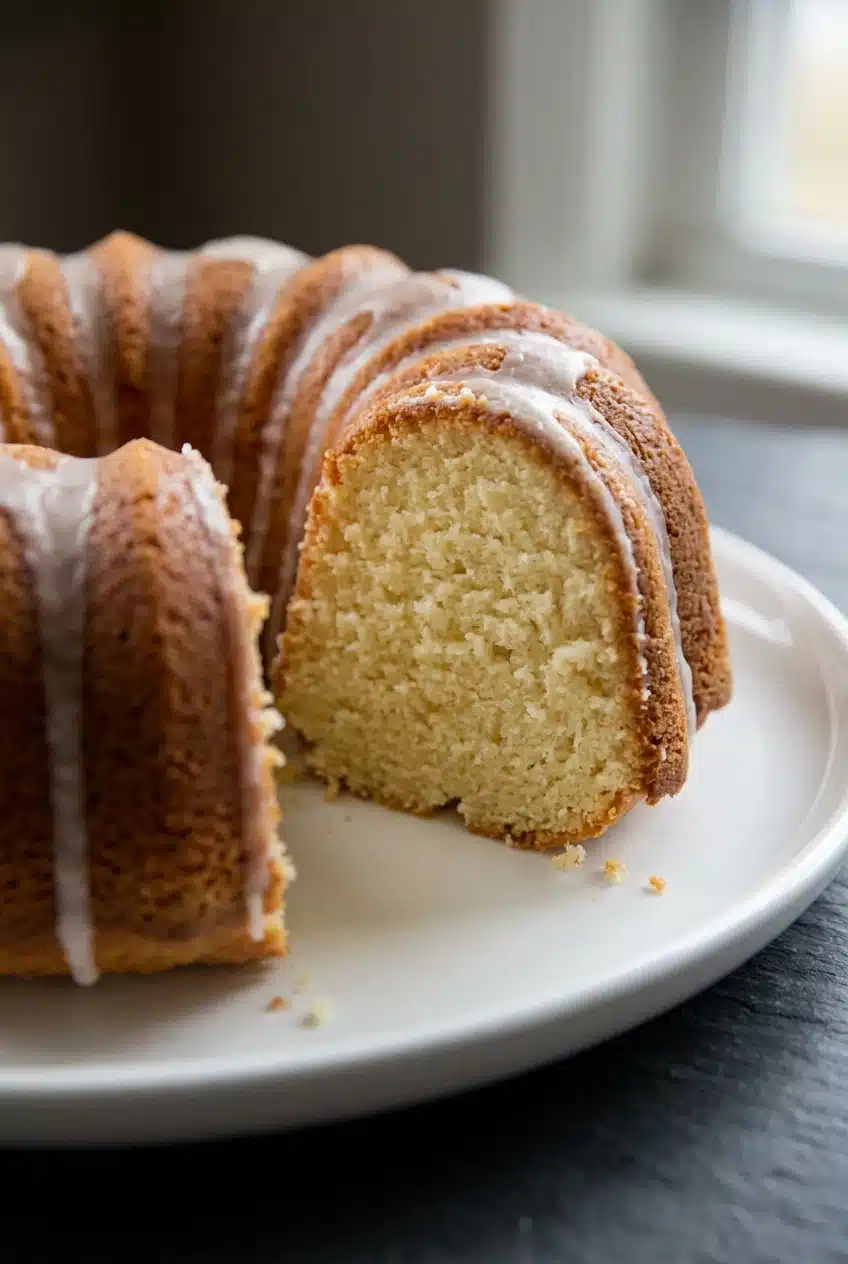
Most pound cake problems begin with uneven mixing, missed pan crevices, or rushing the cooling stage.
How to Prevent Bundt Pan Sticking
- Crust stuck in the ridges: Bare patches can grip the cake; grease every recess and the center tube, then apply a light, even flour coating.
- Cake tears during release: Turning it out while piping hot can leave it fragile; wait for the warm-pan cue in the method.
- Glaze disappears into the crust: Residual warmth can thin the icing; let the cake cool completely on the rack before drizzling.
Avoiding a Dense, Dry, or Tunneled Crumb
- Heavy texture: Rushed creaming limits aeration; give the sugar stage its full mixing time and watch for a paler, fluffier mixture.
- Uneven or separated batter: Cold eggs or liquids can resist blending into softened fat; use the room-temperature ingredients specified.
- Tough crumb or tunnels: Excess mixing after flour develops more gluten; stop when the batter is uniform and no dry streaks remain.
- Dry slices: Baking beyond doneness draws out moisture; begin checking at the point listed in the method.
- Glaze too stiff or runny: Add soda sparingly to loosen a stiff glaze, or powdered sugar to thicken a runny one.
For an optional aroma boost, rub the batter’s citrus zest into its granulated sugar before mixing. Another optional touch is a gentle counter tap after filling the pan to settle large air pockets; avoid repeatedly banging the pan and losing the air you worked to incorporate.
Popular 7-Up Pound Cake Variations
These optional changes shift flavor or texture. Keep them separate from the ingredient list and method above.
All-Purpose Flour vs. Cake Flour
All-purpose flour gives this cake its classic, substantial structure. Sifted cake flour can produce a finer, lighter crumb, but the two flours absorb liquid differently. Don’t assume an unverified substitution measurement will behave identically.
All-Butter vs. Butter-and-Shortening
Replacing the shortening with unsalted butter emphasizes dairy flavor and can give a slightly tighter crumb. For another butter-forward option, try classic pound cake; the butter-and-shortening combination here favors a particularly tender texture.
Alternative Citrus and Cream Cheese Glazes
A milk-and-lemon glaze gives a more directly lemon-focused finish. A lemon cream cheese glaze adds tang and a thicker, richer coating. Both are optional alternatives to the 7-Up glaze, with different handling and storage needs.
If you prefer a cake-mix shortcut, choose a recipe developed for that approach rather than adding a mix to this scratch formula.
Serving Suggestions and Glaze Pairings
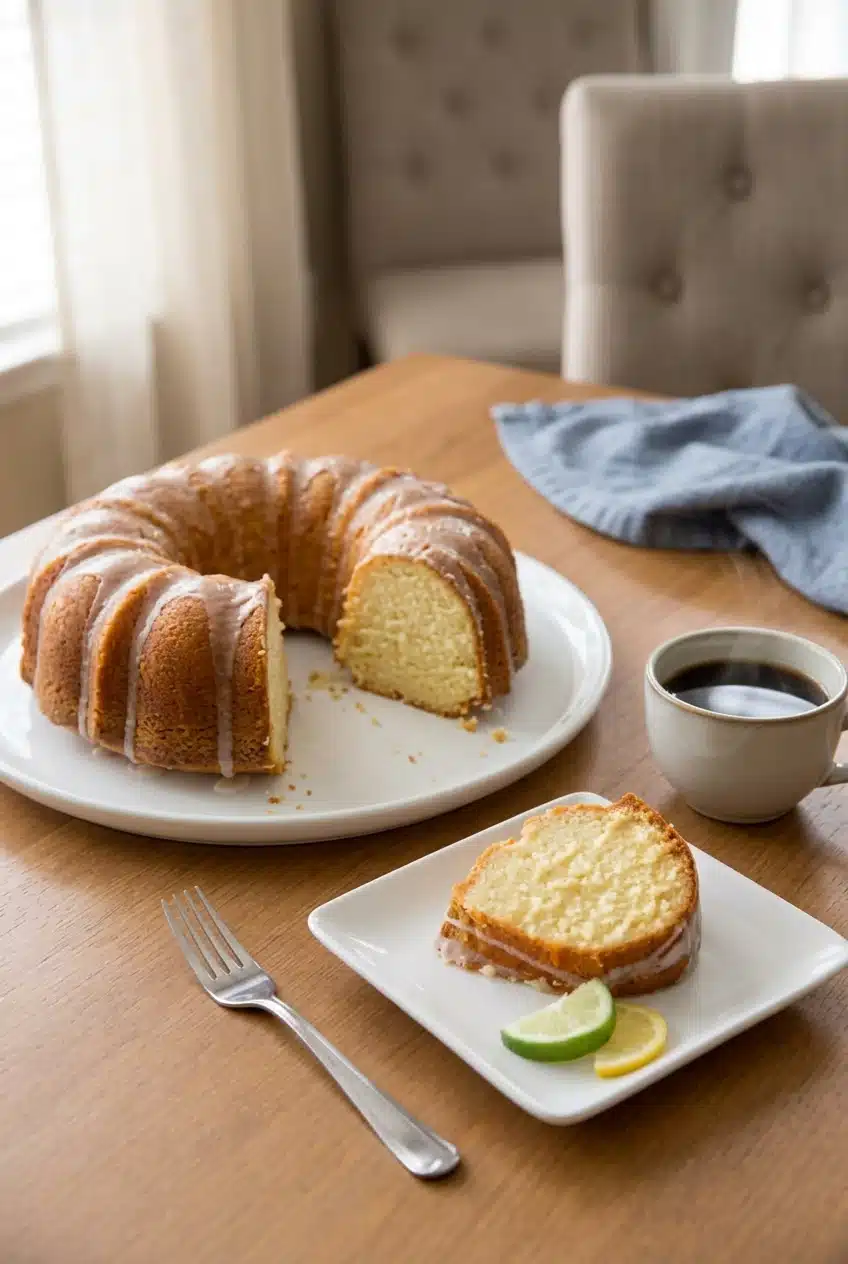
Keep accompaniments light enough to let the buttery citrus crumb remain the focus.
- Fruit and cream: Add macerated strawberries and lightly sweetened whipped cream.
- Ice cream: Serve a slice with vanilla bean ice cream for a creamy contrast.
- Coffee or tea: Pair a plain glazed slice with black coffee or hot tea.
Fresh lemon and lime zest make a fragrant finishing touch. For another fruit-centered dessert, strawberry pound cake offers a different direction.
How to Store and Protect the Crumb
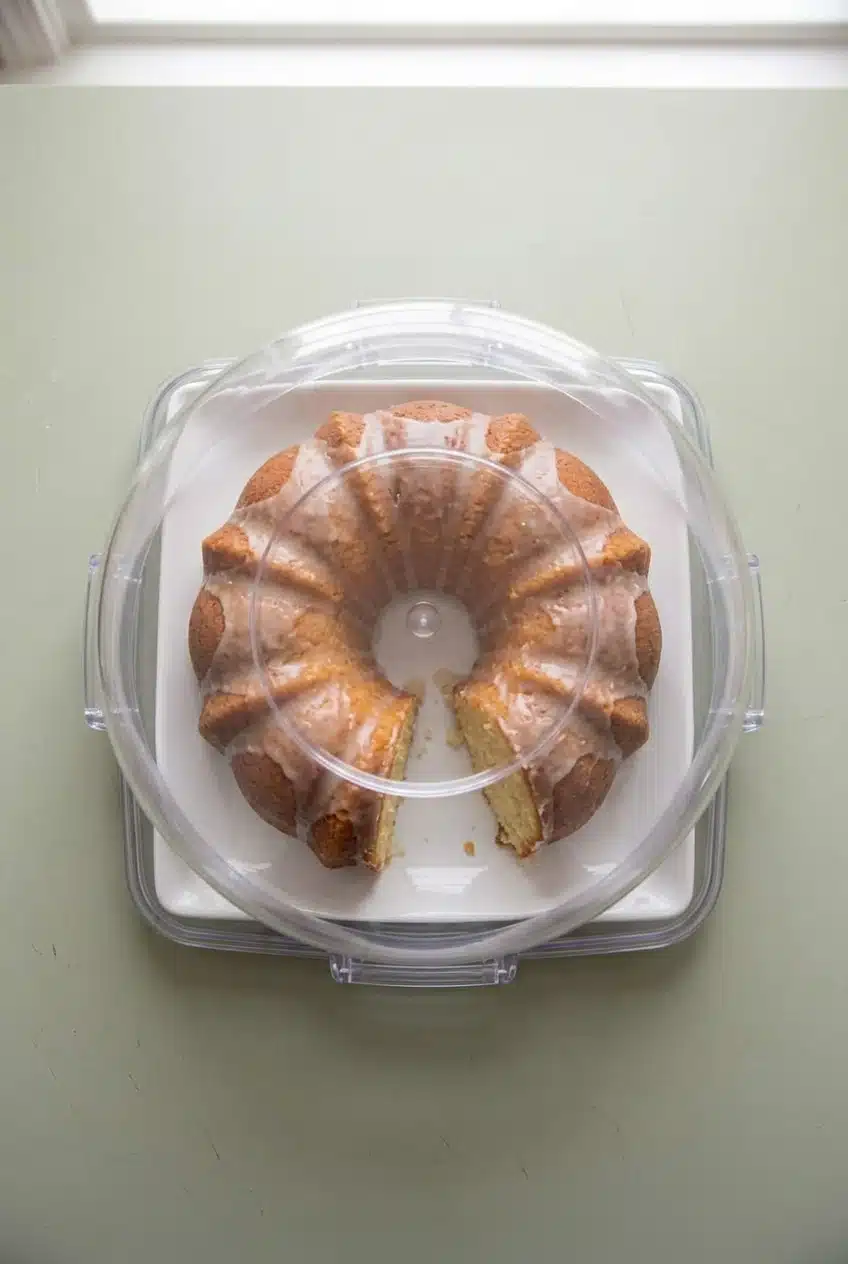
Let the cake cool completely before covering it so trapped warmth doesn’t dampen the crust. Protect cut surfaces with tight wrapping or use a well-sealed cake container to limit drying.
Plan enough cooling time before decorating. If you choose a dairy-based alternative glaze, account for that topping’s storage requirements rather than treating every glazed cake the same.
Final Thoughts on This Classic Southern Cake
Rich butter, cream, and bright lemon-lime flavor give this Southern cake its appeal. The 7-Up glaze adds a sweet citrus finish without hiding the crumb.
Start with room-temperature ingredients, cream patiently, and mix gently after adding flour. Give the cake time to cool, and those glaze ribbons will stay right where you want them.
Frequently Asked Questions
What Does 7-Up Do to a Pound Cake?
It adds moisture, sweetness, and lemon-lime flavor. Its carbonation can assist aeration, but creaming the fats and sugar remains essential for this batter’s texture.
Can I Use Cake Flour Instead of All-Purpose Flour?
Yes, as an optional adaptation for a finer, lighter crumb. All-purpose flour gives the sturdier texture used here; avoid assuming the same measured amount will perform identically.
Can I Make This Recipe With All Butter Instead of Shortening?
Yes, an all-butter variation emphasizes butter flavor. Expect a somewhat tighter crumb than the butter-and-shortening combination.
How Do I Prevent a 7-Up Pound Cake From Sticking to the Bundt Pan?
Grease every ridge and the center tube, then dust lightly with flour. Release the cake when the pan feels warm, rather than immediately after baking or after it has cooled completely.
When Should I Add the Glaze?
Add it after the cake has cooled completely on the rack. A cool crust helps the glaze cling in visible ribbons instead of thinning and soaking into the surface.
7Up Pound Cake Recipe

Equipment
- 12-cup Bundt pan
- Large Mixing Bowl
- Whisk
- Cooling Rack
Ingredients
- 3 cups all-purpose flour sifted
- ½ teaspoon salt
- 1 cup unsalted butter softened
- ½ cup butter-flavored shortening
- 3 cups granulated sugar
- 5 large eggs room temperature
- 1 teaspoon vanilla extract
- 1 teaspoon lemon extract
- 1 teaspoon lime extract optional
- Zest of 1 lemon
- Zest of 1 lime
- 1 cup 7-Up soda room temperature
- ¼ cup heavy whipping cream room temperature
- 1 cup powdered sugar
- 2 tablespoons 7-up
- ⅛ teaspoon vanilla extract optional
- ⅛ teaspoon lemon extract optional
- ⅛ teaspoon lime extract optional
- salt generous pinch
- lemon zest
- lime zest
Instructions
- Set the oven to 325 °F and coat a 12-cup Bundt pan generously with grease, followed by a light flour dusting. The coating should reach the center tube and every fluted recess.
- Distribute the salt through the sifted flour with a whisk in a large bowl, then reserve the mixture. The dry mixture should look uniform, without visible pockets of salt.
- Beat the softened butter with the shortening in another large bowl. Continue until the fats form one whipped, evenly textured mixture.
- Add the granulated sugar and beat at low to low-medium speed for 3 minutes. The mixture should become noticeably paler and fluffier.
- Incorporate each egg separately, fully blending it before adding another. Look for an even mixture after every addition rather than loose streaks of egg.
- Blend in the vanilla and lemon extracts, plus the optional lime extract, then fold through both citrus zests. Small flecks of zest should spread throughout the mixture.
- Work the flour mixture into the creamed mixture in alternating additions with the 7-Up and heavy whipping cream, stopping once combined. The batter should appear fluffy and uniform, with no dry flour remaining.
- Distribute the batter around the prepared Bundt pan using a spoon. Keep the depth even around the center tube.
- Bake for 1 hour and 10–15 minutes, beginning the doneness check at 1 hour. A toothpick inserted into the thickest part of the cake should emerge clean.
- Rest the cake in its pan for about 10 minutes before checking whether it is ready to release. The pan should feel warm rather than hot to the touch.
- Turn the cake out onto a cooling rack and allow it to cool completely. No warmth should remain before you add the glaze.
- Stir the powdered sugar, glaze soda, optional glaze extracts, and generous pinch of salt into a smooth glaze, then drizzle it over the cooled cake and add the final citrus zests if desired. The glaze should fall in ribbons that cling to the crust.