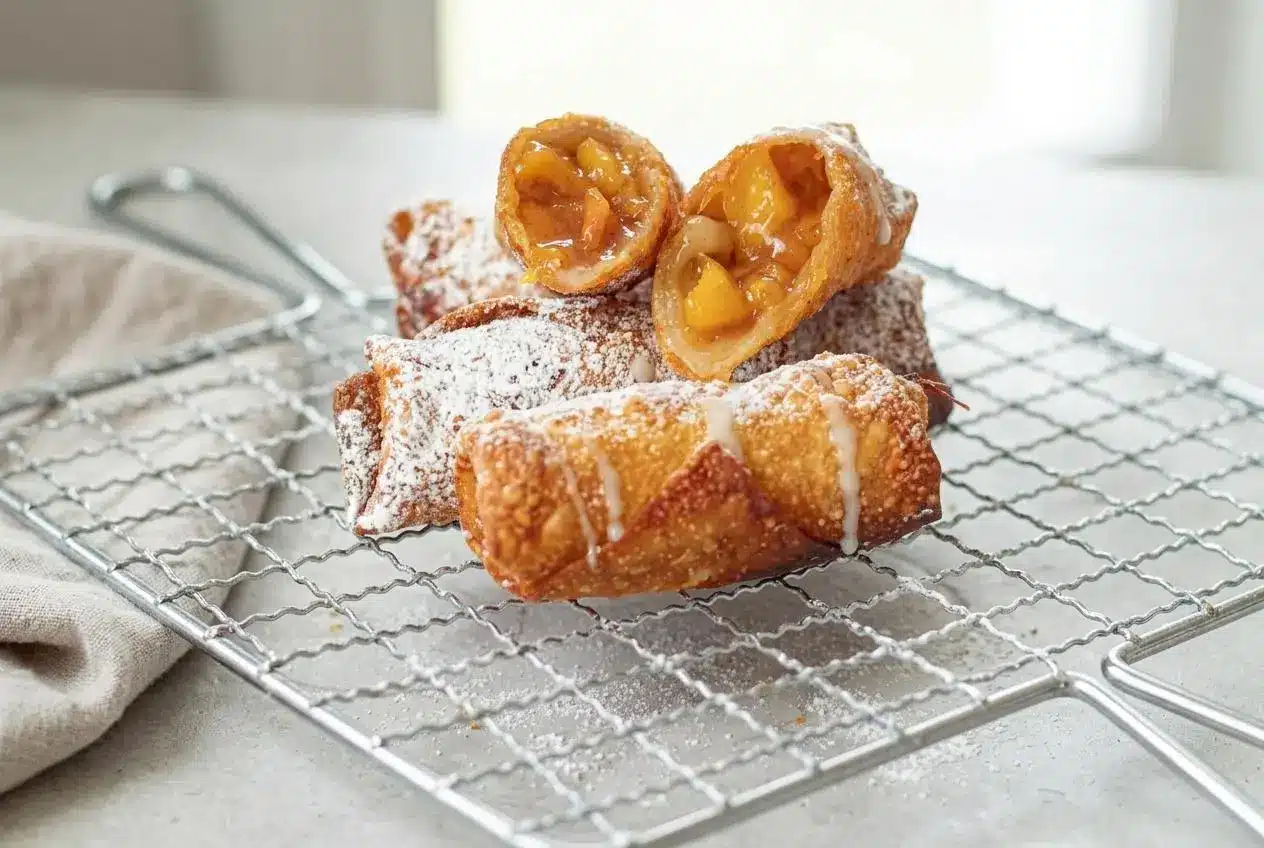
To make these, simmer peaches with butter, brown sugar, cinnamon, and cornstarch until thick, cool the filling completely, wrap it in egg roll wrappers, then deep fry or air fry until crisp and golden.
Peach Cobbler Egg Rolls turn classic cobbler flavors into a warm, crunchy hand-held dessert. You get jammy peaches, cozy spice, and a shell that shatters a little when you bite in.
They smell like warm cinnamon as soon as they hit the oil or air fryer, and the optional vanilla bean dip makes them feel extra dessert-table worthy. The cooling step is what makes everything click.
Spread the cooked peach filling on a plate or shallow bowl to help it cool faster before wrapping.
The Viral Trend Explained
These dessert rolls took off because they mash up two things people already love: the soft, spiced fruit filling of old-fashioned peach cobbler and the crispy shell of an egg roll. It is a smart little shortcut to cobbler flavor without a baking dish.
You may have seen restaurant versions come and go, but homemade is where this dessert really shines. The peach filling tastes fresher, the wrapper stays crisper, and you get to decide whether you want the full deep-fried crunch or a lighter air-fried finish.
The best part is the contrast. Warm, glossy peach cobbler filling inside. Deep golden shell outside. It is dessert with a little drama, in a good way.
Key Ingredients and Substitutions
Each ingredient has a clear job here, from thickening the filling to balancing sweetness and creating that crisp outer shell.
Peach Filling
- 2 cups chopped peaches (fresh, frozen, or canned)
- 1 tablespoon fresh lemon juice
- 2 tablespoon salted butter
- ½ cup light brown sugar
- 4 tsp cornstarch
- ½ teaspoon ground cinnamon
- ½ teaspoon pure vanilla extract
Egg Rolls
- 10 egg roll wrappers
- 2 tbsp water (for brushing)
- vegetable oil (for frying)
- powdered sugar (for dusting (optional))
Vanilla Bean Dipping Sauce
- ¾ cup powdered sugar
- ½ teaspoon vanilla bean paste (or vanilla extract)
- 2-3 tablespoons milk
- pinch salt
The lemon juice keeps the filling from tasting flat and helps balance the brown sugar. Cinnamon and vanilla bring that familiar cobbler warmth, while butter rounds everything out with richness.
The wrappers need a filling that is thick, not runny. That is why cornstarch matters so much here. It gives the peaches a glossy, jam-like texture that stays put inside the roll instead of soaking the wrapper.
Skip flour as a substitute for the thickener. It tends to make the filling look cloudy and taste pasty, which is exactly the wrong vibe for a bright peach dessert.
Selecting Your Peaches
Fresh peaches give the best texture and the most vibrant fruit flavor, especially in peak summer. If they are ripe but still a little firm, they hold up nicely as the filling simmers.
Frozen peaches work very well too. Thaw them first, chop if the pieces are large, and cook until the extra moisture reduces and the mixture turns thick.
Canned peaches are a handy option when you want this dessert without peeling or chopping much fruit. Drain them very well, then chop them so the filling sits neatly inside the wrappers instead of making lumpy pockets.
The Thickener: Why Cornstarch Matters
Cornstarch is what turns the peach mixture from loose fruit syrup into a filling you can actually wrap. As it cooks, the mixture goes from cloudy and thin to glossy and spoonable.
That texture change matters. A thick filling stays centered, seals more cleanly, and helps prevent soggy bottoms and torn wrappers during assembly.
Once it is done, the filling should look closer to a soft compote than a sauce. If it still runs across the pan quickly, it needs a bit more simmering.
I always let the peach filling cool completely before it goes anywhere near the wrappers, because even slightly warm filling can soften them fast and make sealing frustrating.
How to Make Peach Cobbler Egg Rolls
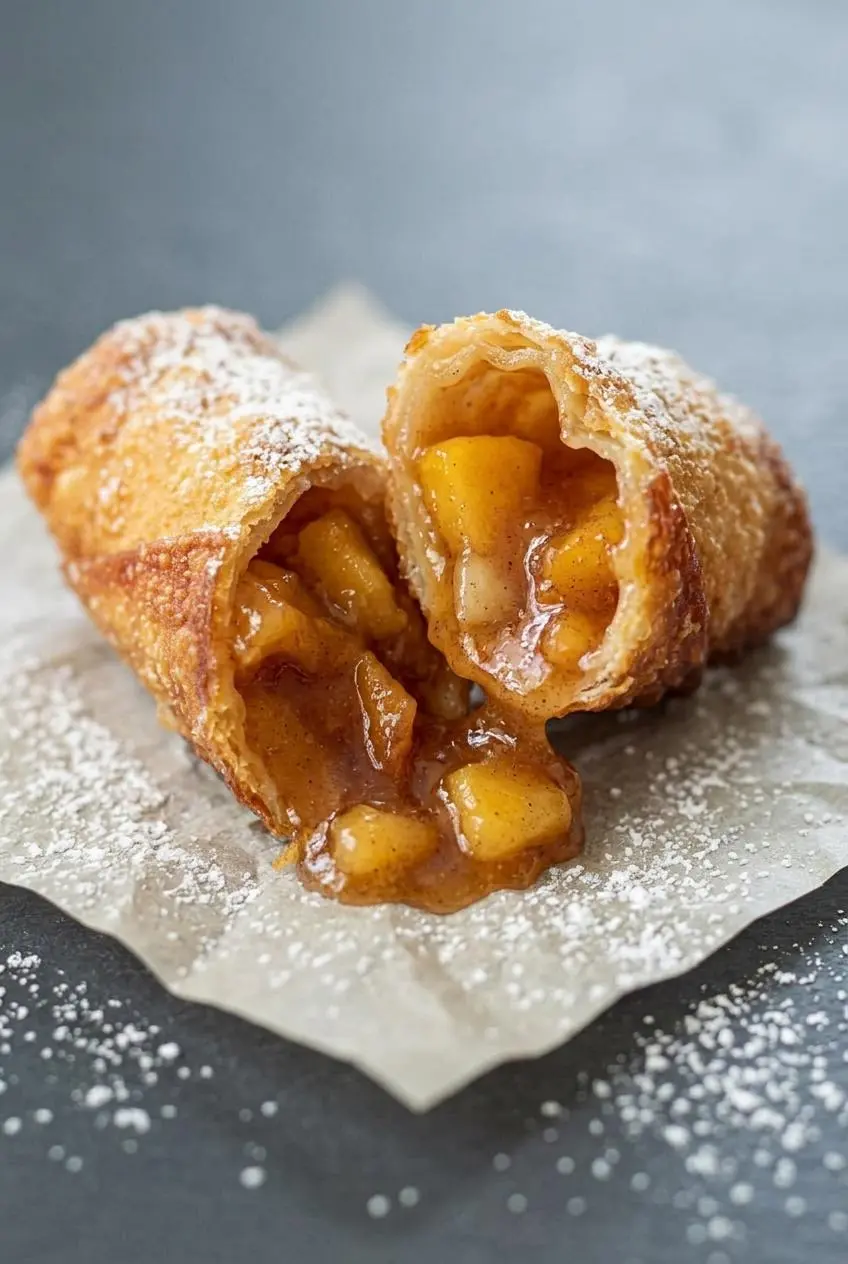
This method is straightforward, but the visual cues matter. Watch the filling thicken, keep the wrappers snug, and fry until the shells turn a deep bubbly gold.
Peach Filling and Assembly
- Add the chopped peaches, lemon juice, butter, brown sugar, cornstarch, and cinnamon to a small saucepan and set it over heat.
Stir as the mixture warms so the cornstarch blends in evenly and the peaches start releasing juice. - Bring the filling to a boil, then lower the heat and simmer for about 10 minutes, stirring now and then, until it thickens; stir in the vanilla extract and let it cool completely.
The mixture will bubble, look cloudy at first, then turn glossy and thick enough to mound on a spoon. - Set one egg roll wrapper on a clean surface with a corner pointing toward you, brush the edges with water, and place about 2 tbsp of cooled peach filling in the center.
The damp edges will look slightly opaque and tacky, which helps create a stronger seal. - Fold the sides inward and roll the wrapper up tightly until fully sealed, then repeat with the remaining wrappers.
A properly rolled egg roll should feel compact with no loose flaps or visible air pockets.
Frying
- Heat the oil to 350°F, then fry the egg rolls in batches for about 5-6 minutes until deep golden brown.
The wrappers should look blistered and evenly browned, with a crisp shell that feels firm when lifted. - Transfer the fried rolls to a wire rack set over paper towel and let them cool slightly, then dust with powdered sugar, if desired.
Keeping them on a rack helps steam escape so the crust stays crisp instead of softening underneath.
Vanilla Bean Dipping Sauce
- Whisk the powdered sugar, milk, and vanilla bean paste together, then add a pinch of salt to taste.
The dip should be smooth, pourable, and thick enough to cling lightly when you drag a spoon through it.
Step-by-Step Wrapping Technique Guide
If egg roll folding feels awkward at first, this layout helps. Once you get the shape right, the process moves quickly.
Place the wrapper like a diamond, with one corner pointing toward you. Spoon the cooled filling into the center, keeping it slightly closer to the bottom corner than the top.
Brush all four edges with water. You do not need to soak the wrapper. A light swipe is enough to make the border sticky and easier to seal.
Lift the bottom corner up over the filling first. Pull it gently so the wrapper hugs the peach mixture instead of draping loosely over it.
Fold in the left and right corners like an envelope. This creates the side walls that keep the filling from escaping during cooking.
Roll upward toward the top corner, keeping light tension as you go. Tight rolls cook more evenly and trap fewer air pockets, which means fewer bursts in hot oil.
Press the top corner down to finish the seal. If a wrapper tears or feels overstuffed, use less filling on the next one. A slotted spoon helps a lot here because it leaves extra syrup behind.
If you love portable peach desserts in general, peach hand pies are another great route with a more traditional pastry shell.
Deep Fried vs. Air Fried Methods
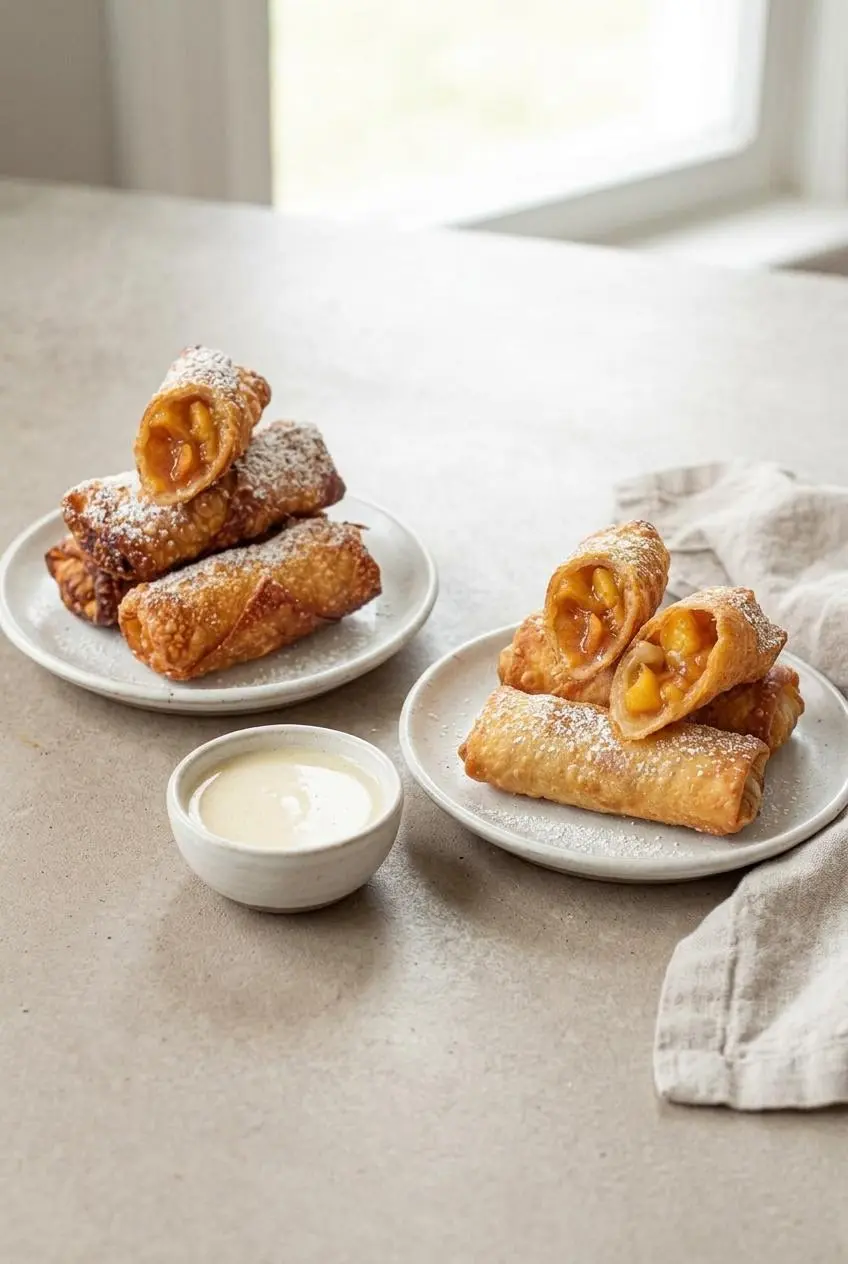
Both methods work, but they do not give exactly the same finish. One leans richer and crunchier, while the other stays lighter and still gets nicely crisp.
The Deep Fried Golden Standard
Deep frying gives the most dramatic crunch and the prettiest blistered surface. The shell browns evenly, the edges stay crisp, and the inside warms through quickly.
Use a thermometer so the oil stays close to the recipe temperature instead of drifting too cool or too hot. If the oil drops too much, the wrappers absorb more oil and lose that light, crisp bite.
Fry in batches and give the rolls space. Crowding the pot can lower the oil temperature fast and lead to uneven color.
This version is the closest to that classic fair-food style texture. Crispy outside, soft peach filling inside, powdered sugar on top, zero subtlety.
The Air Fried Alternative
Air frying is a solid option when you want less oil and easier cleanup. The texture is still crisp, though usually a little drier and less bubbly than deep fried.
Lightly spray the rolls with oil before cooking. That step matters more than people expect, because dry wrappers tend to brown unevenly and stay pale in spots.
Cook them at 380°F to 390°F for 7 to 15 minutes, flipping halfway through, until the wrappers are crisp and golden. The exact timing depends on your air fryer and how cold the filling was when you wrapped the rolls.
For serving, air-fried rolls do especially well with the vanilla dip or a warm caramel drizzle because the lighter shell benefits from that little extra richness.
Troubleshooting Common Mistakes
Most problems come down to filling texture, wrapper handling, or loose rolling. Here is how to fix the common ones.
- The rolls burst while cooking: The filling was too warm, the wrapper was overfilled, or air was trapped inside. Cool the filling completely, use about 2 tbsp, and roll tightly so there are no puffy gaps.
- The wrappers tear during assembly: The peach mixture is probably too wet or too warm. Use a slotted spoon for filling and make sure the compote is thick and cool before you start.
- The rolls turn soggy: The filling needed more simmering or the cooked rolls were stacked while hot. Cook the peach mixture until jammy, then keep the finished rolls on a rack so steam can escape.
- The outside browns too fast: The oil is too hot or the air fryer runs strong. Pull the heat back slightly and cook in smaller batches so the wrapper colors gradually while the center heats through.
- The flavor tastes too sweet: This happens most often with canned peaches packed in syrup. Drain them well and reduce the brown sugar slightly so the peach flavor still comes through.
Storage and Reheating Tips
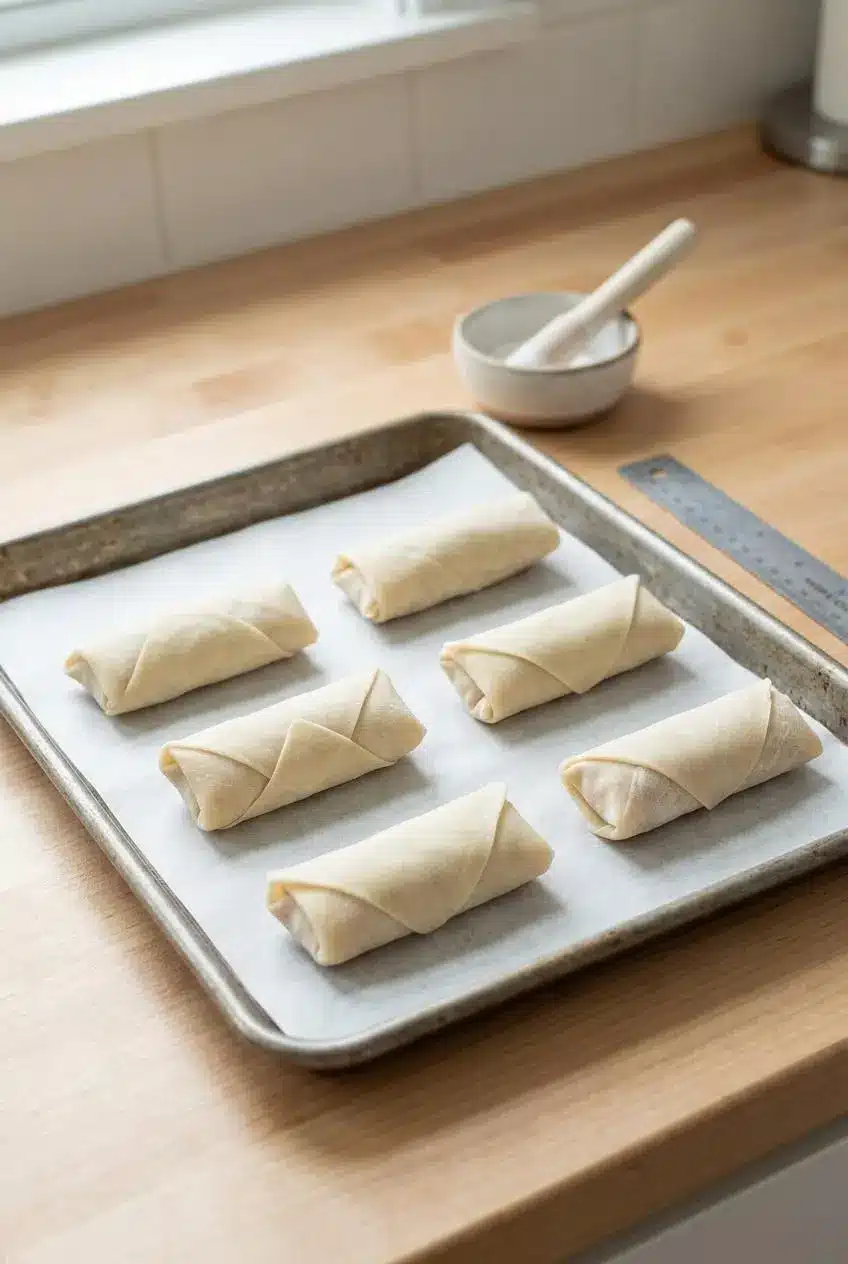
These rolls are at their best soon after cooking, but you can still keep the texture in good shape if you store them carefully.
Storing Uncooked and Cooked Dessert Rolls
If you want to assemble them ahead, place the uncooked rolls on a parchment-lined tray, cover them tightly, and refrigerate until you are ready to cook. Keep the wrappers from touching if possible so damp spots do not form along the seams.
For cooked leftovers, let the rolls cool first, then store them in an airtight container in the refrigerator. A paper towel under or over the rolls can help catch a little extra moisture and protect the crust from softening too quickly.
If the dipping sauce is made ahead, keep it separately so the rolls stay crisp until serving.
Reheating to Restore the Crunch
Skip the microwave if crispness matters. It heats the filling quickly, but it also makes the wrapper soft and a little gummy.
Use a 350°F oven or air fryer and heat the rolls just until the shell turns crisp again and the center is warmed through. Reheating in a single layer works better than piling them together, because hot air can circulate around each roll.
Variations to Try
The core recipe is great as written, but a few optional changes can make it fit what you have on hand or the kind of dessert spread you want.
Canned Peach Quick Version
Canned peaches work very well here. Drain them thoroughly, chop them into smaller pieces, and reduce the brown sugar slightly if the fruit is packed in heavy syrup.
This version is especially useful when fresh peaches are out of season. You still get that warm cobbler flavor, and the texture stays pleasant as long as the filling is simmered until thick.
Vegan Peach Cobbler Rolls
For a plant-based version, use vegan-certified egg roll wrappers and swap the butter for plant-based butter. The filling still needs the same thick, cooled texture before wrapping.
The dipping sauce can be mixed with almond, oat, or soy milk. Vanilla bean paste still gives it that bakery-style flavor, but vanilla extract works well too.
Caramelized Bourbon Peach Filling Option
If you want a deeper, more caramel-like filling, add a small splash of bourbon or a little non-alcoholic bourbon extract while the peaches simmer. It adds a woodsy note that plays nicely with the brown sugar and cinnamon.
If you are after other individual peach desserts with a baked feel instead of a fried shell, mini peach cobblers are a cozy option.
Conclusion
These rolls deliver exactly what makes peach cobbler so comforting, just in a crisp little package. You get warm spiced peaches, a golden shell, and an easy vanilla dip that makes each bite feel finished.
If you remember one thing, let the filling cool completely before wrapping. That one step makes the difference between messy and beautifully crisp.
Frequently Asked Questions
Can I make these with canned peaches?
Yes. Drain them very well first so the filling does not turn watery. Chop the peaches if the pieces are large. If they are packed in heavy syrup, reduce the brown sugar slightly so the filling stays balanced.
How do I prevent my egg rolls from bursting?
Cool the peach filling completely before wrapping. Warm filling softens the wrappers fast. Use a slotted spoon to leave extra syrup behind, avoid overfilling, and roll tightly so there are no air pockets trapped inside.
Can these peach cobbler egg rolls be made ahead?
Yes, you can assemble them ahead and keep them covered in the refrigerator until you are ready to cook. Try not to prep them too far in advance, because wrappers soften as they sit. If you want the best texture, fry or air fry them shortly before serving and reheat any cooked leftovers in the oven or air fryer.
How do I keep the wrappers from getting soggy?
Cook the peach filling until it is thick and jam-like, then let it cool fully before assembling. Loose filling is the main cause of soggy wrappers. After cooking, do not stack the hot rolls. Steam gets trapped quickly and softens the shells almost immediately.
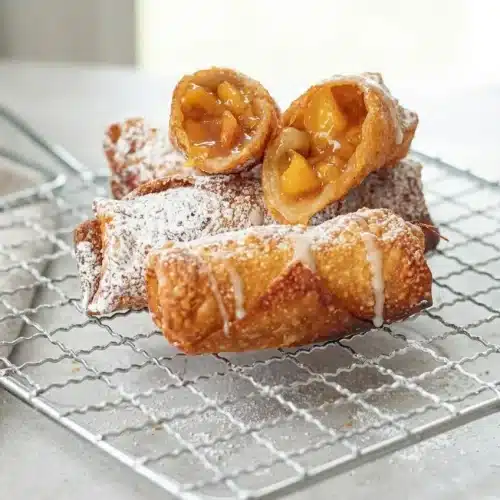
Peach Cobbler Egg Rolls

Equipment
- deep fryer or dutch oven
- cooking thermometer
- Tongs
- Small saucepan
- Measuring cups and spoons
- Cooling Rack
Ingredients
Peach Filling
- 2 cups chopped peaches (fresh, frozen, or canned)
- 1 tablespoon fresh lemon juice
- 2 tablespoon salted butter
- ½ cup light brown sugar
- 4 tsp cornstarch
- ½ teaspoon ground cinnamon
- ½ teaspoon pure vanilla extract
Egg Rolls
- 10 egg roll wrappers
- 2 tbsp water (for brushing)
- vegetable oil (for frying)
- powdered sugar (for dusting (optional))
Vanilla Bean Dipping Sauce
- ¾ cup powdered sugar
- ½ teaspoon vanilla bean paste (or vanilla extract)
- 2-3 tablespoons milk
- pinch salt
Instructions
Peach Filling and Assembly
- Add the chopped peaches, lemon juice, butter, brown sugar, cornstarch, and cinnamon to a small saucepan and set it over heat. Stir as the mixture warms so the cornstarch blends in evenly and the peaches start releasing juice.
- Bring the filling to a boil, then lower the heat and simmer for about 10 minutes, stirring now and then, until it thickens; stir in the vanilla extract and let it cool completely. The mixture will bubble, look cloudy at first, then turn glossy and thick enough to mound on a spoon.
- Set one egg roll wrapper on a clean surface with a corner pointing toward you, brush the edges with water, and place about 2 tbsp of cooled peach filling in the center. The damp edges will look slightly opaque and tacky, which helps create a stronger seal.
- Fold the sides inward and roll the wrapper up tightly until fully sealed, then repeat with the remaining wrappers. A properly rolled egg roll should feel compact with no loose flaps or visible air pockets.
Frying
- Heat the oil to 350°F, then fry the egg rolls in batches for about 5-6 minutes until deep golden brown. The wrappers should look blistered and evenly browned, with a crisp shell that feels firm when lifted.
- Transfer the fried rolls to a wire rack set over paper towel and let them cool slightly, then dust with powdered sugar, if desired. Keeping them on a rack helps steam escape so the crust stays crisp instead of softening underneath.
Vanilla Bean Dipping Sauce
- Whisk the powdered sugar, milk, and vanilla bean paste together, then add a pinch of salt to taste. The dip should be smooth, pourable, and thick enough to cling lightly when you drag a spoon through it.