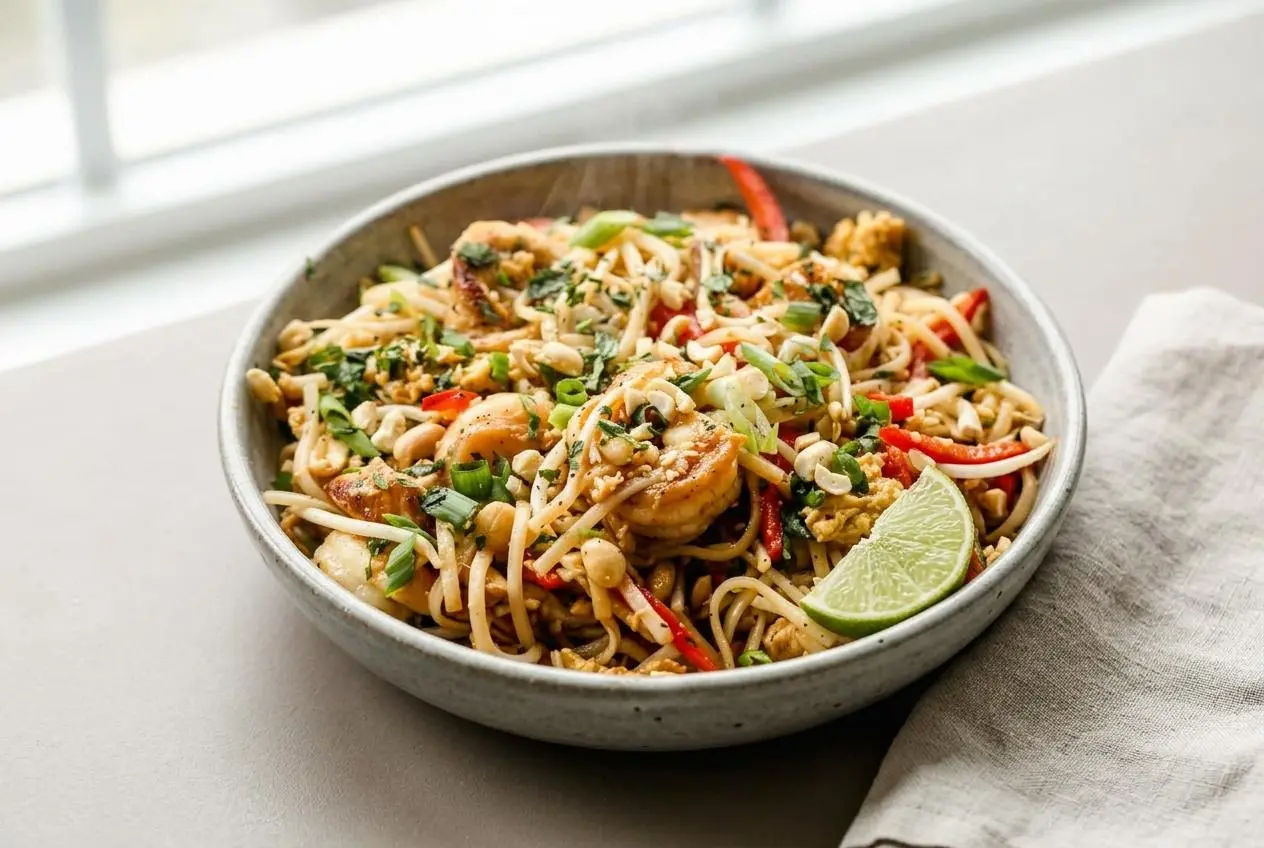
Pad Thai is a Thai noodle stir-fry with chewy rice noodles, egg, protein, bean sprouts, peanuts, and a sweet, salty, tangy sauce. This pad thai recipe brings it together in 30 minutes with a hot pan and careful noodle prep.
Sizzling garlic, toasted peanuts, and bubbling tamarind-style sauce create the aroma that makes this dish feel special, even on a busy night. The goal is distinct noodle strands with a glossy coating, not a heavy, sticky pile.
You’ll get savory depth, bright tang, crisp vegetables, and a nutty chew in every forkful. The noodle soak is the move that makes it work.
Measure the sauce and chop the garlic, pepper, and garnishes before heating the wok, because once the pan is hot, the cooking moves quickly.
What Makes an Authentic Pad Thai Recipe
Great Pad Thai is built on contrast. Tangy tamarind, savory fish sauce, and caramel-like sweetness meet springy rice noodles, soft egg, tender protein, crisp bean sprouts, and dry-roasted peanuts. Each bite should taste lively rather than sugary or heavy.
Thai street-style versions commonly use tamarind pulp for their reddish-brown color and fruity sourness, with palm sugar for rounded sweetness. Ketchup and peanut butter can appear in adapted home versions, but they do not create the classic sauce profile. In this recipe, peanut butter remains optional and adds a creamier, nuttier finish if that is what you enjoy.
High heat matters because it helps the noodles stay separate while the sauce reduces around them. When the liquid is absorbed, the noodles take on a sudden glossy sheen and the pan smells sweet, savory, and faintly caramelized.
Ingredients
Each ingredient contributes to the balance: noodles provide chew, sauce ingredients build sweet-salty tang, eggs add tenderness, and fresh vegetables and peanuts bring color, crunch, and contrast.
- 8 ounces flat rice noodles
- 3 Tablespoons oil
- 3 cloves garlic, minced
- 8 ounces uncooked shrimp, chicken, or extra-firm tofu, cut into small pieces
- 2 eggs
- 1 cup fresh bean sprouts
- 1 red bell pepper, thinly sliced
- 3 green onions, chopped
- 1/2 cup dry roasted peanuts
- 2 limes
- 1/2 cup Fresh cilantro, chopped
- 3 Tablespoons fish sauce
- 1 Tablespoon low-sodium soy sauce
- 5 Tablespoons light brown sugar
- 2 Tablespoons rice vinegar, or Tamarind Paste
- 1 Tablespoon Sriracha hot sauce, or more, to taste
- 2 Tablespoons creamy peanut butter (optional)
Flat rice noodles need to be hydrated carefully so they stay pleasantly chewy in the pan. Fish sauce brings deep savory character, while tamarind paste gives the sauce its fruity tang. Brown sugar softens the acidity and helps the noodles turn glossy. Scrambled egg adds soft richness, and bean sprouts with peanuts keep the finished dish from feeling too soft.
I set out the fish sauce, soy sauce, sugar, vinegar or tamarind, and Sriracha in small bowls before the burner goes on, then keep the garlic and vegetables within arm’s reach.
How to Make Pad Thai
Cook this in batches of no more than two portions at once if using a home skillet. A crowded pan loses heat quickly, which steams the noodles instead of stir-frying them.
- Prepare the flat rice noodles as directed on the package until they are barely tender, then drain and rinse them under cold water.
The noodles should bend easily while still feeling firm enough to resist a gentle bite. - Whisk the fish sauce, soy sauce, brown sugar, rice vinegar or tamarind paste, Sriracha, and optional peanut butter in a bowl until blended.
The mixture should taste boldly sweet, salty, and tangy because the noodles and vegetables will mellow it in the pan. - Warm 1 1/2 tablespoons of oil in a wok or large saucepan over medium-high heat, then cook the garlic, bell pepper, and chosen protein.
Shrimp should turn pink in about 1-2 minutes per side, while chicken needs about 3-4 minutes and should be cooked through after one turn. - Move the cooked ingredients to one side of the pan, add a little more oil to the empty space, and scramble the eggs there with a spatula.
Break the eggs into small, soft curds and fold them in while they are still moist. - Add the noodles, sauce, bean sprouts, and peanuts, saving some peanuts for the finish, then toss briskly until combined.
The sauce should bubble briefly and cling to the noodles in a glossy brown coating rather than pool at the bottom of the pan. - Finish with green onions, the reserved peanuts, cilantro, and lime wedges, then serve right away.
The residual heat will wake up the peanuts and herbs without taking away their fresh crunch. - Cool any remaining noodles before transferring them to the refrigerator.
Keep leftovers covered and enjoy them within 2-3 days.
The Essential Pad Thai Sauce Formula
The sauce gives Pad Thai its identity. For this version, 2 Tablespoons tamarind paste or rice vinegar, 3 Tablespoons fish sauce, and 5 Tablespoons light brown sugar create a strong sweet-sour-salty base that can stand up to unseasoned noodles and fresh sprouts.
Fish sauce supplies savory depth, tamarind brings rounded fruitiness and acidity, and sugar smooths their sharp edges. Taste the mixed sauce before it reaches the wok. It should seem a little intense on its own, then settle into balance once it coats the noodles.
For a slightly smokier flavor, let the sugar touch the hot pan briefly before adding the sauce components. Keep it moving and stop before it darkens too far, since burnt sugar turns bitter fast.
Balancing Tamarind, Fish Sauce, and Palm Sugar
Thai tamarind paste is usually mild, pulpy, and fruity. Dark Indian tamarind concentrate is much sharper and more concentrated, so use about half as much when substituting, then taste before adding more.
Palm sugar is traditional and gives a gentle caramel flavor. Light brown sugar is the practical substitute used here, and it dissolves readily into a glossy glaze. If the sauce tastes flat, it usually needs a better balance of tang and salt rather than more peanut butter.
Pantry Substitutions That Actually Work
- No tamarind paste: Use the listed rice vinegar, then add a small squeeze of lime at serving for brighter flavor.
- No palm sugar: Keep the light brown sugar. Its molasses notes provide a similar rounded sweetness.
- Vegetarian option: Use mushroom soy sauce or a vegan stir-fry sauce in place of fish sauce. The flavor will be less briny but still savory.
- Skip the shortcuts: Plain white vinegar tastes harsh here, and barbecue sauce pushes the dish toward smoky sweetness rather than the clean tang Pad Thai needs.
Mastering the Rice Noodles: Soaking vs. Boiling
Rice noodles are the part most likely to go wrong. Boiling them until fully soft leaves them vulnerable to breaking apart when they hit the hot pan, while soaking lets them finish cooking gradually in the sauce.
For medium rice stick noodles, soak them in lukewarm water for 45 to 60 minutes. They should look flexible and hydrated but still have a firm center when bitten. If a strand folds with no resistance at all, it is likely too soft for stir-frying.
Need a faster route? Soak the noodles in hot tap water for 8 to 12 minutes, watching closely. Drain them thoroughly, then rinse under cold water to remove surface starch that can glue the noodles together. Properly soaked rice noodles also work beautifully in red curry noodle soup, though broth and stir-fry cooking call for different finishing techniques.
Authentic Ingredients and Smart Grocery Swaps
A few traditional additions can deepen the flavor without making dinner feel complicated. Preserved sweet radish adds a gentle crunch and fermented sweetness, dried baby shrimp contributes salty funk, and Chinese garlic chives bring a mild garlicky flavor that holds up to heat.
- Preserved sweet radish: Use it when available for savory-sweet crunch. Crisp fried shallots offer a different but welcome textural contrast.
- Dried shrimp: Adds concentrated seafood flavor. Extra fish sauce can provide more savory depth when dried shrimp is unavailable.
- Chinese garlic chives: Their grassy allium flavor is traditional. Standard scallions are the closest easy swap and work well with the green onions already included.
These additions are optional flavor directions, not required changes. The core dish still succeeds when the tamarind-style sauce, noodles, egg, sprouts, and peanuts are balanced well.
Step-by-Step Stir-Fry Method and Heat Control
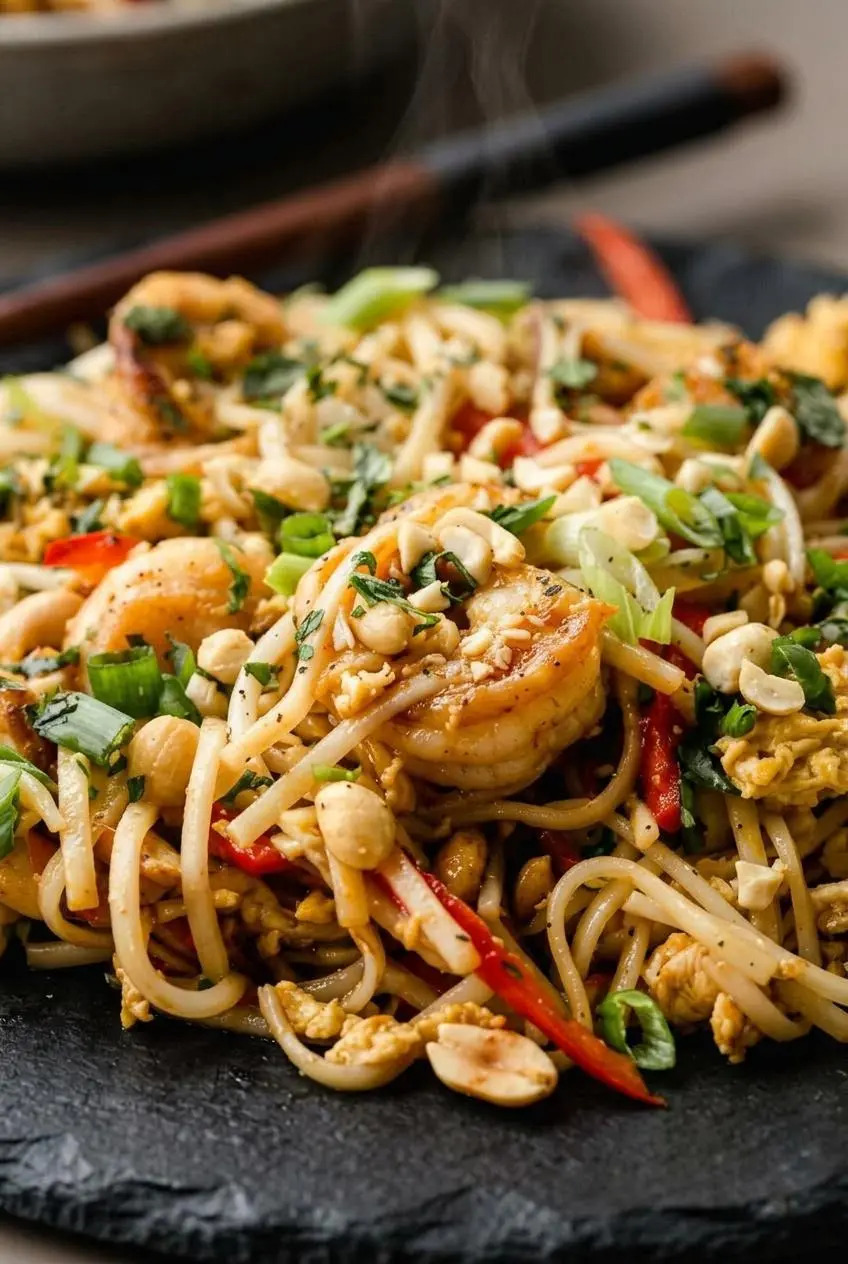
Heat control keeps the eggs tender, the protein juicy, and the noodles glossy. Have every component ready before the oil goes into the wok, then cook quickly without piling four servings into one pan.
Cook the protein first so it gets direct contact with the hot surface, then move it aside while the eggs cook in their own clear space. Do not pour raw egg over the noodles. Scrambling it against the hot pan first gives you distinct soft curds instead of eggy noodles.
When you add the sauce, keep tossing rather than letting the noodles sit. The sauce should be absorbed, not boiled into a puddle. If the pan looks dry before the noodles soften, use the rescue method in the troubleshooting section instead of turning down the heat.
Protein Options and Variations
Choose shrimp, chicken, or extra-firm tofu from the ingredient list, and keep the pieces small so they cook before the garlic can burn. Each option works best when seared first over medium-high heat.
Classic Shrimp and Chicken Prep
Sear shrimp just until they curl, turn opaque, and become pink. Overcooking makes their texture rubbery, so move them aside promptly once they reach that point.
For chicken, spread the pieces out and let the first side color before flipping once. Cook until the centers are no longer pink, then continue with the eggs and noodles. For another fast, savory chicken dinner, try these chicken lettuce wraps.
Crispy Tofu and Vegetarian Swaps
Press extra-firm tofu briefly to remove excess moisture, then cut it into bite-size pieces. Pan-fry it in hot oil until it develops a golden crust, which helps it stay intact when tossed with the sauce.
Replace fish sauce with mushroom soy sauce or vegan stir-fry sauce for a vegetarian version. For a vegan version, leave out the eggs and rely on browned tofu, sprouts, peppers, herbs, and peanuts for body and texture.
Troubleshooting Common Pad Thai Mistakes
- Noodles are dry or stiff: The noodles likely needed more hydration or the sauce reduced too quickly. Add 2 Tablespoons of water around the edge of the pan and toss so the steam can soften them without drowning the sauce.
- Noodles form one sticky clump: Surface starch or a crowded pan is usually the culprit. Rinse the noodles well after draining, keep the heat high, and cook no more than two portions at a time.
- Noodles are soggy and broken: They were probably softened too much before stir-frying. Start with soaked noodles that are pliable but still firm, then let the sauce finish the job.
- The sauce is too sour: Stir in a little more brown sugar, taste, and stop as soon as the sharp edge softens.
- The sauce is too sweet: Add a small squeeze of lime juice to restore brightness, then toss well before deciding whether it needs more.
- The pan seems wet instead of hot: Split the food into smaller batches. The same space-and-heat principle is useful for homemade fried rice, where crowding also traps steam and dulls texture.
Storage, Make-Ahead Prep, and Reheating
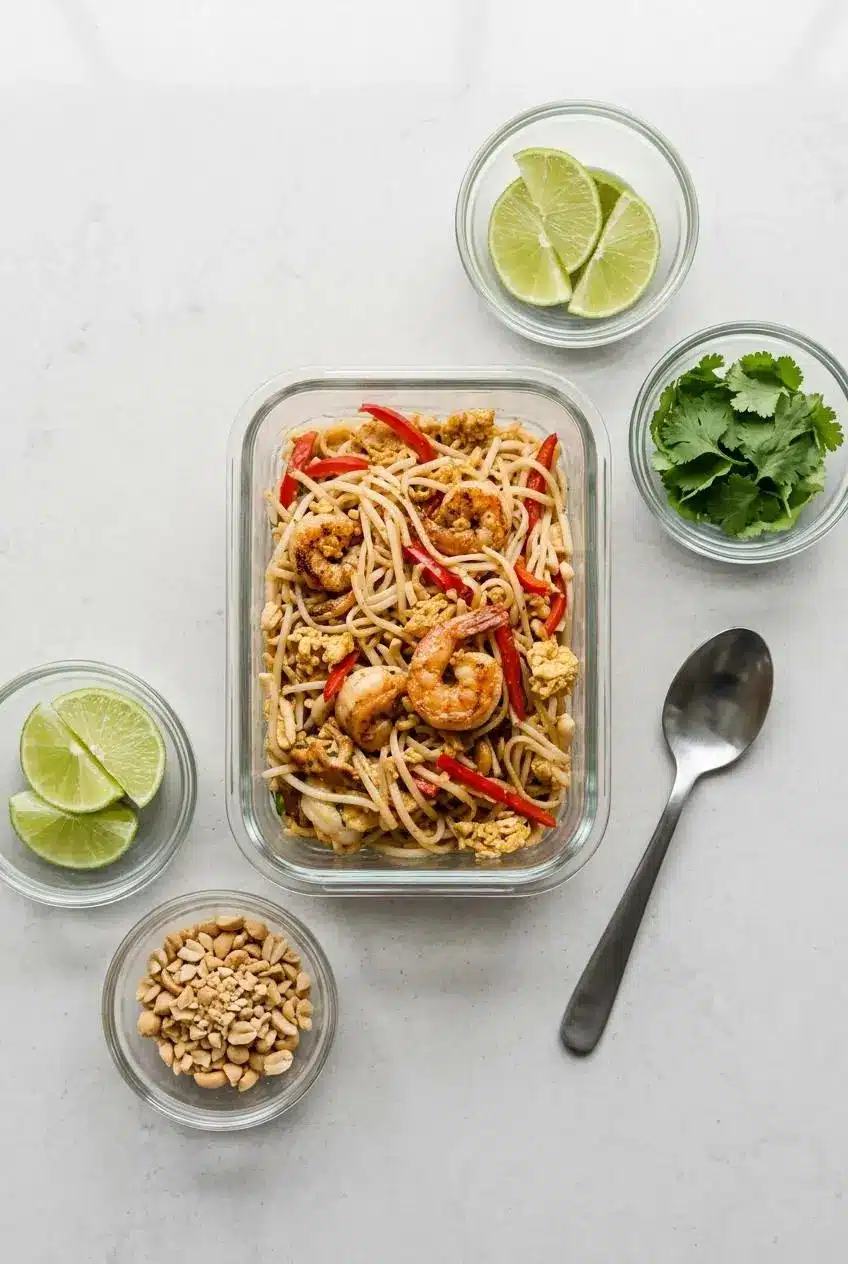
Cool leftovers completely, seal them in an airtight container, and refrigerate them. The cooked noodles are best enjoyed within 2-3 days, as listed in the method. Keep lime, herbs, and peanuts separate when possible so their flavor and crunch stay brighter.
For easier dinner prep, chop the vegetables, measure the sauce ingredients, and prepare the noodles before heating the pan. Cook the actual stir-fry close to serving time, since freshly tossed noodles keep their chew best.
Reheat a portion in a covered skillet over medium heat with a little oil and 2 Tablespoons of water. Let the trapped steam loosen the rice starch, then toss gently until the noodles are warm and glossy. Avoid blasting them dry over high heat, which can make them tough.
Serving Suggestions and Classic Garnishes
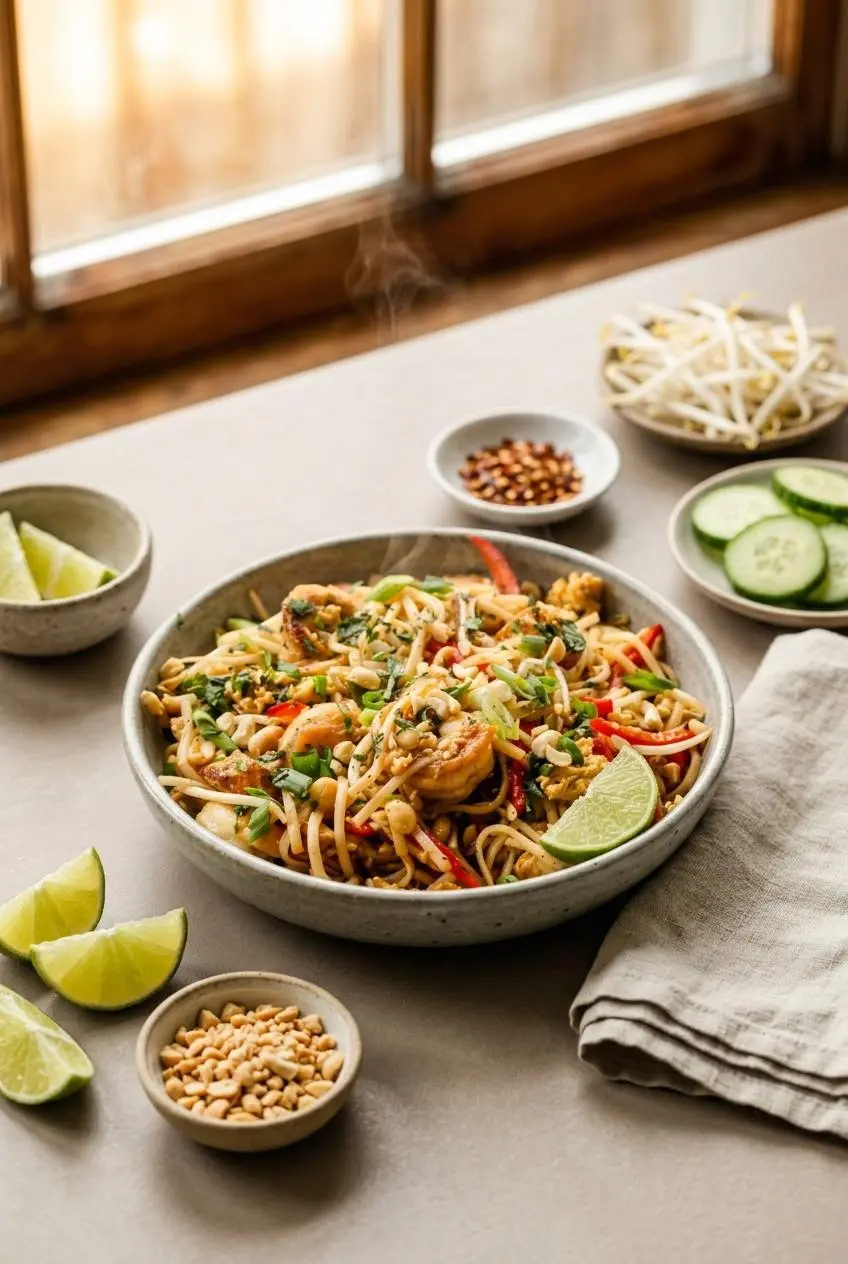
Serve Pad Thai hot with lime wedges, extra bean sprouts, crushed peanuts, and chili flakes on the side. These garnishes are more than decoration: lime sharpens the sauce, sprouts add a fresh snap, peanuts give crunch, and chili lets everyone control the heat.
- Add cool cucumber slices for a crisp contrast to the warm, savory noodles.
- Pair the noodles with a chilled, crunchy Thai chicken salad for a fuller meal with fresh balance.
- Set out extra cilantro and green onions for anyone who likes a more herb-forward plate.
Conclusion
Fresh Pad Thai comes together quickly when the noodles are soaked until pliable, the sauce is balanced before cooking, and the pan stays hot enough to stir-fry rather than steam.
Keep the strands moving until they turn glossy, then finish with lime, herbs, and peanuts. That tangy, savory, nutty chew is worth the quick prep.
Frequently Asked Questions
What Is the Secret Ingredient in Authentic Pad Thai?
Thai tamarind paste provides the fruity sour tang that defines classic Pad Thai. Fish sauce brings savory depth. Palm sugar, or light brown sugar, rounds out the acidity. Ketchup and peanut butter are not traditional sauce foundations, though peanut butter is optional in this version.
Why Are My Pad Thai Noodles Clumpy or Soggy?
Noodles usually clump when they are overcooked before stir-frying or when too much food crowds the pan. Soak rather than fully boil the noodles, then rinse away excess starch. Use a hot pan and cook no more than two portions at once. Toss continuously once the sauce goes in so the strands coat evenly.
What Is a Good Substitute for Tamarind Paste in Pad Thai Sauce?
Use the listed rice vinegar with light brown sugar, then brighten the finished dish with a small squeeze of lime. Equal parts rice vinegar and light brown sugar create a useful sweet-sour direction. Fresh lime adds a little of tamarind’s brightness. Real tamarind paste still provides the deepest fruity flavor.
Can You Make Pad Thai Ahead of Time for Meal Prep?
You can prepare the vegetables, sauce components, and noodles before cooking, then stir-fry close to serving for the best texture. Keep garnishes separate until the plate is ready. Store cooked leftovers covered in the refrigerator as directed in the method. Restore cold noodles in a covered skillet with a little water rather than reheating them dry.
How Do I Prevent Eggs From Overcooking in the Wok?
Push the protein and vegetables to one side, leaving a clear hot area for the eggs. Add a little oil before the beaten eggs go in. Scramble them into soft, small curds with a spatula. Fold the eggs into the noodles while they still look slightly moist.
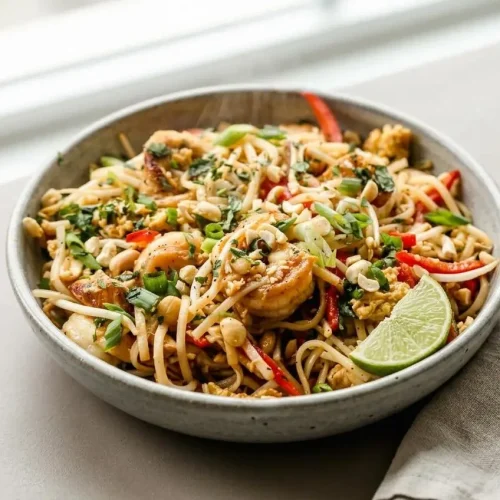
Pad Thai Recipe

Equipment
- wok or large saucepan
- bowl
- Spatula
Ingredients
- 8 ounces flat rice noodles
- 3 Tablespoons oil
- 3 cloves garlic minced
- 8 ounces uncooked shrimp, chicken, or extra-firm tofu cut into small pieces
- 2 eggs
- 1 cup fresh bean sprouts
- 1 red bell pepper thinly sliced
- 3 green onions chopped
- 1/2 cup dry roasted peanuts
- 2 limes
- 1/2 cup Fresh cilantro chopped
- 3 Tablespoons fish sauce
- 1 Tablespoon low-sodium soy sauce
- 5 Tablespoons light brown sugar
- 2 Tablespoons rice vinegar, or Tamarind Paste
- 1 Tablespoon Sriracha hot sauce or more, to taste
- 2 Tablespoons creamy peanut butter (optional)
Instructions
- Prepare the flat rice noodles as directed on the package until they are barely tender, then drain and rinse them under cold water. The noodles should bend easily while still feeling firm enough to resist a gentle bite.
- Whisk the fish sauce, soy sauce, brown sugar, rice vinegar or tamarind paste, Sriracha, and optional peanut butter in a bowl until blended. The mixture should taste boldly sweet, salty, and tangy because the noodles and vegetables will mellow it in the pan.
- Warm 1 1/2 tablespoons of oil in a wok or large saucepan over medium-high heat, then cook the garlic, bell pepper, and chosen protein. Shrimp should turn pink in about 1-2 minutes per side, while chicken needs about 3-4 minutes and should be cooked through after one turn.
- Move the cooked ingredients to one side of the pan, add a little more oil to the empty space, and scramble the eggs there with a spatula. Break the eggs into small, soft curds and fold them in while they are still moist.
- Add the noodles, sauce, bean sprouts, and peanuts, saving some peanuts for the finish, then toss briskly until combined. The sauce should bubble briefly and cling to the noodles in a glossy brown coating rather than pool at the bottom of the pan.
- Finish with green onions, the reserved peanuts, cilantro, and lime wedges, then serve right away. The residual heat will wake up the peanuts and herbs without taking away their fresh crunch.
- Cool any remaining noodles before transferring them to the refrigerator. Keep leftovers covered and enjoy them within 2-3 days.