
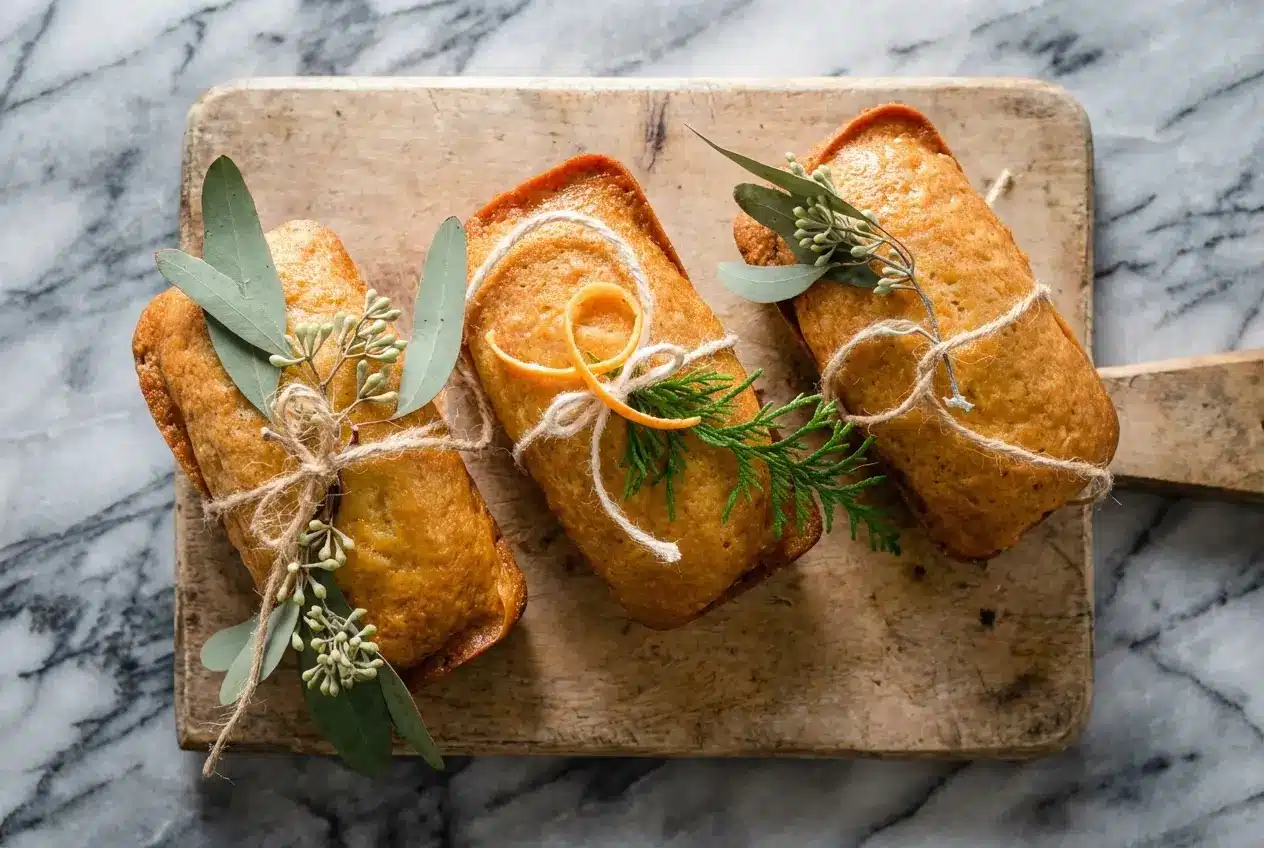
Some cakes perfume the whole house before they even leave the oven, and this is one of them. In my kitchen, the first hint is always orange zest warming against buttery notes, then that gentle ginger heat follows right behind.
Orange Ginger Honey Cake feels like a polished take on a classic honey cake, perfect for Rosh Hashanah, a holiday table, or a slow weekend bake when you want something cozy but a little special. The crystallized ginger brings tiny spicy bursts through the crumb, and the honey-orange soak is what keeps every slice tender and gloriously sticky.
Why You’ll Love This Recipe
Bright meets cozy: Fresh orange zest lifts the whole cake, while ginger gives it that warm, bakery-style depth that makes the flavor feel layered instead of simply sweet.
The secret twist: I love folding in finely diced Crystallized ginger because it creates little chewy jewels in the crumb. Then the honey-orange soak goes on while the cake is warm, giving the top that glossy finish and helping the cake stay soft for days.
Deep flavor without fuss: Beurre Noisette, or browned butter, adds a nutty richness that plain melted butter just cannot match. It brings the same kind of complexity I love in a good brown butter bread, where one simple technique completely changes the personality of the bake.
Reliable moisture: Honey is naturally Hygroscopic, which means it holds onto moisture beautifully. In my experience, that honey-orange finish acts like a gentle seal, so the crumb tastes even better on day two.
Ingredients and Substitutions
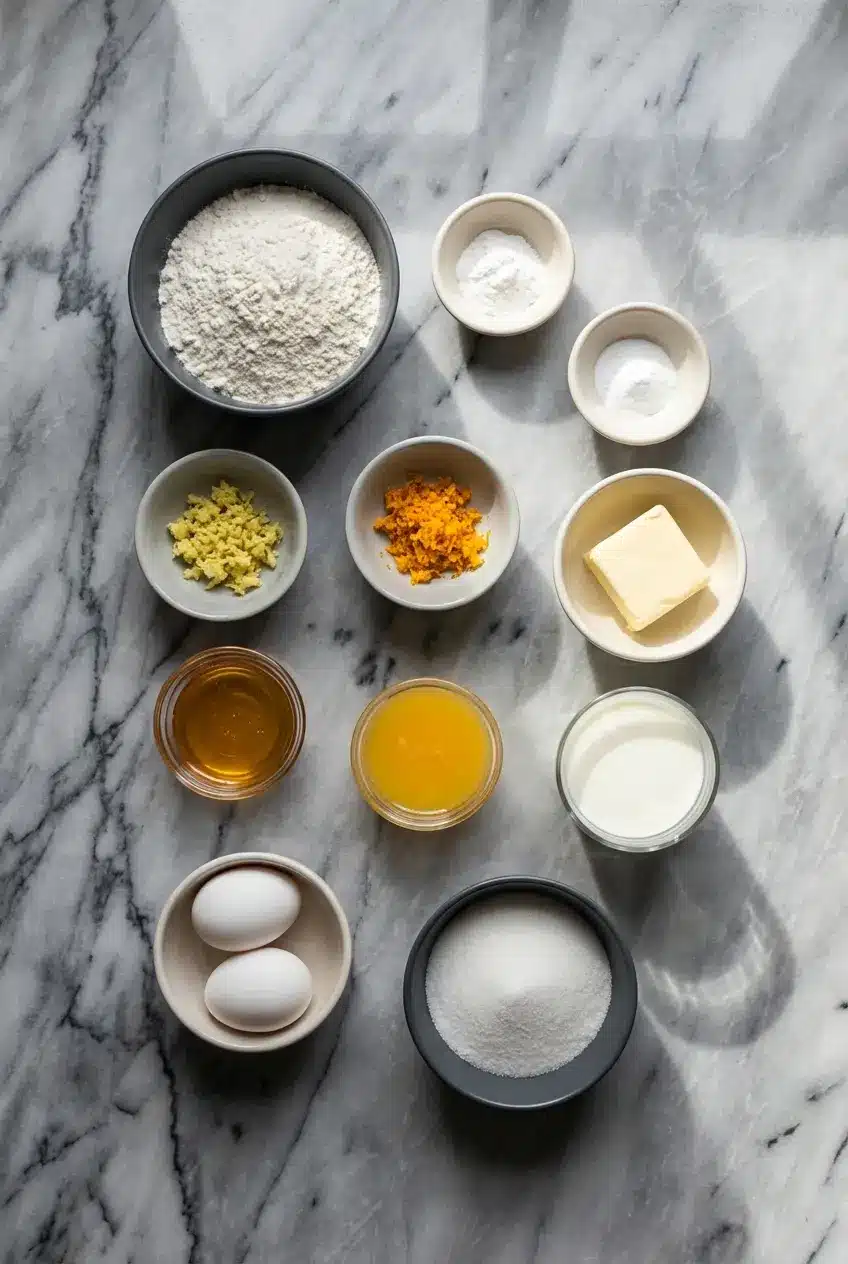
These ingredients build a cake that is fragrant, tender, and deeply flavorful, with enough citrus and spice to keep every bite lively.
Ingredients
- 250 grams ( 2 cups ) all purpose flour
- 1.5 teaspoons baking powder
- 1/2 teaspoon baking soda
- 1 tablespoon fresh grated ginger or 2 teaspoons ground ginger
- 1 tablespoon fresh orange zest
- 113 grams ( 1/2 cups ) unsalted butter
- 270 grams ( 3/4 cup ) honey
- 2 tablespoons fresh orange juice
- 125 grams ( 1/2 cup ) whole milk
- 2 large eggs, room temperature
- 50 grams ( 1/4 cup ) granulated sugar
Ingredient Notes & Substitutions
Honey: Orange blossom honey is my first choice here because it echoes the citrus without overpowering the ginger. If you use a darker honey like buckwheat, expect a bolder, more robust cake with deeper molasses-like notes.
Ginger: Fresh grated ginger gives the batter a cleaner, brighter heat, while ground ginger leans warmer and more familiar. If you can find good stem ginger or high-quality crystallized ginger, it gives the crumb the most luxurious little spicy pockets.
Orange zest and juice: A fresh orange matters here because the zest carries aromatic oils that bottled juice cannot replace. Navel oranges are easy and dependable, while Cara Cara oranges bring a slightly sweeter, floral edge.
Butter: Unsalted butter lets you control the flavor more precisely, and browning it adds that toasty Beurre Noisette character. For a dairy-free version, melted coconut oil or a solid plant-based butter works well, though the flavor will be a bit less nutty.
Milk: Whole milk gives the crumb a soft, rounded richness. Oat milk is my favorite dairy-free swap because it keeps the texture tender, while unsweetened almond milk also works if that is what you keep in the fridge.
Eggs: Room temperature eggs are not a fussy detail, they help the batter blend smoothly and evenly. Cold eggs can make the browned butter seize slightly and interfere with that silky, well-emulsified texture.
Flour: Weighing the flour in grams is the easiest insurance against a dry loaf. A heavy scoop can pack in too much flour, and honey cakes are much happier when the batter stays balanced.
How to Make Orange Ginger Honey Cake
Prep the pans and brown the butter
- Heat your oven to 325℉ (160℃). Prepare four 6-inch mini loaf pans with non-stick spray, or lightly coat them with butter and flour so the cakes release cleanly later.
- Set the butter in a small skillet over medium heat and stir as it melts. Keep going until it turns foamy and develops a golden-brown color with a nutty aroma, then transfer it to the bowl of a stand mixer and let it cool to room temperature so it will not scramble the eggs.
Mix the dry and wet components
- In a medium bowl, whisk together the sifted flour, baking powder, baking soda, ginger, and orange zest until everything is evenly distributed and fragrant. If you are using finely diced crystallized ginger, this is the right moment to make sure it is separated well so it does not clump in one corner of the batter.
- Add the cooled browned butter, honey, orange juice, milk, sugar, and slightly beaten eggs to the mixer bowl. Using the Paddle attachment, beat on medium speed until the mixture looks smooth and unified, with no streaks of egg or butter left behind.
Finish the batter and bake
- Add the flour mixture gradually on medium speed, spooning it in a little at a time. Stop mixing as soon as a smooth cake batter forms, and scrape down the sides and bottom of the bowl so no dry pockets are hiding there.
- Divide the batter evenly among the four prepared pans, then set the pans on a cookie sheet to make them easier to move in and out of the oven.
- Bake for 28 to 30 minutes, until the tops are set and a toothpick inserted in the middle comes out clean. Halfway through baking, loosely tent the loaves with aluminum foil so the honey-rich tops do not brown too quickly.
Cool and add the signature finish
Set the pans on a cooling rack and let the cakes cool completely before removing them. For the sticky finish that gives this Orange Ginger Honey Cake its bakery-style charm, whisk together 1/4 cup honey and 2 tablespoons fresh orange juice, prick the warm tops with a skewer, and spoon the soak over the cakes while they still hold a little warmth.
Secrets for a Perfect Honey Cake
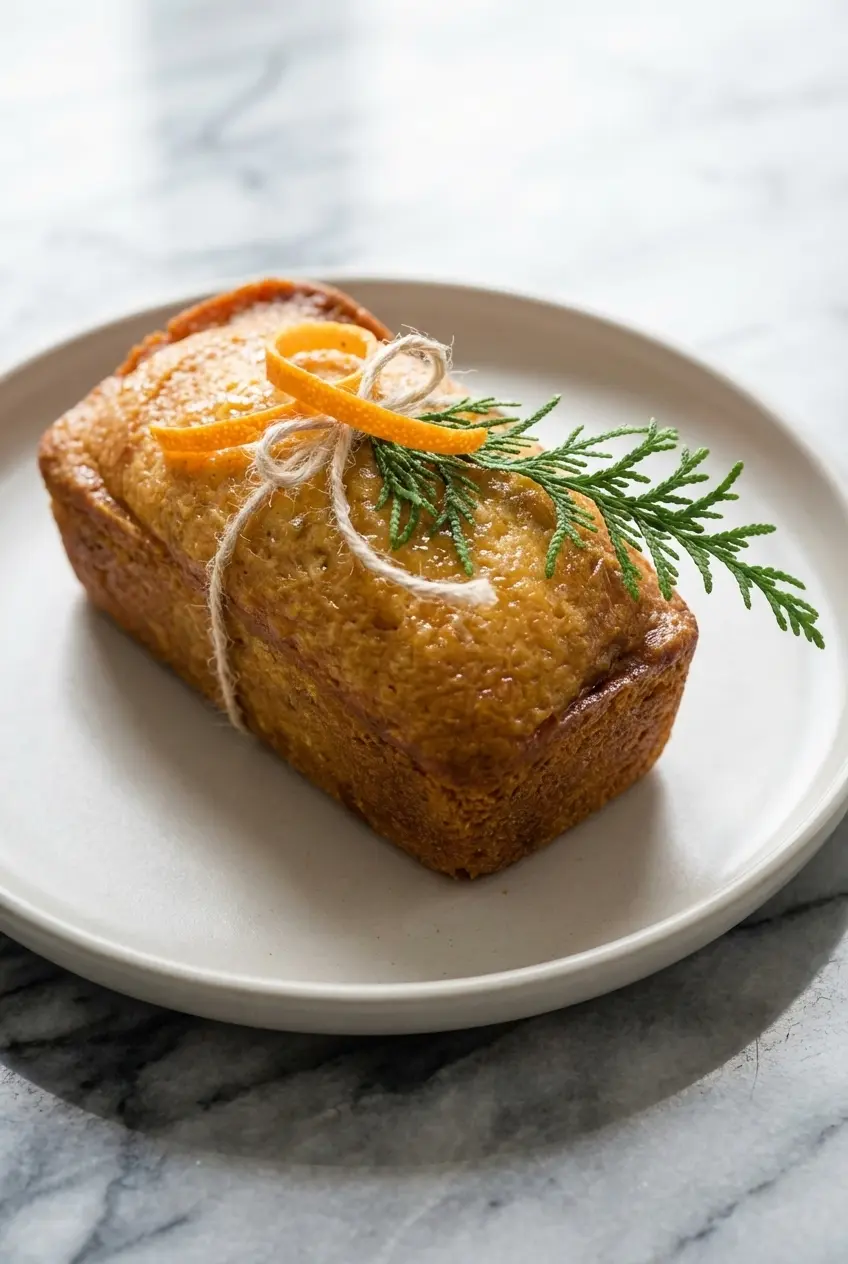
Honey cakes color faster than many butter cakes because honey encourages the Maillard reaction and caramelization early in the bake. That is why this recipe uses a lower oven temperature and a foil tent halfway through, so the center can finish baking before the top gets too dark.
Orange juice is doing real work beyond flavor. Its acidity reacts with the baking soda to support a lighter Crumb structure, giving the loaf a more tender, airy bite instead of a heavy one.
Egg temperature matters more than many bakers realize, especially in a honey-heavy batter. Good mixing creates proper emulsification of the batter, which helps the fat, liquid, and eggs stay smoothly blended for a more even rise and finer texture.
I also swear by weighing flour rather than relying only on cups. Honey already adds density, so a little extra flour is often the difference between a plush, moist loaf and one that feels tight or dry.
Understanding Honey Cake Texture and Climate
Honey is wonderfully Hygroscopic, which is one reason this cake stays moist for so long. In a dry climate, that is a gift, because the crumb keeps its tenderness instead of drying out overnight.
In humid weather, though, that same quality can make the outside of the cake feel extra tacky after a day or two. I like to wrap the loaf well once fully cooled and keep it at room temperature in a container with a snug lid, which helps prevent it from pulling in too much moisture from the air.
The 24-hour rule is absolutely real with honey cake. The orange, ginger, and honey settle into each other overnight, and the sticky glaze softens into the crumb, so the flavor tastes rounder and more complete the next day.
Mastering High-Altitude Honey Baking
At high altitude, a batter rich with honey can rise quickly and then sink before the structure has fully set. If you bake well above sea level, a slight oven increase can help the cake set faster, and trimming back the baking powder just a touch often keeps the rise steadier.
I also recommend watching the center carefully rather than trusting color alone, because honey makes the loaf look done early. A sunken middle usually means the structure was still too soft in the center, whether from altitude, underbaking, or leavening agents that were no longer fresh.
Pro Tips & Troubleshooting
Pro Tips
- Lightly oil the measuring cup before adding honey, and it will slide right out without wasting a drop.
- Zest the oranges before juicing them. It is faster, cleaner, and you will get far more fragrant oils that way.
- Use a sharp Zester and avoid the white pith, which can taste bitter in a delicate cake.
- If you want the best spicy bursts, use finely diced stem ginger or high-quality crystallized ginger rather than dry, dusty pieces.
- Keep a close eye on the butter while browning. It should smell nutty and look amber, not dark brown or scorched.
Common Mistakes to Avoid
- Overmixing: Once the flour goes in, too much mixing develops gluten and makes the cake tougher than it should be.
- Sinking centers: This usually happens when the honey-heavy batter is underbaked in the middle, or when the leavening agents are old and cannot support the loaf properly.
- Burnt toppings: Honey and sugar brown fast, so skipping the foil tent often leaves the top too dark before the center is ready.
- Dense texture: Measuring flour by volume too casually can overload the batter. A scale is your best friend for this recipe.
- Flat flavor: If the orange seems muted, make sure you used fresh zest, not just juice. The fragrant oils in the peel are what make the cake sing.
Serving & Storage
Serving Ideas
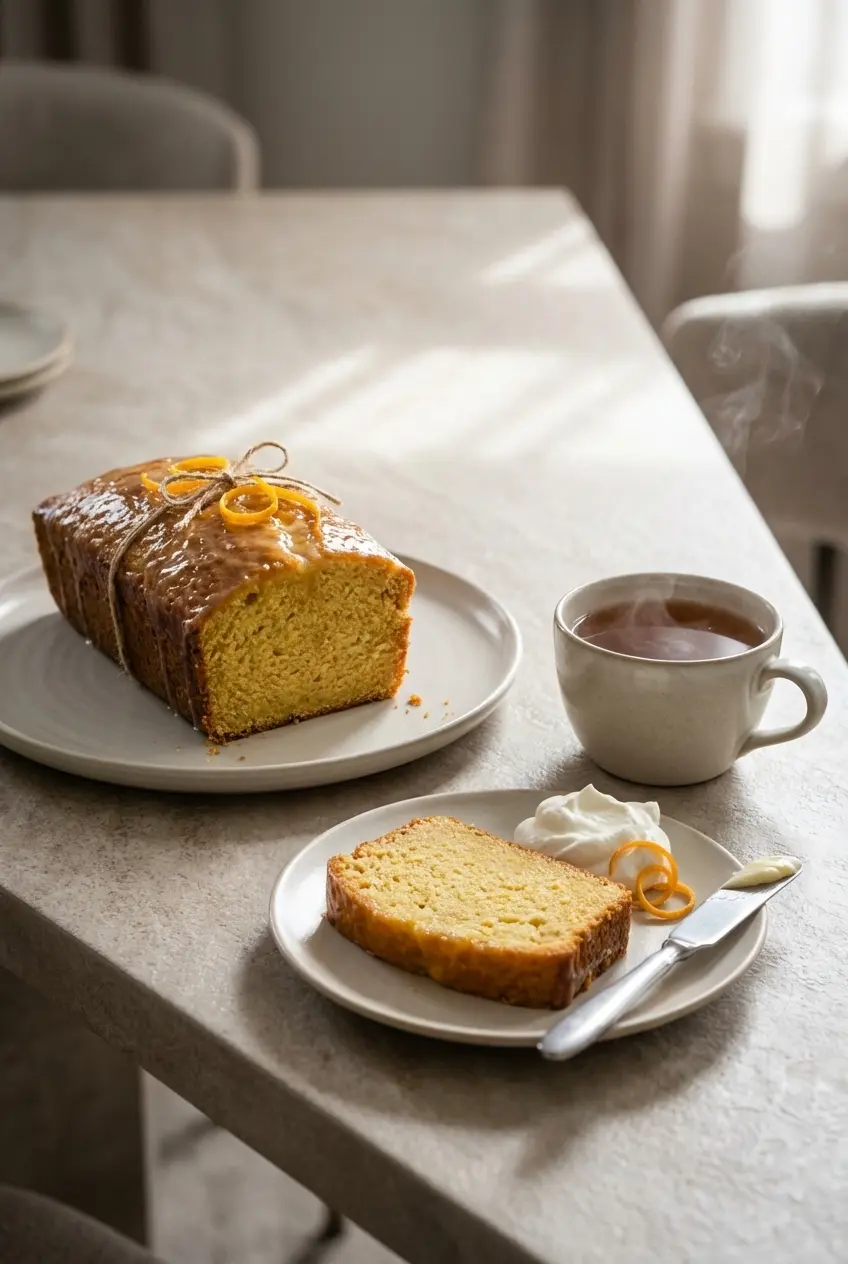
This cake is lovely served slightly warm with softly whipped cream and a little extra orange zest scattered over the top. If you want a dessert-plate finish, a scoop of vanilla bean ice cream beside it is hard to beat.
For tea time, I adore a slice spread with salted butter, or even a swipe of homemade orange butter if I want to lean into the citrus. A few chopped candied orange peels on top also make the loaf look especially pretty on a holiday table.
Storage & Make-Ahead
Once the cake is completely cool, wrap it tightly in plastic wrap to keep that moisture where it belongs. At room temperature, it keeps beautifully for up to 5 days, and the flavor is often best after the first full day of rest.
For longer storage, wrap mini loaves individually in plastic wrap and then place them in a freezer-safe bag or container. Freeze for up to 2 months, then thaw wrapped at room temperature so the crumb stays soft and the glaze does not turn patchy.
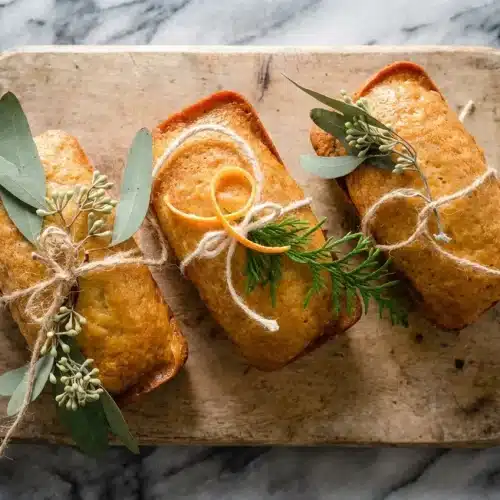
Orange Ginger Honey Cake

Equipment
- Four 6-inch mini loaf pans
- Small skillet
- Stand mixer
- Paddle attachment
- Cooling Rack
- Zester
Ingredients
- 250 grams all purpose flour ( 2 cups )
- 1.5 teaspoons baking powder
- 1/2 teaspoon baking soda
- 1 tablespoon fresh grated ginger or 2 teaspoons ground ginger
- 1 tablespoon fresh orange zest
- 113 grams unsalted butter ( 1/2 cups )
- 270 grams honey ( 3/4 cup )
- 2 tablespoons fresh orange juice
- 125 grams whole milk ( 1/2 cup )
- 2 large eggs room temperature
- 50 grams granulated sugar ( 1/4 cup )
Instructions
Prep the pans and brown the butter
- Heat your oven to 325℉ (160℃). Prepare four 6-inch mini loaf pans with non-stick spray, or lightly coat them with butter and flour so the cakes release cleanly later.
- Set the butter in a small skillet over medium heat and stir as it melts. Keep going until it turns foamy and develops a golden-brown color with a nutty aroma, then transfer it to the bowl of a stand mixer and let it cool to room temperature.
Mix the dry and wet components
- In a medium bowl, whisk together the sifted flour, baking powder, baking soda, ginger, and orange zest until evenly distributed. If using crystallized ginger, ensure it is separated so it does not clump in the batter.
- Add the cooled browned butter, honey, orange juice, milk, sugar, and slightly beaten eggs to the mixer bowl. Using the paddle attachment, beat on medium speed until the mixture is smooth and unified.
Finish the batter and bake
- Add the flour mixture gradually on medium speed, spooning it in a little at a time. Stop mixing as soon as a smooth batter forms and scrape down the sides of the bowl.
- Divide the batter evenly among the four prepared pans and set the pans on a cookie sheet.
- Bake for 28 to 30 minutes until a toothpick inserted in the center comes out clean. Loosely tent the loaves with foil halfway through baking to prevent the honey-rich tops from over-browning.
Cool and add the signature finish
- Set the pans on a cooling rack and let the cakes cool. Whisk together 1/4 cup honey and 2 tablespoons orange juice. Prick the warm tops with a skewer and spoon the soak over the cakes while they still hold some warmth.
Notes
Nutrition
Conclusion
This is the kind of cake that wins people over with one bite, citrusy, warmly spiced, and rich with that sticky honey finish. The crystallized ginger gives it character, and the orange soak is the little professional touch that makes it unforgettable.
If you enjoy bakes with bright citrus flavor, this is a wonderful place to start, and a pinch of extra spice or a different honey can make it feel like your own. The same orange-loving crowd usually has a soft spot for an orange creamsicle cake, too, especially when dessert calls for something sunny and fragrant.
Frequently Asked Questions
Can I use a standard loaf pan instead of mini pans?
How do I make this cake dairy-free?
Why is my honey cake dry?
Why did my honey cake sink in the middle?
Can I use ground ginger instead of fresh?
What is the best type of honey for baking cakes?
How do I store honey cake to keep it moist?
Is this cake suitable for Rosh Hashanah?


Is the 1/4 cup of honey extra or to be reserved from the 270g in the ingredients list?