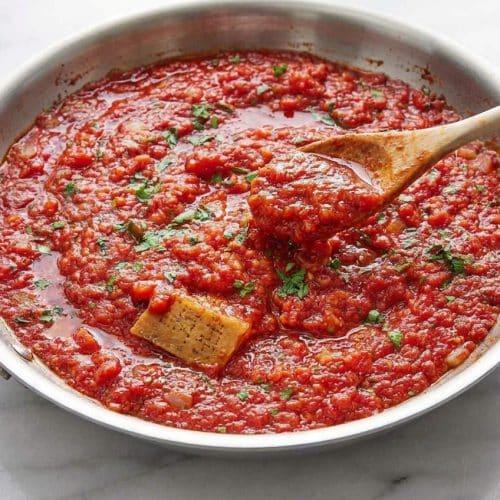
There’s a moment I wait for every time I make marinara sauce, when the kitchen shifts from quiet to deeply alive. Olive oil warms, onion turns sweet, and suddenly the air smells like an old-school Italian-American Sunday, even if it’s a Tuesday night in a small apartment.
This is the marinara sauce I lean on when I want something bright, fast, and unmistakably restaurant-worthy. It’s simple enough for weeknights, but I’ll also explain the little bit of kitchen science that makes it taste deeper, feel silkier, and cling to pasta like it belongs there.
Why You Will Love This Recipe
Umami, without fuss: Simmering a Parmesan rind in the sauce adds a savory backbone that tastes like you cooked all day, and it plays beautifully with good San Marzano tomatoes when you can get them.
Silky “chef finish”: My favorite trick is a quick monté au beurre at the end, whisking in cold butter so the sauce turns glossy and velvety, softening that sharp tomato bite through emulsification.
Skillet flavor, faster: I build this in a wide skillet, so simmering reduces quickly and concentrates flavor without turning the sauce dark and heavy.
Ingredients and Substitutions

These pantry basics layer into a sauce that’s aromatic, savory, and clean. The tomato paste brings depth, the aromatics bring sweetness, and the white wine lifts everything with a bright top note.
Ingredients
- 2 (14.5 ounce) cans Stewed tomatoes
- 1 (6 ounce) can Tomato paste
- 4 tablespoons Fresh parsley, chopped
- 1 clove Garlic, minced
- 1 teaspoon Dried oregano
- 1 teaspoon Salt
- 1/4 teaspoon Ground black pepper
- 6 tablespoons Olive oil
- 1/3 cup Onion, finely diced
- 1/2 cup White wine
Ingredient Notes & Substitutions
Canned tomatoes: Quality matters more than any extra seasoning. When I want the sweetest, least harsh sauce, I reach for San Marzano tomatoes, and true D.O.P. cans tend to be naturally balanced and less tinny.
Olive oil: Extra virgin olive oil gives you that round, fruity base that reads “Italian-American red sauce” right away. If your oil tastes bitter on its own, it will taste bitter in the pan too.
White wine: Wine isn’t just flavor, it helps deglazing, lifting the browned bits and their aroma into the sauce. A crisp, dry bottle works best, anything you’d happily sip alongside pasta.
Alcohol-free option: Chicken or vegetable stock with a teaspoon of lemon juice gives a similar bright lift. You still get that “wake up” note without using wine.
Parmesan rind and butter finish: The rind is the secret umami booster, and the cold butter at the end is what makes the texture feel professionally finished. If you skip the butter, the sauce will still be good, just less silky.
How to make marinara sauce
Blend the tomato base
Add the stewed tomatoes, tomato paste, parsley, garlic, oregano, salt, and black pepper to a food processor. Blend until the mixture looks completely smooth and cohesive, with no leafy flecks or paste streaks, and it smells boldly tomato-forward with a pop of herbs.
Sauté the aromatics
- Set a large skillet over medium heat and warm the olive oil until it shimmers and loosens, but does not smoke.
- Add the finely diced onion and cook for about 2 minutes, stirring often, until it turns glossy and slightly softened. Keep the color pale, because browned onion or garlic can push the sauce toward bitterness.
Simmer, reduce, and finish like a pro
- Pour the blended tomato mixture into the skillet, then stir in the white wine, scraping the bottom so any flavorful bits dissolve into the sauce.
- Add a clean Parmesan rind now and let it settle into the simmer, so it can slowly perfume the sauce with savory depth.
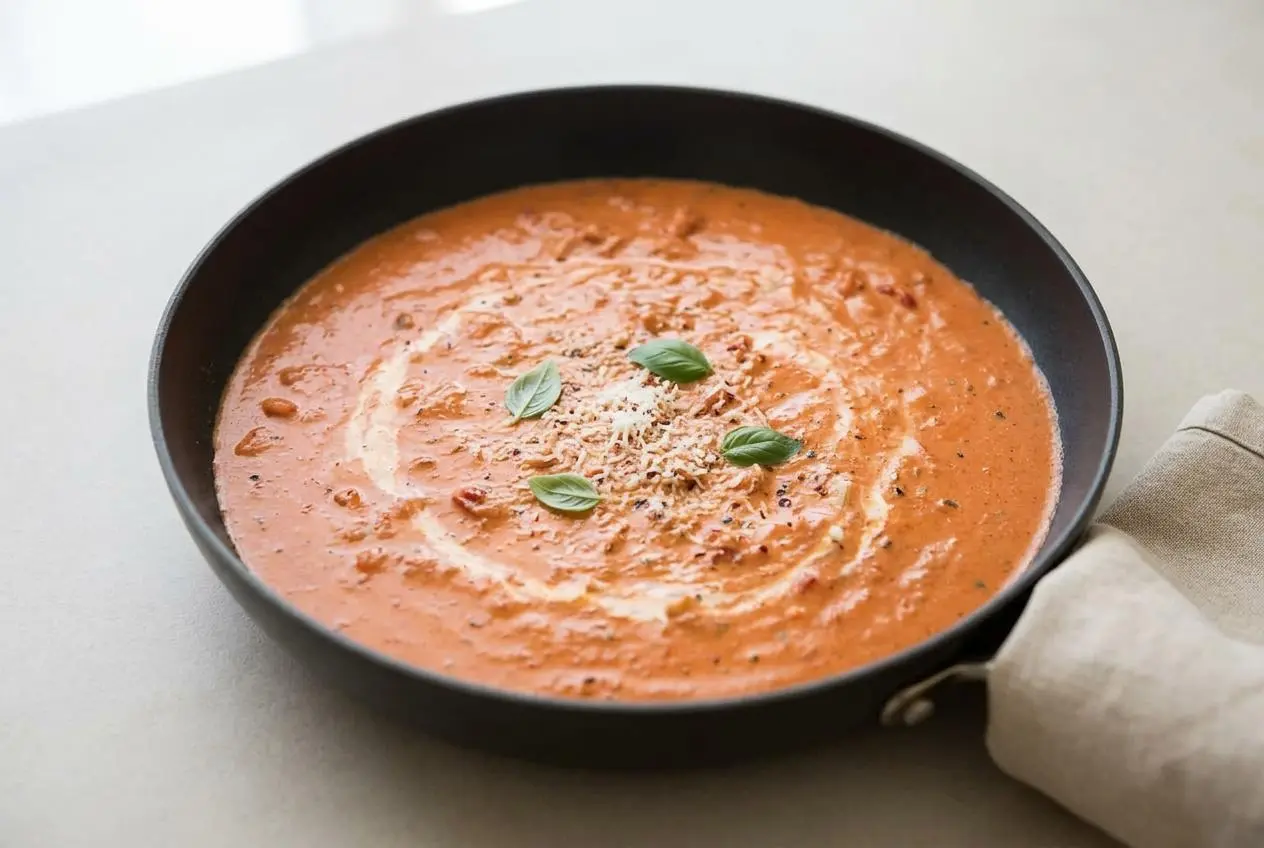
- Bring the sauce to a gentle simmer and cook, stirring occasionally, until it thickens, about 30 minutes. In a skillet, you’ll see steady bubbling and a richer red color as water evaporates and the sauce starts to coat the back of a spoon.
- Take the skillet off the heat, fish out the rind, and discard it. While the sauce is still hot, whisk in one tablespoon of cold butter until it melts in and the marinara turns glossy and softly velvety.
Chef Secrets for the Perfect Red Sauce

A wide skillet is not just convenience, it’s physics. More surface area means faster evaporation, so simmering concentrates tomato flavor quickly without needing extra paste or an endless cook.
Marinara is meant to stay bright and nimble, a quick sauce that tastes of tomatoes and aromatics. Pomodoro is typically thicker and smoother, often more “pure” tomato, and Sunday sauce is the long, slow, meat-simmered tradition, closer to a braise than a quick pasta topper.
If you love slow-cooked depth, a pot of short rib ragu shows how time and collagen change the game. Marinara is a different promise, fresh, lively, and ready when you are.
The Parmesan rind trick works because aged cheese is loaded with savory compounds. That “brothy” impression is tied to a high concentration of glutamate, which gently amplifies umami without making the sauce taste like cheese.
The monté au beurre finish is my favorite kind of quiet magic. Whisking in cold butter creates a micro-emulsion that rounds off acidity balance, so the sauce tastes smoother without dumping in sugar.
For top-tier cans, I look for labeling that matches real origin standards. The EU PDO certification is one clue that a San Marzano product follows strict rules.
Pro Tips & Troubleshooting
Pro Tips
- Use non-reactive cookware like stainless steel or enameled cast iron, acidic tomatoes can pick up a metallic taste in reactive pans.
- Keep the heat at a steady, gentle simmer, you want soft bubbling, not aggressive splattering.
- Let the skillet do the work, a wider surface reduces faster and keeps flavors bright.
- Stir fresh herbs like basil in at the very end, so their oils stay fragrant and vivid.
- Taste after reduction, as water cooks off, salt and oregano will read louder.
Common Mistakes to Avoid
- Letting the onion or garlic brown too much, it can turn the sauce bitter and harsh.
- Fixing a watery sauce by adding more paste, reduction in the skillet keeps the flavor cleaner.
- Simmering until the sauce turns dark and heavy, marinara should stay vibrant and tomato-bright.
- Using reactive cookware that makes the sauce taste metallic, especially with long simmering.
When acidity feels too sharp, a tiny pinch of baking soda can help. Guidance on using it to neutralize acidity lines up with what many of us learned on the line, add a little, stir, then taste.
Serving & Storage

Serving Ideas
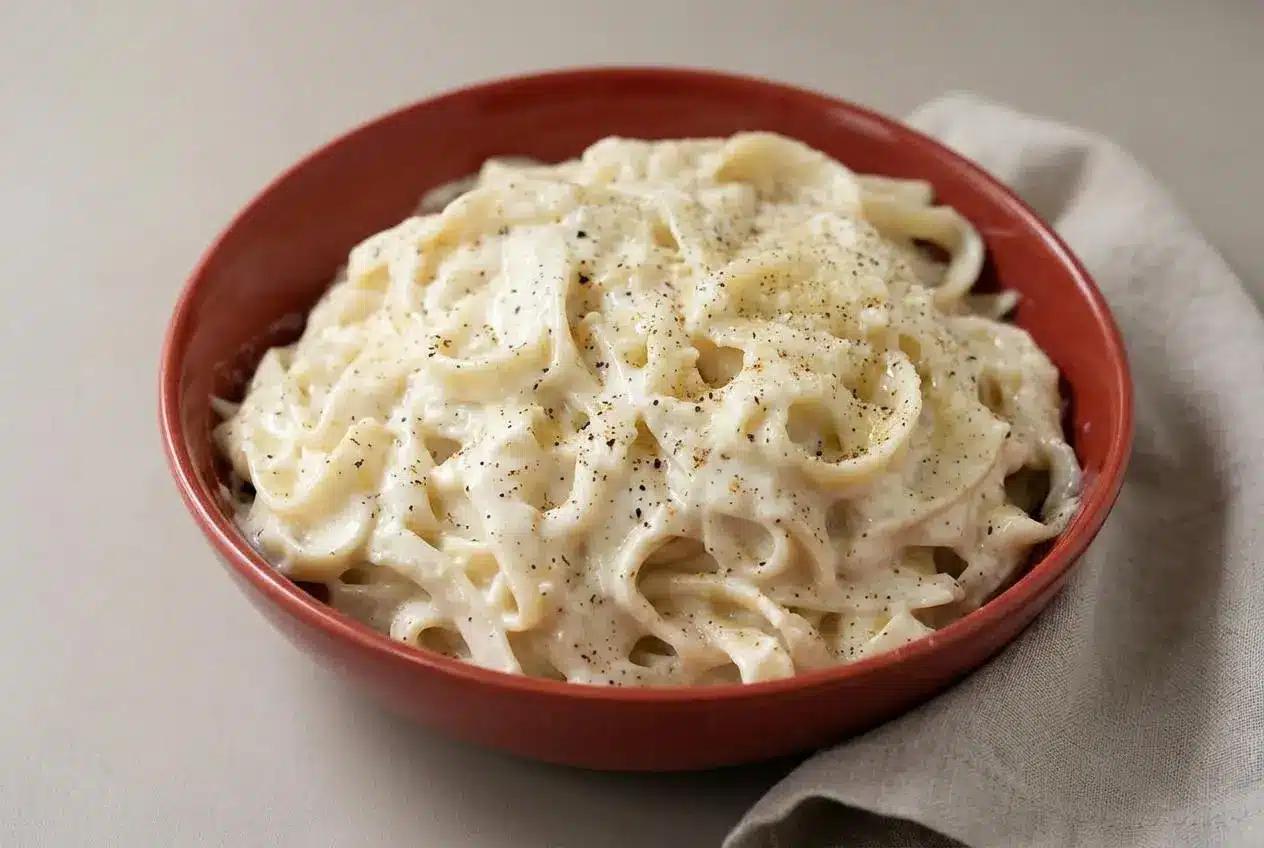
For the classic move, toss this with al dente spaghetti and finish with freshly grated Pecorino Romano. That salty, sheepy bite loves a bright marinara sauce, especially when the butter finish makes it cling.
Warm marinara is a gorgeous dip for mozzarella sticks or calamari, because the sauce stays light instead of muddy. On a snacky night, a burrata appetizer turns it into a downright fancy starter with very little effort.
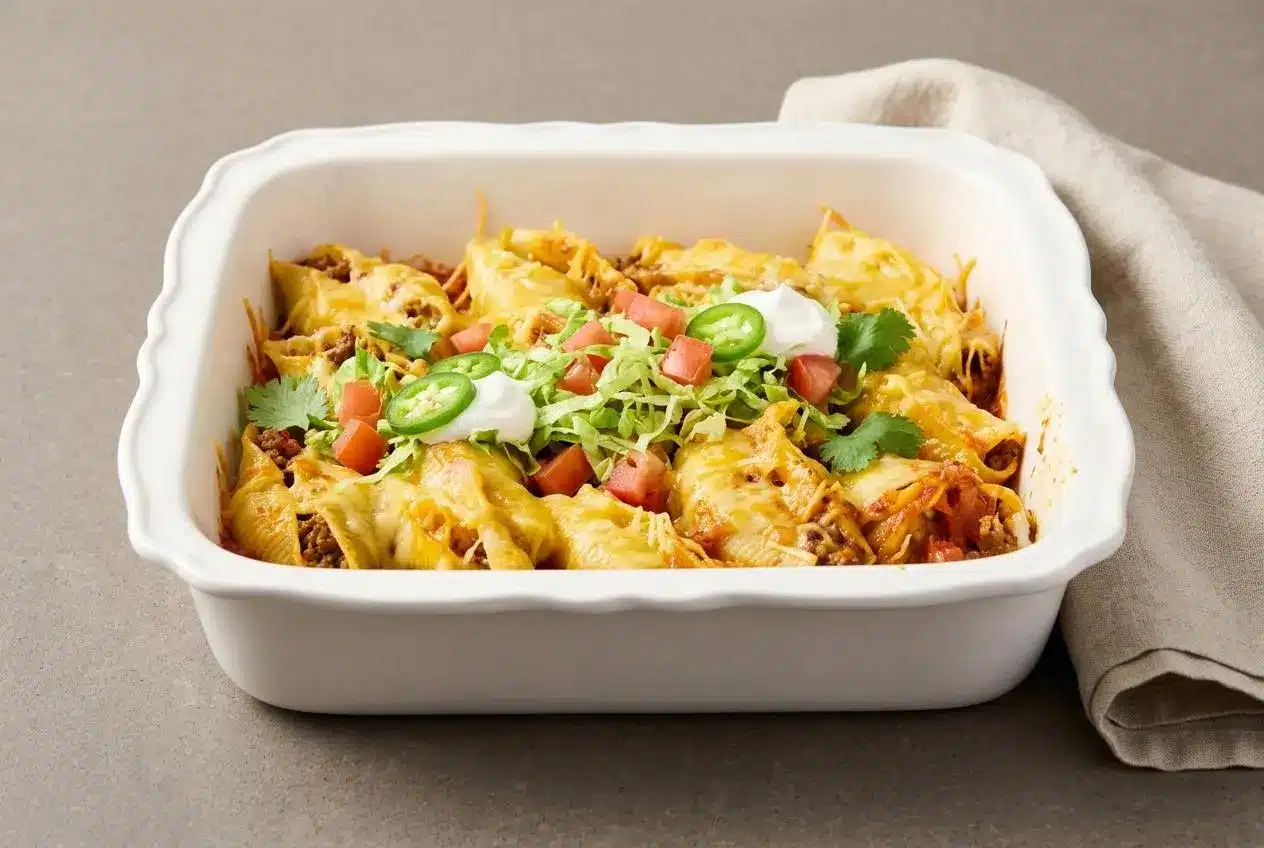
As a baked-pasta base, it’s perfect for Baked Ziti or Eggplant Parmesan, since it reduces cleanly and won’t waterlog the pan. A tray of stuffed shells also loves this sauce, especially when you spoon it on thick before baking.
It’s also a great match with seafood when you keep it bright and not too heavy. A light seafood pasta benefits from marinara that’s clean, aromatic, and gently sweet.
Storage and Food Safety
Even with wine in the pot, storage is the same as other tomato sauces, cool it quickly and refrigerate in a sealed container. The alcohol content cooks off during simmering, but treat leftovers with standard food-safety habits.
In the fridge, I keep it for up to 4 days, and I reheat only what I need. For longer storage, freeze in airtight containers for up to 3 months, leaving a little headspace for expansion.
To reheat without breaking that delicate butter emulsion, warm the sauce gently over low heat and stir often. If it looks a bit separated, a small splash of hot water and a quick whisk usually brings it back together.
Classic Homemade Marinara Sauce

Equipment
- Food processor
- Large Skillet
- Whisk
Ingredients
- 2 (14.5 ounce) cans Stewed tomatoes San Marzano D.O.P. tomatoes are highly recommended for the best flavor.
- 1 (6 ounce) can Tomato paste
- 4 tablespoons Fresh parsley, chopped
- 1 clove Garlic, minced
- 1 teaspoon Dried oregano
- 1 teaspoon Salt
- 1/4 teaspoon Ground black pepper
- 6 tablespoons Olive oil Use high-quality extra virgin olive oil for a fruity base.
- 1/3 cup Onion, finely diced
- 1/2 cup White wine A dry bottle works best; or substitute with stock and lemon juice.
Instructions
Blend the tomato base
- Add the stewed tomatoes, tomato paste, parsley, garlic, oregano, salt, and black pepper to a food processor. Blend until the mixture is completely smooth and cohesive.
Sauté the aromatics
- Warm the olive oil in a large skillet over medium heat until it shimmers. Add the diced onion and sauté for about 2 minutes until glossy and softened, making sure not to brown the onions.
Simmer, reduce, and finish like a pro
- Pour the blended tomato mixture and the white wine into the skillet. Stir well to deglaze the pan and dissolve any flavorful bits into the sauce.
- Add a clean Parmesan rind into the sauce. Bring the mixture to a gentle simmer and cook for approximately 30 minutes, stirring occasionally, until the sauce thickens and coats the back of a spoon.
- Remove the skillet from the heat and discard the Parmesan rind. While the sauce is still hot, whisk in one tablespoon of cold butter until fully melted and the sauce appears glossy and velvety.
Notes
Nutrition
Conclusion
This marinara sauce is everything I want in a red sauce, bright, aromatic, and savory, with a velvety finish that feels like a chef cooked it for you. The Parmesan rind gives deep umami, and the cold-butter whisk at the end makes the tomatoes taste smoother and more luxurious.
Once you’ve done it this way, you’ll start looking at rinds and leftover odds and ends differently. Keep it classic, or nudge it toward arrabbiata with red pepper flakes, the method stays solid either way.