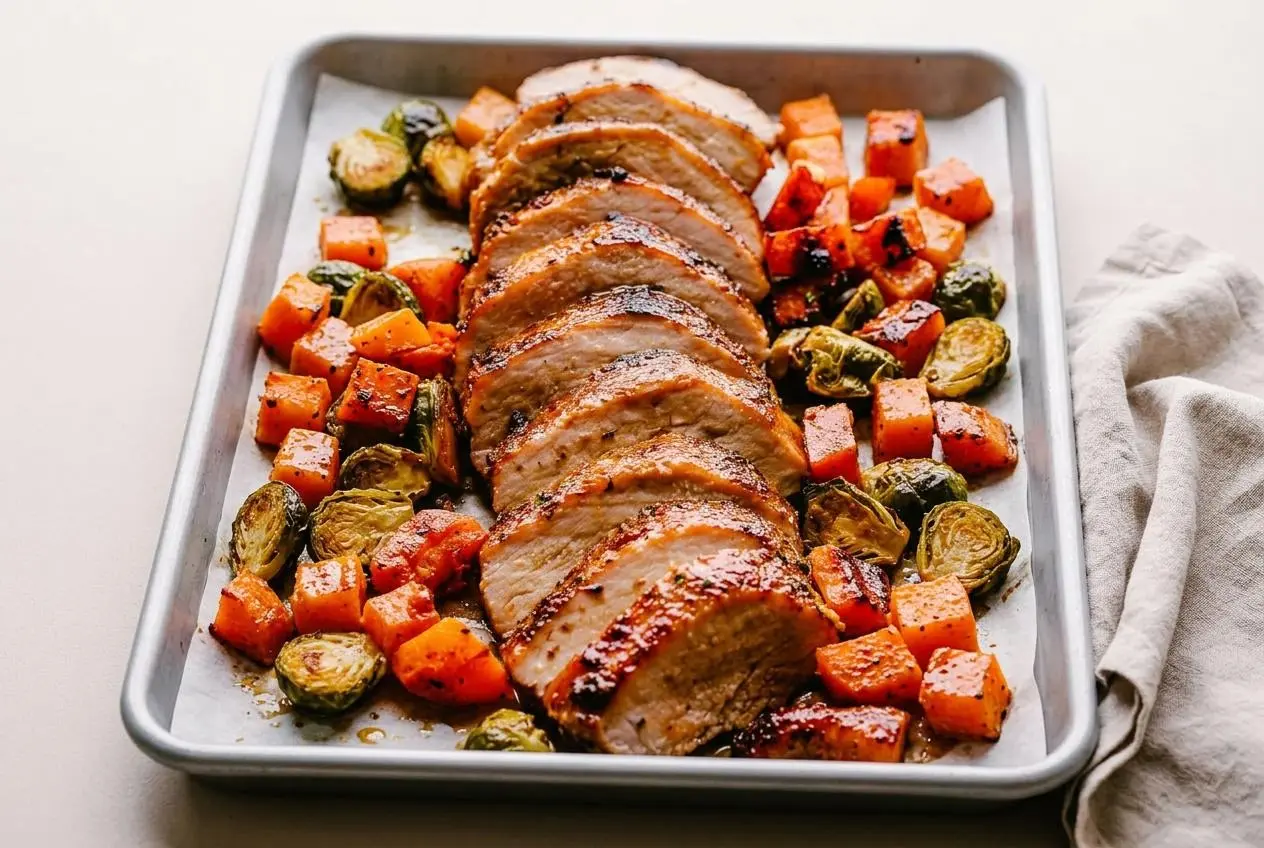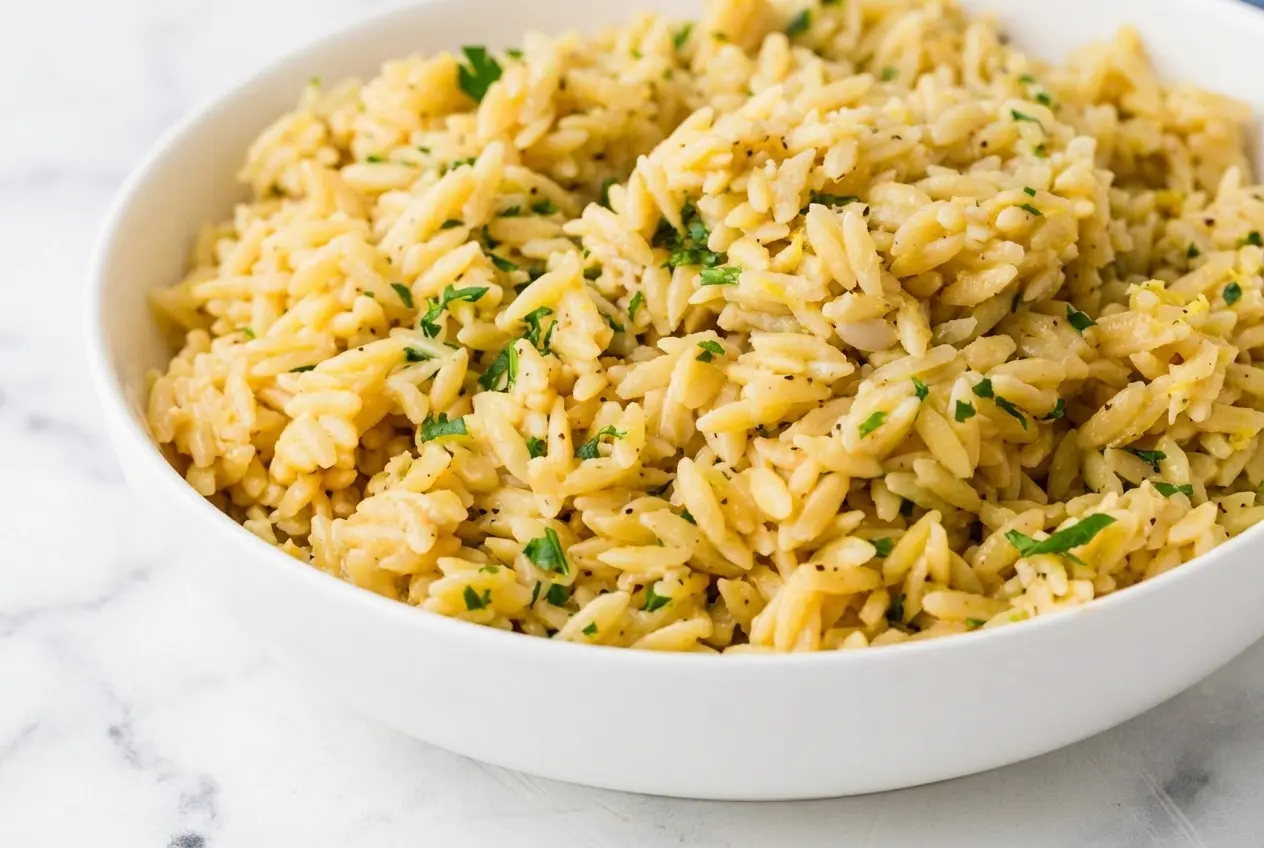
Some nights call for a side dish that feels a little polished without turning dinner into a project. When I want something quick, comforting, and just a touch elegant, this Lemon Orzo Recipe is the one I reach for, because it lands right between cozy and dinner-party worthy.
The finished bowl is bright, velvety, nutty, comforting, and zesty all at once. I’ll walk you through the foolproof method I use to get creamy, glossy orzo pasta without a drop of heavy cream, so you get that rich restaurant feel from a simple skillet on a weeknight.
Why You’ll Love This Recipe
Weeknight luxury: This dish comes together fast, but it tastes like you stood at the stove much longer. In my kitchen, that balance of ease and elegance is exactly what makes it such a dependable side dish.
Toasted flavor: Letting the dry orzo pasta toast until golden gives the semolina a deeper, nuttier character. That quick step adds a savory backbone that keeps the lemon from tasting too sharp.
The secret twist: I finish the skillet risotto-style, stirring in very cold butter and finely grated Parmesan cheese off the heat. That little mantecatura move turns the starches into a glossy sauce that clings to every piece.
Creamy without cream: The absorption method does the heavy lifting here. If you already love the silky, citrusy feel of lemon parmesan pasta, this orzo delivers that same bright comfort in a spoonable, extra-cozy form.
Ingredients and Substitutions
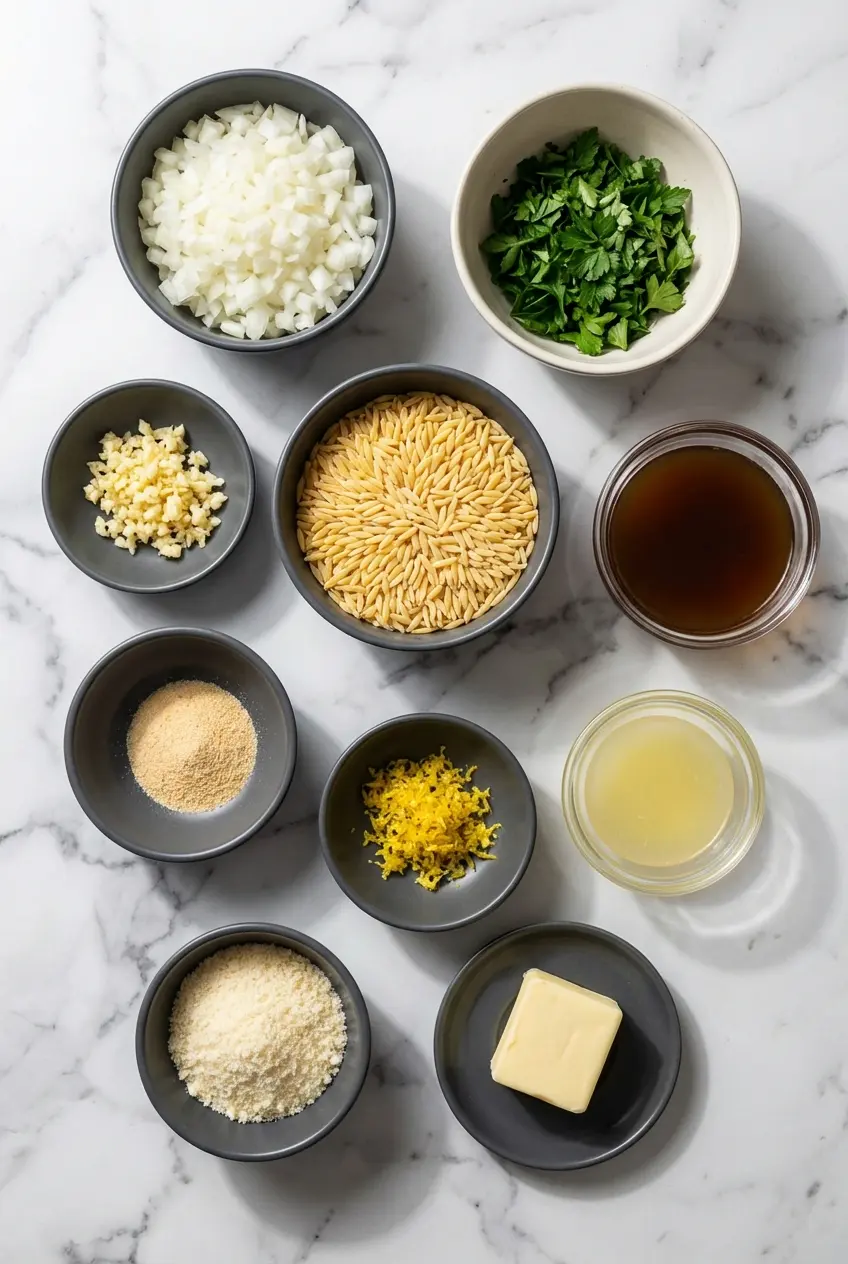
A short list of pantry staples does all the work here, with lemon, broth, butter, and Parmesan building a silky finish around tender orzo.
Ingredients
- 1 tablespoon olive oil
- 1/2 onion, finely diced (or 1 shallot)
- 2 to 3 garlic cloves, minced
- 1/2 teaspoon garlic powder
- 1/2 teaspoon salt
- 1/2 teaspoon ground black pepper
- 1 1/4 cups dry orzo pasta, 8-ounces
- 2 1/2 cups chicken broth
- 1 lemon zest from
- 3 tablespoons fresh lemon juice
- 1/3 cup grated parmesan cheese
- 2 to 3 tablespoon butter
- fresh chopped parsley
Ingredient Notes & Substitutions
Fresh lemon juice: Freshly squeezed juice really matters here. Bottled juice gives you acidity, but it misses the bright, floral character that makes a lemony pasta dish taste lively instead of flat.
Chicken broth: Since broth becomes the cooking liquid and the sauce base, use one you actually enjoy sipping. A good vegetable stock works beautifully if you want a vegetarian version, and it still gives the orzo plenty of savory depth.
Parmesan cheese: A wedge of Parmesan grated at home melts far more smoothly than pre-shredded cheese. Those packaged shreds often carry anti-caking agents, and I’ve found they can leave the final sauce slightly grainy instead of silky.
Butter and dairy-free swaps: Very cold butter helps the sauce emulsify into that glossy finish, so don’t let it sit out first. If you need a dairy-free version, plant-based butter plus nutritional yeast or a vegan parmesan alternative can still give you a creamy, savory result.
Onion or shallot: Either works, so use what’s in the drawer. Shallot leans sweeter and a little more delicate, while onion brings a sturdier all-American pantry flavor that plays well with garlic cloves and lemon zest.
How to Make Lemon Orzo Recipe
Build the flavor base
- Set a large, high-sided skillet over medium heat and add the olive oil. Once the oil looks loose and shiny, add the finely diced onion, or shallot, and cook for 2 to 3 minutes until softened and translucent, stirring now and then so it turns tender without browning too much.
- Add the minced garlic, garlic powder, salt, and black pepper. Stir for 30 seconds, just until the pan smells fragrant and savory, because garlic can go from perfect to bitter in a hurry.
Toast and simmer the orzo
- Tip the dry orzo into the skillet and stir it constantly for 1 to 2 minutes. You want the pasta to take on a light golden color and release a nutty aroma, which is your signal that the semolina has toasted properly.
- Pour in the chicken broth, give everything a thorough stir, and bring it up to a gentle simmer. Let the orzo cook for about 10 minutes, stirring occasionally so the starches do not catch on the bottom, until the pasta is al dente and most of the liquid has been absorbed. If the skillet starts looking too tight before the orzo is tender, loosen it with a small splash of water or extra broth.
Finish with the creamy lemon sauce
Take the skillet completely off the heat, then stir in the lemon zest, fresh lemon juice, grated parmesan cheese, and butter. Stir vigorously until the cheese and butter melt into the residual starch, creating a creamy, glossy sauce that coats the orzo instead of pooling around it.
Season and serve
Taste and add a little more salt or black pepper if needed, then finish with fresh chopped parsley. Serve it while it is hot and loose, when the texture is at its most velvety.
Secrets for Perfection

The ratio is the first key to getting this right, 2 1/2 cups broth to 1 1/4 cups orzo. That is a clean 2-to-1 liquid ratio, so if you want to scale the recipe up or down, you can do the math confidently without ending up with a soupy skillet.
Toasting the dry pasta is more than a flavor trick. As the semolina hits the hot skillet, it begins developing deeper roasted notes through browning, which softens the sharp edge of the lemon and makes the whole dish taste rounder and richer.
The final texture depends on what happens after the heat goes off. Cold butter, finely grated Parmesan, and quick stirring pull the starches and fat together into a creamy suspension, the same logic that makes a good risotto look glossy instead of greasy.
The Science of the Absorption Method
Cooking orzo like rice instead of boiling it like traditional pasta changes the whole personality of the dish. With the absorption method, the starch released from the pasta stays right in the skillet, which is exactly what gives you that velvety sauce.
When orzo pasta is boiled in a big pot of water and drained, much of that precious surface starch goes down the sink. In this recipe, the broth is absorbed little by little into the semolina, so the starch, flavor, and moisture stay concentrated where you want them.
A gentle simmer matters just as much as the liquid ratio. If the skillet boils too aggressively, the outside of the orzo can swell and split before the center reaches that ideal al dente bite, leaving you with mushy pasta instead of tender grains with a little structure.
I also keep an eye on the pan and stir often because orzo is small and quick-cooking. It is closer to rice in behavior than many people expect, which is why the skillet method feels so controlled and gives a better sauce than the standard drain-and-dress approach.
Pro Tips & Troubleshooting
Pro Tips
- Warm broth works better than cold broth because it keeps the skillet temperature steady and helps the orzo start simmering without a long pause.
- Grate Parmesan from a block whenever possible. It melts more smoothly and gives the sauce a silkier finish.
- Add the lemon juice only at the end and off the heat, so the flavor stays fresh and vibrant instead of turning dull or bitter.
- Stir frequently while the orzo simmers, especially in the last few minutes, because the starches can make it stick to the bottom fast.
Common Mistakes to Avoid
- Walking away from the stove is the fastest route to scorched orzo. This pasta absorbs liquid quickly, and it needs a little attention.
- A hard boil can ruin the texture. Even though you add all the broth at once, keep it at a gentle simmer so the pasta cooks evenly and stays pleasantly al dente.
- Skipping the zest is a flavor loss. Lemon zest carries the most concentrated citrus aroma, so the dish tastes flatter if you rely only on juice.
- Gummy or sticky orzo usually points to one of two things, the pasta was not toasted first, or it was not stirred enough during simmering. The fix is simple, toast until lightly golden and keep the skillet moving.
Serving & Storage
Serving Ideas
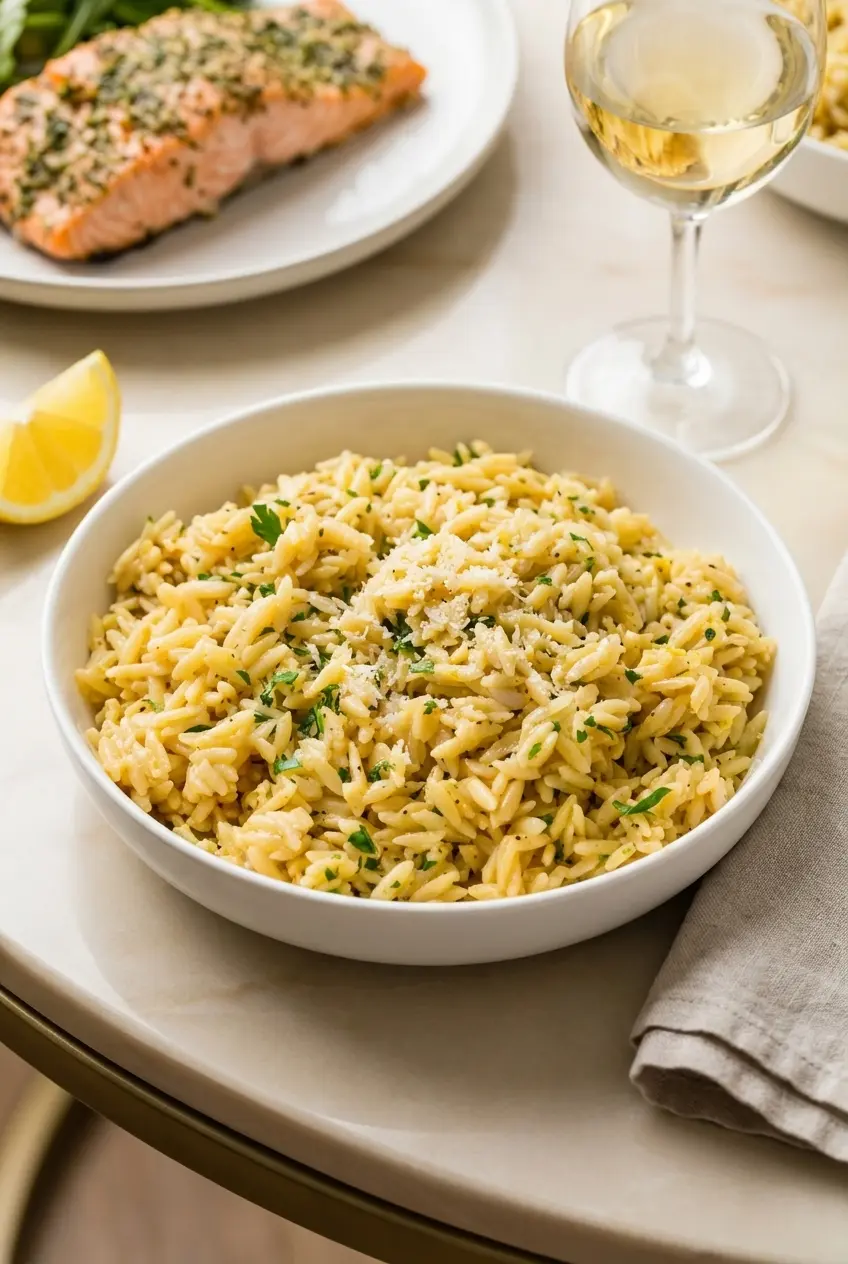
This lemony orzo makes a beautiful partner for herb-crusted salmon or a simple pan-seared flank steak. I also love it next to lemon chicken, because the bright citrus notes echo each other without making the plate feel heavy.
If you want to turn it into more of a main course, stir in spinach, frozen peas, or chopped asparagus during the last 2 minutes of cooking. A few pan-seared scallops or garlic butter shrimp on top make it feel downright special.
For finishing touches, add extra Parmesan, a pinch of red pepper flakes, and a drizzle of good extra virgin olive oil. A crisp white wine like Pinot Grigio or Sauvignon Blanc fits the zesty, buttery profile beautifully.
Storage & Make-Ahead
Leftovers should be cooled and stored in an airtight container in the refrigerator. The orzo will thicken as it sits, which is perfectly normal because the starches continue to set up when chilled.
When reheating, always add a splash of chicken broth or water before warming it on the stove or in the microwave. That little bit of extra liquid wakes the starches back up, loosens the texture, and keeps the cold orzo from clumping into a tight mass.

Lemon Orzo Recipe

Equipment
- Large high-sided skillet
Ingredients
- 1 tablespoon olive oil
- 1/2 onion , finely diced (or 1 shallot)
- 2 to 3 garlic cloves , minced
- 1/2 teaspoon garlic powder
- 1/2 teaspoon salt
- 1/2 teaspoon ground black pepper
- 1 1/4 cups dry orzo pasta , 8-ounces
- 2 1/2 cups chicken broth
- 1 lemon zest from
- 3 tablespoons fresh lemon juice
- 1/3 cup grated parmesan cheese
- 2 to 3 tablespoon butter
- fresh chopped parsley
Instructions
Build the flavor base
- Set a large, high-sided skillet over medium heat and add the olive oil. Once the oil looks loose and shiny, add the finely diced onion or shallot. Cook for 2 to 3 minutes until softened and translucent, stirring occasionally so it turns tender without browning.
- Add the minced garlic, garlic powder, salt, and black pepper. Stir for 30 seconds, just until the pan smells fragrant and savory, making sure the garlic does not burn.
Toast and simmer the orzo
- Tip the dry orzo into the skillet and stir it constantly for 1 to 2 minutes. The pasta should take on a light golden color and release a nutty aroma, signaling that the semolina has toasted properly.
- Pour in the chicken broth, give everything a thorough stir, and bring it up to a gentle simmer. Let the orzo cook for about 10 minutes, stirring occasionally so the starches do not catch on the bottom. Cook until the pasta is al dente and most of the liquid has been absorbed. If the skillet starts looking too dry before the orzo is tender, loosen it with a small splash of water or extra broth.
Finish with the creamy lemon sauce
- Take the skillet completely off the heat, then stir in the lemon zest, fresh lemon juice, grated parmesan cheese, and butter. Stir vigorously until the cheese and butter melt into the residual starch, creating a creamy, glossy sauce that evenly coats the orzo.
Season and serve
- Taste the dish and add a little more salt or black pepper if needed. Finish with fresh chopped parsley and serve immediately while it is hot, loose, and velvety.
Notes
Nutrition
Conclusion
This is the kind of side dish that earns a permanent place in a weeknight rotation, because it gives you a rich, risotto-like finish with almost no fuss and no heavy cream. The toasted orzo, fresh lemon, and off-the-heat butter-Parmesan finish do all the magic.
Once you try the mantecatura technique, it is hard not to use it again. And if you’re building a full citrusy dinner menu, a slice of lemon tart after dinner feels like the perfect bright ending.