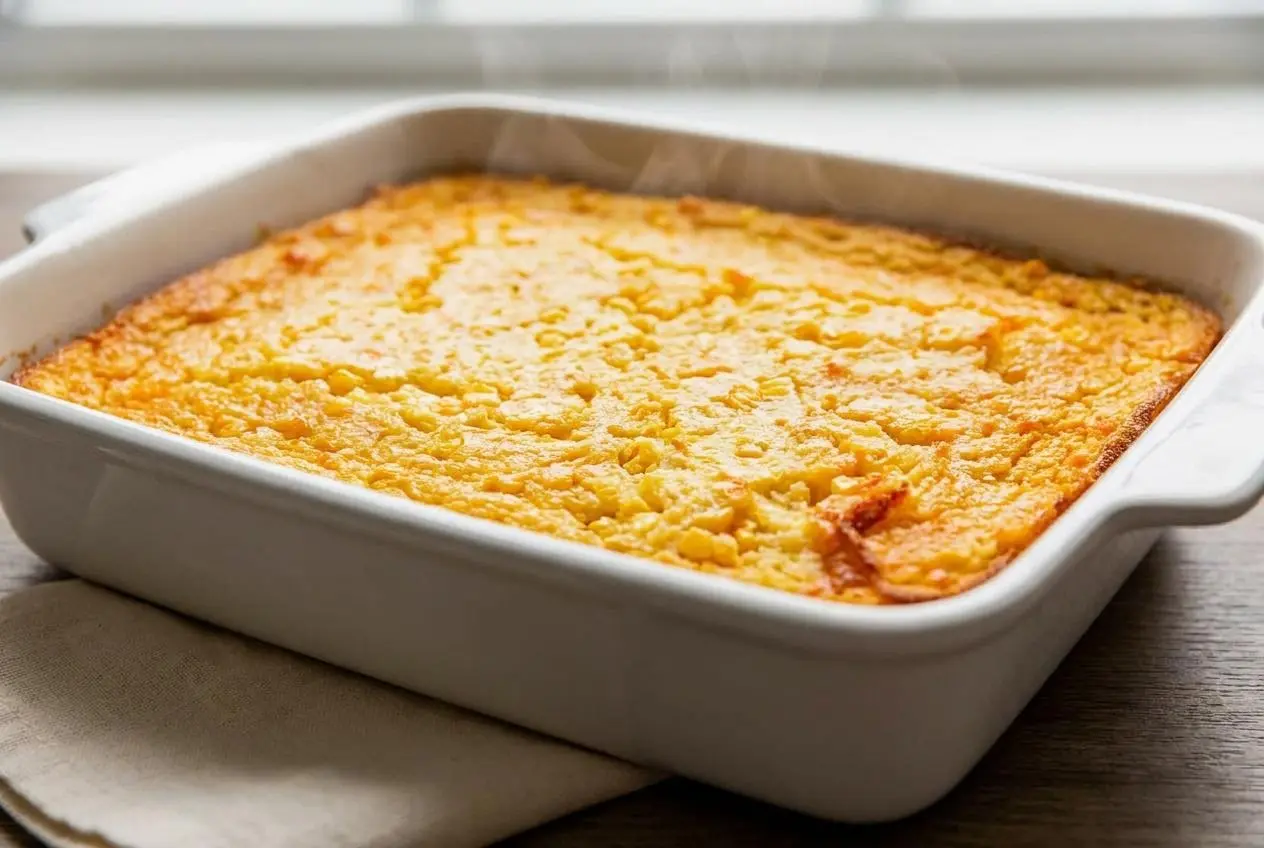
Classic Jiffy corn casserole is made by mixing dry Jiffy Corn Muffin Mix with corn, creamed corn, sour cream, melted butter, and egg, then baking at 350F for 50 to 55 minutes until golden and set.
This jiffy corn casserole recipe gives you that sweet, buttery, custardy side dish people expect on a holiday table, but it is easy enough for any Sunday dinner too.
The kitchen starts smelling like warm cornbread and sweet corn as it bakes, and a few small details make all the difference. The dry mix, the pan size, and the rest time matter here.
Use an 8×8-inch baking dish, not a deeper or smaller pan, so the center sets before the edges get too dark.
Essential Ingredients and Their Kitchen Roles
Each ingredient has a real job here, from building the soft custardy center to creating the golden top and buttery corn flavor.
- 15 ounces canned whole-kernel corn, drained (1 can)
- 15 ounces canned creamed corn (1 can)
- 1 cup sour cream or plain Greek yogurt
- 1/2 cup unsalted butter, melted (1 stick)
- 1 large egg
- 8.5 ounces Jiffy Corn Muffin Mix (1 box)
The whole-kernel corn brings little pops of sweetness and texture. It should be drained well so the batter stays thick enough to bake up tender instead of watery.
Creamed corn is the moisture engine of the casserole, so do not drain it. That soft, loose corn mixture gives the finished dish its pudding-like middle and helps keep the bake rich instead of crumbly.
Sour cream adds tang, richness, and tenderness. Full-fat sour cream gives the softest texture, while plain Greek yogurt works well when you want a slightly brighter flavor.
Melted butter rounds everything out with that classic buttery comfort-food flavor and helps the edges brown nicely in the baking dish.
The egg gives the casserole more structure. It helps the center set, lifts the batter a bit as it bakes, and nudges the texture toward fluffy rather than loose spoonbread.
The Jiffy Corn Muffin Mix goes in completely dry. Do not prepare it first and do not follow the box directions, because this batter already has the moisture and fat it needs.
I always drain the whole-kernel corn very thoroughly here, because even a little extra liquid can push the casserole from custardy into soggy.
How to Make Classic Corn Casserole
- Heat the oven to 350F and grease an 8×8-inch baking dish.
The dish should be ready before the batter is mixed so it can go straight into the oven at the right depth. - Whisk the drained whole-kernel corn, creamed corn, sour cream, melted butter, and egg in a large bowl until evenly combined.
The mixture should look glossy, creamy, and loose, with whole corn kernels suspended throughout. - Stir in the Jiffy Corn Muffin Mix just until no dry patches remain.
Stop mixing once the batter looks thick and spoonable, because overmixing can make the casserole heavier and more bread-like. - Spread the batter into the prepared dish and bake for 50 to 55 minutes.
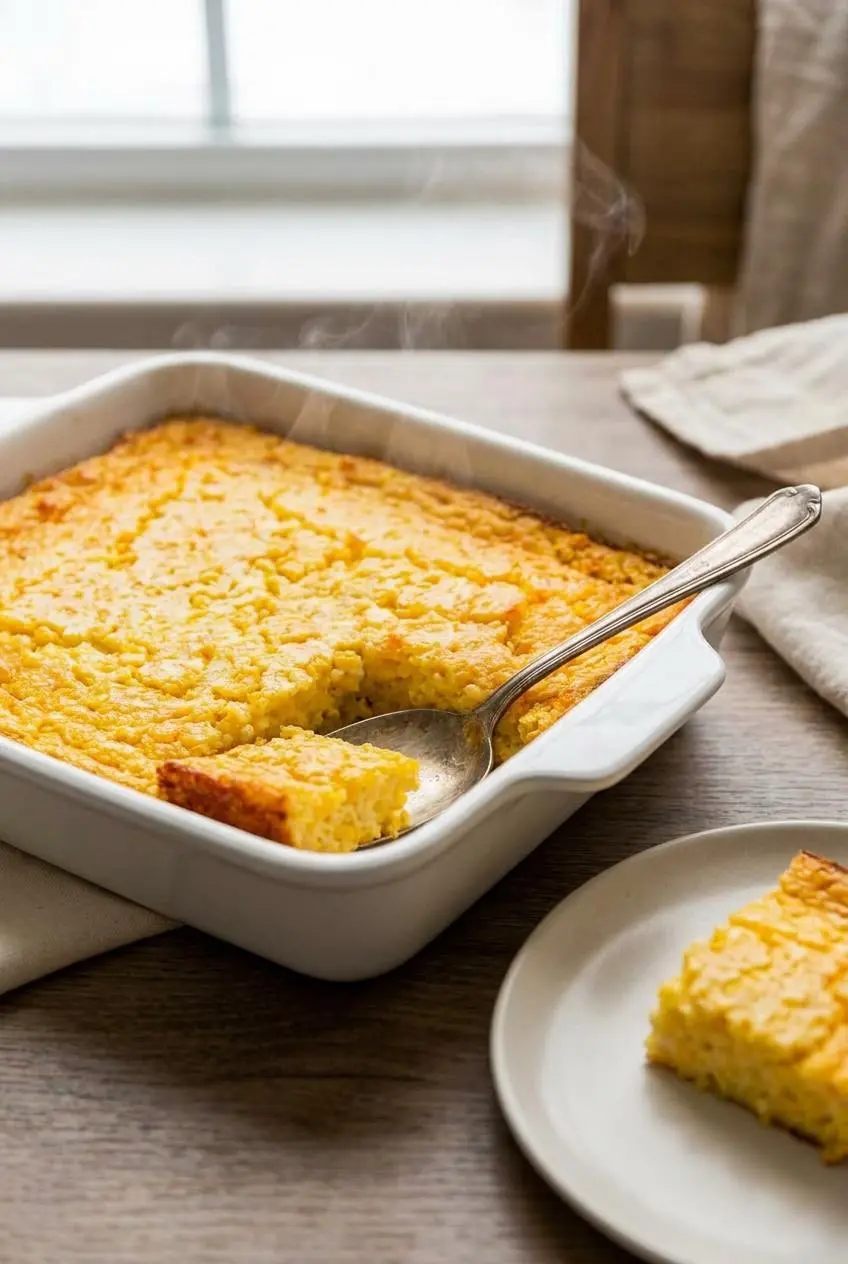
By about the 40-minute mark, you should notice a sweet cornbread aroma and see the edges turning golden. - Check for doneness, then let the casserole rest for at least 10 minutes before serving.
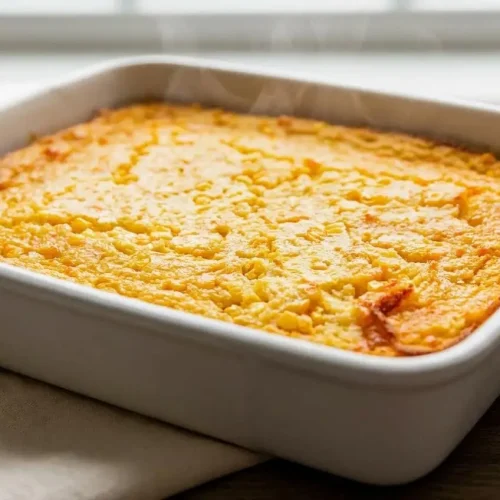
The top should be golden brown, and when you gently tap the side of the dish, the center should show only a slight, stable wobble rather than a loose slosh.
If you like a classic holiday texture, serve this warm with turkey, ham, or roast beef. A pat of honey butter or a shower of sliced green onions works well too.
If you want a firmer corn bake for comparison, a traditional cornbread casserole has a more structured slice and less custardy middle.
Troubleshooting a Runny Center
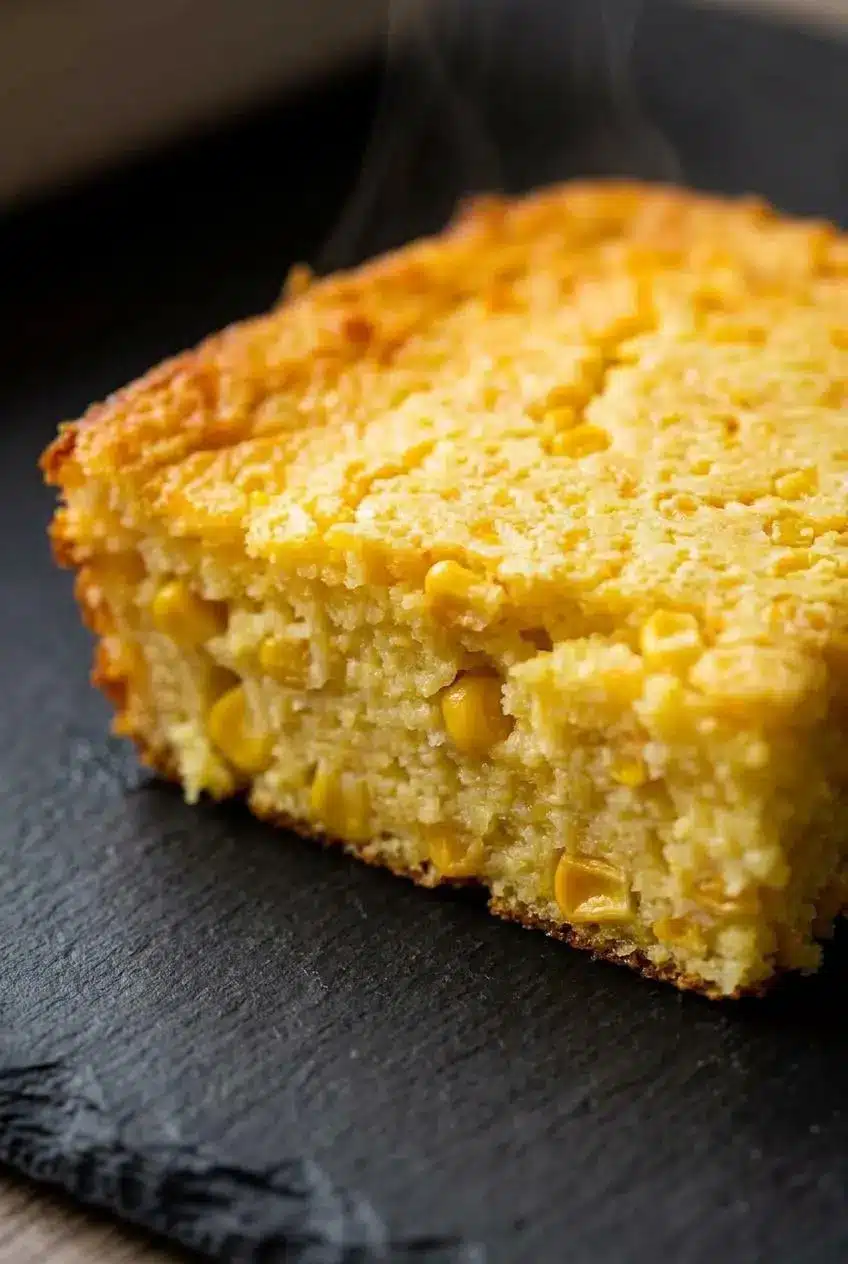
A corn casserole that looks done around the edges but stays wet in the middle is a common kitchen headache. The fix is usually simple if you know what caused it.
- The center is still loose after the top is golden: Loosely tent the dish with foil and keep baking at 350F in 5-minute increments. The foil slows further browning while the middle catches up.
- The batter was too wet from the start: Extra liquid from poorly drained whole-kernel corn can keep the casserole from setting properly. Drain that can very well every time, but leave the creamed corn undrained.
- The pan was too deep or too small: A deeper layer of batter takes longer to cook through, so the edges can brown before the center sets. Stick with an 8×8-inch pan for the stated timing.
- The casserole looks raw and dense: Overmixing after adding the dry muffin mix can tighten the batter and change how it bakes. Stir only until the dry mix disappears.
- The top is getting dark too early: Keep the oven at 350F and use foil rather than raising the heat. Higher heat tends to exaggerate the problem by setting the outside faster than the center.
- The dish bakes unevenly: Dark metal and smaller pans often brown faster, while glass can hold heat longer after baking. Watch the center, not just the edges, when deciding if it is done.
If you want an extra checkpoint, insert a toothpick into the exact center. It should come out mostly clean, not coated in wet batter.
Fluffy Cake vs. Custard Pudding: The Egg Factor
The egg changes this casserole more than people expect. It is the main reason this version slices neatly after resting instead of behaving like a very soft corn pudding.
With 1 egg, you get a nice middle ground. The casserole stays moist and custardy, but it also has enough structure to scoop or cut into squares without collapsing.
With 2 eggs, the batter bakes up lighter and more cake-like. The center rises more, the texture feels a bit fluffier, and the dish leans closer to corn bread than pudding.
With no eggs, the casserole turns richer, denser, and more spoonable. Some people love that soft spoonbread style, but it will not hold its shape as cleanly.
If you are feeding a holiday crowd that expects tidy servings, keep the egg in. If you prefer a looser comfort-food texture, you can lean in that direction on purpose instead of wondering what went wrong.
Gourmet Variations and Swaps
This base is classic on its own, but it also handles a few smart upgrades very well. Keep them optional so the original texture stays predictable.
A tiny pinch of smoked paprika and a small splash of maple syrup can gently deepen the flavor without making the casserole taste like dessert. The paprika adds warmth, and the maple plays up the corn’s natural sweetness.
For a bigger savory turn that can move from holiday side to cozy dinner territory, a chili cornbread casserole is a natural next stop.
Cheesy Cheddar Corn Casserole
Fold 1 cup of freshly shredded sharp cheddar into the batter before baking if you want a richer, slightly more savory version.
Shred the cheese from a block instead of using pre-bagged cheese. It melts more smoothly and keeps the batter from turning grainy. If you want a cheesy top, sprinkle a little extra over the casserole during the final 5 minutes of baking.
Pepper jack also works if you want more kick, but sharp cheddar gives the cleanest classic cheesy flavor.
Gourmet Garlic and Herb Boursin Casserole
Soft garlic and herb cheese melts into this batter easily and gives the casserole a deeper savory note.
To use it, blend the cheese into the warm wet mixture before adding the dry muffin mix. Soft cheeses like Boursin loosen quickly with the residual warmth from the melted butter, so they disappear into the batter more evenly than firmer cheeses.
This variation softens the sweet edge of the corn and makes the casserole feel more dinner-party than potluck, in the best way.
Smoky and Spicy Jalapeno Variation
Stir in a 4-ounce can of drained diced green chiles or some fresh sliced jalapenos for gentle heat.
The spice balances the sweetness of the corn instead of overpowering it. If you use fresh jalapenos, the flavor is brighter and greener. If you use canned green chiles, the heat stays softer and rounder.
Make-Ahead, Storage, and Reheating Rules
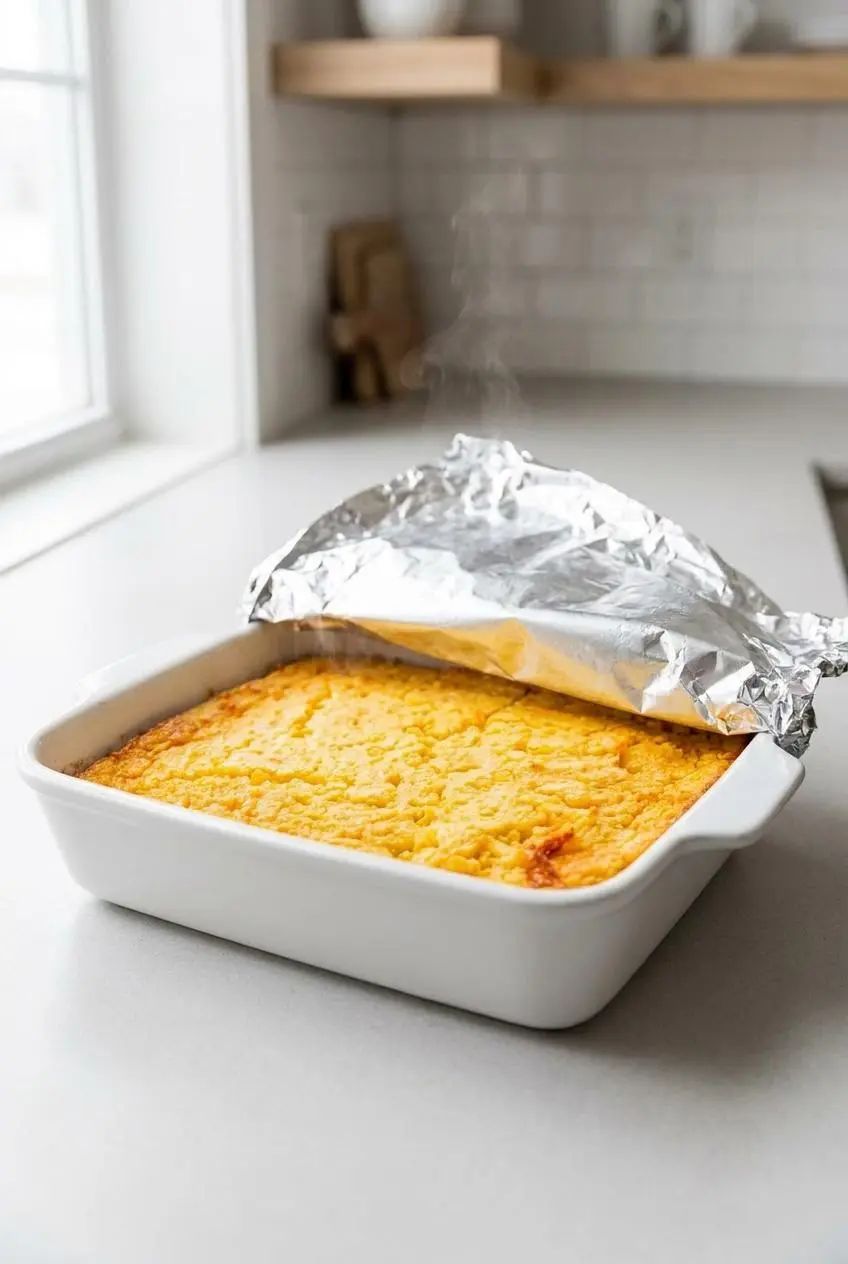
This casserole fits holiday prep well, but a few handling details help it stay creamy instead of drying out.
You can mix the raw batter, cover it tightly, and refrigerate it for up to 24 hours. Before baking, let the dish sit at room temperature for 30 minutes so the batter warms slightly and bakes more evenly.
After baking, cool the casserole and refrigerate leftovers promptly. Keeping perishable dishes chilled in a refrigerator at 40 °F or below helps protect texture and food quality.
For reheating, use a 300F oven so the center warms gently without drying the edges. Cover the pan loosely with foil and heat individual portions or the full casserole until hot in the middle. For an 8×8-inch pan, start checking around 20 to 25 minutes.
If you are planning a full holiday menu, this pairs nicely with another make-ahead side such as classic green bean casserole since both can share oven space with low-stress timing.
If you choose to freeze a baked casserole, a disposable aluminum pan is handy because it can go from freezer storage to oven reheating more easily. Reheat from cold in the oven and warm it all the way through before serving.
Conclusion
This casserole earns its place by being easy to mix, cozy to serve, and reliably delicious when you respect a few key details. Drain the whole-kernel corn well, keep the creamed corn undrained, and add the Jiffy mix completely dry.
Give it that full rest after baking so the center can settle into the soft custardy texture you want. Then scoop, slice, and enjoy the golden corners first if you get there in time.
Frequently Asked Questions
Can I Make Jiffy Corn Casserole Ahead of Time?
Yes. You can mix the raw batter, cover it tightly, and refrigerate it for up to 24 hours. Let it sit at room temperature for 30 minutes before baking. This helps the casserole bake more evenly through the center.
How Do You Fix a Runny Corn Casserole?
Loosely tent the dish with foil to protect the top from getting too dark. Keep baking at 350F in 5-minute increments until the center is set. A toothpick inserted in the middle should come out mostly clean, and the center should have only a slight wobble.
Do I Prepare the Jiffy Muffin Mix First?
No. Add the Jiffy Corn Muffin Mix completely dry. Do not follow the box instructions for making muffins. This batter already contains the wet ingredients needed for the casserole.
Can I Make This Casserole Without Sour Cream?
Yes. Use an equal amount of full-fat plain Greek yogurt if you want a very similar texture. Cream cheese can also work, though the casserole will taste richer and a bit denser. If using cream cheese, mix it in very smoothly so it blends evenly into the batter.
Jiffy Corn Casserole Recipe

Equipment
- 8×8-inch baking pan
- Large Mixing Bowl
- Whisk
- Wooden Spoon
Ingredients
- 15 ounces canned whole-kernel corn drained (1 can)
- 15 ounces canned creamed corn (1 can)
- 1 cup sour cream or plain Greek yogurt
- 1/2 cup unsalted butter melted (1 stick)
- 1 large egg
- 8.5 ounces Jiffy Corn Muffin Mix (1 box)
Instructions
- Heat the oven to 350F and grease an 8×8-inch baking dish. The dish should be ready before the batter is mixed so it can go straight into the oven at the right depth.
- Whisk the drained whole-kernel corn, creamed corn, sour cream, melted butter, and egg in a large bowl until evenly combined. The mixture should look glossy, creamy, and loose, with whole corn kernels suspended throughout.
- Stir in the Jiffy Corn Muffin Mix just until no dry patches remain. Stop mixing once the batter looks thick and spoonable, because overmixing can make the casserole heavier and more bread-like.
- Spread the batter into the prepared dish and bake for 50 to 55 minutes. By about the 40-minute mark, you should notice a sweet cornbread aroma and see the edges turning golden.
- Check for doneness, then let the casserole rest for at least 10 minutes before serving. The top should be golden brown, and when you gently tap the side of the dish, the center should show only a slight, stable wobble rather than a loose slosh.