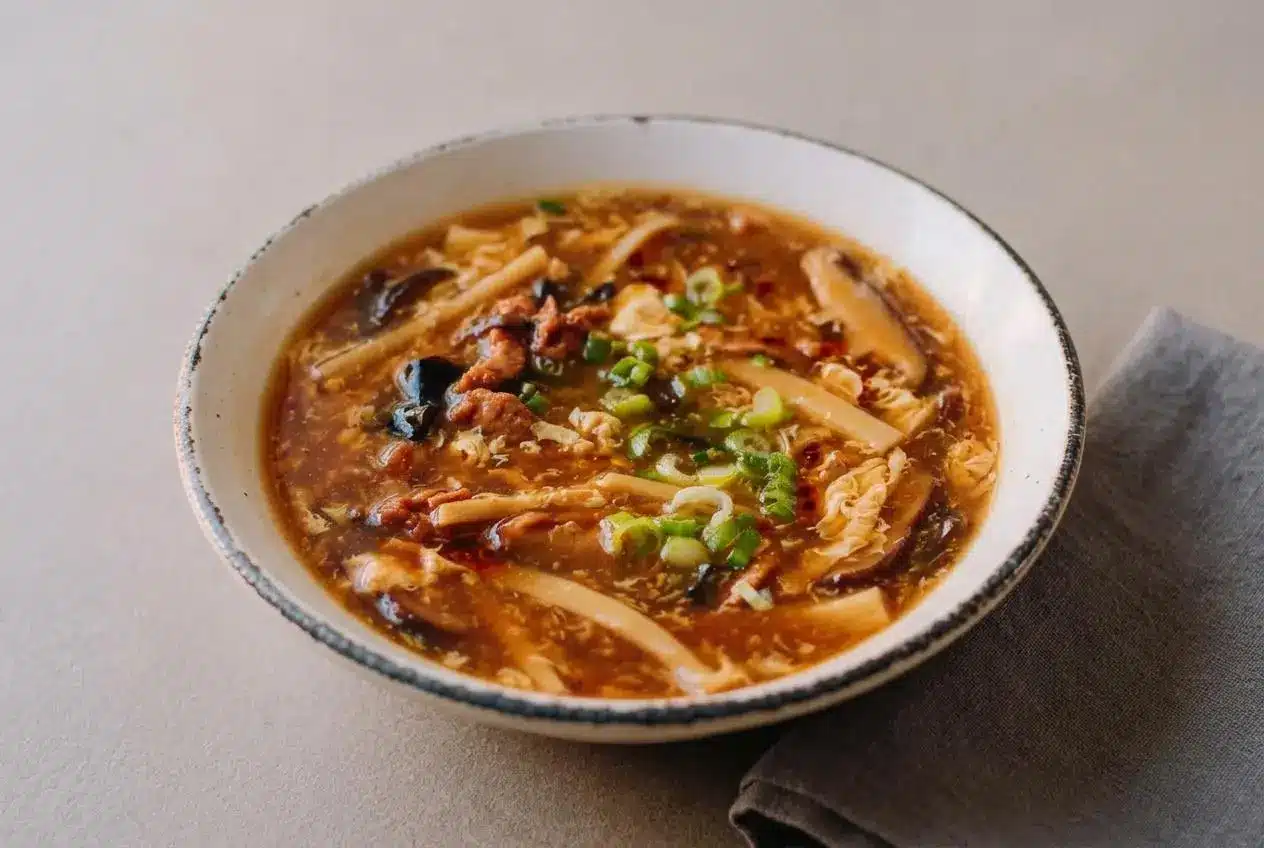
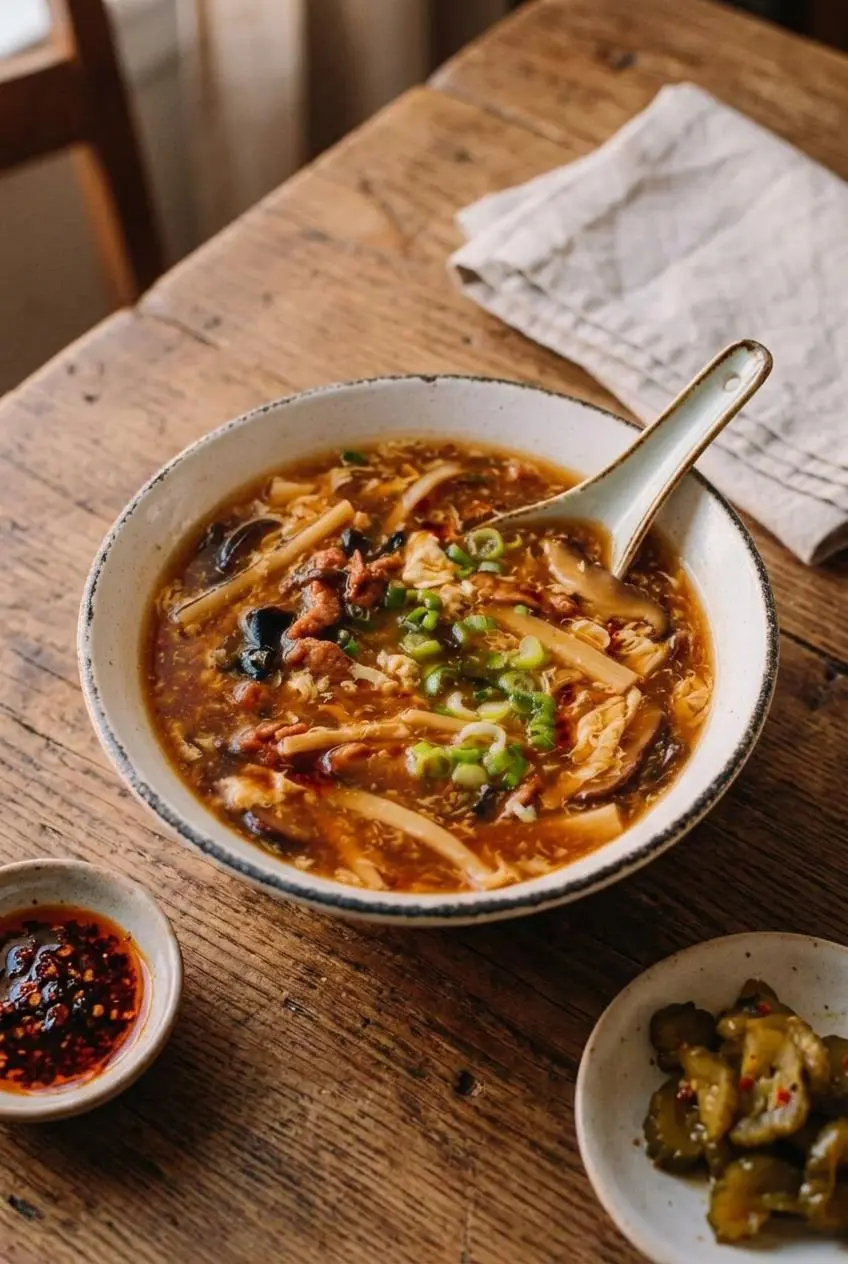
Hot and sour soup is a thick, savory Chinese soup made with chicken stock, tofu, bamboo shoots, mushrooms, pork, white pepper, vinegar, and delicate egg ribbons.
Hot and sour soup should taste layered, not harsh, with warming white pepper, bright vinegar, tender pork, springy tofu, and crunchy wood ears in every spoonful.
Once the vinegar hits the hot broth, the kitchen smells sharp, cozy, and instantly restaurant-like. The egg ribbon trick is simple, and it makes all the difference.
Keep the slurry stirred right up until you pour it, because cornstarch sinks fast and that little detail prevents lumps.
Essential Ingredients for Authentic Chinese Hot and Sour Soup
Each ingredient here has a job, from building the broth’s deep savoriness to creating the classic contrast of silky, crunchy, tender, and tangy.
For the pork and marinade
- 4 oz. pork shoulder (finely julienned)
- 1 tablespoon water
- Pinch of salt
- 2 teaspoons vegetable oil
- 1 teaspoon cornstarch
For the soup
- 1 to 2 dried red chili peppers
- 0.3 ounce dried lily flower (rehydrated)
- 0.3 ounce dried wood ear mushrooms (rehydrated and sliced)
- 0.3 ounce dried shiitake mushrooms (rehydrated and sliced)
- 3 ounces spiced dry tofu
- 4 ounces fresh firm tofu
- 4 ounces bamboo shoots
- 1 large egg
- 1 scallion (finely diced)
- 8 cups low sodium chicken stock
- 1/2 teaspoon salt
- 1/4 teaspoon sugar
- 1 to 2 teaspoons fresh ground white pepper
- 2 teaspoons dark soy or mushroom soy sauce
- 1 tablespoon light soy sauce or seasoned soy sauce
- 1 teaspoon sesame oil
- 1/3 to 1/2 cup white vinegar
- 1/3 cup cornstarch
- 1/4 cup water
White pepper is the key heat here. It gives the broth that clean, earthy, lingering bite that defines the soup. Black pepper tastes woodier and duller in this kind of broth, so it does not create the same takeout-style finish.
White vinegar matters just as much. It brings a sharper, cleaner sourness than rice vinegar, which can taste softer and a little sweet. If you use rice vinegar, the soup still works, but the profile shifts away from the classic restaurant flavor.
Texture is where this soup gets really interesting. Wood ear mushrooms and bamboo shoots add the signature crunch, shiitakes bring deeper mushroom flavor, and lily flowers add a gentle earthy chew that makes the broth feel layered rather than flat.
The two tofus do different jobs. Spiced dry tofu adds a firmer bite and extra savoriness, while fresh firm tofu softens the bowl and soaks up all that broth.
I like to cut the tofu a touch more carefully than everything else, because those slim pieces look best when they stay intact in the finished soup.
Traditional Dried Ingredients Shopping Checklist
If you are shopping at an Asian market, these are the dried ingredients worth looking for first.
- Wood ear mushrooms look like dark, crinkly dried ruffles. Once soaked, they turn glossy and slightly springy, and their main job is crunch.
- Dried lily flowers usually look like pale golden buds or narrow petals tied up like little knots. After soaking, they become tender with a pleasant chewy texture.
- Dried shiitakes are round and thicker than wood ears. They bring deeper, richer mushroom flavor and a meatier bite.
- Spiced dry tofu is usually sold in firm pressed blocks or sheets. It should feel dense and seasoned, not soft like fresh tofu.
If you cannot find the dried mushrooms and lily flowers, skip ahead to the shortcut section for a weeknight version that still tastes good.
Protein Options Pork Shoulder vs. Poached Chicken
Traditional hot and sour soup usually leans on marinated pork shoulder because it gives the broth a fuller, rounder savoriness. The quick mix of water and cornstarch helps the thin pork strips stay tender instead of cooking up tight and dry.
If you prefer chicken, poached chicken breast is the easiest swap. Shred it finely and stir it in where the pork would normally go, keeping the rest of the soup the same. The result tastes a little lighter and cleaner, while pork gives more depth and richness.
For a meatless option, use extra firm tofu in place of the pork and switch to vegetable stock. The soup still keeps its hot, sour, mushroom-rich identity.
How to Make Hot and Sour Soup
This method is all about order. Prep everything first, then build the soup in layers so the pork stays tender, the broth thickens evenly, and the egg ribbons stay light.
Prepare your pork
- Work the 1 tablespoon water into the 4 oz. julienned pork shoulder until the meat drinks it in, then mix in the pinch of salt, 2 teaspoons vegetable oil, and 1 teaspoon cornstarch.
The pork should look lightly glossy and loose rather than wet, which helps it cook up tender in the broth.
Prepare your dry ingredients
- Split the dried chilies, shake out the seeds, and mince the peppers into small pieces.
You want little flecks for background heat, not large bits that overpower a spoonful. - Place the dried lily flowers, wood ears, and shiitakes in separate bowls with 1 cup of water each and let them soak for 1 to 2 hours, using hot water if you want to speed things up.
They are ready when they feel plump and flexible instead of stiff or leathery. - Slice the soaked mushrooms, roughly chop the wood ears, and trim the hard ends from the lily flowers before cutting them in half.
Once prepped, the pieces should be bite-sized and easy to catch on a soup spoon.
Prepare the tofu and other elements
- Cut the spiced tofu and the firm tofu into 2-inch long and 1/4-inch thick pieces, julienne the bamboo shoots, beat the egg, and finely chop the scallion.
Having these ready before the soup starts keeps the final steps calm and quick.
Assemble the soup
- Bring the 8 cups low sodium chicken stock to a boil in a wok or large pot, and if the marinated pork has stuck together, loosen it with another tablespoon of water first.
The pork should fall into the broth in separate strands, not one compact clump. - Add the pork and break it apart immediately with a ladle or chopsticks, then let the broth return to a simmer and skim off any foam with a fine mesh strainer.
The meat will turn opaque quickly and separate under the ladle when it is cooking properly. - Stir in the 1/2 teaspoon salt, 1/4 teaspoon sugar, dried chili pepper, 1 to 2 teaspoons fresh ground white pepper, 2 teaspoons dark soy or mushroom soy sauce, 1 tablespoon light soy sauce or seasoned soy sauce, and 1 teaspoon sesame oil.
The broth will darken slightly and smell warmer, toastier, and more peppery. - Add the lily flowers, wood ears, shiitake mushrooms, and bamboo shoots, then bring everything back to a simmer.
At this stage the soup should look full of contrasting textures but still feel broth-like rather than thick. - Slide in both tofus and pour in the 1/3 to 1/2 cup white vinegar, then stir gently.
The aroma changes fast here, with the broth turning brighter and sharper the moment the vinegar hits the heat. - Whisk the 1/3 cup cornstarch with the 1/4 cup water until fully smooth just before using it.
The slurry should look milky and even, with no settled starch at the bottom. - Keep the soup at a simmer, stir it in a steady circle with your ladle to create a whirlpool, and slowly drizzle in about three quarters of the slurry.
The broth should thicken gradually rather than seize in blobs, which means the slurry is dispersing evenly. - Check the body of the soup and add the rest of the slurry only if you want it thicker.
It is ready when the broth lightly coats the back of a metal spoon instead of sliding off like plain stock.
Adjust seasoning and add egg ribbons
- Taste the soup and adjust with more white pepper for heat or more vinegar for sourness after the thickness is where you want it.
This final balance should taste lively and bold, with neither element drowning out the other. - Bring the soup to a bubbling simmer, stir in a slow circle, and drizzle in the beaten egg in a thin stream.
The egg should stretch into pale ribbons on contact instead of breaking into cloudy bits. - Finish with the chopped scallion and serve the soup hot.
A light optional drizzle of Szechuan peppercorn oil at the table adds a citrusy tingle that plays especially well with the white pepper.
Rehydrating the Dried Mushrooms and Lily Flowers
This part takes the most waiting, but it is easy. Keep each dried ingredient in its own bowl so the flavors stay clear and the textures are easier to judge as they soften.
Hot water speeds things up because it helps the dried mushrooms and lily flowers absorb moisture faster. You will know the shiitakes are ready when the caps bend without cracking, the wood ears feel elastic instead of brittle, and the lily flowers lose their stiff, wiry feel.
Before slicing, press each piece lightly between your fingers. If the center still feels tough or dry, let it soak longer. Cutting them too early gives you chewy little surprises, and not the good kind.
Thickening with the Whirlpool Slurry Method
Cornstarch only works well when it goes into hot liquid as a smooth cold-water slurry. If you add dry cornstarch straight to the pot, it clumps before it can spread and you end up chasing lumps around the soup.
The whirlpool motion solves that problem. Stir the simmering broth in one steady direction with a ladle, then pour the slurry slowly into that moving current. The motion pulls the starch through the soup so it thickens evenly instead of settling in one spot.
Stop before using all of it and check the texture. A good hot and sour soup has body and silkiness, but it still pours from the ladle. If it becomes too stiff, it loses that classic restaurant feel.
How to Create Perfect Feathery Egg Ribbons
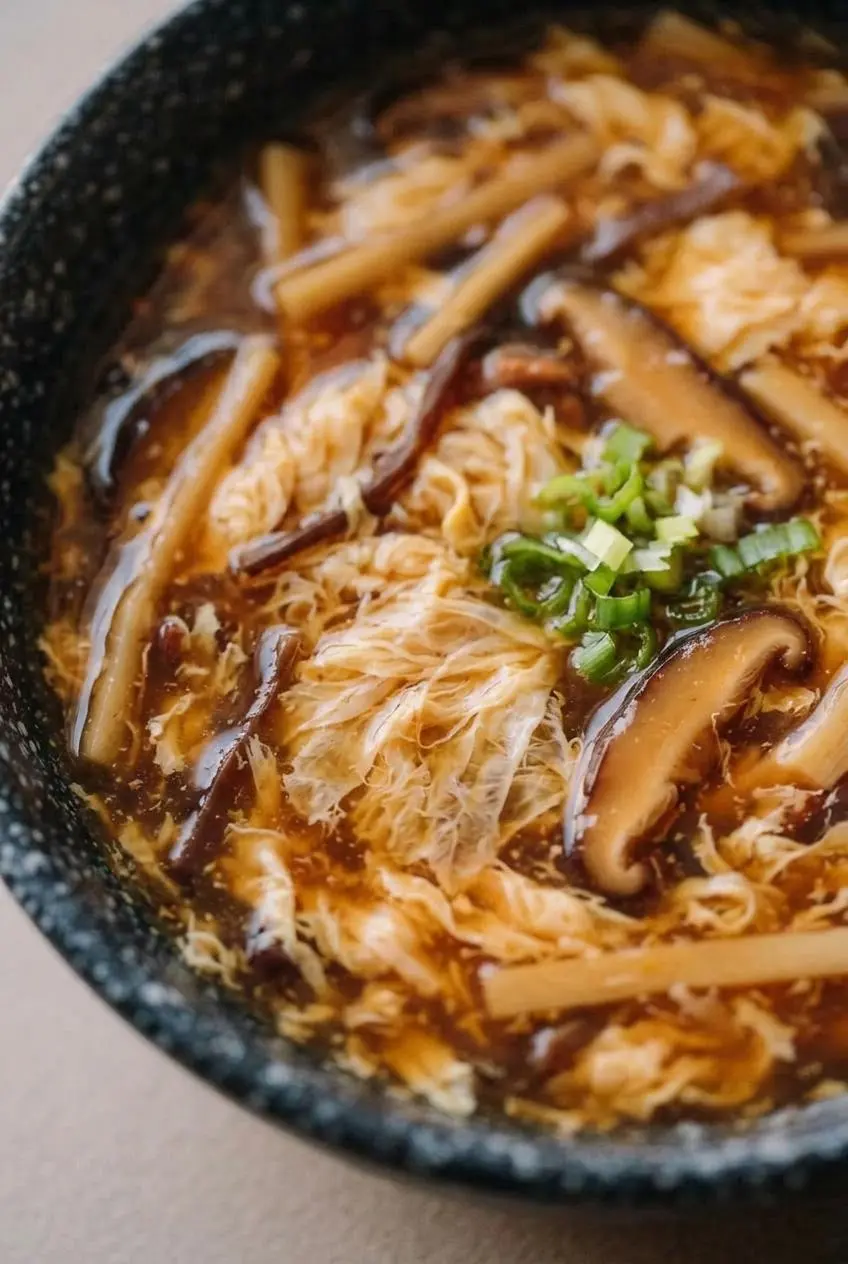
Egg ribbons look fancy, but the technique is mostly about temperature and patience. The broth needs to be actively bubbling before the egg goes in, because heat sets the egg quickly and keeps the soup clearer.
Start a gentle circular motion in the pot, then drizzle the beaten egg in a slow, thin stream. Do not dump it in all at once. After the egg hits the broth, give it about 5 seconds to set before stirring again. That pause helps the ribbons form long, soft strands instead of tiny scrambled bits.
If you stir too hard or too fast, the ribbons shred and the broth turns muddy. If the soup is not hot enough, the egg spreads before it sets and clouds the pot. Slow movement is the whole trick here.
- Best cue: the surface should be clearly bubbling, not just steaming.
- Best pour: thin stream from a small bowl or measuring cup.
- Best motion: slow circles, not whisking.
- Best finish: wait a brief moment before the final stir.
Troubleshooting Common Soup Issues
Most problems with this soup are fixable. The key is to correct the texture or balance at the end instead of starting over.
- If the soup is too thin, mix a little cold water and cornstarch into a smooth slurry and drizzle it into simmering soup while stirring. Give it a moment to thicken before adding more.
- If the soup is too gloopy, loosen it with a small splash of hot stock and stir well. Add the extra liquid gradually so the broth stays silky instead of turning flat.
- If the egg clumps, the stream was likely too thick or the broth was not moving enough. Break up the larger pieces gently and treat the next addition more slowly.
- If the broth turned cloudy after the egg, the soup was probably below a bubbling simmer or stirred too aggressively. You can improve the look by bringing it back to a lively simmer and letting the soup settle for a minute before serving.
- If the flavor is too sour, add a little more stock and a pinch more white pepper or soy to rebalance. Sharpness softens when the savory side catches up.
- If the flavor is too hot, add more vinegar or stock in small amounts. White pepper heat can bloom more as the soup sits.
- If the pork cooks in tight clumps, it was not loosened enough before hitting the broth. Next time, separate the strands with a splash of water before adding them to the pot.
Streamlined 30-Minute Weeknight Shortcuts
If you want the flavor profile without the longer soak, you can make a faster version by changing only the ingredients that need rehydration. Fresh mushrooms will not taste exactly the same as dried shiitakes and wood ears, but they still give the soup good body and make weeknight cooking a lot easier.
Use fresh mushrooms such as baby bella or button mushrooms in place of the dried mushrooms, and skip the lily flowers if they are hard to find. The broth will be a little less earthy and complex, but white pepper, vinegar, tofu, and bamboo shoots still keep the soup recognizably hot and sour.
For another quick, light soup option on a busy night, savory miso soup is a good one to keep in rotation.
Vegetarian Hot and Sour Soup
For a vegetarian version, replace the pork with extra firm tofu cubes and use low-sodium vegetable stock. Keep the mushrooms, bamboo shoots, white pepper, vinegar, soy sauces, and egg ribbon technique the same so the soup still tastes true to style.
The texture shifts a bit without pork, so lean on the wood ears, shiitakes, and tofu for substance. If you want it even heartier, this is one of those soups that benefits from extra mushrooms more than extra starch.
Storage and Reheating Rules
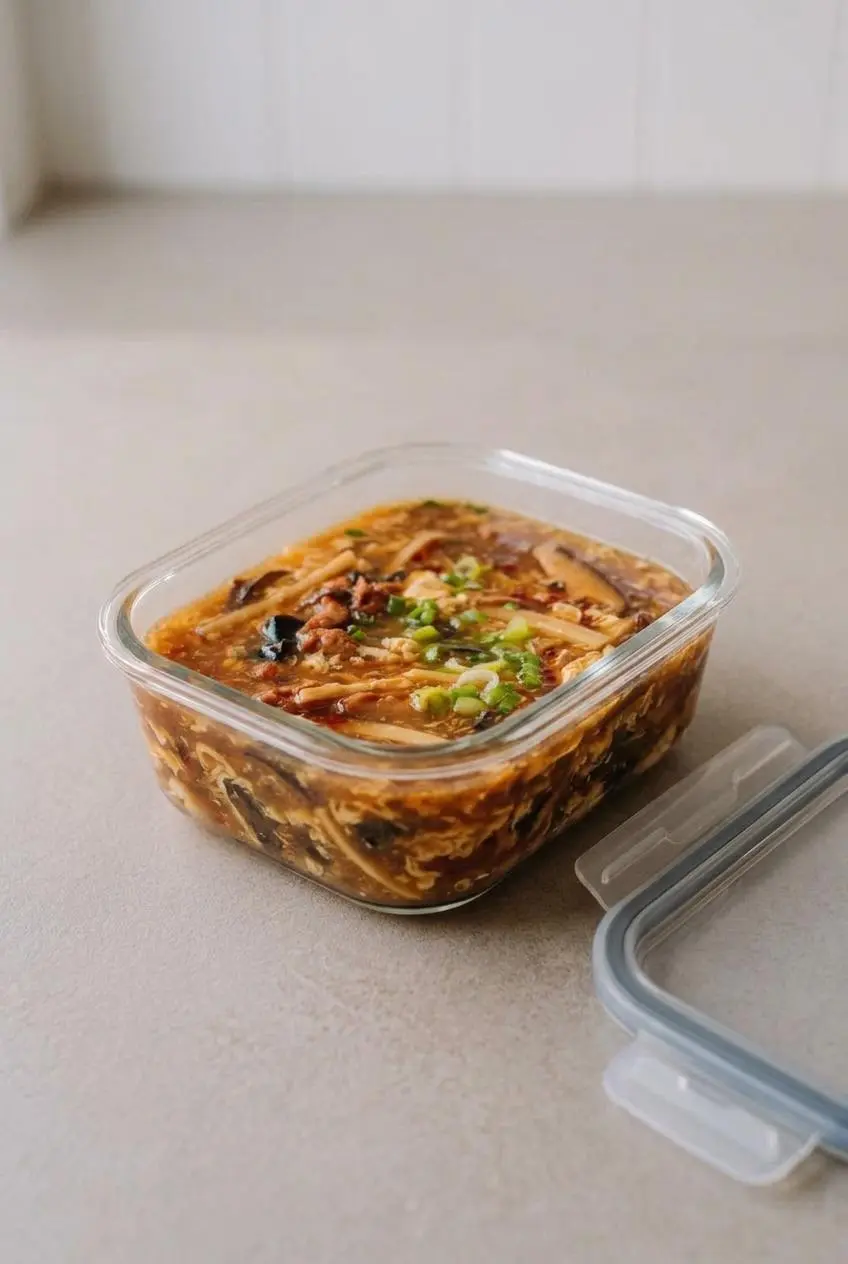
Hot and sour soup is best right after cooking, when the broth is glossy and the egg ribbons are distinct. If you have leftovers, cool the soup and refrigerate it in a covered container, then reheat only what you want to serve.
When reheated, cornstarch-thickened soups often loosen up. Part of that is normal starch breakdown over time, and part of it can happen faster if a tasting spoon went back into the pot, because saliva enzymes weaken the starch structure. That is why leftovers sometimes look noticeably thinner.
Reheat the soup gently on the stove and stir often so the broth warms evenly and the tofu stays intact. If it has turned watery, whisk a small fresh slurry of equal parts cold water and cornstarch, then drizzle it into the hot soup while stirring until the silky body comes back.
Because this soup contains egg, good chilled storage and careful reheating matter. The FDA explains safe handling, storing, and cooking of eggs in its guidance on safe egg handling and storage.
Conclusion
This soup earns its comfort-food status with sharp vinegar, warm white pepper, and that mix of silky broth and crunchy mushrooms that keeps every bite interesting.
Focus on three things and it comes together beautifully: tender marinated pork, a smooth slurry added in a whirlpool, and eggs drizzled into bubbling broth. A hot bowl and extra scallions go a long way.
Frequently Asked Questions
What is the black stuff in hot and sour soup?
The black strips are usually wood ear mushrooms. They are prized more for texture than strong flavor. Once rehydrated, they stay pleasantly crunchy and soak up the savory broth.
Why does my hot and sour soup turn watery when reheated?
Cornstarch-thickened soups naturally loosen as they sit. If a tasting spoon went back into the soup, saliva enzymes can break down the starch even faster. Reheat it on the stove and stir in a small fresh slurry if you need to restore the thickness.
Can I use rice vinegar instead of white vinegar?
Yes, you can, and the soup will still be good. White vinegar is the closer match for classic hot and sour soup because it tastes sharper and cleaner. Rice vinegar is milder and a little sweeter, so the finished bowl tastes softer and less punchy.
How do you make hot and sour soup thicker?
Whisk equal parts cornstarch and cold water into a smooth slurry. Pour it slowly into simmering soup while stirring in a steady circle. Stop and check the texture before adding more, because the soup should coat a spoon without turning pasty.

Hot and Sour Soup

Equipment
- Wok or large stock pot
- Fine mesh strainer
- Mixing Bowls
- Ladle
Ingredients
For the pork and marinade
- 4 oz. pork shoulder finely julienned
- 1 tablespoon water
- Pinch of salt
- 2 teaspoons vegetable oil
- 1 teaspoon cornstarch
For the soup
- 1-2 dried red chili peppers
- 0.3 ounce dried lily flower rehydrated
- 0.3 ounce dried wood ear mushrooms rehydrated and sliced
- 0.3 ounce dried shiitake mushrooms rehydrated and sliced
- 3 ounces spiced dry tofu
- 4 ounces fresh firm tofu
- 4 ounces bamboo shoots
- 1 large egg
- 1 scallion finely diced
- 8 cups low sodium chicken stock
- 1/2 teaspoon salt
- 1/4 teaspoon sugar
- 1-2 teaspoons fresh ground white pepper
- 2 teaspoons dark soy or mushroom soy sauce
- 1 tablespoon light soy sauce or seasoned soy sauce
- 1 teaspoon sesame oil
- 1/3-1/2 cup white vinegar
- 1/3 cup cornstarch
- 1/4 cup water
Instructions
Prepare your pork
- Combine the 4 oz. julienned pork shoulder with 1 tablespoon water until the meat has absorbed the water. Add a pinch of salt, 2 teaspoons vegetable oil, and 1 teaspoon cornstarch and mix until combined. Set aside.
Prepare your dry ingredients
- Cut the dried chilies in half and discard the seeds. Mince them up and set aside.
- In separate bowls, soak the dried lily flowers, wood ears, and shiitake mushrooms in 1 cup of water each for 1 to 2 hours, until hydrated. Using hot water will significantly speed up the process.
- Once they are ready, thinly slice the mushrooms and give the wood ears a rough chop. Trim the tough ends off the lily flowers and cut them in half.
Prepare the tofu and other elements
- Cut both the spiced tofu and the firm tofu into 2-inch long and 1/4-inch thick pieces. Julienne the bamboo shoots. Beat the egg in a small bowl. Wash and chop the scallion and set aside.
Assemble the soup
- Bring the chicken stock to a boil in a wok or pot. If the pork has clumped and stuck together, add another tablespoon of water to loosen it up before adding to the soup.
- Stir in the pork and quickly break up any clumps. Once the soup is simmering again, skim off any foam that floats to the top with a fine meshed strainer.
- Add the salt, sugar, dried chili pepper (if using), white pepper, both soy sauces, and sesame oil.
- Next, add the lily flowers, wood ears, shiitake mushrooms and bamboo shoots and bring the soup to a simmer once again.
- Add the two kinds of tofu and the vinegar and stir.
- Combine the 1/3 cup cornstarch with 1/4 cup water to make a slurry. Ensure it is well-combined, as the cornstarch tends to settle to the bottom.
- Bring the mixture to a simmer and use your soup ladle to stir the soup in a steady circular motion to make a whirlpool while slowly drizzling in the cornstarch slurry. Stop when you are about 3/4 done and check thickness.
- Check consistency of the soup, ensuring it is thick enough to coat your spoon. Add the rest of the cornstarch slurry if you prefer it thicker.
Adjust seasoning and add egg ribbons
- Once the soup is at the preferred thickness, taste and adjust. Add more white pepper for heat or more vinegar for sourness.
- Keep the soup simmering (ensure it is bubbling before adding egg to prevent cloudiness) and stir in a circular motion. Drizzle the beaten egg slowly into the swirling soup to create beautiful egg ribbons.
- Serve the soup hot garnished with chopped scallions.