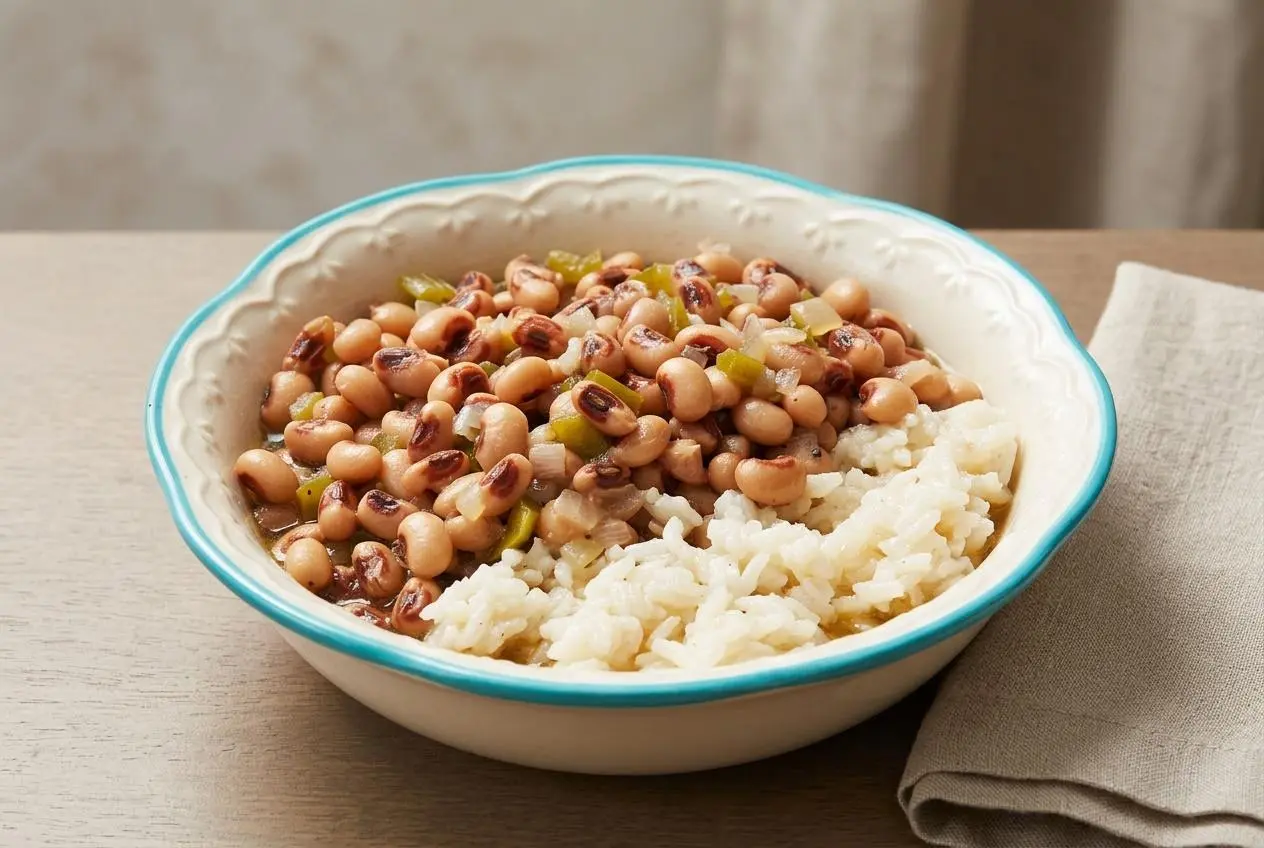
Hoppin’ John is a Southern dish of tender black-eyed peas simmered with smoked pork, aromatics, and broth, then served over or mixed with rice. A gentle simmer creates savory pot liquor, the rich cooking liquid that brings the whole bowl together.
Hoppin’ John starts with onion, celery, and bell pepper sizzling in butter, filling the kitchen with a sweet, savory aroma. Garlic and a ham hock deepen that flavor as the peas soften into a hearty stew.
This version cooks the peas separately from the rice, giving you better control over both textures. It’s comforting enough for a New Year’s table and practical enough for a regular family supper. Save room for the pot liquor.
Keep extra broth within reach so you can adjust the liquid without turning up the heat.
The Cultural Roots and Tradition of Hoppin’ John
Rice is part of what makes this dish Hoppin’ John rather than simply a pot of seasoned black-eyed peas. Whether you spoon the peas over the grains or fold them together, the combination defines the meal.
The dish belongs to the culinary traditions of the Southern Lowcountry and is closely associated with Gullah Geechee foodways and broader African diasporic traditions of cooking rice and legumes. That heritage deserves recognition beyond the familiar New Year’s good-luck story.
There isn’t one universal preparation. Families and regional traditions differ in their choice of field peas, smoked meat, seasonings, and whether they cook the rice with the peas or separately. This version uses black-eyed peas and serves them with white or brown rice.
At New Year’s, the meal carries a hopeful symbolism: peas represent coins, greens suggest greenbacks, and golden cornbread stands for gold. These are food traditions, not promises of prosperity, but they make a warm and meaningful way to gather around the table.
If you enjoy exploring rice-and-legume meals, traditional gallo pinto offers another distinct preparation to try. Each dish has its own identity, even when the pairing feels familiar.
Essential Ingredients for Authentic Hoppin’ John
The peas provide tenderness and body, the vegetables build aroma, and the ham hock gives the broth savory depth. Butter adds richness, vinegar balances it, and rice catches the flavorful cooking liquid.
- 4 tbsp. butter
- 1 large onion, diced
- 4 cloves garlic, minced
- 1 green bell pepper, diced
- 2 stalks celery, diced
- 1 lb. dried black eyed peas
- 5 c. low-sodium chicken broth, plus more as needed
- 1 whole ham hock
- Kosher salt and pepper, to taste
- Cayenne pepper, to taste
- 2 tbsp. white vinegar
- White or brown rice, to serve
Dried black-eyed peas take on the flavor of the broth as they cook. Their starch also helps give the liquid body without a separate thickener.
Onion, celery, and bell pepper form the aromatic combination often called the holy trinity. Cooking them in butter before adding broth takes the edge off their raw flavors. Garlic adds another savory layer, while butter rounds out the finished liquid.
A smoked ham hock contributes smoke, salt, fat, and gelatin-rich body as it simmers. Look for a smoked hock when shopping for this flavor profile. The white vinegar belongs at the end, where its acidity brightens the rich broth without making the bowl taste sharply sour.
I spread dried peas across a light-colored plate before rinsing so stray pebbles and damaged peas are easier to spot.
Choosing the Right Peas and Smoked Meat
Dried peas give you the most control over tenderness and broth texture. Choose a package with intact peas and little loose debris. Canned peas are convenient, but they’re already tender and need a shorter, gentler cooking approach.
The cut of smoked meat also changes the result:
- Smoked ham hock: Skin, bone, and connective tissue enrich the liquid, though the cut may not provide much meat. Use pea tenderness as your main timing cue rather than expecting the hock to fall apart.
- Smoked pork shank: A meatier alternative that can produce a substantial bowl. Its size may require longer cooking than the peas, so don’t assume the same schedule will tenderize both.
- Thick-cut bacon: A quicker alternative that adds smoky flavor and more rendered fat, but less gelatin-rich body. Keep its saltiness in mind before seasoning the broth.
- Smoked turkey leg or wing: A pork-free option with smoky depth. Check the product’s preparation directions and allow enough cooking for the turkey itself, since pea tenderness alone doesn’t establish meat doneness.
Low-sodium broth leaves room for the salt released by smoked meat. Start conservatively with kosher salt, then make your main adjustment after the pot has simmered.
Quick Canned Pea and Plant-Based Swaps
These optional adaptations change the cooking approach, so keep them separate from the dried-pea method below.
- Canned peas and diced ham: Drain and rinse the peas, soften the aromatics, then use diced ham instead of a whole hock and less broth. Gently heat the peas in that flavorful liquid rather than giving them the full dried-pea simmer.
- Smoked turkey: Replace the pork with a smoked turkey leg or wing for a poultry version. The piece’s size and preparation determine its cooking needs, so it isn’t automatically a quick swap.
- Vegetarian: Leave out the ham hock and replace chicken broth with a rich vegetable stock. Smoked paprika or smoked sea salt can add a smoky accent, though the liquid won’t have the same pork-derived richness.
- Vegan: Make the vegetarian changes and replace butter with a plant-based cooking fat. Add smoky seasonings gradually so they complement rather than overwhelm the peas.
For the canned version, add enough liquid to keep the mixture loose and spoonable, then increase it as needed. Canned peas won’t absorb broth like dried peas, so starting with the full amount can leave you with an unnecessarily watery pot.
Other optional additions include red bell pepper, diced jalapeños, diced ham or sliced bacon in place of the hock, and canned diced tomatoes. Add tomatoes after the dried peas soften because their acidity can slow tenderizing. If using torn kale, stir it in during the final 5 minutes of cooking.
How to Make Hoppin’ John Step by Step
Plan for at least 6 hours of soaking and about 1 hour of cooking, with pea tenderness determining when the pot is ready. This recipe makes 10 servings; use a large pot with room for gentle stirring.
- Submerge the dried peas in cool water for at least 6 hours, then drain and rinse them before cooking.
The soak hydrates the peas, helping them soften more evenly in the broth. - Melt the butter in a large pot over medium-high heat, then stir in the onion, garlic, green bell pepper, and celery and cook for 3 to 4 minutes.
The vegetables should begin to soften and smell fragrant as their flavors blend with the butter. - Fold in the soaked peas, pour in the chicken broth, and add the ham hock with a modest amount of salt, pepper, and cayenne.
The low-sodium broth gives you room to adjust seasoning once the smoked meat has flavored the liquid. - Bring the liquid to a boil, lower the heat to a gentle simmer, and cover the pot for 30 minutes.
Look for small, steady bubbles rather than a rolling boil, which can break the pea skins. - Check the peas and broth after the covered simmer, then cook uncovered for about 15 minutes if the liquid needs reducing or add more broth if the mixture is too thick.
Tender peas should yield easily when pressed, while the broth should become cloudier and lightly silky rather than dry or paste-like. - Once the peas are tender, stir in the white vinegar and taste the pot, adjusting salt, pepper, or cayenne as needed.
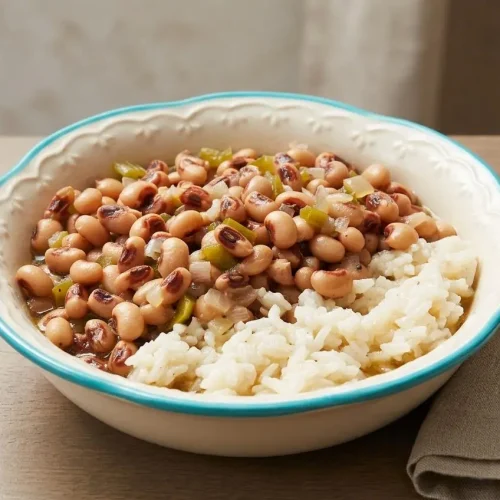
The finished flavor should feel savory and smoky with a brighter edge, not sharply vinegary. - Spoon the peas and their cooking liquid over white or brown rice, or gently combine the pea mixture with cooked rice before serving.
Leave enough pot liquor to moisten the grains rather than draining it away.
The reduction time is a checkpoint, not a deadline. If the peas still have firm centers, continue the gentle simmer before adding vinegar. Keep enough broth in the pot for them to finish softening.
Tips for Perfect Texture and Troubleshooting
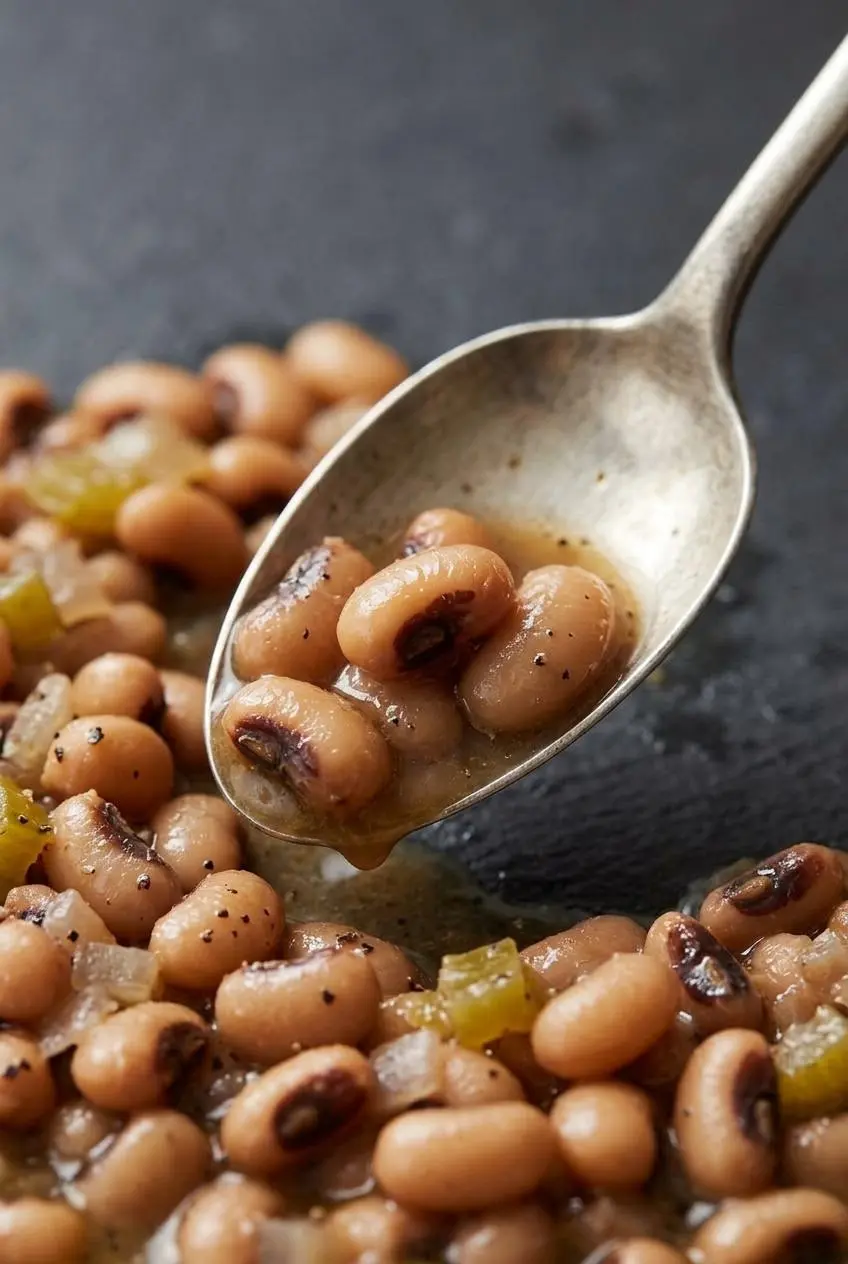
Tender peas and rich broth need slightly different adjustments. Check tenderness first, then decide whether the liquid needs thinning or reducing.
- Salty broth: Smoked meat can release more salt than expected, especially as the broth reduces. Hold back additional salt and loosen an overly concentrated pot with low-sodium broth.
- Heavy flavor: Rich pork broth may need balance rather than more spice. Add the measured vinegar after the peas soften, stir thoroughly, and taste again.
- Dry mixture: Evaporation or pea absorption can leave too little liquid. Add broth gradually until the mixture moves easily when stirred and remains spoonable.
How to Avoid Mushy or Hard Peas
- Split skins and mushy peas: A vigorous boil and rough stirring can break delicate peas apart. Lower the heat and stir gently, particularly once they begin to soften.
- Hard peas after an hour: Older dried peas may need longer cooking. Add warm broth if the liquid is low and continue simmering gently until the centers lose their chalky firmness.
- Peas that soften slowly after an acidic addition: Vinegar or tomatoes added too early can slow the process. Keep simmering patiently and reserve acidic additions for the finish next time.
Test more than one pea before calling the pot done. A pea that collapses under light pressure but still holds its shape in the broth is the target. A soft exterior with a gritty center means it needs more time.
Thickening the Pot Liquor Naturally
Pot liquor should flow from the ladle while carrying a little body. It doesn’t need to look like gravy, and a brothy bowl isn’t a failure.
- Thin liquid with tender peas: Remove the lid and simmer gently to let excess moisture evaporate, watching that the bottom doesn’t become dry.
- Thin liquid when you want more body: Press a ladleful of tender peas against the side of the pot and stir them back into the broth. Their starch thickens the liquid while leaving most peas intact.
- Thick or pasty liquid: Stir in additional broth gradually. Stop when the peas settle comfortably in the liquid instead of sitting in a stiff mound.
Reduction concentrates salt as well as flavor. Taste after thickening, not just before, and avoid continuing to cook already-tender peas solely to achieve a dense sauce.
Traditional Serving Ideas and Lucky Accompaniments
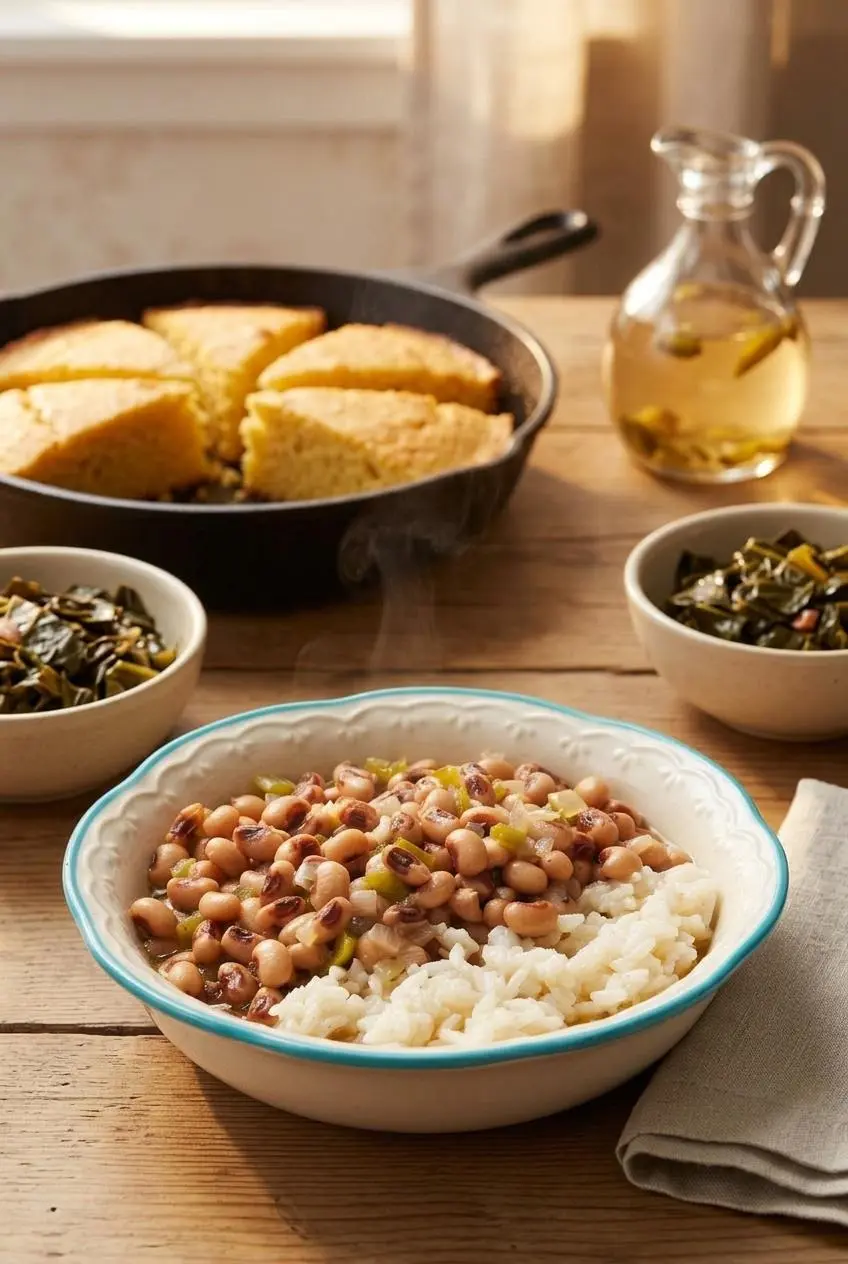
For the best control over texture, spoon the peas over warm, separately cooked rice. You can also fold them into cooked rice just before serving for a more integrated dish.
Carolina Gold rice is a fitting choice for a Lowcountry-inspired plate, though the listed white or brown rice works well. Cook your chosen rice using its package directions. Don’t add uncooked rice directly to this pot using the same broth amount; that would require a different liquid balance and cooking schedule.
- Braised collard greens: Their earthy flavor balances the rich peas, and they bring the traditional greenback symbolism to a New Year’s meal.
- Warm buttermilk skillet cornbread: The crisp edges and tender center suit the brothy bowl and give you something to catch the last spoonfuls.
- Hot pepper vinegar: Offer it at the table so everyone can adjust acidity and heat without changing the entire pot.
Keep the cooking liquid in the serving bowl. It seasons the rice as you eat and carries much of the smoky flavor. If you prefer extra heat, a little hot sauce at the table gives you control without hiding the peas.
Storage and Leftover Skipping Jenny
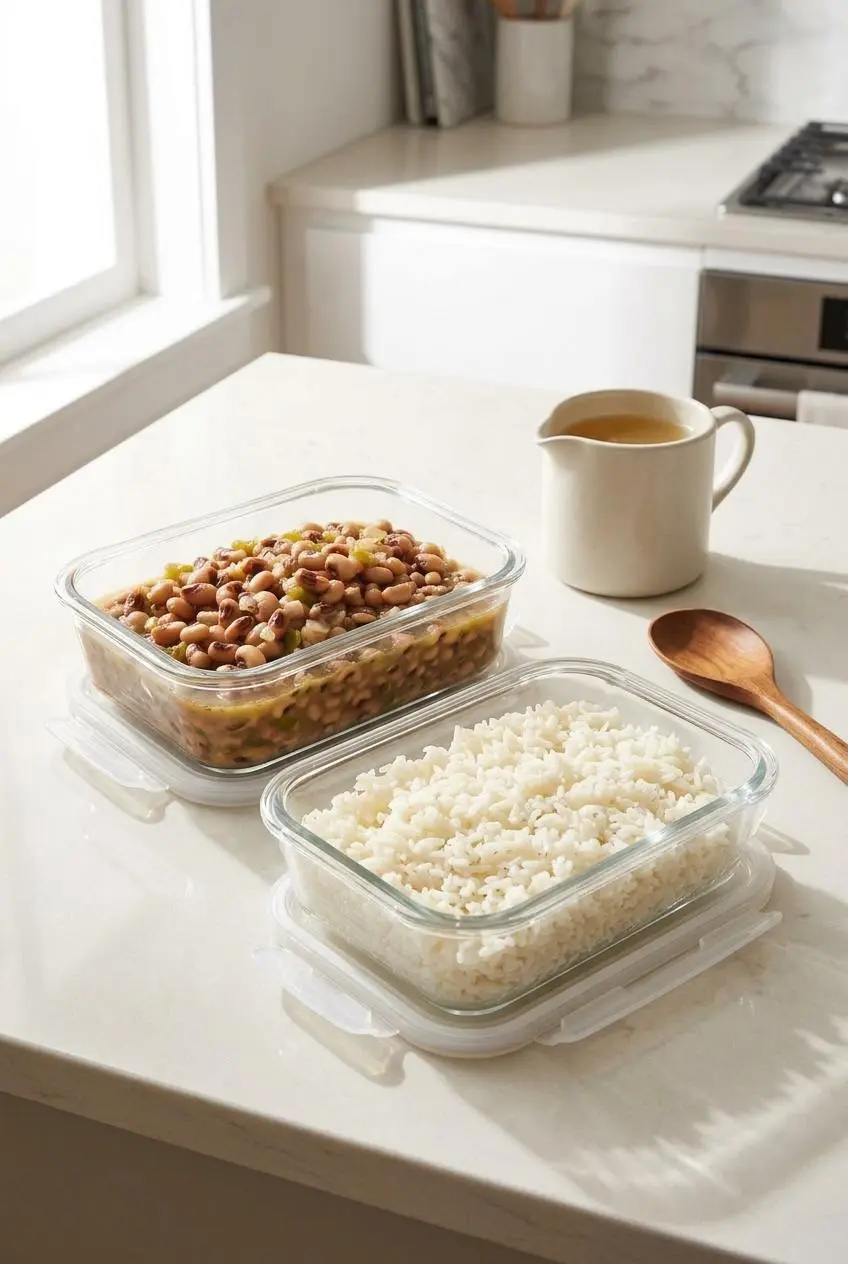
Store rice and peas separately when possible so the grains don’t absorb all the broth. That also makes it easier to restore the stew’s texture when reheating.
For cautious handling, divide leftovers into shallow containers and refrigerate promptly rather than leaving the full pot on the counter to cool completely. Keep the pea stew and cooked rice covered and chilled.
Reheat the peas gently on the stovetop with a splash of broth, stirring carefully to avoid crushing them. Heat the rice separately, then assemble the bowl. Warm only the portion you intend to serve, and heat it thoroughly throughout.
In Southern New Year’s lore, leftover Hoppin’ John served the following day is called Skipping Jenny. The tradition celebrates thrift and continued good fortune, turning the remains of a festive meal into another welcome bowl.
No elaborate transformation is necessary. Restore the pot liquor, warm the rice, and bring the two together again.
Conclusion
A gentle simmer, tender peas, and thoughtfully balanced seasoning make this bowl work. Protect the pea skins, keep the broth spoonable, and wait until the end to add vinegar.
Enjoy it for New Year’s tradition or whenever a smoky, comforting supper sounds right. Serve the rice warm and give every bowl a generous spoonful of pot liquor.
Frequently Asked Questions
What Is the Difference Between Hoppin’ John and Black-Eyed Peas?
Black-eyed peas are the legume itself, whether dried, canned, or cooked. Hoppin’ John is a seasoned Southern peas-and-rice dish, commonly prepared with smoked meat and aromatics. The rice may sit beneath the peas or mix into them before serving.
Do You Need to Soak Black-Eyed Peas Before Cooking?
Black-eyed peas can cook without soaking, but this method calls for at least a 6-hour soak. Soaking helps them hydrate evenly and can shorten cooking. Skipping the soak changes the cooking schedule, so the listed simmer times won’t necessarily apply.
What Is Leftover Hoppin’ John Called?
Leftover Hoppin’ John is traditionally called Skipping Jenny in Southern New Year’s lore. Serving it the following day symbolizes household thrift and continued good fortune.
Why Are My Black-Eyed Peas Still Hard After Cooking?
Older dried peas may take longer to soften, even after soaking. Acidic ingredients added early can slow tenderizing, so reserve vinegar for the finish. Add warm broth if needed and continue a gentle simmer until the centers are tender rather than chalky.
Hoppin’ John

Equipment
- Large Pot
- Cutting board
- Chef knife
Ingredients
- 4 tbsp. butter
- 1 large onion diced
- 4 cloves garlic minced
- 1 green bell pepper diced
- 2 stalks celery diced
- 1 lb. dried black eyed peas
- 5 c. low-sodium chicken broth plus more as needed
- 1 whole ham hock
- Kosher salt and pepper to taste
- Cayenne pepper to taste
- 2 tbsp. white vinegar
- White or brown rice to serve
Instructions
- Submerge the dried peas in cool water for at least 6 hours, then drain and rinse them before cooking. The soak hydrates the peas, helping them soften more evenly in the broth.
- Melt the butter in a large pot over medium-high heat, then stir in the onion, garlic, green bell pepper, and celery and cook for 3 to 4 minutes. The vegetables should begin to soften and smell fragrant as their flavors blend with the butter.
- Fold in the soaked peas, pour in the chicken broth, and add the ham hock with a modest amount of salt, pepper, and cayenne. The low-sodium broth gives you room to adjust seasoning once the smoked meat has flavored the liquid.
- Bring the liquid to a boil, lower the heat to a gentle simmer, and cover the pot for 30 minutes. Look for small, steady bubbles rather than a rolling boil, which can break the pea skins.
- Check the peas and broth after the covered simmer, then cook uncovered for about 15 minutes if the liquid needs reducing or add more broth if the mixture is too thick. Tender peas should yield easily when pressed, while the broth should become cloudier and lightly silky rather than dry or paste-like.
- Once the peas are tender, stir in the white vinegar and taste the pot, adjusting salt, pepper, or cayenne as needed. The finished flavor should feel savory and smoky with a brighter edge, not sharply vinegary.
- Spoon the peas and their cooking liquid over white or brown rice, or gently combine the pea mixture with cooked rice before serving. Leave enough pot liquor to moisten the grains rather than draining it away.