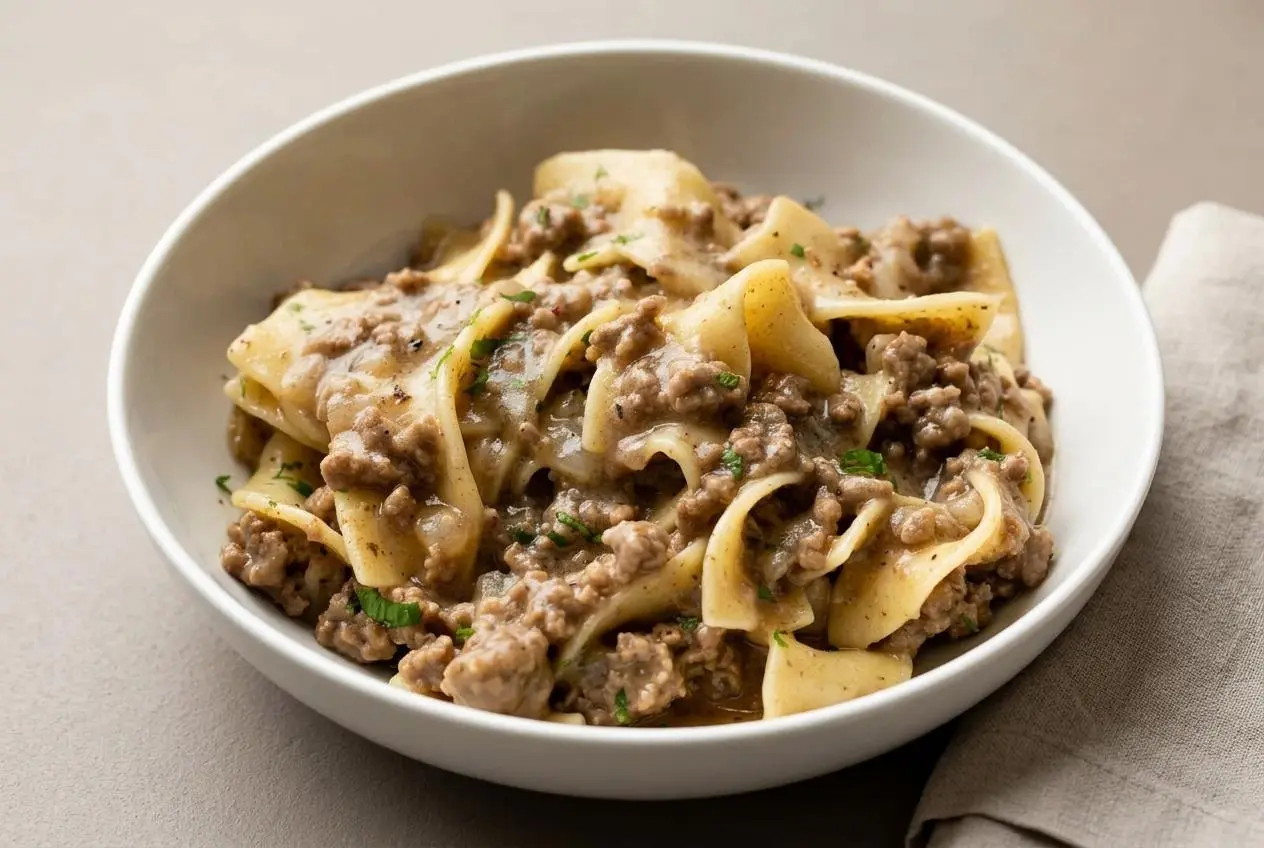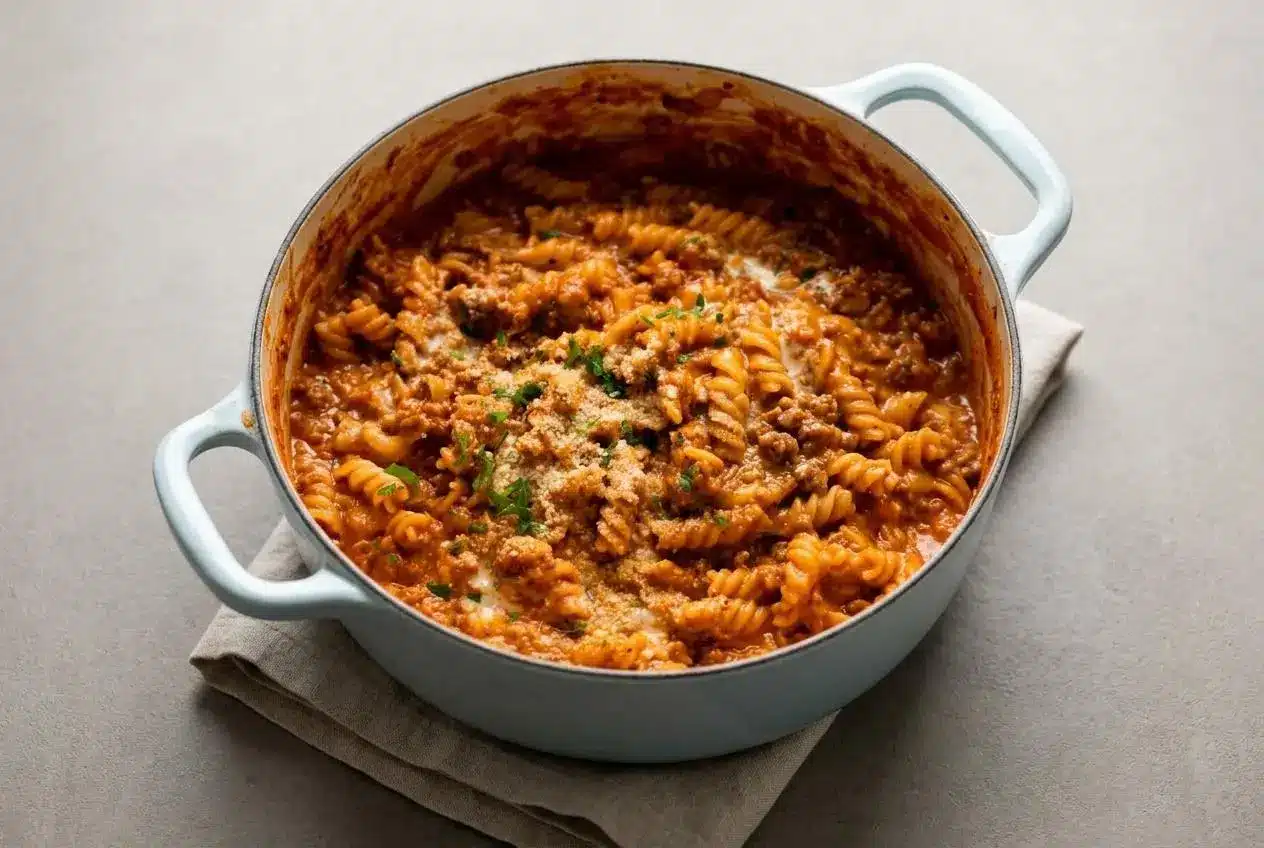
Ground beef pasta is a 30-minute one-pot dinner with seasoned beef, tender short noodles, and a silky tomato cream sauce that cooks in a single heavy pot.
This ground beef pasta starts with garlic, onion, and beef sizzling in olive oil, then lets dry pasta absorb savory broth right in the sauce. The result is rich, creamy, and deeply comforting without leaving a second pot to wash.
The key is to stop while the skillet still looks a little loose. Those noodles keep drinking up sauce after the heat goes off.
Use a wide, heavy-bottomed pot and keep a flat wooden spatula nearby so you can sweep the bottom clean as the pasta simmers.
Key Ingredients and Flavor Foundations
Main Ingredients
Each ingredient builds a different part of the dish: beef adds savory richness, tomatoes bring brightness, broth hydrates the pasta, and cream rounds everything into a glossy sauce.
- 1 1/2 tbsp olive oil
- 2 garlic cloves, finely minced
- 1 onion, finely chopped
- 500g/ 1 lb beef mince / ground beef
- 2 tsp Italian herbs
- 2 tbsp tomato paste
- 400g/ 14 oz can crushed tomatoes
- 1/2 tsp red pepper flakes
- 1 1/2 tsp cooking salt/kosher salt
- 1/2 tsp black pepper
- 4 cups (1 L) chicken stock/broth, low sodium
- 350g/ 12oz fusilli, penne, elbow macaroni
- 3/4 cups thickened / heavy cream
Serving
- Parmesan cheese, finely grated
- Parsley, finely chopped, optional
The onion softens into the sauce while garlic gives it a fragrant edge. Tomato paste adds concentrated sweetness and depth, crushed tomatoes provide acidity, and low-sodium broth lets the pasta release starch directly into the sauce. Parmesan brings a salty finish, while parsley adds freshness.
I prefer 85/15 ground beef here because it leaves enough flavorful drippings for the sauce without making the finished pasta greasy.
Choosing the Right Ground Beef Lean Ratio
Ground beef in the 80/20 range creates a richer, more pronounced browned flavor, but it can leave a noticeable layer of rendered fat in the pot. Beef around 85/15 or 90/10 keeps the sauce more balanced while still giving you enough drippings to brown the aromatics and build flavor.
Break the meat into small, irregular crumbles and let it make contact with the hot pot rather than stirring constantly. Once it is browned and no pink remains, spoon off excess grease if the bottom looks slick before adding the liquids. For cautious handling, cook ground beef to 160 °F at the center.
Selecting Pasta Shapes That Hold Sauce
Fusilli, penne, elbow macaroni, rotini, and medium shells are all sturdy enough for this one-pot approach. Their ridges, curves, and hollow centers catch little bits of beef and creamy tomato sauce, so every spoonful stays well coated.
Avoid tiny shapes such as orzo or acini di pepe. They absorb liquid too quickly, cook unevenly in a thick sauce, and can turn gummy before the rest of the pot reaches the right consistency. If you switch among the listed short pasta shapes, watch the last few minutes closely because thicker pieces may need a little more stirring and a splash of warm broth.
Aromatics and Broth for Maximum Depth
Chicken broth gives the noodles a savory foundation that plain water cannot provide. Since the pasta cooks directly in the tomato mixture, it absorbs that flavor while its starch thickens the sauce around the beef.
Italian herbs need a brief moment in the hot pot to wake up their aroma. Then cook the tomato paste for the full minute. It should darken from bright red to a deeper rust color and smell sweeter, which removes the raw, metallic edge before the tomatoes and broth go in.
How to Make Ground Beef Pasta Step by Step
Keep the pot at a controlled simmer from the moment the pasta goes in. That steady heat cooks the noodles evenly and gives their starch time to thicken the sauce rather than boiling the liquid away too fast.
- Heat the olive oil over high heat in a large heavy-based pot, then add the garlic and onion and cook for 1 1/2 minutes.
The onion should begin to soften and the garlic should smell fragrant without taking on dark color. - Add the ground beef and break it into small crumbles as it cooks, then stir in the Italian herbs for 30 seconds.
Cook until the meat has lost all red color and browned bits are forming across the pot base. - Stir in the tomato paste and cook it for 1 minute before adding the crushed tomatoes, chicken stock/broth, salt, black pepper, and red pepper flakes.
The paste should turn dark rust-red and the mixture should smell savory rather than sharply canned. - Add the dry pasta and bring the liquid to a gentle simmer, then cook for 15 minutes.
Stir every couple of minutes at first, then scrape the bottom more often near the end as the sauce thickens and the pasta becomes nearly tender. - Lower the heat, stir in the heavy cream, and let the pasta simmer for 1 to 2 minutes.
The sauce should turn smooth and glossy while still looking looser than the finished dish will be. - Take the pot off the heat, stir thoroughly, and ladle the pasta into bowls with Parmesan cheese and parsley, optional.
Leave a little sauce around the noodles because they will absorb more liquid as they settle.
The final few minutes do most of the texture work. The pasta should be just shy of fully tender when the cream goes in, and the pot should look noticeably saucy when it comes off the burner. That extra moisture is intentional, not a mistake.
Tips for Perfect Texture and Troubleshooting
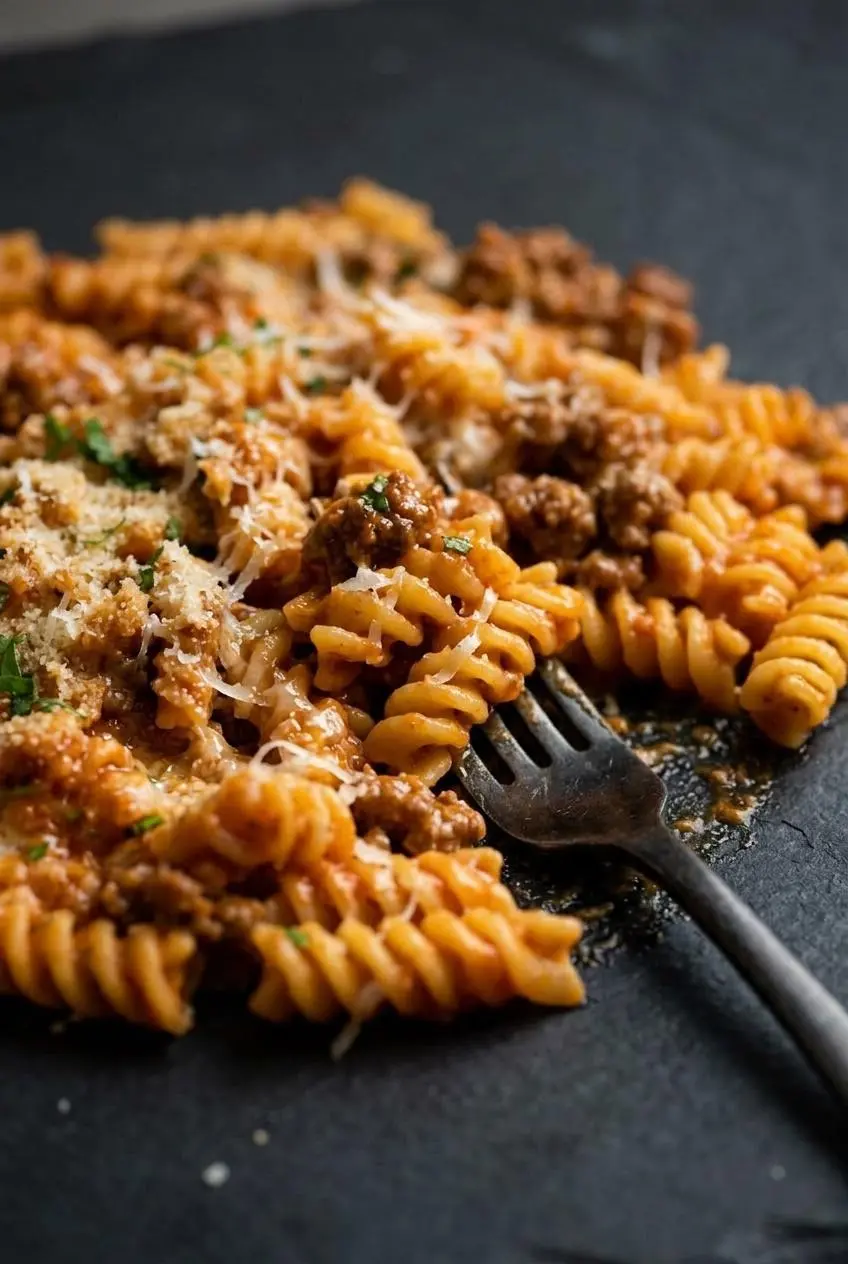
One-pot pasta is forgiving when you watch the heat and stir with purpose. These small adjustments solve the issues that most often show up near the end of cooking.
- The pasta sticks to the bottom: Keep the heat at a gentle simmer, not a hard boil. During the final five minutes, drag a flat wooden or silicone spatula across the entire base of the pot, especially around the edges where starch settles.
- The liquid disappears before the pasta softens: The burner may be running hot or the pasta shape may be especially thirsty. Stir in warm broth a splash at a time, then continue simmering until the noodles are nearly tender.
- The sauce seems thin: Give it a few minutes off the heat before judging. Pasta continues to absorb liquid as it rests, and the sauce will tighten around the noodles.
- The sauce is too thick: Loosen it with a small splash of warm broth and stir until it becomes silky again. Cold liquid can interrupt the smooth texture.
- The cream looks grainy or separated: Reduce the heat before adding it and avoid a vigorous boil afterward. Gentle bubbling keeps the sauce glossy.
- The flavor tastes flat: Make sure the tomato paste reached that darker rust color before the liquids went in. Browning it for the full minute gives the tomatoes a deeper, rounder flavor.
A heavy pot matters here because it holds heat steadily. Thin cookware develops hot spots, which can scorch the starch on the bottom long before the pasta is cooked through.
Flavorful Variations and Substitutions
Keep the main method as written, then use one of these optional directions when you want a different flavor or a lighter finish.
Cheesy Cheddar Beef Skillet
For a nostalgic cheddar version, fold freshly shredded sharp cheddar into the finished pasta off the heat. It melts more smoothly than pre-shredded cheese and adds a mellow, savory pull without changing the one-pot method. If seasoned beef and cheddar are calling your name, try this one pot taco pasta on another busy night.
Spinach and Garden Vegetable Additions
Add fresh baby spinach or sweet green peas during the final two minutes of simmering. Spinach should wilt into the sauce without turning dull, while peas bring small sweet pops that work well with the tomato cream. Sautéed mushrooms or softened bell peppers can also join the beef before the liquids are added for a heartier vegetable-forward bowl.
Cream-Free Tomato Herb Option
For a lighter tomato-herb version, leave out the heavy cream and let the pasta starch provide body. The sauce will be less rich but still cling well to the noodles. Half and half works for a softer creamy finish, or use whole milk whisked with a pinch of cornstarch to help it hold together gently.
Savory Depth With Mustard and Worcestershire
For a deeper beef-forward flavor, stir a tablespoon of Worcestershire sauce and a pinch of ground mustard into the pot with the tomato paste. Both are optional, and they add tangy, savory depth rather than making the dish taste like mustard.
Serving Suggestions and Side Dishes
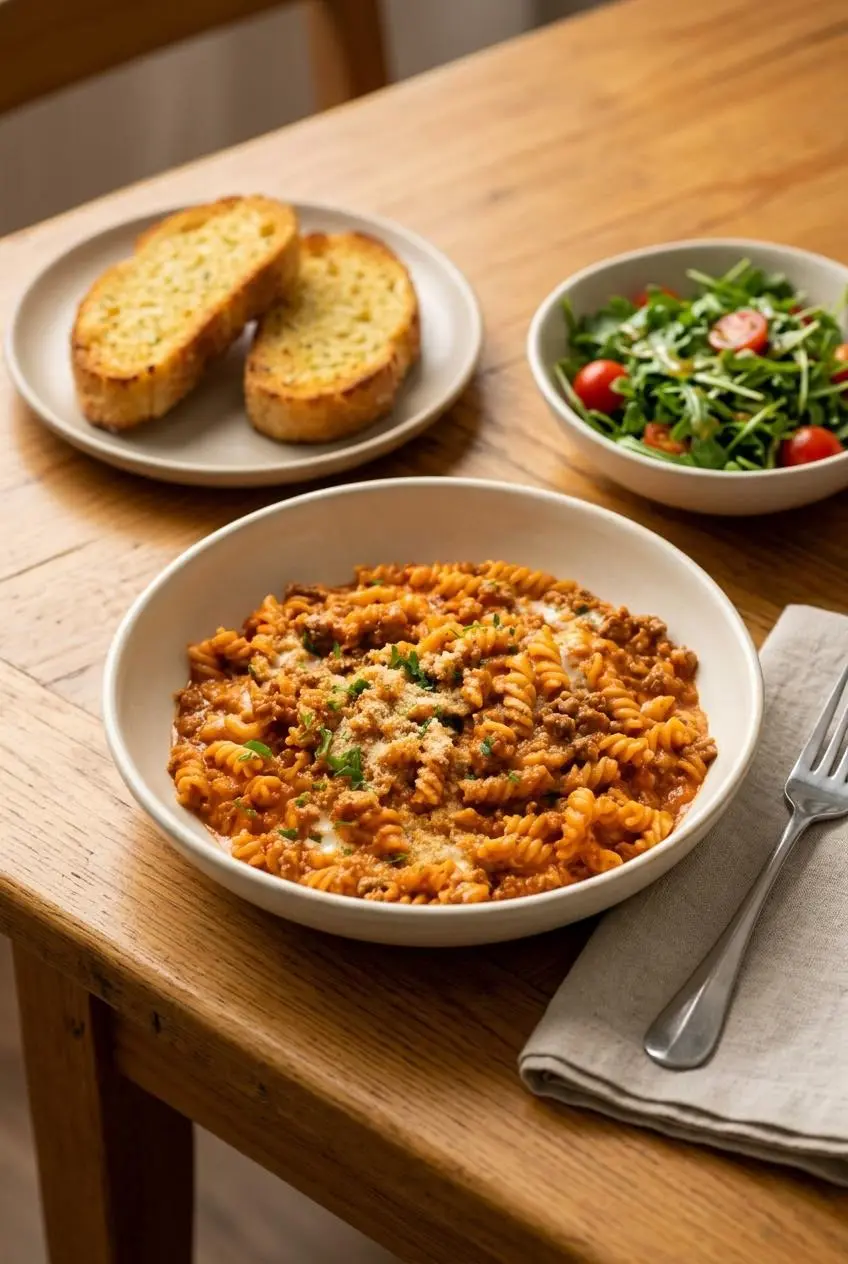
This is a satisfying bowl on its own, but something crisp or crunchy alongside it keeps the meal balanced.
- Serve crusty garlic bread for swiping through the extra tomato cream sauce.
- Pair it with an arugula or romaine salad dressed in a bright lemon vinaigrette to cut through the richness.
- Put finely grated Parmesan and cracked black pepper on the table so everyone can finish their bowl to taste.
- Add a few parsley leaves just before serving when you want a fresher, greener contrast.
Storage and Reheating Guidelines
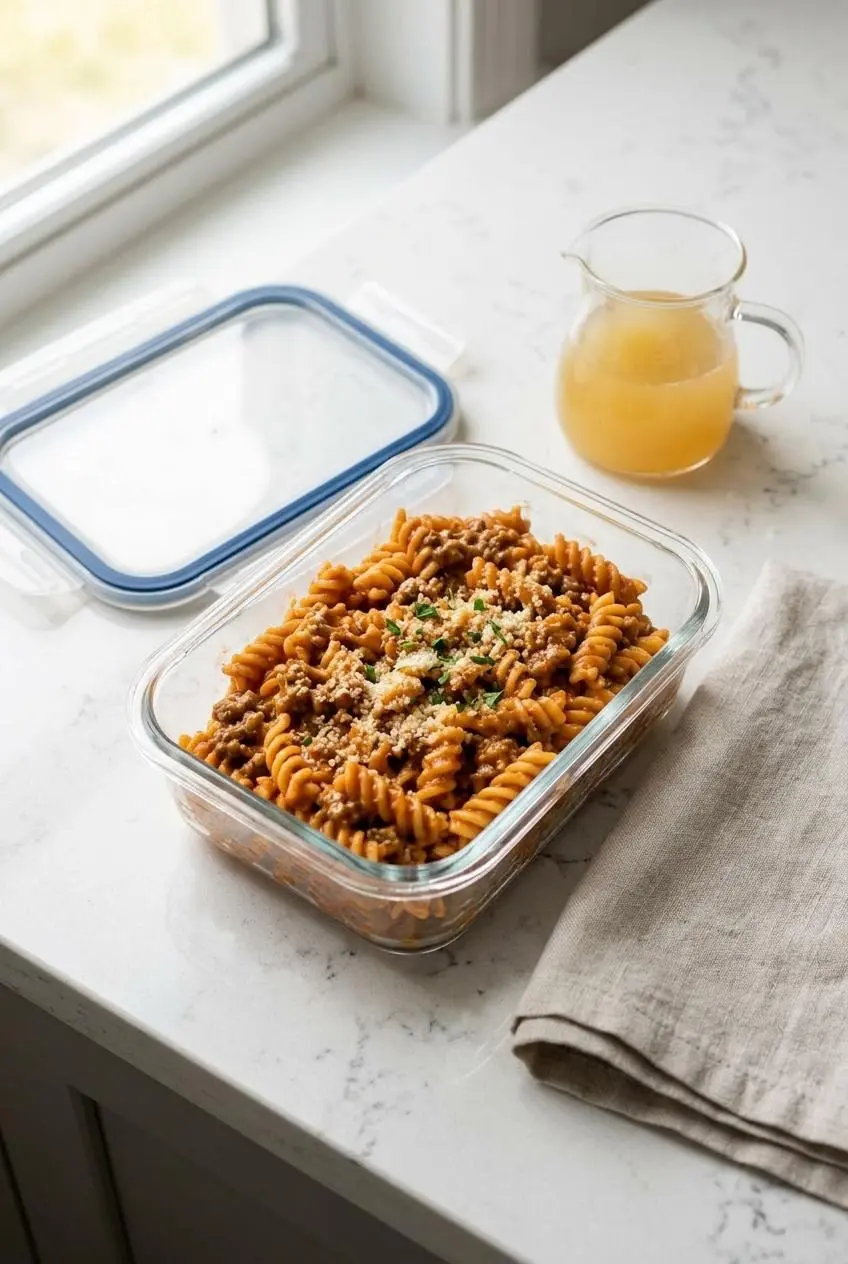
Cool leftovers promptly, then transfer them to shallow airtight containers and keep them chilled. Creamy pasta thickens as it sits because the noodles continue absorbing sauce, so it is best to protect that texture by reheating only the portion you plan to eat.
Warm leftovers gently in a skillet or saucepan over medium-low heat with 2 tablespoons of warm broth or milk. Stir frequently until the sauce loosens and turns glossy again. Avoid blasting it over high heat, which can dry the noodles and make the cream sauce less smooth.
If you would rather give chilled pasta a different second life, turn it into a leftover pasta frittata instead of reheating it in sauce.
Conclusion
This creamy beef pasta delivers a comforting, full-flavored dinner in one pot, with tender noodles and a tomato sauce that becomes richer as it rests. Brown the beef well, toast the tomato paste, and keep the simmer steady.
Stay close during the final minutes, scrape the bottom often, and take the pot off the heat while it still looks slightly saucy. That small bit of patience makes every bowl feel properly cozy.
Frequently Asked Questions
Can I Make Ground Beef Pasta Without Heavy Cream?
Yes. Omit the cream for a classic tomato beef pasta, and let the starch from the noodles thicken the sauce. For a lighter creamy option, use half and half or whole milk whisked with a teaspoon of cornstarch. Add dairy over low heat so the sauce stays smooth.
Which Pasta Shapes Work Best in One-Pot Beef Pasta?
Choose medium short shapes such as fusilli, rotini, penne, elbow macaroni, or medium shells. Their grooves and hollow centers hold the beef and sauce well. Avoid very small pasta shapes because they absorb broth too fast and can become soft before the sauce finishes reducing.
How Do I Prevent the Pasta From Sticking to the Bottom of the Pot?
Use a heavy-bottomed Dutch oven or similar pot, keep the liquid at a moderate simmer, and stir every couple of minutes. During the final five minutes, scrape the bottom regularly with a flat spatula. This keeps the starch from settling and catching on the hot surface.
How Do I Reheat Leftover Creamy Beef Pasta Without Drying It Out?
Reheat it gently in a skillet or saucepan over medium-low heat with warm broth or milk. Stir until the sauce loosens and coats the noodles again. Covering the pan briefly can help warm the center without forcing the sauce to boil. Keep the heat low for the smoothest finish.

Ground Beef Pasta

Equipment
- Large heavy based pot
- Wooden spoon or spatula
- Cheese grater
Ingredients
- 1 1/2 tbsp olive oil
- 2 cloves garlic finely minced
- 1 onion finely chopped
- 500 g beef mince / ground beef 1 lb
- 2 tsp Italian herbs
- 2 tbsp tomato paste
- 400 g can crushed tomatoes 14 oz
- 1/2 tsp red pepper flakes
- 1 1/2 tsp cooking salt/kosher salt
- 1/2 tsp black pepper
- 4 cups chicken stock/broth, low sodium 1 L
- 350 g fusilli, penne, elbow macaroni 12 oz
- 3/4 cups thickened / heavy cream
Serving
- Parmesan cheese finely grated
- Parsley finely chopped, optional
Instructions
- Heat the olive oil over high heat in a large heavy-based pot, then add the garlic and onion and cook for 1 1/2 minutes. The onion should begin to soften and the garlic should smell fragrant without taking on dark color.
- Add the ground beef and break it into small crumbles as it cooks, then stir in the Italian herbs for 30 seconds. Cook until the meat has lost all red color and browned bits are forming across the pot base.
- Stir in the tomato paste and cook it for 1 minute before adding the crushed tomatoes, chicken stock/broth, salt, black pepper, and red pepper flakes. The paste should turn dark rust-red and the mixture should smell savory rather than sharply canned.
- Add the dry pasta and bring the liquid to a gentle simmer, then cook for 15 minutes. Stir every couple of minutes at first, then scrape the bottom more often near the end as the sauce thickens and the pasta becomes nearly tender.
- Lower the heat, stir in the heavy cream, and let the pasta simmer for 1 to 2 minutes. The sauce should turn smooth and glossy while still looking looser than the finished dish will be.
- Take the pot off the heat, stir thoroughly, and ladle the pasta into bowls with Parmesan cheese and parsley, optional. Leave a little sauce around the noodles because they will absorb more liquid as they settle.