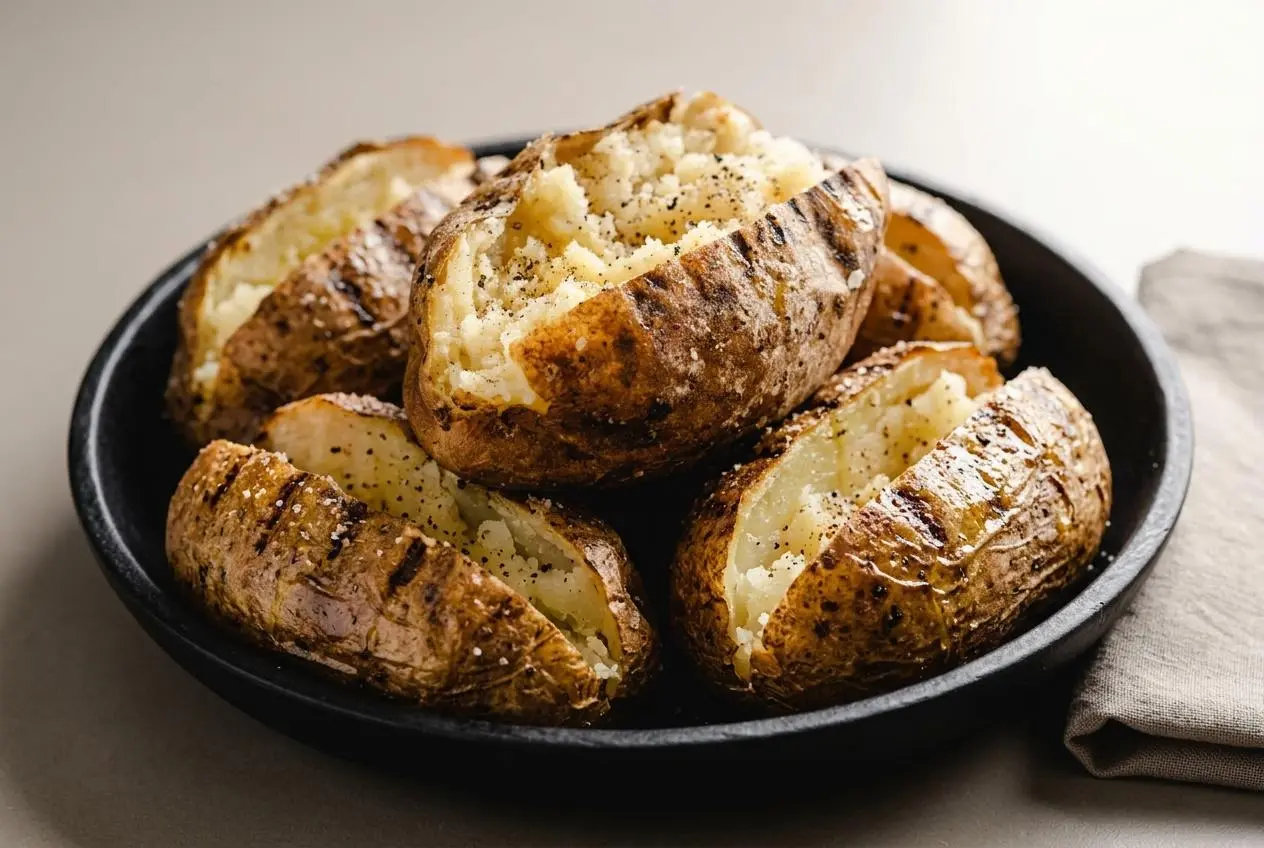
Roast foil-wrapped Russet potatoes over indirect grill heat, then finish them unwrapped over direct heat for crisp skin and a fluffy center. Cook until a thermometer reaches 205 to 215 °F.
Grilled baked potatoes bring together tender, steaming potato flesh and smoky, crackly skins without turning on the oven. The two-zone method keeps the potatoes from scorching before their centers become soft.
Foil handles the slow roast, while a brief grate finish gives you that savory sizzle and deep grilled aroma. The final sear changes everything.
Use heat-resistant gloves or long tongs when opening foil packets because the trapped steam is intensely hot.
Why Grilling Makes Better Baked Potatoes
A grill works like an outdoor oven when you cook with the lid closed and keep the potatoes over indirect heat. The steady surrounding heat softens the centers gradually, while the final direct-heat finish adds a lightly smoky flavor that indoor classic baked potatoes cannot quite duplicate.
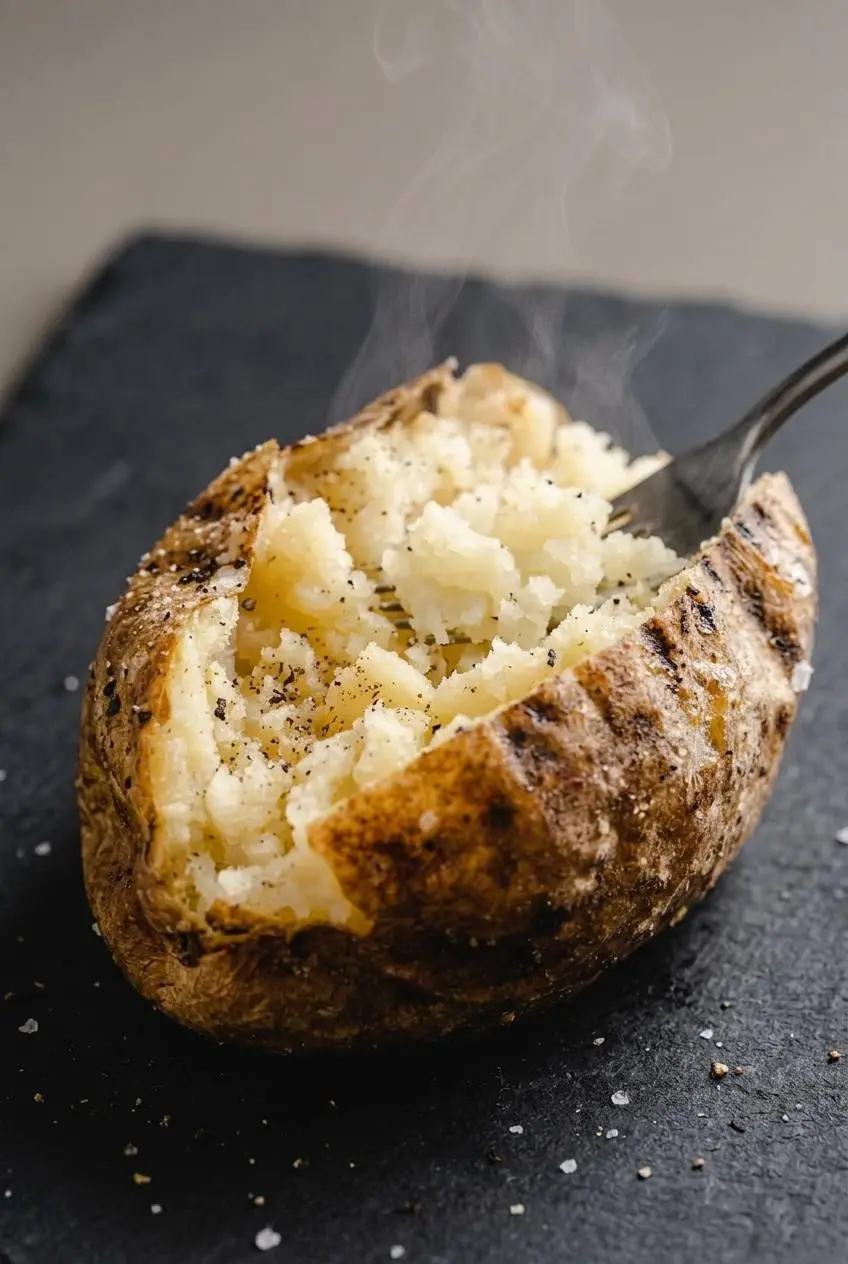
This method also keeps the kitchen cooler during a cookout. Once the foil comes off, the potato skins hit the hot grates with a noticeable sizzle, and their earthy aroma picks up a subtle char. Split one open and you should see dry steam billow out over a light, crumbly interior.
Ingredients for Grilled Baked Potatoes
Each ingredient helps build the contrast that makes these potatoes special: fluffy starch inside, crisp skin outside, and a well-seasoned savory finish.
- 4 large russet potatoes
- 2 Tablespoons olive oil
- 2 teaspoons salt
- 2 teaspoons black pepper
Russets have a high starch content, which gives their interiors the dry, airy texture associated with a great baked potato. Olive oil coats the skin evenly so the salt and pepper cling, while also encouraging browning during the final sear. Salt seasons the skin and helps it dry on the grill; black pepper adds a warm, sharp finish.
I scrub the skins thoroughly, then dry them completely before adding oil so the seasoning sticks and the skin has a better chance to crisp.
How to Make Grilled Baked Potatoes
- Set up the grill for two-zone cooking and heat it to 350 to 400 °F, with one side hotter and one side without direct flame below it.
The indirect side should feel steadily hot when the lid is closed, while the direct side is reserved for the crisp finish. - Rinse and scrub the russet potatoes well, removing any dirt from the skin.
Dry skins will take on oil and seasoning more evenly than damp ones. - Cut four pieces of 18-inch heavy-duty aluminum foil, or use two layers of regular foil for each potato, then place one potato on each packet.
Heavy-duty foil is less likely to tear and leak oil onto the burners or coals. - Drizzle each potato with olive oil, season with salt and black pepper, and wrap each one tightly in foil.
The packets should be sealed enough to hold heat around the potatoes without leaving exposed skin. - Place the wrapped potatoes on the indirect side, leaving space between them, close the lid, and cook for 60 minutes.
Move and rotate the potatoes at the 30-minute mark so those closer to the hotter zone do not cook faster than the rest. - Use tongs or heat-resistant gloves to carefully remove the foil, then move the hot potatoes to the direct-heat side of the grill.
Open the packets away from your face and hands because a burst of steam will escape. - Grill the unwrapped potatoes for 1 to 2 minutes per side, about 4 to 5 minutes total, turning them as the skins brown.
The skins should sound slightly hollow when tapped with tongs and yield gently when squeezed. - Check the center of each potato with an instant-read thermometer, aiming for 205 to 215 °F, then transfer to a platter.
When split with a knife and fluffed with a fork, the center should release dry steam and break into soft, fluffy flakes. - Open the potatoes, fluff the interiors with a fork, and finish with salt, pepper, and any toppings you like.
Serve while the skin is still crisp and the center is hot enough to melt a pat of butter quickly.
Choosing the Best Potatoes and Fats for Grilling
The potato variety and coating fat determine whether you get a cloudlike center with crisp skin or a dense potato with a scorched exterior. Choose for texture first, then flavor.
Why Russets Are the Undisputed Champions
Russet Burbank potatoes are the strongest choice for whole grilled potatoes because their high starch level helps the flesh separate into soft, fluffy pieces as it cooks. Their thicker skins also hold up well through the foil roast and direct-grate finish.
Red potatoes and fingerlings are waxier, so they tend to stay moist and firm rather than becoming airy. They are great for grilling in wedges or skewers, but they do not give the same classic baked-potato texture when cooked whole.
Selecting High-Heat Cooking Fats
Olive oil gives the skin a balanced flavor and works well for this method. If you prefer a more heat-tolerant option for the final sear, avocado oil is a good optional choice. Rendered bacon fat or beef tallow can add rich savory flavor, especially alongside barbecue mains.
Save regular whole butter for serving rather than the initial grill phase. Its milk solids can darken quickly over direct heat. Clarified butter is a better optional choice for brushing on just before the final sear.
Foil vs No Foil: Which Grilling Method Is Best?
Both methods work, but they produce different textures. For a dependable fluffy center and crisp finish, the hybrid approach gives the most control.
The Case for Foil Wrapping
- Even cooking: Heavy-duty foil creates a protected cooking environment around each potato, helping the interior soften without harsh direct heat.
- Less scorching: The foil shields the skin during the longer indirect cook, especially on gas grills with stronger hot spots.
- Better handling: Individual packets make it easier to move potatoes around the grill as heat shifts.
Choose 18-inch heavy-duty aluminum foil when possible. If only regular foil is available, use two layers per potato so the oil and seasoning stay contained.
Grilling Directly on the Grates Without Foil
For naked grilled potatoes, keep the grill near 350 °F and use indirect heat for most of the cook. Oil the skins generously, place the potatoes away from the strongest flame, and turn them about every 20 minutes so one side does not become bitterly blackened.
This technique gives the skin a deeply smoky, slightly chewy character. It is a good option if you enjoy a more rugged barbecue finish, but it needs closer attention than foil-wrapped potatoes.
The Best of Both Worlds Hybrid Technique
The hybrid method starts with foil packets on the indirect zone, where the potatoes cook through evenly. Then the foil comes off and the potatoes move to direct heat for a quick 4 to 5 minute sear.
You get the tender interior that foil supports without sacrificing crisp skin. That final uncovered moment is where the skin tightens, sizzles, and takes on the grill’s best flavor.
Fast Grilling Shortcut: The Microwave Par-Cook Method
When time is tight, partially cook the potatoes in the microwave before they go on the grill. This shortcut keeps the grilled flavor while reducing the time needed over indirect heat.
Wash the potatoes, pierce them all over with a fork, and microwave on high for 5 to 6 minutes until they begin to soften. Carefully coat them with oil, salt, and pepper, then place them over indirect grill heat for 15 to 20 minutes to finish cooking and gain a smoky exterior. This is an optional shortcut, not a replacement for the slower foil-roasted method.
Troubleshooting Common Grilling Mistakes
- Charred skin with a hard center: The potatoes spent too long over intense direct flame. Move them to the cooler zone, wrap them loosely in extra foil, close the lid, and continue cooking until the center softens.
- Soggy skin: Steam stayed trapped inside the foil after cooking. Open the packets as soon as the potatoes come off indirect heat, then use the direct-grate finish to dry and crisp the skins.
- Torn foil and flare-ups: Thin foil can rip and allow oil to drip onto flames or burners. Use heavy-duty foil, or double regular foil, and keep packets on the indirect side.
- Unevenly cooked potatoes: One side of the grill runs hotter than the other. Rotate the potatoes at the halfway point and leave space around every packet for heat to circulate.
- Skin will not crisp: The potatoes went straight from sealed foil to the serving plate. Unwrap them fully and give each side direct heat until the surface feels dry and lightly blistered.
Delicious Toppings and Flavor Variations
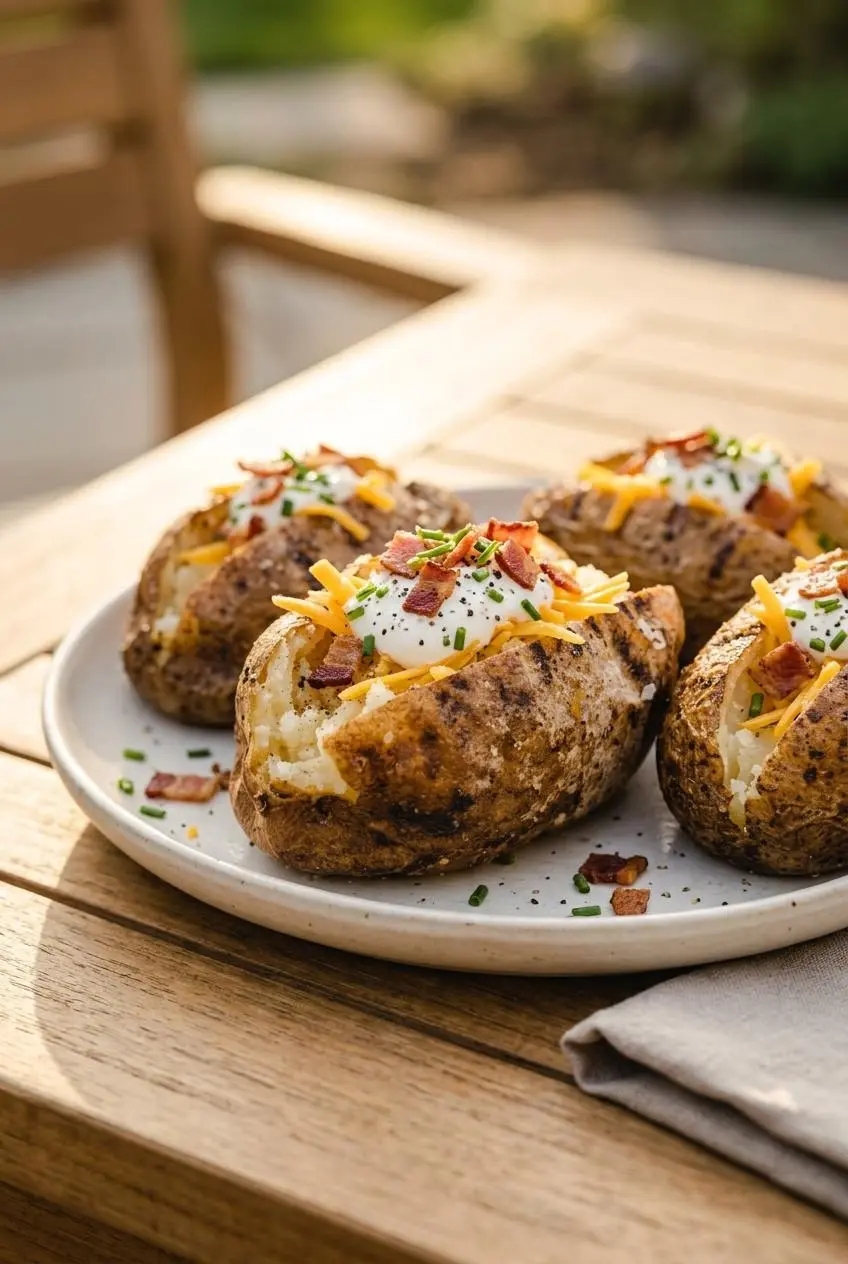
Keep the main potato method as written, then personalize each hot potato at the table. A toppings bar works especially well when the grill is already busy with a larger cookout meal.
Classic Steakhouse Fixings
For a familiar steakhouse-style potato, add sharp shredded cheddar, crisp thick-cut bacon crumbles, chilled sour cream, finely sliced chives, and freshly cracked black pepper. The cool sour cream and salty bacon are especially good against the hot, fluffy center.
For a richer finish, brush the skins with smoked garlic clarified butter right before the final direct sear. It adds a savory aroma and helps the exterior become especially crisp.
Loaded BBQ Smoked Meat Spuds
Turn a potato into a full meal with warm pulled pork or chopped smoked brisket, tangy barbecue sauce, pickled jalapeño slices, and melted pepper jack cheese. Keep the toppings warm so they do not cool the potato too quickly.
- Hasselback style: Make thin crosswise cuts in a potato without slicing through the bottom, then grill it indirectly and baste the ridges with garlic butter for crisp edges.
- Sweet potato option: Cook sweet potatoes indirectly at 350 °F until tender, then finish briefly over direct heat for charred sweetness.
- Stuffed potato inspiration: Try these stuffed sweet potatoes when you want a filling-focused alternative with savory toppings.
Storage and Reheating Guidelines
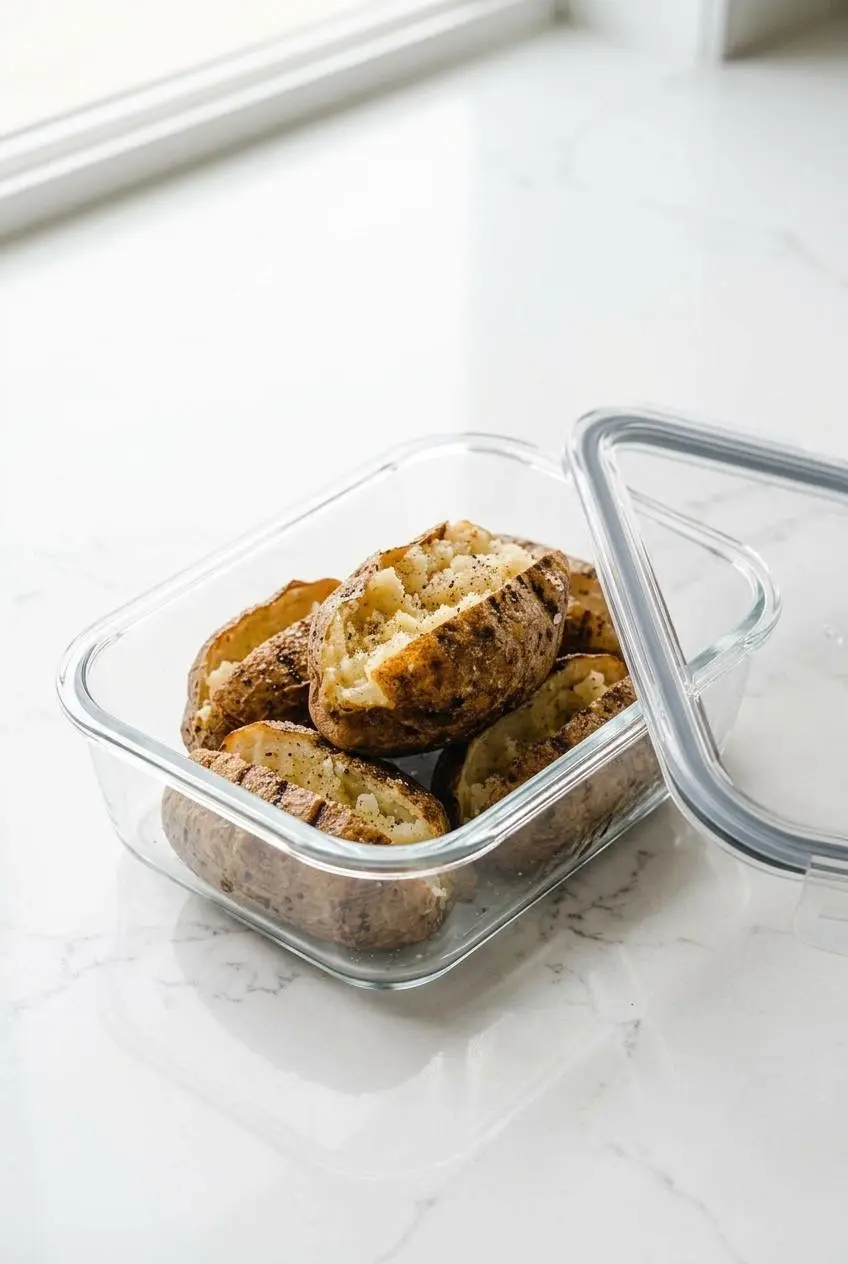
Remove leftover potatoes from their foil before chilling so moisture does not soften the skins. Refrigerate them in an airtight container within two hours, and use them within three to four days for safe leftover storage.
To bring back some crispness, reheat unwrapped potatoes on a medium grill or in the oven until hot through and the skin feels dry again. Microwaving is convenient, but it tends to soften the exterior. Split and fluff the potato after reheating rather than before, which helps the center stay moist.
Conclusion
Two-zone grilling gives you the best path to tender potato interiors and crisp, smoky skins. Roast the potatoes in foil over indirect heat, then finish them directly over the flame for that satisfying contrast.
Use the thermometer as your final check, then load each potato with toppings that fit the meal. A little garlic clarified butter before the sear makes a particularly good finish.
Frequently Asked Questions
How Long Do Baked Potatoes Take to Make on the Grill?
Medium to large Russet potatoes generally need 50 to 60 minutes over indirect heat at 375 to 400 °F. Plan on another 4 to 5 minutes over direct heat to crisp the skin after unwrapping.
Should You Wrap Potatoes in Foil When Grilling?
Yes, foil helps prevent the skin from scorching while the interior cooks through. For crisp skin, unwrap the potatoes for the final few minutes and finish them over direct heat.
What Internal Temperature Indicates a Grilled Potato Is Done?
Insert an instant-read thermometer into the center of the potato. A reading between 205 and 215 °F indicates a soft, fluffy interior; 210 °F is a useful target.
Can You Microwave Potatoes Before Putting Them on the Grill?
Yes. Pierce the potatoes and microwave them on high for 5 to 6 minutes before grilling. Finish them over indirect heat for about 15 to 20 minutes, then use direct heat briefly for color and crispness.
How Do You Get Crispy Skin on Grilled Baked Potatoes?
Remove the foil completely before the final grill stage. Brush the skin with oil or clarified butter, then sear directly over the flames while turning often until the skin feels dry, taut, and lightly blistered.
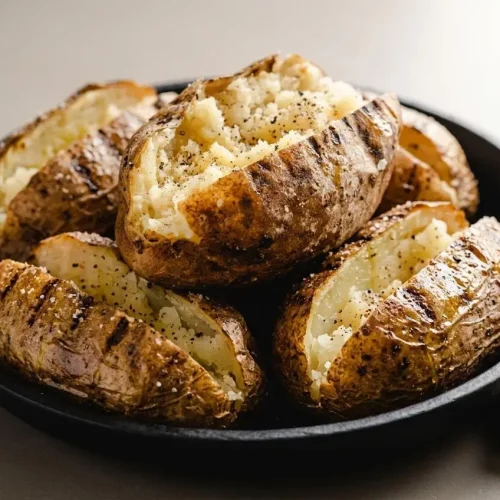
Grilled Baked Potatoes

Equipment
- 18 inch heavy duty aluminum foil
- Grill
- heat-resistant gloves or tongs
- Instant-read thermometer
Ingredients
- 4 large russet potatoes
- 2 Tablespoons olive oil
- 2 teaspoons salt
- 2 teaspoons black pepper
Instructions
- Set up the grill for two-zone cooking and heat it to 350 to 400 °F, with one side hotter and one side without direct flame below it. The indirect side should feel steadily hot when the lid is closed, while the direct side is reserved for the crisp finish.
- Rinse and scrub the russet potatoes well, removing any dirt from the skin. Dry skins will take on oil and seasoning more evenly than damp ones.
- Cut four pieces of 18-inch heavy-duty aluminum foil, or use two layers of regular foil for each potato, then place one potato on each packet. Heavy-duty foil is less likely to tear and leak oil onto the burners or coals.
- Drizzle each potato with olive oil, season with salt and black pepper, and wrap each one tightly in foil. The packets should be sealed enough to hold heat around the potatoes without leaving exposed skin.
- Place the wrapped potatoes on the indirect side, leaving space between them, close the lid, and cook for 60 minutes. Move and rotate the potatoes at the 30-minute mark so those closer to the hotter zone do not cook faster than the rest.
- Use tongs or heat-resistant gloves to carefully remove the foil, then move the hot potatoes to the direct-heat side of the grill. Open the packets away from your face and hands because a burst of steam will escape.
- Grill the unwrapped potatoes for 1 to 2 minutes per side, about 4 to 5 minutes total, turning them as the skins brown. The skins should sound slightly hollow when tapped with tongs and yield gently when squeezed.
- Check the center of each potato with an instant-read thermometer, aiming for 205 to 215 °F, then transfer to a platter. When split with a knife and fluffed with a fork, the center should release dry steam and break into soft, fluffy flakes.
- Open the potatoes, fluff the interiors with a fork, and finish with salt, pepper, and any toppings you like. Serve while the skin is still crisp and the center is hot enough to melt a pat of butter quickly.