Some cakes are all about frosting and layers, but this one wins people over with pure buttery character. In my kitchen, this style of French Butter Cake is the kind of bake I turn to when I want something simple, rich, and quietly impressive without fussing over fancy decoration.
What makes this version special is the browned butter. That little extra step brings deep, nutty flavor to a cake that is already known for its moist crumb and crisp sugar top, so it is perfect for weekend baking, brunch tables, or a cozy slice with coffee.
Why You’ll Love This Recipe
Deep butter flavor: I have made plenty of butter cake recipe variations over the years, and browned butter is the one change that makes the biggest difference. It adds a toasty, almost caramel-like richness that plain melted butter just cannot match.
Moist, tender texture: Between the cake flour and the sour cream, the crumb stays soft, fine, and beautifully moist. It has that satisfying, rich bite you want from a true French Butter Cake, not a dry or fluffy slice that disappears into crumbs.
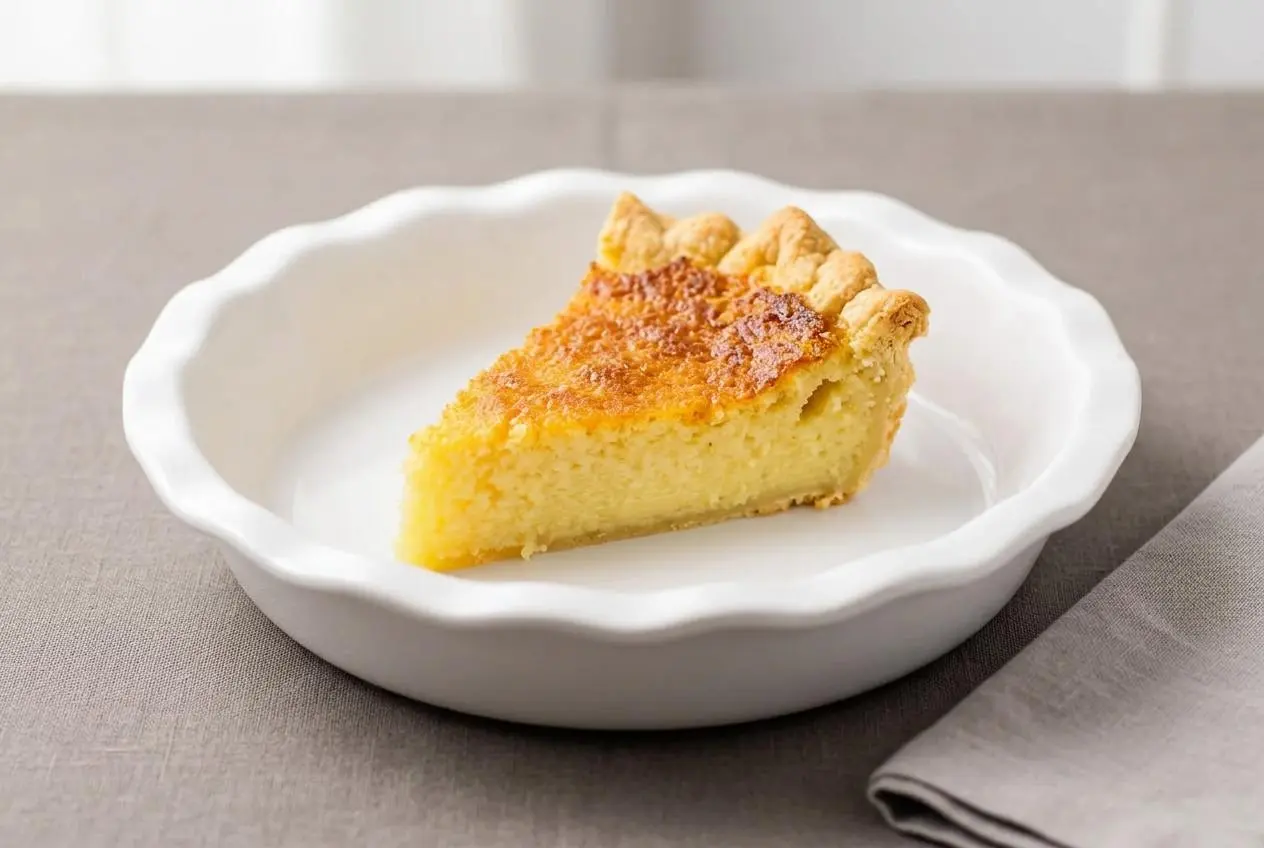
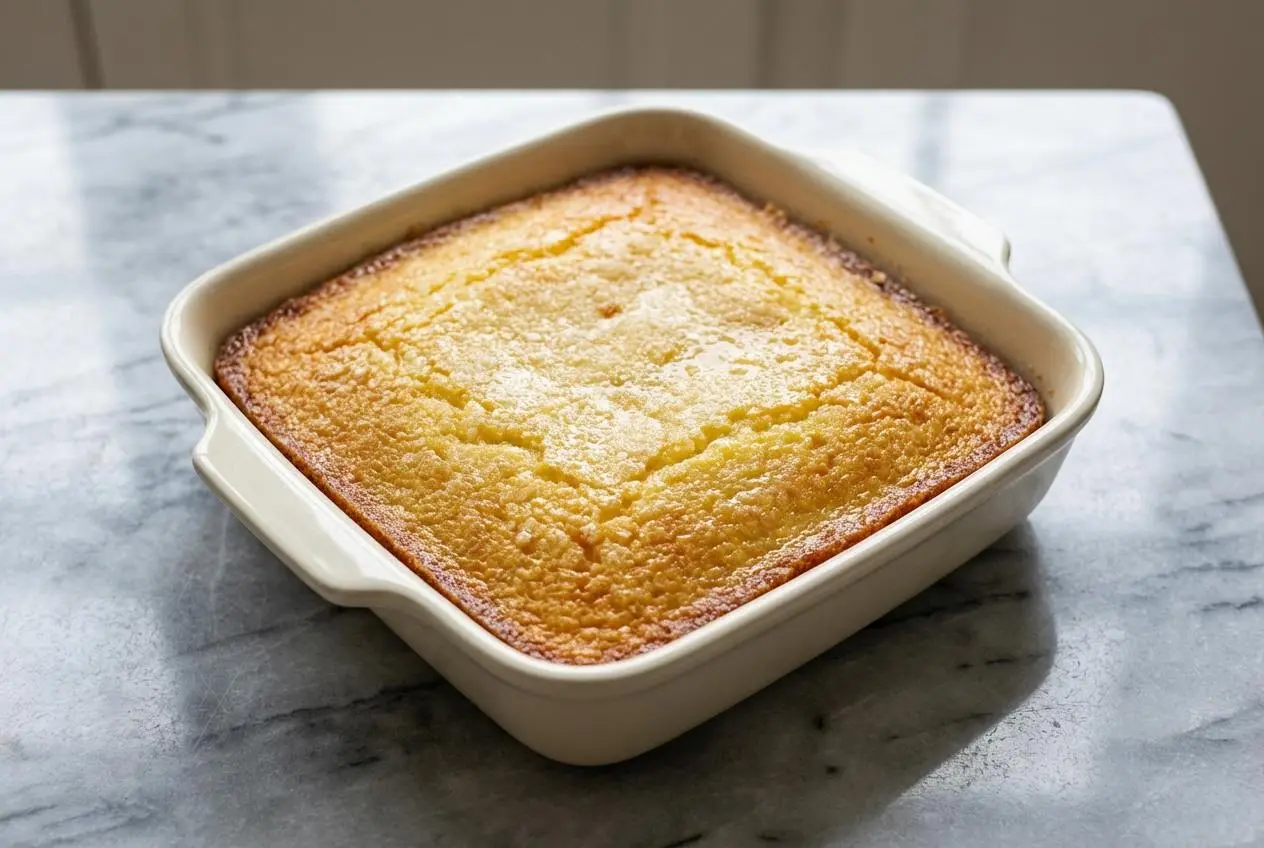
That crackly sugar top: The final sprinkle of sugar creates a crunchy sugar crust that feels almost bakery-style. It is such a small touch, but it gives every bite a lovely contrast between crisp top and tender center.
Elegant without being difficult: In my kitchen, this is the sort of cake I make when I want something that feels special but uses everyday pantry staples. Once you know the trick of beurre noisette, the whole recipe feels easy and dependable.
Ingredients and Substitutions
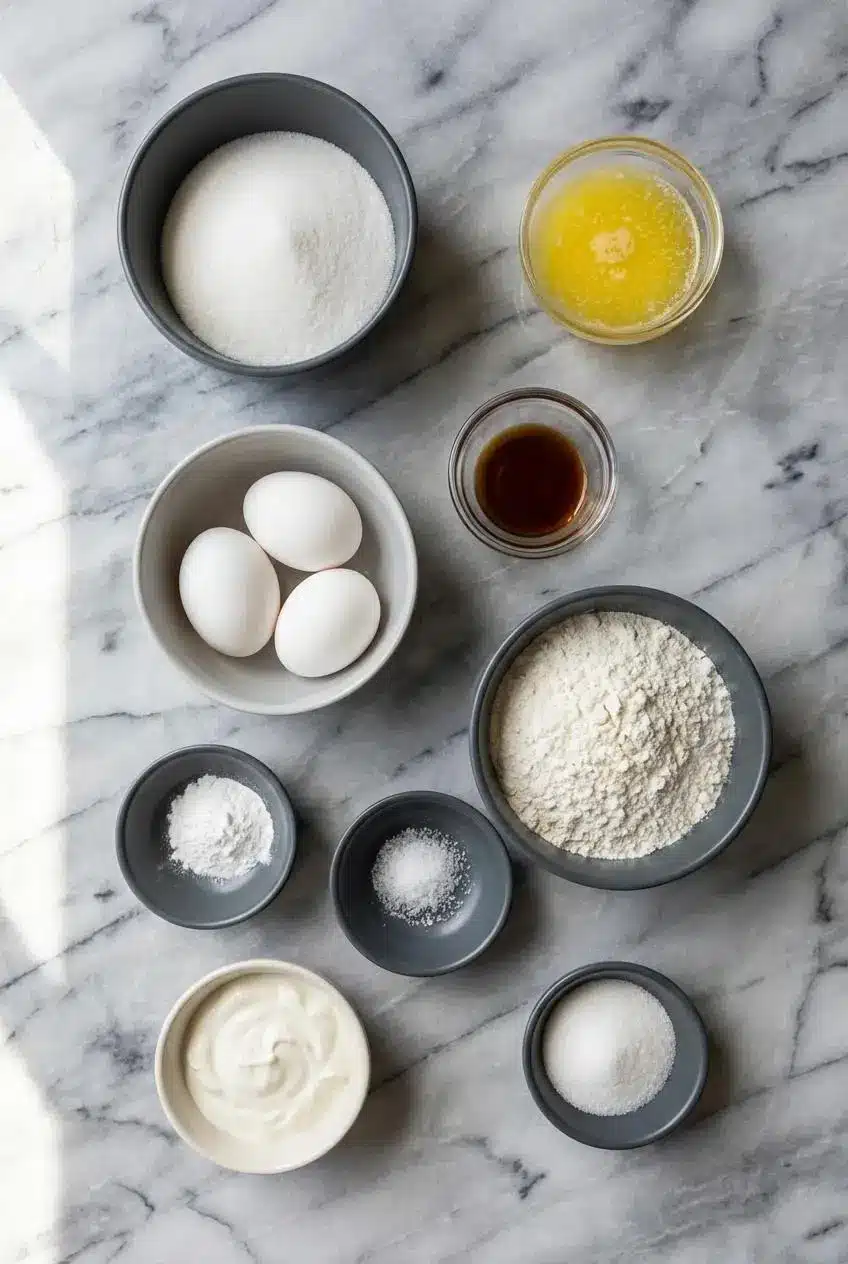
Precise measurements matter here, because this cake gets its signature texture from a careful balance of butter, cake flour, eggs, and sour cream.
Ingredients
- 1 cup granulated sugar
- 1 cup butter, melted
- 3 eggs, room temperature
- 2 ½ teaspoons vanilla extract
- 2 cups cake flour
- 2 teaspoons baking powder
- 1 teaspoon salt
- ⅔ cup sour cream
- 2 tablespoons granulated sugar, for topping
Ingredient Notes & Substitutions
Butter: For the best flavor, I use unsalted butter so I can control the seasoning from start to finish. If salted butter is what you have on hand, it will still work, but reduce the added salt to ½ teaspoon so the cake does not taste overly salty.
Cake flour: This is one of the keys to a fine, delicate crumb. If you only have all-purpose flour, a reliable swap is to measure 1 cup of all-purpose flour, remove 2 tablespoons, replace them with 2 tablespoons of cornstarch, and sift well before using.
Sour cream: Full-fat sour cream gives this sour cream cake its moisture and a gentle tang that keeps the sweetness in balance. Full-fat Greek yogurt is the best substitute in a pinch, and it gives a similar richness.
Room temperature ingredients: Eggs and sour cream blend far more smoothly when they are not fridge-cold. When cold ingredients hit warm browned butter, the mixture can look curdled and uneven, which makes the batter harder to emulsify properly.
How to Make French Butter Cake
Brown the Butter and Prepare the Pan
- Set your oven to 350°F and grease a 9×9-inch baking dish so it is ready when the batter is mixed. Then place the butter in a light-colored saucepan over medium heat and let it melt, watching as it foams and sizzles.
- Keep cooking just until the milk solids at the bottom turn golden brown and the butter smells deeply nutty, like toasted hazelnuts. Pour it into a large mixing bowl right away so it does not keep cooking, then let it cool briefly for a few minutes before moving on.
Build the Batter
- Add the sugar to the browned butter and mix for 1 minute, until the mixture looks glossy, fragrant, and slightly grainy. It will not be fluffy in the same way as creamed butter, and that is exactly what you want here.
- Add the eggs one at a time, mixing well after each addition so the batter turns smoother and more cohesive. Stir in the vanilla extract and notice how the aroma becomes warm and sweet.
- In a separate small bowl, sift together the cake flour, baking powder, and salt. Slowly add the dry mixture to the wet ingredients, mixing only until you no longer see dry streaks, because overmixing can make the finished cake tough instead of tender.
- Fold in the sour cream gently with a spatula until the batter is smooth and evenly blended. At this stage, it should look thick, silky, and rich.
Bake and Finish
- Spoon the batter into the prepared baking dish and spread it into an even layer. Sprinkle the remaining granulated sugar over the top so the cake bakes up with that signature crunchy sugar crust.
- Bake for 30 to 35 minutes, until the top is golden and a toothpick inserted in the center comes out clean. Let the cake cool before slicing, which helps the crumb settle and makes for neater pieces.
The Secrets to a Perfect French Butter Cake
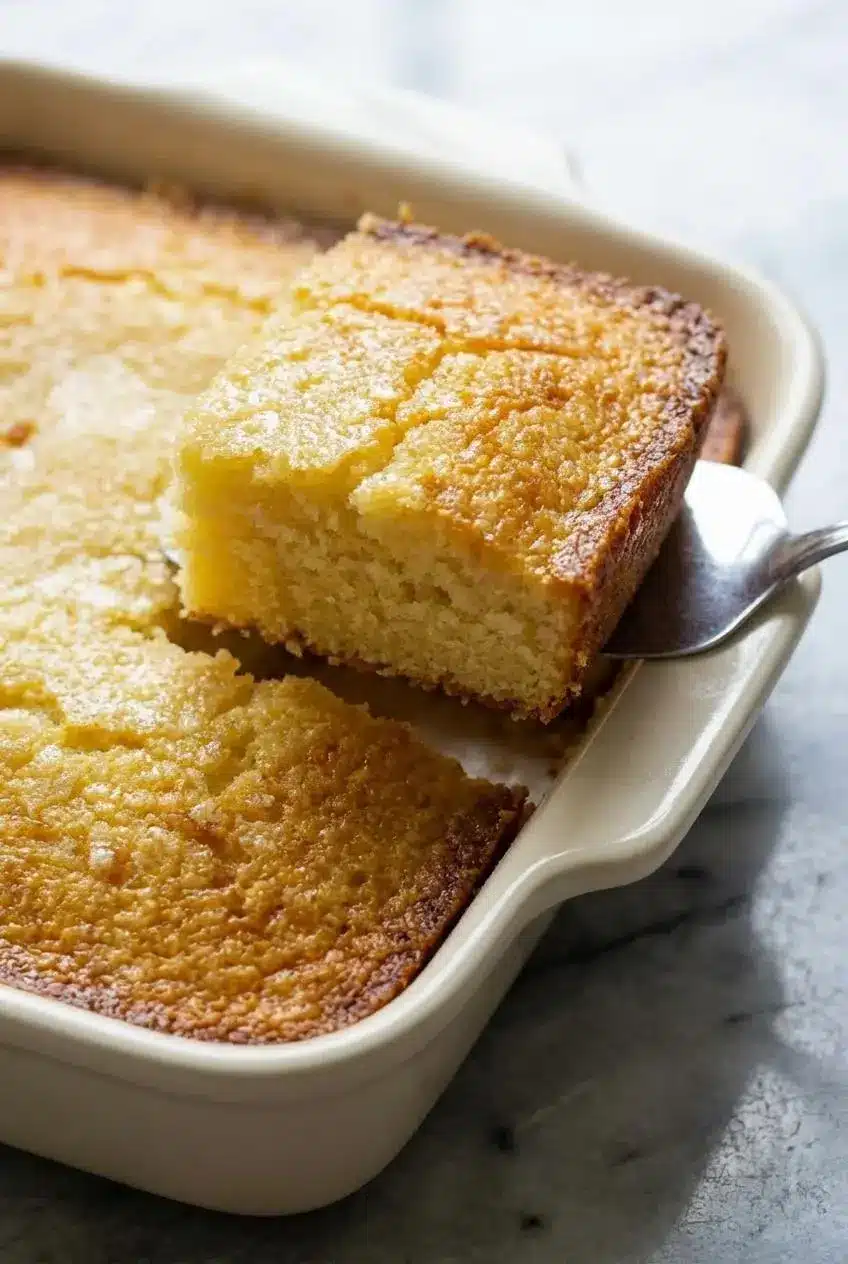
The magic of browned butter: Browning butter is not just melting it, it is a flavor-building step that transforms the whole cake. As the milk solids toast, they develop the nutty depth that makes beurre noisette such a classic French technique, and that is what gives this cake its unforgettable aroma.
Why melted butter works here: A cake made with melted butter behaves differently from one made with the creaming method. Because the flour gets coated more directly with fat, less gluten develops, and the crumb stays denser, moister, and finer, which is exactly the texture I want in this style of butter cake recipe.
Why room temperature matters: When eggs and sour cream are closer in temperature to the browned butter, they blend into a smooth emulsion instead of tightening up on contact. That means a more even batter, a better rise, and a finished cake that feels rich rather than greasy.
Understanding the French Butter Cake
A French Butter Cake is less about one strict old-world formula and more about a style of cake where butter takes center stage. It is usually rich, moist, and a little denser than many American layer cakes, with a simple elegance that feels right at home beside coffee or tea.
If you enjoy straightforward French-style desserts that let a few good ingredients shine, a classic like French chocolate flan has that same rustic charm. Neither dessert needs heavy decoration to feel memorable, which is part of their appeal.
French Butter Cake vs. pound cake: A traditional American pound cake often leans on the classic balance of flour, butter, sugar, and eggs, and it is commonly made by creaming butter and sugar for a lighter, more aerated texture. This cake goes in a different direction, using melted butter and sour cream for a moist cake with a tighter, more velvety crumb.
Is it Gâteau Breton?: Not quite. Gâteau Breton is a specialty from Brittany that is far denser, richer in yolks, and often almost shortbread-like in texture, while this version is softer, lighter, and more cake-like from edge to center.
Pro Tips & Troubleshooting
Pro Tips
- Sift the cake flour, baking powder, and salt, even if you are tempted to rush. It helps everything blend evenly and gives the cake a more uniform rise.
- Once the dry ingredients go in, mix only until just combined. In my kitchen, that is the line between a tender crumb and a tough one.
- Start checking at the 30-minute mark and trust the toothpick test. A few moist crumbs are perfect, but wet batter means it needs more time.
- Let the butter brown slowly and keep your eyes on it. It can go from nutty and amber to bitter very quickly.
Common Mistakes to Avoid
- Using cold eggs or sour cream straight from the refrigerator, which can cause the browned butter to seize and leave you with a broken-looking batter.
- Overmixing after adding the flour, which develops too much gluten and turns a soft cake into something rubbery.
- Overbaking the cake, especially in the final few minutes, which is the fastest way to lose that lovely moist texture.
- Skipping the sugar topping, because that final layer is what creates the delicate crunchy sugar crust on top.
Flavor Variations
A little citrus zest goes beautifully with browned butter. The zest of one lemon or orange stirred in with the sugar brightens the whole cake without taking away its buttery backbone.
If you love warm bakery aromas, add 1/2 teaspoon of almond extract along with the vanilla extract. It deepens the nutty notes and pairs especially well with berries and whipped cream.
Once the cake is cool, a lemon glaze made with powdered sugar and fresh lemon juice gives it a sunnier finish. This kind of easy, adaptable batter has the same everyday appeal as a simple banana bread, where one reliable base can be dressed up in several delicious ways.
Serving and Storage
Serving Suggestions
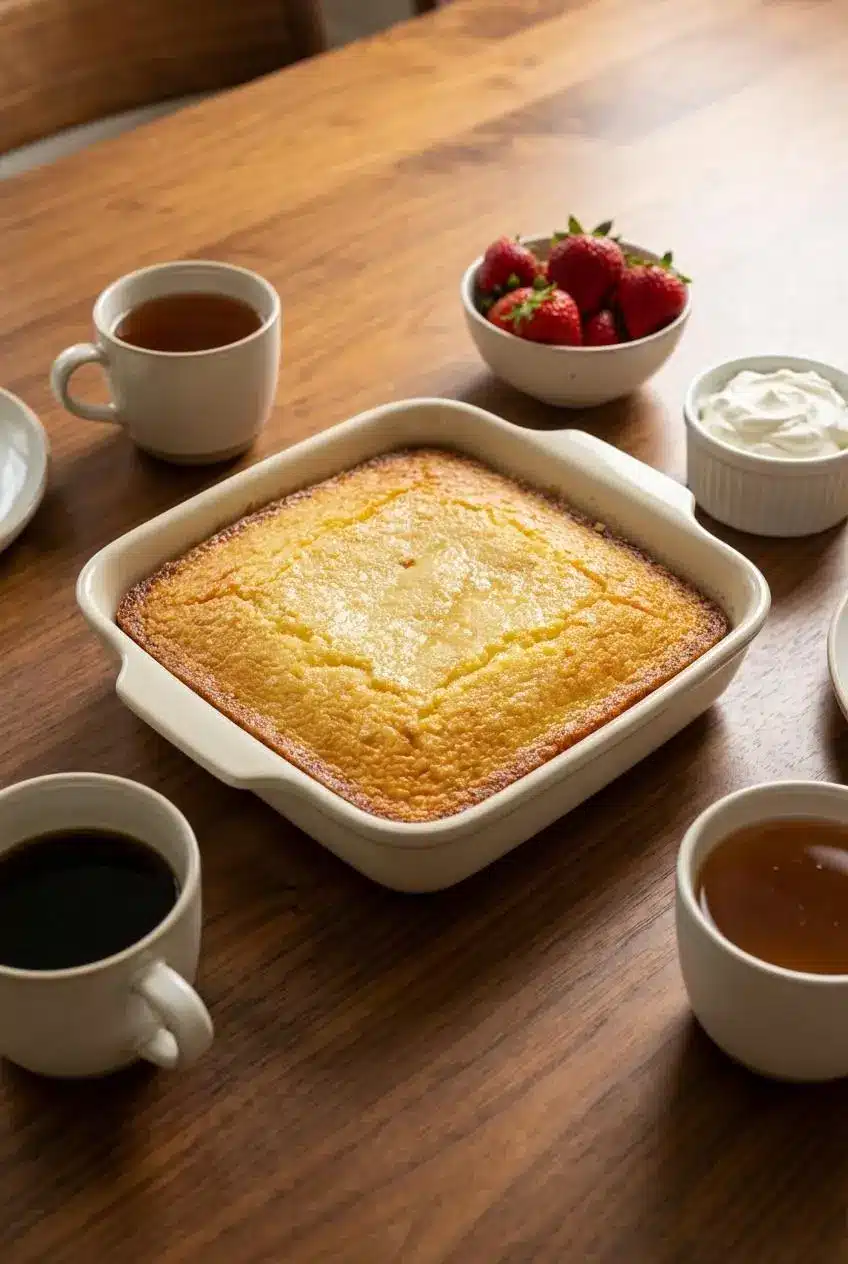
This cake is wonderful slightly warm or fully cooled at room temperature. I like serving it plain first, because the browned butter flavor deserves a moment to shine before you add anything else.
For dessert, fresh strawberries or raspberries and a spoonful of crème fraîche are all you need. Lightly sweetened whipped cream works beautifully too, especially when the sugar crust is still crisp.
At brunch, this cake fits right in beside coffee and tea, and it has that same indulgent, crowd-pleasing spirit as Creme Brulee French Toast. It is the kind of bake that makes a slow morning feel a little more special without much extra effort.
Storage and Make-Ahead
Store the cake in an airtight container at room temperature for up to 3 days. In fact, the flavor often tastes even deeper on day two, once the buttery notes have settled in.
I usually avoid refrigerating it unless the kitchen is very warm, because the fridge can dry the crumb and mute some of that lovely butter flavor. Room temperature storage keeps the texture softer and more inviting.
This cake freezes beautifully. Wrap the fully cooled cake, or individual slices, tightly in plastic wrap and then foil, and freeze for up to 3 months. Thaw it overnight at room temperature before serving.
Easy French Butter Cake

Equipment
- 9×9-inch baking dish
- Light-colored saucepan
- Large Mixing Bowl
- Spatula
Ingredients
- 1 cup granulated sugar
- 1 cup butter, melted
- 3 eggs, room temperature
- 2 ½ teaspoons vanilla extract
- 2 cups cake flour
- 2 teaspoons baking powder
- 1 teaspoon salt
- ⅔ cup sour cream
- 2 tablespoons granulated sugar, for topping
Instructions
Brown the Butter and Prepare the Pan
- Preheat your oven to 350°F (175°C) and grease a 9×9-inch baking dish. Place the butter in a light-colored saucepan over medium heat to melt.
- Continue cooking the butter as it foams and sizzles. Watch for the milk solids at the bottom to turn golden brown and for the butter to smell deeply nutty. Immediately pour it into a large mixing bowl to stop the cooking process and let it cool for a few minutes.
Build the Batter
- Add 1 cup of granulated sugar to the browned butter and mix for 1 minute until glossy and fragrant.
- Add the eggs one at a time, mixing well after each one. Stir in the vanilla extract.
- In a separate bowl, sift together the cake flour, baking powder, and salt. Gradually add this dry mixture to the wet ingredients, mixing only until you no longer see streaks of flour.
- Gently fold in the sour cream with a spatula until the batter is smooth and evenly blended.
Bake and Finish
- Spoon the batter into the prepared baking dish and spread it evenly. Sprinkle the remaining 2 tablespoons of granulated sugar over the top.
- Bake for 30 to 35 minutes, or until the top is golden and a toothpick inserted into the center comes out clean. Let the cake cool in the pan for at least 10 minutes before slicing and serving.
Notes
Nutrition
Conclusion
This is the kind of cake that proves a small technique can make a big difference. Browning the butter turns a simple French Butter Cake into something richer, toastier, and far more memorable.
If you bake it once, there is a good chance it will earn a regular place in your kitchen. Add citrus, spoon on berries, or keep it plain and let that crunchy top and tender crumb do all the talking.
Frequently Asked Questions
What is the difference between French butter cake and pound cake?
What makes this butter cake so moist and flavorful?
Can I use all-purpose flour instead of cake flour?
How do I get the signature crunchy top on my butter cake?
How should I store French butter cake and can I freeze it?
Can I bake this in a different pan, like a Bundt or loaf pan?