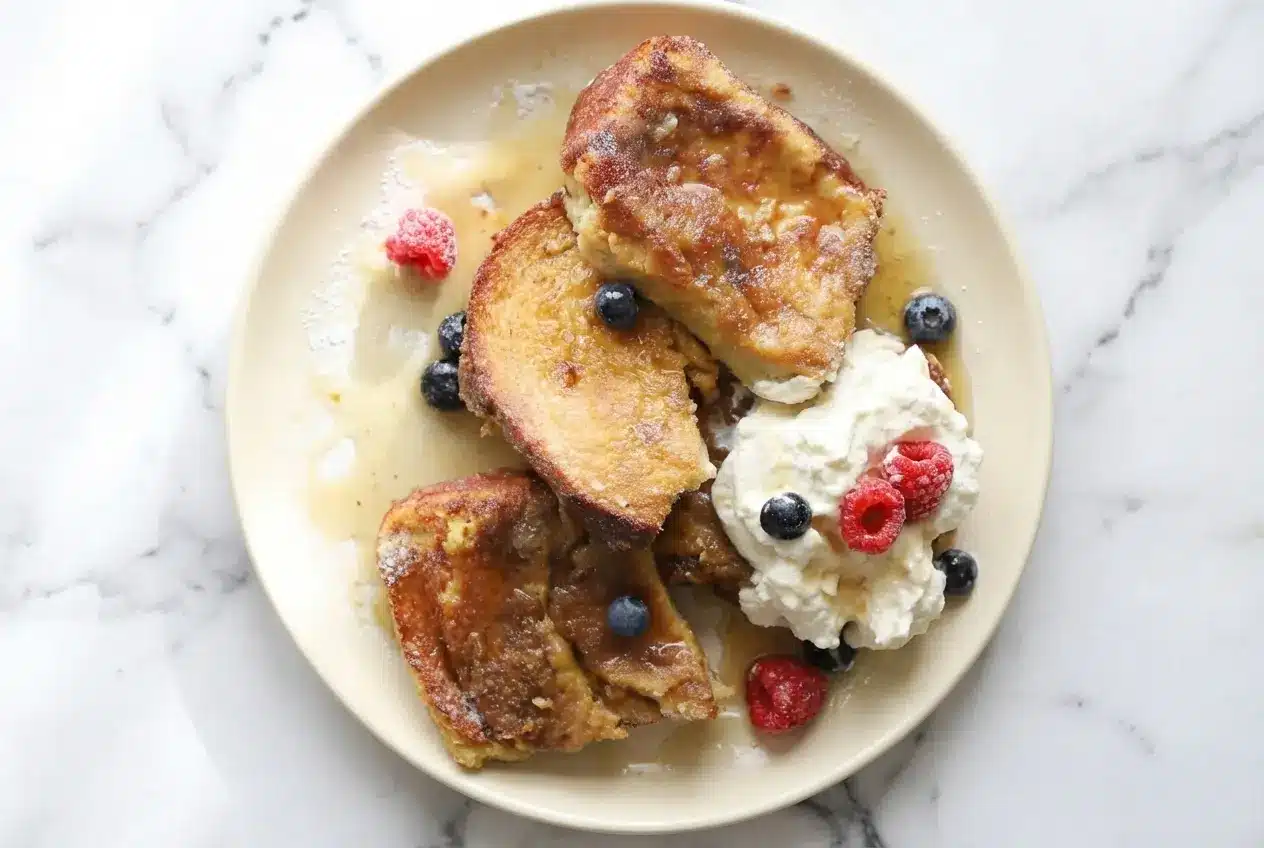
There is something special about waking up on a holiday morning knowing breakfast is already waiting for you. In my kitchen, that kind of calm usually means one thing, Overnight Crème Brûlée French Toast, the kind of make-ahead breakfast that feels a little fancy without asking you to do much before coffee.
It is perfect for weekend guests, Christmas brunch, or any slow morning when you want a rich vanilla custard center and a crisp, caramelized top that cracks just like dessert. The best part is that all the messy work happens the night before, so the morning feels easy and generous.
Why You’ll Love This Recipe
Bakery-style texture: Each slice bakes up with a soft vanilla custard middle and deeply caramelized edges, so it eats like a cross between a French toast casserole and a true Crème Brûlée.
The secret twist: I brown the butter before stirring it with the brown sugar, and that one small step gives the base a toasted, nutty depth that keeps the sweetness from tasting flat.
That signature crackle: A light shower of fine granulated sugar right before broiling or torching is what creates the thin glassy crust. In my kitchen, this is the difference between sweet baked toast and a real brûléed finish.
Hosting made easier: Because everything is assembled the night before, the morning stays relaxed. If you love that same no-rush breakfast feeling, strawberry overnight oats bring the same easy charm to busy weekends.
Ingredients and Substitutions
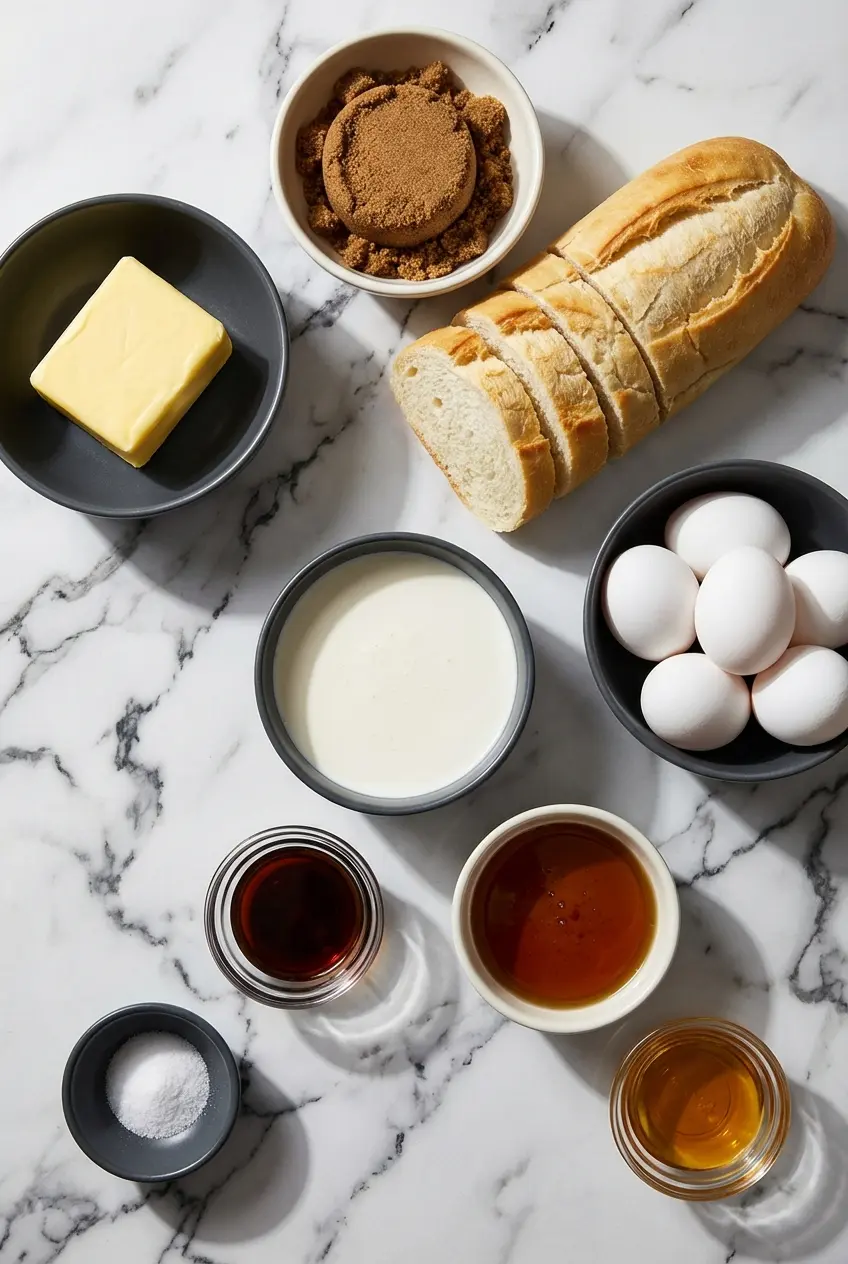
These ingredients create a custardy center, a buttery caramel base, and that classic brûlée-style top that makes every bite feel extra special.
Ingredients
- 1/2 cup butter
- 1 cup packed dark brown sugar
- 1 loaf French bread, or other artisan white bread, cut into 1 inch slices
- 6 large eggs
- 1 1/2 cups half and half
- 1 tablespoon pure vanilla extract
- 2 tablespoons pure maple syrup
- 1 teaspoon grand marnier orange liqueur
- 1/2 teaspoon salt
Ingredient Notes & Substitutions
Half and half: This is one of the keys to a proper vanilla custard texture. It gives the casserole enough richness to feel luxurious, but it is not so heavy that the bread turns greasy or overly dense.
Grand Marnier: That little spoonful adds a subtle orange note that lifts all the caramel flavors. If you want an alcohol-free version, use 1 teaspoon of orange extract or a small splash of fresh orange juice instead.
French bread: I like a sturdy artisan loaf here because it holds its shape after an overnight soak. Challah and Brioche also work beautifully, though Brioche will make the final dish richer and more dessert-like.
Dark brown sugar: Its deeper molasses flavor gives the caramel base a fuller, more old-fashioned taste. If you enjoy extra texture, toasted chopped pecans or walnuts can be stirred into the brown sugar mixture for a nutty variation.
Vanilla and maple syrup: Use pure versions if you can. They are simple ingredients, but in a recipe this cozy and custard-forward, clean flavor really comes through.
How to Make Overnight Crème Brûlée French Toast
Build the caramel base
- The night before, set a small saucepan over medium heat and melt the butter until it begins to foam. Let it cook just long enough to smell nutty and toasted, then stir in the brown sugar and cook for about 4 minutes, until the mixture is bubbly, smooth, and glossy.
- Pour that warm brown butter caramel into the bottom of a 9×13 baking dish and spread it into an even layer with a spatula so every slice gets some of that sticky, golden base.
Whisk the custard and assemble
- In a large bowl, whisk the eggs for 1 minute until they look loose and well blended. Add the half and half, vanilla extract, maple syrup, grand marnier orange liqueur, and salt, then whisk again until the custard is fully combined and silky.
- Arrange the 1-inch slices of bread in a single layer over the brown sugar mixture, fitting in as many as the dish will comfortably hold. Pour the custard slowly and evenly over the bread so the tops and edges are well moistened, then cover tightly with plastic wrap and refrigerate overnight.
Bake and flip
In the morning, preheat the oven to 350 degrees F. Bake the casserole uncovered for 40 to 45 minutes, until the bread looks lightly golden and the custard is set, then carefully remove the dish from the oven and use a spatula to turn each slice over.
Create the brûlée crust
Dust the flipped slices with a thin, even layer of fine granulated sugar. Switch the oven to broil and broil on high for about 2 minutes, or use a kitchen torch, until the sugar melts into a glass-like crust, then watch closely because it can go from amber and beautiful to bitter in a flash. Finish with fresh berries and serve while the top still has that delicate crackle.
Secrets for Perfection
When I want this casserole to taste restaurant-worthy, I pay close attention to the bread and the butter. Slightly stale bread soaks up the vanilla custard much more evenly, and if all you have is fresh bread, slice it and dry it in a low oven for 10 to 15 minutes until the surface feels lightly firm, not toasted dark.
If you open the fridge in the morning and see a little custard still pooled in the dish, do not panic. Spoon that liquid over the tops, or gently press the slices down so the dry corners can absorb more before the pan goes into the oven.
Browning the butter is the quiet little move that makes this dish feel gourmet. As the Maillard reaction adds complex caramel notes, the flavor shifts from simply sweet to toasted, layered, and deeply aromatic.
Choosing the Best Bread for Custard Casseroles
French bread is my usual pick because it has a sturdy crumb and enough structure to survive an overnight soak without collapsing. Challah is softer and slightly eggier, while Brioche gives you the richest, most dessert-like bite of the three.
That richer texture is not your imagination. The fat content in Brioche yields a richer dessert-like texture, which is wonderful if you want this to lean into the dessert-for-breakfast side of the table.
Stale bread is not optional here, it is the backbone of the recipe. Dry starch behaves like a sponge and pulls in the custard, while fresh bread stays too soft and turns mushy once it sits in an egg mixture overnight.
If your loaf is extra wide, keep those slices around 1 inch thick. That thickness gives you enough body for a custardy center while still allowing the edges to turn beautifully golden in the oven.
The Science of a Perfect Sugar Crust
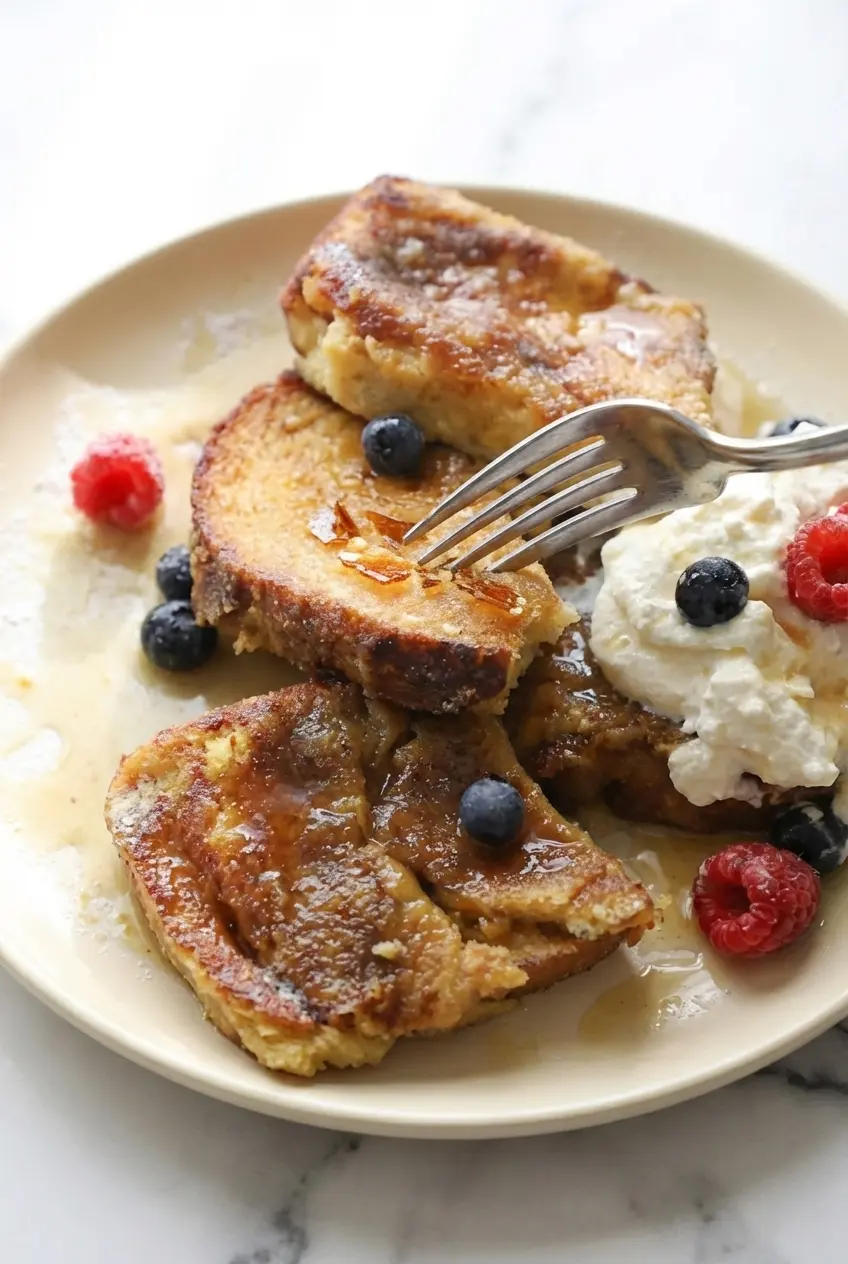
The final sugar topping is what gives this dish its true Crème Brûlée identity. Without that thin coating of white granulated sugar after baking, you get sweetness, but you do not get that signature crack when your fork taps the top.
A broiler works well because it blasts the sugar with high top heat very quickly, but a kitchen torch gives you better control. That is why the finish feels closer to the top of a classic crème brûlée, where the sugar melts into a thin shell without overcooking what sits underneath.
The real trick is understanding the mechanics behind the brûlée effect. Sugar needs intense surface heat to liquefy and then harden into a brittle layer, so a light, even dusting always works better than a thick pile that melts unevenly.
Pro Tips & Troubleshooting
Pro Tips
- Let the casserole sit at room temperature for 20 to 30 minutes before baking so the center cooks more evenly and to help prevent a cold glass or ceramic baking dish from shattering in a hot oven.
- Thermal shock is real with bakeware, especially straight from the refrigerator, and the science behind how to prevent a cold glass/ceramic baking dish from shattering explains why that short rest matters so much.
- Give the baked French toast 5 to 10 minutes to rest before serving so the caramel underneath can thicken slightly and the slices hold together better.
- If you forgot to buy stale bread, dry fresh slices in a low oven for 10 to 15 minutes before assembling. That quick step saves the texture.
Common Mistakes to Avoid
- Using thin sandwich bread, which tends to dissolve into the custard instead of holding a plush, sliceable shape.
- Skipping the overnight soak. A quick 10-minute rest leaves the centers dry, especially with thick artisan bread.
- Walking away during the broiling step, because the sugar can burn in seconds once it starts to caramelize.
- Baking the dish straight from the fridge without a short rest, which can lead to uneven baking and a cooler center.
Serving & Storage
Serving Ideas
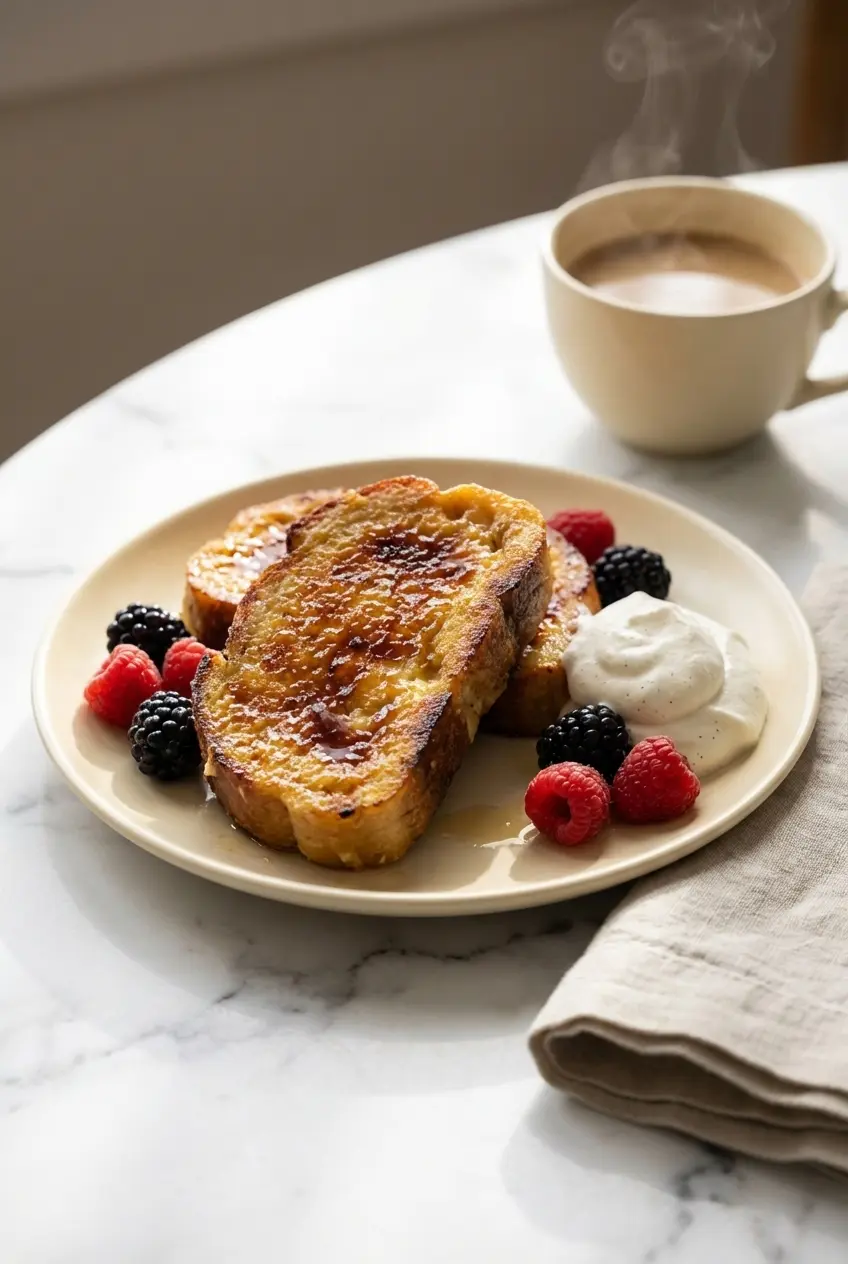
I love serving this with fresh raspberries and blackberries because their tartness cuts through the sweet caramel base so nicely. A spoonful of lightly sweetened vanilla bean whipped cream on top makes it feel holiday-table worthy without much extra work.
Extra maple syrup is usually unnecessary since the brown sugar layer already brings plenty of sweetness. For a full brunch spread, I like to pair a warm slice with something cold and cheerful, and a glass of banana iced coffee makes the whole morning feel a little more festive.
Storage & Make-Ahead Logistics
For a smaller family, you can halve the recipe and bake it in an 8×8 pan without losing that important caramel-to-bread balance. Just keep the same basic layering approach so each slice still sits over a full coating of the brown butter base.
If you want to get ahead for a future holiday brunch, assemble the unbaked casserole, wrap it tightly, and freeze it. Thaw it overnight in the refrigerator before baking, then let it sit at room temperature for 20 to 30 minutes before it goes into the oven.
Leftovers keep well in the fridge for up to 3 days. To bring back some of the crisp top, reheat portions in a 350 degree F oven or in the air fryer until warmed through and lightly re-crisped, rather than microwaving them into softness.

Overnight Crème Brûlée French Toast

Equipment
- 9×13-inch baking dish
- Small saucepan
- Kitchen torch
Ingredients
- 1/2 cup butter
- 1 cup packed dark brown sugar
- 1 loaf French bread, or other artisan white bread, cut into 1 inch slices
- 6 large eggs
- 1 1/2 cups half and half
- 1 tablespoon pure vanilla extract
- 2 tablespoons pure maple syrup
- 1 teaspoon grand marnier orange liqueur
- 1/2 teaspoon salt
Instructions
Build the caramel base
- The night before, set a small saucepan over medium heat and melt the butter until it begins to foam. Let it cook just long enough to smell nutty and toasted, then stir in the brown sugar and cook for about 4 minutes, until the mixture is bubbly, smooth, and glossy.
- Pour that warm brown butter caramel into the bottom of a 9×13 baking dish and spread it into an even layer with a spatula so every slice gets a rich, golden base.
Whisk the custard and assemble
- In a large bowl, whisk the eggs for 1 minute until they look loose and well blended. Add the half and half, vanilla extract, maple syrup, grand marnier orange liqueur, and salt, then whisk again until the custard is fully combined and silky.
- Arrange the 1-inch slices of bread in a single layer over the brown sugar mixture, fitting in as many as the dish will comfortably hold. Pour the custard slowly and evenly over the bread so the tops and edges are well moistened. Cover tightly with plastic wrap and refrigerate overnight.
Bake and flip
- In the morning, preheat the oven to 350 degrees F. Remove the dish from the refrigerator and let it sit at room temperature for 20 to 30 minutes to take the chill off. Bake the casserole uncovered for 40 to 45 minutes, until the bread looks lightly golden and the custard is set.
- Carefully remove the dish from the oven and use a spatula to turn each slice over.
Create the brûlée crust
- Dust the flipped slices with a thin, even layer of fine granulated sugar.
- Switch the oven to broil and broil on high for about 2 minutes, or use a kitchen torch, until the sugar melts into a glass-like crust. Watch very closely to prevent burning. Let the dish rest for 5 to 10 minutes before serving with fresh berries.
Notes
Conclusion
This is the kind of breakfast that makes people think you worked all morning, even though you did the hard part the night before. Between the brown butter caramel base and that shatteringly crisp sugar crust, every bite feels rich, custardy, and a little bit celebratory.
Set it up tonight, and tomorrow morning will feel wonderfully easy. Once you make it once, it is hard not to start dreaming up your own version with Brioche, berries, or a handful of toasted nuts.