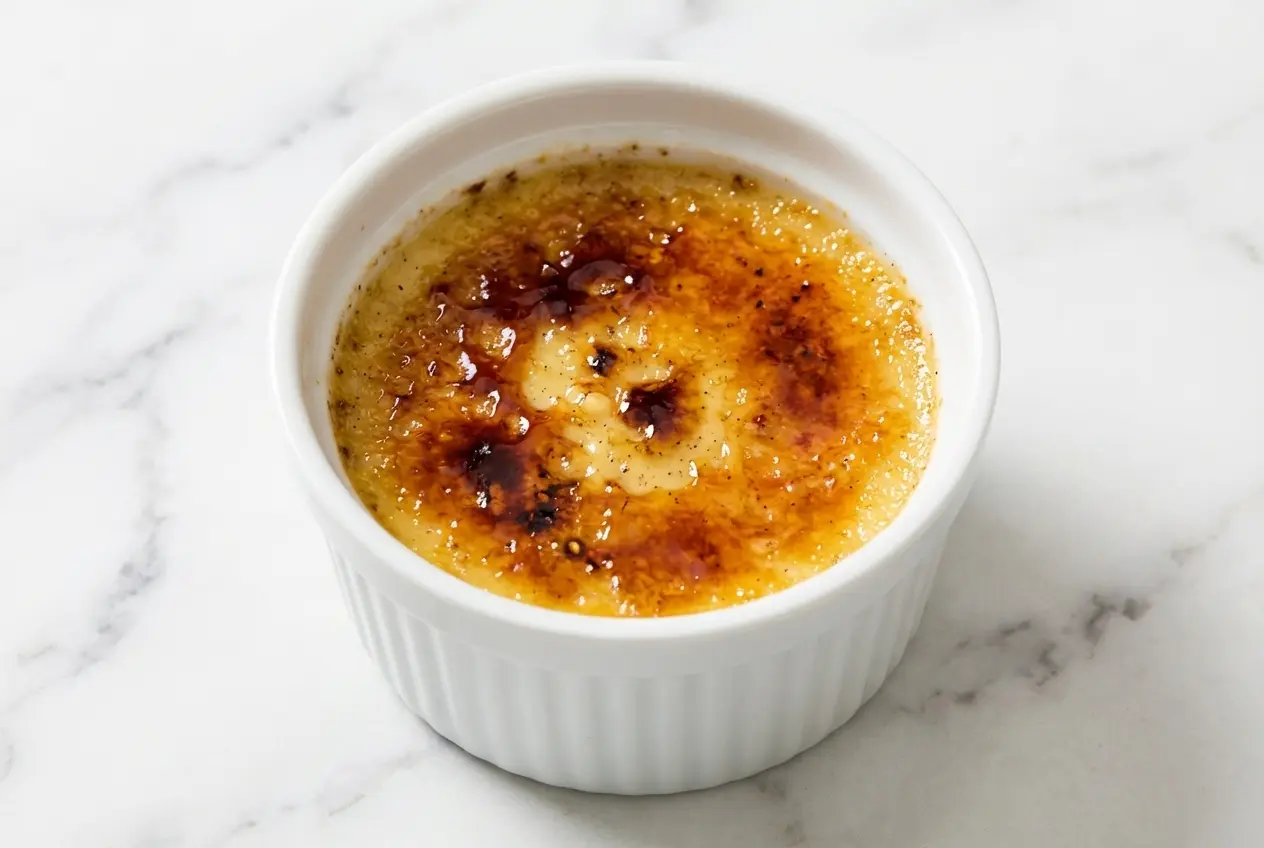
There is something about a chilled French custard that instantly makes an ordinary evening feel a little dressed up. In my kitchen, Tahitian Vanilla Creme Brulee is the dessert I reach for when I want that restaurant-style magic without a lot of fuss, just a silky custard tucked under a crackly sugar lid.
This version is especially lovely for home cooks because it leans on a simple, foolproof method and rewards patience with incredible flavor. The 24-hour cold infusion coaxes every floral note from the vanilla bean, so the finished custard tastes delicate, luxurious, and far more elegant than the short ingredient list suggests.
Why You’ll Love This Recipe
The flavor is unforgettable: Tahitian vanilla beans have a naturally floral, fruity personality, and when I steep them in cold heavy whipping cream for 24 hours, the custard tastes deeper and more perfumed than a standard stovetop version.
The cold infusion is the secret: Instead of blasting those delicate aromatics with heat right away, the cream slowly pulls in the vanilla’s fragile compounds. In my experience, that makes the final custard smell almost blooming, with a softer, more layered finish.
The texture is pure luxury: A good creme brulee should give you that crisp caramelized top, then melt into a silky custard underneath. This method delivers that contrast beautifully, especially when the egg yolks are tempered gently and the ramekins bake in a proper water bath.
Ingredients and Substitutions
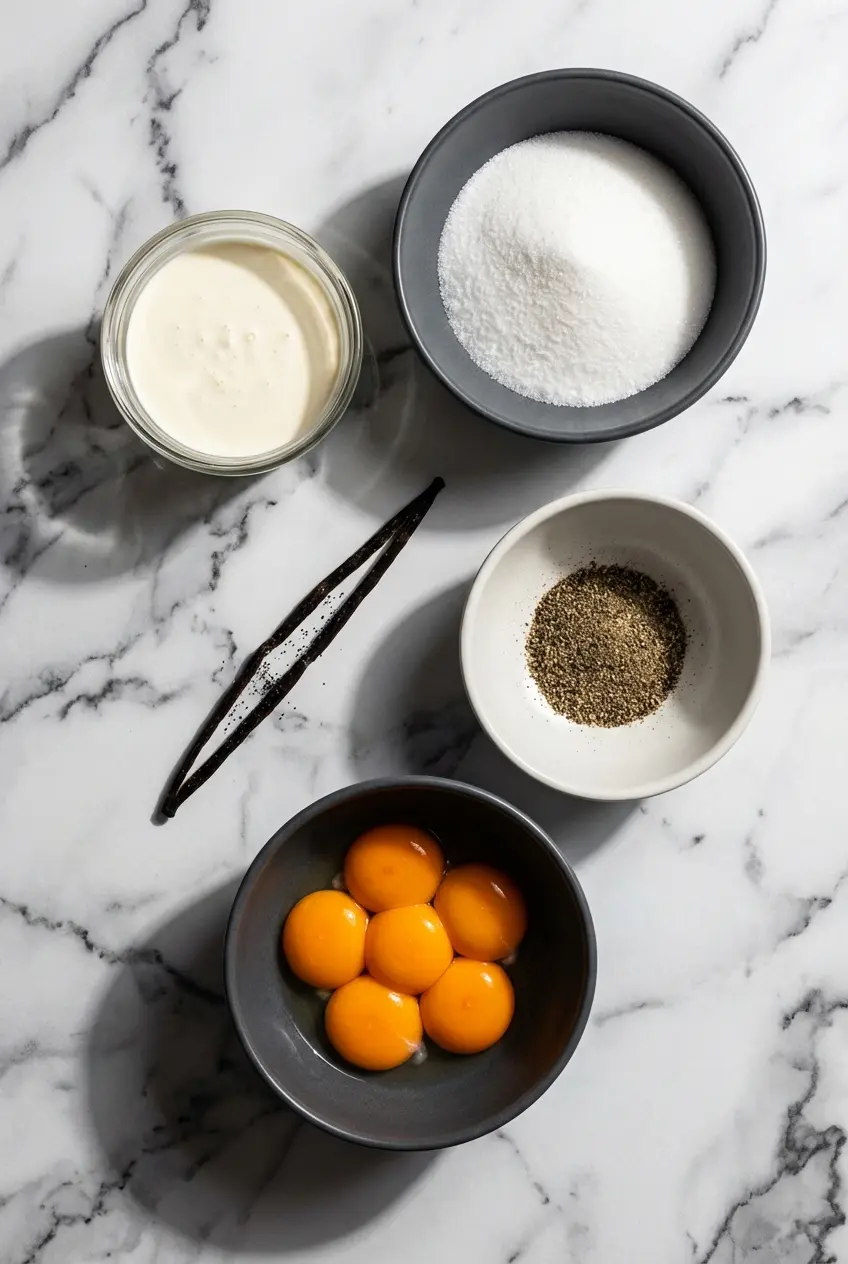
A dessert this elegant depends on just a handful of ingredients, so each one has a real job to do, from richness and structure to fragrance and that signature caramelized finish.
Ingredients
- 2 Cups whipping cream
- 1/2 Cup sugar
- 1 Tahitian vanilla bean, split lengthwise
- 1/4 teaspoon finely ground pepper
- 5 large egg yolks
- 6-12 teaspoons sugar
Ingredient Notes & Substitutions
Whipping cream: This is the backbone of the custard, and I consider heavy whipping cream the best choice for that lush, spoon-coating texture creme brulee is known for. If you want a lighter custard, you can swap half of it with half-and-half or whole milk, but the result will be a little less velvety.
Tahitian vanilla bean: Tahitian vanilla beans bring floral, fruity, almost cherry-like notes that make this dessert feel especially refined. If you have ever wondered why some vanilla desserts taste flat, it is often because the bean itself is not expressive enough for a gentle custard like this.
Finely ground pepper: It may sound unusual, but this tiny amount does not make the custard spicy. It works more like a quiet flavor enhancer, lifting the vanilla and giving the cream a subtle complexity that lingers on the palate.
Sugar for topping: For the best caramelization, I like superfine sugar or raw cane sugar because it melts more evenly and forms a more delicate glassy shell. Standard granulated sugar works in a pinch, but it can brown less evenly under a kitchen torch.
Egg yolks: These give the custard its body, color, and satiny finish. Fresh yolks make a noticeable difference, especially in a simple dessert where every ingredient stands in the spotlight.
How to Make Tahitian Vanilla Creme Brulee
Cold Infusion and Oven Prep
- Start a day ahead by scraping the seeds from the Tahitian vanilla bean into the 2 cups of cold whipping cream. Drop in the scraped pod as well, cover tightly, and refrigerate for 24 hours so the cream can slowly absorb all those delicate floral notes.
- When you are ready to bake, heat the oven to 325 degrees. Set 6 ramekins inside a large baking pan, leaving space between them so they do not touch and the heat can circulate gently around each custard.
Build the Custard Base
- Pour the cold-infused cream, along with the vanilla pod, into a heavy saucepan. Add the 1/2 cup sugar and the 1/4 teaspoon finely ground pepper, then cook over gentle heat, stirring constantly, until the sugar dissolves and the mixture reaches a very soft simmer, not a boil.
- As soon as it looks steamy and smooth, strain the hot cream into a large measuring cup to catch the pod and any stray bits. In a medium bowl, whisk the 5 large egg yolks until loosened, then slowly stream in the hot cream while whisking the whole time so the yolks warm gradually instead of scrambling.
- Once the custard mixture is just blended, pour it back into the measuring cup and divide it evenly among the ramekins. The liquid should look pale, glossy, and fluid, with no streaks of cooked egg.
Bake in a Water Bath
Place the pan on the oven rack first, then carefully pour in enough hot water to come halfway up the sides of the ramekins. Bake for 30 to 35 minutes, until the edges are set but the centers still tremble slightly when gently shaken, then lift the ramekins from the bain-marie and cool them on a work surface for 30 minutes before refrigerating for 3 hours up to 2 days.
Caramelize and Rechill
Sprinkle 1 to 2 teaspoons of sugar over each chilled custard in a thin, even layer. Hold the flame of a kitchen torch about 2 inches from the surface and move it steadily until the sugar melts and turns amber brown, about 2 minutes, then refrigerate the finished creme brulee for 2 to 4 hours to rechill the custard, but no longer than 4 hours or the crust will begin to soften. Add fruit just before serving if you like.
Secrets for Perfection
The surest way to nail the texture is to watch for an internal temperature of 170 to 175°F. If you like using a digital thermometer, that range gives you a custard that is set enough to hold its shape but still creamy once chilled.
The visual cue matters just as much. The edges should look softly set, while the center should wobble with a gentle sway, almost like jiggly cat pudding, not slosh like liquid and not sit stiff and firm.
Tempering is where many cooks get nervous, but it is simple when you slow down. Add the warm cream to the egg yolks in a thin, steady stream while whisking constantly, and the mixture will stay smooth, glossy, and free of little scrambled bits.
Understanding Tahitian Vanilla vs Madagascar Vanilla
Not all vanilla tastes the same, and this dessert is the perfect place to notice the difference. Tahitian vanilla, or Vanilla tahitensis, is prized for floral, fruity, and slightly cherry-like notes, which is why it shines in delicate custards and cold-infused cream.
Madagascar vanilla, or Vanilla planifolia, is the more familiar classic. Its flavor is creamier, woodier, and more robust, which makes it wonderful in cookies, cakes, and baked goods where the vanilla has to stand up to stronger flavors.
In a recipe built on heavy whipping cream, egg yolks, and very little else, Tahitian vanilla beans bring a more fragrant, perfumed finish that feels almost airy despite the richness. That is exactly why I love them here, especially when fruit is involved.
The Science of a Flawless Sugar Crust
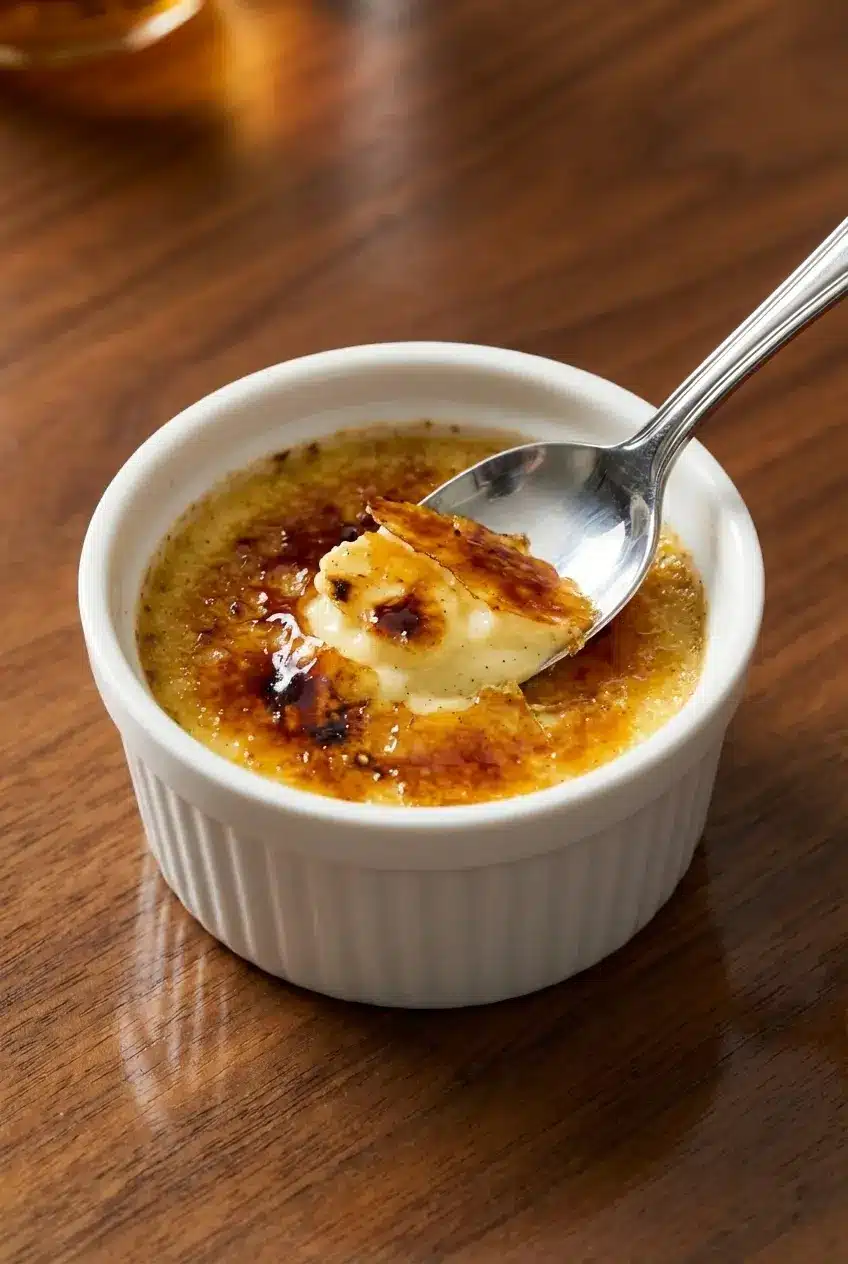
The beauty of creme brulee lives in that first tap of the spoon. As the sugar heats, caramelization transforms it from loose crystals into a glossy amber sheet, while deeper browned notes develop in a way that reminds me of the flavor-building you get when making beurre noisette, where simple heat creates something far more complex and fragrant.
Superfine sugar usually gives the cleanest crust because the smaller crystals melt quickly and evenly. That means less time with the flame on the surface, which helps keep the chilled custard underneath cold and silky instead of turning warm and loose.
When using a kitchen torch, keep the flame moving in slow circles and never park it in one spot. You want an even glassy shell with amber patches, not bitter black spots and certainly not warm custard bubbling underneath.
Pro Tips & Troubleshooting
Pro Tips
- Strain the warm custard through a fine-mesh sieve before filling the ramekins to catch any cooked egg bits, chalazae, or lingering vanilla solids, which keeps the texture exceptionally smooth.
- Pull the oven rack out before adding the hot water to the baking pan. That little move makes the bain-marie much safer and helps prevent splashes from landing in the custard cups.
- For a stronger vanilla profile, stir in 1/2 teaspoon of high-quality pure vanilla extract once the cream comes off the heat. It adds a gentle double-vanilla effect without masking the bean.
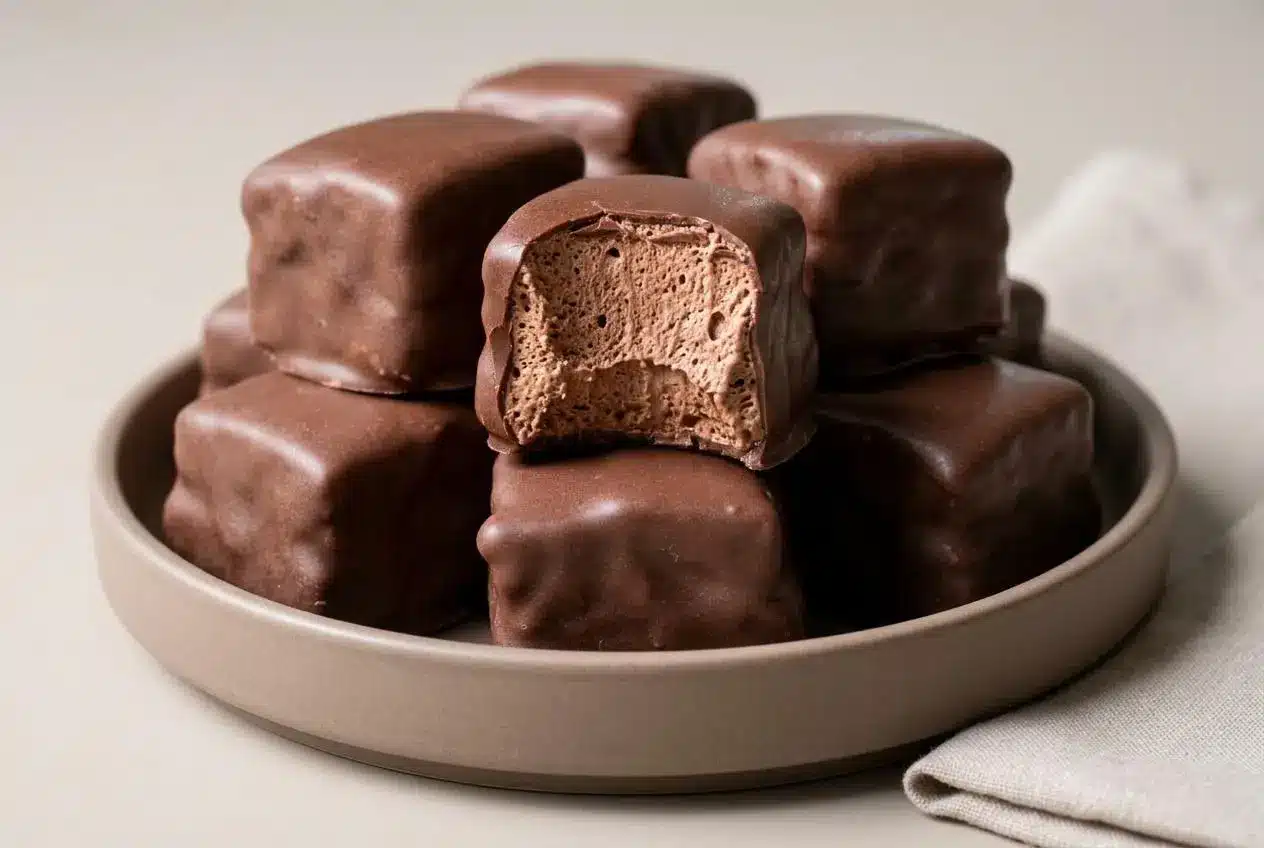
- If you love silky desserts with a soft, mousse-like finish, the texture goals here are not far from a good chocolate marshmallow mousse, where restraint and gentle handling make all the difference.
Common Mistakes to Avoid
- Letting the cream boil hard before tempering the egg yolks. Once it gets too hot, the yolks can seize and turn grainy almost instantly.
- Baking the custards until they are completely firm in the center. They should still have a slight wobble when they leave the oven, or the finished texture will be dense instead of silky.
- Chilling the creme brulee for more than 4 hours after torching the top. Fridge moisture slowly dissolves the caramelized sugar and turns that crisp lid into syrup.
Serving & Storage
Serving Ideas
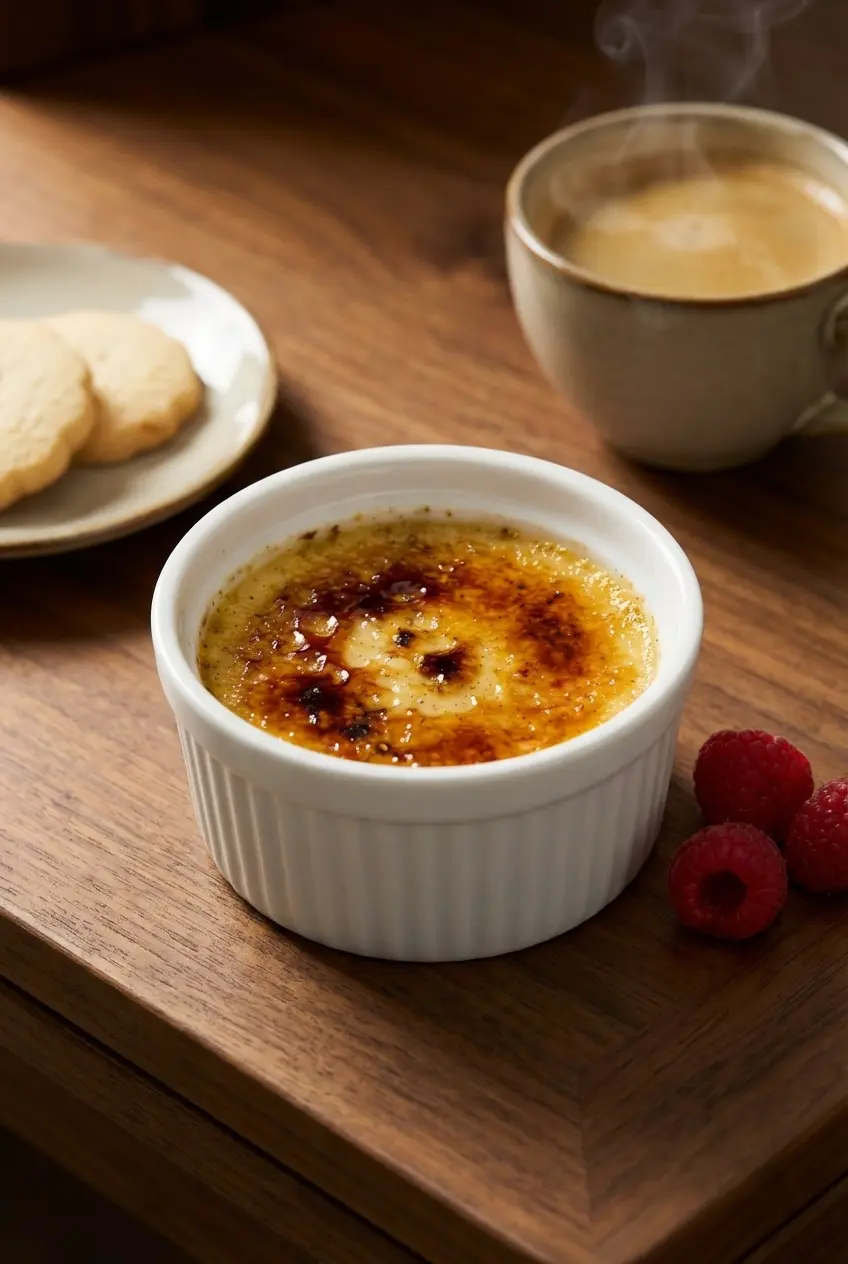
I love serving this custard with fresh raspberries, sliced strawberries, or thin peaches because a bright, juicy fruit cuts through the richness beautifully. If you want a little crunch on the side, delicate cookies like tuiles or shortbread are a lovely match.
For a more unexpected finish, a tropical version works especially well with Tahitian vanilla. A little freshly chopped ginger steeped with the vanilla and a spoonful of diced mango on top make the dessert feel sunny and fragrant.
On a dinner table, this pairs beautifully with coffee or tea, especially something aromatic and warming. The floral vanilla notes play very nicely against a cup of spiced Yemeni coffee, which brings enough contrast to balance the creamy custard without overwhelming it.
Storage & Make-Ahead
The baked custards can rest in the refrigerator for up to 2 days before you torch the tops, which makes this a wonderful dinner-party dessert. I actually prefer making them ahead, because the texture settles into that classic silky finish after a long chill.
Once the sugar is torched, serve them the same day for the best crackly crust. Freezing is not a great option here, since thawing can break the custard’s smooth emulsion and leave the texture watery or grainy.
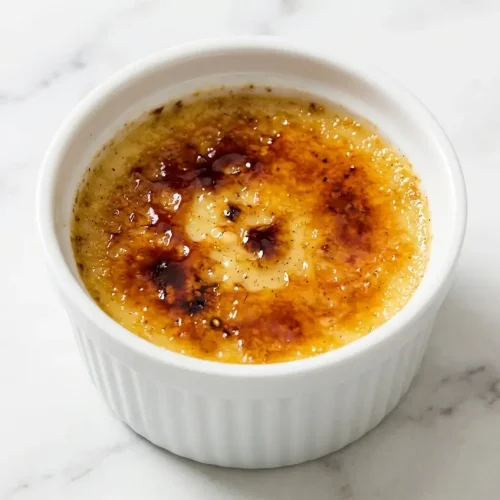
Tahitian Vanilla Creme Brulee

Equipment
- Ramekins
- Large baking pan
- Heavy saucepan
- Fine-Mesh Sieve
- Kitchen torch
Ingredients
- 2 Cups whipping cream
- 1/2 Cup sugar
- 1 Tahitian vanilla bean, split lengthwise
- 1/4 teaspoon finely ground pepper
- 5 large egg yolks
- 6-12 teaspoons sugar
Instructions
Cold Infusion and Oven Prep
- Start a day ahead by scraping the seeds from the Tahitian vanilla bean into the 2 cups of cold whipping cream. Drop in the scraped pod as well, cover tightly, and refrigerate for 24 hours so the cream can slowly absorb all those delicate floral notes.
- When you are ready to bake, heat the oven to 325 degrees. Set 6 ramekins inside a large baking pan, leaving space between them so they do not touch and the heat can circulate gently around each custard.
Build the Custard Base
- Pour the cold-infused cream, along with the vanilla pod, into a heavy saucepan. Add the 1/2 cup sugar and the 1/4 teaspoon finely ground pepper, then cook over gentle heat, stirring constantly, until the sugar dissolves and the mixture reaches a very soft simmer, not a boil.
- As soon as it looks steamy and smooth, strain the hot cream into a large measuring cup to catch the pod and any stray bits. In a medium bowl, whisk the 5 large egg yolks until loosened, then slowly stream in the hot cream while whisking the whole time so the yolks warm gradually instead of scrambling.
- Once the custard mixture is just blended, pour it back into the measuring cup and divide it evenly among the ramekins. The liquid should look pale, glossy, and fluid, with no streaks of cooked egg.
Bake in a Water Bath
- Place the pan on the oven rack first, then carefully pour in enough hot water to come halfway up the sides of the ramekins. Bake for 30 to 35 minutes, until the edges are set but the centers still tremble slightly when gently shaken, then lift the ramekins from the bain-marie and cool them on a work surface for 30 minutes before refrigerating for 3 hours up to 2 days.
Caramelize and Rechill
- Sprinkle 1 to 2 teaspoons of sugar over each chilled custard in a thin, even layer. Hold the flame of a kitchen torch about 2 inches from the surface and move it steadily until the sugar melts and turns amber brown, about 2 minutes, then refrigerate the finished creme brulee for 2 to 4 hours to rechill the custard, but no longer than 4 hours or the crust will begin to soften. Add fruit just before serving if you like.
Notes
Nutrition
Conclusion
Tahitian Vanilla Creme Brulee already feels elegant, but the 24-hour cold infusion gives it an extra layer of quiet luxury. Those floral vanilla notes stay vivid, the custard stays silky, and the caramelized top delivers that perfect crack every time.
If you are planning a dinner party or just want a dessert that feels special without being fussy, this is a beautiful one to make. Once you taste the difference that slow infusion brings, it is hard to go back.