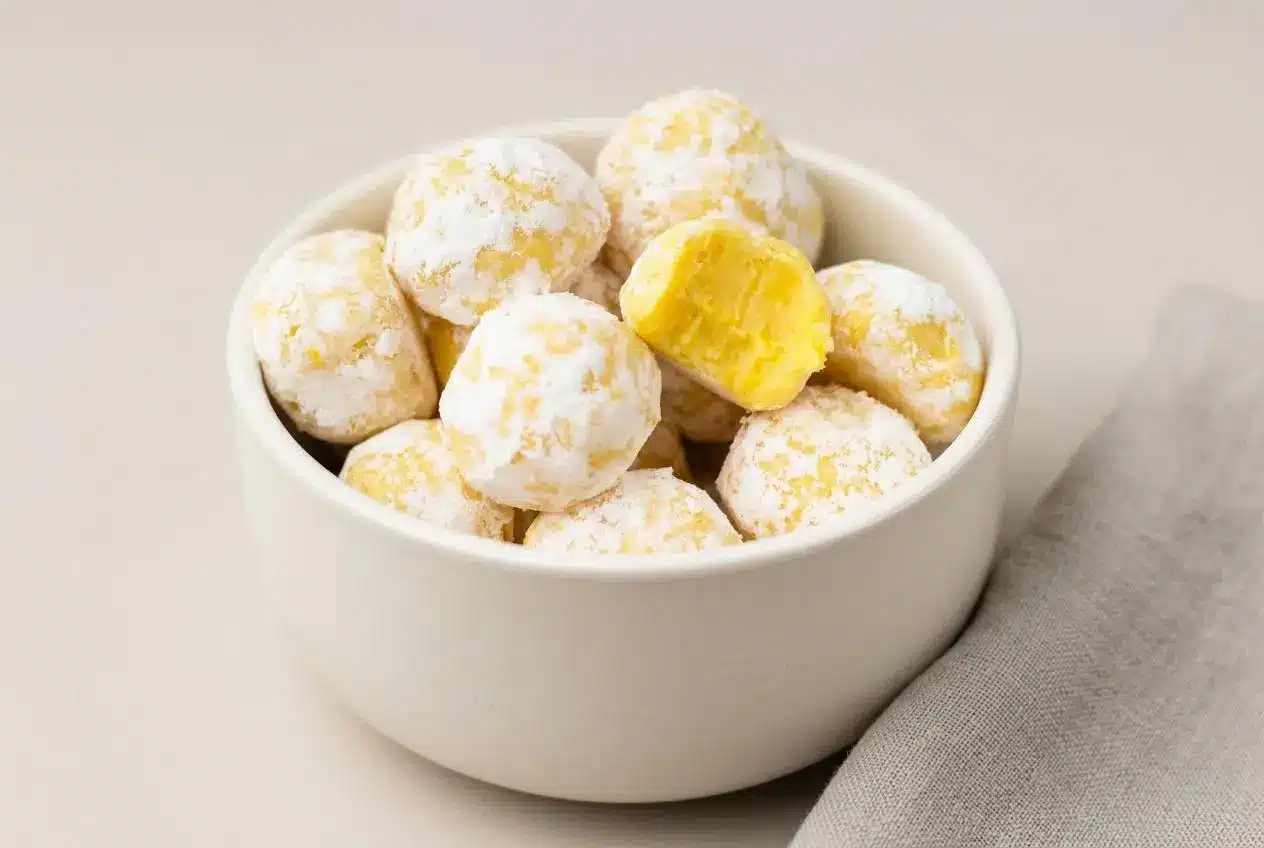
White chocolate lemon truffles are bite-sized, no-bake confections with a creamy center made from melted white chocolate, heavy cream, lemon juice, and zest. Chill the lemon ganache, shape it into balls, and roll them in powdered sugar for a silky, citrus-bright treat.
Fresh lemon gives these white chocolate lemon truffles a fragrant tang that balances the chocolate’s sweetness. Powdered sugar adds a delicate finish without hiding the soft, creamy center.
The microwave handles the melting, and the refrigerator does most of the remaining work. Gentle heat and a thorough chill matter more than fancy candy-making equipment. Watch for that satin sheen.
Zest the lemons before juicing them, while their firm shape makes them easier to hold against the grater.
Essential Ingredients for White Chocolate Lemon Truffles
White chocolate provides sweetness and structure, cream softens the center, and lemon zest and juice add aroma and tartness. Yellow coloring gives the ganache its sunny tint, while powdered sugar creates a delicate coating.
- 9 ounces white chocolate chips
- ¼ cup heavy cream
- Zest of two lemons
- 1 tablespoon lemon juice
- A few drops of yellow food coloring
- ¼ cup powdered sugar
Heavy cream turns melted chocolate into ganache rather than a hard chocolate shell. Its liquid and fat help create a smooth, creamy mixture, while the chocolate supplies enough structure for shaping after refrigeration. Use heavy cream rather than a thinner dairy substitute, which can change how firmly the center sets.
The lemon ingredients do different jobs. Zest supplies the fragrant citrus character, and juice brings the tart edge. Adding extra juice to chase a stronger lemon flavor can make the ganache softer, so keep the measured amount intact.
Food coloring affects appearance rather than flavor or firmness. Powdered sugar belongs on the outside, not in the ganache, where it would change the balance and texture.
I turn the lemon after each light pass over the grater so I collect the fragrant yellow peel without scraping into the bitter white pith.
Choosing Quality White Chocolate
Check the ingredient label for cocoa butter when buying white chocolate chips. True white chocolate gets its characteristic melt and structure from cocoa butter. Products labeled white baking chips or white coating may use other fats instead, so the name on the front of the bag doesn’t tell the whole story.
Compound coatings can work well for dipping, but they aren’t interchangeable with white chocolate in every ganache. Different fat blends can change the firmness and mouthfeel of the finished center. For this recipe, choose white chocolate chips containing cocoa butter for the intended creamy texture.
Some chips retain their shape briefly even after they soften. Stir before assuming they need more heat. A mixture that looks partly unmelted may become smooth once you work the softened chips into the warm cream.
Fresh Zest Versus Bottled Lemon Juice
Freshly grated zest brings concentrated lemon aroma without adding much liquid. Grate it finely so the finished truffles feel creamy rather than threaded with long pieces of peel.
Fresh lemon juice gives a lively tart flavor that pairs naturally with the zest. Strain out seeds and coarse pulp before measuring it. Bottled juice can taste different, but it isn’t automatically a cause of broken ganache; heating technique and the amount of liquid also matter.
Keep the zest and juice separate until the melted chocolate and cream are ready. When the zest meets the warm ganache, its citrus fragrance becomes especially noticeable. That aroma should complement the chocolate, not require extra juice to come through.
Mastering the Step-by-Step Lemon Ganache Method
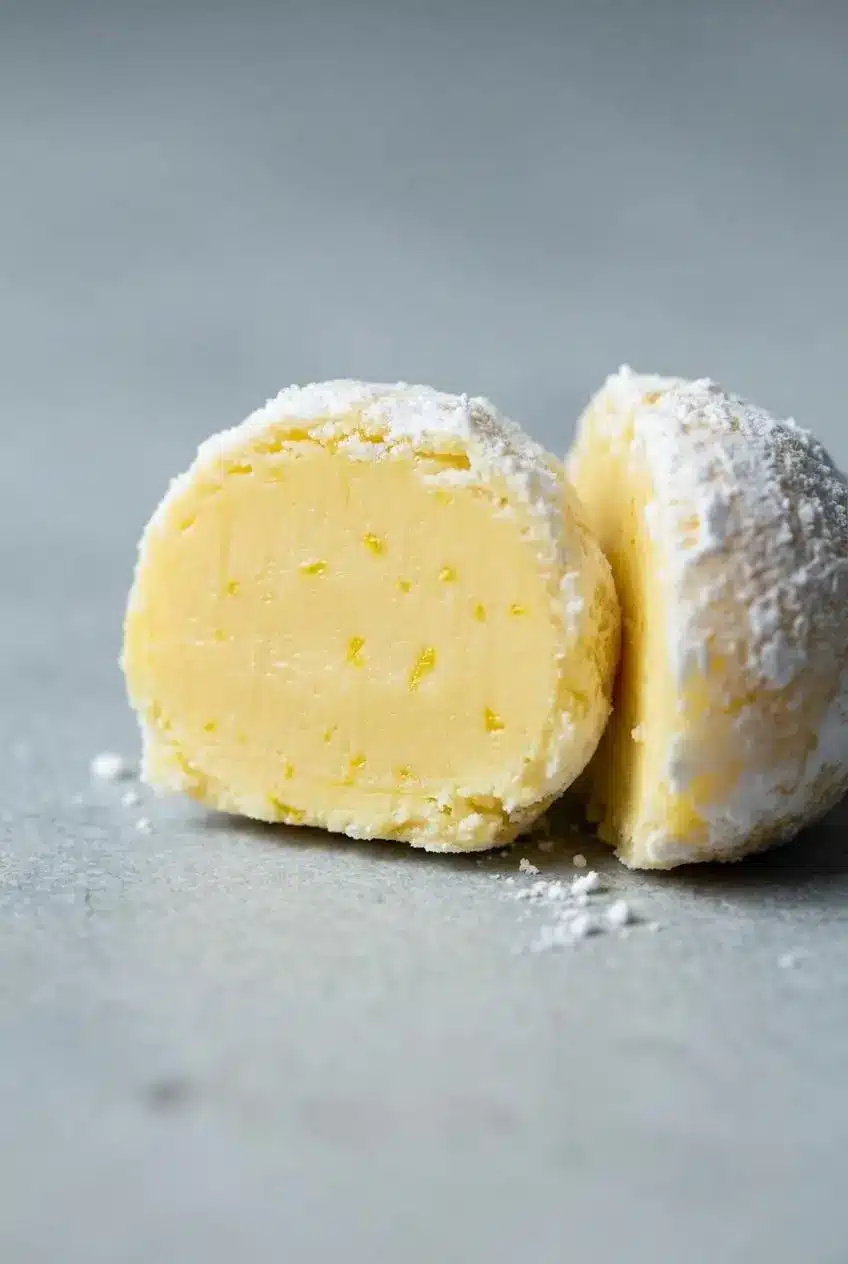
Heat the chocolate gently, then use texture rather than guesswork to decide when to stop. This recipe makes 24 truffles and takes about 2 hours 50 minutes total, including 2 hours 30 minutes of chilling.
Set out a microwave-safe heatproof bowl, a spoon or spatula, a sifter, and a parchment-lined cutting board or sheet pan. Keep the bowl and stirring utensil dry before adding the measured ingredients.
- Combine the heavy cream and white chocolate chips in a microwave-safe heatproof bowl.
The cream will pool around the chips before heating brings them together. - Heat for 20 seconds at a time, stirring thoroughly after every burst, and stop when the mixture becomes smooth.
The finished mixture should look glossy, with no firm chips remaining. - Stir the zest and yellow food coloring into the melted mixture, incorporating the lemon juice gradually as you stir.
The ganache should have an even color and a smooth satin sheen. - Refrigerate the ganache for two hours to firm it for shaping.
It should feel cool and hold a rounded spoonful instead of flowing back into the bowl. - Pass the powdered sugar through a sifter into a separate bowl.
The sugar should look fine and fluffy, without compact lumps. - Scoop portions of chilled ganache with a spoon and briefly roll each between your palms to form balls.
The centers should feel firm but pliable, with only slight tackiness. - Turn each shaped center in the sifted powdered sugar until coated.
A light, even white layer should cover the surface. - Arrange the coated truffles on a parchment-lined cutting board or sheet pan and refrigerate for a final 30 minutes before serving.
The finished truffles should hold their shape when lifted.
During melting, scrape around the bowl’s sides and across its bottom between bursts. This distributes the heat and catches softened chocolate that might otherwise sit unnoticed. Stop heating as soon as stirring gives you a smooth mixture; don’t keep microwaving to make it thinner.
White chocolate can scorch with excessive heat, but a single temperature cutoff isn’t a useful substitute for watching the mixture. Microwave strength, bowl material, and hot spots all affect the process. Short bursts and thorough stirring give you better control.
For an optional alternative to microwave melting, use a heatproof bowl over gently simmering water, keeping its bottom above the water. Stir the chocolate and cream together and avoid letting steam or splashes enter the bowl. Continue with the same flavoring and chilling stages once smooth.
When shaping, use a light touch. Prolonged rolling warms the center and makes it stickier. Aim for similar portions rather than perfectly identical spheres, and return the mixture to the refrigerator if it starts losing its shape.
Troubleshooting Common White Chocolate Truffle Pitfalls
A rough or sticky mixture doesn’t always mean the batch is lost. First identify whether the problem comes from melting, mixing, or insufficient chilling.
- Thick, grainy chocolate: Excess heat or uneven contact with liquid can leave the mixture stiff and rough. Stop heating, add a small splash of warm heavy cream, and stir gently from the center outward to try to restore smoothness.
- Oily or separated ganache: Visible fat around the edges suggests the mixture hasn’t come together evenly. Let an excessively hot mixture cool slightly, then stir steadily; a little warm cream may help it become cohesive again.
- Ganache too soft to scoop: A warm bowl, a different chocolate formulation, or inaccurate measuring can affect firmness. Return the mixture to the refrigerator and check for a shape-holding texture before trying again.
- Centers sticking to your hands: Warm palms and lengthy rolling can soften the ganache. Chill the mixture again, dry your hands well, and shape each portion with brief movements.
- Powdered sugar turning damp: Warm or moist centers can absorb their coating. If the shaped balls soften during rolling, chill them before dusting, then complete the final refrigeration step.
Use extra cream cautiously during a rescue. It may help bring a rough mixture together, but it also changes the chocolate-to-liquid balance and can leave a softer center. Add it gradually, stopping once the ganache becomes smooth rather than pouring in a generous splash.
A distinctly scorched flavor won’t disappear through stirring or chilling. Before working further on a damaged batch, check whether it merely looks uneven or also smells burnt. An emulsion problem and scorched chocolate need different expectations.
If properly chilled ganache still won’t hold a spoonful, don’t add powdered sugar to force it into shape. That changes the center without addressing the cause. Keep it chilled and use a soft batch as a dessert topping rather than repeatedly warming it in your hands.
Powdered sugar also isn’t a moisture barrier. Even carefully coated truffles may lose some of their snowy appearance in storage. Avoid heavy layers intended to compensate; they can become pasty instead of delicate.
Storage and Make-Ahead Recommendations
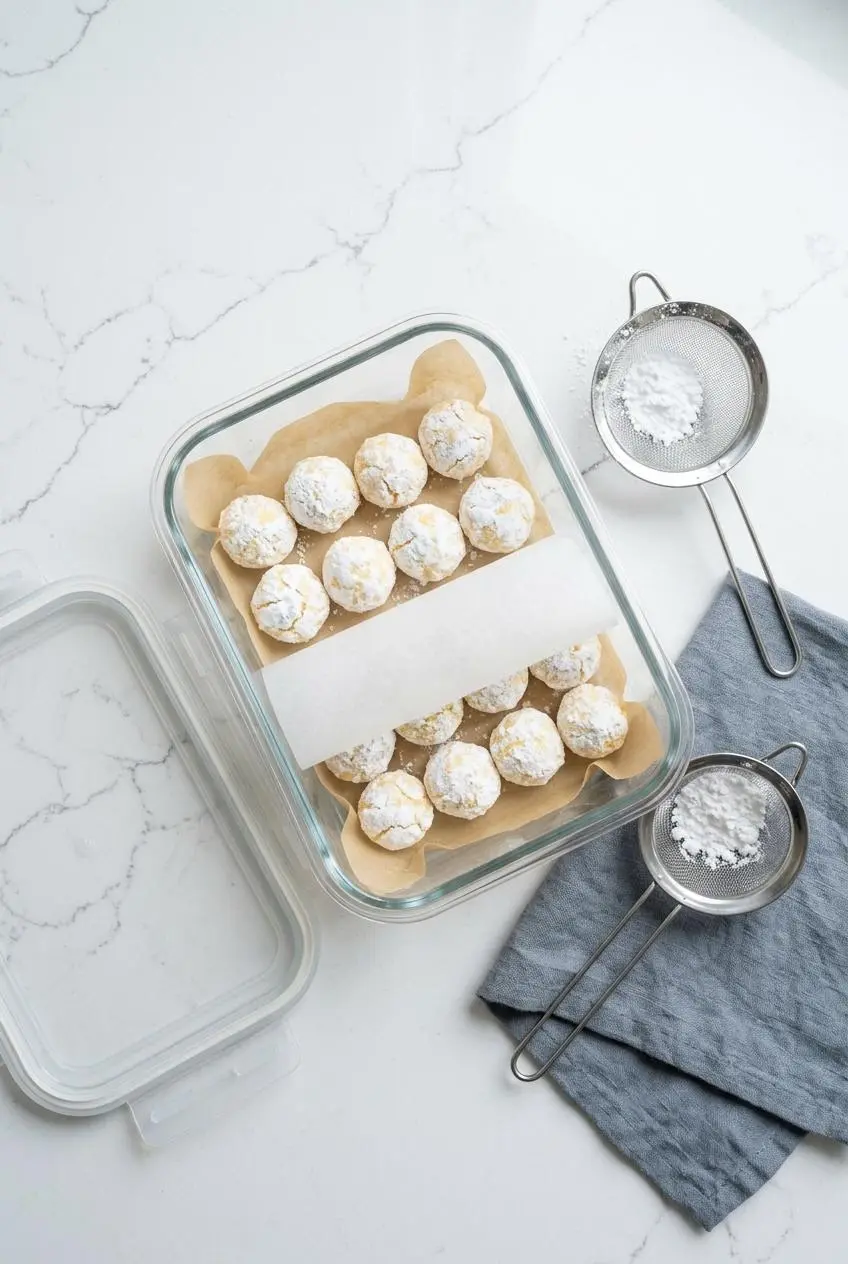
Keep these cream-based truffles covered and refrigerated, with particular attention to protecting their coating from moisture.
Once the final chill is complete, transfer them to a food-grade airtight container lined with parchment or wax paper. Separate stacked layers with more paper so the soft centers don’t press into each other. A snug lid also helps keep refrigerator odors away from the chocolate.
For advance preparation, use the recipe’s natural pause after chilling the ganache. Keep the bowl covered and refrigerated until you’re ready to shape it, then finish the coating and final chill before serving. Don’t treat the chilling time as a shelf-life recommendation.
For gifting, place the chilled truffles in candy paper liners inside a closed container and tell the recipient to keep them refrigerated. Decorative tins work best when they also hold a sealed inner container.
At a gathering, put out a modest platter and keep the rest chilled rather than displaying the entire batch in a warm room. Handle the truffles gently with clean, dry hands or a serving utensil.
Flavor Variations and Creative Coatings
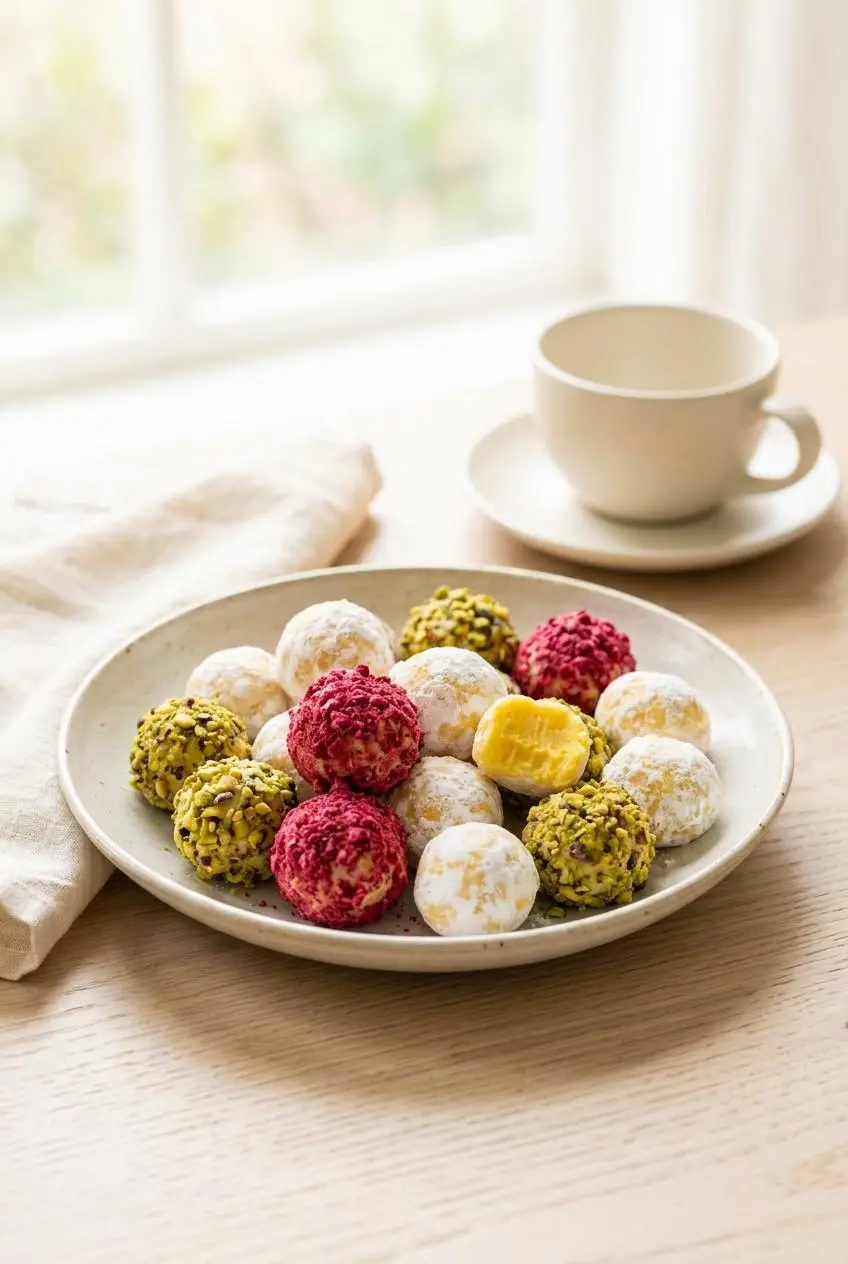
Change the outer coating for contrast, or choose a different lemon variety while keeping the measured juice amount the same. These ideas are optional and separate from the powdered-sugar version above.
For an assorted candy box, pair the bright citrus centers with classic chocolate truffles. Different chocolate flavors make the assortment more interesting without requiring changes to this ganache.
Golden Cookie and Cream Cheese Shortcut
Golden vanilla sandwich cookies and cream cheese make a different style of no-bake lemon truffle. The center tastes more like cheesecake, with a denser, crumb-based texture rather than the smooth melt of cream ganache.
For that separate approach, crush the cookies finely and work in softened cream cheese gradually until the mixture holds together when pressed. Add lemon zest for citrus aroma, shape the mixture, and chill it until firm enough to dip in melted white chocolate.
Don’t substitute cream cheese directly for the heavy cream in the ganache instructions. The cookie mixture relies on crumbs for structure and needs its own proportions. Choose a dedicated cookie-truffle recipe when you want measured quantities for that version.
Alternative Crunchy and Fruity Toppings
- Toasted unsweetened shredded coconut: Let it cool completely before coating the centers for a nutty flavor and chewy contrast.
- Crushed freeze-dried raspberries or strawberries: Use a fine powder for tart fruit flavor and a colorful coating without adding fresh fruit juice.
- Finely chopped roasted pistachios: Small pieces cling more evenly and add a gentle crunch against the creamy center.
- Meyer lemons: Substitute their zest and juice for a milder, sweeter citrus character with a floral aroma, keeping the listed amounts unchanged.
Keep textured coatings finely chopped or crushed so they cover the balls without requiring firm pressure. Pressing too hard can flatten the center, especially if it has warmed during shaping.
Conclusion
Bright lemon and creamy white chocolate make a satisfying little confection with a soft center and delicate finish. Gentle heating and thorough chilling give the ganache its best chance to stay smooth and shape cleanly.
Serve the truffles chilled for spring gatherings or bridal showers, or tuck them into candy cups for a thoughtful gift. A fragrant citrus bite makes a lovely finish to the dessert tray.
Frequently Asked Questions
Do White Chocolate and Lemon Pair Well Together?
Yes. Lemon juice adds tartness that balances white chocolate’s sweetness, while zest supplies a fragrant citrus aroma. Together, they make the rich center taste brighter without losing its creamy character.
Why Did My White Chocolate Ganache Seize or Separate?
Excess heat or uneven liquid incorporation can make the mixture grainy or oily. Stop heating and stir gently, trying a little warm cream if needed. Add it cautiously because extra liquid can soften the finished ganache.
How Long Do Homemade White Chocolate Lemon Truffles Last?
There isn’t a verified shelf-life limit for this particular ganache. Keep the truffles in an airtight container in the refrigerator, handle them with clean utensils, and avoid planning extended storage for gifts or events.
How Should I Keep the Truffles Before Serving?
Keep them covered and refrigerated after their final chill. Use parchment or wax paper between layers, and handle them gently to preserve the powdered-sugar coating. Bring out the portions you plan to serve while keeping the rest chilled.
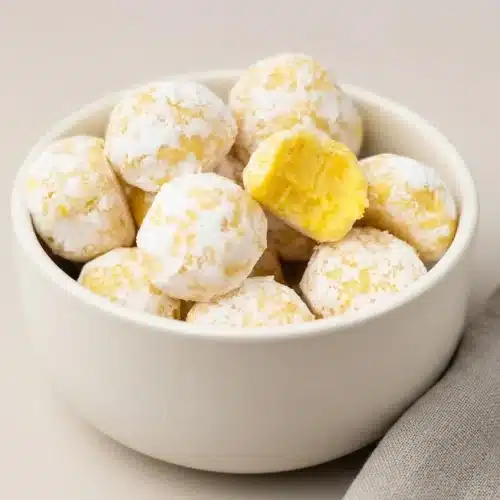
White Chocolate Lemon Truffles

Equipment
- Heatproof bowl
- Microwave
- Sifter
- Parchment Paper
- Sheet Pan
Ingredients
- 9 ounces white chocolate chips
- ¼ cup heavy cream
- Zest of two lemons
- 1 tablespoon lemon juice
- A few drops of yellow food coloring
- ¼ cup powdered sugar
Instructions
- Combine the heavy cream and white chocolate chips in a microwave-safe heatproof bowl. The cream will pool around the chips before heating brings them together.
- Heat for 20 seconds at a time, stirring thoroughly after every burst, and stop when the mixture becomes smooth. The finished mixture should look glossy, with no firm chips remaining.
- Stir the zest and yellow food coloring into the melted mixture, incorporating the lemon juice gradually as you stir. The ganache should have an even color and a smooth satin sheen.
- Refrigerate the ganache for two hours to firm it for shaping. It should feel cool and hold a rounded spoonful instead of flowing back into the bowl.
- Pass the powdered sugar through a sifter into a separate bowl. The sugar should look fine and fluffy, without compact lumps.
- Scoop portions of chilled ganache with a spoon and briefly roll each between your palms to form balls. The centers should feel firm but pliable, with only slight tackiness.
- Turn each shaped center in the sifted powdered sugar until coated. A light, even white layer should cover the surface.
- Arrange the coated truffles on a parchment-lined cutting board or sheet pan and refrigerate for a final 30 minutes before serving. The finished truffles should hold their shape when lifted.