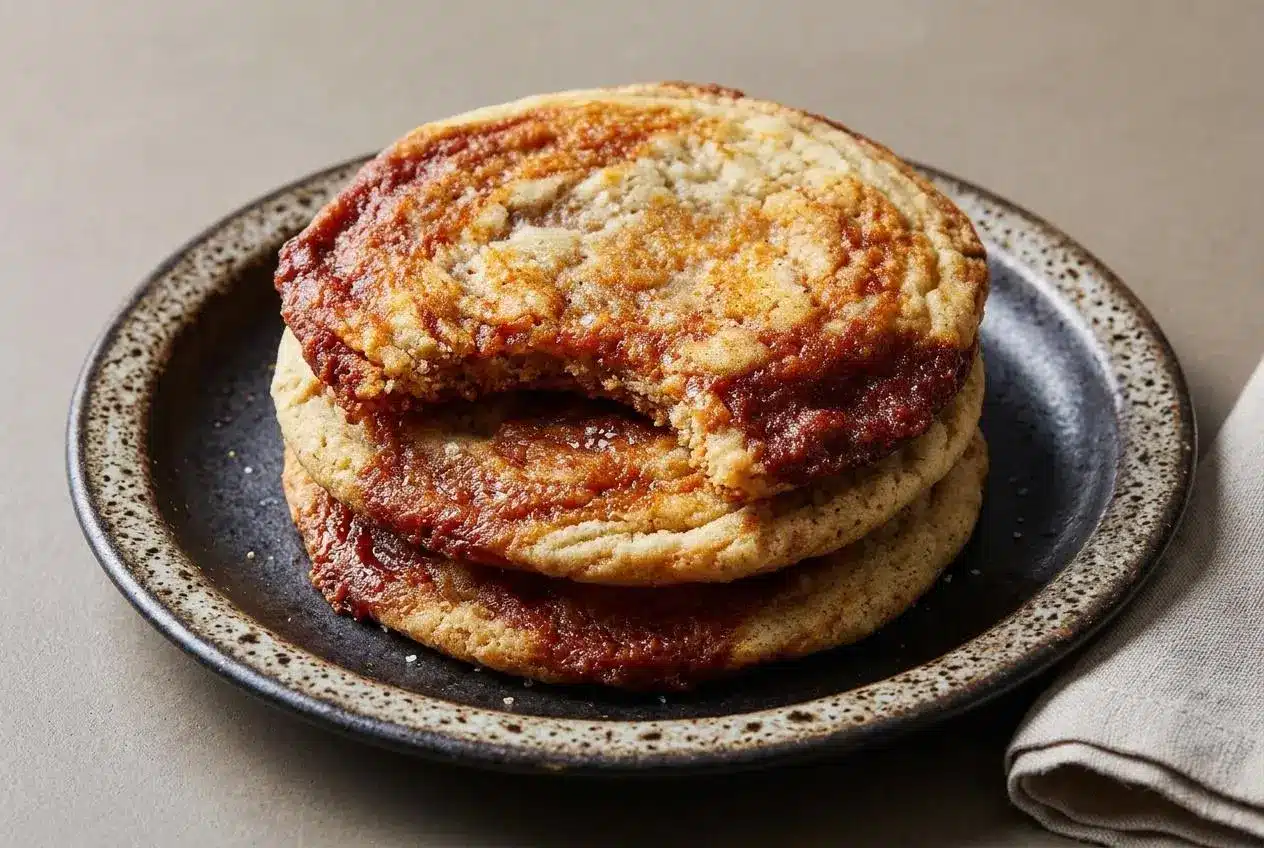
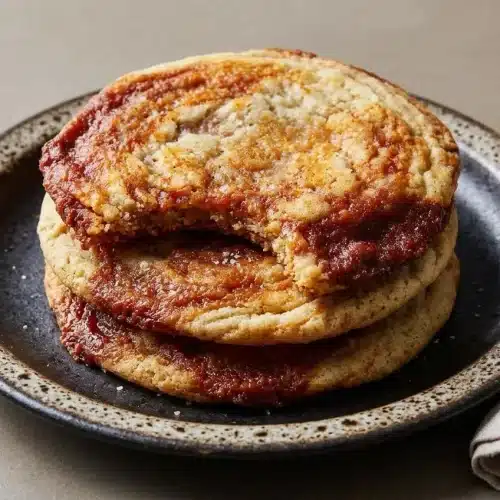
Gochujang caramel cookies are chewy, buttery sugar cookies streaked with a mixture of Korean chile paste, brown sugar, and butter. Bake them at 350 °F for 11 to 13 minutes for golden edges, soft centers, and sweet caramel flavor with savory warmth.
These gochujang caramel cookies bring together familiar cinnamon and vanilla flavors with clay-red ribbons of fermented chile paste. They’re closer to a buttery snickerdoodle than a fiery dessert, with pockets of brown sugar sweetness running through the dough.
Warm cinnamon and toasted sugar fill the kitchen as the edges turn golden. The technique matters more than vigorous mixing: chill the dough, leave the swirl distinct, and let the cookies finish setting on their pans. Keep those red ribbons wide.
Before mixing, check that the butter yields easily to a spoon but hasn’t melted into a puddle.
Ingredients and Their Crucial Roles
Butter supplies richness, the sugars shape sweetness and texture, and gochujang brings savory depth and color. Egg and flour give the cookies structure, while cinnamon, vanilla, salt, and baking soda support their aroma, balance, and spread.
- ½ cup (8 tablespoons)/115 grams unsalted butter, very soft
- 2 packed tablespoons dark brown sugar
- 1 heaping tablespoon gochujang
- 1 cup/200 grams granulated sugar
- 1 large egg, at room temperature
- ½ teaspoon coarse kosher salt or ¾ teaspoon kosher salt (such as Diamond Crystal)
- ¼ teaspoon ground cinnamon
- 1 teaspoon vanilla extract
- ½ teaspoon baking soda
- 1 ½ cups/185 grams all-purpose flour
Gochujang: This fermented Korean chile paste contributes heat, sweetness, saltiness, and umami. Choose a thick paste rather than a pourable condiment. Heat and salt levels vary by brand, so a mild variety is a sensible starting point if you’re sensitive to spice. Keep the recipe’s measured amount unchanged.
Dark brown sugar: Its molasses flavor gives the swirl a caramel-like character and complements the fermented paste. The sweetness balances the perception of heat; it doesn’t remove the chile’s spiciness. This “caramel” starts as a stirred paste, so there’s no saucepan or candy thermometer involved.
Very soft butter: Softness makes hand whisking manageable and helps the butter blend smoothly with the other ingredients. Melted butter behaves differently and can leave the dough too loose. Reserve one tablespoon for the swirl and use the remaining seven tablespoons in the dough.
Granulated sugar, flour, and egg: Granulated sugar contributes sweetness and crisp edges, while flour and egg help the cookies hold together. Measure the flour carefully, using the supplied weight if possible. Excess flour can make the dough stiff and the finished cookies less chewy.
Cinnamon, vanilla, and salt: Cinnamon and vanilla connect the savory swirl to familiar cookie flavors. Follow the salt option that matches your product, since kosher salts differ in crystal size and density.
I look for butter that smears smoothly against the bowl without leaving firm lumps; that makes hand mixing much easier.
How to Make the Gochujang Caramel Cookies Step by Step
Prepare the red paste separately, then build and chill the pale cookie dough before combining them. Have a small bowl, large bowl, whisk, flexible spatula, ice cream scoop, and two large sheet pans ready. This makes about eight large cookies.
- Blend 1 tablespoon of the butter with the dark brown sugar and gochujang in a small bowl, then leave the mixture at room temperature.
The paste should look evenly red, with no separate streaks of butter. - Whisk the remaining 7 tablespoons butter with the granulated sugar, egg, salt, cinnamon, and vanilla by hand for about 1 minute.
A smooth, cohesive mixture is the goal rather than a fluffy, whipped texture. - Use a flexible spatula to incorporate the baking soda, then gently work in the flour and refrigerate the bowl for 15 to 20 minutes.
The chilled dough should feel less sticky while remaining soft enough to fold. - During the dough’s refrigerator rest, preheat the oven to 350 °F and cover two large sheet pans with parchment paper.
The parchment should lie flat so the dough portions have an even surface beneath them. - Distribute the red paste across the chilled dough in 3 to 4 separate dollops, then draw the spatula through the bowl in broad circular sweeps.
Stop with wide orange-red bands still visible against the pale dough, before the mixtures become uniformly pink. - Portion the dough with an ice cream scoop into ¼-cup mounds, leaving at least 3 inches between them and placing 4 to 5 cookies on each pan.
The generous gaps give these large cookies room to spread without joining together. - Bake for 11 to 13 minutes, turning the pans halfway through, then leave the cookies on their baking sheets until completely cool.
Look for lightly golden edges and dry, set centers; the cookies will settle slightly as the pans’ residual heat helps them finish setting.
Crafting the Quick Gochujang Caramel
Press any butter lumps against the side of the small bowl as you stir. An evenly blended paste spreads into ribbons more readily than a mixture with firm butter pieces.
Keep this bowl at room temperature while the dough chills. Refrigerating both mixtures would make the swirl harder to draw through the dough, encouraging extra folding when you want as little mixing as possible.
Mixing and Chilling the Cookie Dough
Hand whisking gives you control over the butter mixture without deliberately beating in lots of air. Once the flour enters the bowl, switch to gentle stirring and stop when you no longer see dry patches.
The refrigerator rest is part of the method, not an optional pause. It firms the butter enough to make the dough easier to handle and helps the two mixtures remain distinct. Use both the clock and the texture cue: the dough should bend under the spatula rather than crumble or flow.
The Perfect Swirl: Marbling Without Blending
Space the dollops around the bowl instead of piling all the paste in the middle. Sweep through the dough with the broad face of the spatula, turning some pale dough over the red mixture.
Stop before everything looks evenly distributed. You want contrasting areas, not a perfectly blended dough. Pale sections between the clay-red ribbons give the finished cookies their marbled appearance. When scooping, avoid repeatedly stirring the bowl to make every portion identical.
Baking Success: Timing, Doneness Cues, and Troubleshooting
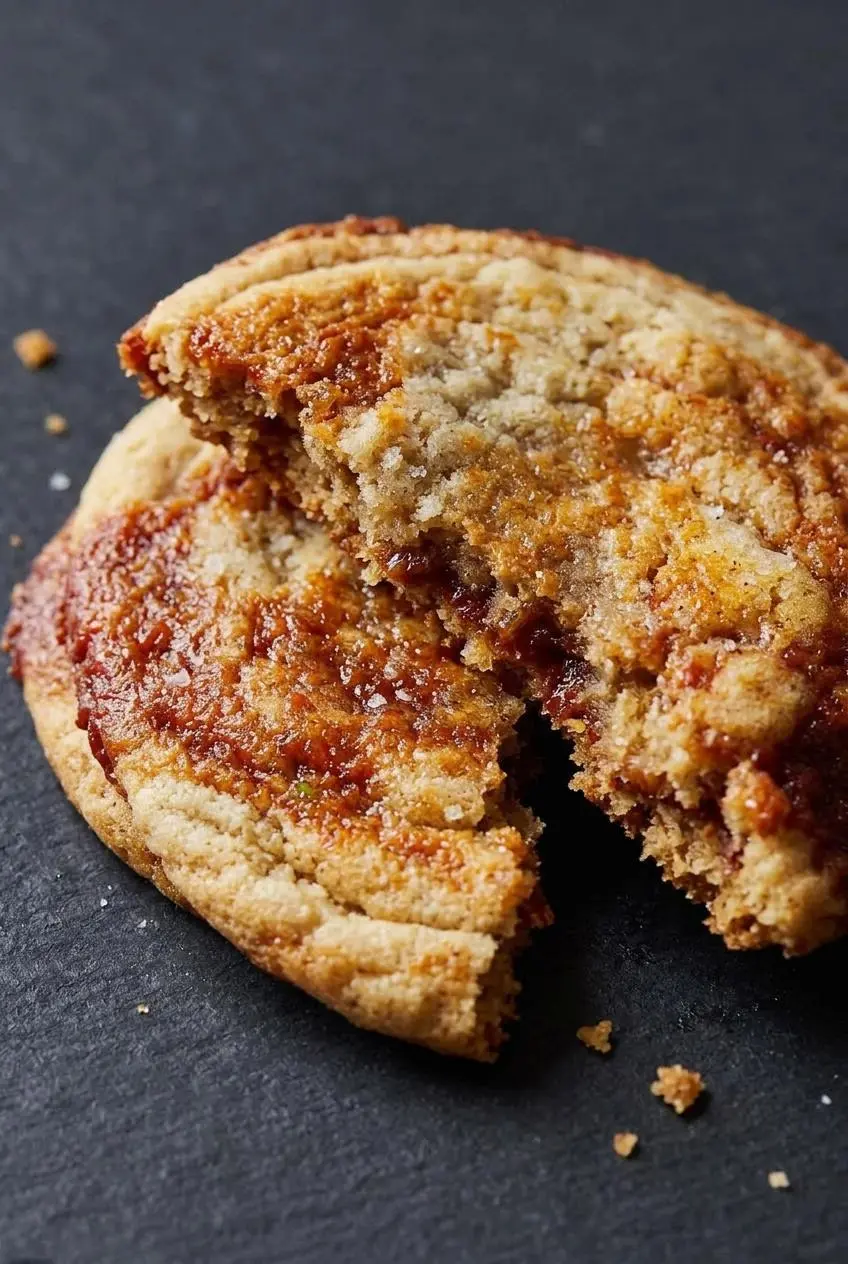
Judge doneness by the edges and centers together. The edges should show light golden color, while the centers should look dry and set rather than wet or glossy.
Keep the oven at 350 °F and rotate the pans halfway through the 11 to 13 minute bake. Rotation helps compensate for uneven oven heat. Don’t wait for the entire surface to turn deeply golden, since that can cost you the soft center.
Leave the cookies on their pans until completely cool. They’re delicate when hot, and moving them immediately can tear the centers. Slight flattening during cooling is expected and doesn’t mean the batch failed.
Why Hand Mixing Delivers the Best Crinkle Texture
Hand mixing makes it easier to stop once the ingredients come together. A stand mixer can quickly whip extra air into the butter, especially if you follow the long creaming routine used for other cookies.
After adding flour, gentle stirring matters regardless of which equipment you used earlier. Prolonged mixing works the dough more than necessary and can make the texture tougher. For a familiar cinnamon-cookie comparison, try classic snickerdoodle cookies; here, the gochujang ribbon adds a savory contrast.
Critical Baking Cues: Avoiding Over-Spread and Flat Cookies
- The cookies spread excessively: Melted butter or dough that missed its chill can make the mounds too loose. Start with soft, unmelted butter and complete the refrigerator rest before marbling.
- The cookies run together: Crowded pans leave no room for their wide spread. Preserve the required spacing instead of squeezing another scoop into a gap.
- The dough turns uniformly red: Too much folding blends away the contrast. You can’t restore the pale ribbons, so bake that batch as it is and stop earlier when swirling the next one.
- The paste seems runny: A pourable gochujang sauce or melted butter may be the cause. Use thick gochujang paste and very soft butter rather than adding flour to the swirl.
- The centers look pale: Color alone isn’t the best guide. Check whether the centers look dry and set while the edges show light gold.
- The cookies break during transfer: They likely haven’t finished cooling. Leave them on the baking sheets so their structure can firm before lifting.
Cooling and Proper Storage
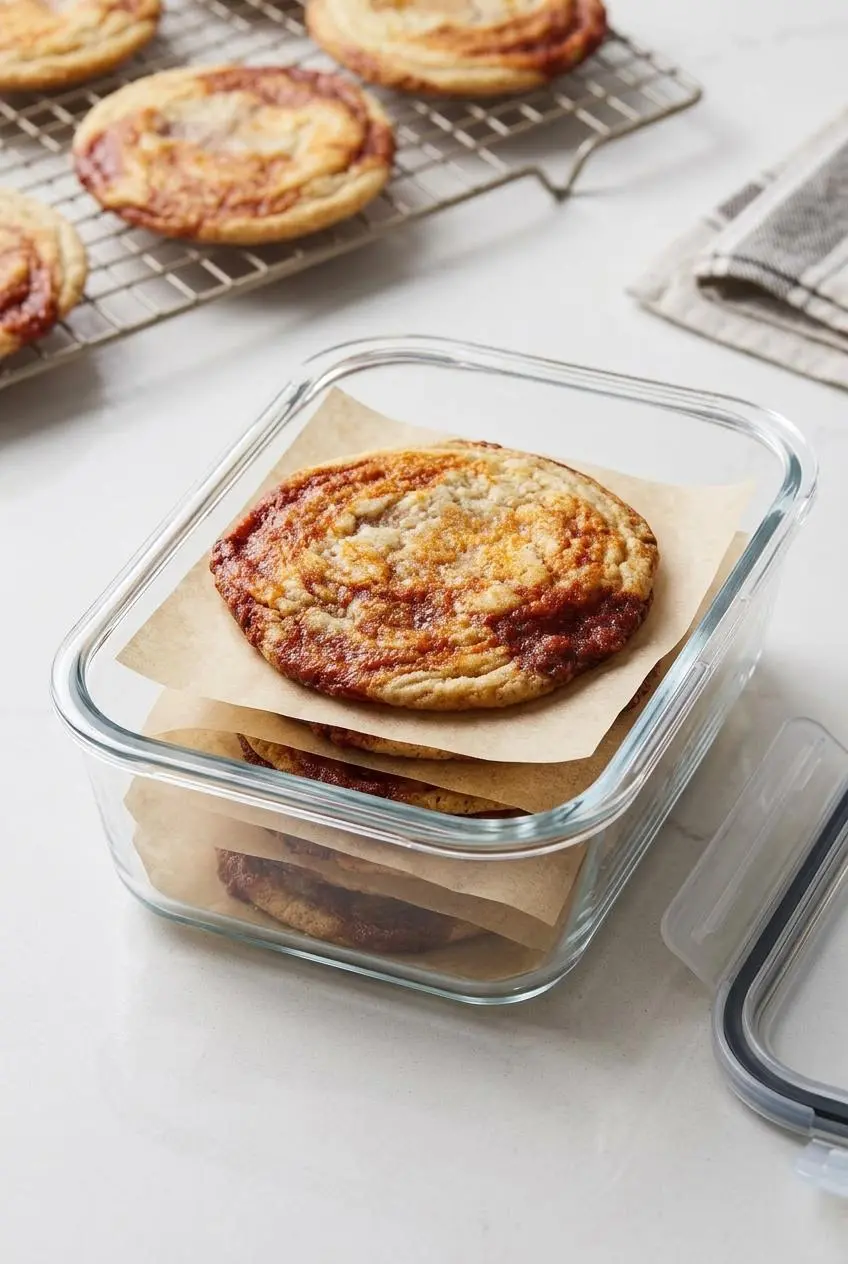
Cool the cookies completely before enclosing them. Packing warm cookies traps steam, which can soften the crisp edges and create moisture inside the container.
Store cooled cookies in an airtight container at room temperature, away from direct heat and sunlight. Choose a container that holds them without crushing the broad, delicate edges. If you stack them, parchment between layers helps keep the swirled surfaces from sticking together.
Protecting the Marbled Dough Before Baking
Get the pans and oven ready during the scheduled dough chill so you can portion the dough after swirling without unnecessary handling. If it becomes very sticky while you work, return the bowl to the refrigerator until it feels pliable again rather than mixing in extra flour.
Keep the red paste separate until the dough has completed its initial chill. That order protects the contrast and avoids repeatedly stirring an already-marbled mixture.
Flavor Variations and Sizing Options
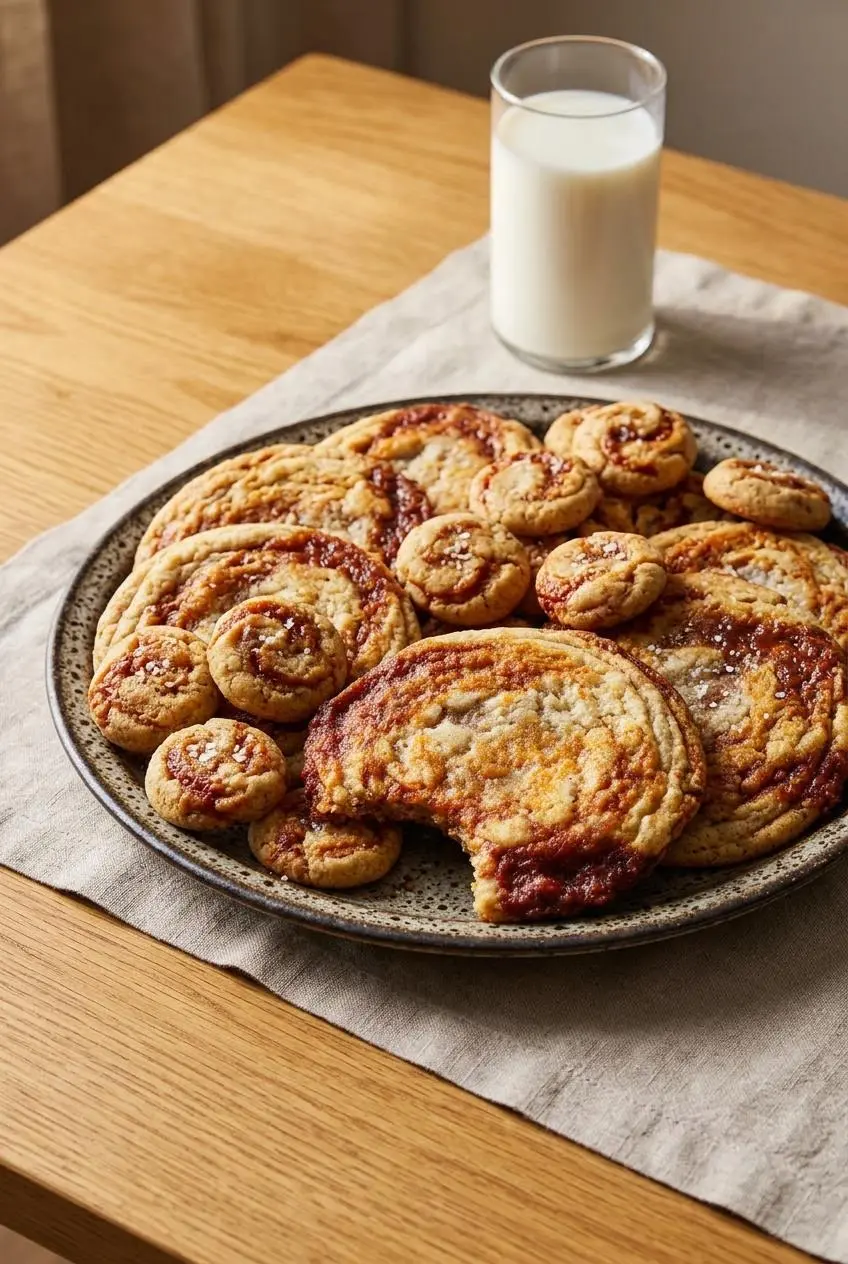
Keep the dough proportions unchanged when experimenting with size or finishing touches. Smaller portions and optional toppings can change the presentation without replacing the gochujang swirl.
Baking Smaller Party-Sized Cookies
For a cookie platter, you can use a smaller scoop, such as a 1.5-tablespoon scoop, instead of making the large ¼-cup portions. This produces more cookies from the same dough, but the yield depends on how consistently you fill the scoop.
Smaller cookies will generally need less baking time. Begin checking earlier and use the same doneness cues: lightly golden edges and dry, set centers. Give each portion room to spread, and still let the cookies cool completely on their pans.
Optional Flavor Accents
- Flaky sea salt: An optional finish on the freshly baked cookies emphasizes the sweet-and-salty contrast; use a light hand because gochujang already contributes salt.
- Smoked flaky salt: Choose this instead of plain flaky salt if you want a smoky accent, keeping the finish restrained so it doesn’t overpower the cinnamon.
- Toasted white sesame seeds: An optional sprinkle adds nutty flavor and a delicate crunch alongside the fermented chile paste.
Serve the cooled cookies with cold milk or iced barley tea, or add them to a holiday platter. Label them as containing gochujang so guests know to expect some warmth. For another sweet-and-salty option alongside them, salted caramel cheesecake cookies offer a different caramel-centered treat.
Conclusion
These cookies balance buttery sweetness with cinnamon, caramel-like brown sugar, and the savory warmth of gochujang. Distinct ribbons make each bite a little different.
Mix gently, give the dough its chill, and leave the baked cookies on their pans until cool. A restrained swirl is the most useful finishing touch.
Frequently Asked Questions
What Do Gochujang Caramel Cookies Taste Like?
They resemble rich, buttery snickerdoodles with cinnamon and vanilla. The brown sugar swirl adds caramel-like sweetness, while gochujang brings savory depth and lingering warmth.
Are Gochujang Caramel Cookies Very Spicy?
They’re generally sweet and warming rather than intensely spicy, but the heat depends on your gochujang. Butter and sugar balance the flavor without eliminating the chile heat, so choose a mild paste for heat-sensitive guests.
Can I Use an Electric Stand Mixer for This Dough?
You can, but hand mixing is preferred for this dough. If using a mixer, avoid extended whipping, then stir the flour in gently with a spatula.
Should I Keep the Paste Separate Until the Dough Is Chilled?
Yes. Chill the pale dough first and leave the gochujang paste at room temperature. Combine them only when you’re ready to swirl and portion, which helps preserve distinct ribbons.
Which Type of Gochujang Is Best for Baking Cookies?
Use thick gochujang paste, commonly sold in tubs, rather than a pourable dipping or bibimbap sauce. Ssamjang is a different condiment and isn’t a direct substitute here. Check the package’s heat level and ingredient label, since brands vary in saltiness and sweetness.
Gochujang Caramel Cookies

Equipment
- Small bowl
- large bowl
- Whisk
- flexible spatula
- Parchment Paper
- large sheet pans
- Ice cream scoop
Ingredients
- ½ cup unsalted butter (8 tablespoons)/115 grams, very soft
- 2 packed tablespoons dark brown sugar
- 1 heaping tablespoon gochujang
- 1 cup granulated sugar 200 grams
- 1 large egg at room temperature
- ½ teaspoon coarse kosher salt or ¾ teaspoon kosher salt (such as Diamond Crystal)
- ¼ teaspoon ground cinnamon
- 1 teaspoon vanilla extract
- ½ teaspoon baking soda
- 1 ½ cups all-purpose flour 185 grams
Instructions
- Blend 1 tablespoon of the butter with the dark brown sugar and gochujang in a small bowl, then leave the mixture at room temperature. The paste should look evenly red, with no separate streaks of butter.
- Whisk the remaining 7 tablespoons butter with the granulated sugar, egg, salt, cinnamon, and vanilla by hand for about 1 minute. A smooth, cohesive mixture is the goal rather than a fluffy, whipped texture.
- Use a flexible spatula to incorporate the baking soda, then gently work in the flour and refrigerate the bowl for 15 to 20 minutes. The chilled dough should feel less sticky while remaining soft enough to fold.
- During the dough’s refrigerator rest, preheat the oven to 350 °F and cover two large sheet pans with parchment paper. The parchment should lie flat so the dough portions have an even surface beneath them.
- Distribute the red paste across the chilled dough in 3 to 4 separate dollops, then draw the spatula through the bowl in broad circular sweeps. Stop with wide orange-red bands still visible against the pale dough, before the mixtures become uniformly pink.
- Portion the dough with an ice cream scoop into ¼-cup mounds, leaving at least 3 inches between them and placing 4 to 5 cookies on each pan. The generous gaps give these large cookies room to spread without joining together.
- Bake for 11 to 13 minutes, turning the pans halfway through, then leave the cookies on their baking sheets until completely cool. Look for lightly golden edges and dry, set centers; the cookies will settle slightly as the pans’ residual heat helps them finish setting.