Rice paper croissants are custard-dipped rice paper sheets stacked, cut, and rolled into crescents, then baked at 350°F for 30 to 35 minutes. They have a crisp, golden shell and a chewy, mochi-like center rather than the flaky layers of a traditional croissant.
These rice paper croissants turn stiff, round wrappers into a buttery treat that tastes surprisingly like vanilla French toast. The egg custard softens the sheets, while baking gives the outside a crackly crust. Expect a pleasantly stretchy middle, not airy wheat pastry.
You don’t need to knead dough or fold butter into pastry. The shaping takes a little attention, but three stacked sheets give each crescent its structure. This batch makes three croissants, with about 15 minutes of prep. The trick is in the sailboat cut.
Choose a shallow dipping dish wide enough to hold a rice paper sheet flat without folding its edges.
Ingredients You Need and Why Each One Matters
Rice paper supplies the crisp shell and chewy layers, while eggs, milk, and butter create a rich custard. Baking powder contributes lift; sugar and vanilla bring sweetness, browning, and that familiar French toast aroma.
- 9 sheets rice paper
- 2 large eggs + 1 egg yolk
- 3 tbsp butter (melted)
- ½ tsp baking powder
- ¼ cup whole milk
- 2 tbsp sugar + 1 t. For sprinkling
- ½ tsp Vanilla extract
Rice paper: Each croissant uses three sheets. The custard hydrates them so they bend and stick together; the exposed surfaces crisp as they bake. Rice paper formulas vary, so the feel of the softened stack matters more than a rigid dipping count. For a gluten-free version, check the rice paper and baking powder labels.
Eggs and extra yolk: Whole eggs help the custard set around the rice paper. The additional yolk brings richness and deeper color. Together, they give the center its French toast character without turning it into conventional bread dough.
Butter and milk: Melted butter adds flavor and richness throughout the layers. Whole milk loosens the egg mixture and provides moisture for the dry wrappers. A smooth dip coats more evenly than one with visible streaks of egg or pools of butter.
Baking powder: This gives the custard a little lift during baking. It won’t create the honeycomb interior of laminated pastry, but it helps keep the stacked layers from feeling completely dense.
Sugar and vanilla: Whisk the 2 tablespoons of sugar into the custard and reserve the additional teaspoon for the tops. That sprinkle encourages a blistered, crackly surface. Vanilla supplies the warm dessert aroma that makes these especially good served warm.
I let the melted butter cool slightly before whisking it into the eggs so the custard stays smooth instead of developing cooked egg flecks.
How to Make the Rice Paper Croissants Step by Step
Keep the custard coating light enough that you can lift and arrange the sheets. A flexible, cohesive stack is much easier to shape than one swimming in liquid.
Preparing the Egg Custard Laminate
The custard acts as both the dipping liquid and the binder between layers. Use a whisk to break up the eggs thoroughly, then incorporate the butter gradually before adding the remaining custard ingredients.
- Set the oven to 350°F before mixing the custard.
This moderate heat gives the thick center time to cook while the outside browns. - Combine the two whole eggs and extra yolk in a wide, shallow dish, whisking until uniform.
The mixture should show no distinct strands of egg white. - Pour the melted butter into the eggs gradually while whisking continuously.
A well-blended mixture looks glossy rather than separated into oily patches. - Add the baking powder, milk, 2 tablespoons of sugar, and vanilla, then whisk thoroughly.
The dipping custard should look evenly combined, with no visible pockets of baking powder. - Coat a rice paper sheet in custard, lift it out, and let loose liquid fall back into the dish.
The wrapper should carry a coating without a puddle of custard hanging underneath. - Dip two more sheets the same way and align all three on a cutting plate.
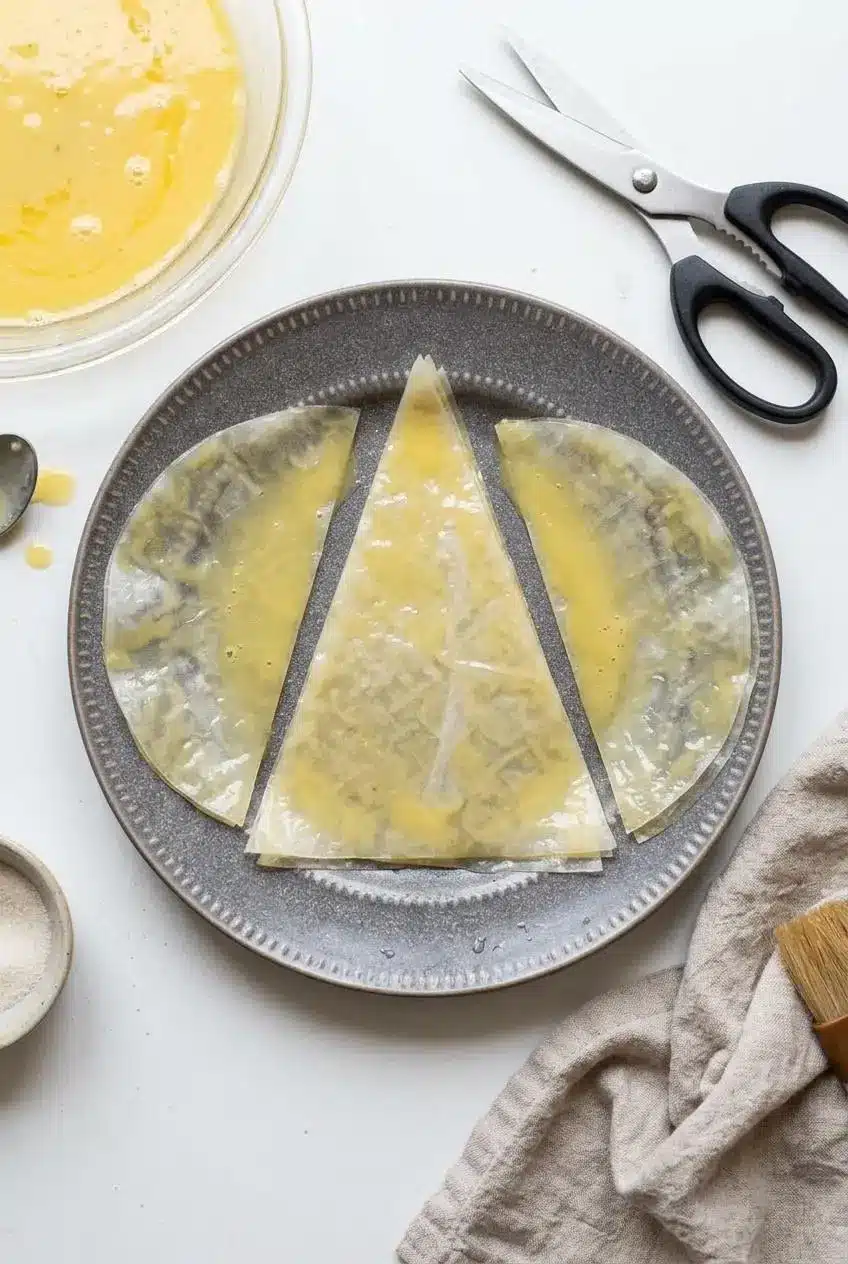
The layers will feel slippery initially, then begin clinging together as they soften. - Use a sharp knife or kitchen scissors to make two cuts from the circle’s top center toward its lower left and lower right edges.
You should have a broad central triangle and two curved side pieces. - Lay one curved piece lengthwise over the triangle’s center and the other crosswise across its broad bottom edge.
The arrangement should have a pointed top and a thicker, wider bottom. - Roll the layered shape from its wide bottom toward the pointed tip, then assemble the remaining croissants with the other sheets.
Each roll should have a plump center with the triangle’s point wrapped around it. - Transfer the crescents to a parchment-lined baking tray, sprinkle the reserved teaspoon of sugar over them, and bake for 30 to 35 minutes until golden and crisp.
Look for a crackly exterior and a set, chewy center rather than wet custard.
The Sailboat Cut and Roll Technique
Picture the circle as a clock face. Start both cuts at 12 o’clock: one runs toward the lower right edge, and the other toward the lower left. Keep the bottom of the central triangle broad enough to roll. The curved pieces on either side are sometimes called semicircles, though their exact shape depends on your cuts.
Keep each cut piece layered rather than separating its three sheets. Place one side piece vertically along the triangle, then turn the other sideways across the bottom. This redistributes the rice paper so the crescent has a substantial belly instead of a thin, hollow roll.
Roll steadily toward the point without squeezing out the custard. The layers should travel together. If they slide apart, realign them before continuing rather than trying to tighten the finished crescent aggressively.
Baking Until Golden and Crisp
Use the middle oven rack for balanced heat. Leave space between the crescents so their sides can dry and brown instead of touching.
A warm vanilla aroma and a pocked, golden crust are useful progress cues, but aroma alone doesn’t confirm that the middle has set. The exterior should look dry and crisp, while the center remains chewy rather than liquid or visibly eggy. Thin tips may darken before the rounded belly.
Expert Tips and Troubleshooting for Crispy Croissants

Hydration is the main balancing act: the sheets need enough moisture to bend, but not so much that they lose their structure.
As an optional handling tip, let the dipped stack rest on the cutting plate for about 30 to 45 seconds before cutting. This helps the upper and lower sheets soften more evenly. Use the feel as your guide: the stack should bend and cut cleanly without falling apart.
For an optional flavor adjustment, add a tiny pinch of fine sea salt and a dash of cinnamon to the custard. Salt balances the sweetness, while cinnamon leans into the French toast flavor. Neither belongs in the required ingredient list.
Use a spatula to return custard from the clean cutting plate to the dipping dish as you assemble the batch. That keeps excess liquid from collecting beneath the next stack.
Air Fryer vs Oven Method
- Oven: Bake at 350°F for 30 to 35 minutes on the middle rack. This is the primary method and gives the thick center a more forgiving cooking window.
- Optional air fryer approach: Use 320 to 350°F as a starting range and check around 6 minutes. This is an early inspection, not a guaranteed finishing time; continue until the crust is golden and the custard center has set.
- Batch size: An oven tray accommodates the batch comfortably. An air fryer suits smaller batches, with space around each crescent for circulating air.
- Browning control: Start toward the lower end of the air fryer range if your appliance browns quickly. Fast surface color doesn’t necessarily mean the thick middle is ready.
Common Mistakes to Avoid
- Sheets collapse during rolling: Prolonged soaking can make the wrappers too soft. Dip to coat, drain the excess, and let the stacked sheets finish hydrating on the plate.
- Cuts tear or look jagged: Unevenly softened layers resist the blade. Allow the brief rest described above, then use sharp scissors or a sharp knife.
- Tips burn before the center sets: High heat or a top-rack position browns the thinnest parts too quickly. Keep the oven at the specified temperature and use the middle rack.
- The middle seems gummy: Some chew is expected, but wet custard isn’t the goal. Check the center as well as the crust rather than judging only by the pointed ends.
Delicious Variations: Chocolate, Savory, and Vegan
These optional adaptations change the filling or custard without replacing the classic oven method above. Keep fillings modest so the rice paper can wrap around them.
Chocolate Pain au Chocolat Version
Place dark chocolate chips or a small piece of a chocolate bar across the wide bottom of the assembled triangle just before rolling. Enclose the chocolate in the first turn, then continue toward the tip.
The chocolate melts into a soft center that contrasts with the crisp shell. Keep it away from the outer edges to limit leakage onto the tray. This gives you a pain au chocolat-inspired flavor, with the same chewy rice paper texture rather than flaky pastry.
Savory Ham and Cheese Version
For a savory breakfast version, leave out the vanilla and sugar, including the topping sprinkle. Season the egg dip with a pinch of salt and black pepper, then place thin ham slices and shredded cheese across the wide base before rolling.
Thin layers of filling are easier to enclose than a bulky mound. Cheese adds richness, while ham brings saltiness, so go lightly with additional salt. Expect a savory, custardy center beneath the crisp rice paper shell.
Vegan and Dairy-Free Option
For an egg-free and dairy-free adaptation, use a liquid plant-based egg substitute, soy or oat milk, and melted vegan butter. Keep the baking powder, sugar, and vanilla for the sweet version.
Choose a plant egg product intended for cooking and follow its package substitution guidance rather than assuming every product replaces whole eggs and an extra yolk identically. Check all ingredient labels if avoiding animal products.
This adaptation may set and brown differently. Treat it as a variation, not an identical result: watch the center and crust, and expect differences in richness and chew.
Serving Suggestions, Storage, and Reheating

Serve these warm for the strongest contrast between the crisp shell and soft, chewy center. Let the initial heat ease before biting into a chocolate-filled version.
- Breakfast: Pair with fresh berries and morning coffee.
- A sweeter finish: Dust with powdered sugar just before serving.
- Dessert: Drizzle melted chocolate over the warm crust.
The crust softens as moisture moves through the layers, so fresh-baked crunch is the best texture to aim for. For leftovers, allow steam to escape, then refrigerate in an airtight container; avoid leaving these egg-custard pastries sitting out. Refrigeration protects the leftovers but doesn’t preserve their original crispness.
To bring back some crunch, use dry heat rather than a microwave:
- Arrange the croissants separately on a baking tray or in an air fryer basket.
- Warm gently in the oven or air fryer, checking the thin tips as the center heats.
- Remove when heated through and the exterior feels crisp again, then serve promptly.
A microwave tends to soften the shell instead of re-crisping it. Reheating can improve the exterior, but don’t expect leftovers to match the fresh batch exactly.
Conclusion
Rice paper croissants deliver a distinctive combination of crackly crust, buttery vanilla flavor, and mochi-like chew. A light custard coating and a cohesive stack make the shaping much easier.
Give the layers a brief chance to soften before cutting, then roll from the wide base toward the point. Once that feels comfortable, try a chocolate filling or a little cinnamon in the custard for your next warm batch.
Frequently Asked Questions
Can You Make Croissants From Rice Paper?
Yes. Dip three stacked rice paper sheets in egg custard, cut and arrange them, then roll and bake into crescents. They resemble croissants in shape, but their centers are chewy rather than flaky. For a gluten-free version, check the rice paper and baking powder labels.
What Do Rice Paper Croissants Actually Taste Like?
They taste buttery and sweet, with vanilla French toast flavor. The exterior is crisp and crackly; the warm center has a stretchy, mochi-like chew. They don’t have the airy, laminated texture of wheat croissants.
Can You Make Chocolate Croissants With Rice Paper?
Yes. Add dark chocolate chips or a small chocolate bar piece at the wide base before rolling. Keep the chocolate inside the edges so the wrapper can enclose it. Bake using the oven method above for a melted chocolate center.
How Do You Make Rice Paper Croissants in the Air Fryer?
Assemble the three-sheet crescents as described, then arrange them with space between them in the basket. Use the optional air fryer starting range described above and inspect early. Continue until the exterior is golden and the custard center is set; don’t treat early browning as proof of doneness.
How Do You Store and Reheat Rice Paper Croissants So They Stay Crispy?
Refrigerate cooled leftovers in an airtight container, expecting the crust to soften. Use an oven or air fryer to heat them through and restore some exterior crunch. Avoid the microwave when crispness is the goal, and serve after reheating.

Rice Paper Croissants

Equipment
- 1 baking tray lined with parchment
- 1 pan shallow
- 1 whisk
- 1 scissors or knife, for cutting rice paper
Ingredients
- 9 sheets rice paper
- 2 large eggs + 1 egg yolk
- 3 tbsp butter (melted)
- ½ tsp baking powder
- ¼ cup whole milk
- 2 tbsp sugar + 1 t. For sprinkling
- ½ tsp Vanilla extract
Instructions
- Set the oven to 350°F before mixing the custard. This moderate heat gives the thick center time to cook while the outside browns.
- Combine the two whole eggs and extra yolk in a wide, shallow dish, whisking until uniform. The mixture should show no distinct strands of egg white.
- Pour the melted butter into the eggs gradually while whisking continuously. A well-blended mixture looks glossy rather than separated into oily patches.
- Add the baking powder, milk, 2 tablespoons of sugar, and vanilla, then whisk thoroughly. The dipping custard should look evenly combined, with no visible pockets of baking powder.
- Coat a rice paper sheet in custard, lift it out, and let loose liquid fall back into the dish. The wrapper should carry a coating without a puddle of custard hanging underneath.
- Dip two more sheets the same way and align all three on a cutting plate. The layers will feel slippery initially, then begin clinging together as they soften.
- Use a sharp knife or kitchen scissors to make two cuts from the circle’s top center toward its lower left and lower right edges. You should have a broad central triangle and two curved side pieces.
- Lay one curved piece lengthwise over the triangle’s center and the other crosswise across its broad bottom edge. The arrangement should have a pointed top and a thicker, wider bottom.
- Roll the layered shape from its wide bottom toward the pointed tip, then assemble the remaining croissants with the other sheets. Each roll should have a plump center with the triangle’s point wrapped around it.
- Transfer the crescents to a parchment-lined baking tray, sprinkle the reserved teaspoon of sugar over them, and bake for 30 to 35 minutes until golden and crisp. Look for a crackly exterior and a set, chewy center rather than wet custard.