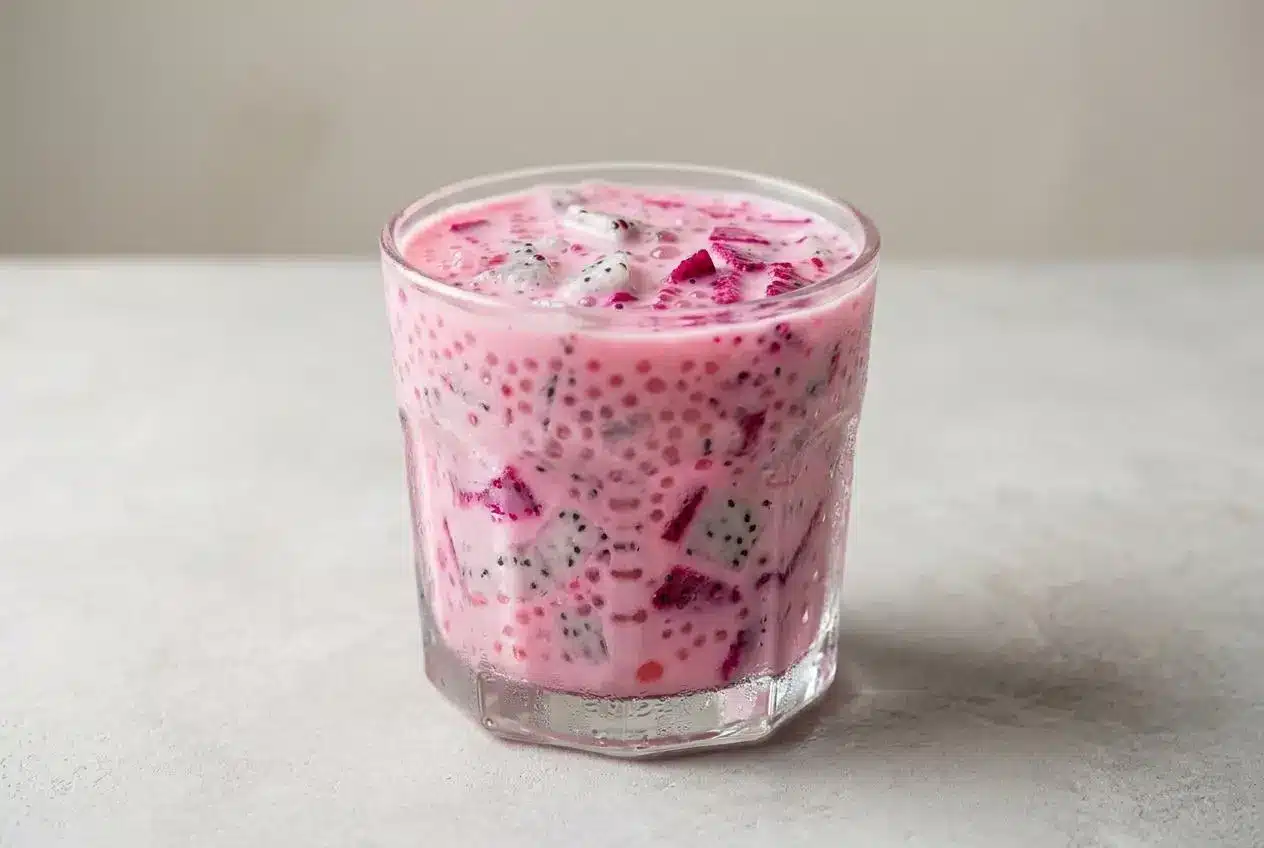
Dragonfruit Sago is a refreshing, creamy dessert with chewy sago pearls, dragonfruit, jelly cubes, and a sweet milk base. It can be served more like a drink or a pudding depending on how much liquid you like.
Dragonfruit Sago tastes sweet, tropical, creamy, and lightly chewy all at once. The mix of soft fruit, bouncy boba, and silky milk makes it especially good when served cold.
It looks dramatic in the bowl but the method is very doable once you know how to cook the sago properly. The little texture cues make all the difference.
Use pink dragonfruit if you want that vivid natural color without adding anything extra.
What Is Dragonfruit Sago?
This dessert is a chilled Asian fruit and milk dessert built around sago pearls. You get creamy milk, juicy dragonfruit, chewy pearls, and jelly cubes in the same spoonful, which is why it feels more interesting than a plain fruit pudding.
Some versions are loose enough to sip, while others are thick enough to eat with a spoon. This one lands in the middle, and you can nudge it either way by adjusting how much milk you add at serving time.
It is especially nice after spicy food or on a hot day, when cold desserts actually feel refreshing instead of heavy. For a colorful dessert table, it also sits nicely beside colorful Fruit Kabobs.
Ingredients You’ll Need
Each ingredient has a job here, from the chewy bite of sago to the floral fruit, creamy milk base, and jelly cubes that keep every spoonful lively.
For the Dragonfruit Sago
- ¼ cup Sago
- ⅔ cup Condensed milk
- ½ cup Evaporated milk
- 1 cup Milk
- ⅔ cup White dragonfruit chopped
- 1 cup Pink dragonfruit chopped
- ¾ cup Popping boba
- 1 cup Ice cubes
For the Dragonfruit Jelly
- ½ cup Pink dragonfruit fresh or frozen
- ¼ cup Water
- ½ tsp Agar agar
For the Coconut Jelly
- ⅓ cup Coconut Milk
- ⅓ cup Coconut water
- ½ tsp agar agar
About the Dragonfruit: Pink vs. White
Pink dragonfruit is the best choice when you want bold color and a slightly sweeter, fuller fruit flavor. It turns the dessert bright pink naturally, while white dragonfruit gives you a softer look and a milder taste.
Using both works well here because white dragonfruit keeps the fruit pieces delicate, while pink dragonfruit adds color to the overall bowl. When shopping, look for fruit with bright, even skin and a slight give when you press it gently. If it feels rock hard, it usually needs more time.
Sago vs. Tapioca Pearls
Sago and tapioca pearls are often used the same way in desserts like this. They come from different plants, but once cooked they both give that pleasantly chewy texture people want in a chilled tropical pudding.
If your store carries tapioca pearls instead of sago, they are a practical swap for this style of dessert. The main thing that matters is cooking them until translucent, not sticky or chalky in the middle.
The Creamy Base: A Guide to Milks
Condensed milk sweetens the dessert and gives it richness, so the base tastes lush instead of thin. Evaporated milk adds body and a mellow dairy note without pushing the sweetness too far.
Regular milk loosens everything into a spoonable consistency and helps balance the thicker milks. Coconut milk appears in the jelly rather than the main base here, adding gentle tropical flavor and a softer set.
Agar agar is what turns the dragonfruit and coconut mixtures into neat jelly cubes instead of a loose sauce. That extra texture matters, because this dessert is at its best when every bite has some contrast.
I always check sago pearls before cooking and skip any soaking, because soaking tends to make them gluggy instead of nicely chewy.
How to Make Dragonfruit Sago
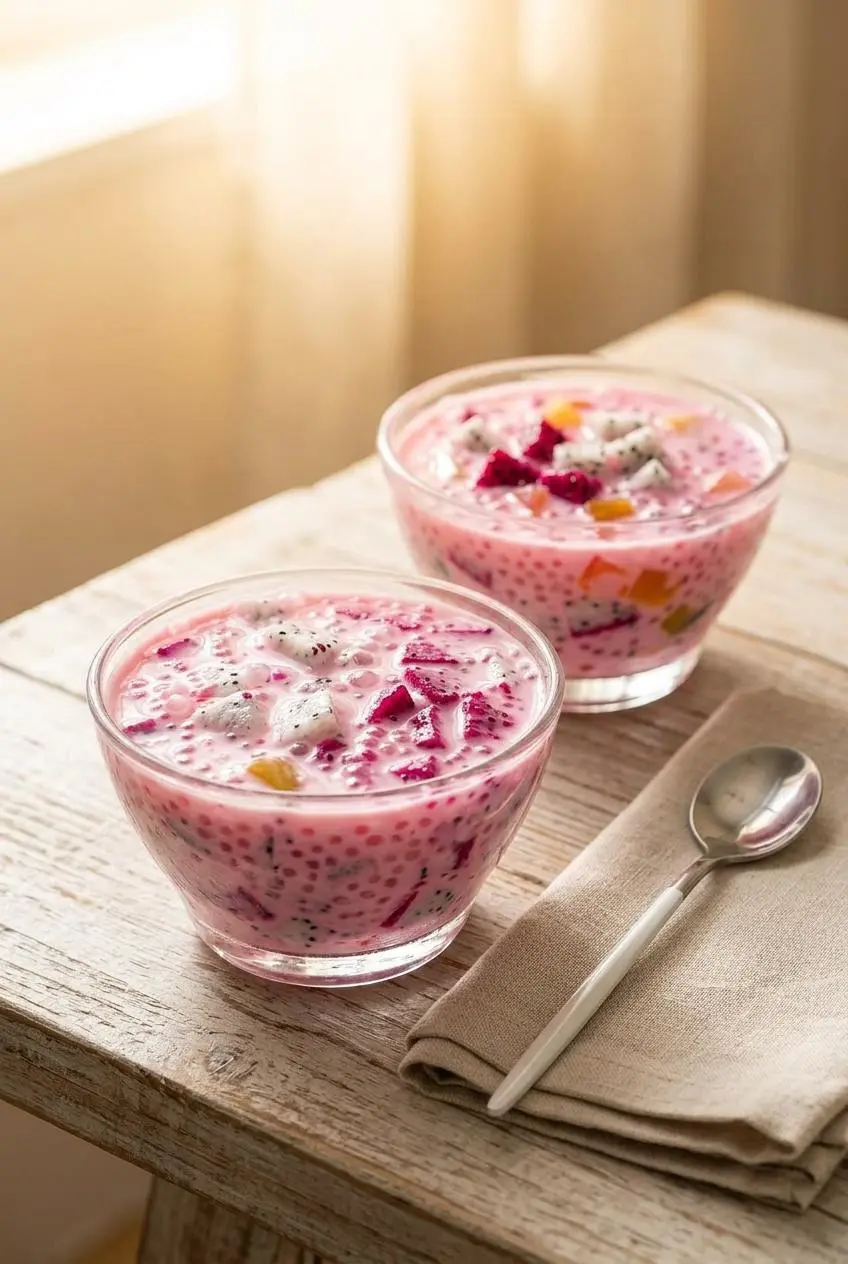
The recipe works best when you treat it as four clear stages: set the jellies, cook the sago, then assemble everything cold so the textures stay distinct.
To Make the Coconut Jelly
- Combine the coconut milk and coconut water in a saucepan and bring the mixture to a boil.
Once it is hot, whisk in the agar agar until smooth and keep it at a boil briefly so the powder fully dissolves. - Pour the mixture into a bowl and leave it to cool until firm enough to cut.
The jelly should feel set and springy rather than liquid in the center. - Cut the set jelly into small pieces for serving.
Smaller cubes are easier to scoop and spread more evenly through the dessert.
To Make the Dragonfruit Jelly
- Place the pink dragonfruit and ¼ cup Water in a saucepan and simmer for a couple of minutes.
The fruit should soften enough to mash easily and release its bright color. - Lightly crush the fruit pieces, then add the Agar agar and bring the mixture to a boil.
Boiling helps the agar activate so the jelly will set cleanly later. - Transfer the mixture to a bowl and let it cool until firm.
When set, it should slice into tidy cubes instead of smearing. - Cut the dragonfruit jelly into cubes of your preferred size.
Try to keep them bite-sized so they mix well with the pearls and fruit.
To Cook the Sago
- Bring 3 to 4 cups water to a boil in a heavy-bottomed pot, then add the sago.
Use plenty of water so the pearls can move freely and do not stick together right away. - Cook the sago for 12 to 14 min, stirring often as it simmers.
You want the pearls to swell and turn mostly translucent rather than clump on the bottom. - Turn off the heat, cover the pot, and let the sago finish in the trapped steam for 10 min.
The pearls are ready when they look glassy and translucent with no white dot in the center. - Drain the sago and rinse it under cold water before setting it aside.
This washes away excess starch so the pearls stay separate and pleasantly chewy instead of sticky.
To Assemble and Serve
- Add the coconut jelly, dragonfruit jelly, chopped dragonfruit, cooked sago, popping boba, and ice cubes to a large bowl.
Distributing the solids first makes it easier to mix without crushing the fruit. - Pour in the Milk, Evaporated milk, and Condensed milk, then stir until everything is evenly combined.
The mixture should look creamy and lightly pink, with the pearls suspended rather than packed together. - Spoon into serving bowls and serve chilled.
After chilling, the flavors meld and the sago absorbs some liquid, so the dessert tastes sweeter and thicker.
Tips for Perfect Results
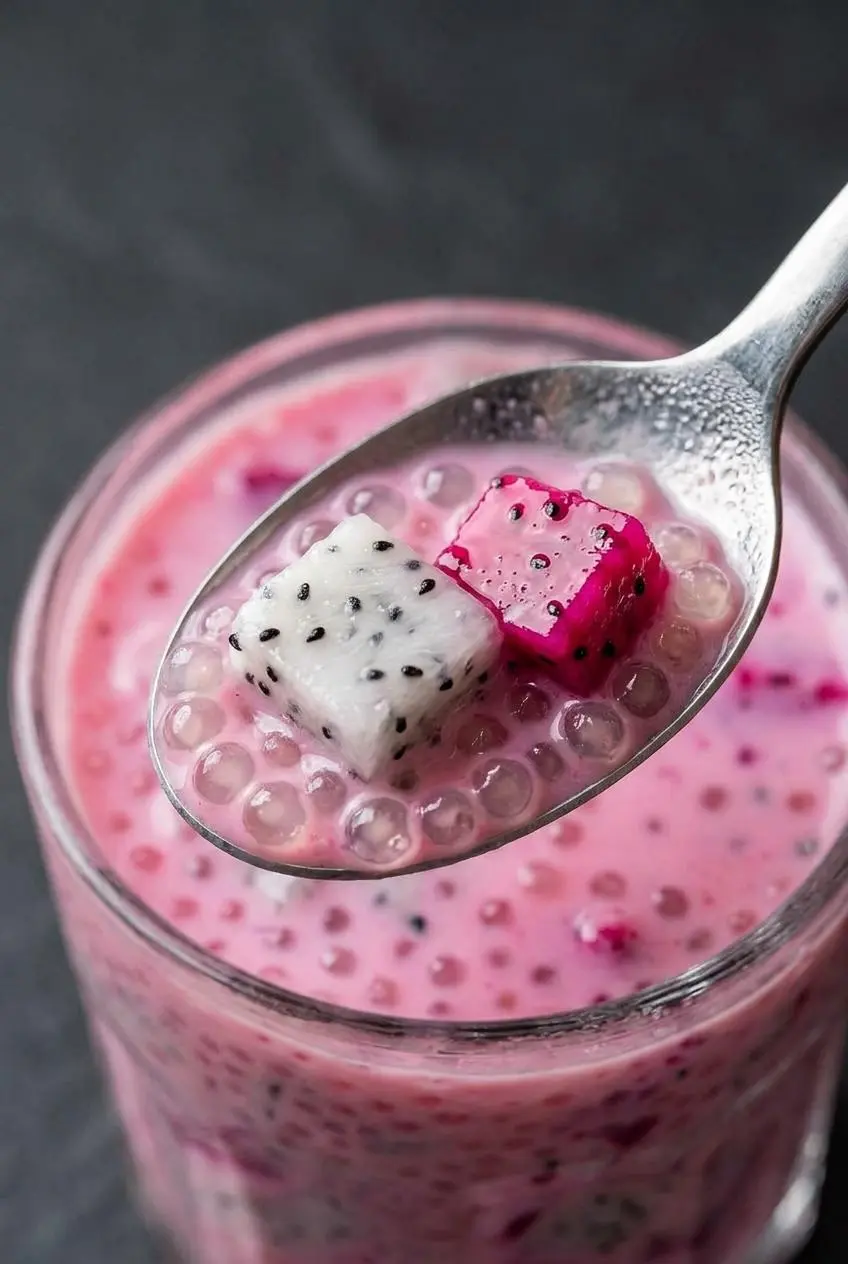
A few small choices make a big difference here, especially with sago. If the pearls are cooked well, the rest of the dessert is easy.
Start the sago in fully boiling water, not warm water. Stir during cooking so it does not settle and glue itself to the bottom of the pot.
Do not stop the cooking too early. A cooked pearl should be translucent and chewy, not opaque in the middle. That white center is the warning sign that it needs more time.
Rinse the drained sago under cold water right away. That step removes the extra surface starch that causes clumps.
Chill the finished dessert well before serving if you want the best flavor and texture. As it sits cold, the milk base tastes more blended and the sago thickens the mixture slightly.
If your dessert seems too loose, use less extra milk at serving time or let it chill longer. If it turns thicker than you want, stir in a splash of milk just before serving.
For the best fruit flavor, choose dragonfruit with bright skin and a slight softness when pressed. Dull, shriveled skin usually means the fruit is past its prime.
Sago Troubleshooting Guide
This is the part that trips people up most often, so here is the quick fix version.
| Problem | Likely Cause | How to Fix It |
|---|---|---|
| Clumpy sago | Too little water or not enough stirring during cooking | Cook in plenty of boiling water, stir often, then rinse well under cold water after draining. |
| Mushy sago | Cooked too long or left sitting hot for too long | Stop once the pearls are translucent and chewy, then drain promptly so they do not keep softening. |
| Hard white center | Undercooked pearls | Let the covered pearls steam until the center turns clear and glassy before draining. |
| Watery dessert | Too much liquid or not enough chilling time | Use a lighter hand with extra milk and chill until the sago has time to absorb some of the base. |
Variations and Customizations
This dessert is easy to change without losing its tropical feel. A little lime zest and a squeeze of lime juice can brighten the sweetness nicely, though it is best added lightly so it does not overpower the milk base.
Quick and Easy Version
If you want the shortcut route, use store-bought coconut jelly instead of making it from scratch. That trims the prep and still gives you the fun contrast of creamy milk, fruit, and chewy add-ins.
You can also keep the dragonfruit in chunks and skip the homemade dragonfruit jelly if you want a simpler bowl. The dessert will feel lighter and less structured, but still very refreshing.
Creamy Blended Pudding Version
For a thicker, pudding-like version, blend part of the pink dragonfruit into the milk base instead of leaving all of it in chunks. This gives you a smoother, creamier texture and a more even pink color throughout.
If you like an extra plush texture, blend in frozen dragonfruit with banana. That pushes the dessert toward tropical pudding rather than a drinky sago bowl.
If fruit-forward sago desserts are your thing, the Strawberry Sago recipe is another fun direction to try.
How to Make It Vegan
To make a vegan version, swap the dairy milk for coconut milk, oat milk, or another plant-based milk you enjoy drinking cold. Then replace the condensed milk with a vegan condensed milk alternative or sweeten to taste with maple syrup, agave, or sugar.
Coconut milk gives the richest tropical flavor, while oat milk keeps the base mild and creamy. If you already love coconut desserts, a tropical Coconut Cake fits the same flavor mood.
Milk & Sweetener Customization Options
These changes are optional, but they make it easier to steer the dessert toward lighter, richer, sweeter, or more tropical.
| Option | What Changes | Result |
|---|---|---|
| Whole milk | Use as the balancing milk | Clean dairy flavor with a lighter finish. |
| Coconut milk | Use in place of regular milk | Richer texture and a more tropical flavor. |
| Evaporated milk | Keep it in the mix | Creamier body without extra sweetness. |
| Condensed milk | Use as the main sweetener | Classic rich sweetness and silkier texture. |
| Maple syrup or agave | Use instead of condensed milk in a variation | Cleaner sweetness with a looser texture. |
Storage and Make-Ahead Guide
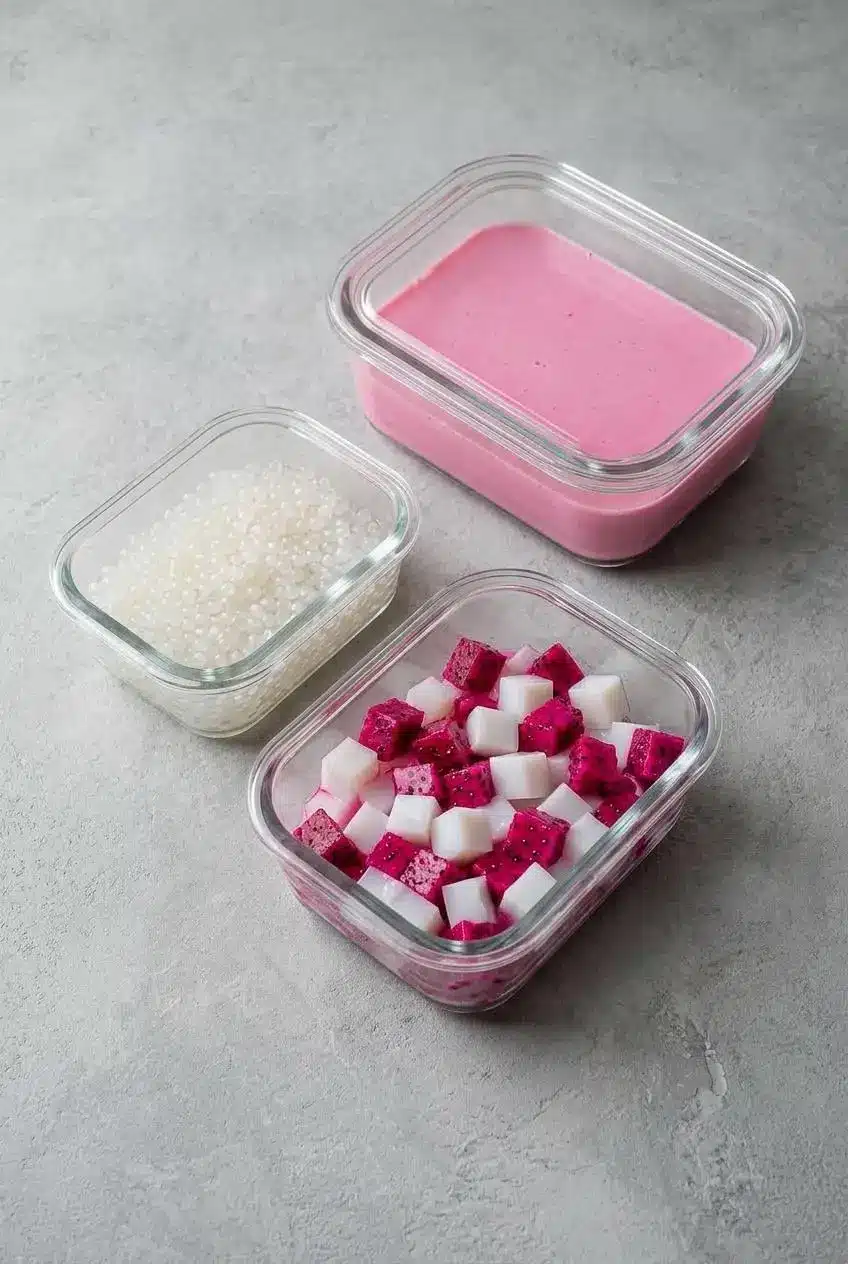
This dessert holds up best when the parts are stored separately. Keep the cooked sago, the jellies, and the milk base chilled in separate containers, then combine them shortly before serving so the pearls stay pleasantly chewy.
Once mixed, the sago keeps absorbing liquid, so the dessert naturally gets thicker and softer as it sits. If that happens, loosen it with a little milk right before serving.
Leftovers are best while the fruit still tastes fresh and the pearls still have some bounce. Store them covered in the refrigerator and keep them well chilled.
If you are making it for a party, assemble close to serving time for the best texture. That way the ice does not dilute the milk base and the popping boba stays lively.
Conclusion
Dragonfruit sago is one of those desserts that feels special without asking for complicated technique. It is creamy, cold, tropical, and full of texture in the best way.
The biggest trick is simple: cook the sago until fully translucent, then rinse it well so it stays chewy instead of clumpy. Once that part is done, the rest comes together easily.
Frequently Asked Questions (FAQ)
How can I prevent my sago pearls from clumping together?
Cook them in plenty of boiling water so the pearls can move freely. Stir during cooking, especially early on, to keep them from settling and sticking. Drain and rinse them under cold water right away to remove excess starch. You want separate, chewy pearls, not a sticky mass.
Can I make dragonfruit sago ahead of time for a party?
Yes, but it is smartest to keep the parts separate until close to serving. Store the cooked sago, jellies, and milk mixture in the refrigerator in separate containers. Mixing everything too early softens the pearls and can water down the texture. Assemble it cold, then serve right away for the best bowl.
What’s the difference between pink and white dragonfruit in this recipe?
Pink dragonfruit gives the dessert its bright color and usually a sweeter, more noticeable fruit flavor. White dragonfruit still works well, but the final dessert looks paler and tastes a bit milder. Using both can be a nice balance when you want vivid color with gentle fruit pieces. If appearance matters for serving, pink is the better pick.
How long does leftover dragonfruit sago last?
It is best while the fruit is fresh and the sago still has some chew. Keep leftovers in an airtight container in the refrigerator and serve them cold. Over time, the pearls absorb more liquid and soften, so the texture changes first. If needed, stir in a little milk before serving to loosen the mixture.
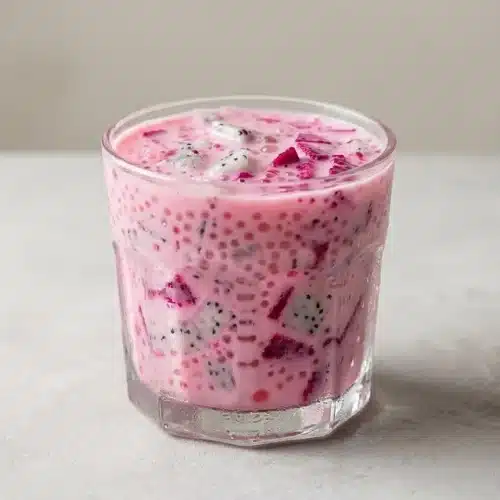
Dragonfruit Sago

Equipment
- Saucepan
- Heavy-bottomed pot
- Whisk
- large bowl
Ingredients
For the Dragonfruit Sago
- ¼ cup Sago
- ⅔ cup Condensed milk
- ½ cup Evaporated milk
- 1 cup Milk
- ⅔ cup White dragonfruit chopped
- 1 cup Pink dragonfruit chopped
- ¾ cup Popping boba
- 1 cup Ice cubes
For the Dragonfruit Jelly
- ½ cup Pink dragonfruit fresh or frozen
- ¼ cup Water
- ½ tsp Agar agar
For the Coconut Jelly
- ⅓ cup Coconut Milk
- ⅓ cup Coconut water
- ½ tsp agar agar
Instructions
To Make the Coconut Jelly
- Combine the coconut milk and coconut water in a saucepan and bring the mixture to a boil. Once it is hot, whisk in the agar agar until smooth and keep it at a boil briefly so the powder fully dissolves.
- Pour the mixture into a bowl and leave it to cool until firm enough to cut. The jelly should feel set and springy rather than liquid in the center.
- Cut the set jelly into small pieces for serving. Smaller cubes are easier to scoop and spread more evenly through the dessert.
To Make the Dragonfruit Jelly
- Place the pink dragonfruit and ¼ cup Water in a saucepan and simmer for a couple of minutes. The fruit should soften enough to mash easily and release its bright color.
- Lightly crush the fruit pieces, then add the Agar agar and bring the mixture to a boil. Boiling helps the agar activate so the jelly will set cleanly later.
- Transfer the mixture to a bowl and let it cool until firm. When set, it should slice into tidy cubes instead of smearing.
- Cut the dragonfruit jelly into cubes of your preferred size. Try to keep them bite-sized so they mix well with the pearls and fruit.
To Cook the Sago
- Bring 3 to 4 cups water to a boil in a heavy-bottomed pot, then add the sago. Use plenty of water so the pearls can move freely and do not stick together right away.
- Cook the sago for 12 to 14 min, stirring often as it simmers. You want the pearls to swell and turn mostly translucent rather than clump on the bottom.
- Turn off the heat, cover the pot, and let the sago finish in the trapped steam for 10 min. The pearls are ready when they look glassy and translucent with no white dot in the center.
- Drain the sago and rinse it under cold water before setting it aside. This washes away excess starch so the pearls stay separate and pleasantly chewy instead of sticky.
To Assemble and Serve
- Add the coconut jelly, dragonfruit jelly, chopped dragonfruit, cooked sago, popping boba, and ice cubes to a large bowl. Distributing the solids first makes it easier to mix without crushing the fruit.
- Pour in the Milk, Evaporated milk, and Condensed milk, then stir until everything is evenly combined. The mixture should look creamy and lightly pink, with the pearls suspended rather than packed together.
- Spoon into serving bowls and serve chilled. After chilling, the flavors meld and the sago absorbs some liquid, so the dessert tastes sweeter and thicker.