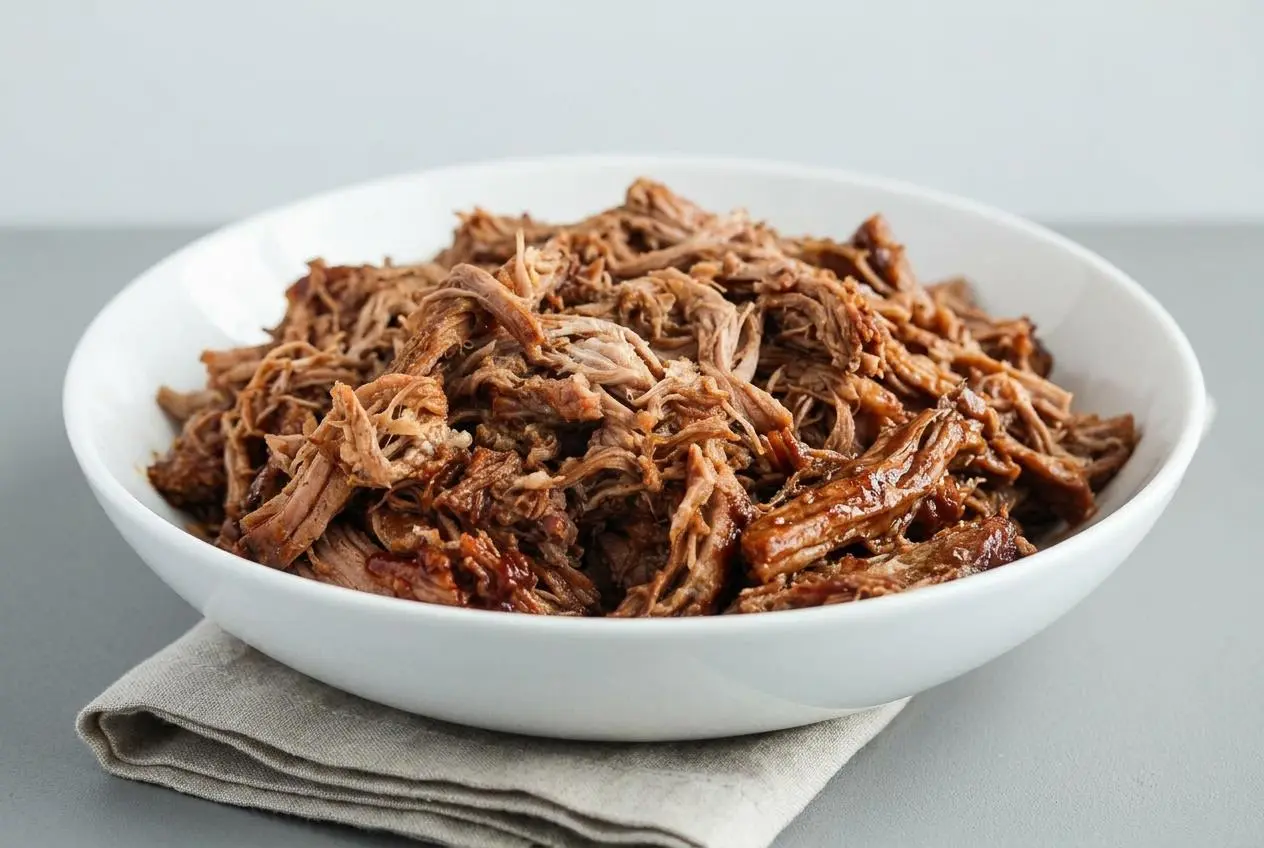
For tender pulled pork, season a pork shoulder with a balanced rub, cook it low and slow, and wait until the center reaches 195°F to 205°F so it pulls apart easily.
Crock Pot Pulled Pork turns a well-marbled shoulder roast into smoky, sweet, savory shreds with very little hands-on work. The brown sugar and paprika form a dark amber crust while garlic flavors the meat from the inside.
As it cooks, the sharp Worcestershire aroma softens into something richer and deeper. The pan juices are worth saving.
Place the thermometer probe in the thickest part of the roast and keep it away from any bone for the clearest reading.
Best Cuts of Pork for Slow Cooking
The right cut makes the difference between silky, pull-apart pork and dry, stringy meat. Choose pork shoulder or another well-marbled roast with enough connective tissue to soften during a long, gentle cook.
As the roast cooks, its collagen gradually loosens into gelatin, giving the shredded pork a moist, rich texture. Lean cuts such as pork loin can cook through, but they do not have the same fat and connective tissue to protect them during extended slow cooking.
Boston Butt vs Pork Shoulder Picnic
Boston butt and picnic roast both come from the shoulder, and either can work well in a slow cooker.
- Boston butt: Usually the easiest choice for pulled pork because it has even marbling, a compact shape, and a tender finished texture.
- Picnic roast: Often includes more bone, skin, and exterior fat. It delivers great flavor but may take more trimming after cooking.
- Bone-in or boneless: Both work. A bone-in roast adds another doneness cue because the bone should lift out easily once the meat is tender.
Trimming and Prepping the Meat
Leave some surface fat for flavor, but trim away thick, hard sections of the fat cap before seasoning. Aim for a thin layer, roughly 1/4 inch, so the roast stays lush without leaving the finished pork overly greasy.
Pat the roast dry before applying the rub. A dry surface helps the seasonings cling, and the brown sugar and paprika can develop a deeper color as the pork cooks.
Essential Ingredients and Flavor Base
Every ingredient contributes to the pork’s savory depth, smoky color, caramelized edges, aromatic garlic pockets, and balanced barbecue finish.
- 4lb Shoulder Pork Roast
- 1/4 cup Worcestershire Sauce
- 4 large cloves Garlic
- 2 teaspoons Paprika
- 1/3 cup Brown Sugar
- 2 teaspoons Coarse Kosher Salt
- 1/2 teaspoon Black Pepper
- 1 cup your favorite BBQ Sauce
Brown sugar rounds out the salt and creates a dark, lightly caramelized exterior. Paprika adds warm color and a gentle smoky character, while black pepper keeps the sweetness from taking over. Kosher salt seasons the meat throughout the long cook.
Worcestershire sauce brings a savory, tangy depth that works especially well with rich pork shoulder. The garlic is cut into slivers and tucked into the roast, so its flavor reaches beyond the surface instead of sitting only in the rub.
No water or broth is needed here. Pork shoulder releases its own juices and rendered fat beneath the closed slow cooker lid, creating a flavorful cooking liquid as it softens.
I like pressing the garlic slivers well into the cuts so every forkful gets a little of that mellow, slow-cooked garlic flavor.
How to Make Crock Pot Pulled Pork
Cooking on low gives the shoulder more time to relax and become tender. The clock is useful, but the meat thermometer and the feel of the roast are the final judges.
- Combine the paprika, brown sugar, kosher salt, and black pepper in a small bowl, stirring with a fork until the color is even.
The rub should look like a loose, reddish-brown seasoning blend with no clumps of brown sugar. - Cut the garlic into 8 to 10 slivers, make small openings across the pork, and push the garlic into the meat before coating the roast with the rub.
The surface should be thoroughly seasoned, with the garlic tucked below the exterior rather than left exposed. - Set the seasoned roast in the Crock Pot and pour the Worcestershire sauce over the top.
The sauce will collect around the pork and begin building a savory cooking liquid as the roast warms. - Cook on low for 5 to 6 hours, using the low setting when tenderness is the priority, or cook on high for 3 to 4 hours when needed.
Near the end, the exterior should be deep amber and the aroma should shift from sharp and vinegary to mellow and savory. - For an Instant Pot option, cook the prepared pork at high pressure for 120 minutes.
Check the thickest portion after cooking because tenderness depends on the roast’s shape and marbling. - Check the internal temperature with a meat thermometer and continue cooking if the pork has not reached 195°F to 205°F.
At this stage, the probe should slide in with very little resistance and the meat should yield easily when pressed. - For a slow cooker roast that is still firm, continue cooking in 30-minute intervals; for pressure-cooked pork, use 10-minute intervals.
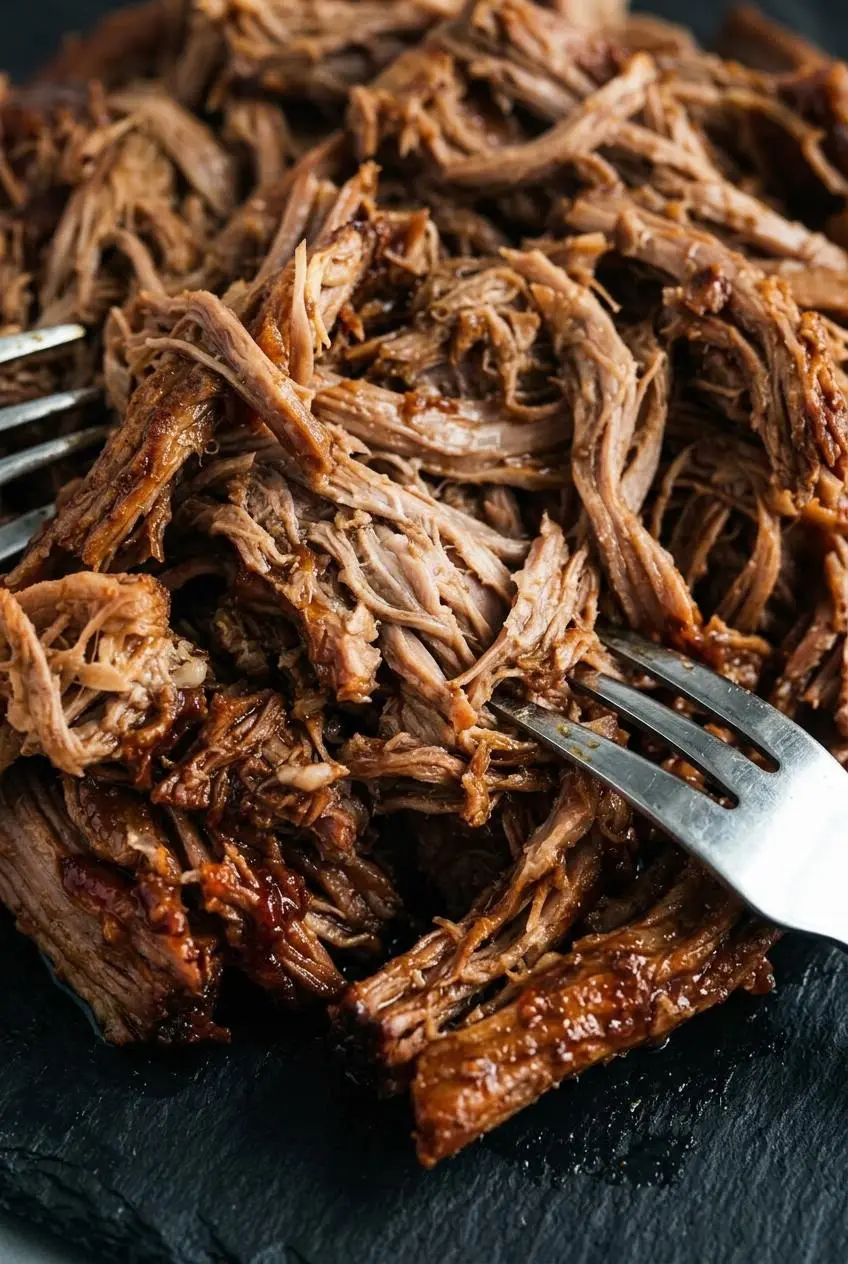
The roast is ready to shred when two forks separate the meat without tugging or springing back. - Remove any bone and visible pieces of fat, shred the pork with two forks, then stir in the barbecue sauce.
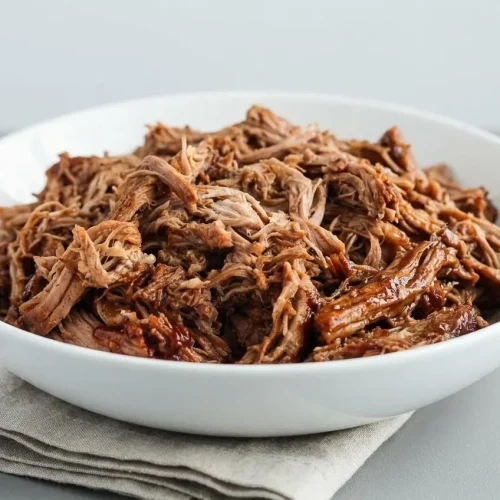
The finished meat should be coated and juicy, with distinct tender strands rather than large chewy chunks.
Expert Tips and Troubleshooting
Most pulled pork problems come down to temperature, patience, or how the cooking juices are handled. These fixes keep the final pile of pork moist and full of flavor.
- The pork is tough: Toughness usually means the connective tissue has not softened enough. Keep the roast on low in 30-minute intervals, then test again with a fork and thermometer.
- The pork seems dry: Shred only when the meat is fully tender, then toss it with barbecue sauce and some defatted cooking juices. Sauce alone can cover dryness, but the pork juices bring deeper flavor.
- The pork is greasy: Strain the liquid from the slow cooker, let the fat rise, and skim it away. Simmer the remaining broth briefly if it tastes thin, then stir a little back into the shredded meat.
- The meat shreds unevenly: Rest the roast for 20 minutes before pulling it apart. This gives the juices time to settle instead of running out onto the cutting board.
- The flavor tastes flat: Mix the barbecue sauce through the warm pork rather than spooning it only on top. The hot strands absorb the sweet, smoky sauce more evenly.
If the cooking liquid is very fatty, chill it until the fat firms up, then lift it away before returning the flavorful juices to the pork. Do not pour all of that rendered fat back in. A little concentrated broth goes much further than a greasy flood.
Flavorful Variations and Liquid Options
Keep the main method as written, then use one of these optional directions when you want a different barbecue personality. Each changes the finish without replacing the pork shoulder’s slow-cooked richness.
Tangy Carolina Vinegar Style
For a brighter, sharper finish, use apple cider vinegar, yellow mustard, and crushed red pepper flakes in place of a sweeter barbecue-forward finish. Add them as an optional serving sauce or toss them with a portion of the cooked pork, not the entire batch, so everyone can choose their preferred level of tang.
If citrusy, Mexican-style shredded pork sounds better for another meal, try slow cooker pork carnitas for a different take on slow-cooked shoulder.
Sweet Soda Braised Pork
For a sweeter profile, add a splash of cola or root beer as an optional braising liquid. The soda brings caramel-like sweetness that pairs well with a bolder barbecue sauce, though it will make the final flavor noticeably sweeter than the standard version.
Use this option sparingly and keep the sauce balance in mind. Pork shoulder already creates plenty of liquid, so the soda should enhance the flavor rather than turn the pot into soup.
Serving Suggestions and Crowd Planning
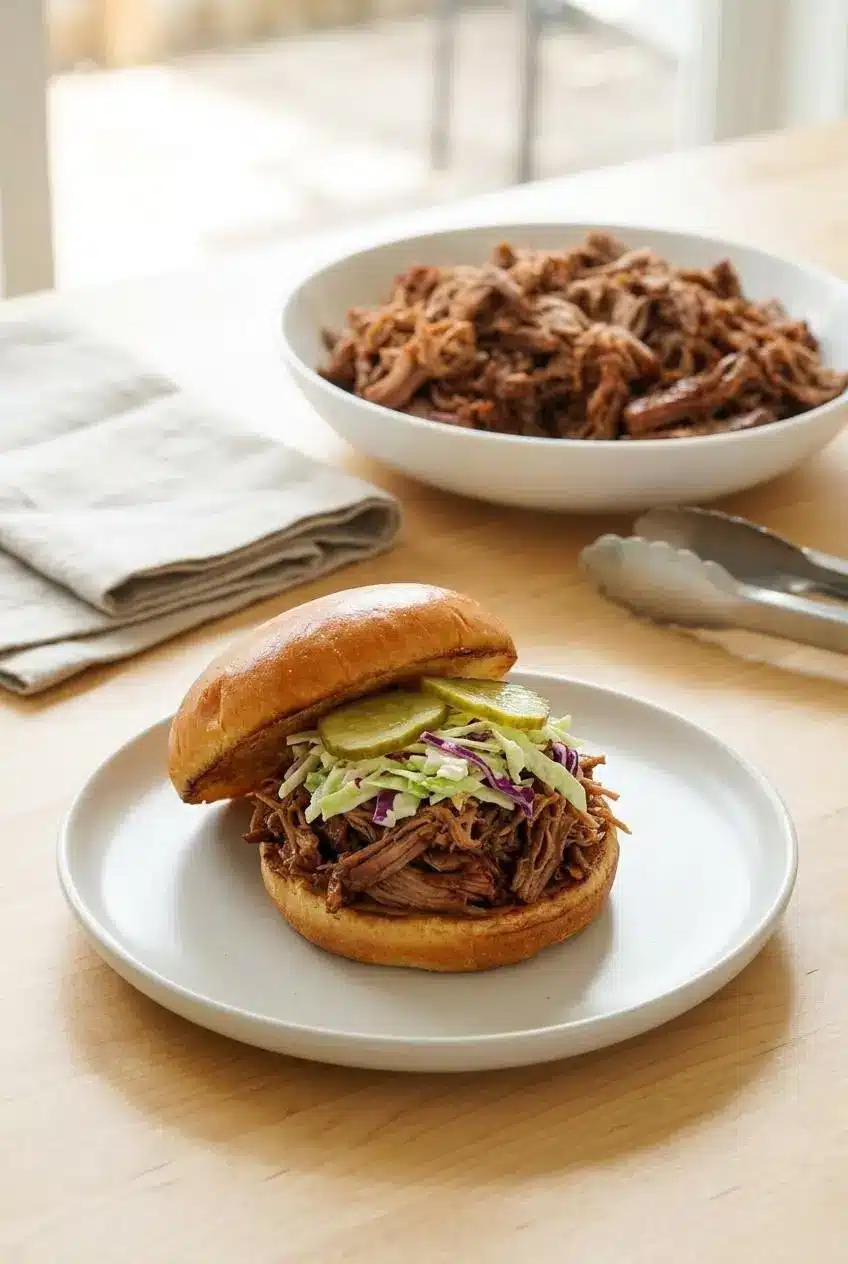
Pulled pork works equally well for a casual weeknight meal or a full backyard spread. Plan on roughly one-third to one-half pound of cooked pork per person, depending on the sides and whether you are serving sandwiches or a build-your-own meal.
- Pile it onto toasted brioche buns with crisp coleslaw and dill pickles for the classic sweet, tangy, crunchy combination.
- Spoon it over baked sweet potatoes or regular baked potatoes, letting the warm pork and barbecue sauce take the place of a heavy topping.
- Use it for nachos with barbecue sauce drizzled over the top, adding your preferred toppings just before serving.
- Set out warm corn tortillas for an easy taco-style spread with slaw, pickles, and sauce on the side.
For a game-day table, serve the pork alongside crockpot jalapeno corn dip. The creamy, spicy dip gives the spread contrast without competing with the smoky pork.
Storage, Freezing, and Reheating
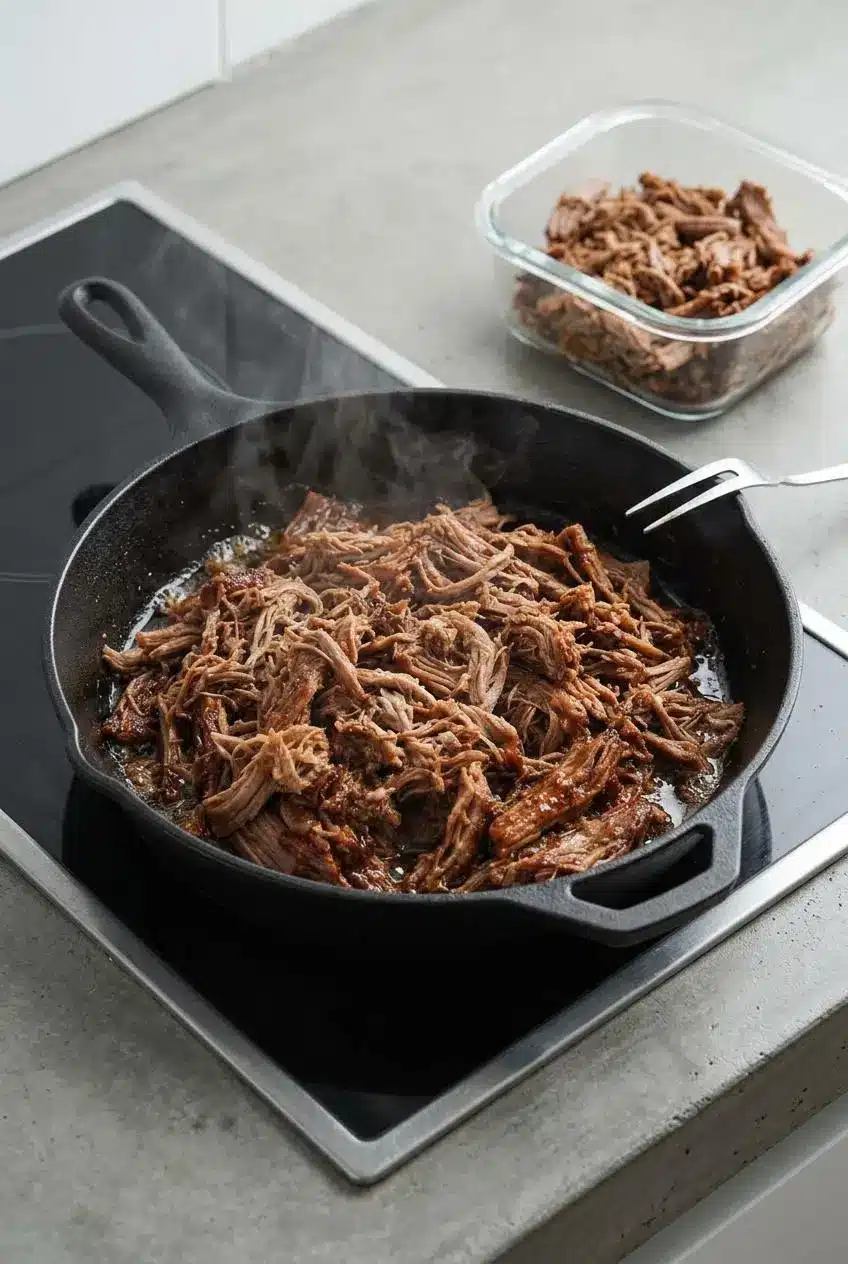
Cool the pork promptly, then keep it in an airtight container with a spoonful of defatted cooking juices so the shreds stay moist. Store the barbecue sauce mixed in or keep extra sauce separate if you want more control over the flavor when reheating.
For freezing, divide the pork into meal-size portions and seal it in freezer-safe bags or containers with a little defatted juice. Press excess air from bags before sealing to protect the texture and prevent the meat from drying out.
Reheat pork gently in a skillet over medium-low heat with a small amount of its juices. Add a touch of butter or oil if the skillet looks dry, cover for a few minutes to warm the center, then uncover at the end if you want lightly crisp edges. Avoid blasting cold pork in the microwave without moisture, which can make the strands rubbery.
Conclusion
Slow cooking turns a marbled pork shoulder into tender, smoky shreds, while the brown sugar rub, garlic, Worcestershire sauce, and barbecue sauce build bold flavor in every bite.
Cook low when possible, trust the thermometer and fork test, and save those defatted pan juices for the finish. A juicy pulled pork sandwich is never far away.
Frequently Asked Questions
Does Pulled Pork in a Slow Cooker Need Extra Liquid?
No. Pork shoulder releases natural juices and rendered fat as it cooks under the lid, so the Worcestershire sauce is enough to start the braise. Adding water or broth can dilute the pork flavor. If the pot seems dry early on, keep the lid closed and give the roast time to release its juices.
How Do You Know When Crock Pot Pulled Pork Is Done?
Check the thickest part of the roast with a meat thermometer. For easy shredding, aim for 195°F to 205°F. The fork test matters too. Two forks should pull the meat apart with almost no resistance, and a bone-in roast should release its bone easily.
Why Is My Slow Cooker Pulled Pork Tough After Cooking?
Tough pork usually needs more time. The connective tissue has not softened enough yet, so keep it cooking on low and check again after another 30 minutes. Do not shred it forcefully while it is still firm. Once the roast reaches its tender stage, the strands will separate cleanly instead of tearing into chewy chunks.
Can You Freeze Cooked Shredded Pulled Pork?
Yes. Pack cooled pulled pork in airtight freezer-safe bags or containers with a little defatted cooking juice to help preserve moisture. Freeze in portions that suit your household, then reheat gently in a covered skillet with the juices until hot and tender.
Crock Pot Pulled Pork

Equipment
- OXO Good Grips 9-Inch Tongs with Silicone Heads, Black
- Crock-Pot SCCPVL610-S-A 6-Quart Cook & Carry Programmable Slow Cooker with Digital Timer, Stainless Steel
- Instant Pot Duo Nova Pressure Cooker 7 in 1, 6 Qt, Best for Beginners
Ingredients
- 4 lb Shoulder Pork Roast
- 1/4 cup Worcestershire Sauce
- 4 large cloves Garlic
- 2 teaspoons Paprika
- 1/3 cup Brown Sugar
- 2 teaspoons Coarse Kosher Salt
- 1/2 teaspoon Black Pepper
- 1 cup your favorite BBQ Sauce
Instructions
- Combine the paprika, brown sugar, kosher salt, and black pepper in a small bowl, stirring with a fork until the color is even. The rub should look like a loose, reddish-brown seasoning blend with no clumps of brown sugar.
- Cut the garlic into 8 to 10 slivers, make small openings across the pork, and push the garlic into the meat before coating the roast with the rub. The surface should be thoroughly seasoned, with the garlic tucked below the exterior rather than left exposed.
- Set the seasoned roast in the Crock Pot and pour the Worcestershire sauce over the top. The sauce will collect around the pork and begin building a savory cooking liquid as the roast warms.
- Cook on low for 5 to 6 hours, using the low setting when tenderness is the priority, or cook on high for 3 to 4 hours when needed. Near the end, the exterior should be deep amber and the aroma should shift from sharp and vinegary to mellow and savory.
- For an Instant Pot option, cook the prepared pork at high pressure for 120 minutes. Check the thickest portion after cooking because tenderness depends on the roast’s shape and marbling.
- Check the internal temperature with a meat thermometer and continue cooking if the pork has not reached 195°F to 205°F. At this stage, the probe should slide in with very little resistance and the meat should yield easily when pressed.
- For a slow cooker roast that is still firm, continue cooking in 30-minute intervals; for pressure-cooked pork, use 10-minute intervals. The roast is ready to shred when two forks separate the meat without tugging or springing back.
- Remove any bone and visible pieces of fat, shred the pork with two forks, then stir in the barbecue sauce. The finished meat should be coated and juicy, with distinct tender strands rather than large chewy chunks.