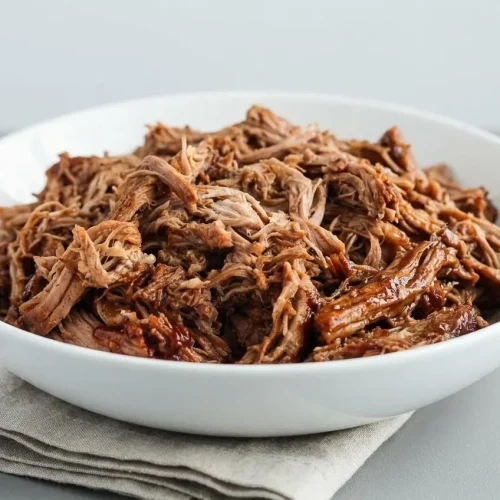
Crock Pot Pulled Pork

Tender slow-cooked pork shoulder seasoned with a smoky brown sugar rub, stuffed with garlic slivers, and shredded into rich barbecue sauce for flavorful sandwiches.
Equipment
- OXO Good Grips 9-Inch Tongs with Silicone Heads, Black
- Crock-Pot SCCPVL610-S-A 6-Quart Cook & Carry Programmable Slow Cooker with Digital Timer, Stainless Steel
- Instant Pot Duo Nova Pressure Cooker 7 in 1, 6 Qt, Best for Beginners
Ingredients
- 4 lb Shoulder Pork Roast
- 1/4 cup Worcestershire Sauce
- 4 large cloves Garlic
- 2 teaspoons Paprika
- 1/3 cup Brown Sugar
- 2 teaspoons Coarse Kosher Salt
- 1/2 teaspoon Black Pepper
- 1 cup your favorite BBQ Sauce
Instructions
- Combine the paprika, brown sugar, kosher salt, and black pepper in a small bowl, stirring with a fork until the color is even. The rub should look like a loose, reddish-brown seasoning blend with no clumps of brown sugar.
- Cut the garlic into 8 to 10 slivers, make small openings across the pork, and push the garlic into the meat before coating the roast with the rub. The surface should be thoroughly seasoned, with the garlic tucked below the exterior rather than left exposed.
- Set the seasoned roast in the Crock Pot and pour the Worcestershire sauce over the top. The sauce will collect around the pork and begin building a savory cooking liquid as the roast warms.
- Cook on low for 5 to 6 hours, using the low setting when tenderness is the priority, or cook on high for 3 to 4 hours when needed. Near the end, the exterior should be deep amber and the aroma should shift from sharp and vinegary to mellow and savory.
- For an Instant Pot option, cook the prepared pork at high pressure for 120 minutes. Check the thickest portion after cooking because tenderness depends on the roast’s shape and marbling.
- Check the internal temperature with a meat thermometer and continue cooking if the pork has not reached 195°F to 205°F. At this stage, the probe should slide in with very little resistance and the meat should yield easily when pressed.
- For a slow cooker roast that is still firm, continue cooking in 30-minute intervals; for pressure-cooked pork, use 10-minute intervals. The roast is ready to shred when two forks separate the meat without tugging or springing back.
- Remove any bone and visible pieces of fat, shred the pork with two forks, then stir in the barbecue sauce. The finished meat should be coated and juicy, with distinct tender strands rather than large chewy chunks.
Notes
Doneness cue: Insert a meat thermometer into the thickest part away from bone. Aim for 195°F to 205°F, where collagen breaks down and the meat yields effortlessly to forks.
Resting tip: Let the roast rest for 20 minutes before pulling so the natural juices settle back into the meat rather than running out.
Cooking juices: Strain the slow cooker liquid, skim off excess surface fat, and stir a splash of the remaining savory broth into the shredded pork for extra moisture.
Storage and reheating: Store leftover pork in an airtight container with a spoonful of defatted juices. Reheat gently in a covered skillet over medium-low heat with a little juice to prevent the meat from drying out.
Nutrition information is an estimate based on common ingredients and serving sizes. Values may vary depending on brands, portions, and substitutions.