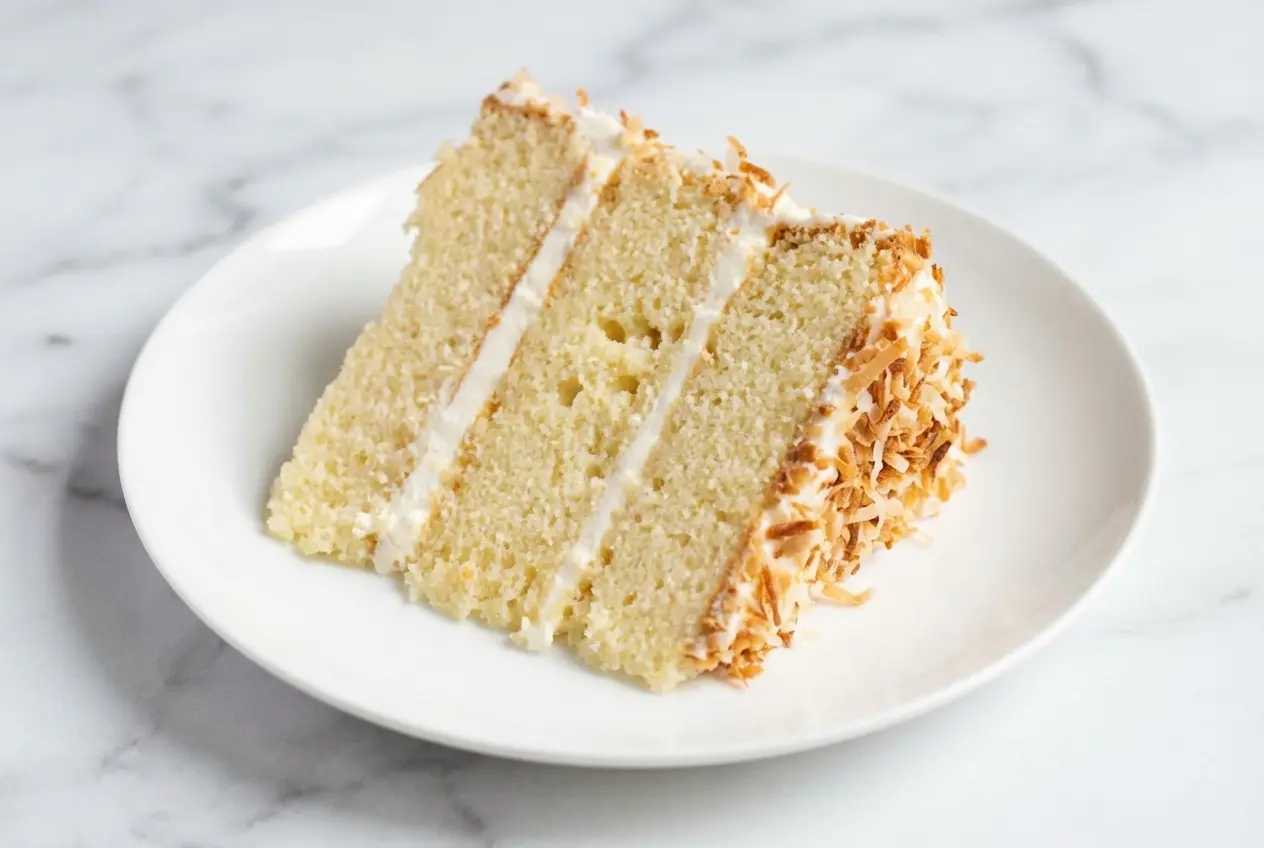
Some cakes belong to birthdays, church suppers, and big family Sundays, and Coconut Cake has always been one of them in my kitchen. When I want a layer cake that feels bakery-worthy but still deeply homemade, this is the one I pull out, because it bakes up velvety, plush, tropical, sweet, and nutty from the very first slice.
What makes this version special is not just the cream cheese frosting or the cloud of toasted coconut on the outside. It is the extra technique, a toasted coconut milk infusion and a light syrup soak, that gives the cake layers deeper flavor and a tender crumb that stays moist far beyond what you get from a standard mix.
Why You’ll Love This Recipe
Big coconut flavor: I learned the hard way that plain canned coconut milk can taste a little shy once it goes into the oven. Steeping toasted coconut in the warm milk coaxes out those rich coconut oils, so the batter tastes fuller and more natural.
Moisture that lasts: A light coconut simple syrup brushed over the warm cake layers locks in softness without making the cake heavy. Even after chilling, the crumb stays exceptionally tender and never turns stodgy.
Bakery-style texture: The reverse creaming method gives this Coconut Cake a fine, even crumb that feels polished and reliable. Paired with sour cream and full-fat coconut milk, it creates that soft, plush bite every layer cake should have.
A celebration cake that behaves: This recipe is rich and showy, but it is also practical. The cake layers stack beautifully, the cream cheese frosting spreads like a dream, and the toasted coconut makes every slice look like it came from a favorite Southern bakery case.
Ingredients and Substitutions
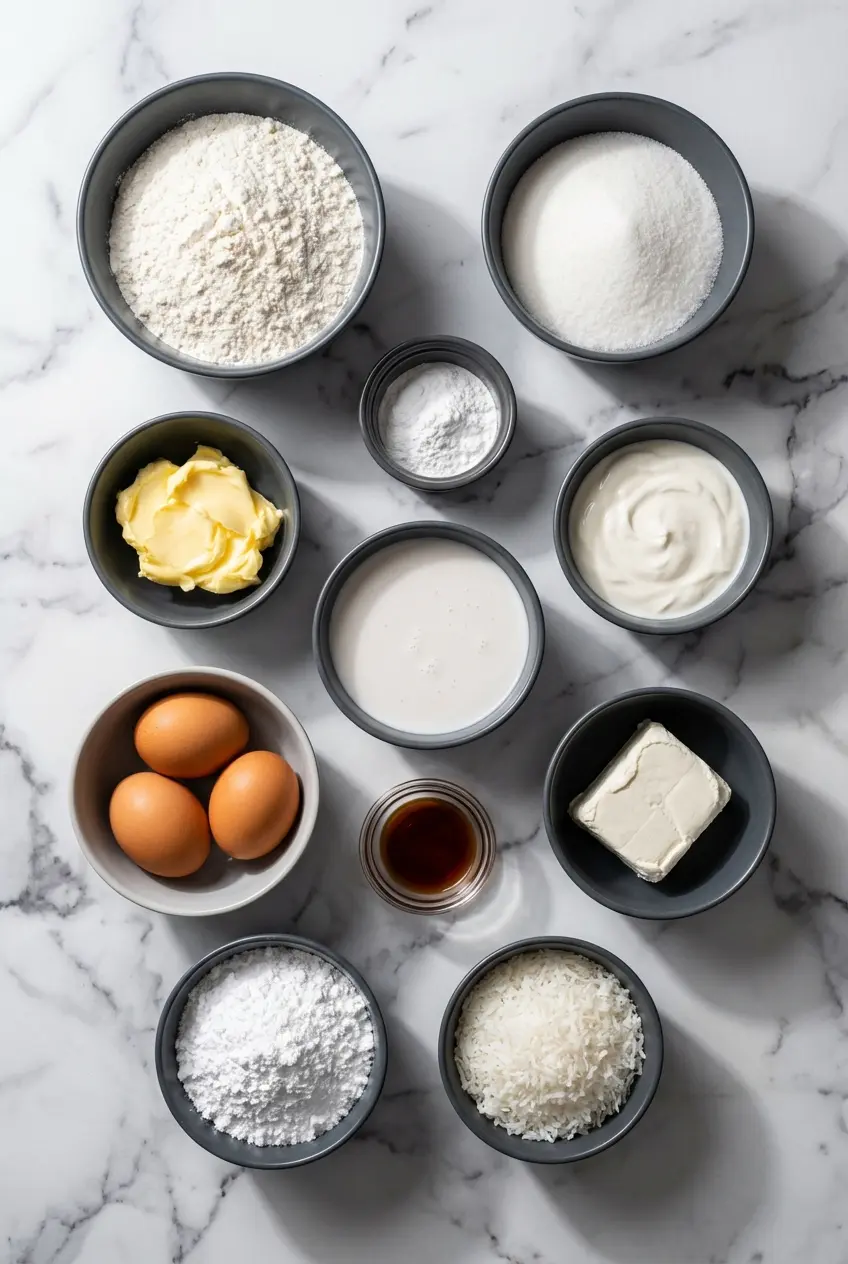
Each ingredient here has a job, from building a soft, stable crumb to creating a frosting that is tangy, light, and easy to spread.
Ingredients
For the cake:
- 3 3/4 cups all-purpose flour 450g
- 2 1/4 cups sugar 450g
- 3 1/4 tsp baking powder
- 1 tsp kosher salt
- 3/4 cup unsalted butter, softened to room temperature 170g
- 1 cup + 2 tbsp sour cream, at room temperature 254g
- 3/4 cup full fat coconut milk, at room temperature or warmed 170g
- 6 tbsp neutral oil (canola, vegetable, coconut, grapeseed, etc. will all work) 75g
- 3 large eggs, at room temperature 150g
- 1 tbsp vanilla extract
For the frosting:
- 8 oz cream cheese, softened slightly 226g
- 1/2 cup butter, softened to room temperature 113g
- 3.5-4 cups powdered sugar 340-454g
- 2 tbsp sour cream 28g
- 2 tbsp coconut milk 28g
- 1/2 tsp vanilla extract
- 1/4 tsp kosher salt
For topping:
- 2 cups sweetened shredded coconut 170g
Ingredient Notes & Substitutions
Butter and neutral oil: This is one of my favorite cake tricks. Room temperature butter brings the classic rich flavor you expect in a layer cake, while neutral oil coats the flour proteins and helps keep the crumb softer and moister, especially after the cake has been refrigerated.
Full-fat coconut milk: Use canned full-fat coconut milk, not the kind sold in cartons for drinking. The higher fat content gives this Coconut Cake the richness and tenderness it needs, and it also carries the toasted coconut infusion much better.
Sweetened shredded coconut: For a snowy, extra-moist finish, thawed fresh frozen coconut can stand in for pantry shreds on the outside of the cake. If you love a little crunch and a deeper nutty note, toasted sweetened shredded coconut is still my go-to choice.
Vanilla extract: Vanilla rounds out the coconut beautifully, and a tiny splash of almond extract alongside it can deepen the flavor profile in a lovely old-fashioned way. Keep it subtle so the cake still reads as coconut first.
Sour cream: Sour cream is what gives this sour cream cake style crumb its tenderness and gentle richness. Full-fat works best here because it adds body and helps the batter stay smooth and stable.
How to Make Coconut Cake
Prep the pans and build the coconut base
- Heat your oven to 350 F, then grease and line 3 8-inch cake pans with parchment so the layers release cleanly later. Before you start mixing, warm the 3/4 cup full fat coconut milk if needed, toast a small handful of the shredded coconut, and let that toasted coconut steep in the warm milk for 10 to 15 minutes. Strain it out before using the milk, the liquid will pick up a deeper, toastier coconut aroma.
- Set a stand mixer with the paddle attachment in place and add the flour, sugar, baking powder, and kosher salt to the bowl. Give them a quick mix on low so everything is evenly distributed before the fat goes in.
- With the mixer still on low, add the softened unsalted butter 1 tablespoon at a time. Keep mixing for at least 1 full minute, until the mixture looks sandy with tiny butter bits throughout, almost like damp beach sand or fine wet gravel, which tells you the flour has been coated properly for the reverse creaming method.
Mix the batter and bake the layers
- In a large measuring cup or medium bowl, whisk together the sour cream, the strained infused coconut milk, neutral oil, eggs, and vanilla extract until the mixture is smooth and creamy. If the coconut milk looks separated from the can, a quick 30 seconds in the microwave helps it loosen, and if your sour cream is still cold, whisk it with the coconut milk first and warm it for 30 seconds so the mixture blends without lumps.
- Slowly pour the wet mixture into the dry ingredients with the mixer running on low. Once everything comes together, raise the speed to medium and beat for 1 minute, just until the batter turns smooth, silky, and thick enough to ribbon softly off the paddle.
- Divide the batter evenly between the prepared pans, about 565g per layer, and bake for 30 minutes. The cakes are ready when the kitchen smells buttery and fragrant, the edges are lightly golden, and the centers spring back when you press them gently with a fingertip.
- Once the layers are out of the oven and have cooled slightly, brush the tops with a light simple syrup made from equal parts sugar and water, boiled with a splash of coconut extract or coconut rum. This extra step is simple, but it seals in moisture and gives every bite a more pronounced coconut finish.
Toast the coconut and whip the frosting
- Keep the oven at 350 F and spread the remaining sweetened shredded coconut over a baking sheet in an even layer. Toast it for 20 minutes, stirring every 5 minutes, until it turns light golden and smells sweet and nutty, watching closely toward the end so it does not brown too far.
- For the frosting, beat the cream cheese and softened butter in the bowl of the stand mixer on low speed for about 1 minute, just until combined and smooth. You want it creamy and unified, not overly whipped at this point.
- Add 3 cups powdered sugar gradually, about 1/2 cup at a time, mixing on low after each addition so the sugar disappears neatly into the bowl. Add the sour cream, coconut milk, vanilla extract, and kosher salt, then beat on medium speed for about 3 minutes until the frosting looks pale, fluffy, and spreadable. If it seems looser than you prefer, blend in the remaining 1/2 to 1 cup powdered sugar.
Assemble and finish
Once the cake layers are completely cool, spread the cream cheese frosting between the layers and over the outside of the cake. Press the toasted shredded coconut onto the top and sides with your hands, patting gently as you go, a little mess on the counter is part of the ritual with a proper coconut layer cake.
Secrets for Perfection
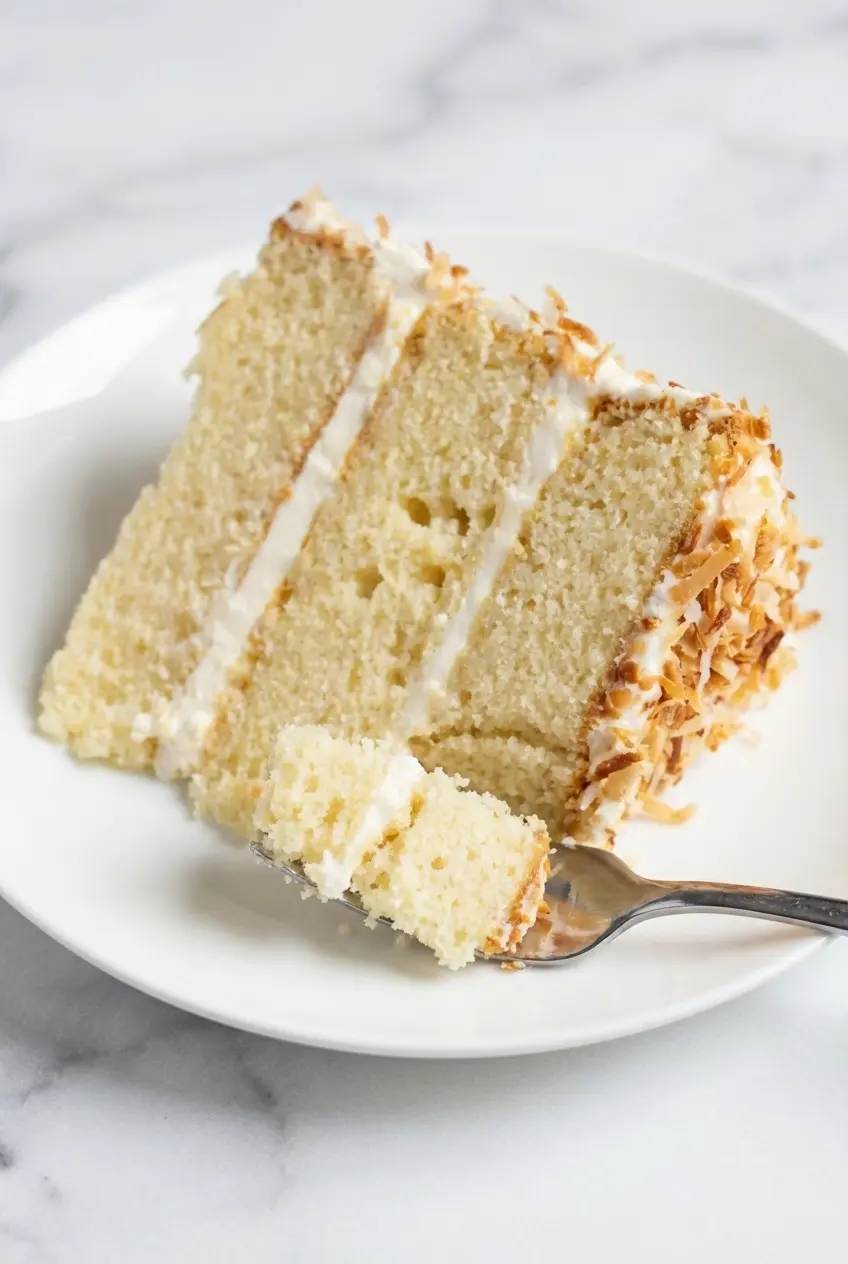
The reverse creaming method is the heart of this cake’s texture. When bakers say the mixture should look sandy, think of wet gravel or damp cornmeal with tiny soft butter pebbles throughout, not a smooth paste and not loose flour, because that visual cue tells you the fat has coated the flour well enough to keep the crumb fine and tender.
Room temperature ingredients matter more here than many people realize. Cold sour cream or eggs can cause the batter to look curdled or split, which makes it harder to build a smooth structure, and this is true in almost any sour cream cake where tenderness depends on an even, silky batter from the start.
If your cake layers dome in the oven, let them cool fully before leveling. Set one hand lightly on top of the cake, use a long serrated knife, and saw gently in a slow circle while keeping the blade parallel to the counter, trimming only the raised cap so each layer sits flat and stacks without sliding.
For the neatest finish, chill or even freeze the layers briefly before frosting. Firmer cake layers shed fewer crumbs, hold their shape better, and make the whole assembly process feel far less fussy.
The Science of Coconut Ingredients in Baking
Not all coconut products behave the same way in batter, and this is where many coconut desserts go sideways. Canned full-fat coconut milk contains a balanced mix of coconut fat and liquid that enriches the crumb, while coconut cream is thicker and richer because it contains less water and more fat, and cream of coconut is a sweetened product meant more for drinks and desserts than for replacing coconut milk one-for-one in cake.
For this recipe, full-fat canned coconut milk hits the sweet spot. It gives the cake enough fat for richness without throwing off the moisture balance, while cream of coconut would make the batter too sweet and sticky, and coconut cream could make it overly heavy if swapped carelessly.
Carton coconut milk is a different product entirely, and I do not recommend it here. It has far more water and much less fat, so instead of a plush Coconut Cake with a tender crumb, you are far more likely to end up with layers that bake up dry, flat, and less flavorful.
Pro Tips & Troubleshooting
Pro Tips
- Freeze the baked cake layers for at least 30 minutes before applying the crumb coat. This firms up the crumb, helps the frosting glide on cleanly, and keeps the cake layers from tearing.
- If you want a bright, tangy contrast to all that creamy coconut flavor, spread lemon curd or mango curd between the layers. The flavor plays beautifully with tropical desserts, much like a good coconut dream cake that leans into fruit-forward filling.
- For an Almond Joy style variation, drizzle a layer of chocolate ganache between the cakes and finish the top with slivered almonds along with the toasted coconut.
- A small dash of almond extract with the vanilla can deepen the flavor without shouting over the coconut. Start small, because a little goes a long way.
Common Mistakes to Avoid
- Overmixing once the wet ingredients go in. After the batter is fully combined and mixed on medium for 1 minute, stop, because extra mixing develops gluten and can make the cake dense and tough.
- Using carton coconut milk instead of canned full-fat coconut milk. The lower fat content simply does not give the same moist, rich result.
- Mixing with cold dairy. Chilly sour cream or butter can create a lumpy batter or uneven frosting texture.
- Frosting the cake while the layers are still warm. Cream cheese frosting will soften fast, and the layers can start slipping before you even get the coconut on the sides.
- Toasting the coconut without stirring. Those edges can go from pale gold to too dark quickly, so keep to the 5-minute stirring rhythm.
Serving & Storage
Serving Ideas
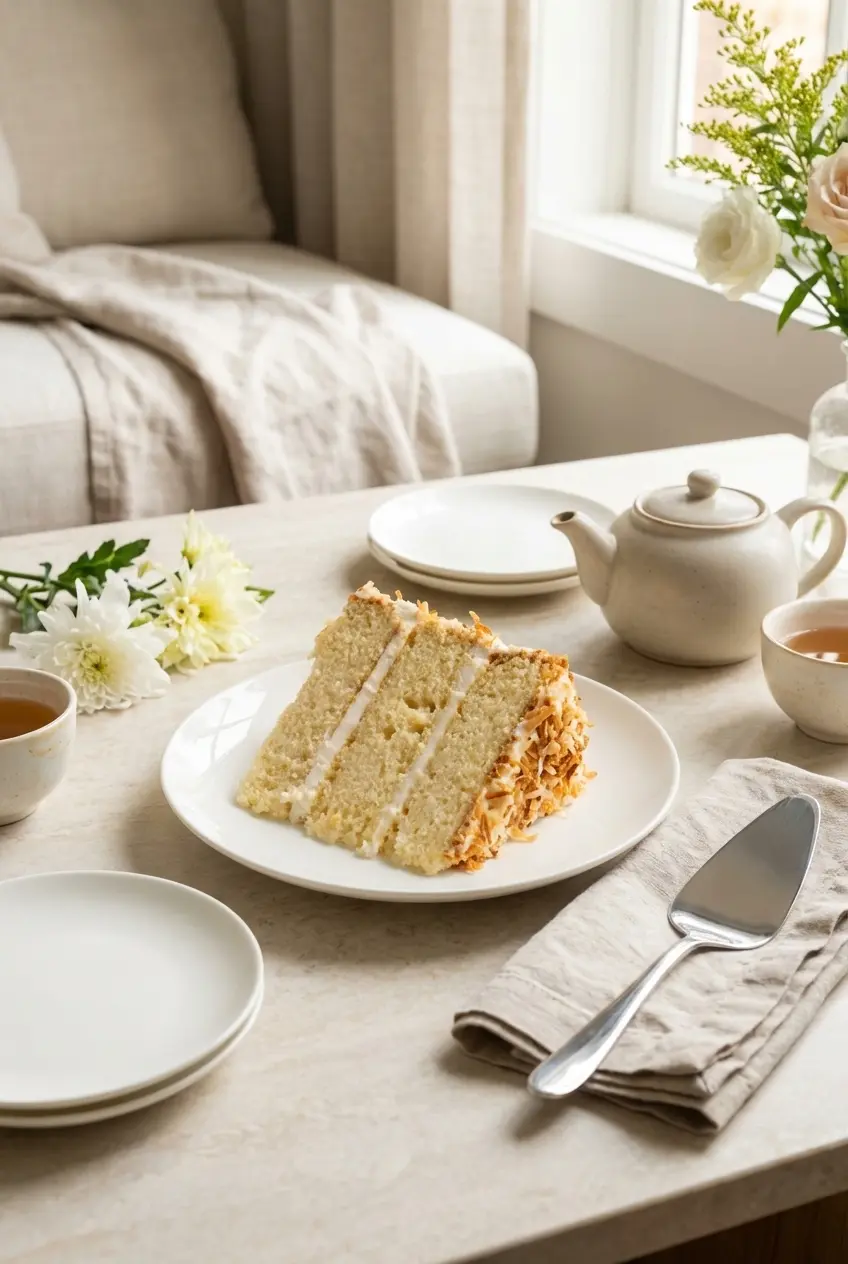
Serve this cake at room temperature whenever possible. The butter in the layers softens slightly as it sits, and that is when the crumb feels the fluffiest and the coconut flavor opens up the most.
A scoop of vanilla bean ice cream beside a slice is hard to beat, and a spoonful of passionfruit puree gives the whole dessert a bright, tropical lift. If you are setting it out for a celebration, a few edible flowers or lime wedges around the cake stand make the white coconut exterior really pop.
Storage & Make-Ahead
Because of the cream cheese frosting, the finished cake should be refrigerated for food safety. I like to keep it under a cake dome, or if the cake has been cut, press plastic wrap gently against the exposed slices so the crumb stays protected instead of drying out in the fridge.
For make-ahead baking, the unfrosted cake layers freeze beautifully. Wrap each layer tightly in plastic wrap, then again in foil, and freeze until needed, then thaw in the refrigerator or on the counter before leveling, filling, and frosting.
If the cake has been chilled, let slices sit out for a bit before serving so the texture softens again. That little wait makes a big difference with butter-based layer cakes and gives the frosting a creamier feel on the palate.
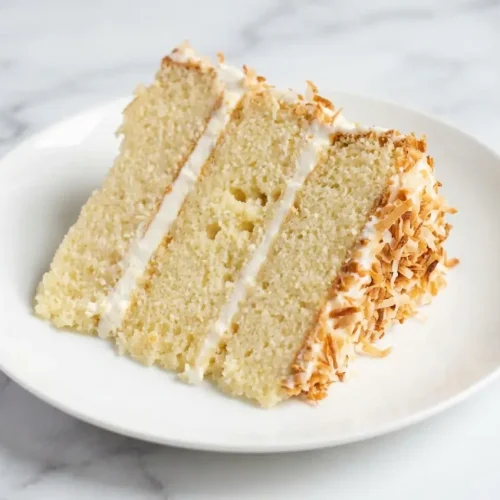
Velvety Coconut Cake With Cream Cheese Frosting

Equipment
- Three 8-inch cake pans
- Parchment Paper
- Stand mixer with paddle attachment
- Baking Sheet
Ingredients
For the cake:
- 3 3/4 cups all-purpose flour 450g
- 2 1/4 cups sugar 450g
- 3 1/4 tsp baking powder
- 1 tsp kosher salt
- 3/4 cup unsalted butter, softened to room temperature 170g
- 1 cup + 2 tbsp sour cream, at room temperature 254g
- 3/4 cup full fat coconut milk, at room temperature or warmed 170g
- 6 tbsp neutral oil (canola, vegetable, coconut, grapeseed, etc. will all work) 75g
- 3 large eggs, at room temperature 150g
- 1 tbsp vanilla extract
For the frosting:
- 8 oz cream cheese, softened slightly 226g
- 1/2 cup butter, softened to room temperature 113g
- 3.5-4 cups powdered sugar 340-454g
- 2 tbsp sour cream 28g
- 2 tbsp coconut milk 28g
- 1/2 tsp vanilla extract
- 1/4 tsp kosher salt
For topping:
- 2 cups sweetened shredded coconut 170g
Instructions
Prep the pans and build the coconut base
- Heat your oven to 350 F. Grease and line three 8-inch cake pans with parchment paper. Warm 3/4 cup full-fat coconut milk and toast a handful of shredded coconut. Steep the toasted coconut in the warm milk for 10 to 15 minutes, then strain it out, reserving the liquid.
- In a stand mixer fitted with the paddle attachment, combine the flour, sugar, baking powder, and kosher salt. Mix on low speed until evenly distributed.
- With the mixer on low, add the softened butter 1 tablespoon at a time. Beat for at least 1 minute until the texture resembles damp sand or fine gravel, ensuring the flour is thoroughly coated for the reverse creaming method.
Mix the batter and bake the layers
- Whisk together the sour cream, strained coconut milk, oil, eggs, and vanilla in a separate bowl until smooth. Slowly pour this wet mixture into the dry ingredients while the mixer runs on low.
- Increase speed to medium and beat for 1 minute until the batter is smooth and thick enough to ribbon off the paddle. Divide the batter evenly between the three pans (approximately 565g per pan).
- Bake for 30 minutes until the edges are golden and the centers spring back when touched. Once removed, brush the warm tops with a simple syrup (equal parts sugar and water) for extra moisture.
Toast the coconut and whip the frosting
- Spread the remaining 2 cups of shredded coconut on a baking sheet. Toast at 350 F for 20 minutes, stirring every 5 minutes until light golden and fragrant.
- In the mixer, beat the cream cheese and softened butter on low for 1 minute until smooth. Gradually add 3 cups of powdered sugar, then mix in the sour cream, coconut milk, vanilla, and salt.
- Beat on medium for 3 minutes until fluffy and pale. If the consistency is too loose, add the remaining powdered sugar as needed.
Assemble and finish
- Once layers are completely cool, spread frosting between each layer and over the entire exterior. Press the toasted coconut onto the top and sides of the cake, patting gently to adhere.
Notes
Conclusion
This cake earns its keep with two smart moves, the toasted coconut milk infusion and the reverse creaming method. Together they give you a Coconut Cake with deep flavor, a fine tender crumb, and the kind of moisture that lasts from the first slice to the last.
If you are baking for Easter, a birthday, a shower, or just a weekend when you want something special on the counter, this one is worth every bowl and crumb. And if coconut desserts are your weakness, rich treats like coconut pie bars fit right into the same dreamy, tropical lane.
Frequently Asked Questions
What is the difference between canned coconut milk, coconut cream, and cream of coconut?
Can I freeze the coconut cake layers ahead of time?
Why does this recipe use the reverse creaming method?
How can I ensure my coconut cake stays incredibly moist?
Should coconut cake with cream cheese frosting be refrigerated?