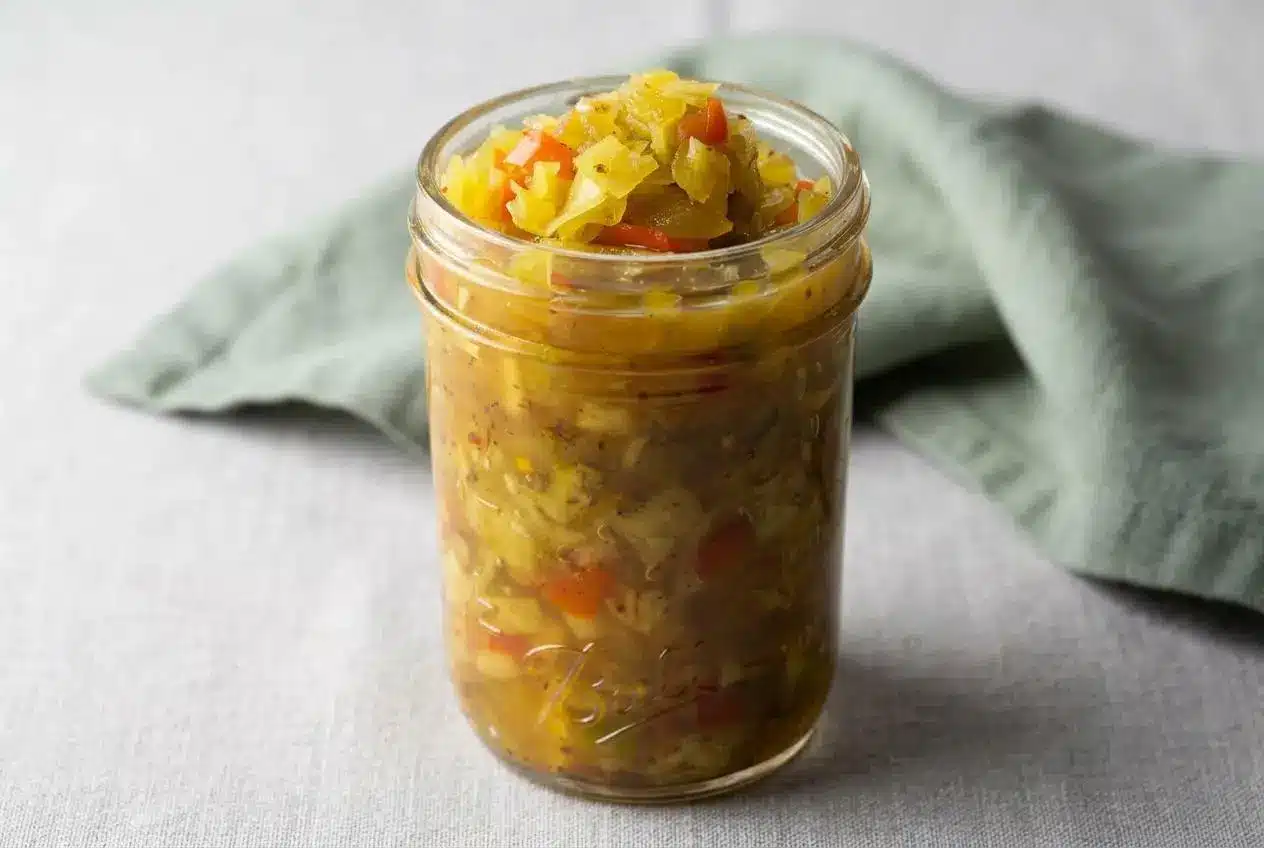
This chow chow recipe is a classic Southern relish made with green tomatoes, cabbage, peppers, vinegar, and spices. It turns garden vegetables into a sweet, tangy, crunchy condiment with options for refrigerator storage or water bath canning.
Chow chow is one of those old-school preserves that earns its place fast. It brings bright vinegar tang, gentle sweetness, a little heat, and a crisp relish texture that wakes up beans, barbecue, and sandwiches.
If you have a pile of green tomatoes and want something practical and delicious, this is a very good place to start. The flavor gets even better as it rests.
Chop the vegetables to a fine, even texture, but stop before they turn into paste. That little bit of structure is what gives chow chow its signature crunch.
What Is Southern Chow Chow?
Southern chow chow is a sweet and tangy relish made to preserve end-of-season vegetables, especially green tomatoes and cabbage. It usually includes onion and peppers too, then gets cooked with vinegar, sugar, and spices until the flavors turn sharp, sweet, zesty, and just a little spicy.
It tastes brighter and chunkier than standard pickle relish, with a crunchy bite that works beautifully on savory foods. It started as a practical way to use up garden surplus, and honestly, that waste-not idea still feels pretty smart.
Ingredients for This Chow Chow Recipe
Each ingredient has a job here: cabbage and green tomatoes bring crunch, vinegar adds tang, sugar rounds the edges, and the spice blend gives the relish its warm, old-fashioned depth.
- 1 small green cabbage finely chopped (8-10 cups)
- 5 unripe green tomatoes cored and finely chopped (6 cups)
- 1 extra-large sweet onion finely chopped (4-5 cups)
- 2 red bell peppers seeded and finely chopped (2 cups)
- 2 green bell peppers seeded and finely chopped (2 cups)
- ½ cup salt
- 4 cups white vinegar
- 2 ½ cups light brown sugar packed
- 1 tablespoon celery seeds
- 1 tablespoon dry mustard
- 2 teaspoons ground ginger
- 1 teaspoon ground allspice
- 1 teaspoon dried dill
- ½ -1 teaspoon crushed red pepper
I like to pulse the vegetables in batches in a food processor so everything stays finely chopped and even, but not mushy.
How to Make Chow Chow
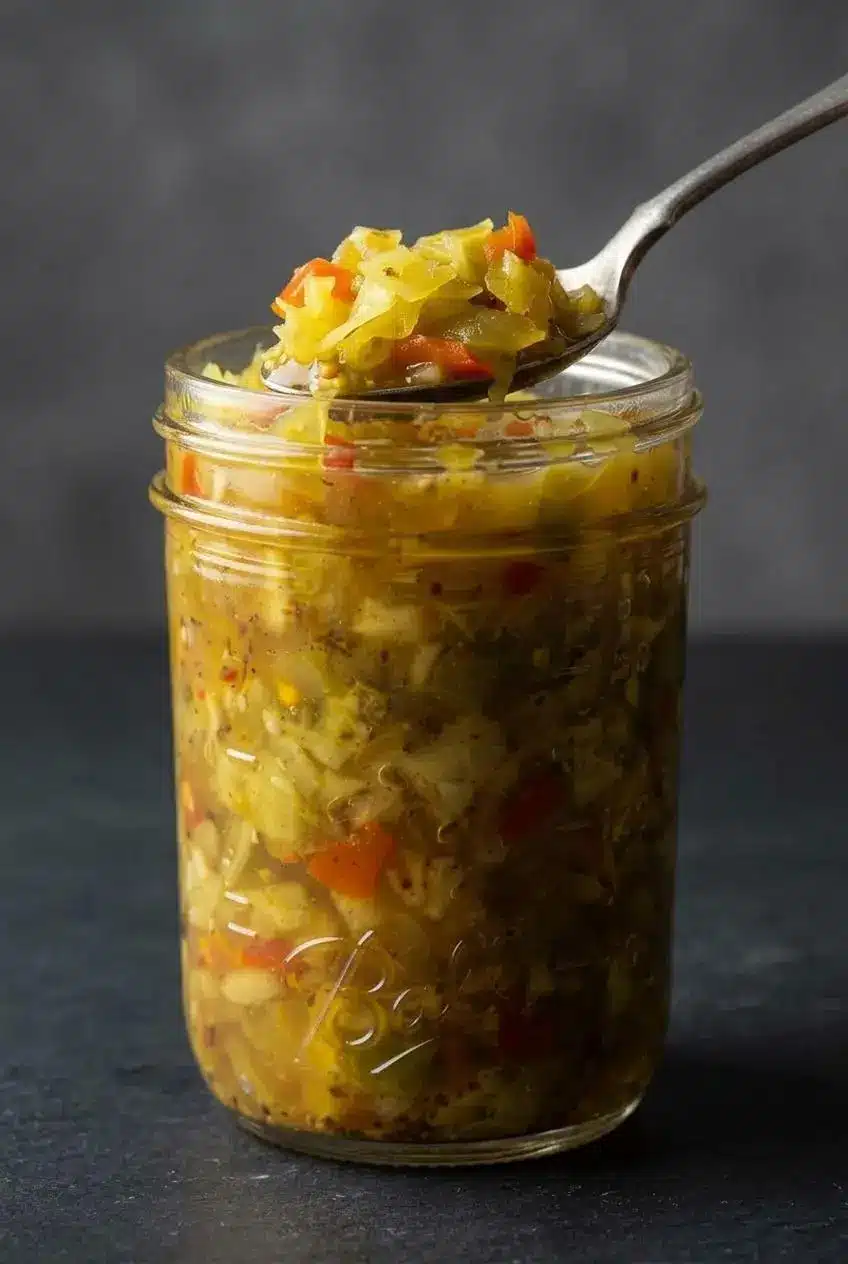
Equipment Needed
You’ll need a very large mixing bowl, a colander, a 6 to 8-quart pot, jars with lids, and a large pot deep enough for water bath canning if you plan to process the jars.
Ingredients
The vegetable mixture does most of the texture work, while the vinegar, brown sugar, and spices build the sweet-sharp brine that gives chow chow its classic Southern flavor.
Step-by-Step Instructions
- Combine the chopped cabbage, green tomatoes, onion, red bell peppers, green bell peppers, and salt in a very large bowl, then mix well and cover.
Let the vegetables stand for at least 4 hours so they release moisture and look softened and damp rather than juicy. - Drain the salted vegetables very well before cooking.
The mixture should look moist but not wet, which helps keep the finished relish from turning watery. - Pour the vinegar into a 6 to 8-quart pot and add the brown sugar, celery seeds, dry mustard, ground ginger, allspice, dried dill, and crushed red pepper, then bring it to a boil.
Lower the heat and simmer for 10 minutes until the brine smells fragrant, spicy, and sharp. - Stir the drained vegetables into the simmering brine and cook for 10 minutes.
The cabbage and peppers should turn tender and slightly olive-toned while the mixture stays spoonable, not dry. - Spoon the hot chow chow and its liquid into 7 pint jars or 14 cup jars.
If you are canning, leave ½ inch headspace at the top so the jars can seal properly. - For canning, lower the filled jars into boiling water so they are covered by at least 1 inch of water and process for 10 minutes.
Wipe the jar rims clean before sealing, then lift the jars out carefully and let them cool undisturbed to room temperature. - If you are skipping canning, seal the jars and refrigerate them.
The relish tastes good right away, but the flavor becomes more rounded after it chills and settles.
Ingredient Notes and Key Choices
A few ingredient decisions make a big difference here. These are the ones that most often affect flavor, color, and texture.
The Best Salt for Pickling
Use non-iodized salt if you can, such as pickling salt, kosher salt, or sea salt. Iodized table salt can make the brine cloudy and may leave a slightly bitter or harsh finish. For a relish like this, that cleaner look and cleaner taste are worth it.
Choosing Your Vinegar
White vinegar gives chow chow a clean, sharp tang and a brighter overall flavor, which is why it fits this recipe so well. Apple cider vinegar brings a fruitier, slightly softer edge. Both can work for a similar relish style, but for canning, stick with a tested acidic setup using 5% vinegar and the original balance of vinegar and other ingredients, as reflected in university extension guidance.
Can I Use Ripe Tomatoes?
Yes, but the result changes. Ripe tomatoes make a softer, sweeter relish with less of that signature tart snap. Green tomatoes are what give chow chow its firmer texture and bright, tangy backbone.
Troubleshooting Your Chow Chow
A lot of home cooks run into the same few problems with chow chow. The good news is that most of them are easy to prevent once you know what to watch for.
| Problem | Likely Cause | How to Fix or Prevent |
|---|---|---|
| Watery relish | The vegetables did not sit with the salt long enough, or they were not drained thoroughly. | Salt the vegetables for at least 4 hours and drain them really well before cooking. If the batch is already cooked, simmer it a bit longer to reduce liquid, but watch the texture closely. |
| Mushy texture | The vegetables were chopped too fine or cooked too long. | Go for a fine chop, not a purée. A few quick pulses in a processor work better than running it nonstop, and sticking to the cooking time helps preserve some crunch. |
| Too sweet | The flavor has not mellowed yet, or the balance is richer than you prefer. | Give the relish time to rest before judging it. For a refrigerator-only batch, you can reduce the sugar slightly next time, but keep the original ratio for canning. |
| Too sour | The vinegar flavor is still sharp and the relish has not had time to come together. | Let it sit and chill so the sugar and spices can round out the tang. Serving it with rich foods also softens that edge. |
| Too salty | Some of the drawn-out liquid stayed with the vegetables after salting. | Drain more thoroughly next time. If needed, you can let the salted vegetables sit in the colander longer before they go into the pot. |
| Cloudy or dark brine | Iodized salt, mineral-heavy water, or vegetable pieces that browned before cooking. | Use non-iodized salt and keep the chopped vegetables moving into the salted bowl promptly. Cloudiness is usually a quality issue, not a sign that the batch failed. |
Recipe Variations and Customization
This base version is classic, but you can nudge the flavor in different directions. Keep these as optional changes rather than part of the main recipe.
For a Spicier Kick
If you like more heat, increase the crushed red pepper. For a fresher pepper bite, you can also add a finely chopped jalapeño, serrano, or even habanero to the vegetable mix. Remove the seeds if you want the flavor without quite so much fire.
Adjusting the Sweetness
For canning, keep the sugar and vinegar balance as written. For a refrigerator-only batch, you have more wiggle room, and starting with a 1/4 cup reduction is a reasonable way to make it less sweet without changing the whole personality of the relish.
For a Vibrant Yellow Color
If you want that old-fashioned yellow chow chow look, add 1 teaspoon of turmeric with the other spices. It brightens the color nicely without pushing the flavor too far.
A Smoky, Richer Variation
For a deeper flavor that pairs especially well with grilled meats, stir 1 teaspoon of smoked paprika and 1 tablespoon of tomato paste into the simmering vinegar mixture. It gives the relish a darker, richer feel while keeping the same sweet-tangy profile.
Creative Ways to Use Chow Chow
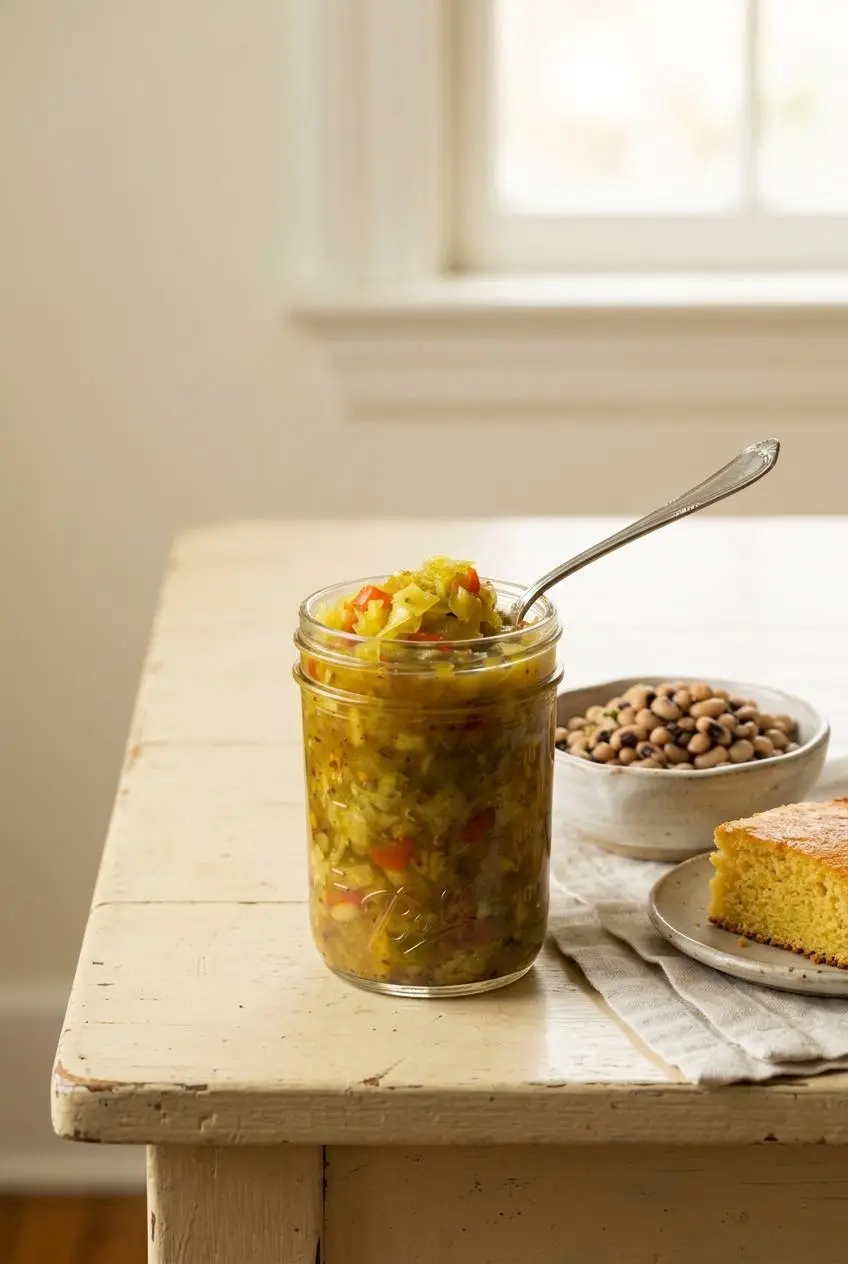
Once you have a jar open, it disappears fast. The sweet, tangy crunch works anywhere a rich or savory dish needs a little lift.
| Dish | How to Serve It | Why It Works |
|---|---|---|
| Pinto beans or black-eyed peas | Spoon it right over the top before serving. | The vinegar and crunch cut through soft, creamy beans beautifully. |
| Cornbread | Serve it on the side or pile a little on each bite. | Sweet corn and tangy relish are a very Southern, very happy match. |
| Hot dogs, sausages, and burgers | Use it like a chunky relish. | It adds texture, acidity, and a little spice in one spoonful. |
| Pulled pork sandwiches | Layer it inside the sandwich. | The sharp brine balances smoky, rich meat. |
| Tuna, chicken, egg, or potato salad | Stir in a spoonful or two. | It wakes up creamy salads with crunch and zip. |
| Cream cheese and crackers | Spoon it over a block of cream cheese for a quick appetizer. | The creamy base softens the tang and makes it party-friendly. |
| Deviled eggs | Mix a little into the filling. | You get a brighter, zippier bite without extra fuss. |
Storage and Canning: Keeping Your Chow Chow Fresh
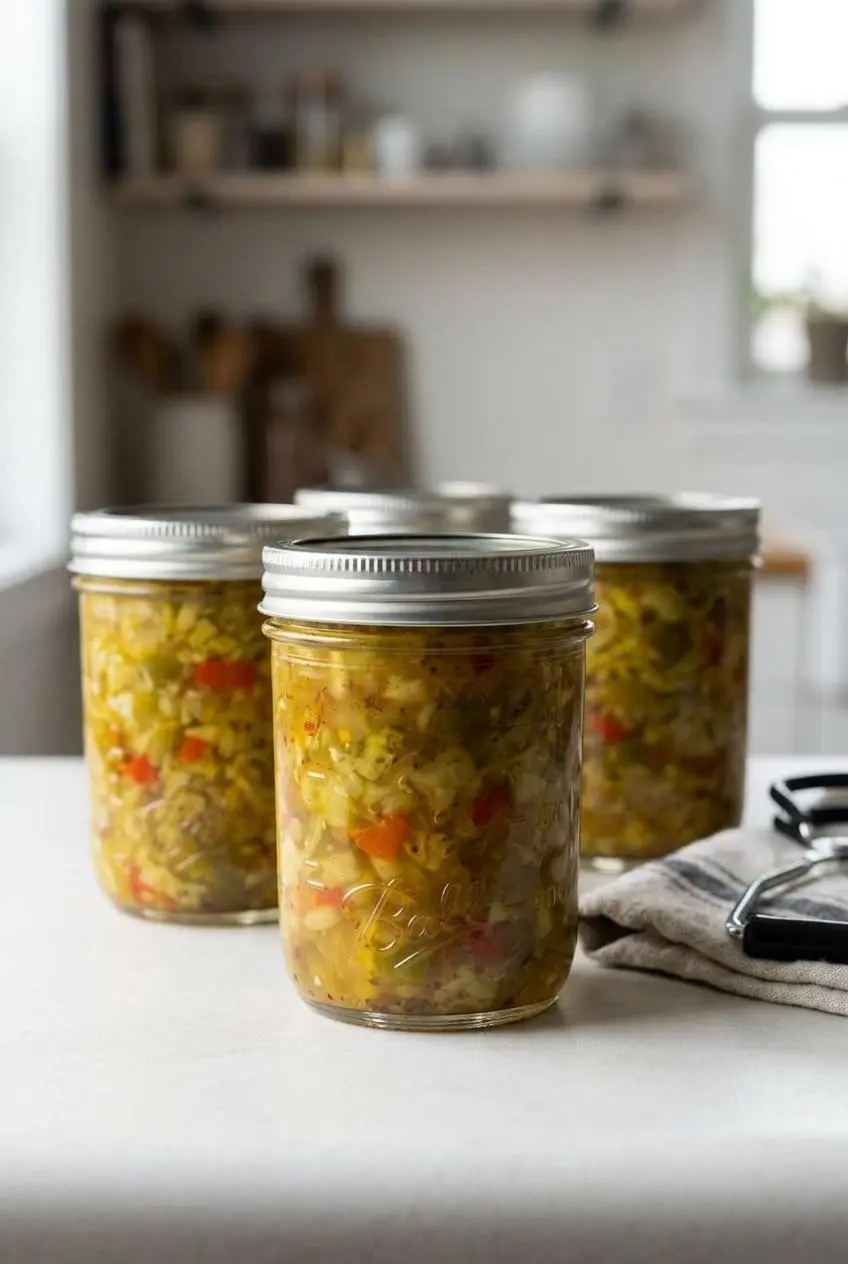
This is the section where details matter most. If you plan to can chow chow, stick closely to tested preserving practices and avoid old methods like paraffin wax sealing.
Refrigerator Method
If you are not canning the chow chow, transfer it to clean airtight jars and keep it refrigerated. The official recipe keeps it for up to 2 weeks. The flavor improves as it chills, so it’s a great make-now, enjoy-soon condiment.
Once a canned jar is opened, keep it in the refrigerator and use clean utensils each time. For longer storage quality in the pantry, keep sealed jars in a cool, dry place below 85 °F, following official guidance.
Water Bath Canning Method
Water bath canning is the modern standard for high-acid relishes like this one. Before you start, wash the jars, prepare lids as directed by the manufacturer, and have a pot deep enough to cover the jars with water.
Fill the hot jars with hot chow chow, leaving ½ inch of headspace. Wipe the rims clean, apply the lids, and screw on the bands until fingertip-tight. Then lower the jars into boiling water, making sure the water covers them by at least 1 inch, and process pint jars for 10 minutes. Tested university extension guidance also notes that processing times can change with altitude, so adjust if needed where you live.
After processing, lift the jars out carefully and let them cool undisturbed to room temperature. Once sealed, this recipe stores at room temperature for at least one year.
How to Check for a Proper Seal
After the jars cool, look at the center of each lid. It should curve downward and stay put when pressed gently. If you hear that satisfying little ping while the jars cool, that is a good sign too.
If a lid did not seal, refrigerate that jar and use it as a refrigerator batch instead of storing it in the pantry.
Conclusion
Homemade chow chow is one of the most useful condiments you can keep around. It’s sweet, tangy, crunchy, and full of that old-fashioned Southern charm that makes plain food taste like a real meal.
Once you make a batch, you’ll start finding excuses to spoon it onto everything from beans to burgers. Enjoy your jars and make the most of that homemade Southern classic.
Frequently Asked Questions
How long does homemade chow chow need to sit before eating?
You can eat it right away, but it tastes better after the flavors have time to blend. For the refrigerator version, letting it rest for 24 to 48 hours gives it a fuller, rounder flavor. For canned jars, waiting at least a week makes a noticeable difference.
My chow chow is watery, can I fix it?
Yes, but prevention works better than repair. If it is already cooked, simmer it gently a bit longer to reduce some of the liquid, keeping an eye on the texture so the vegetables do not go soft. Next time, salt the vegetables for at least 4 hours and drain them very thoroughly before they hit the pot.
Is it safe to use less sugar or vinegar when canning chow chow?
For canning, it is better to keep the vinegar and sugar ratio as written. Those ingredients do more than flavor the relish, and changing the balance can affect preservation. If you want more freedom to tweak the taste, make a refrigerator batch instead.
What’s the best salt to use for chow chow?
Non-iodized salt is the best choice, including pickling salt, kosher salt, or sea salt. Iodized table salt can cloud the brine and leave a less clean flavor.
Can I use ripe tomatoes instead of green ones?
Yes, but expect a different result. The relish will be softer, sweeter, and less tangy, while green tomatoes give chow chow its classic firm texture and tart bite.
How do I make my chow chow spicier?
The easiest way is to add more crushed red pepper. You can also mix in a finely minced hot pepper, such as jalapeño or serrano, if you want a brighter, fresher heat.
Chow Chow Recipe

Equipment
- Very large mixing bowl
- Colander
- 6 to 8-quart pot
- Jars with lids
- Large pot (for water bath canning)
Ingredients
- 1 small green cabbage finely chopped (8-10 cups)
- 5 unripe green tomatoes cored and finely chopped (6 cups)
- 1 extra-large sweet onion finely chopped (4-5 cups)
- 2 red bell peppers seeded and finely chopped (2 cups)
- 2 green bell peppers seeded and finely chopped (2 cups)
- ½ cup salt
- 4 cups white vinegar
- 2 ½ cups light brown sugar packed
- 1 tablespoon celery seeds
- 1 tablespoon dry mustard
- 2 teaspoons ground ginger
- 1 teaspoon ground allspice
- 1 teaspoon dried dill
- ½ -1 teaspoon crushed red pepper
Instructions
- Combine the chopped cabbage, green tomatoes, onion, red bell peppers, green bell peppers, and salt in a very large bowl, then mix well and cover. Let the vegetables stand for at least 4 hours so they release moisture and look softened and damp rather than juicy.
- Drain the salted vegetables very well before cooking. The mixture should look moist but not wet , which helps keep the finished relish from turning watery.
- Pour the vinegar into a 6 to 8-quart pot and add the brown sugar, celery seeds, dry mustard, ground ginger, allspice, dried dill, and crushed red pepper, then bring it to a boil. Lower the heat and simmer for 10 minutes until the brine smells fragrant, spicy, and sharp.
- Stir the drained vegetables into the simmering brine and cook for 10 minutes. The cabbage and peppers should turn tender and slightly olive-toned while the mixture stays spoonable, not dry.
- Spoon the hot chow chow and its liquid into 7 pint jars or 14 cup jars. If you are canning, leave ½ inch headspace at the top so the jars can seal properly.
- For canning, lower the filled jars into boiling water so they are covered by at least 1 inch of water and process for 10 minutes. Wipe the jar rims clean before sealing, then lift the jars out carefully and let them cool undisturbed to room temperature.
- If you are skipping canning, seal the jars and refrigerate them. The relish tastes good right away, but the flavor becomes more rounded after it chills and settles.