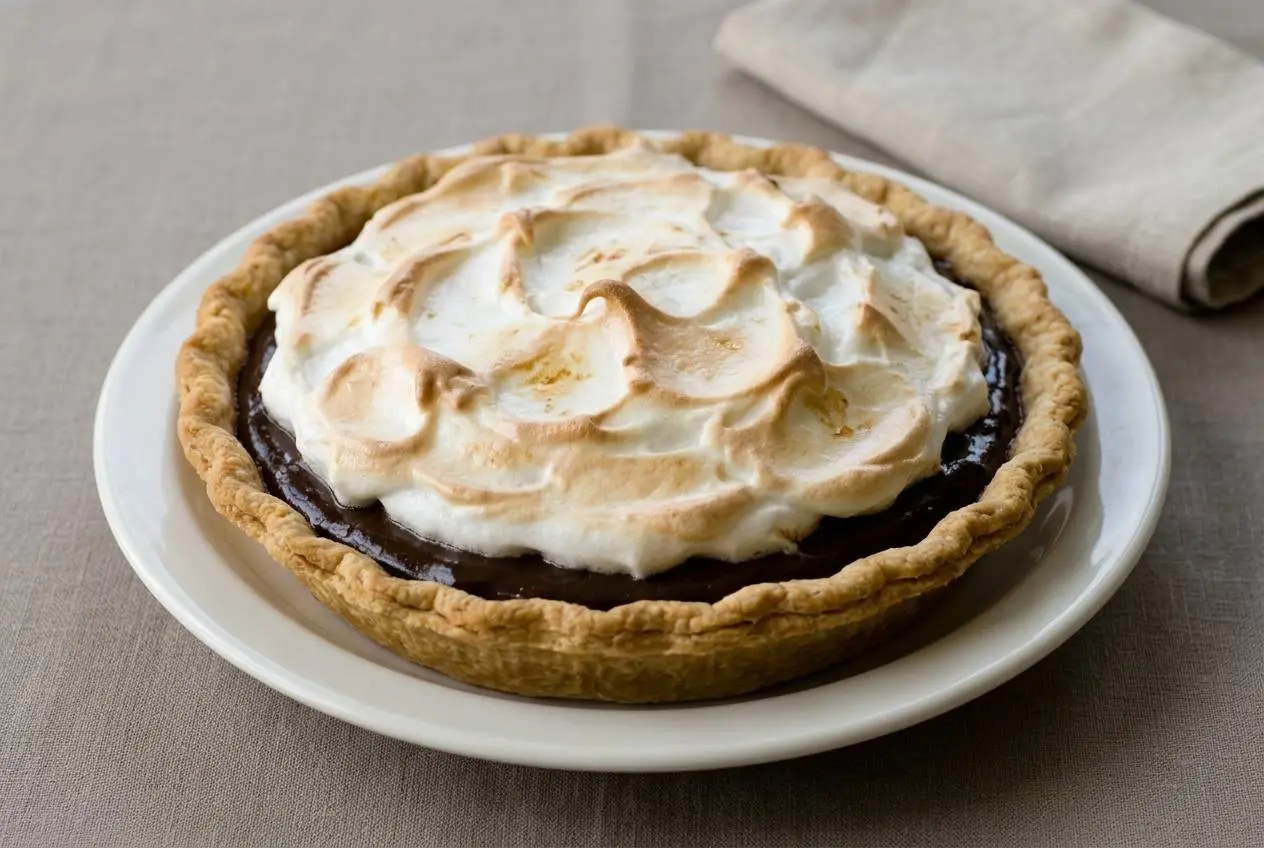
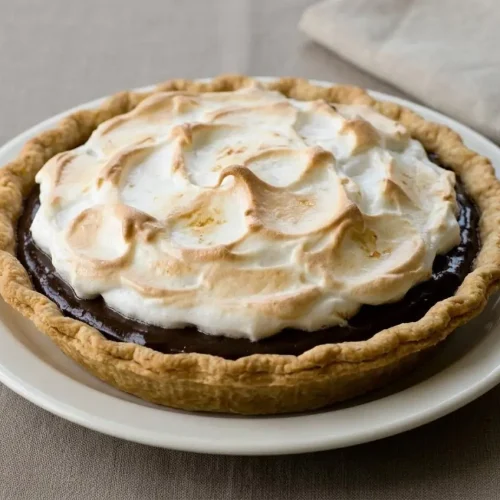
A classic chocolate pie starts with a baked crust, a stovetop chocolate custard, and a soft meringue baked until lightly browned. The key is to cook the filling until it looks like thick pudding before it ever goes into the crust.
This chocolate pie recipe is an old-fashioned chocolate custard pie with deep cocoa flavor, a smooth sliceable filling, and a cloud of meringue on top. It lands somewhere between pudding and pie in the best possible way.
If you like your desserts rich but not heavy, this one really delivers. The stovetop custard smells deeply chocolatey as it cooks, and one texture cue makes all the difference.
Have your pie pan, whisk, and mixing bowl ready before you start, because the custard and crust come together more smoothly when everything is within reach.
What Makes This the Best Chocolate Pie?
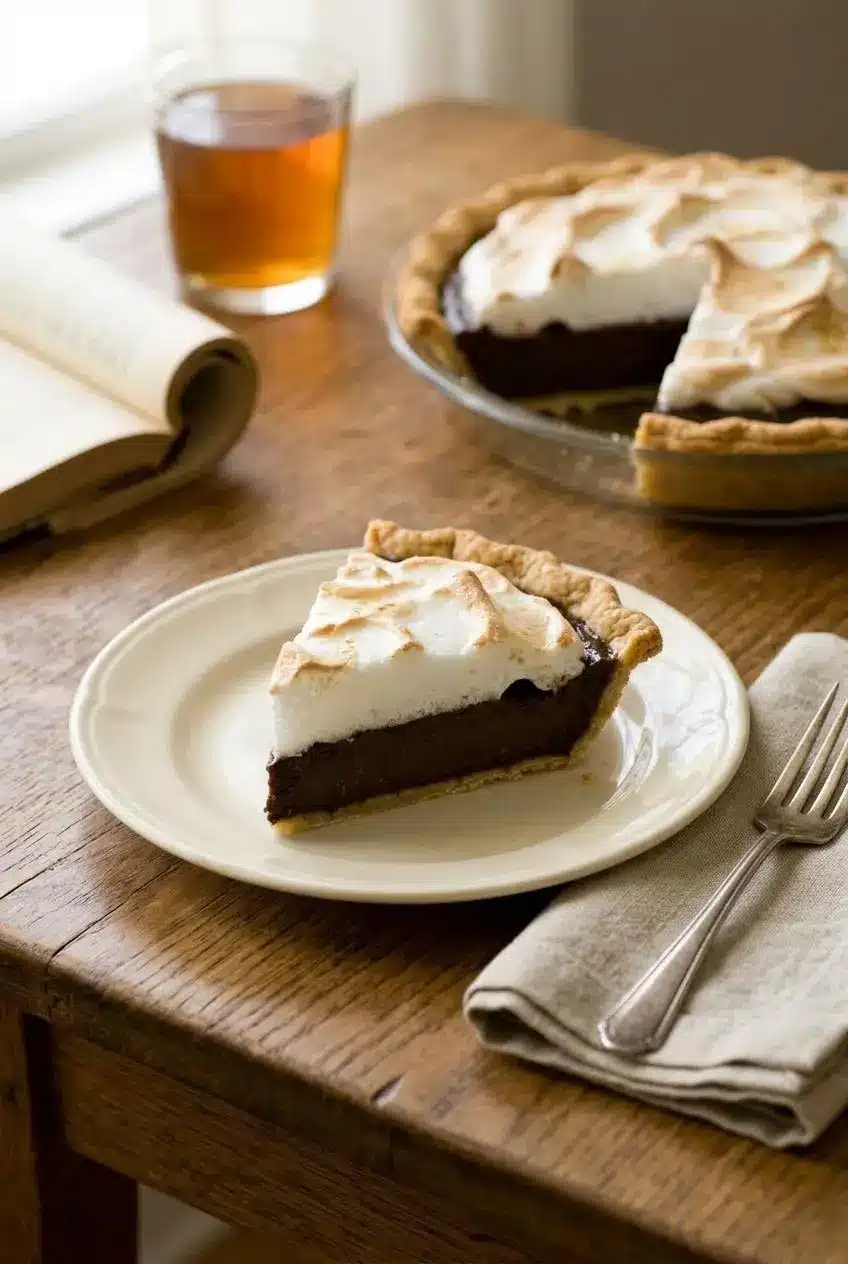
This is the classic Southern-style version: a cooked chocolate custard poured into a baked pie shell, then topped with meringue and returned to the oven. It is not a no-bake mousse pie, and it is not a fluffy cream pie.
That cooked filling matters. When cocoa, flour, milk, sugar, and egg yolks thicken together on the stove, the chocolate flavor tastes deeper and rounder, and the texture turns silky instead of airy. You get a pie that slices like a soft custard and still feels comforting enough to eat warm.
Key Ingredients for a Perfect Chocolate Pie
Each ingredient has a real job here, from thickening the custard to keeping the filling creamy, glossy, balanced, and deeply chocolatey.
Ingredients for the pie
- 4 tablespoons unsweetened cocoa or 1.5 ounces baking chocolate
- 3/4 cups granulated sugar
- 5 tablespoons all-purpose flour
- 1/4 teaspoon kosher salt
- 2 large egg yolks, lightly beaten
- 1 1/2 cups whole milk
- 1/2 teaspoon vanilla extract
- 1 tablespoon unsalted butter
- 1 unbaked 9-inch shallow piecrust
Ingredients for the meringue
- 2 large egg whites
- 1/8 teaspoon kosher salt
- 4 tablespoons granulated sugar
What is chocolate pie filling made of? In this version, it is a cooked custard made from sugar, flour, milk, egg yolks, cocoa or baking chocolate, then finished with butter and vanilla for extra richness and aroma.
Flour is the thickener here, and it needs heat and steady stirring to do its job well. Once the custard bubbles and turns pudding-thick, the flour has activated and the filling will hold its shape much better after cooling.
Whole milk is important because its fat gives the custard a creamier mouthfeel and smoother finish. Lower-fat milk can still work in a pinch, but the pie will taste a little thinner and less lush.
You can make this pie with unsweetened cocoa or baking chocolate. Cocoa gives you a clean, classic chocolate flavor and blends easily into the custard. Baking chocolate makes the filling taste fuller and slightly richer. If you go that route, it helps to know how to melt chocolate smoothly before adding it. Chocolate chips can work too, but they usually contain stabilizers, so the texture may be a touch less silky.
If you want to deepen the chocolate flavor, a small pinch of instant espresso powder stirred into the dry ingredients can help without making the pie taste like coffee.
I always whisk the cocoa and flour together very thoroughly before adding milk, because that small step saves a lot of lump chasing later.
How to Make Classic Chocolate Pie
- Heat the oven to 350 °F.
Getting the oven ready first keeps the crust and meringue timing simple later on. - Whisk the cocoa, sugar, flour, salt, egg yolks, and milk together in a saucepot until the mixture looks evenly blended.
A smooth start helps the custard thicken evenly without dry pockets of flour or cocoa. - Set the pot over medium heat and stir constantly for 5 to 10 minutes, scraping well as the mixture cooks.
Stop only when it bubbles and turns thick enough to coat the back of a spoon, and a line drawn through it holds its shape. - Take the pot off the heat and stir in the vanilla extract and butter until fully incorporated.
The custard should look glossy and smell deeply chocolatey at this point. - Place the piecrust in a shallow 9-inch pie pan, prick it with a fork, and bake it until lightly browned, about 20 minutes.
A baked shell gives the filling a firmer base and helps keep the bottom from turning soft too quickly. - Beat the egg whites, salt, and sugar in a mixing bowl on high speed for 3 to 5 minutes.
Stop at soft peaks, when the meringue looks fluffy and the tip bends over gently instead of standing stiff and dry. - Fill the browned crust with the chocolate custard, spread the meringue over the top, and bake uncovered for about 10 minutes.
Pull the pie when the meringue peaks are lightly browned and the top looks softly set, then serve warm.
Patience matters during the custard stage. Do not crank up the heat trying to hurry it along, because scorched milk and curdled eggs are very annoying guests at dessert.
Tips for a Flawless Chocolate Pie
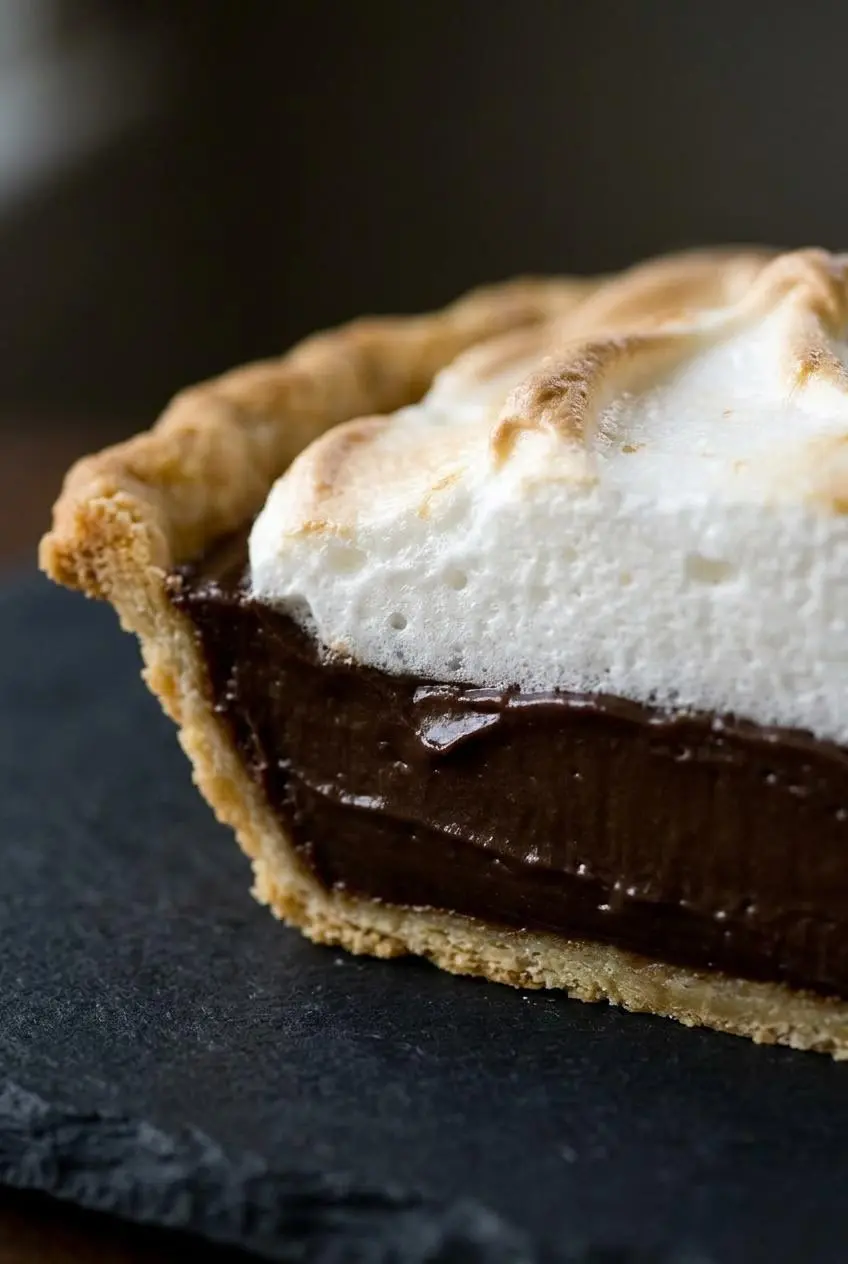
These small choices make the pie easier to handle and help the filling stay smooth, rich, and well set.
- Stir the custard constantly over medium heat so it thickens evenly without scorching on the bottom of the pot.
- Do not rely on the oven to finish thickening the filling. The custard needs to reach its full pudding-like consistency on the stove.
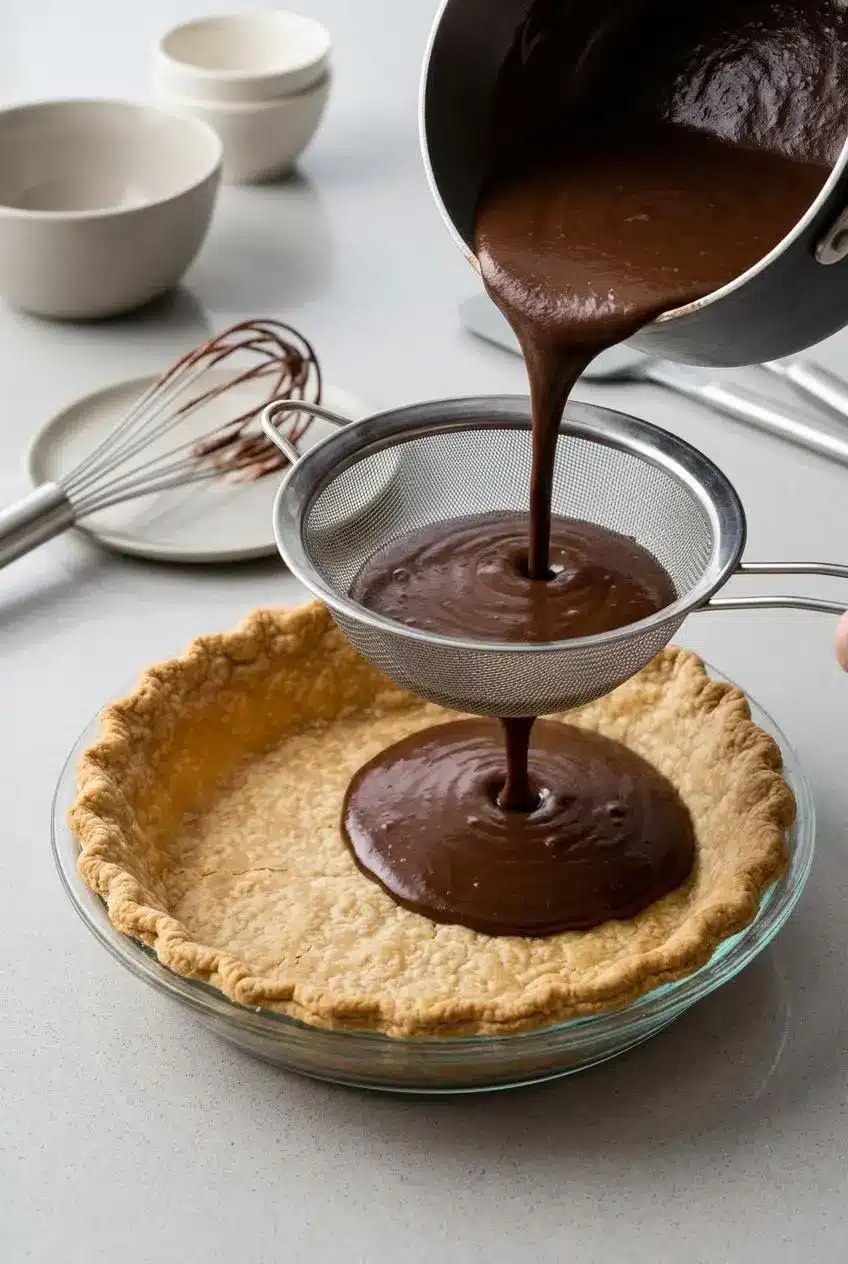
- If the filling looks a little rough, pour it through a fine-mesh sieve before it goes into the crust for an extra-smooth finish.
- If you are chilling the filling before assembling or holding it briefly, press plastic wrap directly onto the warm surface to prevent a skin from forming.
- Do not overbeat the meringue. Soft peaks spread more easily and are less likely to dry out or pull away from the pie.
- Use baking chocolate instead of cocoa if you want a slightly richer, fuller chocolate profile.
- Blind-bake the crust until it is actually cooked and lightly golden, not pale, so it can stand up to the custard.
Troubleshooting Common Pie Problems
If something goes sideways, it is usually fixable or at least easy to prevent next time. Most chocolate pie problems come down to thickness, heat, or crust prep.
| Problem | Solution |
|---|---|
| Runny filling | Cook the custard longer on the stove until it bubbles and looks like thick pudding. |
| Lumpy custard | Whisk firmly off the heat, or strain it through a fine-mesh sieve before filling the crust. |
| Weeping meringue | Beat until soft peaks form and make sure the sugar is fully incorporated before baking. |
| Cracked filling | Avoid excessive heat and let the pie cool gradually after baking. |
| Soggy crust | Blind-bake the shell until golden so it has a crisp barrier before the filling goes in. |
Why Is My Pie Runny?
The most common cause is undercooked custard. The filling needs enough time on the stovetop to bubble and visibly thicken. If it still looks loose like hot chocolate sauce, it is not ready yet.
The right texture is closer to pudding than sauce. When you drag a spoon through it, the trail should stay visible for a moment. If the pie still seems soft after baking, cooling it longer will help it firm up, but cooling cannot rescue a truly undercooked custard.
How to Fix Lumpy Custard
Lumps usually happen when the heat is a little too aggressive or the mixture was not whisked smooth at the beginning. The good news is that this one is often easy to fix.
Take the pot off the heat and whisk vigorously right away. If the custard still looks rough, run it through a fine-mesh sieve before pouring it into the crust. That gives you the best shot at a smooth filling without changing the flavor.
How to Prevent a Soggy Crust
Blind-baking is the answer. Bake the pie shell on its own until it is fully set and lightly golden before the custard goes in. That creates a crisp barrier between the pastry and the wet filling.
A pale underbaked crust will soften quickly once the custard hits it. If you are using a store-bought crust, the same rule applies: bake it long enough to look cooked and dry, not doughy.
Variations: Toppings, Crusts, and Fillings
You can keep the classic soul of this pie and still tweak the finish. These options change the texture and style more than the flavor, so choose the one that matches how you want to serve it.
Meringue vs. Whipped Cream Topping
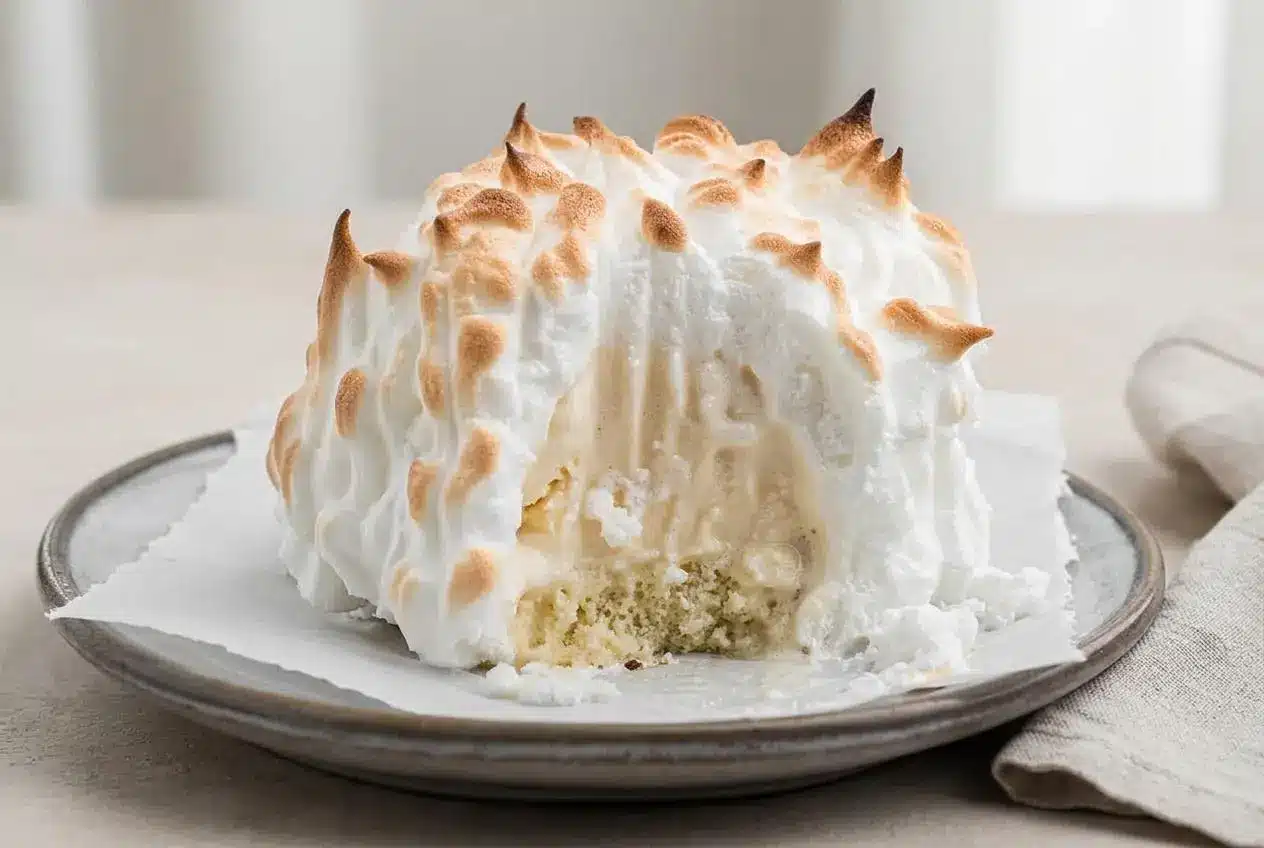
Meringue is the traditional choice here. It is light, sweet, and toasty on top, and it gives the pie that old-fashioned look with soft golden peaks.
Whipped cream is softer, cooler, and creamier. If you want less sweetness and no extra oven step after the filling is made, sweetened whipped cream is a very good alternative. It also pairs especially well with a fully chilled pie.
Alternative Pie Crusts (Oreo, Graham Cracker)
If you want an easier route, an Oreo crumb crust or graham cracker crust works well with this filling. Both add a sweeter, more crumbly base than pastry, and both lean the pie in a more casual, diner-style direction.
| Crust | What It Adds | Best For |
|---|---|---|
| Pastry crust | Flaky texture and classic pie structure | Traditional chocolate custard pie with meringue |
| Oreo crumb crust | Extra chocolate flavor and a firmer crumb base | A richer dessert feel and easy prep |
| Graham cracker crust | Buttery sweetness and a softer crunch | A lighter, shortcut-style version |
A crumb crust is especially handy if you plan to skip meringue and top the pie with whipped cream instead.
Easy No-Bake Filling Option
If you want the flavor of chocolate pie with less stovetop work, use a thick no-bake pudding or mousse-style filling in a crumb crust. That version is softer, lighter, and more like a chocolate cream pie than this classic cooked custard pie.
For a shortcut idea, a chocolate pudding filling can stand in as an easy alternative. If you love rich custard-style chocolate desserts in general, French chocolate flan scratches a very similar itch.
Make-Ahead and Storage Guide
This pie benefits from cool storage, especially if you want neater slices. Keep it covered in the refrigerator, and keep your refrigerator at 40 °F or below for perishable desserts with dairy and eggs, as outlined in refrigeration guidance for 40 °F or below.
If you want to split up the work, bake the crust first and make the custard separately, then assemble once both are ready. You can also make the filling earlier in the day and keep plastic wrap pressed directly against the surface so it stays smooth.
Because this pie includes eggs in both the filling and topping, handle and chill it carefully after baking. Good egg handling and prompt refrigeration matter for desserts like this, especially once sliced, as covered in safe handling and storage of shell eggs.
Conclusion
This pie earns its place on any dessert table with its silky chocolate custard, crisp crust, and soft meringue top. It feels classic for a reason.
If you remember one thing, let it be this: cook the filling until it is truly thick on the stove. That is the move that turns a good pie into one you will want to make again.
Frequently Asked Questions (FAQ)
Why did my chocolate pie turn out runny?
Most likely, the custard did not cook long enough on the stovetop. It needs to bubble and thicken to a pudding-like consistency before it goes into the crust. If you want clean slices, chilling the finished pie for at least 4 hours also helps it firm up properly.
Can I use chocolate chips instead of baking chocolate?
Yes, you can. Chocolate chips will work, but they often contain stabilizers, so the filling may be slightly less smooth than one made with baking chocolate. For the richest texture, baking chocolate or unsweetened cocoa is usually the better choice.
How do you keep a pie crust from getting soggy?
Blind-bake it first. Baking the crust on its own until it is fully cooked and lightly golden creates a dry, crisp layer that protects it from the wet custard filling.
How long does chocolate pie need to chill?
For a firm, fully set filling, chill the pie for at least 4 hours. If you prefer the neatest slices and the most pudding-like texture, a longer chill works even better.
Chocolate Pie Recipe

Equipment
- Saucepot
- Whisk
- 9-inch pie pan
- Mixing Bowl
- Oven
Ingredients
Ingredients for the pie
- 4 tablespoons unsweetened cocoa or 1.5 ounces baking chocolate
- 3/4 cups granulated sugar
- 5 tablespoons all-purpose flour
- 1/4 teaspoon kosher salt
- 2 large egg yolks, lightly beaten
- 1 1/2 cups whole milk
- 1/2 teaspoon vanilla extract
- 1 tablespoon unsalted butter
- 1 unbaked 9-inch shallow piecrust
Ingredients for the meringue
- 2 large egg whites
- 1/8 teaspoon kosher salt
- 4 tablespoons granulated sugar
Instructions
- Heat the oven to 350 °F. Getting the oven ready first keeps the crust and meringue timing simple later on.
- Whisk the cocoa, sugar, flour, salt, egg yolks, and milk together in a saucepot until the mixture looks evenly blended. A smooth start helps the custard thicken evenly without dry pockets of flour or cocoa.
- Set the pot over medium heat and stir constantly for 5 to 10 minutes, scraping well as the mixture cooks. Stop only when it bubbles and turns thick enough to coat the back of a spoon, and a line drawn through it holds its shape.
- Take the pot off the heat and stir in the vanilla extract and butter until fully incorporated. The custard should look glossy and smell deeply chocolatey at this point.
- Place the piecrust in a shallow 9-inch pie pan, prick it with a fork, and bake it until lightly browned, about 20 minutes. A baked shell gives the filling a firmer base and helps keep the bottom from turning soft too quickly.
- Beat the egg whites, salt, and sugar in a mixing bowl on high speed for 3 to 5 minutes. Stop at soft peaks, when the meringue looks fluffy and the tip bends over gently instead of standing stiff and dry.
- Fill the browned crust with the chocolate custard, spread the meringue over the top, and bake uncovered for about 10 minutes. Pull the pie when the meringue peaks are lightly browned and the top looks softly set, then serve warm.