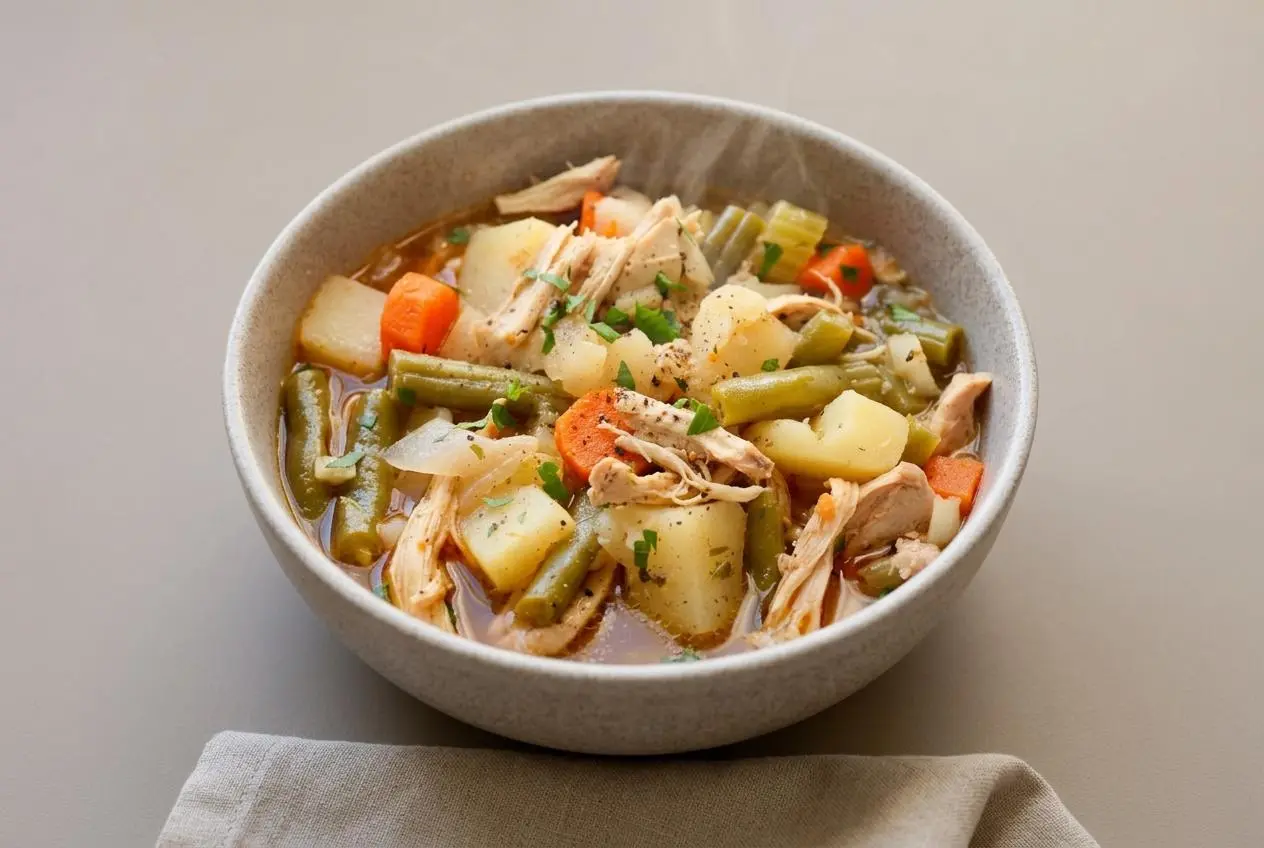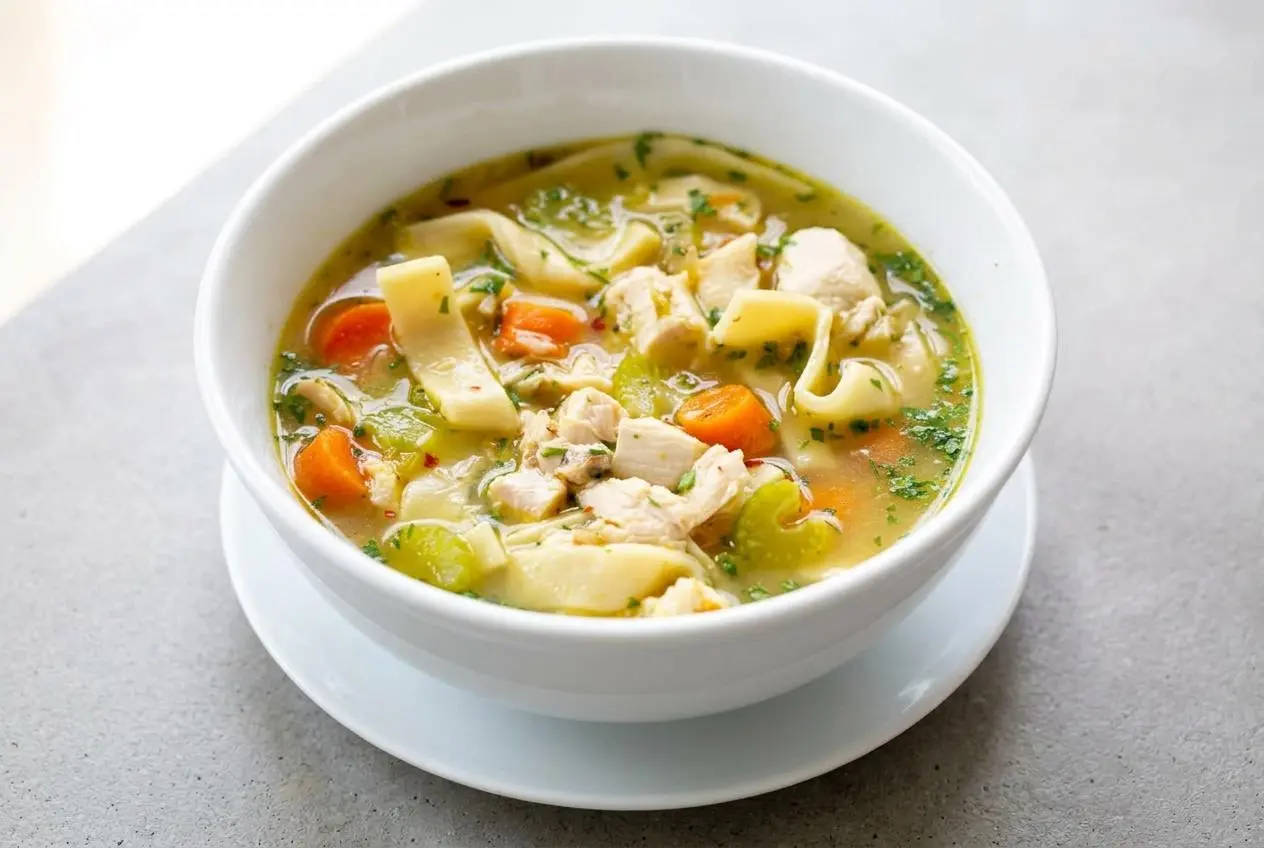
Make this comforting soup in 40 minutes by simmering tender vegetables and egg noodles in seasoned chicken broth, then adding shredded rotisserie chicken at the end.
This chicken noodle soup recipe builds a savory, golden broth with butter-softened celery and carrots, fragrant garlic, herbs, and hearty noodles.
The vegetables gently sweeten the broth while the noodles make every bowl satisfying. The trick is pulling the pot off the heat at just the right moment.
Dice the carrots and celery to a similar bite-size shape so they soften at the same pace.
Essential Ingredients for Rich Flavor
Each ingredient contributes something useful: butter adds richness, vegetables create sweetness, herbs bring aroma, noodles provide bite, and chicken gives the broth a satisfying finish.
- 1/2 Tablespoon butter
- 2 ribs celery, diced
- 3-4 large carrots, diced
- 1 clove garlic, minced
- 10 cups chicken stock, or broth
- 1 teaspoon salt, to taste
- 1/2 teaspoon freshly ground black pepper, to taste
- 1/8 teaspoon dried rosemary, or more, to taste
- 1/8 teaspoon dried thyme
- 1/8 teaspoon crushed red pepper flakes
- 1 batch homemade egg noodles, or 4 cups dry egg noodles, farfalle or other bite-size pasta
- 3 cups rotisserie chicken
- 1 teaspoon better than bouillon chicken flavor, or more, as needed, or chicken bouillon granules
Celery, carrots, and garlic form the aromatic foundation often called mirepoix. Here, the ratio leans naturally sweet because of the carrots, while celery gives the broth a clean, savory backbone. Butter helps those vegetables soften without tasting oily, and it carries the herb aroma through the pot.
Choose chicken stock or broth that tastes good before it goes into the soup, then adjust carefully. Salt levels vary widely, especially when bouillon is involved. The Better Than Bouillon chicken flavor or bouillon granules deepen the savory character without changing the soup’s familiar, homey profile.
Wide egg noodles are the most reliable choice because their sturdy shape stays pleasantly chewy in hot broth. Farfalle and other bite-size pasta work too, though their cooking time and broth absorption can differ. For a smaller pasta style, try chicken pastina soup when you want a softer, spoon-friendly bowl.
Rotisserie chicken brings cooked, shredded meat into the pot at the end, so it stays tender rather than simmering until dry. It is also what makes this soup practical for a weeknight without sacrificing the deeply savory broth.
I cut the carrots and celery into evenly sized pieces because uneven chunks leave you with some vegetables soft and others oddly firm.
Step-by-Step Chicken Noodle Soup
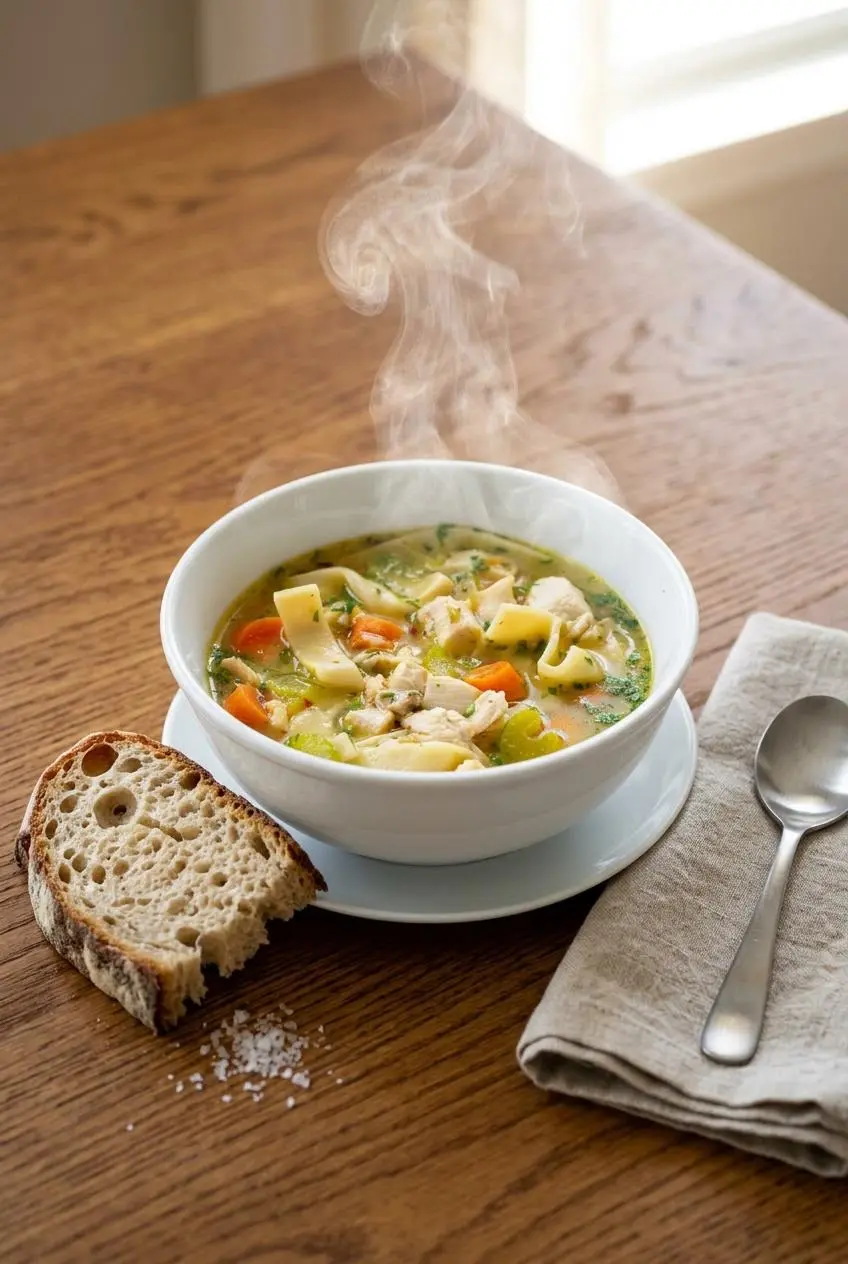
Build flavor in stages, then watch the noodles closely. The broth should taste balanced before the pasta goes in, because noodles absorb seasoning as they cook.
- Melt the butter in a large stock pot over medium-high heat, then cook the celery and carrots for 3 minutes.
The vegetables should begin to soften around the edges and smell lightly sweet, not brown. - Stir in the minced garlic and cook for 30 seconds.
As soon as the garlic smells fragrant, move on so it does not brown and turn sharp. - Pour in the chicken stock and add the rosemary, thyme, crushed red pepper flakes, salt, and black pepper.
Taste the broth before adding extra salt, then stir in Better Than Bouillon chicken flavor or bouillon granules if it needs more savory depth. - Bring the seasoned broth to a boil and add the homemade egg noodles or dry pasta.
Keep the broth at a steady boil until the noodles are al dente, with a tender outside and a slight firmness in the center. - Take the pot off the heat as soon as store-bought noodles are barely tender.
Residual heat continues cooking the pasta, so stopping early helps prevent a mushy texture. - Stir in the rotisserie chicken and taste once more before adjusting the seasonings.
The chicken should warm through while remaining moist and easy to pull apart with a spoon.
Serve the soup while the noodles still have some spring. A warm piece of crusty sourdough or a crisp green salad with lemon vinaigrette turns it into a full meal without competing with the broth.
Expert Tips for Success
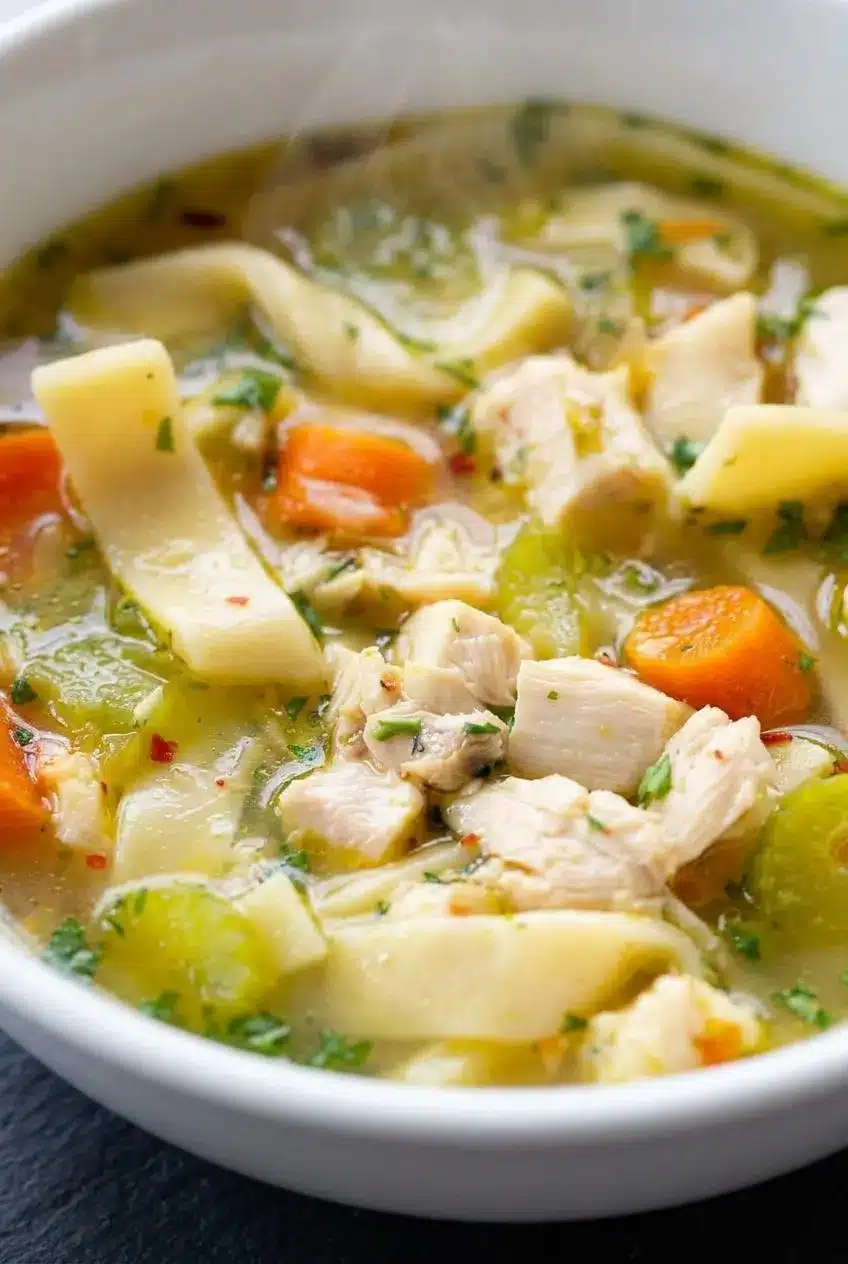
Small adjustments make the difference between a flat broth and one that tastes slow-simmered. Focus on seasoning in layers rather than adding a heavy dose of salt at the start.
- Broth tastes bland: Add bouillon paste or granules gradually after tasting. It boosts chicken flavor quickly, but it can also bring extra salt.
- Vegetables are still firm: Keep the carrot and celery pieces similar in size, then give them the full sauté time before adding liquid.
- Herbs seem faint: Stir the dried rosemary and thyme into the hot aromatics briefly before adding the stock. Their fragrance should bloom in the butter.
- Noodles turn soft: Stop cooking when they are just al dente, especially with store-bought egg noodles. The hot pot keeps working after the burner is off.
- Broth tastes too salty: Avoid adding more salt until after the bouillon and chicken are in the pot. Both can shift the seasoning quickly.
For a brighter finish, add a strip of fresh lemon peel while the broth simmers, then remove it before serving. A pinch of ground turmeric can deepen the golden color, but keep both additions optional so the classic herb flavor stays in charge. If citrus-forward soups are your thing, Greek lemon chicken soup takes that bright direction further.
Bone-in chicken can create a richer long-simmered broth, but it needs a different cooking approach and more time than this recipe allows. For this fast method, cooked rotisserie chicken is the better fit because it warms gently after the noodles are nearly done.
Customization Ideas and Variations
Keep the main soup as written, then change the finish when you want a different texture or a faster dinner plan. These options stay outside the core ingredient list and method.
Creamy Chicken Noodle Soup
For a velvety bowl, stir a splash of heavy cream or half-and-half into the soup during the final minute, after the chicken has warmed through. Keep the heat gentle so the dairy blends smoothly into the broth. For a fuller version built around that texture, make creamy chicken noodle soup.
Quick Rotisserie Chicken Variation
This recipe already uses rotisserie chicken, making it a strong choice when dinner needs to happen quickly. Use dry egg noodles rather than homemade noodles, keep the vegetable dice even, and lean on the bouillon only after tasting the broth. The result still has a savory, cooked-all-day feel in a much shorter cooking window.
For a hands-off approach with a different cooking schedule, crockpot chicken noodle soup is a useful alternative. Keep noodles separate until close to serving whenever texture matters.
Storage and Reheating Guidelines
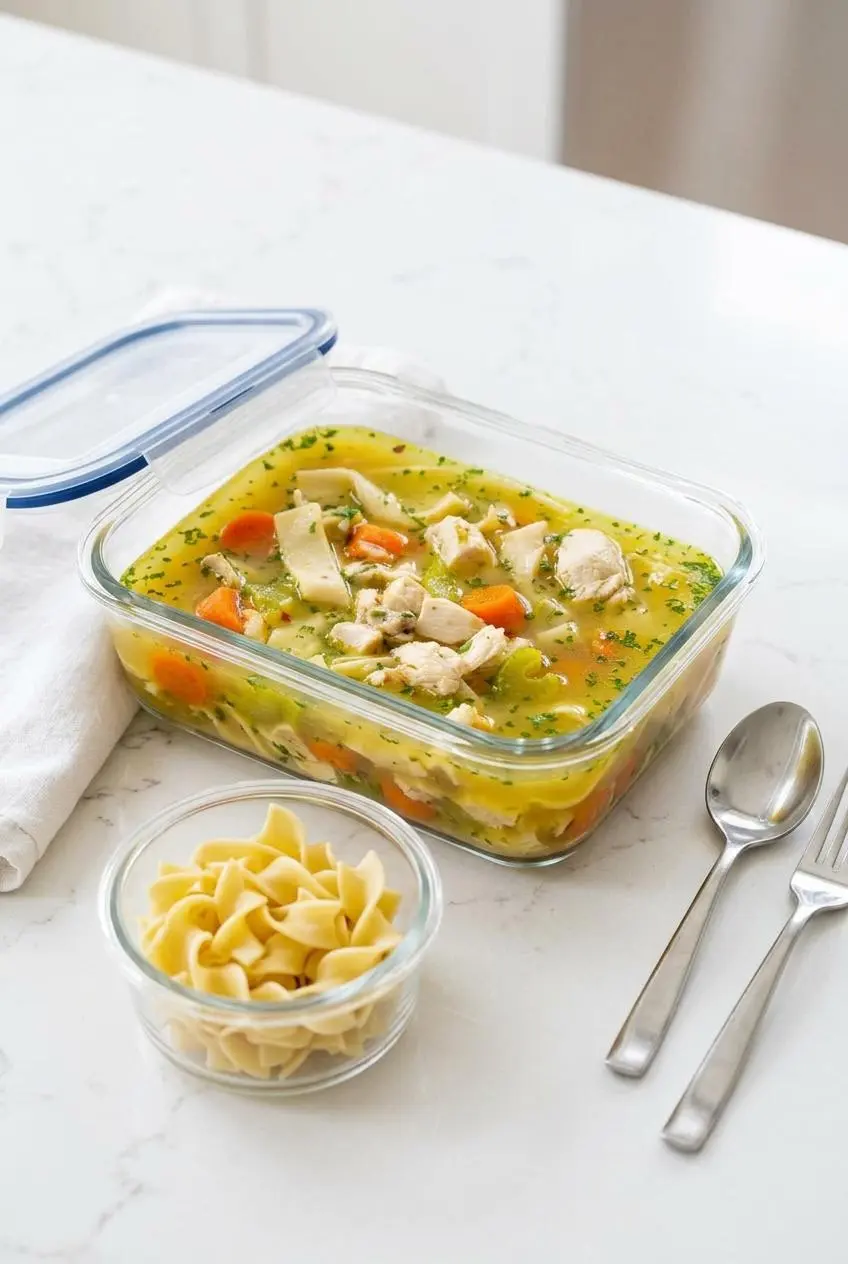
The best leftover strategy is to keep cooked noodles and broth in separate airtight containers. The noodles absorb broth as they sit, so storing them apart preserves both the pasta’s bite and the soup’s brothy texture.
For refrigerated leftovers, cool the soup promptly and keep it covered in the refrigerator. Refrigerate cooked leftovers within two hours and use them within three to four days. Reheat the broth gently in a saucepan, then add noodles only for the portion you plan to serve.
For longer-term storage, keep the broth, vegetables, and chicken separate from the noodles. Add freshly cooked noodles after the broth is heated, since pasta loses its best texture when held in broth for too long.
Conclusion
A fragrant pot of chicken noodle soup is hard to beat when you want a comforting meal without spending all day at the stove. Butter-softened vegetables, seasoned broth, rotisserie chicken, and properly timed noodles do the work.
Taste before every final seasoning adjustment, then serve it with warm crusty bread while the noodles are still tender and lively.
Frequently Asked Questions
What Are the Best Noodles to Use for Chicken Noodle Soup?
Wide egg noodles are the best all-around choice because they hold their shape well in hot broth and stay tender without becoming mushy too quickly. Use homemade egg noodles for a soft, traditional texture. Choose dry wide egg noodles for a fast, dependable option. Farfalle and other bite-size pasta work when egg noodles are unavailable.
How Can I Keep Noodles From Becoming Soggy in Leftover Soup?
Cook and store the noodles separately from the broth. Reheat only the amount of broth you need, then add noodles to each bowl just before serving. This prevents them from soaking up the broth and turning bloated.
Can You Freeze Chicken Noodle Soup?
For the best texture, keep noodles out of any portion you plan to preserve for later. Prepare fresh noodles when the broth and chicken are reheated, since cooked pasta does not hold its texture as well as the broth base.
How Do I Add Rich Flavor to Chicken Broth Quickly?
Sauté the celery, carrots, and garlic in butter first, then season the broth with rosemary, thyme, black pepper, and crushed red pepper flakes. Taste before adding concentrated chicken bouillon paste or granules, which can quickly deepen the chicken flavor.
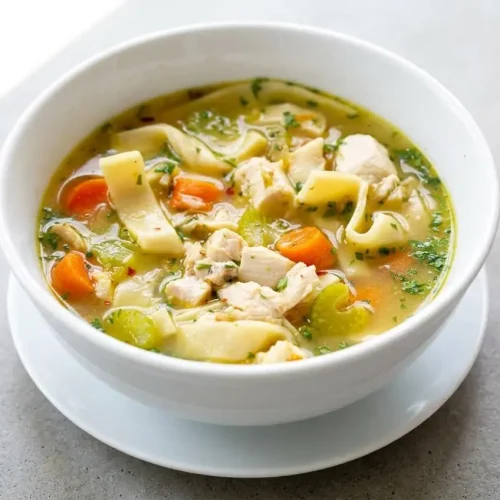
Chicken Noodle Soup Recipe

Equipment
- Large stock pot
Ingredients
- 1/2 Tablespoon butter
- 2 ribs celery diced
- 3-4 large carrots diced
- 1 clove garlic minced
- 10 cups chicken stock or broth
- 1 teaspoon salt to taste
- 1/2 teaspoon freshly ground black pepper to taste
- 1/8 teaspoon dried rosemary or more, to taste
- 1/8 teaspoon dried thyme
- 1/8 teaspoon crushed red pepper flakes
- 1 batch homemade egg noodles or 4 cups dry egg noodles, farfalle or other bite-size pasta
- 3 cups rotisserie chicken
- 1 teaspoon better than bouillon chicken flavor or more, as needed, or chicken bouillon granules
Instructions
- Melt the butter in a large stock pot over medium-high heat, then cook the celery and carrots for 3 minutes. The vegetables should begin to soften around the edges and smell lightly sweet, not brown.
- Stir in the minced garlic and cook for 30 seconds. As soon as the garlic smells fragrant, move on so it does not brown and turn sharp.
- Pour in the chicken stock and add the rosemary, thyme, crushed red pepper flakes, salt, and black pepper. Taste the broth before adding extra salt, then stir in Better Than Bouillon chicken flavor or bouillon granules if it needs more savory depth.
- Bring the seasoned broth to a boil and add the homemade egg noodles or dry pasta. Keep the broth at a steady boil until the noodles are al dente, with a tender outside and a slight firmness in the center.
- Take the pot off the heat as soon as store-bought noodles are barely tender. Residual heat continues cooking the pasta, so stopping early helps prevent a mushy texture.
- Stir in the rotisserie chicken and taste once more before adjusting the seasonings. The chicken should warm through while remaining moist and easy to pull apart with a spoon.