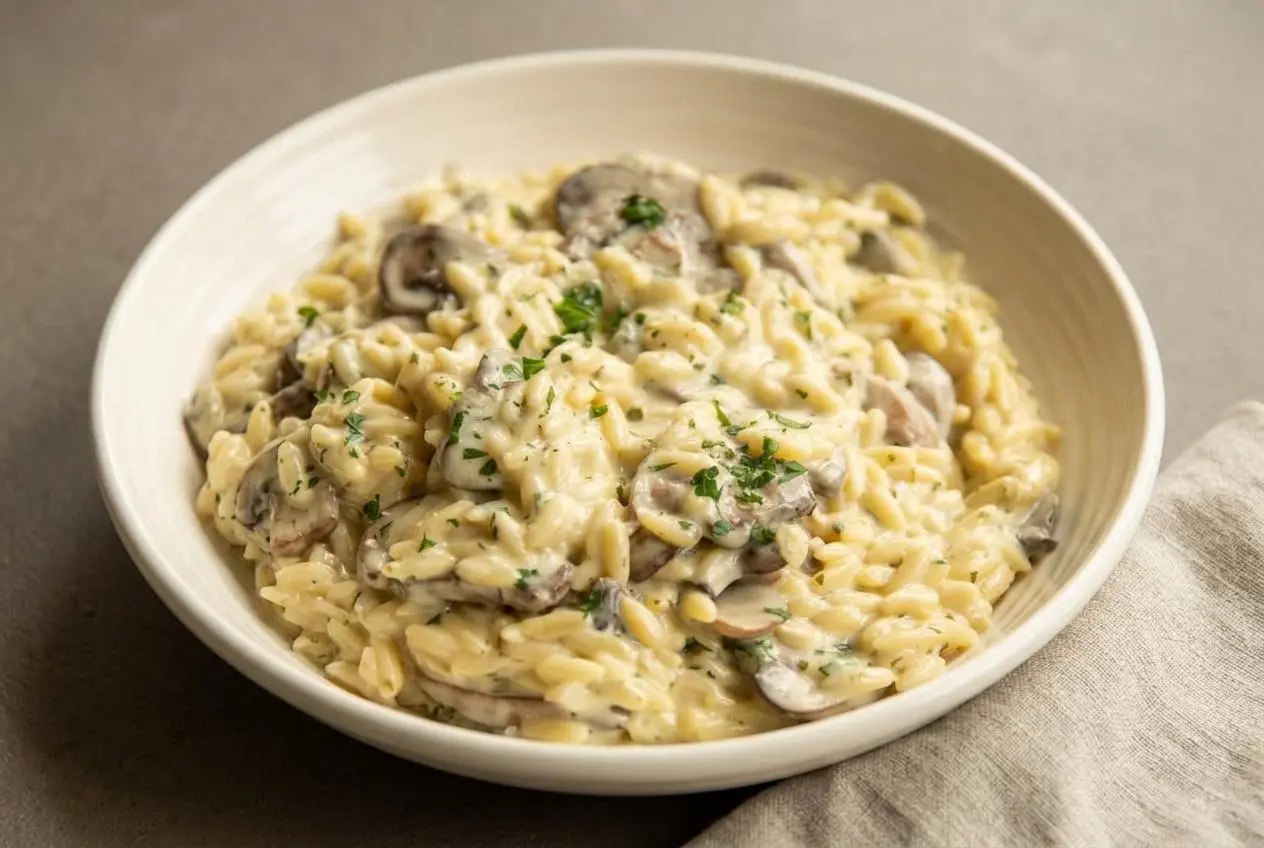
Cook rice-shaped orzo directly in broth and cream with browned mushrooms for a silky, risotto-style dinner without a separate pot of pasta water. This recipe serves four and takes 45 minutes total, including prep and mushroom browning.
Creamy Mushroom Orzo brings together earthy mushrooms, fragrant garlic butter, and a sauce that clings to every little piece of pasta. The mushrooms get their own turn in the hot pot before the orzo goes in, giving the finished dish savory depth rather than just creaminess.
It’s a comforting dinner with one pot to wash and no separate sauce to juggle. A gentle simmer and an off-heat Parmesan finish keep the texture glossy. The browning makes the difference.
Grate the Parmesan and measure the liquids before heating the pot so you can give the mushrooms your full attention.
Essential Ingredients for Deep Mushroom Flavor
Mushrooms supply earthy depth, wine balances the dairy richness, and broth hydrates the pasta. Onion, garlic, and herbs build aroma, while cream, butter, Parmesan, and the orzo’s own starch create the silky sauce.
- Olive Oil, (as needed)
- 1lb / 500g Mushrooms, (sliced (here I use Chestnut Mushrooms))
- 2 tbsp Butter
- 1 medium Onion (finely diced)
- 2 fat cloves of Garlic, (minced)
- 1/2 cup / 120ml Dry White Wine
- 2 cups / 400g Uncooked Orzo
- 3 1/2 cups / 875ml Chicken Stock, (or as needed)
- 1 cup / 250ml Heavy/Double Cream (at room temp)
- 1 tbsp finely diced Fresh Parsley
- 2 tsp finely diced Fresh Thyme
- 1/2 cup / 40g freshly grated Parmesan
- Salt & Black Pepper, (to taste)
Dry white wine does two jobs: it lifts the browned bits from the pot and adds acidity to balance the cream and butter. Choose a dry wine rather than a sweet one, and reduce it thoroughly before adding the pasta. The pot should look nearly dry, not like it still holds a pool of wine.
Use chicken stock with a flavor you enjoy, since the orzo absorbs it rather than cooking in water that gets drained away. Stock and Parmesan vary in saltiness, so leave the final seasoning adjustment until after the cheese goes in.
Room-temperature cream blends readily into the cooking liquid. Freshly grated Parmesan adds savory flavor and helps give the finished sauce body; finely grated cheese also disperses more easily than large shreds. Packaged grated cheese can contain anti-caking ingredients that make a smooth finish harder to achieve.
I look for firm mushrooms with dry surfaces and avoid packages with slimy patches or a puddle of moisture.
Selecting the Best Mushroom Blend
Chestnut mushrooms and cremini are excellent choices for a rounded, earthy flavor. White button mushrooms work too, with a milder result. Browning them well matters more than choosing an expensive variety.
For a more distinctive mushroom flavor, replace part of the mushrooms with a cultivated specialty mix, such as shiitake or oyster mushrooms. Trim tough stems where needed and keep the pieces reasonably similar in size so they cook evenly.
Don’t assume a mushroom blend will brown faster simply because it sounds more flavorful. Surface moisture, slice thickness, and crowding all affect browning. Give the slices room and let their first side develop color before moving them.
The Role of Starch and Broth in Sauce Emulsion
Orzo is pasta, also called risoni, rather than rice. As it cooks directly in the broth, it releases starch into the liquid. That starch thickens the sauce and helps the broth, cream, and butter stay together in a glossy coating without a flour roux.
The liquid balance changes as the pasta absorbs moisture and steam escapes. Different orzo brands and pot shapes can behave differently, so use the listed stock amount as your starting point and the pasta’s texture as your guide. If the sauce gets thick while the center is still firm, it needs more hot stock, not a higher flame.
How to Make Creamy Mushroom Orzo
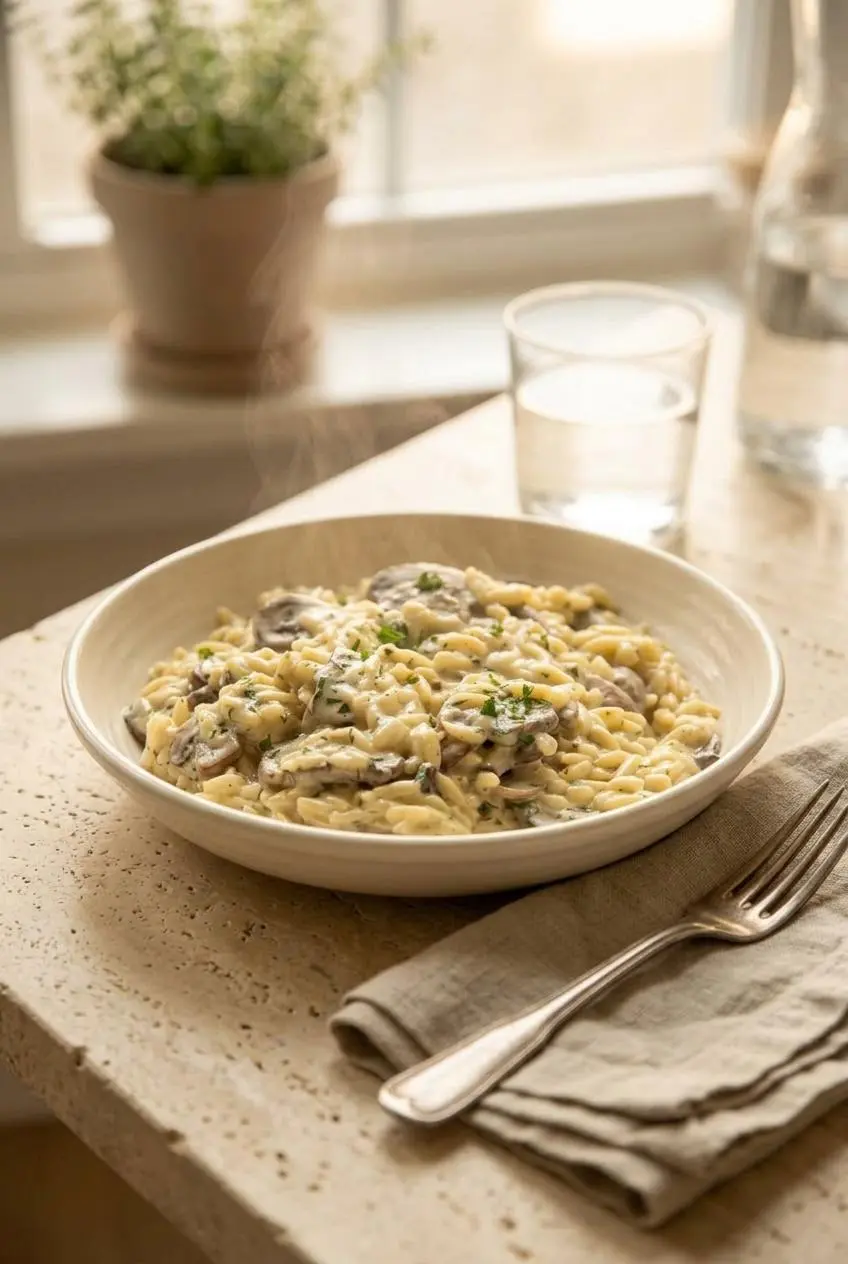
Allow 10 minutes for prep and about 35 minutes for cooking. Use a large pot, a wooden spoon, and a fine cheese grater; a pot with enough room for the mushrooms to spread out makes the first stage easier.
- Heat a drizzle of olive oil in a large pot over medium-high heat and arrange half the sliced mushrooms across the bottom.
Let the undersides develop a golden-brown surface before turning them rather than stirring continuously. - Turn the mushrooms, season with salt and pepper, finish browning them, and transfer them to a bowl; cook the remaining mushrooms the same way, adding oil as needed.
Both batches should have browned edges and a deeper, nutty aroma instead of looking pale and wet. - Use the same pot to melt 1 tbsp butter, soften and lightly brown the diced onion, then stir in the garlic for about 30 seconds.
The onion should look tender, and the garlic should smell fragrant without taking on dark color. - Add the white wine and simmer for about 5 minutes, using the spoon to loosen the browned residue from the bottom.
Wait until almost all the wine has evaporated and only a little concentrated moisture remains. - Add the uncooked orzo and browned mushrooms, followed by the stock, cream, parsley, and thyme, then stir and bring everything to a simmer.
The pasta should sit in a loose, creamy liquid with the mushrooms and herbs distributed throughout. - Reduce the heat slightly and cook at a gentle simmer, stirring frequently across the bottom until the orzo reaches al dente.
The liquid should thicken into a glossy sauce while the pasta becomes tender with a small amount of resistance at its center. - Move the pot off the heat, incorporate the Parmesan and remaining 1 tbsp butter, adjust the salt and pepper, and loosen with hot stock or water if needed.
The finished orzo should flow softly when stirred rather than hold together as a stiff mound.
Watch the sauce as well as the pasta. Early in the simmer, the liquid bubbles freely between the pieces of orzo. Later, it coats them and briefly parts behind the spoon. Start tasting as the pasta softens, and check closely near the end rather than relying on a fixed simmering time.
Once the orzo has a tender bite, remove the pot from the heat. Don’t wait for the sauce to become as thick as you want it on the plate: the cheese finish and the pasta’s continued absorption will tighten it further. Serve promptly, with extra Parmesan or parsley if desired.
Mastering the Creamy One-Pot Technique
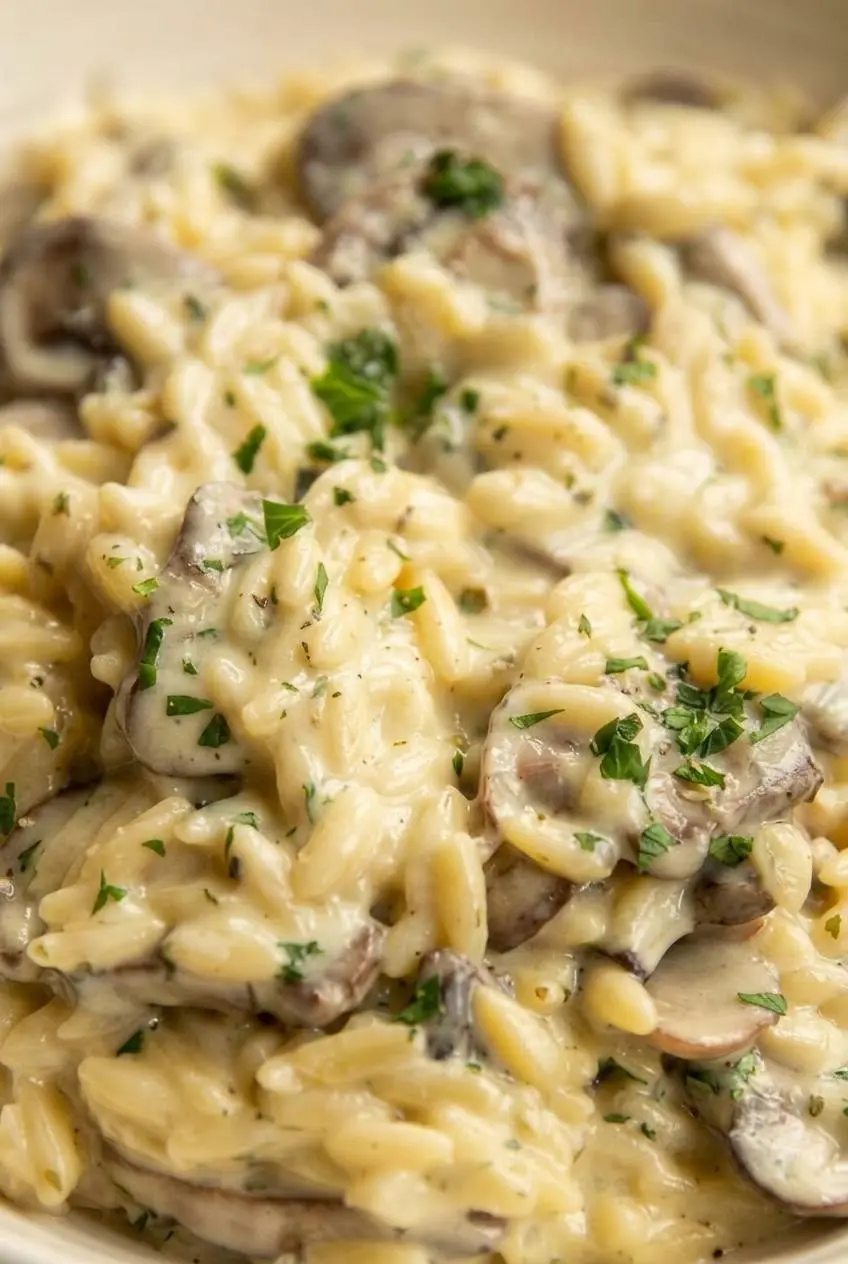
The best texture comes from controlling evaporation, not stirring as fast as possible. Maintain small, steady bubbles and sweep the spoon across the bottom and into the corners of the pot, where pasta can collect.
For browning, keep the mushroom batches uncrowded and follow the seasoning order in the method. A crowded pot traps moisture around the slices, so they spend more time steaming before their surfaces can brown. Give each batch time to develop color rather than chasing it around the pot.
- Thick sauce, firm pasta: The liquid has reduced before the orzo finished cooking; add hot stock in splashes and continue the gentle simmer.
- Tender pasta, slightly loose sauce: Finish with Parmesan and butter off the heat before deciding it needs more cooking, since both help the sauce gain body.
- Pasta catching on the bottom: Lower the heat, stir thoroughly along the base, and add stock if the mixture no longer moves freely.
- Orzo stiffening before serving: Continued absorption has tightened the sauce; stir in a splash of warm stock or water to restore its flow.
- Grainy cheese finish: Excessive heat or coarse cheese can make blending difficult; take the pot off the burner and add finely grated Parmesan while stirring.
- Flavor seems flat: Taste after the cheese goes in, then adjust salt and black pepper rather than adding more cream.
If the bottom actually scorches, avoid scraping burnt residue into the sauce. Transfer the unburned portion to a clean pot and loosen it gently. Extra liquid can help the texture, but it won’t remove a burnt flavor.
Recipe Variations and Dietary Swaps
Keep these changes optional and separate from the main ingredient list. They offer different flavors and textures, so adjust the sauce by feel rather than expecting every version to behave identically.
- Brighter finish: Add fresh lemon zest after cooking for citrus aroma without extra liquid.
- Warm spice: A light touch of ground nutmeg complements the cream without overpowering the mushrooms.
- Sweet peas: Add them near the end of the simmer and let them become tender before finishing the sauce.
- Without wine: Replace the wine with the same volume of chicken or vegetable broth, then add a little fresh lemon juice to taste after cooking.
Spinach and Mushroom Orzo
Fold fresh baby spinach into the pot during the final stage of simmering. Stir until the leaves wilt evenly, then finish with the cheese and butter as usual.
Fresh spinach adds color and a mild leafy flavor. If you use cooked spinach instead, squeeze out excess moisture before adding it so it doesn’t dilute the sauce. Let the pasta’s doneness guide the finish rather than extending the simmer just to thicken liquid released by the greens.
Dairy-Free and Vegan Adaptations
For a plant-based version, replace the chicken stock with vegetable broth, use olive oil or dairy-free butter in place of butter, and swap the heavy cream for unsweetened cashew cream. Finish with dairy-free Parmesan or nutritional yeast instead of dairy cheese.
Cashew cream offers body, but its thickness varies. Use the cream volume as a starting point and loosen with vegetable broth if the sauce becomes too dense. Nutritional yeast gives savory flavor rather than the same melting behavior as Parmesan, so taste and adjust gradually.
For a less rich dairy version, replace part of the cream with additional broth. The orzo’s starch will still give the sauce body, although the result won’t have the same richness. Avoid treating thin milk as a straight substitute for heavy cream and boiling it hard.
Protein Additions with Chicken or Chickpeas
- Cooked chicken: Fold in shredded cooked chicken during the final simmer so it heats through without a prolonged boil.
- Chickpeas: Drain and rinse canned chickpeas, then add them near the end so they warm through while retaining their shape.
Add either gradually, leaving enough sauce to coat the orzo. For a separate chicken-centered dinner with a citrus finish, try creamy lemon chicken orzo.
Storage, Make-Ahead, and Reheating Directions
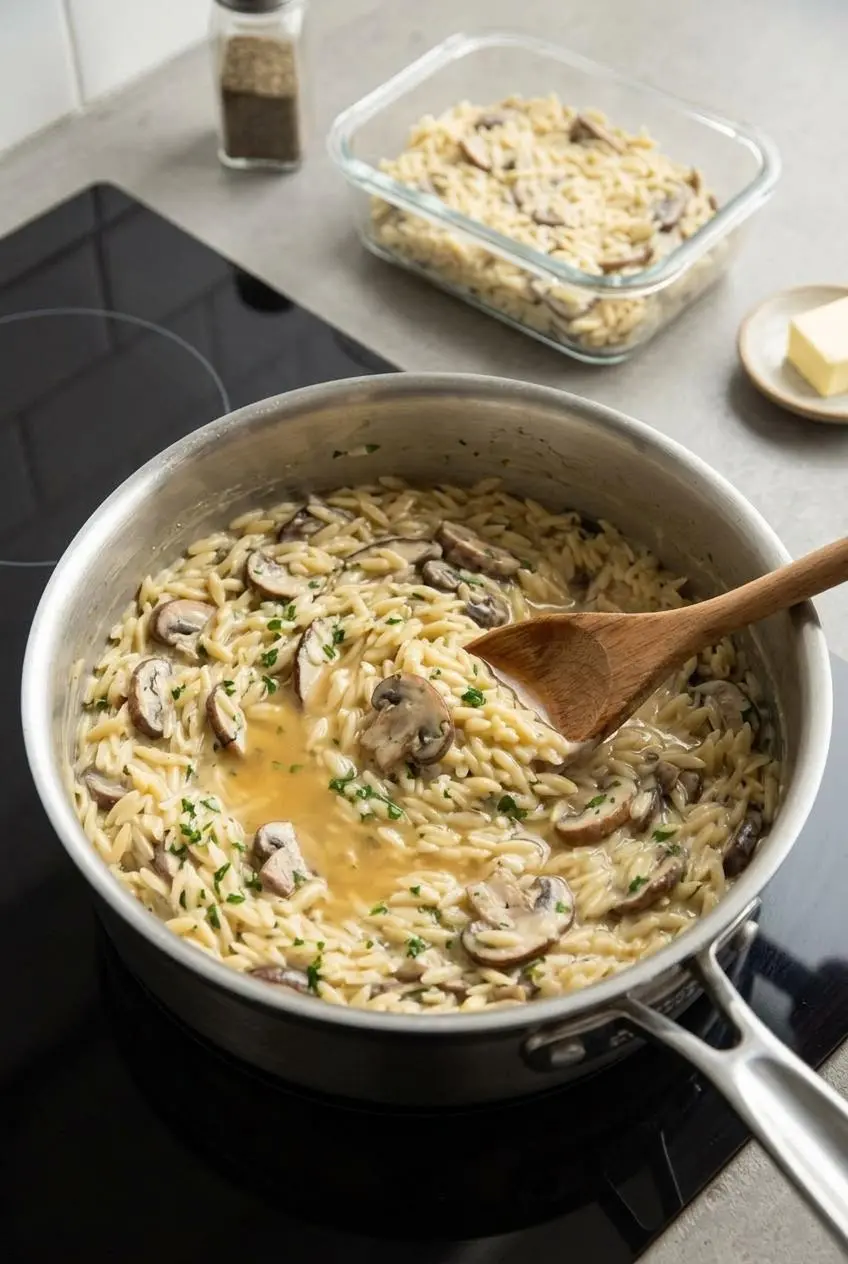
Orzo keeps absorbing sauce as it cools, so chilled leftovers will look firmer than the freshly cooked dish. That texture change is expected; added moisture and gentle heat help restore a creamy consistency.
Refrigerate leftovers promptly in shallow, airtight containers rather than leaving the pot at room temperature. Keep any extra parsley separate to add after reheating.
For less work at cooking time, organize the measured ingredients and prepare the aromatics separately, keeping perishable ingredients chilled. Cook the orzo close to serving for the best texture rather than trying to hold the finished pot warm.
To reheat, put the portion you need in a saucepan with a splash of broth, milk, or water. Warm over low heat, stirring gently and adding more liquid as the pasta loosens, until hot throughout. Avoid boiling it vigorously or cooking it down until dry.
Add liquid gradually rather than flooding the pan at the start. The goal is a sauce that coats the pasta, not a soup. Reheated orzo may be softer than it was freshly cooked, so stop heating once it is hot and creamy.
Conclusion
This one-pot dinner gets its depth from browned mushrooms and its silky finish from pasta starch, cream, and Parmesan. Give the mushrooms space to sear, then fold in the cheese off the heat.
Serve it with a crisp peppery salad or warm crusty bread, plus fresh parsley if you like. Bring it to the table while the sauce still flows easily from the spoon.
Frequently Asked Questions
How Can You Make Orzo Creamier?
Simmer it directly in broth and cream rather than boiling and draining it separately. Stir regularly to distribute the released starch, then finish with finely grated Parmesan and butter off the heat. Keep enough liquid in the pot for the sauce to stay loose.
What Cheese Is Best in Mushroom Orzo?
Freshly grated Parmigiano-Reggiano is a good choice for savory flavor and a smooth finish. Pecorino Romano is a sharper, saltier alternative, so adjust the final seasoning carefully. Avoid packaged grated cheese when possible, and add either cheese off the heat.
How Do You Keep Orzo from Sticking to the Pot?
Use a gentle simmer and stir across the entire bottom regularly. If the pasta starts dragging against the pot while it’s still firm, lower the heat and add hot stock. Stirring alone won’t solve a mixture that has run out of liquid.
Can Creamy Mushroom Orzo Be Made Without Wine?
Yes. Use the same volume of chicken or vegetable broth to loosen the browned bits instead. Add a little fresh lemon juice after cooking, tasting as you go, to balance the richness without making the sauce sour.
How Can You Reheat Creamy Mushroom Orzo Without Drying It Out?
Warm it gently in a saucepan with a splash of broth, milk, or water. Stir and add more liquid as needed until the pasta is hot throughout and the sauce coats it again. Avoid reheating it dry or reducing the sauce aggressively.
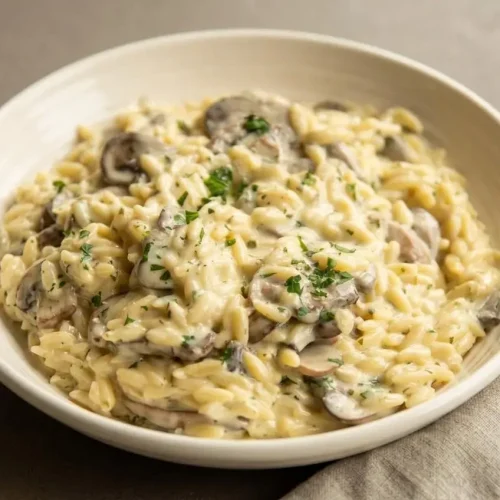
Creamy Mushroom Orzo

Equipment
- Sharp Knife & Chopping Board
- Large Pot & Wooden Spoon
- Fine Cheese Grater
- Jug (for stock)
Ingredients
- Olive Oil (as needed)
- 1 lb Mushrooms 500g, sliced (here I use Chestnut Mushrooms)
- 2 tbsp Butter
- 1 medium Onion finely diced
- 2 fat cloves Garlic minced
- 1/2 cup Dry White Wine 120ml
- 2 cups Uncooked Orzo 400g
- 3 1/2 cups Chicken Stock 875ml, or as needed
- 1 cup Heavy/Double Cream 250ml, at room temp
- 1 tbsp Fresh Parsley finely diced
- 2 tsp Fresh Thyme finely diced
- 1/2 cup freshly grated Parmesan 40g
- Salt & Black Pepper (to taste)
Instructions
- Heat a drizzle of olive oil in a large pot over medium-high heat and arrange half the sliced mushrooms across the bottom. Let the undersides develop a golden-brown surface before turning them rather than stirring continuously.
- Turn the mushrooms, season with salt and pepper, finish browning them, and transfer them to a bowl; cook the remaining mushrooms the same way, adding oil as needed. Both batches should have browned edges and a deeper, nutty aroma instead of looking pale and wet.
- Use the same pot to melt 1 tbsp butter, soften and lightly brown the diced onion, then stir in the garlic for about 30 seconds. The onion should look tender, and the garlic should smell fragrant without taking on dark color.
- Add the white wine and simmer for about 5 minutes, using the spoon to loosen the browned residue from the bottom. Wait until almost all the wine has evaporated and only a little concentrated moisture remains.
- Add the uncooked orzo and browned mushrooms, followed by the stock, cream, parsley, and thyme, then stir and bring everything to a simmer. The pasta should sit in a loose, creamy liquid with the mushrooms and herbs distributed throughout.
- Reduce the heat slightly and cook at a gentle simmer, stirring frequently across the bottom until the orzo reaches al dente. The liquid should thicken into a glossy sauce while the pasta becomes tender with a small amount of resistance at its center.
- Move the pot off the heat, incorporate the Parmesan and remaining 1 tbsp butter, adjust the salt and pepper, and loosen with hot stock or water if needed. The finished orzo should flow softly when stirred rather than hold together as a stiff mound.