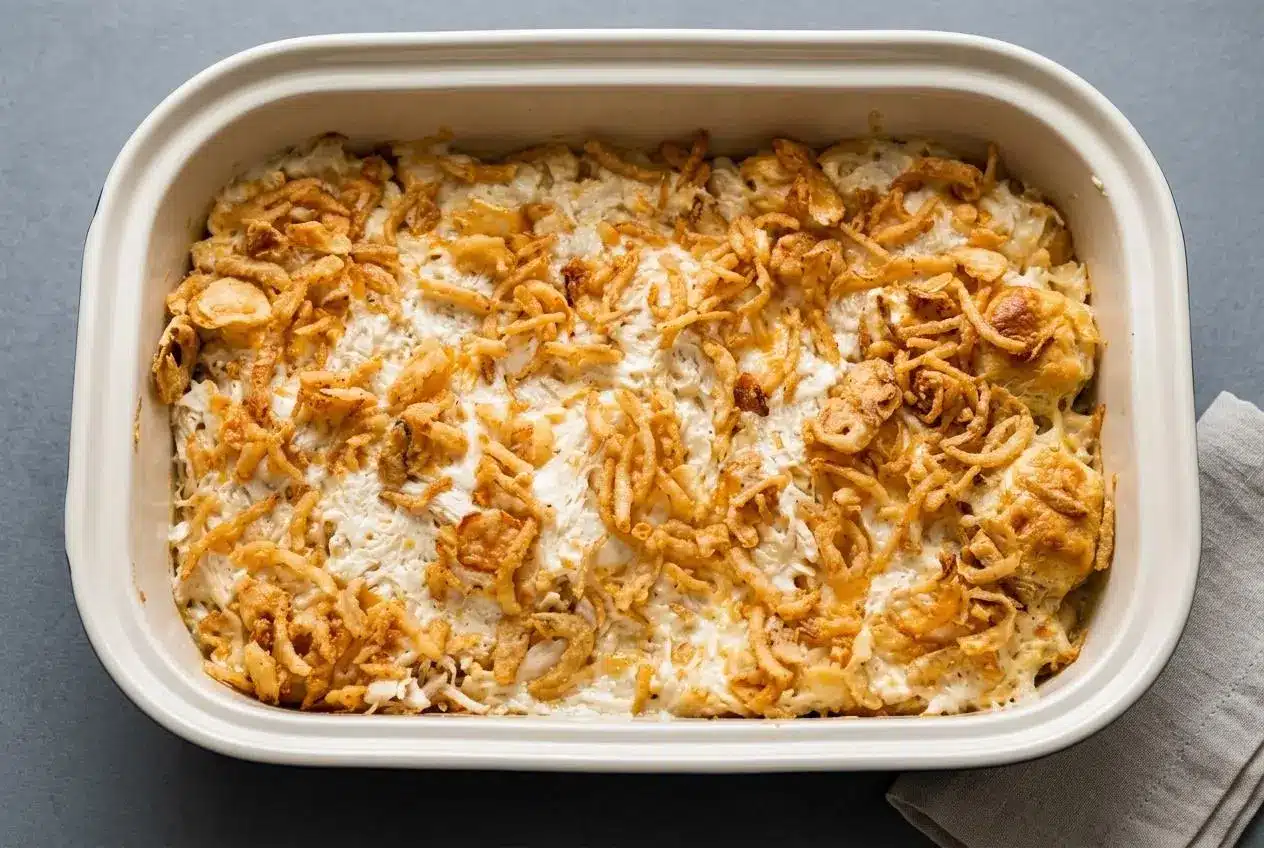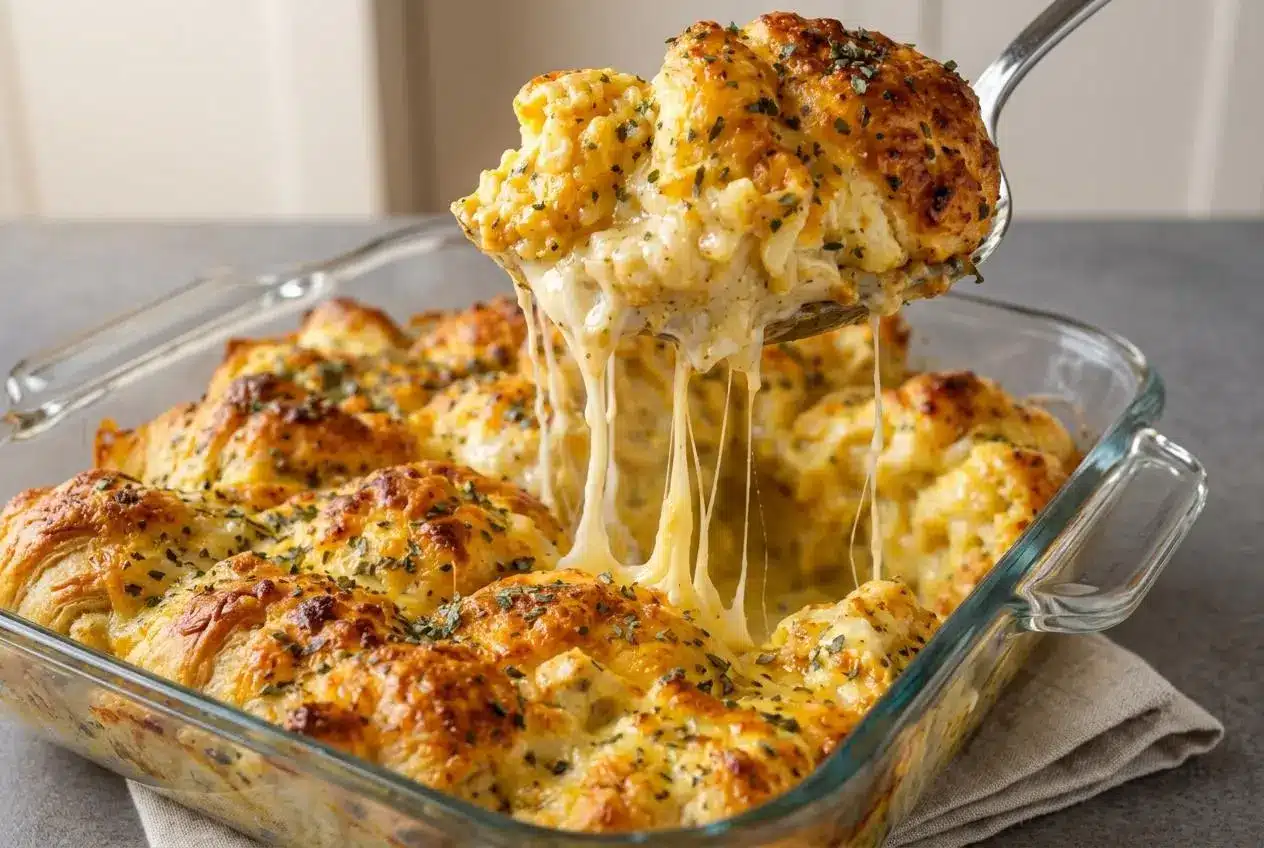
Seasoned chicken and cream cheese fill flaky crescent rolls, then bake under a creamy cheddar sauce at 350°F for 30 minutes until golden and bubbling.
This chicken crescent roll casserole turns cooked chicken into a warm, creamy dinner with buttery pastry around every bite. It is especially handy when you want a satisfying casserole without spending the evening at the stove.
The cheddar sauce bubbles around the rolls while the tops turn deeply golden and fragrant. The key is a modest filling.
Set the cream cheese and butter out before you start so they mash into a smooth filling instead of leaving little cold lumps behind.
Ingredients
Each ingredient contributes to the creamy filling, tender pastry base, rich sauce, or browned cheddar topping that gives this casserole its comforting texture.
- 2 (8 oz) cans Pillsbury Refrigerated Crescent Dinner Rolls
- 1 (10 3/4 oz) can cream of chicken soup, undiluted
- 3/4 cup grated cheddar cheese
- 1/2 cup heavy whipping cream
Filling
- 4 oz cream cheese, room temperature
- 4 tbsp butter, room temperature
- 1 tsp garlic powder
- 1/3 cup onion, finely chopped
- 2 large cooked chicken breasts, finely chopped (about 2 cups)
- 1/2 cup finely grated cheddar cheese
- 1/2 tsp seasoning salt
- 1/2 tsp ground black pepper
- 2–4 tbsp heavy whipping cream
Topping
- 1–2 cups grated cheddar cheese
Room-temperature cream cheese and butter coat the chopped chicken, helping the filling stay soft and cohesive. Heavy cream loosens the condensed soup into a velvety sauce, while cheddar adds savory depth inside the rolls and across the top.
I prefer grating cheddar from a block for this casserole because it melts into a smoother blanket over the pastry.
Key Ingredients and Smart Substitutions
The combination works because each component has a different job. Crescent dough provides a flaky shell, cooked chicken makes the filling substantial, and the cream cheese and butter give chopped chicken a rich, spreadable binder instead of a dry, crumbly texture.
Use sharp cheddar for a stronger cheesy flavor, Monterey Jack for a milder and especially melty finish, or mild Swiss for a gentle nuttiness. Bagged shredded cheese can work, but block cheese generally melts more smoothly because it has less anti-caking starch clinging to the shreds.
The cream of chicken soup and heavy cream form the sauce that keeps the lower portion of each roll tender. Keep the sauce layer beneath the rolls thin, then spoon the rest over the top. That balance gives you creamy edges without soaking the dough.
Choosing Your Chicken: Rotisserie vs Breasts
Use fully cooked chicken only, whether it comes from roasted breasts or a rotisserie bird, and measure about 2 cups after chopping. Roasted chicken breasts give you more control over seasoning and sodium, while rotisserie meat makes this a faster weeknight assembly.
If you enjoy relying on prepared chicken for cozy bakes, a rotisserie chicken casserole is another practical dinner path. Remove skin and any bones first, then chop the meat finely so it rolls neatly inside the dough.
Homemade Cream Sauce Alternative
For a scratch-style option, make a quick roux in a small saucepan with 2 tbsp melted butter and 2 tbsp all-purpose flour. Slowly whisk in 1 cup chicken broth and a splash of heavy cream, then cook until thickened and season with garlic powder and onion powder to taste. This is an optional sauce swap, not part of the ingredient list above.
Let the sauce thicken enough to coat a spoon, but do not cook it until it becomes stiff. A pourable sauce settles between the rolls and creates those creamy, bubbly edges.
How to Make Chicken Crescent Roll Casserole
Work in this order so the filling stays smooth, the rolls seal easily, and the sauce lands where it helps most. A 9×13-inch baking dish gives the rolls room to expand while keeping the sauce at the right depth.
- Heat the oven to 350°F and butter a 9×13-inch baking dish.
Coat the corners and bottom evenly so the sauce and pastry release more easily after baking. - Warm the cream of chicken soup, 3/4 cup grated cheddar cheese, and 1/2 cup heavy whipping cream in a small pot over medium heat.
Stir until the cheese disappears into a smooth sauce, then remove the pot from the heat. - Mash the room-temperature cream cheese, room-temperature butter, and garlic powder together in a mixing bowl with a fork.
The mixture should look soft and uniform with no firm bits of cream cheese remaining. - Stir in the chopped chicken, onion, 1/2 cup finely grated cheddar cheese, seasoning salt, black pepper, and 2–4 tbsp heavy whipping cream.
The filling should hold together and feel creamy enough to scoop without becoming runny. - Separate and unroll the crescent dough, then place 1 level tablespoon of filling on the wide end of each triangle and roll toward the pointed end.
Keep the filling centered and tuck the dough around it so the seams stay closed as the rolls expand. - Spoon a thin coating of the cheese sauce across the bottom of the buttered dish.
The sauce should lightly cover the dish rather than form a deep pool beneath the pastry. - Set the filled crescent rolls over the sauce in the baking dish.
Arrange them snugly with a little space for the dough to puff and brown. - Pour the remaining cheese sauce over the rolls.
Leave some dough exposed on top so it can develop a golden, flaky finish. - Scatter the grated cheddar cheese over the casserole.
The cheese should cover the rolls lightly and melt into the sauce as it bakes. - Bake for 30 minutes.
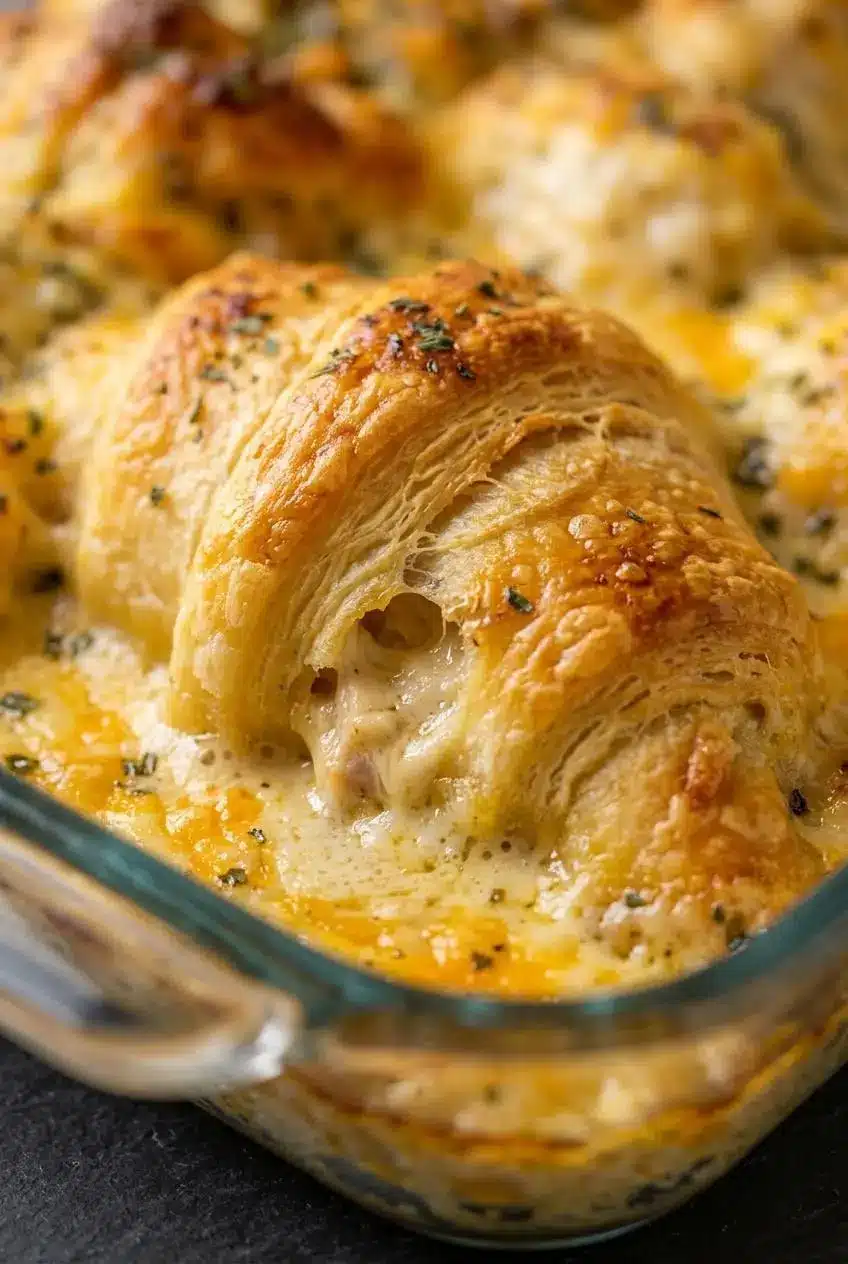
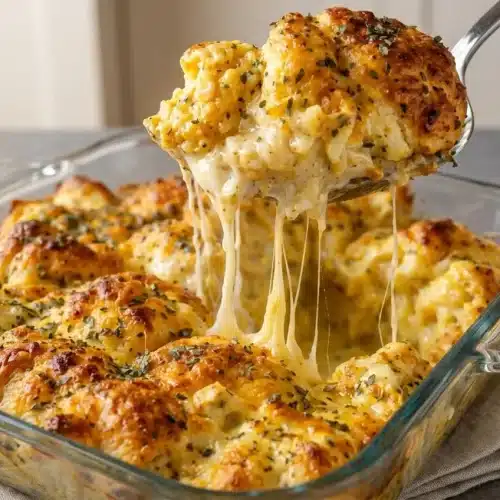
The casserole is ready when the tops are golden, the edges bubble actively, and the kitchen smells buttery and savory.
Essential Success Tips and Troubleshooting
Small assembly choices make the difference between flaky crescents and a casserole with split seams or damp bottoms.
- Soggy bottoms: Too much sauce beneath the rolls traps moisture. Spread only a thin layer in the dish, keep the casserole uncovered, and leave some dough exposed above the sauce.
- Filling leaks from the rolls: Overstuffed triangles burst as the dough expands. Stick to one level tablespoon of filling and roll from the wide end with the side edges tucked inward.
- Lumpy chicken filling: Cold cream cheese and butter do not blend evenly. Let both soften first, then mash them thoroughly with the garlic powder before adding chicken.
- Pale pastry tops: The rolls may be sitting under too much sauce. Make sure the top ridges remain visible when you pour the sauce and add the cheddar.
- Loose sauce when serving: Give the baked casserole 5 minutes to rest after it comes out of the oven. The melted cheese and sauce settle into cleaner, scoopable portions.
- Dry chicken: Finely chop cooked chicken rather than leaving it in large chunks, so the cream cheese mixture can coat it evenly.
Make Ahead and Reheating
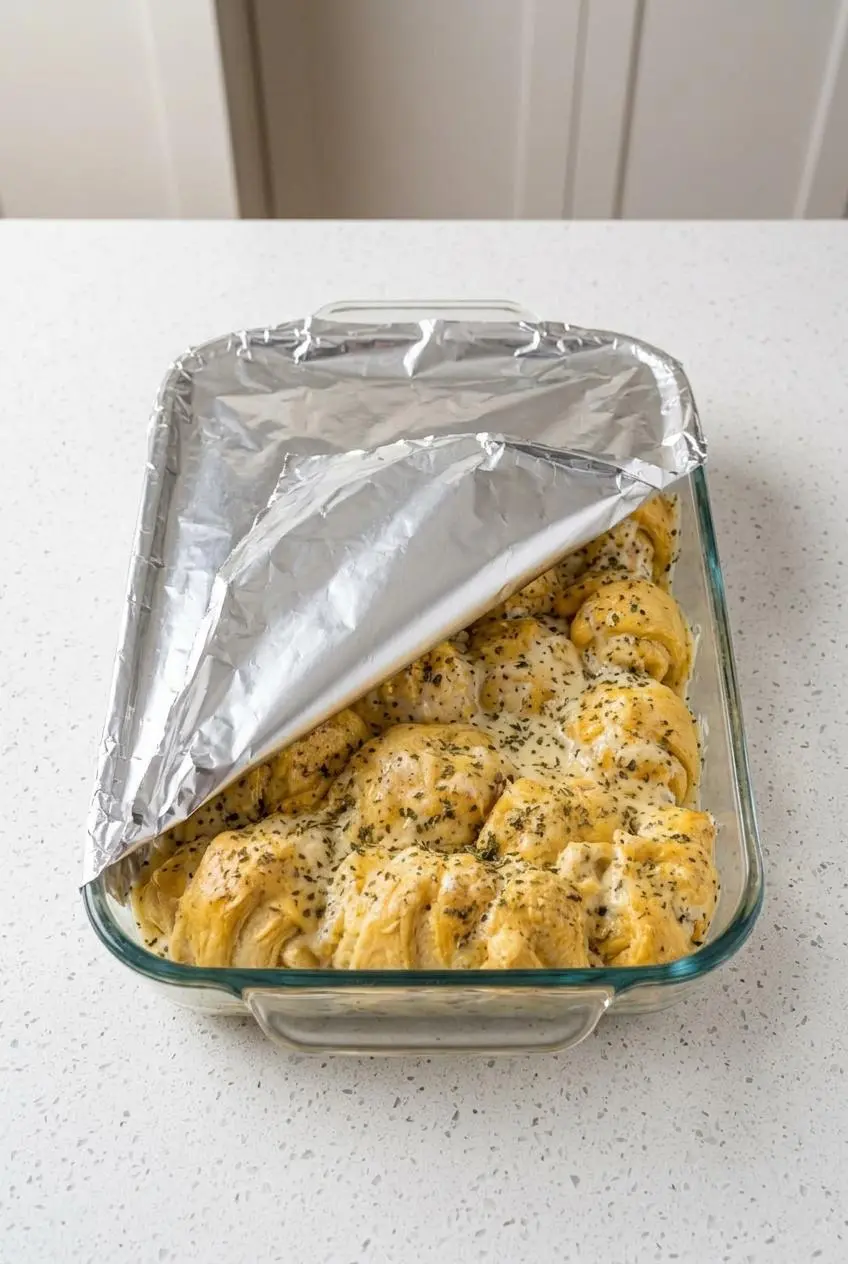
You can assemble the filled rolls and sauce ahead on the day you plan to bake. Cover the dish tightly, keep it chilled, and bake while the dough is still cold rather than leaving the assembled casserole on the counter.
For the best crescent texture, avoid freezing the unbaked dish. Raw crescent dough can absorb moisture from the sauce and lose some of its lift, so this casserole is at its best baked fresh.
Reheat portions in a 350°F oven under foil until warmed through, then uncover briefly to revive the top crust. For a poultry casserole or leftovers, heat the center to 165°F before serving.
Cool leftovers promptly, transfer them to a covered container, and keep them chilled. Reheat only the portion you plan to serve so the pastry has the best chance of staying tender underneath and lightly crisp on top.
Delicious Variations and Serving Suggestions
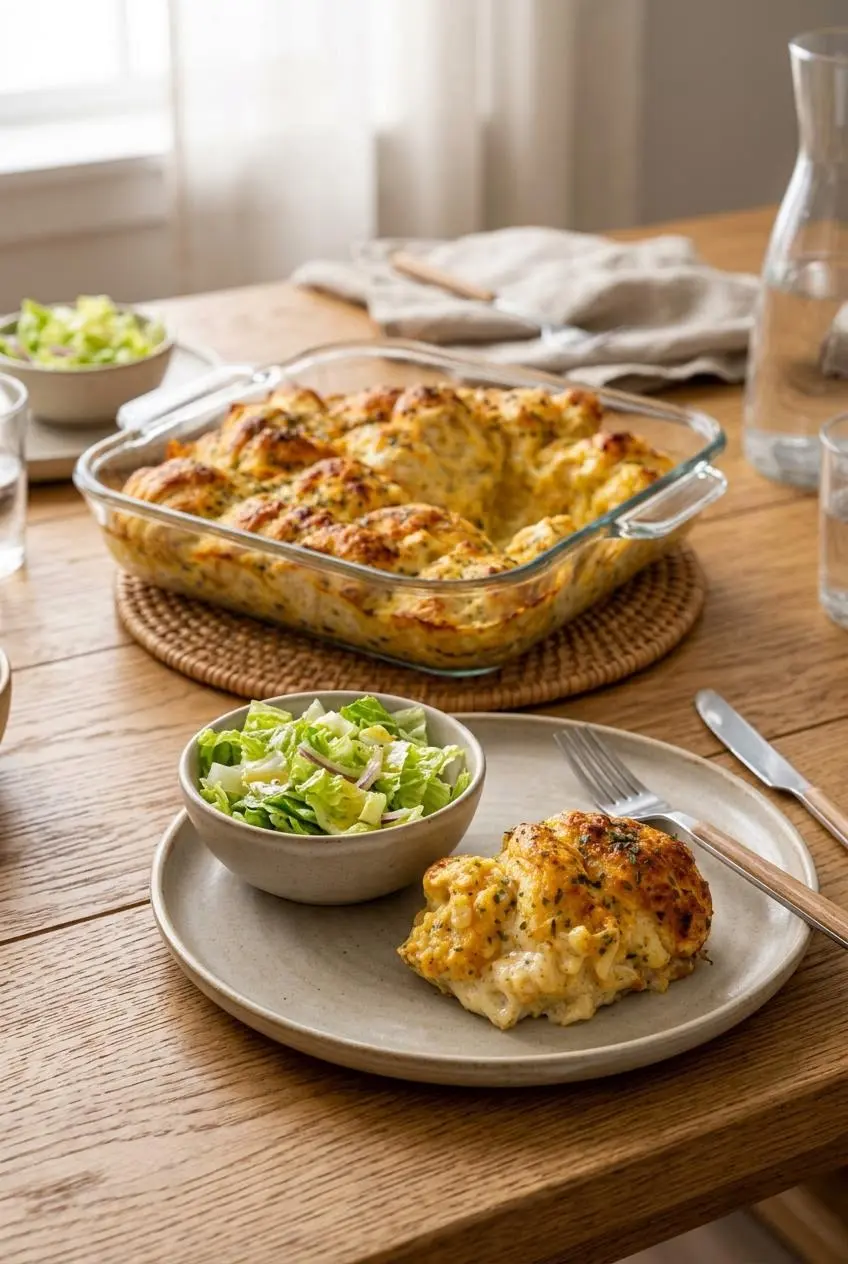
Keep the main casserole as written, then use these optional ideas when you want a different flavor or a more complete dinner.
- Herby Dijon sauce: Stir a little Dijon mustard and fresh thyme into the warm sauce for gentle tang and a savory herbal edge.
- Mushroom addition: Sauté mushrooms until their moisture cooks away, then fold them into the filling for deeper savory flavor without watering down the rolls.
- Turkey swap: Use finely chopped leftover roasted turkey in place of chicken for a cozy post-holiday meal. Keep the same rolling and sauce method.
- Different cheese: Replace cheddar with Monterey Jack for a milder pull or smoked Gouda for a more pronounced savory finish.
Broccoli and Cheddar Chicken Crescent Bake
For a vegetable-forward variation, fold well-steamed, finely chopped broccoli florets into the filling or tuck them between the rolls. Drain broccoli thoroughly first, and squeeze baby spinach dry before using it, because excess moisture is the quickest route to soft pastry.
If broccoli and cheddar are already a favorite combination at your table, this chicken broccoli casserole offers another hearty dinner built around those flavors.
Balanced Sides to Cut the Richness
A fresh, tangy side makes the creamy filling feel even more satisfying. Try one of these easy pairings:
- Crisp romaine tossed with lemon vinaigrette for brightness and crunch.
- Garlic roasted green beans for a savory vegetable side with a firmer texture.
- Sweet steamed corn for color and a mellow contrast to the seasoned sauce.
Conclusion
Chicken crescent roll casserole brings together golden pastry, creamy chicken filling, and bubbly cheddar sauce in one warm dinner dish. Softened dairy and modest portions of filling make the rolling step much easier.
Serve it while the tops are still crisp at the edges, with a bright green salad alongside. That fresh contrast makes every creamy bite feel just right.
Frequently Asked Questions
Can I Make Chicken Crescent Roll Casserole Ahead of Time?
Yes. Assemble the filled rolls and sauce in the baking dish, cover tightly, and keep it chilled until baking time. For the best pastry texture, prepare it close to when you plan to bake it and avoid leaving the assembled dish at room temperature.
How Do I Prevent the Crescent Roll Dough From Getting Soggy?
Use only a thin film of sauce in the bottom of the dish, then arrange the rolls on top. Pour the remaining sauce over them without completely covering the dough. Bake uncovered at 350°F until the tops are richly golden and the edges bubble, then rest the casserole for 5 minutes before serving.
Can I Freeze Chicken Crescent Roll Casserole Before Baking?
It is better not to freeze this casserole before baking. The uncooked dough can take on moisture from the sauce and may not rise as nicely. For the flakiest result, assemble and bake it fresh, then enjoy it once the sauce has settled.
What Can I Use Instead of Canned Cream of Chicken Soup?
Make an optional stovetop replacement with 2 tbsp butter, 2 tbsp all-purpose flour, 1 cup chicken broth, and a splash of heavy cream. Season it with garlic powder and onion powder to taste. Whisk until the sauce thickens enough to coat a spoon, then use it in place of the condensed soup mixture.
Chicken Crescent Roll Casserole

Equipment
- 9×13-inch baking dish
- Small Pot
- Mixing Bowl
Ingredients
- 2 (8 oz) cans Pillsbury Refrigerated Crescent Dinner Rolls
- 1 (10 3/4 oz) can cream of chicken soup undiluted
- 3/4 cup grated cheddar cheese
- 1/2 cup heavy whipping cream
Filling
- 4 oz cream cheese room temperature
- 4 tbsp butter room temperature
- 1 tsp garlic powder
- 1/3 cup onion finely chopped
- 2 large cooked chicken breasts finely chopped (about 2 cups)
- 1/2 cup finely grated cheddar cheese
- 1/2 tsp seasoning salt
- 1/2 tsp ground black pepper
- 2–4 tbsp heavy whipping cream
Topping
- 1–2 cups grated cheddar cheese
Instructions
- Heat the oven to 350°F and butter a 9×13-inch baking dish. Coat the corners and bottom evenly so the sauce and pastry release more easily after baking.
- Warm the cream of chicken soup, 3/4 cup grated cheddar cheese, and 1/2 cup heavy whipping cream in a small pot over medium heat. Stir until the cheese disappears into a smooth sauce, then remove the pot from the heat.
- Mash the room-temperature cream cheese, room-temperature butter, and garlic powder together in a mixing bowl with a fork. The mixture should look soft and uniform with no firm bits of cream cheese remaining.
- Stir in the chopped chicken, onion, 1/2 cup finely grated cheddar cheese, seasoning salt, black pepper, and 2–4 tbsp heavy whipping cream. The filling should hold together and feel creamy enough to scoop without becoming runny.
- Separate and unroll the crescent dough, then place 1 level tablespoon of filling on the wide end of each triangle and roll toward the pointed end. Keep the filling centered and tuck the dough around it so the seams stay closed as the rolls expand.
- Spoon a thin coating of the cheese sauce across the bottom of the buttered dish. The sauce should lightly cover the dish rather than form a deep pool beneath the pastry.
- Set the filled crescent rolls over the sauce in the baking dish. Arrange them snugly with a little space for the dough to puff and brown.
- Pour the remaining cheese sauce over the rolls. Leave some dough exposed on top so it can develop a golden, flaky finish.
- Scatter the grated cheddar cheese over the casserole. The cheese should cover the rolls lightly and melt into the sauce as it bakes.
- Bake for 30 minutes. The casserole is ready when the tops are golden, the edges bubble actively, and the kitchen smells buttery and savory.