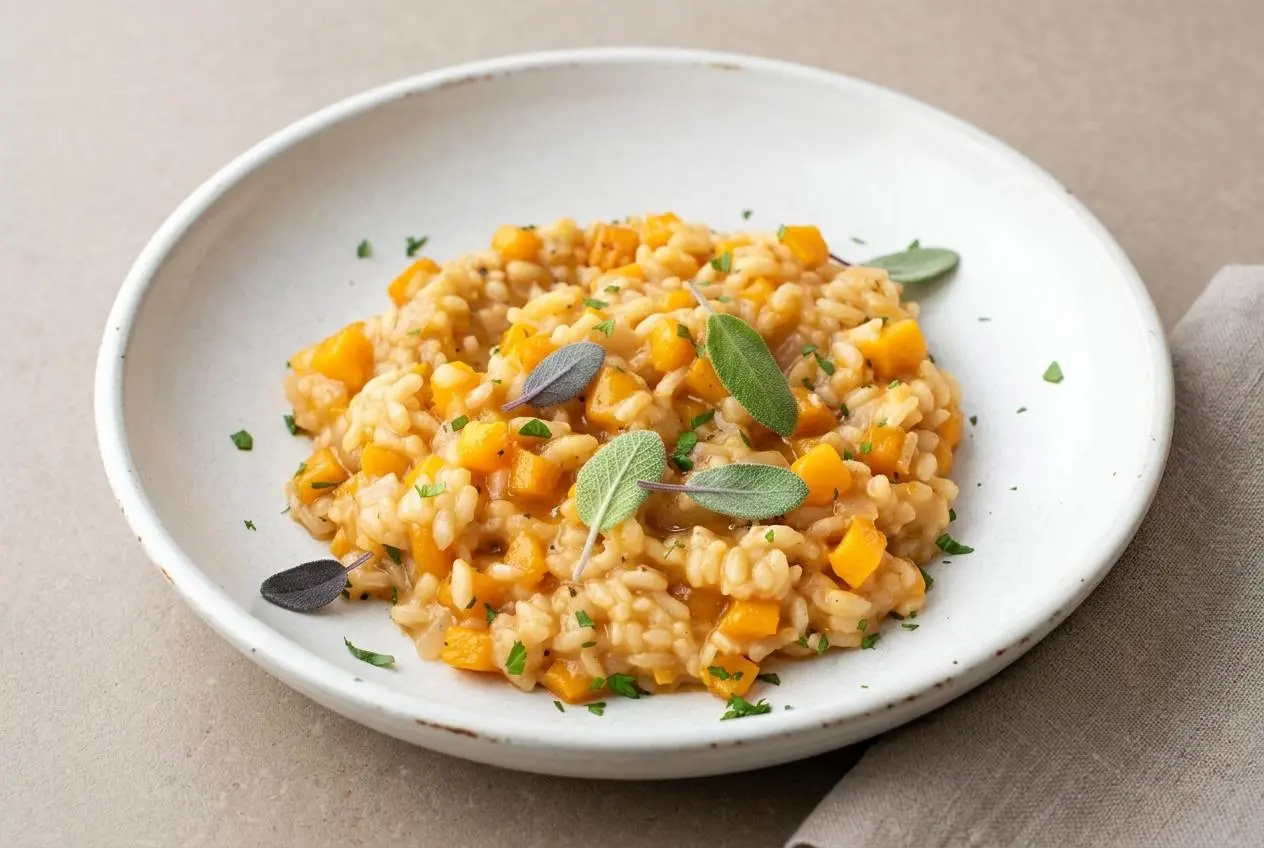
Butternut squash risotto is a creamy Italian-style dish of toasted Arborio rice, tender diced squash, white wine, and warm vegetable broth stirred into a velvety finish.
This butternut squash risotto balances sweet, soft squash with savory herbs, pecorino or Parmesan, and rice that stays pleasantly al dente at the center.
The secret is steady heat and a patient ladle. Watch the rice turn silky.
Keep the vegetable broth barely simmering in a small saucepan beside the skillet so every addition keeps the rice cooking evenly.
Key Ingredients and Smart Substitutions
Olive oil carries the aromatics, squash brings sweetness and color, Arborio creates the creamy structure, broth supplies moisture, and herbs, wine, and cheese build savory balance.
- 1 tablespoon extra-virgin olive oil
- 1 medium yellow onion, chopped
- 1/2 teaspoon sea salt, plus more to taste
- Freshly ground black pepper
- 2 cups cubed butternut squash, ¼-inch cubes
- 2 garlic cloves, finely chopped
- 1 teaspoon minced rosemary or sage
- 1 cup uncooked Arborio rice
- ½ cup dry white wine
- 4 cups warmed vegetable broth
- Chopped parsley or small sage leaves, optional, for garnish
- ½ cup grated pecorino or Parmesan cheese, optional, for serving
Arborio is essential here because its high surface starch releases gradually as you stir, thickening the broth into a creamy coating. Carnaroli also works well if you have it, but long-grain rice, jasmine, and basmati will not create the same texture.
Cut the squash into even ¼-inch cubes so it turns tender on the same schedule as the rice. The edges should begin to look translucent after sautéing, while the centers remain intact enough to give the finished dish some welcome texture.
Dry white wine adds brightness and loosens the browned bits left by the onion and squash. To cook without wine, use the same amount of extra warm broth mixed with a teaspoon of fresh lemon juice or white wine vinegar. Use a vegetable broth you enjoy drinking, since its flavor becomes the backbone of the dish.
I prefer a low-sodium broth here because it gives me more control when the liquid reduces and the cheese goes in at the end.
How to Make Butternut Squash Risotto
A wide, large skillet gives the rice room to cook in an even layer. Stay nearby while it simmers: risotto needs gentle attention, not frantic stirring or a nonstop workout for your arm.
- Warm the olive oil in a large skillet over medium heat, then cook the onion with the salt and several grinds of pepper for 2 to 3 minutes before adding the squash for 6 to 8 minutes.
The onion should soften without browning deeply, and the squash edges should look slightly translucent. - Stir in the garlic, rosemary or sage, and Arborio rice, and cook for about 1 minute before pouring in the wine.
The skillet should smell fragrant and toasty; continue stirring for 1 to 3 minutes until the wine has nearly disappeared. - Add the warmed vegetable broth ¾ cup at a time, stirring continuously and waiting until each addition is absorbed before adding more.
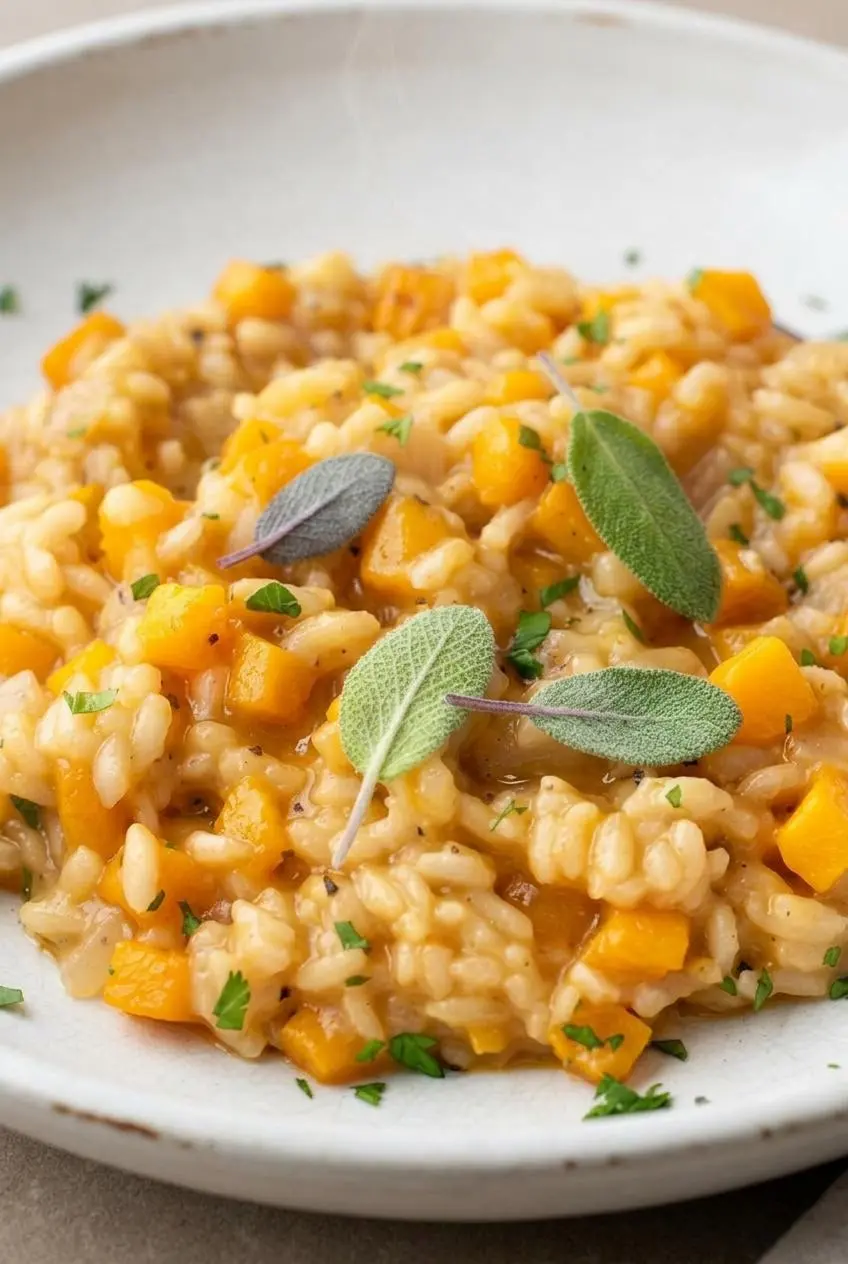
The rice is ready when the squash is tender and the grains are soft and creamy with a small al dente bite; season to taste. - Finish with chopped parsley or small sage leaves, and serve with grated pecorino or Parmesan cheese, if desired.
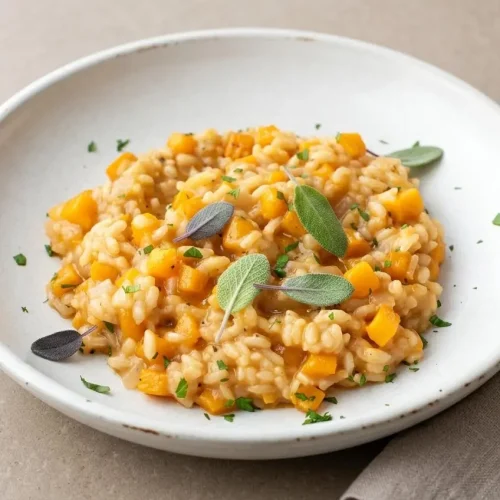
The risotto should spread softly rather than sit in a stiff mound.
Toasting the Rice and Deglazing
When the dry Arborio hits the warm skillet, stir it through the oil until the grains make a faint chalky clatter against the pan. Look closely: the outer edges become translucent while a tiny white core remains. This brief toasting helps the grains keep their shape as they absorb broth.
Pour in the wine only after the rice has had that minute of contact with the skillet. Scrape across the bottom as it bubbles away, lifting the caramelized fond from the onions and squash. Those browned bits give the risotto a deeper savory flavor before the broth begins.
The Incremental Broth Simmer
Add hot broth in measured additions instead of pouring it all in at once. Each addition gives the rice time to absorb liquid while gentle stirring rubs grains together and releases starch, creating the characteristic silky texture.
Use the pan-trail test between additions. Drag a wooden spoon across the skillet base: it should leave a clear path that slowly fills back in. If the trail closes immediately, let the rice cook a little longer. If it stays dry and sharp, add the next portion of warm broth.
Finishing With Mantecatura and Optional Brown Butter
Once the rice is tender, take the skillet off direct heat before folding in the optional cheese. This finishing step, often called mantecatura, helps the dairy melt into the starchy liquid rather than turn grainy from aggressive heat.
For all’onda texture, spoon some risotto onto a warm plate and give it a gentle shake. It should settle in soft waves, not hold a tall, rigid shape. For an optional nutty finish, swirl in browned butter and a pinch of lemon zest just before serving. Keep the butter amber, not dark brown, so it tastes nutty rather than scorched.
Troubleshooting Common Risotto Problems
Most risotto problems come down to broth temperature, pan heat, or when the next addition of liquid goes in. These fixes keep the texture creamy without turning the rice to paste.
- Crunchy or chalky rice: The broth may have evaporated too quickly, often because the heat was too high or the liquid was not hot enough. Lower the heat and add warm broth or hot water ¼ cup at a time, stirring gently until the firm center softens.
- Loose or soupy risotto: Too much liquid remains around the grains. Simmer uncovered over medium-low heat for 2 to 3 minutes, stirring continuously, until excess moisture evaporates and the starch tightens the sauce.
- Thick, gluey texture: The rice may have been stirred too hard or cooked over a harsh flame. Keep the skillet at an active but gentle simmer, and stir smoothly enough to prevent sticking without mashing the grains.
- Risotto tastes too salty: Broth and cheese can concentrate as the liquid reduces. Stir in warm unsalted water, or a splash of warm unsweetened milk, instead of adding more salted broth.
- Squash is still firm while the rice is nearly done: The cubes were likely cut larger than ¼ inch. Continue with warm broth in small additions until the squash yields easily to the side of a spoon, keeping the rice at a gentle simmer.
- The risotto tastes flat: Add black pepper and a little more salt only after the final broth addition has reduced. A small squeeze of lemon can brighten the squash and cheese without making the dish taste sharply citrusy.
Variations and Dietary Adjustments
These optional approaches change the style of the dish without changing the stovetop method above. Choose one direction rather than trying to combine every variation in one pan.
Oven-Baked Butternut Squash Risotto
For a lower-stir approach, use a Dutch oven and combine short-grain rice, hot vegetable broth, and diced squash. Cover and bake until the rice and squash are tender, then finish on the stovetop if needed to loosen the texture before folding in cheese and aromatics.
The oven method is convenient, though the stovetop version gives you more control over the final all’onda consistency. Keep the broth hot before it goes into the Dutch oven so the rice starts cooking promptly.
Vegan and Dairy-Free Butternut Risotto
Skip the pecorino or Parmesan and finish the risotto with nutritional yeast, a dairy-free Parmesan alternative, or a small dollop of white miso for savory depth. Taste carefully before adding more salt, since miso and plant-based cheeses can be quite salty.
Risotto made with the listed rice, squash, vegetables, herbs, wine, and vegetable broth is naturally gluten-free, but check packaged broth and dairy-free cheese labels if you need to avoid gluten completely.
Pureed Squash and Roasted Cube Adaptations
- For a smoother, more golden risotto, puree part of the cooked squash with warm broth, then stir it in gradually as the rice finishes.
- For more contrast, roast separate ¼-inch squash cubes until browned at the edges and fold them in near serving time.
- For a hybrid approach, puree some squash for body while keeping some cubes whole for caramelized sweetness and a tender bite.
If you have extra roasted squash puree, use it in a comforting butternut squash soup rather than adding all of it to the risotto and overwhelming the rice.
Storage, Make-Ahead, and Reheating
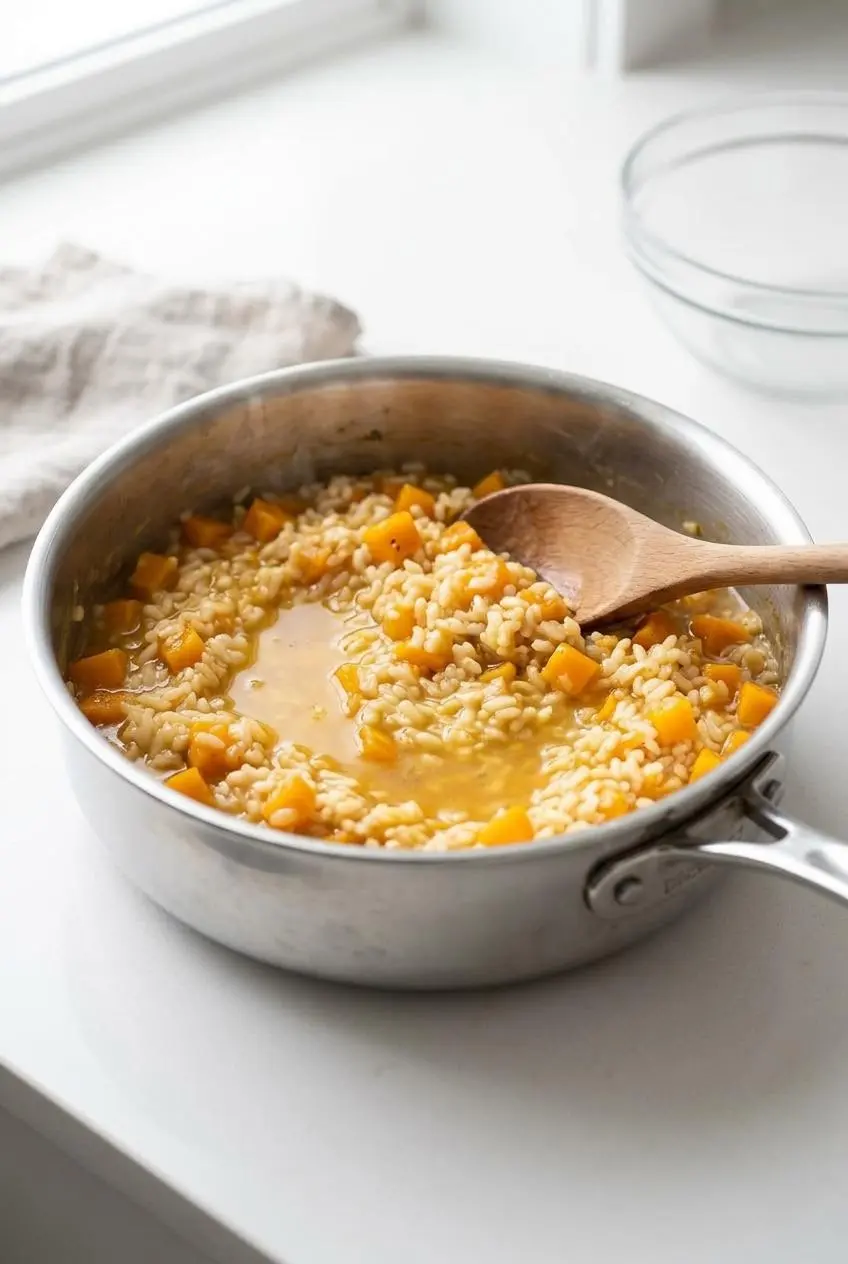
Risotto tastes its silkiest straight from the skillet, but you can plan ahead without sacrificing the finish. For a dinner gathering, stop cooking while the rice still has a noticeably firm center, spread it in a thin layer on a rimmed baking sheet to cool, then finish it later in a skillet with hot broth.
Cool leftovers completely and store them in an airtight container. Refrigerate perishable leftovers within two hours, keep the refrigerator at 40°F or below, and use refrigerated leftovers within 3 to 4 days for safe cold food storage.
To reheat, warm the risotto in a saucepan over medium-low heat with a generous splash of warm broth or water. Stir gently until the starch loosens and the mixture becomes creamy again. High heat can make chilled risotto clump and stick before the center has warmed through.
For the best texture, avoid holding finished risotto for an extended time. The grains continue to absorb moisture as they sit, so reserve a little warm broth to loosen the consistency right before serving.
Serving Suggestions and Complete Menus
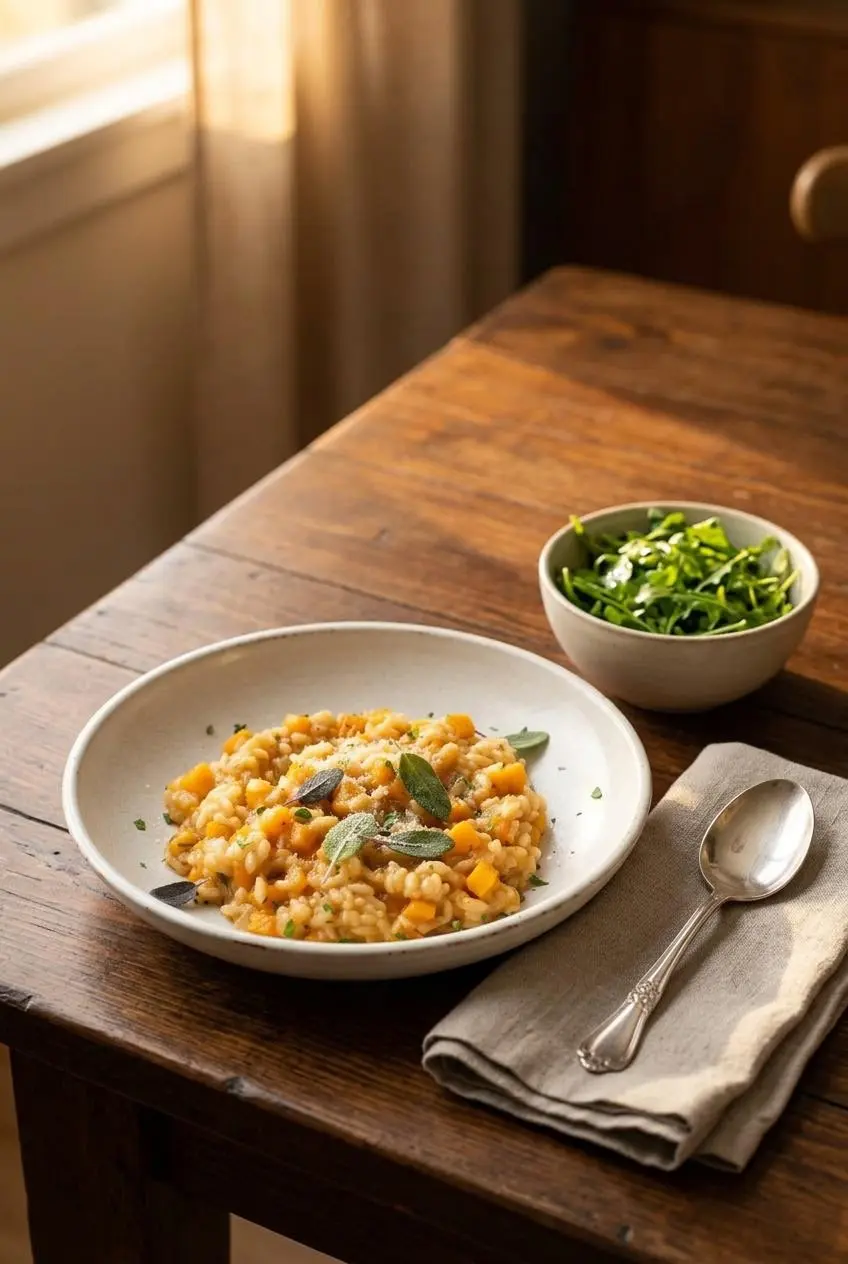
Rich risotto benefits from something crisp, peppery, or lightly acidic alongside it. A lemony arugula salad, shaved fennel, or simply steamed green vegetables keeps the plate fresh without competing with the squash.
- Top each bowl with crispy pan-fried sage leaves for fragrance and a delicate crunch.
- Scatter toasted chopped pistachios over the risotto for a nutty contrast that works especially well with rosemary.
- Serve it beside roasted chicken, seared pork tenderloin, or pan-seared scallops for a heartier meal.
- For a cool, crunchy counterpoint, pair the risotto with a crisp wedge salad dressed simply enough to let the squash shine.
Conclusion
Sweet butternut squash, fragrant herbs, and creamy Arborio rice make a comforting bowl that feels special without being fussy. The small squash dice and gradual broth additions keep every spoonful balanced.
Keep the broth hot in the neighboring pot, taste as you finish, and use the optional browned butter when you want an extra nutty flourish. Serve it while the rice is still flowing softly.
Frequently Asked Questions
Can I Make Butternut Squash Risotto Without White Wine?
Yes. Replace the wine with the same amount of extra warm vegetable broth mixed with a teaspoon of fresh lemon juice or white wine vinegar. The acidity brightens the squash and helps balance the richness of the rice and optional cheese. Add it when the wine would normally go into the skillet.
Why Is My Risotto Rice Still Crunchy After All the Broth Is Gone?
The pan was likely too hot, so the liquid evaporated before the grains had time to soften. Cold broth can also slow and unevenly interrupt cooking. Lower the heat and add warm broth or hot water ¼ cup at a time, stirring gently between additions. Continue until the rice is tender with a small al dente center.
Can I Prepare Butternut Squash Risotto in Advance?
Yes, with a partial-cook approach. Stop while the rice still has a firm center, spread it out to cool, then finish it later with hot broth in the skillet. This protects the final texture better than fully cooking the risotto and holding it. Finish with cheese and any garnishes just before serving.
How Do You Reheat Leftover Risotto So It Is Creamy Again?
Warm it slowly in a saucepan over medium-low heat with a splash of warm broth, water, or milk. Chilled rice absorbs moisture and firms up, so it needs added liquid to loosen. Stir gently until the risotto becomes smooth and spoonable again. Add liquid gradually so it does not turn watery.
Can I Use Regular Long-Grain Rice Instead of Arborio?
Long-grain rice is not a good substitute because it does not release enough starch to form risotto’s naturally creamy sauce. Jasmine and basmati stay more separate and fluffy. Use Carnaroli or Vialone Nano if Arborio is unavailable. Both are short-grain Italian rices that create a creamy texture while keeping a distinct, tender grain.
Butternut Squash Risotto

Equipment
- Staub Dutch Oven
- Large Skillet
Ingredients
- 1 tablespoon extra-virgin olive oil
- 1 medium yellow onion chopped
- 1/2 teaspoon sea salt plus more to taste
- Freshly ground black pepper
- 2 cups cubed butternut squash ¼-inch cubes
- 2 cloves garlic finely chopped
- 1 teaspoon minced rosemary or sage
- 1 cup uncooked Arborio rice
- ½ cup dry white wine
- 4 cups warmed vegetable broth
- Chopped parsley or small sage leaves optional, for garnish
- ½ cup grated pecorino or Parmesan cheese optional, for serving
Instructions
- Warm the olive oil in a large skillet over medium heat, then cook the onion with the salt and several grinds of pepper for 2 to 3 minutes before adding the squash for 6 to 8 minutes. The onion should soften without browning deeply, and the squash edges should look slightly translucent.
- Stir in the garlic, rosemary or sage, and Arborio rice, and cook for about 1 minute before pouring in the wine. The skillet should smell fragrant and toasty; continue stirring for 1 to 3 minutes until the wine has nearly disappeared.
- Add the warmed vegetable broth ¾ cup at a time, stirring continuously and waiting until each addition is absorbed before adding more. The rice is ready when the squash is tender and the grains are soft and creamy with a small al dente bite; season to taste.
- Finish with chopped parsley or small sage leaves, and serve with grated pecorino or Parmesan cheese, if desired. The risotto should spread softly rather than sit in a stiff mound.