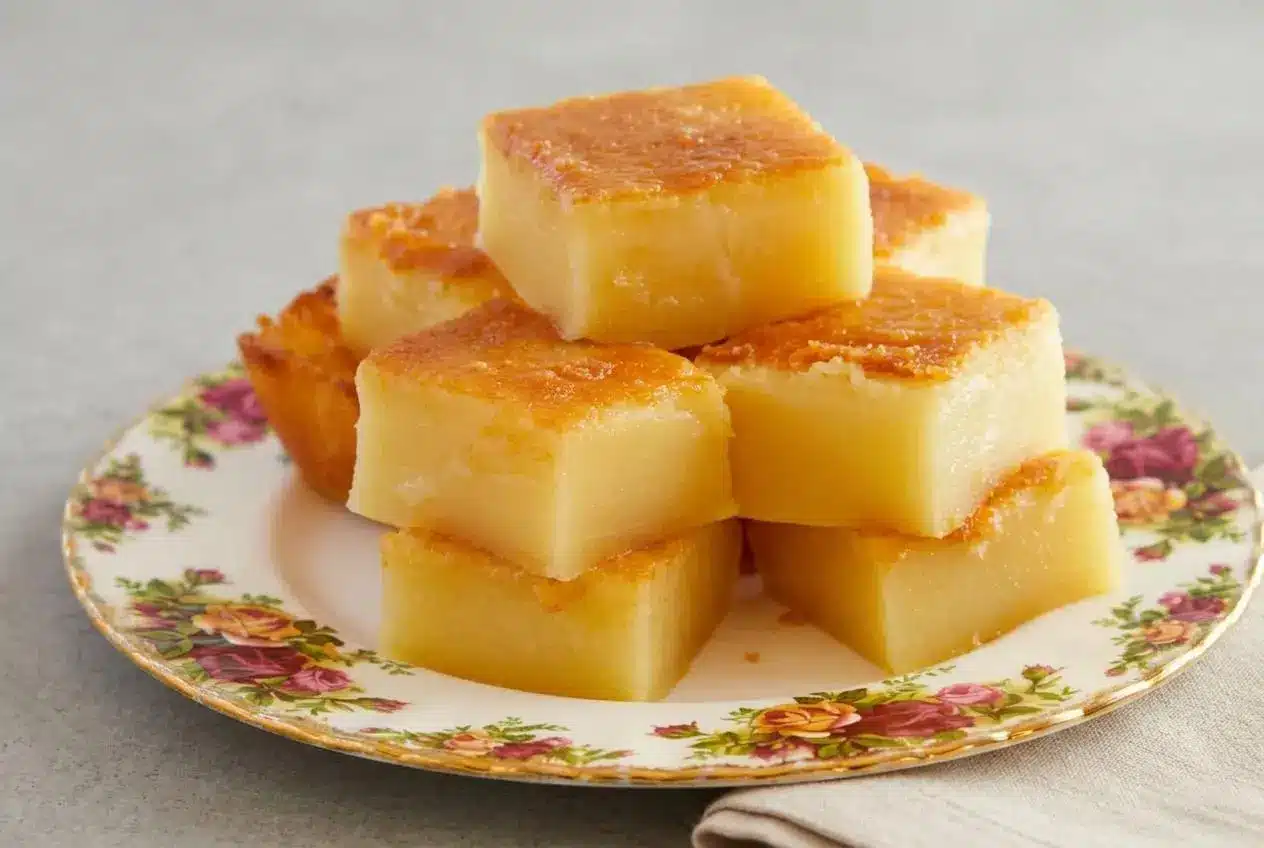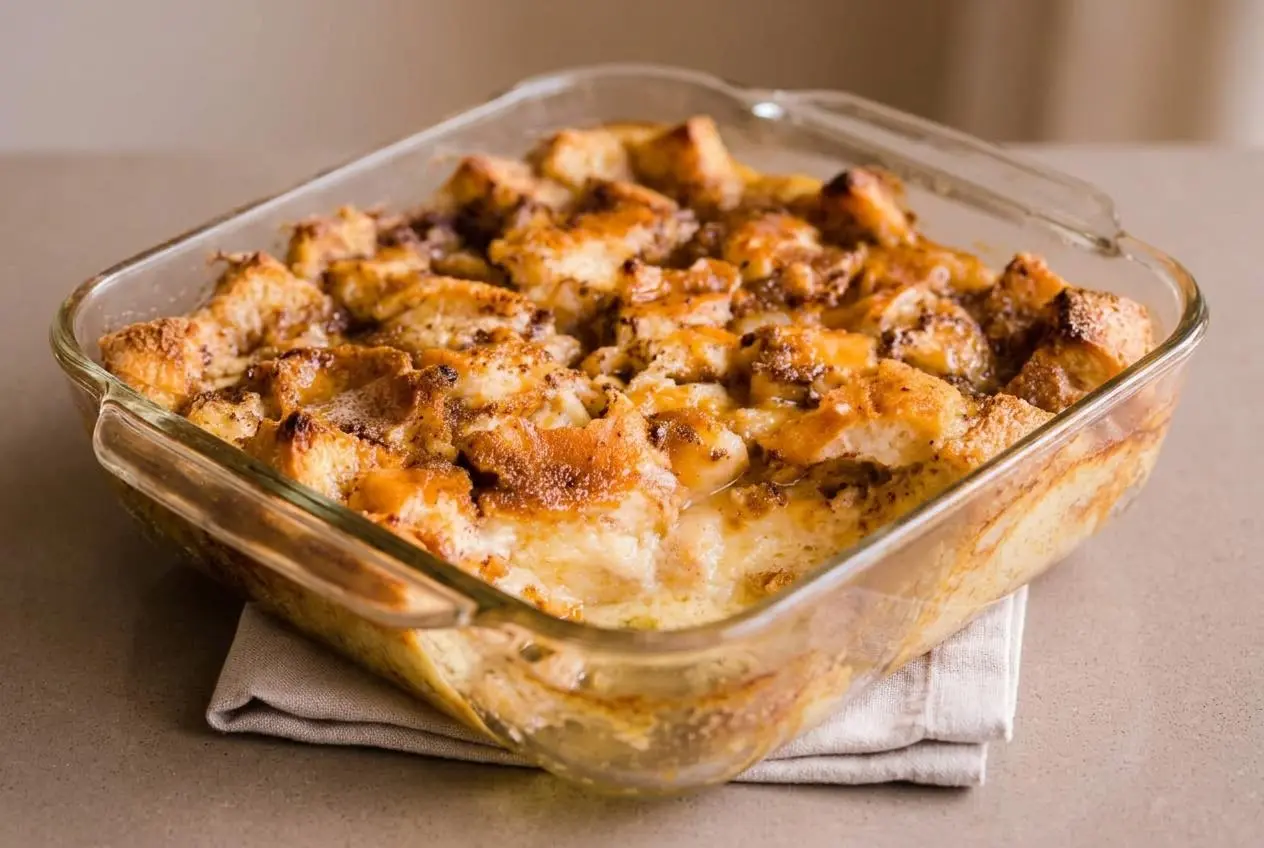
Classic bread pudding is a baked dessert of stale bread soaked in sweet cinnamon egg custard and baked until golden and set.
This bread pudding recipe turns stale bread into a warm, custardy dessert with crisp golden edges and a fragrant cinnamon aroma. It bakes in an 8-inch square dish and makes a comforting finish for a casual dinner or weekend brunch.
Butter melts into the bread while vanilla and cinnamon round out the sweetness. The optional brown sugar drizzle makes every spoonful feel extra cozy. Watch for that fork spring-back.
Use larger, evenly sized bread pieces rather than crumbs so the custard can settle into the centers without creating a dense, soggy block.
Essential Ingredients and Bread Choices
Each ingredient has a purpose: bread provides structure, butter adds richness, eggs set the custard, and milk, sugar, cinnamon, and vanilla create a soft, warmly spiced center.
Bread Pudding
- 6 slices stale bread
- 3 tablespoons of butter (1 Tablespoon + 2 Tablespoons)
- 4 beaten eggs
- 2 cups milk
- 3/4 cup white sugar
- 1 teaspoon vanilla extract
- 1 teaspoon cinnamon
- raisins (optional)
Optional Brown Sugar Butter Drizzle
- 3 tablespoons butter (salted (but unsalted is ok too!))
- 1 tablespoon brown sugar
- 1 teaspoon vanilla extract
- 1-2 tablespoons milk (or heavy cream – optional)
Selecting the Right Bread and Custard Base
Stale bread is the key to distinct, tender bites. It drinks in the custard while holding its shape, unlike very soft fresh sandwich bread, which can dissolve into a pasty center. French bread, challah, brioche, Texas toast, and day-old sourdough all work well because their crumb has enough structure to stay intact.
If your bread is fresh, tear or cut it, spread it out, and dry it in a 300°F oven for 10 to 15 minutes. The goal is a dry surface and firmer crumb, not browned toast. A sturdy loaf such as homemade French bread gives the pudding pleasantly defined pockets of custard.
The eggs give the milk custard enough structure to set, while milk keeps it soft rather than heavy. Sugar sweetens the custard, and cinnamon and vanilla bring warmth without masking the bread’s buttery flavor. Raisins remain optional, but they add little bursts of chewiness throughout.
I cut or tear the bread into similarly sized pieces so every piece absorbs custard at about the same pace and the center bakes evenly.
How to Make Bread Pudding
Arrange the bread loosely, coat it well with custard, and let the liquid reach every piece before baking. As the pudding cooks, the cinnamon scent becomes more pronounced and the top gradually turns golden.
Bread Pudding
- Heat the oven to 350°F and coat an 8-inch square baking dish with 1 Tablespoon of butter.
The buttered corners should look fully covered to help the pudding release cleanly after baking. - Place the stale bread in the prepared dish, keeping the pieces larger instead of crushing them into crumbs.
Leave small spaces between pieces so the custard can flow around and into the bread. - Melt the remaining 2 tablespoons of butter and pour it over the bread.
The bread should glisten lightly, with butter reaching both the top and tucked-in pieces. - Whisk the beaten eggs with the milk, white sugar, vanilla extract, cinnamon, and raisins (optional).
Mix until the sugar and cinnamon are evenly distributed through the pale custard. - Pour the custard over the bread, moving around the dish so every piece is coated.
The bread will begin to soften and absorb the liquid without needing to be pressed down forcefully. - Bake for 45 minutes.
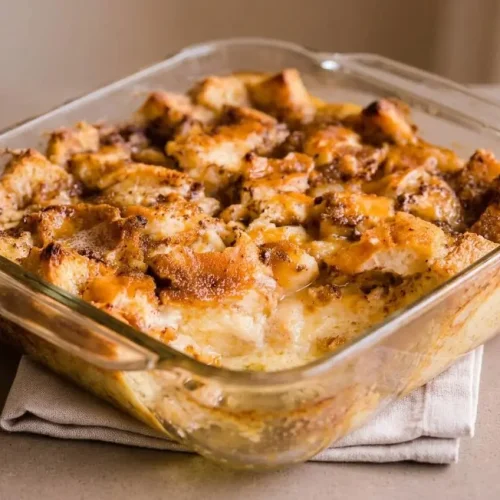
The top should be golden and puffed, and the center should gently spring back when lightly touched with a fork.
Optional Buttery Brown Sugar Sauce
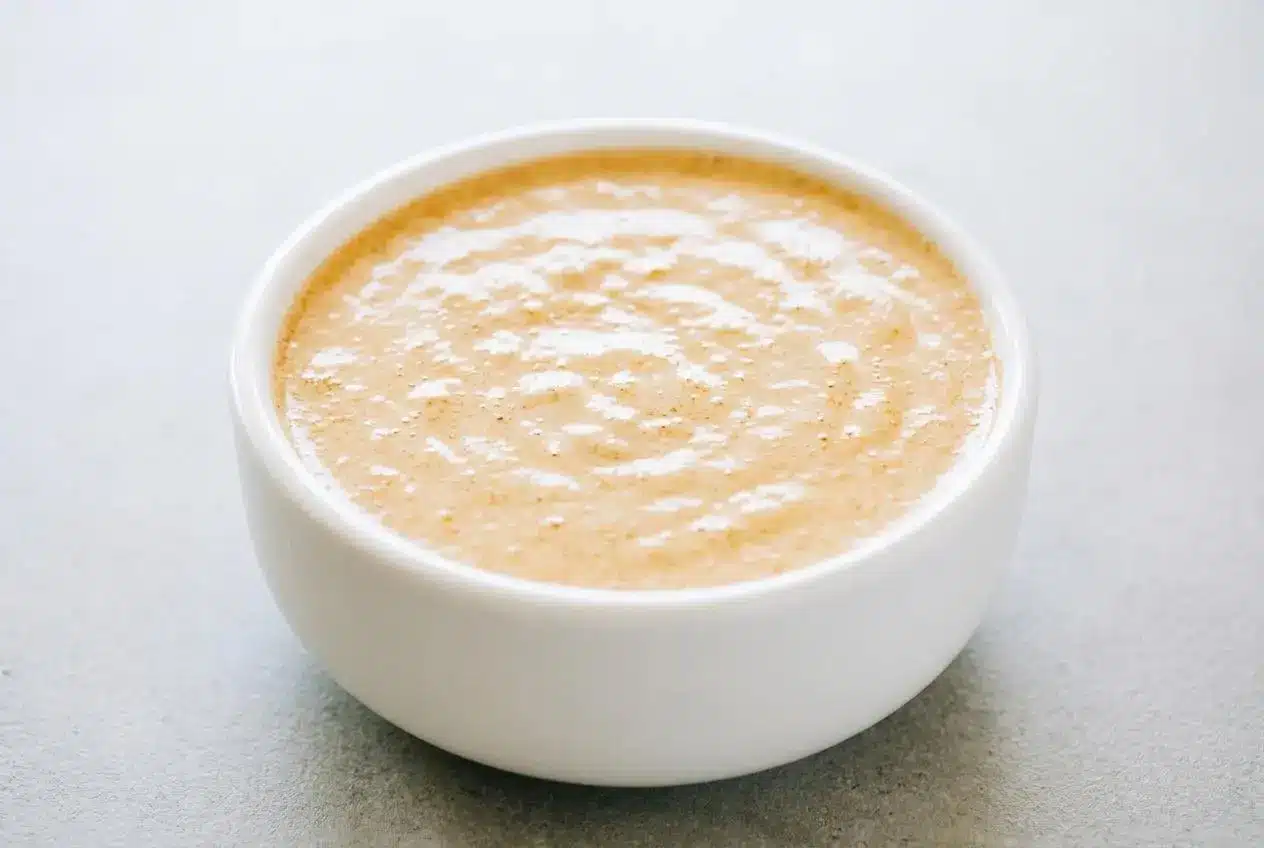
- Melt the 3 tablespoons butter in a small saucepan over high heat, then lower the heat to medium until it turns lightly browned; reduce to a simmer and whisk in the brown sugar and 1-2 tablespoons milk (or heavy cream – optional), then remove from the heat and whisk in the vanilla extract.
The finished drizzle should smell nutty and look smooth enough to flow slowly over warm portions.
Tips for Success and Troubleshooting
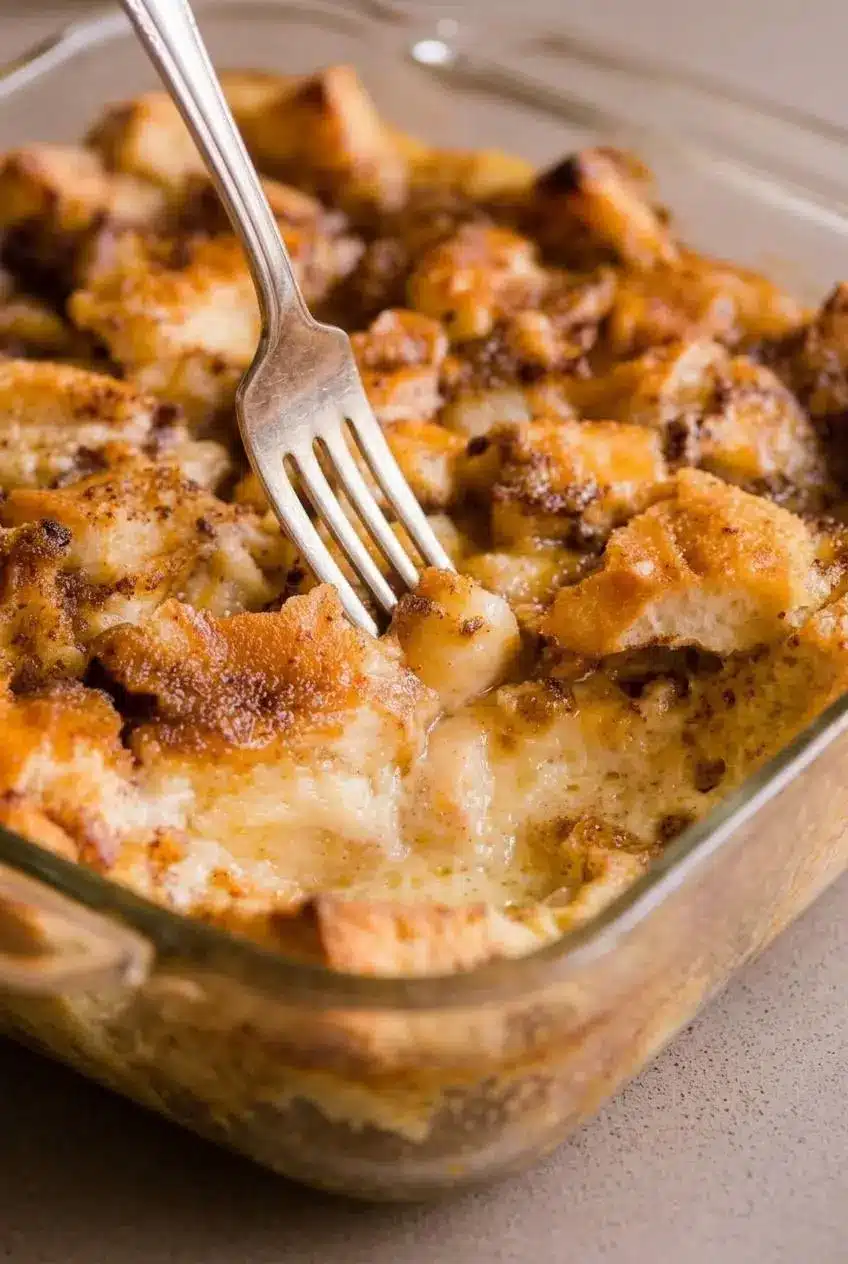
A good bread pudding has a set custard center, soft bread underneath, and a top that stays lightly crisp. These fixes address the most common texture problems.
- Watery or soggy center: Fresh, soft bread or underbaking usually causes it. Start with stale or oven-dried bread, coat it evenly, and bake until the center looks puffed rather than wet.
- Dry, separated custard: Overbaking can make the eggs tighten and release moisture. Take the dish out once the center gives a gentle fork spring-back instead of baking until it feels firm all the way through.
- Top browning too quickly: Loosely tent the dish with foil while the center finishes setting. This protects the bread from becoming overly dark without trapping so much steam that the top goes soft.
- Unsure whether it is done: Insert a knife near the center. It should come out without liquid custard clinging to it. For an egg-based dessert, cooking the center to 160°F is a useful additional check for thoroughly cooked egg dishes.
Decadent Dessert Sauces and Serving Suggestions
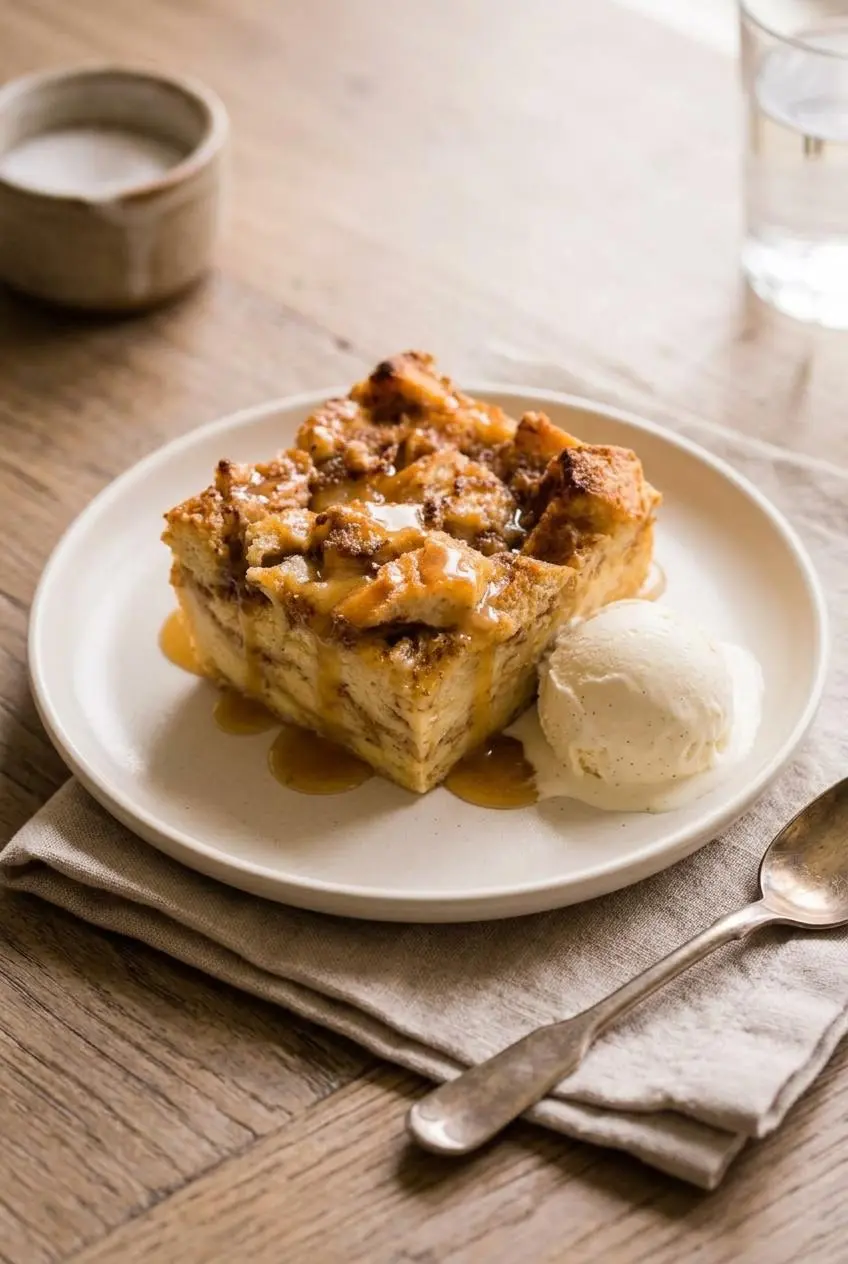
Warm toppings make the contrast between crisp edges and tender custard even more satisfying. Add them just before serving so the pudding keeps its texture.
Buttery Brown Sugar Glaze
The optional brown sugar butter drizzle is the closest match for this cinnamon pudding. Letting the butter turn lightly golden before adding the sugar gives it a toasted, nutty flavor that balances the sweet custard. Spoon it over the whole dish for a glossy finish, or let everyone add it to individual servings.
Creamy Vanilla Dessert Sauce
For a lighter, pourable alternative, serve warm slices with vanilla dessert sauce. Vanilla bean ice cream also melts into a quick creamy topping, while fresh whipped cream gives a cool contrast to the warm pudding. Fresh berries or sliced bananas bring a bright, juicy counterpoint.
Delicious Variations and Add-Ins
Keep the main pudding as written, then make optional changes when you want a different texture or a more fruit-forward dessert.
Brioche and Croissant Richness
Day-old brioche, challah, or croissants make a richer pudding because their buttery crumb softens into especially plush layers. Use the same custard proportions, but keep the pieces substantial so the finished dessert still has some structure. Cinnamon bread can also deepen the spice flavor, though it will make the final pudding sweeter and more aromatic.
Fruit and Toasted Nut Additions
Raisins are already an optional addition, but dried cranberries offer a tangier bite and diced apples bring soft fruit texture. Fold add-ins gently through the bread before pouring in the custard so they are distributed without breaking up the bread.
For a seasonal variation, add orange zest and toasted pecans for citrusy warmth and crunch. If baked fruit is what you are craving, this peach bread pudding is another cozy direction for a custard-based dessert.
Make-Ahead, Storage, and Reheating
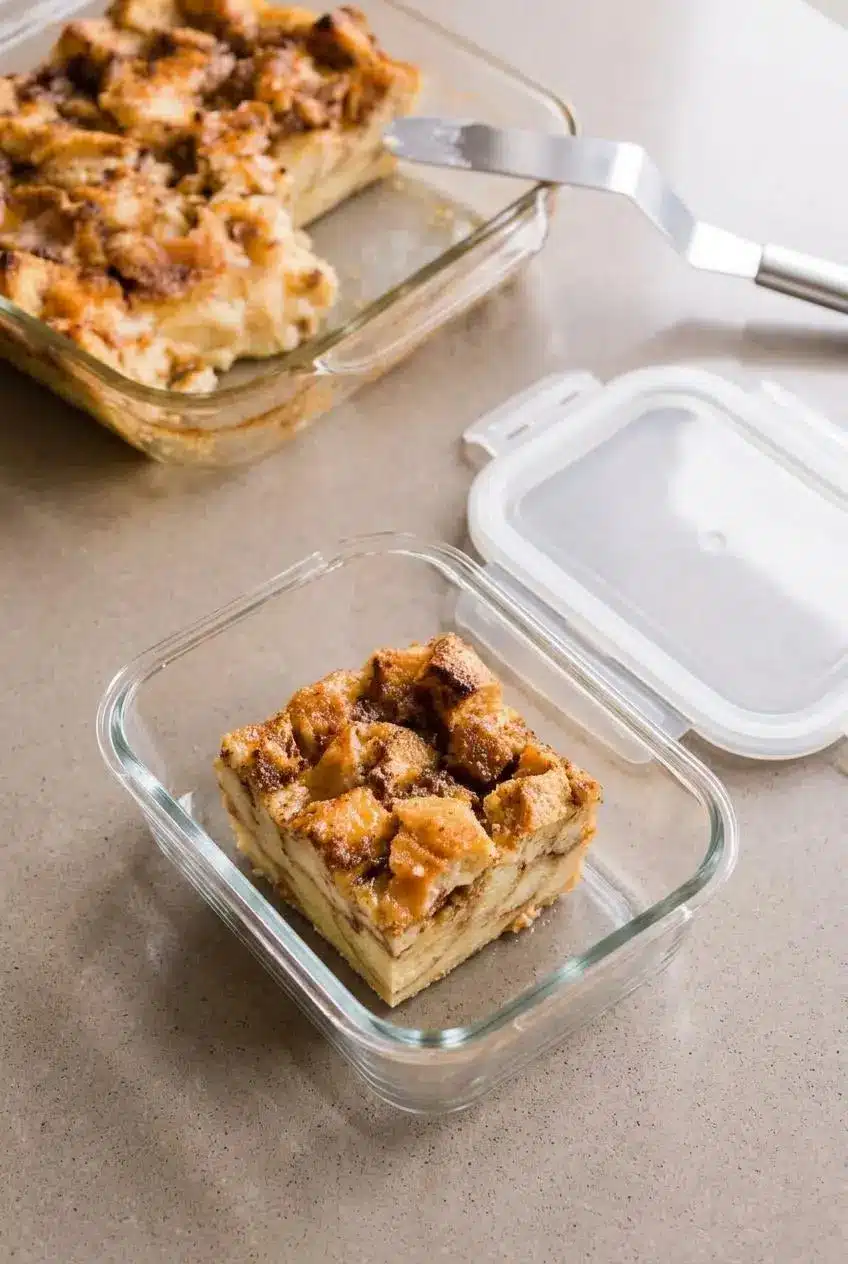
For easier entertaining, butter the dish and measure the ingredients ahead, then combine the bread and custard close to baking time. This helps preserve the contrast between a tender center and golden edges.
Cool leftover bread pudding before transferring it to an airtight container and keep it chilled. Refrigerators should stay at 40°F or below for proper handling of perishable foods such as milk and egg dishes, as outlined in refrigerator temperature guidance for perishable foods.
Warm individual portions briefly in the microwave, stopping before the custard dries out. For crispier edges, reheat covered portions in the oven until warmed through, then uncover near the end if the top needs to regain a little texture. Add the brown sugar butter drizzle after reheating.
Conclusion
This bread pudding delivers warm cinnamon custard, buttery bread, and a golden top from a familiar combination of ingredients. The most reliable doneness cue is a puffed center that gives a gentle spring when touched with a fork.
Serve it warm with the brown sugar butter drizzle, vanilla sauce, or a scoop of ice cream. Orange zest and pecans are an easy optional addition when you want a little extra aroma and crunch.
Frequently Asked Questions
What Is the Best Type of Bread to Use for Bread Pudding?
Choose sturdy, day-old bread that can absorb custard without falling apart. French bread gives defined, chewy-custardy bites. Brioche and challah make a richer, softer pudding. Texas toast and sourdough also hold their shape well. Avoid very fresh, soft sandwich bread unless you dry it first.
How Do You Keep Bread Pudding From Becoming Soggy?
Use stale or lightly oven-dried bread and make sure the custard reaches all the pieces evenly. Do not mash the bread down into the liquid. Bake until the center puffs and lightly springs back when tested with a fork.
Can I Prepare Bread Pudding the Night Before Baking?
For the best texture, prepare the dish and custard components ahead, then combine them close to baking time. Keeping the bread separate until you are ready to bake helps it retain more defined edges and avoids an overly soft center.
How Do You Reheat Leftover Bread Pudding?
Warm a portion gently in the microwave until heated through, or use a covered oven dish for a crisper finish. Reheat only what you plan to serve, then add sauce after warming so it stays smooth and glossy.
Bread Pudding Recipe

Equipment
- 8×8 baking dish
- Mixing Bowl
- Saucepan
- Whisk
Ingredients
Bread Pudding
- 6 slices stale bread
- 3 tablespoons of butter (1 Tablespoon + 2 Tablespoons)
- 4 beaten eggs
- 2 cups milk
- 3/4 cup white sugar
- 1 teaspoon vanilla extract
- 1 teaspoon cinnamon
- raisins (optional)
Optional Brown Sugar Butter Drizzle
- 3 tablespoons butter (salted (but unsalted is ok too!))
- 1 tablespoon brown sugar
- 1 teaspoon vanilla extract
- 1-2 tablespoons milk (or heavy cream – optional)
Instructions
Bread Pudding
- Heat the oven to 350°F and coat an 8-inch square baking dish with 1 Tablespoon of butter. The buttered corners should look fully covered to help the pudding release cleanly after baking.
- Place the stale bread in the prepared dish, keeping the pieces larger instead of crushing them into crumbs. Leave small spaces between pieces so the custard can flow around and into the bread.
- Melt the remaining 2 tablespoons of butter and pour it over the bread. The bread should glisten lightly, with butter reaching both the top and tucked-in pieces.
- Whisk the beaten eggs with the milk, white sugar, vanilla extract, cinnamon, and raisins (optional). Mix until the sugar and cinnamon are evenly distributed through the pale custard.
- Pour the custard over the bread, moving around the dish so every piece is coated. The bread will begin to soften and absorb the liquid without needing to be pressed down forcefully.
- Bake for 45 minutes. The top should be golden and puffed, and the center should gently spring back when lightly touched with a fork.
Optional Buttery Brown Sugar Sauce
- Melt the 3 tablespoons butter in a small saucepan over high heat, then lower the heat to medium until it turns lightly browned; reduce to a simmer and whisk in the brown sugar and 1-2 tablespoons milk (or heavy cream – optional), then remove from the heat and whisk in the vanilla extract. The finished drizzle should smell nutty and look smooth enough to flow slowly over warm portions.