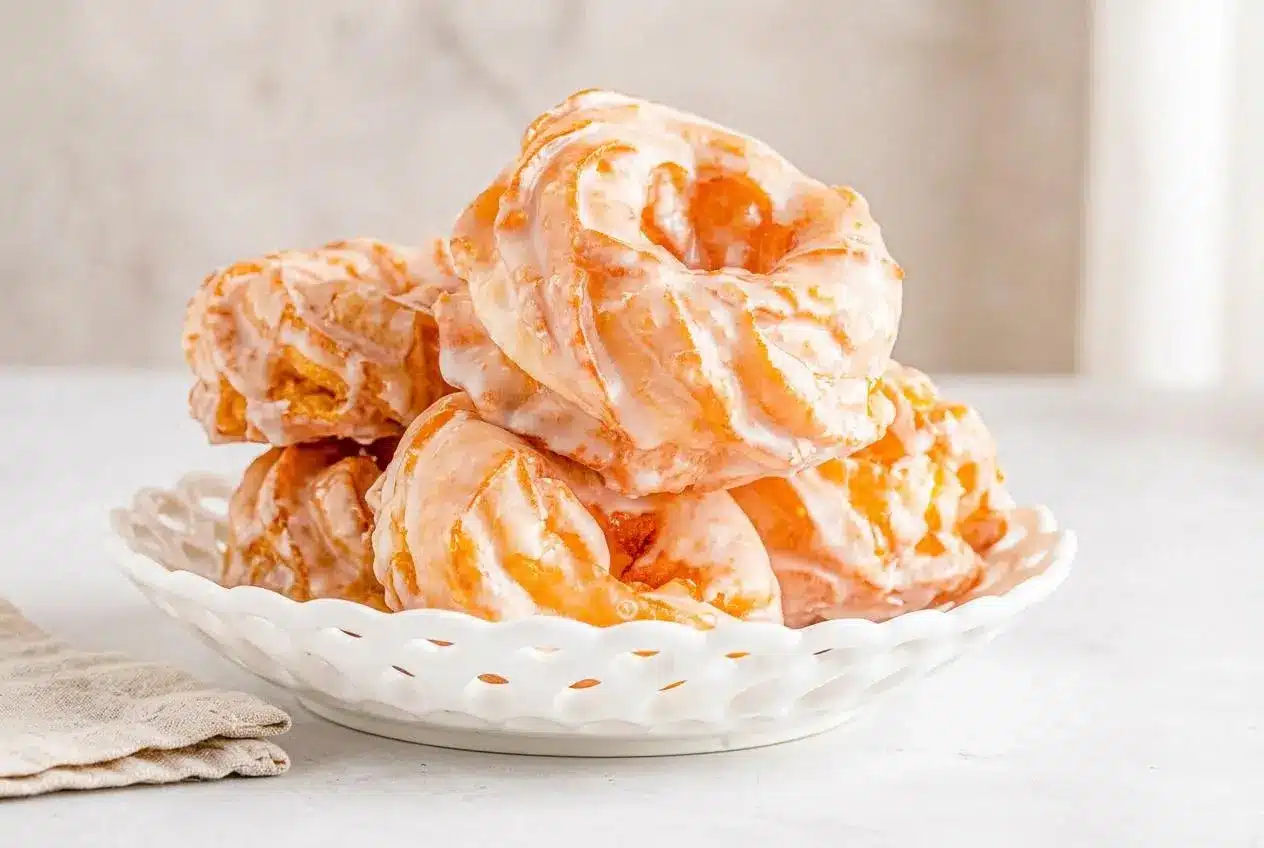
French crullers are light, fluted ring donuts made from fried pâte à choux rather than yeast dough or cake batter. Pipe them onto parchment squares, fry until golden and airy, then dip them in a glossy vanilla glaze.
These homemade french crullers have delicate, crisp edges and an egg-rich interior that practically melts away. A large star tip gives them their familiar grooves, which catch a thin coating of sweet vanilla glaze.
If you love coffee-shop crullers, this batch brings that experience to your kitchen without a proofing stage. The main challenge is getting the cooked dough ready for the eggs. Watch for the glossy V.
Set out your piping bag, parchment, thermometer, and draining rack before heating the oil so you can focus on frying.
What Makes a French Cruller Different from Regular Donuts
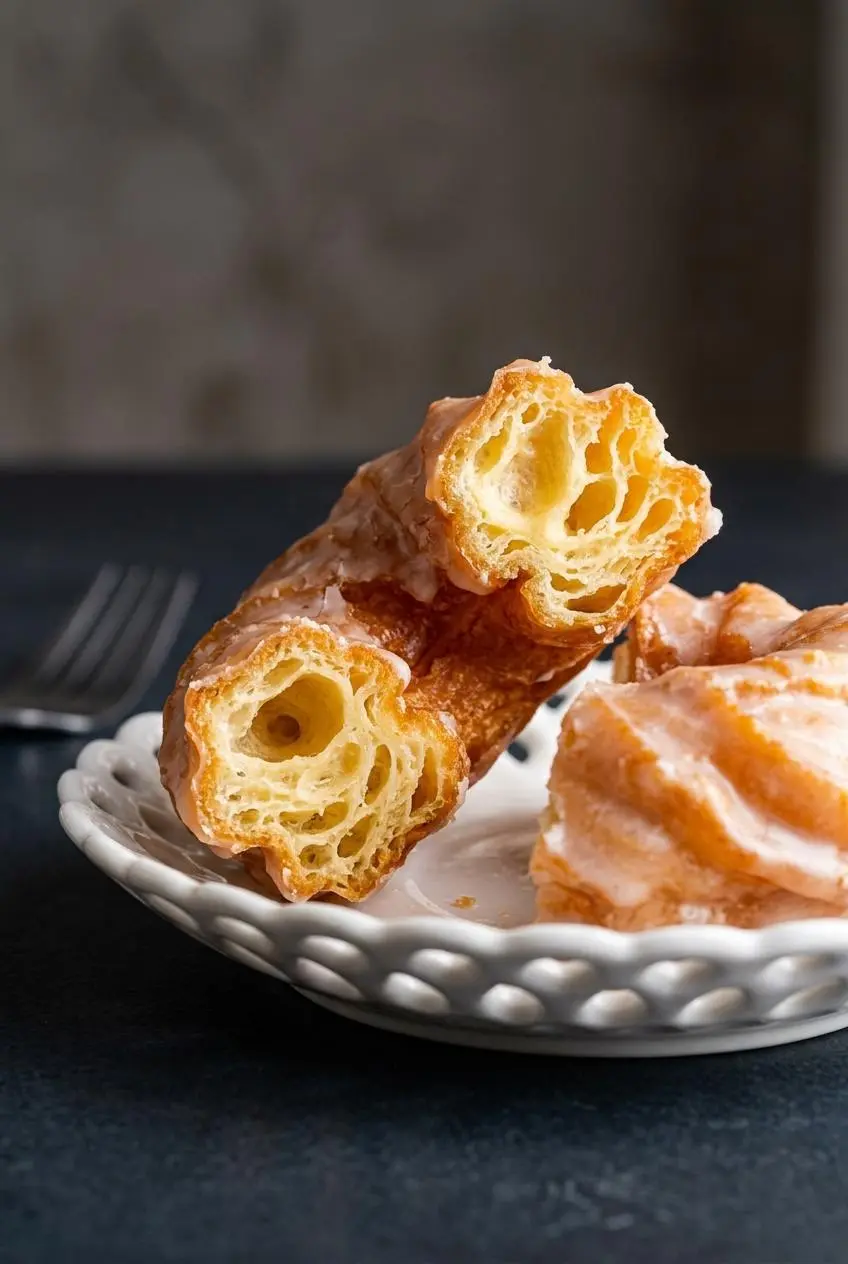
The difference starts with the dough: French crullers rise with steam, not yeast or baking powder.
Pâte à choux begins as a cooked mixture of water, butter, and flour. Eggs turn that firm paste into a glossy, pipeable dough. In hot oil, moisture becomes steam, expanding the rings while the flour and egg proteins establish their structure.
- French crullers: piped rings with defined ridges, delicate walls, and airy pockets inside.
- Yeast donuts: risen dough with a breadlike crumb and a soft, chewy bite.
- Cake donuts and Dutch-style cake crullers: chemically leavened pastries with a closer crumb; cake crullers often have a twisted shape.
For a Dunkin-style result at home, the appeal is that crisp exterior beneath a shiny glaze. Making them yourself also lets you enjoy the ridges before they soften. No claims about changing coffee-shop menus are needed to appreciate a freshly fried batch.
Key Ingredients and Why Each Matters
Water supplies steam, flour builds structure, and eggs give the pastry lift and richness. Butter rounds out the flavor, salt balances the sweetness, and vanilla scents both the dough and the smooth sugar glaze.
Donuts
- 1 1/4 cup water
- 1/2 cup unsalted butter (at room temperature)
- 4 1/2 teaspoons granulated sugar
- 1/2 teaspoon salt
- 1/2 teaspoon vanilla extract
- 1 1/4 cups all-purpose flour
- 4 large eggs
- 2 egg whites (from large eggs, discard yolks or save for another use)
Frying
- Oil (as necessary to fill your pot 3 to 4 inches deep; I use and recommend vegetable oil)
Glaze
- 2 cups confectioners’ sugar (sifted if it’s lumpy)
- 1 tablespoon light-colored corn syrup (such as Caro)
- 2 to 3 teaspoons hot water
- 2 teaspoons vanilla extract
Whole eggs and extra whites do different jobs. Yolks contribute richness and help the butter blend into the dough. Whites supply moisture and proteins that help the expanding pastry hold its shape. Together, they support an airy center and delicate, crisp ridges without making the interior cakey.
All-purpose flour provides the structure here. Cooking it with the liquid forms a paste that can absorb eggs and hold piped grooves. Bread flour generally contains more protein and can produce a firmer shell, but it can also change how much egg the paste needs. Stick with all-purpose flour for these quantities rather than treating the two flours as interchangeable.
Butter adds flavor as well as tenderness. The dough itself has restrained sweetness, leaving room for the glaze. Salt keeps the finished pastry from tasting flat, especially once the sugary coating sets.
Light corn syrup helps the glaze stay smooth. It discourages sugar crystallization and adds gloss. Sifting lumpy confectioners’ sugar matters too: whisking can leave stubborn little sugar pockets that collect in the cruller grooves.
I like to crack the eggs into separate small bowls before starting so each addition can go into the mixer without a scramble for shells.
How to Make French Crullers Step by Step
Plan on 90 minutes of preparation and about 5 minutes of frying per batch; the listed total is 95 minutes. The recipe makes 16 servings, and frying additional batches will affect your actual finish time.
French Crullers
- Heat the water, butter, sugar, salt, and vanilla together in a medium saucepan over medium-high heat until boiling.
The butter should melt into the liquid as bubbles break across the surface. - Work the flour into the boiling mixture with a sturdy spoon or whisk.
Keep stirring until no dry flour remains. - Stir the paste over the heat until patches of starchy film appear on the pan bottom, then take the saucepan off the burner.
The mixture should gather into a cohesive mass rather than remain fluid.
Mixer
- Move the hot paste carefully into a stand mixer bowl with a paddle attachment, or a large bowl for a handheld mixer, and beat at medium-low speed for about 3 to 4 minutes.
The paste should release heat and become less steamy. - Beat in the whole eggs individually, followed by the egg whites individually, fully blending each addition before the next.
The paste may briefly look broken before it comes together again. - Continue beating after the final white until the dough develops a smooth sheen.
It should retain some shape instead of spreading like batter.
Oil
- Fill a large stockpot with oil to a depth of 3 to 4 inches and heat it to 375°F, monitoring with a clip-on digital thermometer.
Leave ample empty space above the oil for bubbling and expansion. - Cut parchment into 3 to 4-inch squares while the oil heats and arrange them on a baking sheet.
Keep the squares flat so they support the piped rings.
Piping
- Load the dough into a piping bag fitted with a very large open star tip.
The tip should leave pronounced grooves in the dough. - Form a 3 to 4-inch dough ring directly on each parchment square.
Join the ends neatly without building a thick mound at the seam.
Frying
- Lower each parchment-supported ring gently into the oil with the dough facing down.
The paper should remain accessible above the ring. - Use long tongs to dip the parchment into the oil and ease it away from the dough.
Let the paper release rather than pulling against a sticky ring. - Cook each cruller for about 2 to 3 minutes on each side.
Look for an expanded ring with a deep golden exterior. - Drain the cooked rings on paper towels over a wire rack and continue until all the dough is fried.
Keep the finished crullers aside while preparing the glaze.
Glaze
- Whisk the confectioners’ sugar, corn syrup, hot water, and vanilla in a medium bowl.
The glaze should look uniform, without dry sugar pockets. - Immerse a warm cruller in the glaze and rotate it with a fork to make sure both sides receive a coating.
The glaze should reach into the fluted edges. - Lift the ring with a fork or wide slotted spatula and let the excess coating fall back into the bowl, then repeat with the remaining crullers.
A thin coating preserves the definition of the ridges. - Arrange the glazed rings on a wire rack and wait for the coating to set before serving.
The surface should lose its wet appearance.
Cooking and Cooling the Choux Paste
The thin film on the saucepan bottom tells you the flour paste has begun drying out. Don’t scrape and cook until it browns. After transferring it to the mixer, let the mixing release heat; check that the paste is below 125°F before adding eggs to avoid cooking them on contact.
Incorporating the Eggs for a Glossy Pipeable Dough
Give each egg time to disappear into the paste. A temporarily slippery, separated appearance is normal. Lift the stopped paddle to check the finished dough: it should hang in a thick V-shaped ribbon, while the dough in the bowl still holds soft ridges. A flowing stream is too loose.
Piping onto Parchment Squares and Frying at 375°F
Parchment carries the soft dough into the oil without stretching the ring. It usually loosens after about 20 to 30 seconds; remove it with long tongs once it releases. Small surface cracks show expansion, but don’t prove the center is done. Aim for deep golden, not dark brown, since the color can deepen during cooling.
Dipping in the Glossy Vanilla Glaze
Warm rings help the glaze spread through the grooves rather than sit in thick patches. Let excess glaze drain into the bowl before returning each cruller to the rack. Give the coating room to set without stacking the rings.
Pro Tips and Troubleshooting for Airy Crullers
Most cruller problems begin with dough consistency or changing oil temperature. Check those before adjusting the frying time.
- Dough feels too stiff: first confirm that all the measured eggs and whites have fully incorporated. Scrape the bowl and finish mixing before deciding the paste needs correction. Don’t add flour or liquid automatically.
- Dough spreads and loses its ridges: warm paste or insufficient drying can leave it loose. Let warm dough cool before reassessing; cooling won’t repair a truly overhydrated paste. Avoid stirring raw flour into finished choux, which can leave an uneven texture.
- Piped rings feel too soft to move: leave them on their parchment supports and handle the paper, not the dough. If the rings slump immediately after piping, address the dough consistency before placing them in oil.
- Grooves disappear: use a very large open star opening. Wilton 1M, Wilton 6B, and Ateco 828 have different openings and tooth patterns, so they won’t produce identical rings. The larger Ateco 828 is a useful reference for generous cruller ridges; a smaller tip produces a thinner rope.
- Outside browns while the middle stays wet: check the thermometer rather than trusting the burner setting. Excessively hot oil colors the shell before the interior has time to set. Reduce the heat and bring the oil back to the target before continuing.
- Crullers feel greasy and heavy: crowding can cool the oil. Fry smaller batches with room for each ring to expand and turn, and let the temperature recover between batches.
- Rings collapse after draining: the interior may still be too moist. Check a cooled test cruller before finishing the batch; it should have airy pockets rather than a dense band of wet paste.
Custom Glaze Variations and Flavor Ideas
Keep the vanilla coating for a classic batch, or use an optional glaze to change the flavor without changing the frying method.
French Honey Glaze and Warm Spice Option
For a honey glaze, combine confectioners’ sugar with honey, milk, and a small squeeze of lemon juice. Add the liquid gradually until the coating flows over a ridge without running straight off. Honey brings floral sweetness; lemon gives it a brighter finish.
For another optional direction, add a tiny pinch of freshly grated nutmeg or cinnamon to the dough. Keep the spice subtle so the buttery, egg-rich pastry remains noticeable.
Browned butter or hot espresso can replace part of the glaze water for a nutty or gently bitter contrast. Add gradually and check consistency, since these additions behave differently from water.
Chocolate, Maple, and Fruit Glazes
- Cocoa chocolate: sift cocoa with confectioners’ sugar, then blend with liquid gradually for a smooth coating with a pleasantly bittersweet edge.
- Maple: use pure maple syrup to flavor a confectioners’ sugar glaze, keeping it thick enough to cling to the warm pastry.
- Berry: stir finely powdered freeze-dried berries into the sugar for tangy flavor without much added moisture.
- Apple cider: use boiled apple cider to add concentrated apple flavor, adjusting the glaze gradually so it doesn’t become too thin.
Serving Suggestions
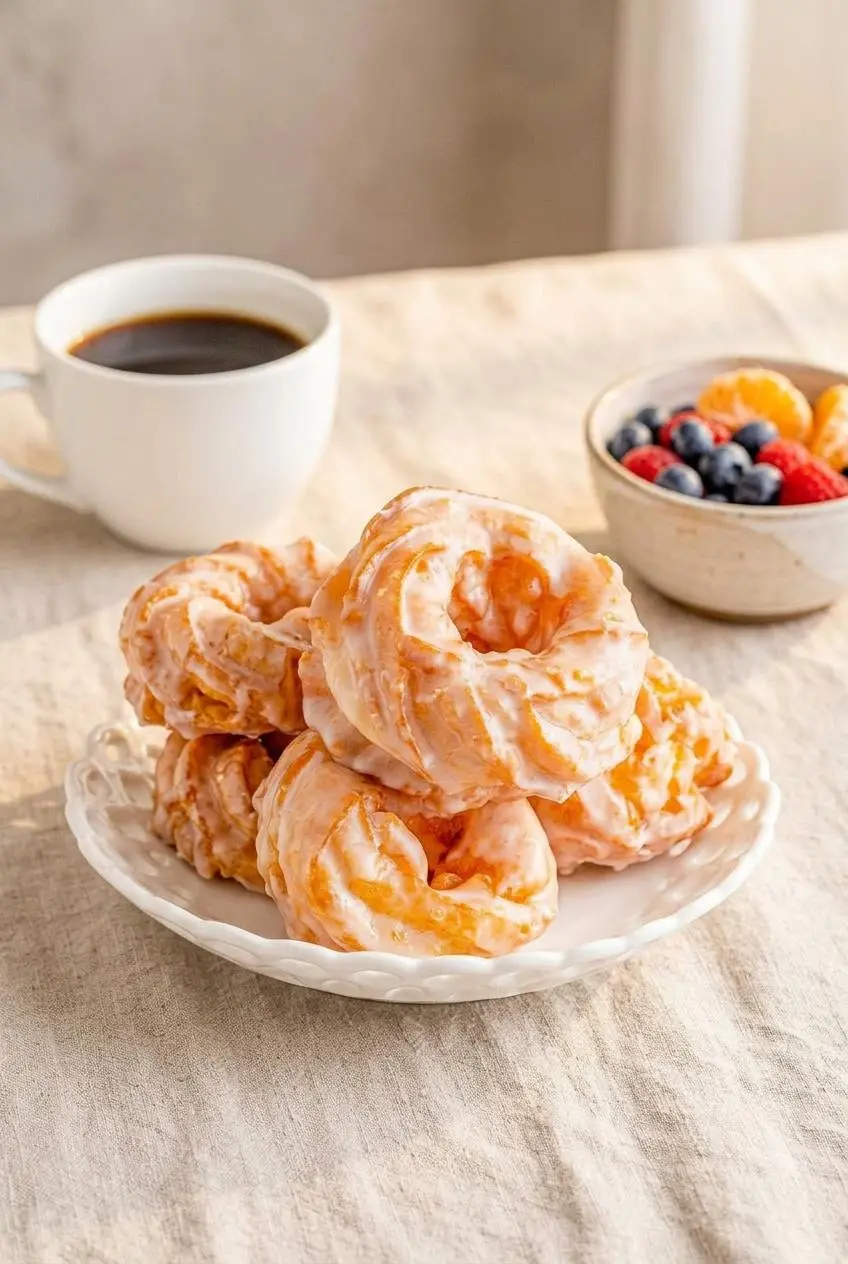
Serve the crullers once the glaze has set, while the pastry still has its delicate crispness. Espresso or dark roast coffee balances the sweet coating. For a richer café-style pairing, offer French hot chocolate.
Fresh berries and citrus segments make a bright accompaniment for a weekend brunch platter. Keep fruit in a separate bowl so its juices don’t soften the pastry.
For guests, offer vanilla and chocolate glazed rings on separate platters. Avoid piling freshly glazed crullers into a deep bowl, where the coating can stick and the lower rings can lose their fluted edges.
Storage and Protecting the Crisp Texture
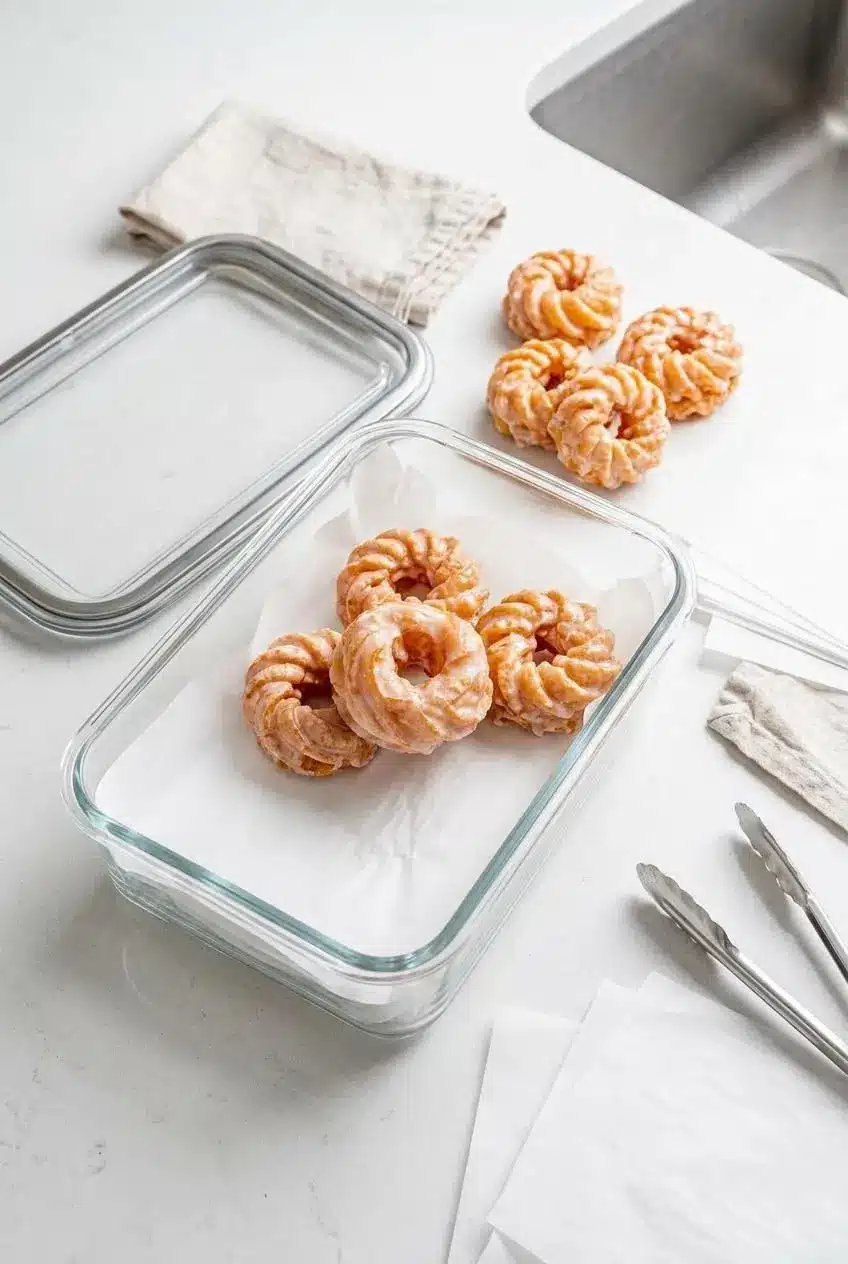
Freshly fried crullers have the strongest contrast between crisp ridges and a tender center. Storage softens that contrast, so cook a batch when you can serve it fresh.
Let leftover rings cool completely before putting them in a well-sealed container. Packing them while warm traps steam, which softens the crust and makes the glaze tacky. Separate stacked layers with parchment to limit sticking, and keep the container away from heat and moisture.
A brief microwave warming can soften the pastry, but it won’t restore fried crispness and may melt the glaze. Warm an individual portion gently rather than repeatedly warming the whole batch.
Conclusion
Golden ridges, an airy center, and a thin vanilla coating make homemade crullers worth the attention. Let the paste cool before adding eggs, then use the thermometer to keep frying steady.
Start with the classic glaze, or try the optional honey finish when you want a different flavor. Enjoy them fresh, with something warm to sip.
Frequently Asked Questions
What Is the Difference Between a French Cruller and a Regular Donut?
French crullers use egg-rich choux pastry that expands with steam. Yeast donuts have a breadlike crumb, while cake donuts use chemical leavening and have a denser texture. The piped choux gives French crullers their fluted edges and airy pockets.
Can I Bake French Crullers in the Oven Instead of Frying Them?
Choux rings can bake into a puffed pastry, but they won’t have the same fried crust or rich exterior. This dough’s method is designed for frying; use a dedicated baked choux method rather than assuming the frying directions translate directly to the oven.
Why Is Corn Syrup in the Glaze and Can I Substitute Honey?
Corn syrup discourages crystallization and helps the glaze look smooth and glossy. Honey or maple syrup is an optional alternative, but each adds its own flavor and may change the consistency. Add liquid gradually rather than assuming the coating will behave identically.
How Can I Get Ready Before Piping French Crullers?
Cut the parchment squares, fit the piping bag with its star tip, and arrange the draining rack before beginning. These preparations let you move from mixing to piping without leaving finished dough waiting while you organize the counter.
Why Did My French Crullers Deflate or Turn Out Raw Inside?
The exterior may have browned before the interior set, especially if the oil ran too hot. Loose dough can also struggle to hold its structure. Check the paste’s consistency, monitor the oil, and inspect a test cruller before frying the remaining rings.
French Crullers

Equipment
- 1 medium saucepan
- 1 Large Bowl
- 1 Stand Mixer or Hand Mixer
- 1 Large Stockpot
- 1 digital thermometer
- 1 Piping Bag Fitted with a Very Large Star Tip
- 1 Tongs
- 1 Wire Rack
- 1 Medium Bowl
Ingredients
Donuts
- 1 1/4 cup water
- 1/2 cup unsalted butter at room temperature
- 4 1/2 teaspoons granulated sugar
- 1/2 teaspoon salt
- 1/2 teaspoon vanilla extract
- 1 1/4 cups all-purpose flour
- 4 large eggs
- 2 egg whites from large eggs, discard yolks or save for another use
Frying
- Oil as necessary to fill your pot 3 to 4 inches deep; I use and recommend vegetable oil
Glaze
- 2 cups confectioners’ sugar sifted if it’s lumpy
- 1 tablespoon light-colored corn syrup such as Caro
- 2 to 3 teaspoons hot water
- 2 teaspoons vanilla extract
Instructions
French Crullers
- Heat the water, butter, sugar, salt, and vanilla together in a medium saucepan over medium-high heat until boiling. The butter should melt into the liquid as bubbles break across the surface.
- Work the flour into the boiling mixture with a sturdy spoon or whisk. Keep stirring until no dry flour remains.
- Stir the paste over the heat until patches of starchy film appear on the pan bottom, then take the saucepan off the burner. The mixture should gather into a cohesive mass rather than remain fluid.
Mixer
- Move the hot paste carefully into a stand mixer bowl with a paddle attachment, or a large bowl for a handheld mixer, and beat at medium-low speed for about 3 to 4 minutes. The paste should release heat and become less steamy.
- Beat in the whole eggs individually, followed by the egg whites individually, fully blending each addition before the next. The paste may briefly look broken before it comes together again.
- Continue beating after the final white until the dough develops a smooth sheen. It should retain some shape instead of spreading like batter.
Oil
- Fill a large stockpot with oil to a depth of 3 to 4 inches and heat it to 375°F, monitoring with a clip-on digital thermometer. Leave ample empty space above the oil for bubbling and expansion.
- Cut parchment into 3 to 4-inch squares while the oil heats and arrange them on a baking sheet. Keep the squares flat so they support the piped rings.
Piping
- Load the dough into a piping bag fitted with a very large open star tip. The tip should leave pronounced grooves in the dough.
- Form a 3 to 4-inch dough ring directly on each parchment square. Join the ends neatly without building a thick mound at the seam.
Frying
- Lower each parchment-supported ring gently into the oil with the dough facing down. The paper should remain accessible above the ring.
- Use long tongs to dip the parchment into the oil and ease it away from the dough. Let the paper release rather than pulling against a sticky ring.
- Cook each cruller for about 2 to 3 minutes on each side. Look for an expanded ring with a deep golden exterior.
- Drain the cooked rings on paper towels over a wire rack and continue until all the dough is fried. Keep the finished crullers aside while preparing the glaze.
Glaze
- Whisk the confectioners’ sugar, corn syrup, hot water, and vanilla in a medium bowl. The glaze should look uniform, without dry sugar pockets.
- Immerse a warm cruller in the glaze and rotate it with a fork to make sure both sides receive a coating. The glaze should reach into the fluted edges.
- Lift the ring with a fork or wide slotted spatula and let the excess coating fall back into the bowl, then repeat with the remaining crullers. A thin coating preserves the definition of the ridges.
- Arrange the glazed rings on a wire rack and wait for the coating to set before serving. The surface should lose its wet appearance.