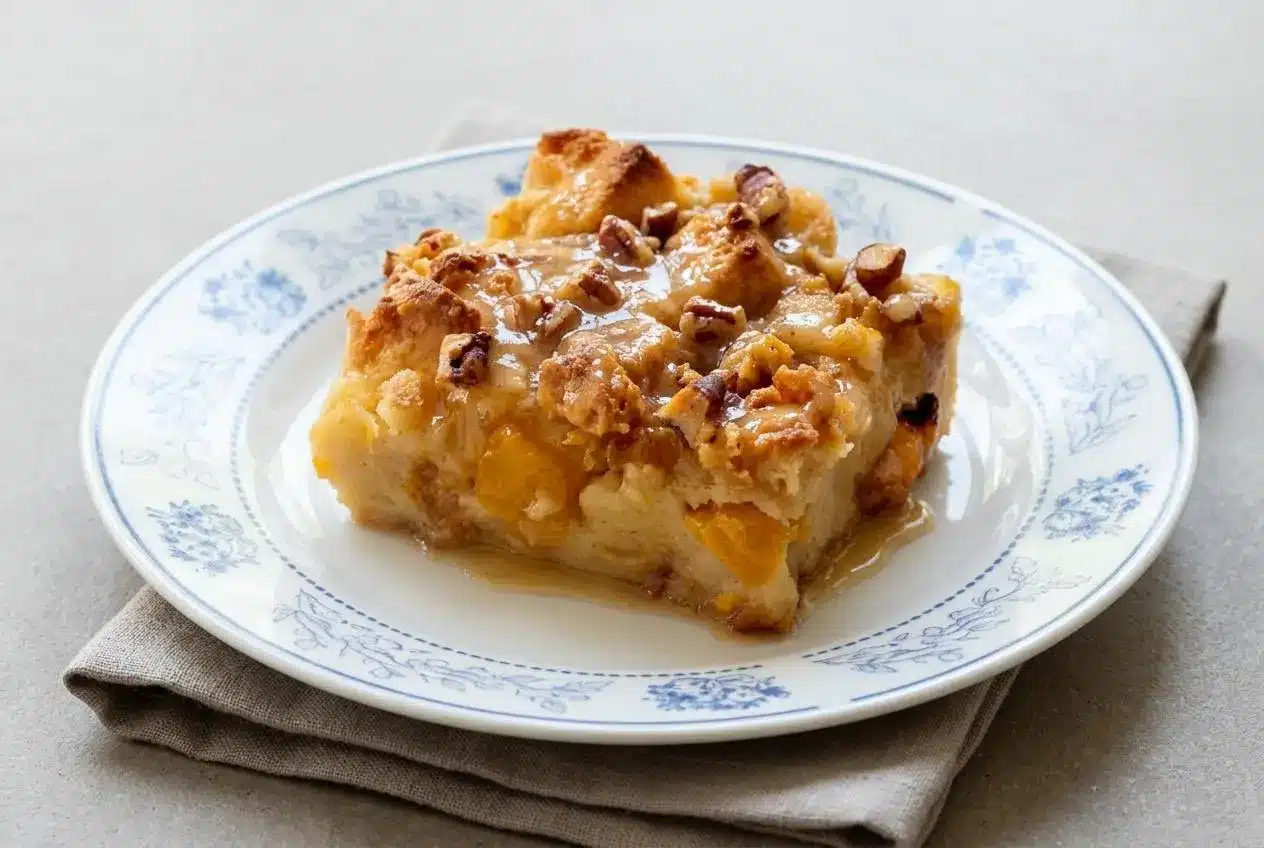
To make the best Peach Bread Pudding, toss dried bread cubes with fresh, canned, or thawed peaches in a sweet vanilla egg custard. Let it soak for 30 minutes, then bake at 350 °F for 40 to 45 minutes.
Warm baking peaches, cinnamon, and sugar give this dessert a soft custardy middle and caramelized edges. Peach Bread Pudding lands somewhere between a cozy brunch bake and an easy dessert, especially once the buttery sauce hits the plate.
It works best when you control moisture from the start, from the bread you choose to the way you prep the fruit. The little soak-and-cover trick makes all the difference.
Use bread cubes that feel dry all the way through before they ever meet the custard.
Ingredients for Your Pudding Masterpiece
Each ingredient pulls its weight here, building structure, creaminess, sweetness, spice, and that toasted finish on top.
Bread Pudding
- 8 cups bread (cubed)
- 3 Eggs
- 3 Tablespoons Butter (Melted)
- 1 cup vanilla yogurt
- 1 cup milk
- 2 cups Sugar + 2Tbsp
- 2 cups Fresh Peaches (Peeled, Pitted And Diced)
- 1/2 cups Pecans (Chopped)
- 1 tsp cinnamon
Caramel Sauce
- 1 cup Unsalted Butter
- 1 cup Heavy Cream
- 1 cup Brown Sugar
The bread is the framework, so sturdy loaves such as challah, brioche, or even crusty French bread hold the custard far better than soft sandwich slices. Eggs, milk, and melted butter create the custard body, while vanilla yogurt adds tang and helps the mixture bake up silkier instead of loose. Peaches bring fragrance and juiciness, cinnamon warms the whole pan, and pecans add crunch right when the top needs contrast.
I like to rub a bread cube between my fingers before mixing. If it still feels springy in the center, it needs more drying time.
How to Make Creamy Peach Bread Pudding
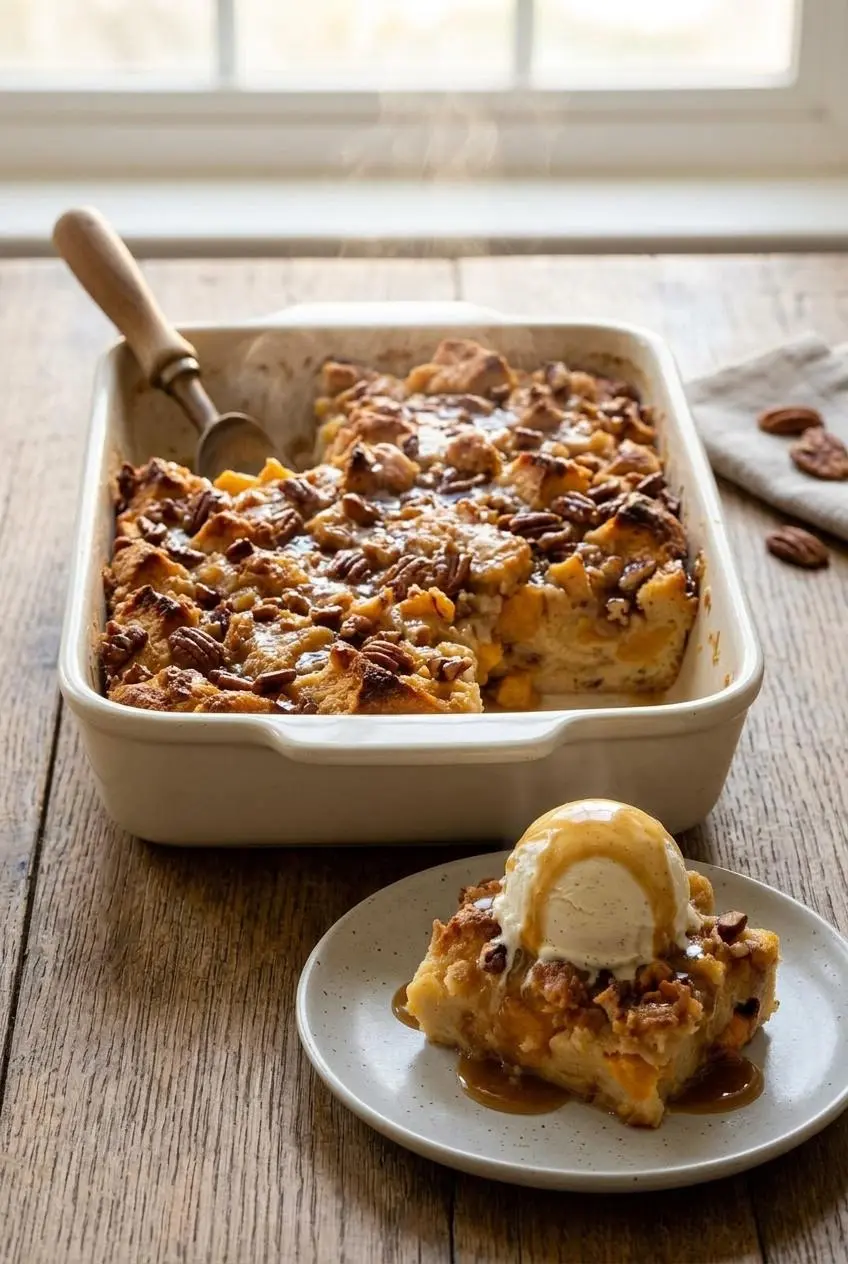
This method is straightforward, but the order matters. Build the custard first, give the bread time to drink it in, and cover the dish early so the center sets before the top gets too dark.
Bread Pudding
- Heat the oven to 350 °F and coat a 9×13 baking dish with cooking spray.
The dish should be fully greased so the custard releases cleanly from the corners. - Whisk the 3 Eggs in a large bowl, then blend in the melted butter, vanilla yogurt, and milk before slowly stirring in 2 cups Sugar until dissolved.
The mixture should look smooth and glossy, with no gritty sugar collecting at the bottom. - Fold in the peaches and bread cubes until every piece is coated.
The bread should start absorbing the custard right away, but the cubes should still hold their shape. - Let the mixture stand for 30 minutes before baking.
This soak prevents dry pockets in the middle and gives the center a creamy, even texture. - Mix the remaining 2Tbsp sugar with the 1 tsp cinnamon in a small bowl.
The blend should look evenly sandy and speckled, not streaky. - Transfer the soaked bread mixture to the prepared dish and scatter the cinnamon sugar over the top, then cover loosely with buttered foil and bake for 20 minutes.
The foil should sit like a light tent so steam stays in without sticking to the surface. - Remove the foil, add the pecans, and continue baking for 20 to 25 minutes more.
The pudding is ready when the top is golden and the center has a slight jiggle instead of a wet slosh.
Caramel Sauce
- Start the sauce while the pudding bakes so it is ready for serving.
This timing keeps the sauce warm and pourable instead of thickening too much in the pan. - Combine the butter, heavy cream, and brown sugar in a heavy saucepan over medium-low heat and bring the mixture to a boil while stirring.
As it heats, the aroma shifts from plain butter to deep caramel and toasted sugar. - Lower the heat and simmer for about 5 minutes until the sauce thickens slightly.
It should coat the spoon lightly and look smooth, not grainy. - Spoon the sauce over each serving and finish with vanilla ice cream if you like.
The hot sauce should melt into the warm pudding and pool around the edges.
If you want a little extra lift, stir a pinch of freshly grated nutmeg and a bit of orange zest into the custard. Keep it optional, but it does make the peach flavor taste brighter.
The Best Bread Choices for Pudding Mastery
Bread pudding succeeds or fails with the bread. Soft fresh sandwich bread collapses too fast, so you end up with a heavy, soggy center instead of tender cubes suspended in custard.
Look for a loaf with some structure and a tighter crumb. Challah, brioche, and French bread all absorb the liquid well without dissolving. For a spiced variation, cinnamon swirl bread can work nicely too, especially if you want the cinnamon note to feel baked into every bite.
A good cube size is about 1 inch. Smaller pieces can turn mushy, while very large chunks stay dry in the middle. The recipe’s bread-to-liquid balance works best when the cubes are big enough to hold shape but not so big that the custard cannot reach the center.
Oven-Drying Bread Cubes in Minutes
If your bread is fresh, dry it before mixing. Spread the cubes out on a sheet pan and warm them in a 200 °F oven for 10 to 15 minutes, just until the outside feels dry and the centers lose that soft bakery bounce.
Tap one or two cubes with your fingernail. They should sound a little dry and hollow, not soft and quiet. That small step saves the whole pudding from turning dense.
Challah vs. Brioche
Challah usually gives you a slightly lighter, eggy structure with a gentle chew. Brioche is richer and more buttery, so the finished pudding tastes fuller and softer.
Both work well because they are sturdy enough to handle a sweet egg custard. If you want a more defined cube shape in the finished dish, challah usually holds a bit firmer. If you want a softer, more luxurious bite, brioche leans that way.
Selecting and Prepping Your Peaches
Peaches bring the flavor, but they also bring water. The trick is using the fruit without letting that extra moisture thin the custard.
Fresh peaches are classic, but this dessert is not limited to peak summer. Canned and frozen peaches work well too when you prep them carefully, and that makes the dish worth keeping in your year-round dessert rotation. If you have extra fruit on hand, peach cobbler pound cake is another good way to use it.
Using Fresh Summer Peaches
Choose ripe but still firm peaches. They should smell fragrant and give slightly when pressed, but they should not feel squishy or leaky.
To prep them, peel, pit, and dice them into small pieces so they distribute evenly through the bread. If the skins cling, blanch the peaches briefly in hot water, then slip the skins off once they loosen. Firm fruit holds its shape better in the bake, which keeps the pudding from turning jammy in spots.
Tips for Canned and Frozen Peaches
Canned peaches are a smart off-season option, but drain them thoroughly and pat them dry before adding them to the bowl. Do not pour the packing syrup into the custard. That extra liquid throws off the texture fast.
Frozen peaches need the same moisture control. Thaw them fully, blot away surface moisture, and gently squeeze out excess liquid if they seem very wet. Once prepped, both versions can stand in for fresh peaches without changing the official recipe steps.
Baking Formats: Ramekins vs. Casserole Dish
The 9×13 dish gives you the classic family-style version with a creamy middle and plenty of browned edges. It is the right choice when you want soft custard underneath and a broad top for cinnamon sugar and pecans.
Ramekins bake the same mixture in a different way. Because they have more exposed surface area, they usually set faster and develop more golden edges per serving. The texture feels a little firmer and slightly less spoony in the center.
If you use ramekins, fill them with the same soaked mixture and start checking earlier than you would with the big dish. The top should still look lightly puffed, and the center should wobble gently rather than look wet.
The Science of a Perfect Custard Set
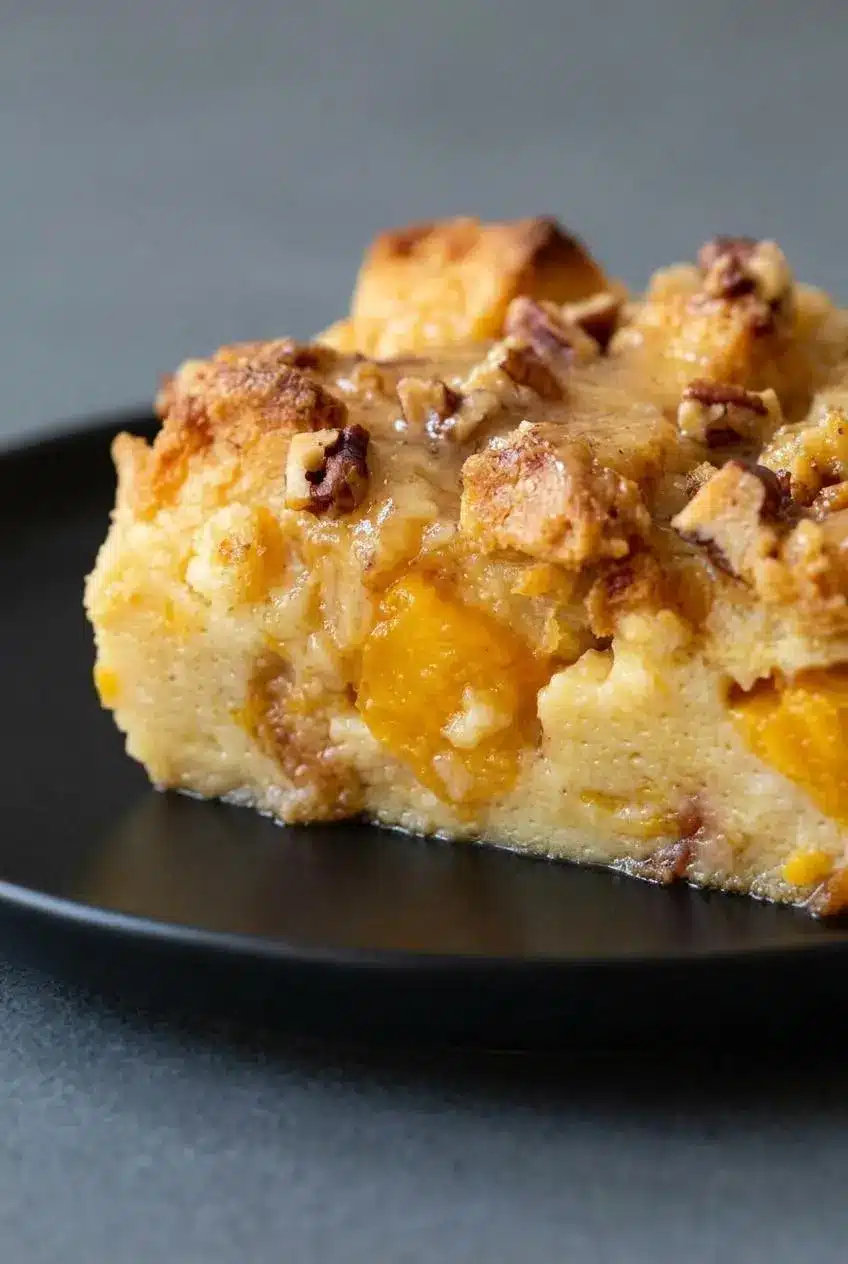
Custard can look done on top before it is actually set in the middle. That is why this recipe starts covered and finishes uncovered. The foil slows browning, traps gentle heat, and gives the egg mixture time to firm up without scorching the surface.
You are aiming for a center that jiggles slightly when the pan is nudged. It should not ripple like liquid, and it should not look stiff or dry either. If you like using a thermometer for egg dishes, 160 °F for cooked egg mixtures is the benchmark many home cooks use.
Why Yogurt Belongs in Your Custard
Vanilla yogurt does more than add flavor. Its mild tang balances the sugar, and its thickness helps the custard feel plush instead of watery.
It also softens the texture of the egg mixture, so the finished pudding bakes up silky rather than rubbery. That matters even more in a fruit dessert, where peach juices can otherwise make the center feel looser than you want.
Texture Troubleshooting: Wet vs. Dry
If your pudding turns out too wet or too dry, the fix is usually simple. Most problems trace back to bread moisture, fruit moisture, or baking exposure.
- If the center seems runny, keep the foil loose and bake a bit longer until the middle shifts from sloshy to softly jiggly.
- If the pudding feels dry, the bread may have been too large or not fully soaked. Give the cubes the full 30 minutes so the custard reaches the center.
- If the top browns too fast, keep it covered for the first half of baking as written. That protects the surface while the custard underneath sets.
- If the whole dish feels heavy and soggy, fresh soft bread or overly wet peaches are the usual cause. Dry the bread first and blot canned or thawed fruit well.
- If the flavor tastes flat, a tiny pinch of nutmeg or a little orange zest can brighten the peaches without changing the recipe structure.
Adding the Perfect Nutty Crunch
Pecans belong on the pudding after the foil comes off, not at the beginning. That timing lets them toast during the final stretch instead of darkening too early.
For even more flavor, toss the pecans lightly with a bit of the cinnamon sugar before scattering them over the top. The nuts should come out fragrant and crisp, not bitter. Almonds can work too if you want a different kind of crunch.
Lighter Swaps That Still Taste Decadent
If you want to lighten the texture a little, low-fat yogurt and low-fat milk can still give you a soft custard. The pudding will taste a bit less rich, but it should stay creamy as long as the bread is dried well and the fruit is not too wet.
What you do not want is to cut too much fat and then rush the soak. The custard needs that rest to spread evenly through the bread, especially when the dairy is leaner.
Gluten-Free Peach Bread Pudding
This dessert can work with a sturdy loaf of gluten-free bread, but drying matters even more because gluten-free slices can crumble fast once wet.
Cut the loaf into thick cubes, dry them thoroughly, and handle the soaked mixture gently when you transfer it to the pan. Choose a loaf with structure rather than one that is very soft or airy, and keep this swap optional rather than automatic.
Make-Ahead Prep and Storage Guide
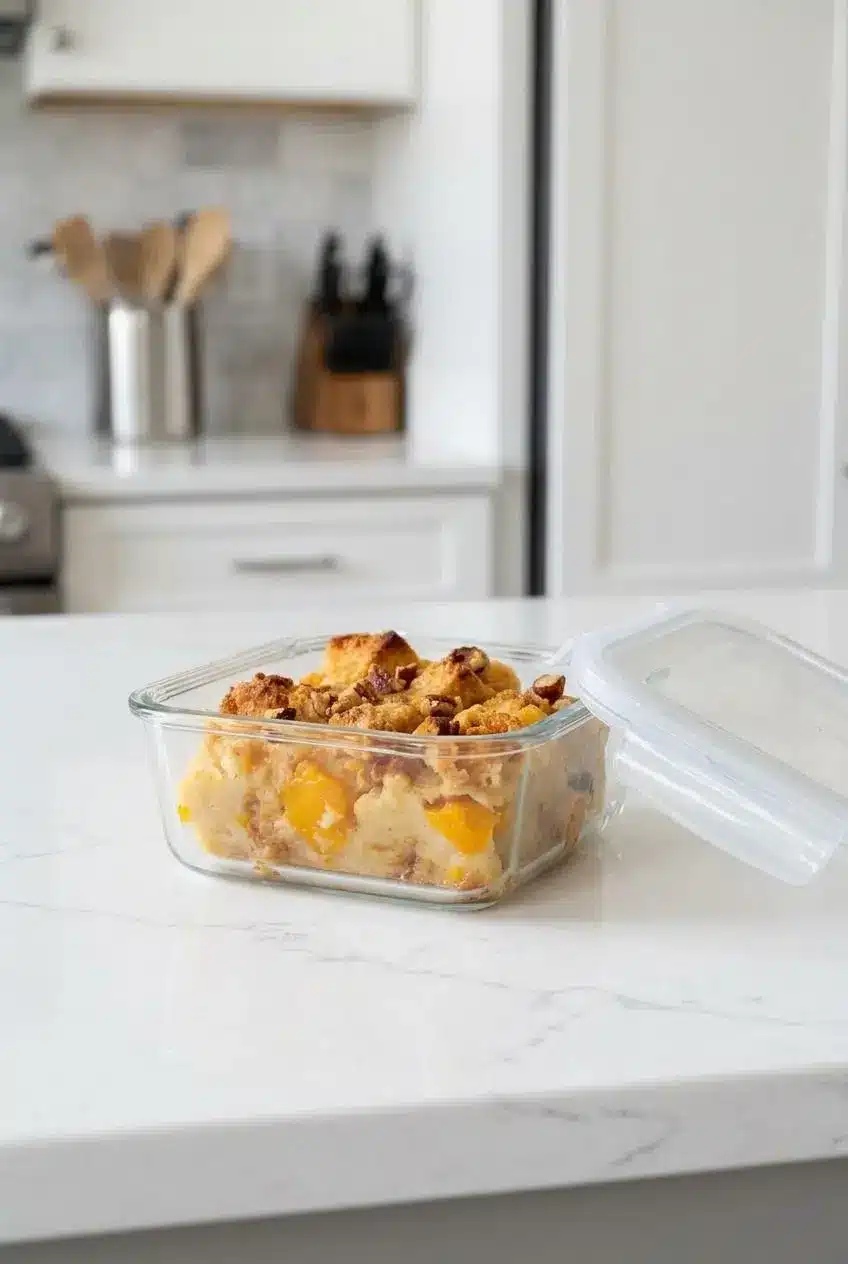
You can assemble the pudding in the baking dish, cover it, and chill it before baking. Letting it stand at room temperature for 20 minutes before it goes into the oven helps the custard bake more evenly.
For baked leftovers, cool the dish before covering and refrigerating. Reheat portions in a 350 °F oven under foil so the top does not dry out before the center warms through.
Because this dessert contains eggs and dairy, keep it well chilled when storing, and avoid leaving it out longer than needed. Good handling and prompt refrigeration matter with dishes like this, as noted in USDA egg handling and refrigeration advice.
Conclusion
This is the kind of dessert that feels generous without being fussy. Dry bread, well-prepped peaches, the full soaking time, and a loose foil tent are the real keys to getting that creamy center and golden top.
Serve it warm with plenty of caramel sauce, and do not rush the texture cues. When the middle gives that soft jiggle, you are right where you want to be.
Frequently Asked Questions
Can I make peach bread pudding in advance?
Yes. You can assemble the dish completely, cover it, and refrigerate it before baking. Let it stand at room temperature for 20 minutes before it goes into the oven so the center bakes more evenly.
Can I use canned or frozen peaches instead of fresh?
Absolutely. Canned peaches work well if you drain them completely and pat them dry. Frozen peaches also work, but thaw them first and remove excess moisture before mixing them into the custard.
How do I prevent my bread pudding from getting too soggy?
Use thick, dry bread cubes rather than soft fresh slices. The bread needs structure before it meets the custard. Also skip any extra peach juices and keep the full 30-minute soak. That gives you a creamy center instead of a wet one.
What is the best type of bread to use for bread pudding?
Challah, brioche, and French bread are the top choices here. They absorb the custard well while still holding their shape. Avoid thin sandwich bread, which tends to break down too quickly and makes the pudding feel heavy.
Peach Bread Pudding

Equipment
- 9×13 Baking Dish
- Large Mixing Bowl
- Small mixing bowl
- Heavy saucepan
Ingredients
Bread Pudding
- 8 cups bread cubed
- 3 Eggs
- 3 Tablespoons Butter Melted
- 1 cup vanilla yogurt
- 1 cup milk
- 2 cups Sugar plus 2 Tbsp
- 2 cups Fresh Peaches Peeled, Pitted And Diced
- 1/2 cups Pecans Chopped
- 1 tsp cinnamon
Caramel Sauce
- 1 cup Unsalted Butter
- 1 cup Heavy Cream
- 1 cup Brown Sugar
Instructions
Bread Pudding
- Heat the oven to 350 °F and coat a 9×13 baking dish with cooking spray. The dish should be fully greased so the custard releases cleanly from the corners.
- Whisk the 3 Eggs in a large bowl, then blend in the melted butter, vanilla yogurt, and milk before slowly stirring in 2 cups Sugar until dissolved. The mixture should look smooth and glossy, with no gritty sugar collecting at the bottom.
- Fold in the peaches and bread cubes until every piece is coated. The bread should start absorbing the custard right away, but the cubes should still hold their shape.
- Let the mixture stand for 30 minutes before baking. This soak prevents dry pockets in the middle and gives the center a creamy, even texture.
- Mix the remaining 2Tbsp sugar with the 1 tsp cinnamon in a small bowl. The blend should look evenly sandy and speckled, not streaky.
- Transfer the soaked bread mixture to the prepared dish and scatter the cinnamon sugar over the top, then cover loosely with buttered foil and bake for 20 minutes. The foil should sit like a light tent so steam stays in without sticking to the surface.
- Remove the foil, add the pecans, and continue baking for 20 to 25 minutes more. The pudding is ready when the top is golden and the center has a slight jiggle instead of a wet slosh.
Caramel Sauce
- Start the sauce while the pudding bakes so it is ready for serving. This timing keeps the sauce warm and pourable instead of thickening too much in the pan.
- Combine the butter, heavy cream, and brown sugar in a heavy saucepan over medium-low heat and bring the mixture to a boil while stirring. As it heats, the aroma shifts from plain butter to deep caramel and toasted sugar.
- Lower the heat and simmer for about 5 minutes until the sauce thickens slightly. It should coat the spoon lightly and look smooth, not grainy.
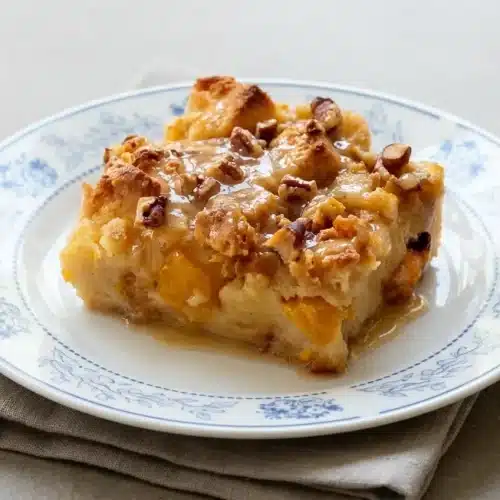
- Spoon the sauce over each serving and finish with vanilla ice cream if you like. The hot sauce should melt into the warm pudding and pool around the edges.