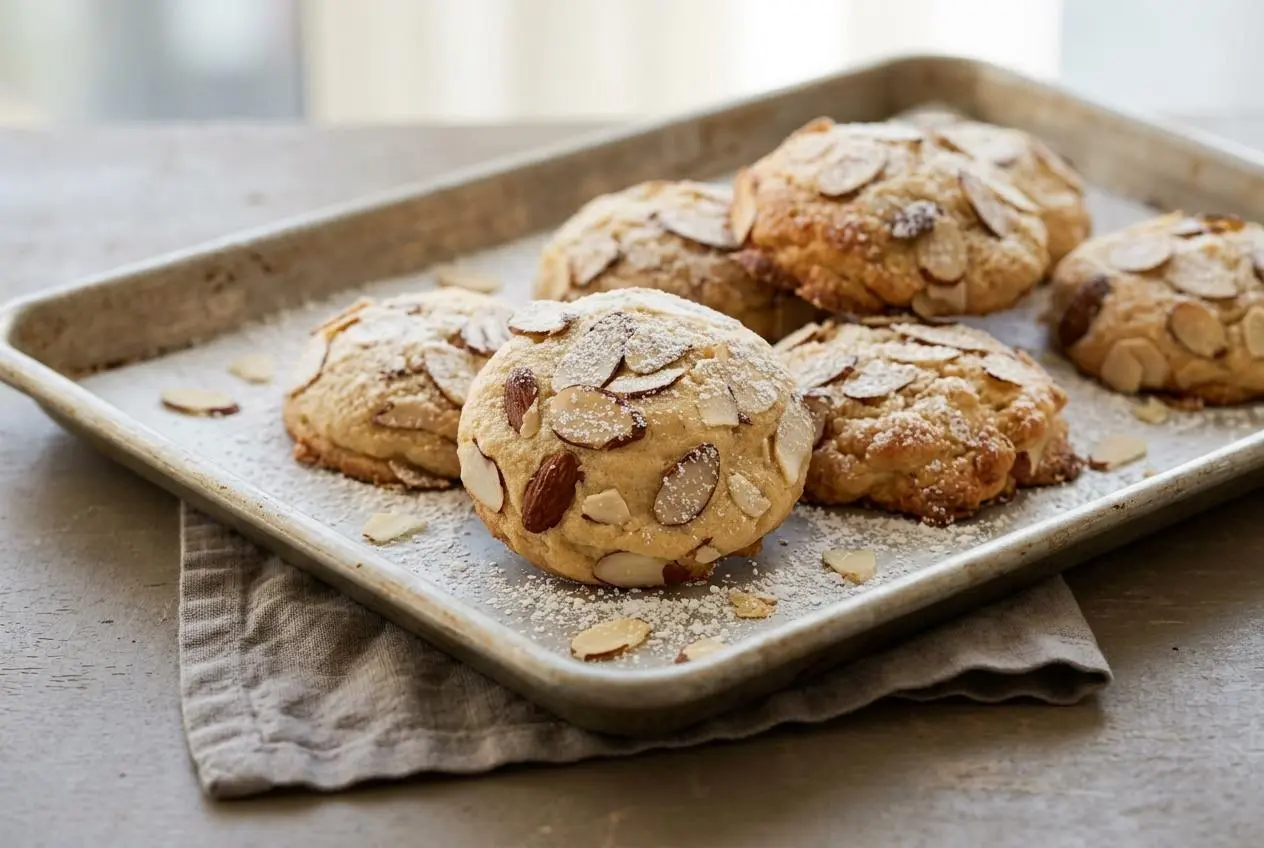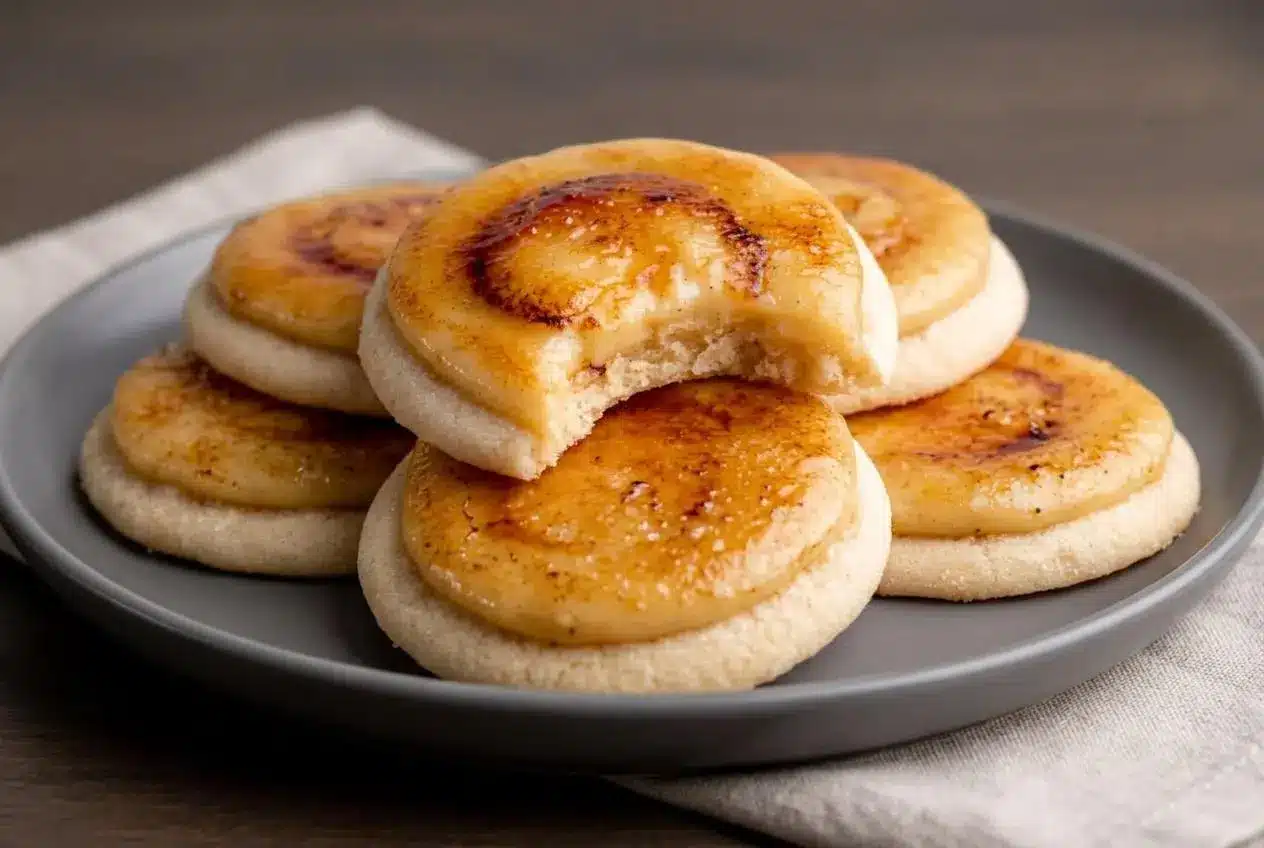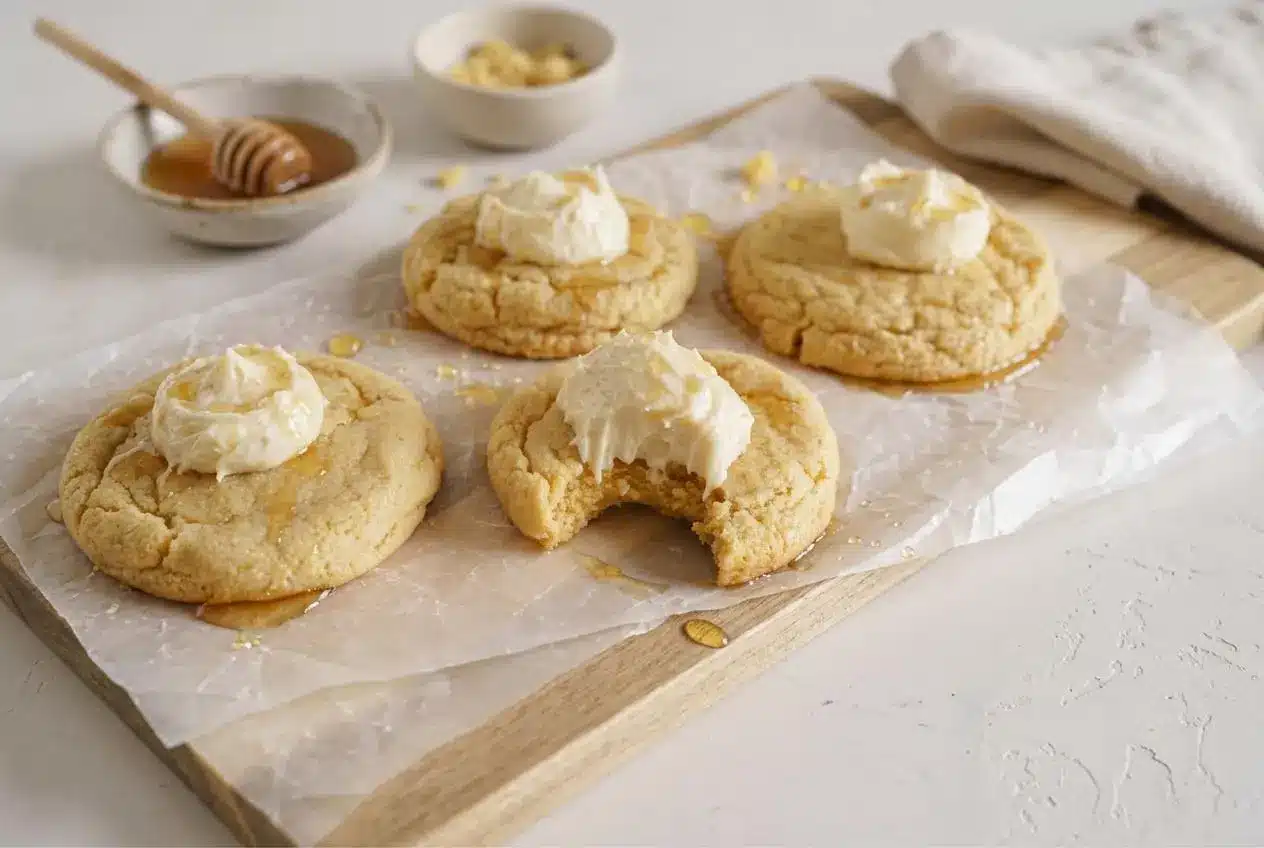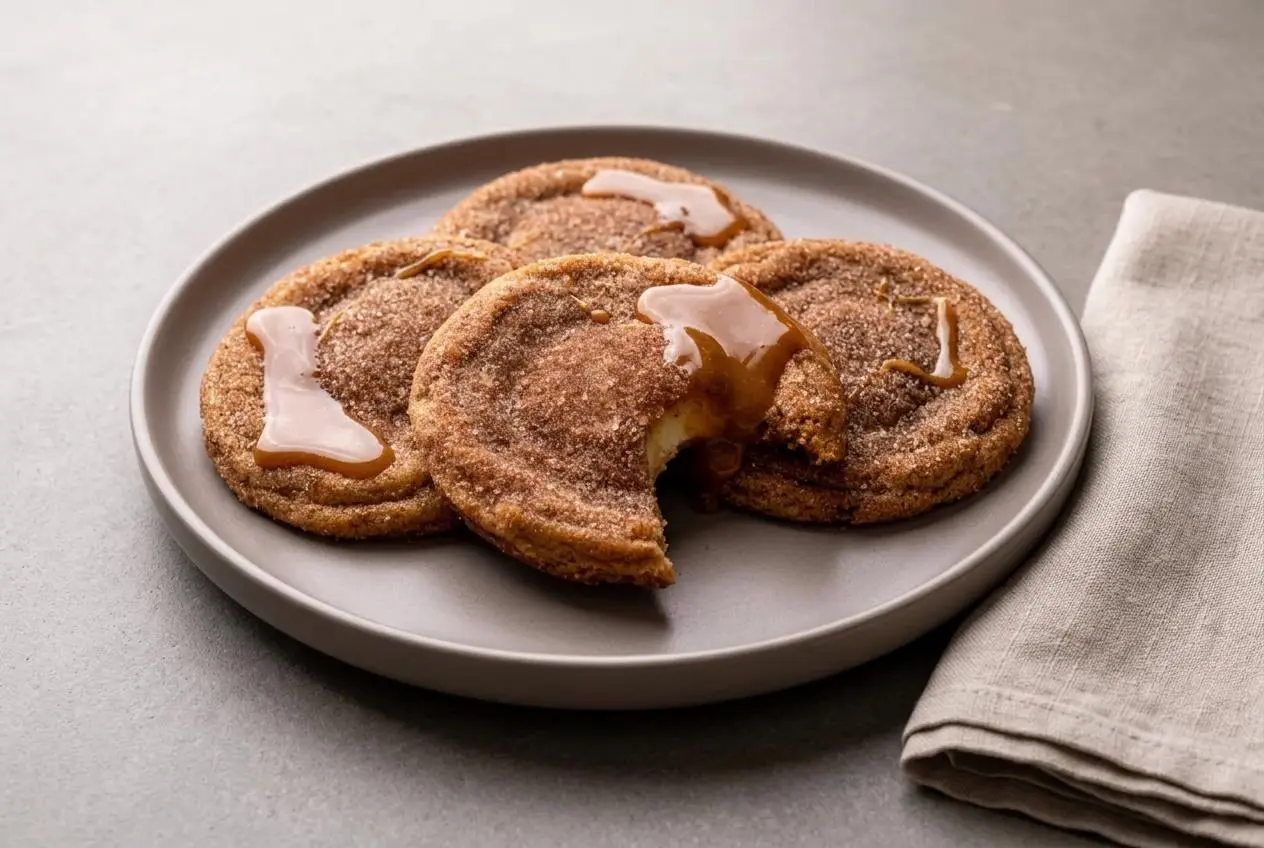
Warm cinnamon sugar and a soft cheesecake center make churro cheesecake cookies a richly textured treat. Wrap nutty brown butter dough around frozen cream cheese filling, coat it in cinnamon sugar, and bake at 350°F until the bottoms turn golden.
These stuffed cookies bring together the toasted flavor of brown butter, a chewy cookie interior, and a creamy vanilla filling. A second cinnamon sugar dip adds a fresh, crackly finish after baking.
The recipe makes six generous cookies, with caramel sauce for the finishing drizzle. The trick is keeping the filling firm while the dough stays flexible enough to seal. That creamy center is worth a careful pinch.
Clear space for a parchment-lined tray in the freezer before mixing the filling.
Ingredients for Churro Cheesecake Cookies
Brown butter adds toasted richness, sugars shape the chewy texture and crisp coating, and flour gives the dough structure. Cream cheese supplies the creamy center, while cinnamon, vanilla, salt, and caramel bring warmth, aroma, and balance.
Cookie Dough
- 1/2 Cup Unsalted Brown Butter
- 1/2 Cup + 1 Tbsp Packed Brown Sugar
- 3 Tbsp Sugar
- 1 Large Egg (Room Temp)
- 1/2 Tsp Vanilla
- 1 1/3 Cups of All Purpose Flour(Spoon & Leveled)
- 1/2 Tsp Baking Soda
- 1/2 Tsp Cinnamon
- 1/4 Tsp Salt
- Store Bought Caramel Sauce
Cheesecake Filling
- 3 oz Cream Cheese
- 1 1/2 Tbsp Sugar
- 1/4 Tsp Vanilla
Cinnamon Sugar
- 1/2 Cup Granulated Sugar
- 4 Tsp Cinnamon
The butter quantity refers to browned butter, not the amount before browning. Use the listed amount in the dough and keep the toasted specks, which carry much of its nutty flavor.
Soften the cream cheese to room temperature before beating it. Full-fat cream cheese gives a rich center, but softness is what helps it blend without lumps. Spoon flour into the measuring cup and level the surface rather than packing it down; excess flour makes the dough harder to wrap.
I check softened cream cheese by pressing it with a spatula; it should yield easily without a firm center.
Key Ingredients and Why They Work
Brown butter gives these baked cookies a toasted depth that echoes the flavor of fried churro dough. As butter heats, water evaporates and its milk solids brown, creating the amber flecks and nutty aroma you want to preserve.
Cool it before mixing. Butter that remains hot keeps the dough loose, while butter that has fully solidified becomes difficult to whisk. Aim for room-temperature butter that looks slightly thickened but still pours.
Brown sugar contributes moisture and chewiness inside the cookie. White sugar complements that texture, especially in the outer coating, where its crystals provide crunch. Replacing all the white sugar with brown sugar would change the dough and sacrifice the distinctive granular finish.
The cinnamon sugar coating uses a familiar approach found in snickerdoodle cookies, but the cheesecake center makes careful shaping especially important here.
Flour supports the filling, the egg helps bind the dough, and baking soda provides lift. Stop folding once the dry ingredients disappear so the dough stays tender rather than becoming tough.
Divide the coating between separate dishes. One touches raw dough containing egg and flour; the other stays reserved for baked cookies. Keep your dipping utensils separate as well.
How to Make Churro Cheesecake Cookies
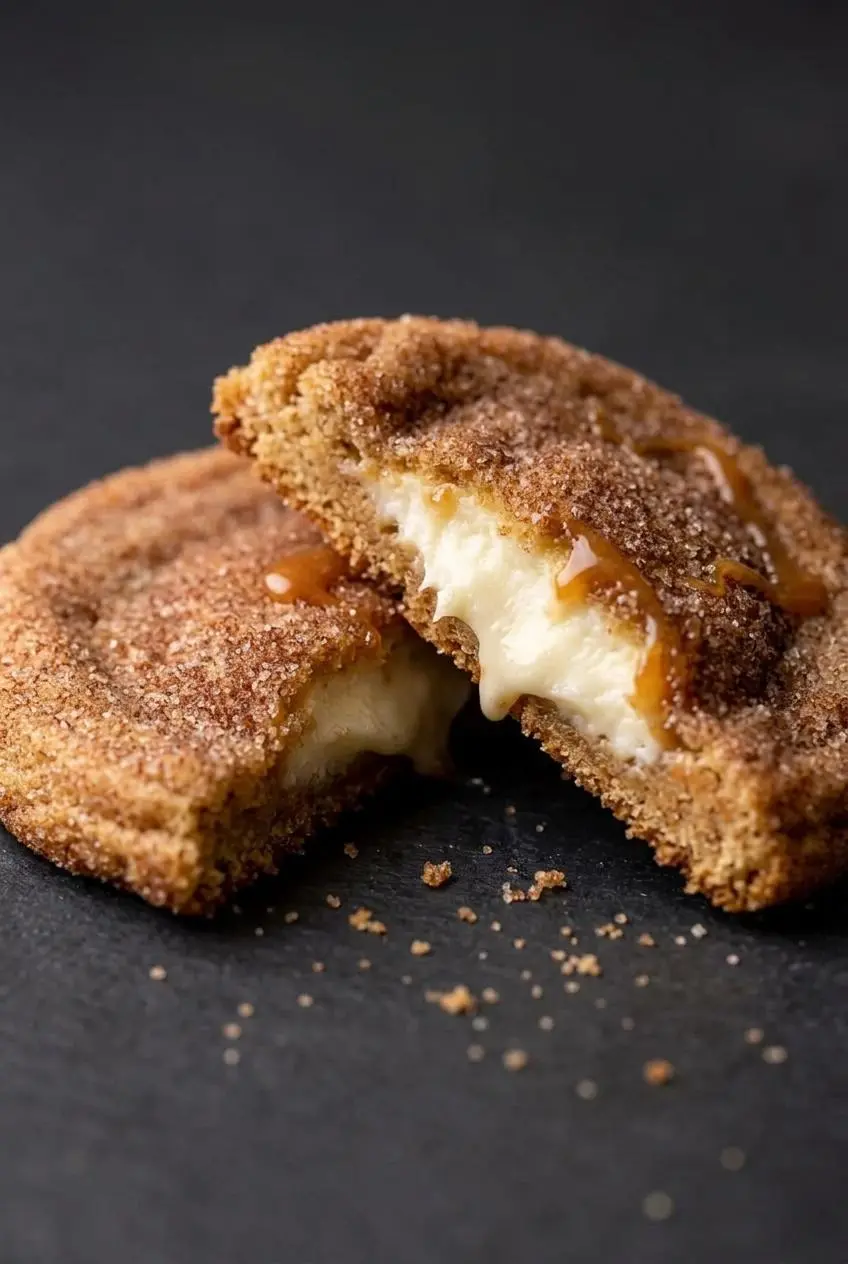
Make the filling first so it can firm up while you brown the butter and prepare the dough. Plan for about 25 minutes of preparation and 10 minutes of baking, plus filling-freezing time, butter cooling, and any brief dough chilling.
Instructions
- Beat the room-temperature cream cheese with the filling sugar and vanilla using a stand mixer or handheld mixer for 2 to 3 minutes.
The mixture should look creamy and uniform, without visible lumps. - Portion the filling into 1/2-tablespoon dollops on parchment paper and freeze for 30 minutes to 1 hour.
The portions should feel solid enough to lift without smearing. - Cube the butter, then stir it continuously in a heavy saucepan over medium heat until the milk solids turn golden brown, and transfer it to a heat-safe bowl.
Look beneath the foam for amber specks and a toasted, nutty aroma. - Once the browned butter reaches room temperature but remains thick and fluid, heat the oven to 350°F and whisk the butter with both dough sugars in a large bowl.
The mixture should look evenly blended, without a separate pool of butter. - Whisk the egg and dough vanilla into the butter mixture.
Continue until the egg disappears into a uniform mixture. - Sift together the flour, baking soda, dough cinnamon, and salt, then fold them into the wet ingredients.
Stop when no dry pockets remain and the dough comes together. - Refrigerate the dough for about 20 minutes only if it feels too soft to shape.
It should become pliable and hold its shape, rather than turning hard or brittle. - Measure dough portions with a 1/4-cup measure or regular ice cream scoop, flatten each with your palm, and set a frozen filling dollop in the center.
Keep the dough thickness even so the filling has a sturdy covering underneath. - Bring the dough edges over the filling and pinch them together, then gently smooth the closed portion into a ball.
No cream cheese should remain exposed, and the seam should look fully joined. - Combine the coating sugar and cinnamon, divide the mixture equally between two dishes, and roll each dough ball in the first dish.
Cover the entire surface while leaving the second dish untouched by raw dough. - Arrange six coated dough balls on a large cookie sheet with generous spaces between them.
Each portion needs room to spread without touching its neighbors. - Bake for 10 minutes, checking for golden-brown bottoms.
The edges should look lightly golden while the centers remain soft and puffy. - Immediately after baking, circle each cookie gently with a large round cutter or the rim of a large measuring cup.
A small circular motion nudges uneven edges into a rounder shape without pressing down the center. - Let the cookies become firm enough to handle, then carefully dip their tops into the reserved cinnamon sugar.
Lift them gently because the warm centers leave these cookies softer than ordinary cookies. - Allow the cookies to cool completely, then drizzle them with store-bought caramel sauce.
The cooled dough should support the creamy filling without collapsing when lifted.
Browning the Butter to Perfection
Cutting the butter into evenly sized cubes helps it melt consistently. Stir along the bottom of the saucepan, where the milk solids settle, and watch their color rather than relying only on the foam.
Golden specks and a nutty fragrance signal that the butter is ready. Pour it out of the hot saucepan promptly; leaving it there lets residual heat continue browning the solids. Include the toasted specks when transferring it to the cooling bowl.
Freezing the Cheesecake Core
Firm filling is easier to enclose without smearing cream cheese onto the dough edges. Freezing also helps the center hold its shape during assembly, giving the dough a better chance to form a continuous shell.
Space the dollops apart on parchment so you can lift them individually. If a portion bends or leaves a creamy streak when lifted, let it firm up further before wrapping it.
Assembling, Sealing, and the Double Sugar Dip
Flatten each dough portion evenly, keeping enough dough beneath the filling as well as around it. Bring opposite edges together, close the remaining gaps, and smooth the seam with gentle pressure. Stretching a thin patch over the filling creates a weak spot.
The first coating clings to the raw dough and bakes onto its surface. The second adds fresh cinnamon sugar crystals after the cookies can support gentle handling. Don’t rush that dip: a cookie that bends when lifted needs more time to set.
Troubleshooting Common Stuffed Cookie Mistakes
Most problems begin with dough temperature, filling firmness, or uneven wrapping. Check those before changing the ingredients.
- Filling leaks out: A soft filling dollop, open seam, or thin dough wall can let cream cheese escape. Use solid filling portions and redistribute the dough evenly before closing every gap.
- Dough cracks while wrapping: Chilling has made the butter too firm. Let the dough soften at room temperature until it bends without splitting, then shape it gently.
- Cookies spread excessively: Warm brown butter or loosely measured flour can leave the dough too soft. Cool the butter properly, measure flour by spooning and leveling, and use the brief dough chill when needed.
- Cookies feel dry or dense: Packed flour, excessive mixing, or baking past the golden-bottom cue can cause this. Measure without compressing the flour and fold only until combined.
- The coating looks patchy: The dough balls may not have rolled through the coating evenly. Turn each portion to cover its underside and sides before placing it on the sheet.
- Cookies break during the second dip: Their warm structure hasn’t set enough to support the filling. Leave them undisturbed until you can lift them gently without bending.
Storage and Reheating Instructions
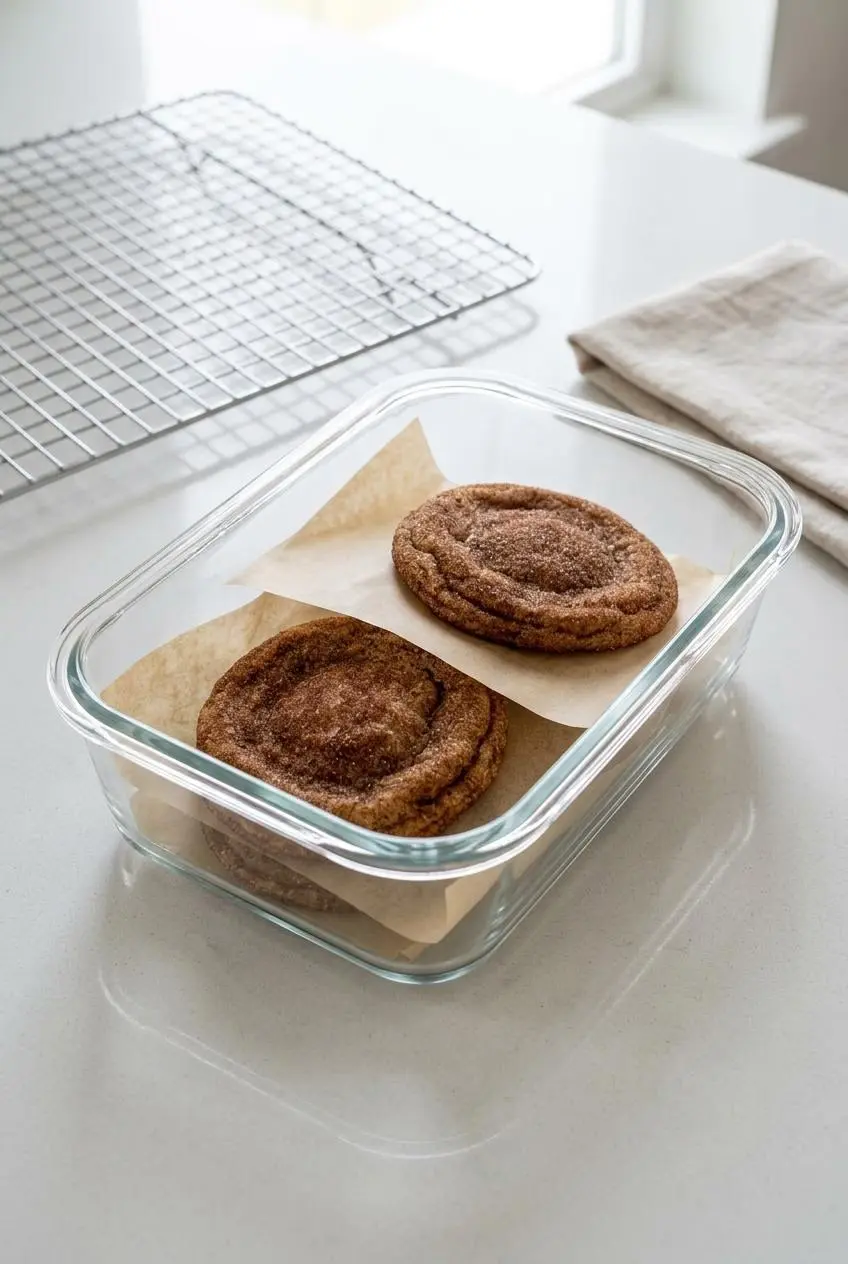
Because these cookies contain a cream cheese center, keep leftovers chilled rather than treating them like unfilled cookies. Once cooled, place them in a covered container, using parchment between layers to protect the coating.
Keep the caramel drizzle separate when storing portions you haven’t finished. Adding it near serving preserves more of the cinnamon sugar texture and prevents the tops from becoming sticky.
For preparation, freeze the filling dollops as directed and assemble them while firm. The dough itself should stay pliable for wrapping; prolonged chilling makes shaping harder.
To warm a baked cookie, use a low oven and check it frequently, removing it when gently warmed. Reheat only the portion you plan to serve. The filling will soften, and reheating may not restore the freshly baked coating completely.
Creative Serving and Flavor Variations
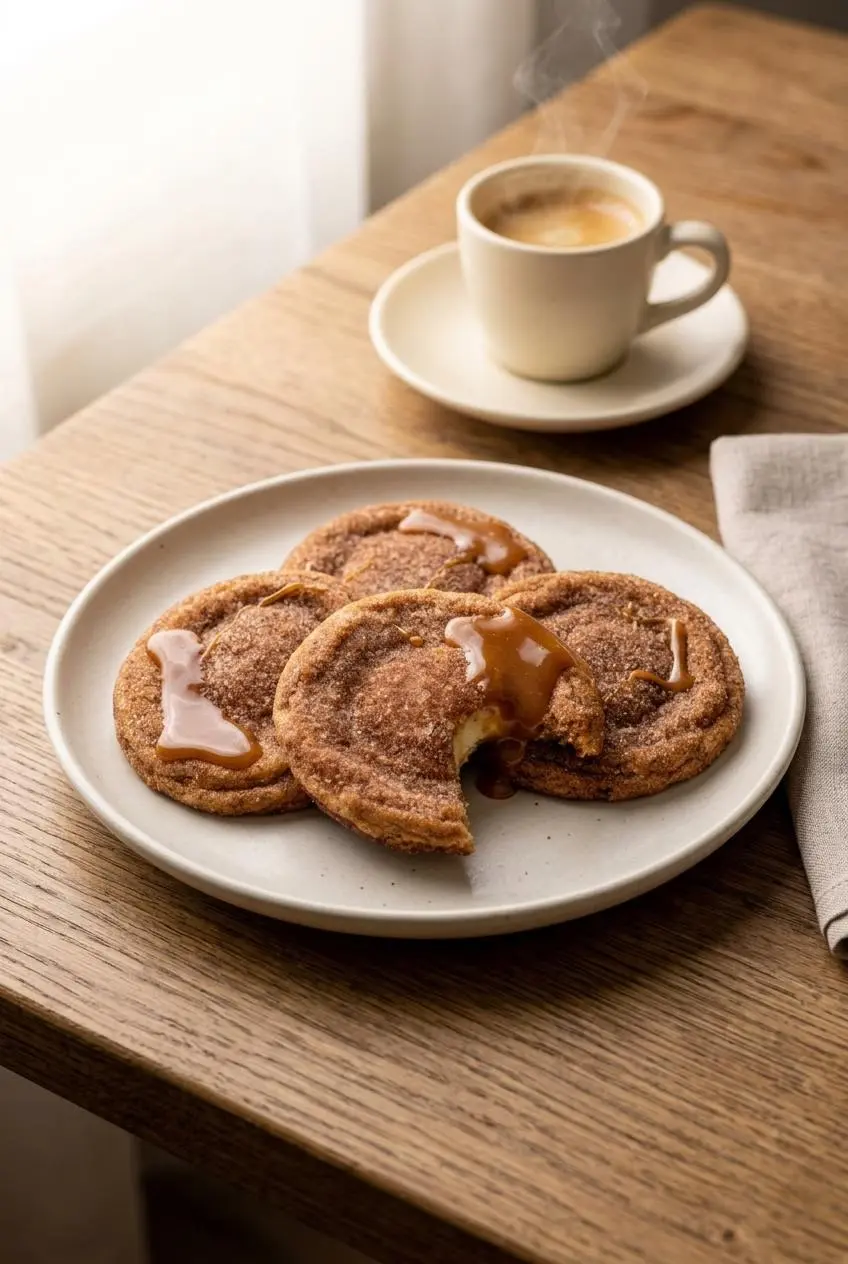
Add toppings near serving so the cinnamon sugar keeps its texture. These optional ideas stay separate from the dough and filling method.
For a larger gathering, churro cheesecake bars offer the same cinnamon and cream cheese pairing in a sliceable dessert.
Salted Caramel and Dulce de Leche Drizzle
Use salted caramel for a sweet-salty finish, or choose thick dulce de leche for a deeper milk-caramel flavor. Warm either gently until it flows, then drizzle lightly rather than covering the entire cinnamon sugar crust.
Pair the cookies with hot espresso or Mexican spiced hot chocolate. For a richer dessert, add vanilla bean ice cream alongside a cooled cookie.
Brown Butter Pecan Churro Cookies
For an optional nutty finish, mix finely chopped toasted pecans into the outer cinnamon sugar coating. Keep the pieces small so they cling more readily and don’t make the soft cookies awkward to handle.
The pecans emphasize the toasted butter flavor while adding a different crunch from the sugar crystals. Keep this addition outside the cheesecake filling so its creamy texture stays unchanged.
Conclusion
These cookies combine toasted brown butter, cinnamon sugar crunch, and a soft cheesecake center in one generous dessert. Caramel adds the final touch without hiding the spiced crust.
Firm filling, cooled butter, and evenly sealed dough make the biggest difference. Give the baked cookies time to set before dipping, and you’ll keep that creamy center where it belongs.
Frequently Asked Questions
How Do You Keep Cheesecake Filling From Leaking Out?
Freeze the filling dollops until solid, flatten the dough evenly, and pinch every seam closed. Avoid thin patches beneath or around the filling, which can open as the cookies spread.
Do Churro Cheesecake Cookies Need to Be Refrigerated?
Yes, keep cooled leftovers in a covered container in the refrigerator because they contain a cream cheese center. Separate layers with parchment to protect the cinnamon sugar coating.
Why Did My Cookie Dough Become Too Stiff to Wrap?
The butter firms as the dough chills. Use the brief chill only when the dough is too soft, and let overly firm dough soften until pliable before wrapping the filling.
Can You Freeze Unbaked Churro Cheesecake Cookies?
The freezing step here applies to the cheesecake filling dollops, not long-term storage of assembled cookies. For this method, wrap the solid filling in pliable dough, coat the portions, and bake as directed.
Why Must the Brown Butter Cool Before Adding Sugar?
Hot butter keeps the mixture loose and can affect the egg when it is added. Cooling it until thick but still fluid gives you better control over the dough’s consistency and spread.
Churro Cheesecake Cookies

Equipment
- Stand mixer or handheld mixer
- Heavy saucepan
- large cookie sheet
- Ice cream scoop
- Parchment Paper
- large round cookie cutter
Ingredients
Cookie Dough
- 1/2 Cup Unsalted Brown Butter
- 1/2 Cup + 1 Tbsp Packed Brown Sugar
- 3 Tbsp Sugar
- 1 Large Egg Room Temp
- 1/2 Tsp Vanilla
- 1 1/3 Cups All Purpose Flour Spoon & Leveled
- 1/2 Tsp Baking Soda
- 1/2 Tsp Cinnamon
- 1/4 Tsp Salt
- Store Bought Caramel Sauce
Cheesecake Filling
- 3 oz Cream Cheese
- 1 1/2 Tbsp Sugar
- 1/4 Tsp Vanilla
Cinnamon Sugar
- 1/2 Cup Granulated Sugar
- 4 Tsp Cinnamon
Instructions
Instructions
- Beat the room-temperature cream cheese with the filling sugar and vanilla using a stand mixer or handheld mixer for 2 to 3 minutes. The mixture should look creamy and uniform, without visible lumps.
- Portion the filling into 1/2-tablespoon dollops on parchment paper and freeze for 30 minutes to 1 hour. The portions should feel solid enough to lift without smearing.
- Cube the butter, then stir it continuously in a heavy saucepan over medium heat until the milk solids turn golden brown, and transfer it to a heat-safe bowl. Look beneath the foam for amber specks and a toasted, nutty aroma.
- Once the browned butter reaches room temperature but remains thick and fluid, heat the oven to 350°F and whisk the butter with both dough sugars in a large bowl. The mixture should look evenly blended, without a separate pool of butter.
- Whisk the egg and dough vanilla into the butter mixture. Continue until the egg disappears into a uniform mixture.
- Sift together the flour, baking soda, dough cinnamon, and salt, then fold them into the wet ingredients. Stop when no dry pockets remain and the dough comes together.
- Refrigerate the dough for about 20 minutes only if it feels too soft to shape. It should become pliable and hold its shape, rather than turning hard or brittle.
- Measure dough portions with a 1/4-cup measure or regular ice cream scoop, flatten each with your palm, and set a frozen filling dollop in the center. Keep the dough thickness even so the filling has a sturdy covering underneath.
- Bring the dough edges over the filling and pinch them together, then gently smooth the closed portion into a ball. No cream cheese should remain exposed, and the seam should look fully joined.
- Combine the coating sugar and cinnamon, divide the mixture equally between two dishes, and roll each dough ball in the first dish. Cover the entire surface while leaving the second dish untouched by raw dough.
- Arrange six coated dough balls on a large cookie sheet with generous spaces between them. Each portion needs room to spread without touching its neighbors.
- Bake for 10 minutes, checking for golden-brown bottoms. The edges should look lightly golden while the centers remain soft and puffy.
- Immediately after baking, circle each cookie gently with a large round cutter or the rim of a large measuring cup. A small circular motion nudges uneven edges into a rounder shape without pressing down the center.
- Let the cookies become firm enough to handle, then carefully dip their tops into the reserved cinnamon sugar. Lift them gently because the warm centers leave these cookies softer than ordinary cookies.
- Allow the cookies to cool completely, then drizzle them with store-bought caramel sauce. The cooled dough should support the creamy filling without collapsing when lifted.