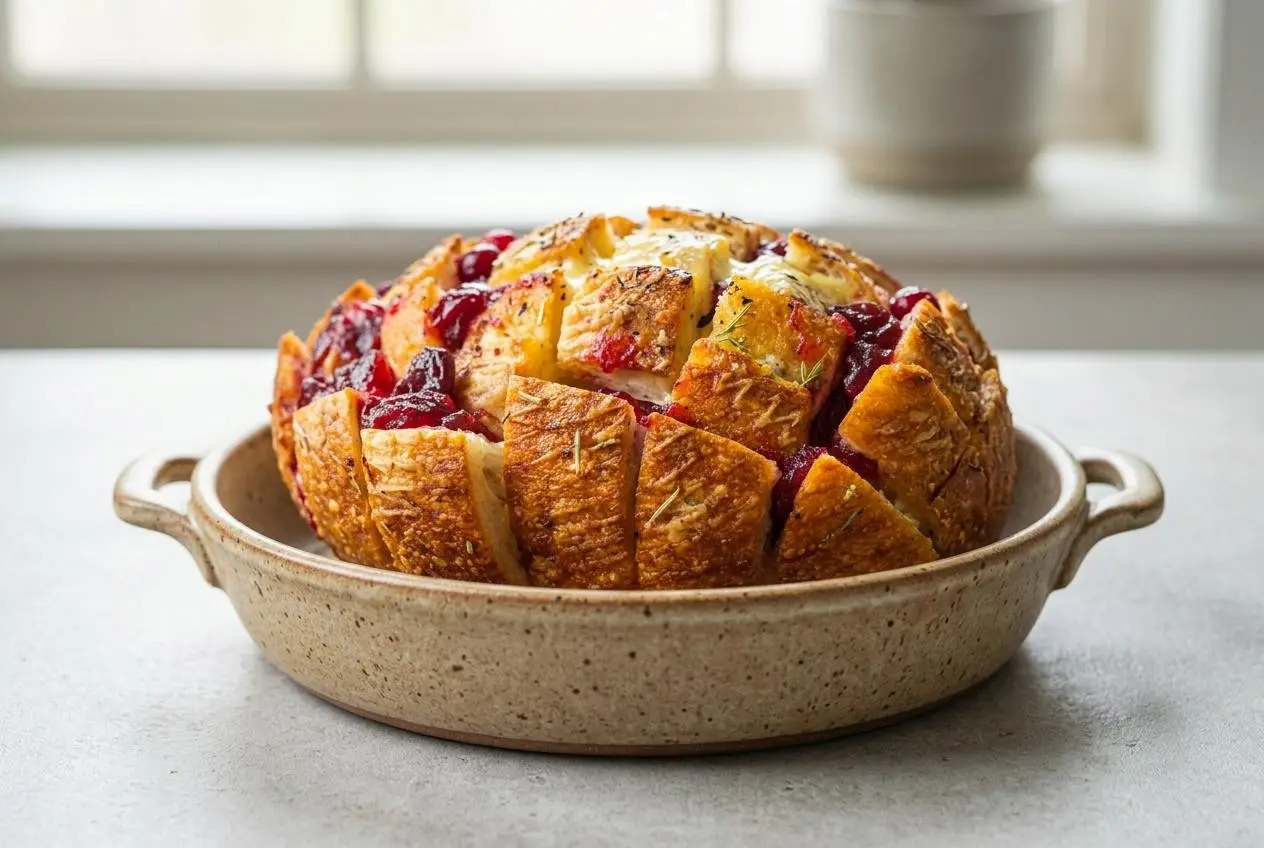
To make cranberry brie pull apart bread, cut a sourdough loaf into a 1-inch grid without slicing through the bottom. Brush the openings with herb butter, tuck in brie and whole berry cranberry sauce, and bake wrapped in foil at 350°F until the cheese melts, about 20 minutes.
This cranberry brie pull apart bread is a warm, shareable appetizer with buttery bread, creamy cheese, and pockets of sweet-tart fruit. Each piece pulls away from the loaf with filling tucked between its edges.
Thyme and rosemary bring a savory aroma that balances the cranberry sauce, while sourdough adds chew beneath the melted brie. It fits right into a Thanksgiving or Christmas appetizer spread. Keep that bottom crust intact for the best pull.
Set out a sharp serrated bread knife before starting; gentle sawing keeps the loaf from flattening beneath your hand.
Essential Ingredients and Smart Substitutions
Sourdough provides structure, butter carries the herb flavor, and brie adds creamy richness. Whole berry cranberry sauce brings sweetness and tartness, while thyme, rosemary, and salt give the bread a savory finish.
- 1 large round sourdough bread
- 1/2 cup (1 stick) butter
- 1 teaspoon dried thyme
- 1 teaspoon dried rosemary
- 1 (16 oz) wheel of brie, chopped or cubed
- 1 1/2 cups whole berry cranberry sauce
- Kosher salt, to taste
The butter does more than coat the crust. It moistens the cut bread surfaces and distributes the dried herbs into the center, where plain bread might otherwise taste dry. Brie supplies the soft, buttery filling, and cranberry sauce gives that richness a welcome tart contrast.
Salt the butter mixture lightly, especially if you use salted butter. The cheese contributes its own seasoning, so the herb butter shouldn’t taste aggressively salty.
I prefer cutting brie while it feels firm and cold; the pieces are easier to tuck into the bread without smearing.
Selecting the Right Bread Boule
Choose a large round sourdough boule with a firm crust and a chewy, substantial crumb. It should hold its shape when you steady it for slicing rather than compress under your palm.
The crust forms the foundation for the entire appetizer. A sturdy interior also gives the butter, cheese, and sauce somewhere to settle without immediately soaking through. Soft sandwich bread and delicate brioche don’t offer the same support.
A firm artisan French or Italian round loaf can work as an optional substitute, though it won’t have sourdough’s tang. If you want to bake the loaf yourself, homemade sourdough bread lets you start with a crusty foundation; let it cool fully before cutting.
Brie Preparation and Rind Guidelines
Leave the white rind on the brie. It’s edible, and it helps the soft pieces hold together during cutting and stuffing. Expect some rind to remain visible after baking rather than disappear completely.
Work with chilled cheese and use a sharp knife. If the brie starts sticking and flattening instead of cutting cleanly, return it to the refrigerator until it firms up.
You can trim the rind if you dislike its flavor or texture, but it’s not necessary. Rindless brie will be softer to handle, so tuck it gently into the channels instead of pressing it down.
Whole Berry Versus Jellied Cranberry Sauce
Whole berry cranberry sauce gives you distinct fruit pockets alongside the cheese. Choose a thick sauce that sits on a spoon rather than a loose sauce that immediately runs off.
Smooth jellied sauce doesn’t provide the same berry texture, but it isn’t automatically watery. Consistency matters more than that distinction: a loose filling can soak into the crumb regardless of whether it contains whole fruit.
Thick homemade cranberry sauce can replace the canned version. Stir it before measuring, and avoid spooning any separated liquid into the loaf. Chunky cooked sauce suits this filling better than a loose cranberry relish.
How to Make the Cranberry Brie Pull Apart Bread Step by Step
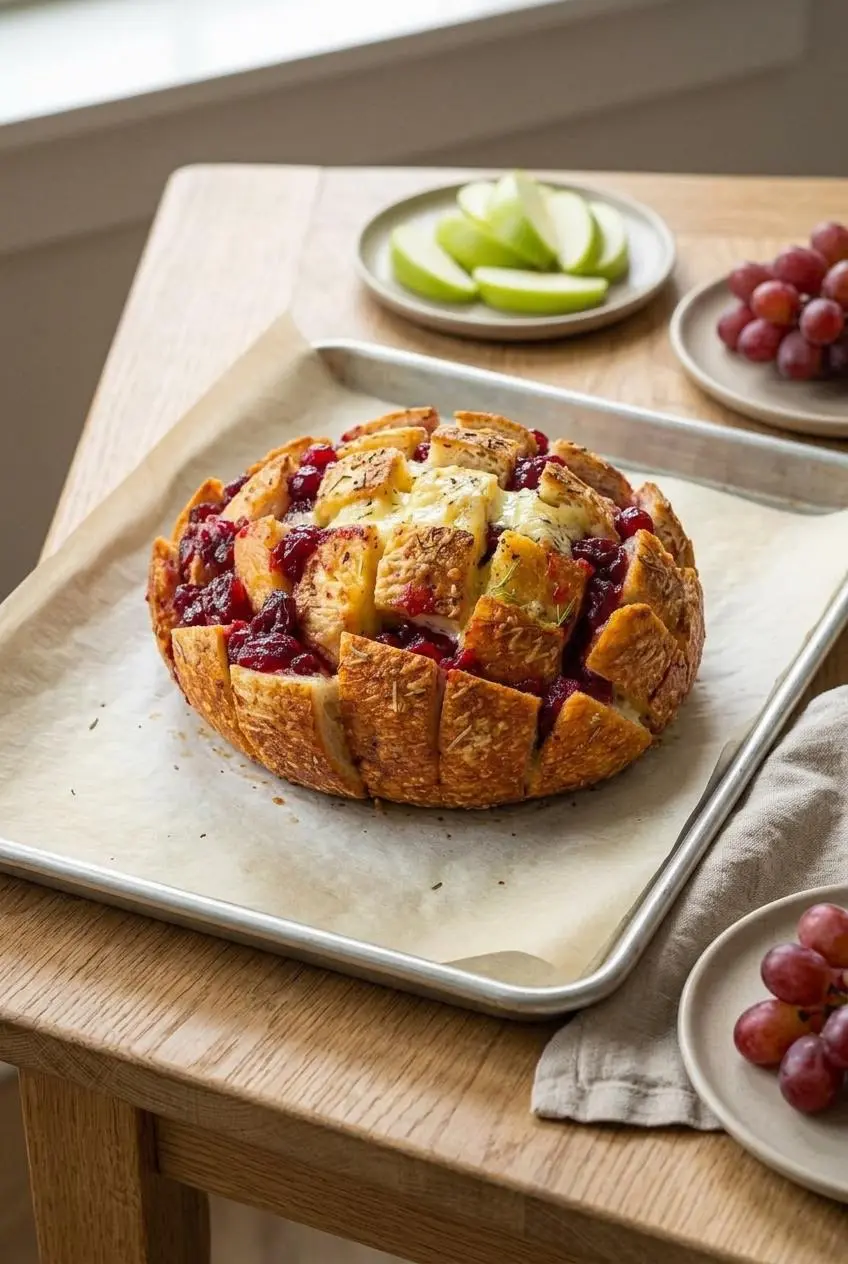
The intact bottom crust holds everything together, while the foil protects the bread as the brie melts. Have a baking sheet, foil, small bowl, pastry brush, and serrated knife ready.
Servings: 9. Allow about 10 minutes for preparation, with the wrapped baking stage taking about 20 minutes; use melted cheese in the center as your final cue.
- Set the oven to 350°F so it heats while you assemble the loaf.
A fully heated oven helps warm the filling evenly. - Use a serrated knife to make parallel cuts 1 inch apart, then turn the loaf and repeat across those cuts without reaching the bottom crust.
The top should form a grid of connected bread pieces supported by an unbroken foundation. - Warm the butter until fluid, then stir it together with the thyme, rosemary, and kosher salt in a small bowl.
The herbs should spread throughout the butter rather than remain in dry clumps. - Set the cut loaf on a baking sheet and work the herb butter over the top and down between the pieces with a pastry brush.
The exposed crumb inside the channels should look lightly glossy. - Distribute the brie and cranberry sauce through the openings, enclose the loaf in foil, and bake for about 20 minutes until the cheese melts.
Look for soft, molten brie in a central opening rather than checking only the outer edges. - Open the foil carefully and serve the loaf hot.
The cheese should feel loose and creamy between the warm bread pieces.
The Crosshatch Slicing Technique
Steady the loaf with your free hand and move the knife back and forth with light pressure. Let the serrations cut the crust rather than pushing the blade straight down.
Stop above the bottom crust on every pass. The goal is connected columns of bread, not detached cubes. As you make the second set of cuts, support the already-cut pieces so they don’t bend sideways and tear.
Don’t force every opening wide at once. Gently separate only the channel you’re filling, then release it before moving to the next.
Infusing and Brushing Herb Butter
Stir the butter mixture as you brush because dried herbs can settle at the bottom of the bowl. A silicone pastry brush helps reach narrow openings; a spoon can help direct butter into deeper channels.
Focus on the inner cut surfaces, not just the exposed top. That’s where the butter prevents bland, dry bites. You should notice the earthy thyme and piney rosemary aroma as the warm butter coats the bread.
Stuffing and Two-Stage Foil Baking
Tuck cheese into both directions of the grid, then add cranberry sauce alongside it. Spread the filling throughout the loaf instead of piling it around the outside, which can leave the center mostly bread.
Close the foil around the loaf to trap warmth and moisture during the initial bake. Leave enough space above the bread that the foil doesn’t press tightly against the filling.
The loaf is ready to unwrap and serve once the brie melts. For an optional crisper finish, open the foil and return the bread to the oven briefly, watching the exposed tips for a golden color. This uncovered finish is a texture choice, not a required extra baking stage.
Expert Tips for the Ultimate Cheese Pull

Check the center before serving: the outside can look ready while deeper cheese pieces remain firm.
- The loaf starts tearing: Pulling the channels too far apart strains their connection to the crust. Open each gap gently and use smaller cheese pieces where the space is narrow.
- The middle hasn’t melted: Filling crowded near the edges can warm unevenly. Check a central channel and keep the loaf covered if the interior still needs heat.
- The bread tastes dry: Butter brushed only over the top misses the inner crumb. Reach down the cut surfaces before adding the filling.
- The bottom feels wet: Loose sauce or a cut through the foundation lets moisture collect underneath. Use thick sauce and protect the bottom crust when slicing.
- Butter leaks onto the pan: A single torn foil layer can let drippings escape. Use overlapping layers and keep the wrapped loaf on the baking sheet.
Soft cheese, an occasional gentle bubble, and a warm herb-butter aroma signal that the filling is coming together. Serve promptly for the loosest cheese texture; brie firms as it cools.
Keep the loaf on its baking sheet or use a broad spatula to support the bottom when moving it to a platter. Crisp apple slices, grapes, and crackers make useful accompaniments without competing with the rich filling.
Make-Ahead, Storage, and Reheating Directions
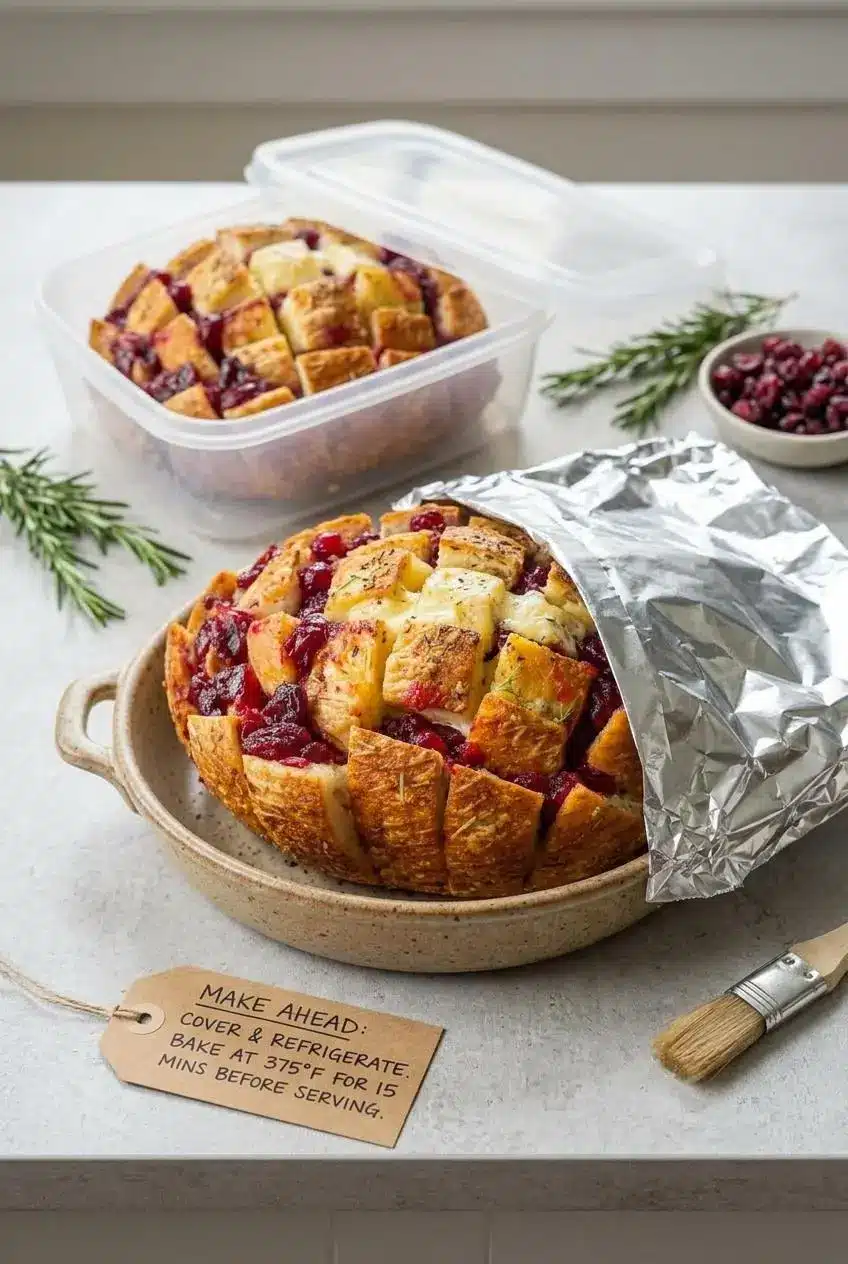
For hosting, organize the components separately rather than relying on a long hold for the stuffed loaf. Measure the herbs, portion the sauce, and cut the brie, keeping the cheese and any opened sauce refrigerated.
Cut, butter, and fill the bread when you’re ready to bake. This approach limits the time cranberry sauce sits against the crumb and gives you a fresher texture. A fully assembled loaf prepared well ahead may soften, so avoid treating it as a long-hold appetizer.
Keep leftover pieces covered and refrigerated, and don’t leave the cheese-filled bread sitting out throughout a gathering. Store portions in a covered container so exposed crumb doesn’t dry out.
To reheat, place the pieces on a baking sheet and cover them loosely with foil. Warm them in the oven until the cheese softens and the center heats through, then uncover briefly if the crust needs crisping. Check smaller portions sooner than a large remaining section.
The microwave is less suitable when you want a crisp crust; it can leave the bread chewy. For a menu that favors individual portions instead of a shared loaf, cranberry brie bites offer the same fruit-and-cheese pairing in a different format.
Flavor Variations and Add-Ins
Keep these upgrades optional, and use them to accent the cranberry and brie rather than crowd the bread channels.
Nutty Brown Butter Infusion
For a deeper flavor, gently brown the butter before mixing in the herbs. Watch for golden milk solids and a toasted, nutty aroma, then remove it from the heat before those solids darken too far.
Minced fresh rosemary or thyme can add a brighter herbal character, while cracked black pepper gives the buttery filling a savory edge. Keep the butter fluid enough to brush into the cuts.
Toasted Pecans and Orange Zest
- Toasted pecans or walnuts: Tuck chopped nuts beside the brie for crunch, keeping them small enough that the bread pieces still pull away easily.
- Dried cranberries and orange zest: Add dried cranberries for chew and a little fresh zest for citrus aroma, while keeping the whole berry sauce as the main fruit filling.
- Apricot or fig preserves: Use thick preserves as an optional seasonal swap for a sweeter, less tart variation.
If you’d rather try a different fruit-centered loaf, peach pull apart bread offers another way to enjoy the shareable format.
Conclusion
Tart cranberries, creamy brie, and savory herb butter give this crusty loaf a satisfying balance. Careful slicing and evenly distributed filling make each pull-away piece worth reaching for.
Bring the bread to the table hot, with the foil opened and the loaf well supported. Let everyone enjoy it while the cheese is soft and the bread edges still have their crunch.
Frequently Asked Questions
Do You Leave the Rind on Brie for Pull-Apart Bread?
Yes. Brie rind is edible and helps the soft cheese hold its shape while you cut and tuck it into the loaf. You can trim it if you dislike the texture, but removing it isn’t necessary.
What Is the Best Bread to Use for Pull-Apart Appetizers?
A crusty round sourdough boule is ideal. Its firm crust and chewy crumb support the butter, cheese, and sauce. A sturdy artisan French or Italian round loaf can also work, unlike soft sandwich bread or delicate brioche.
Can You Make Cranberry Brie Bread in Advance?
Prepare the filling components separately and keep the brie chilled, then cut and assemble the loaf when you’re ready to bake. This protects the bread’s texture better than leaving sauce against the crumb for an extended hold.
How Do You Keep the Bottom of Pull-Apart Bread From Getting Soggy?
Use thick whole berry cranberry sauce and leave the bottom crust uncut. Avoid adding separated liquid from the sauce, and open the foil after baking to release trapped steam. An optional brief uncovered finish can crisp the exposed bread edges.

Cranberry Brie Pull Apart Bread

Equipment
- Baking Sheet
- Aluminum Foil
- Small bowl
- Pastry brush
- Serrated bread knife
Ingredients
- 1 large round sourdough bread
- 1/2 cup butter 1 stick
- 1 teaspoon dried thyme
- 1 teaspoon dried rosemary
- 1 wheel brie 16 oz, chopped or cubed
- 1 1/2 cups whole berry cranberry sauce
- Kosher salt to taste
Instructions
- Set the oven to 350°F so it heats while you assemble the loaf. A fully heated oven helps warm the filling evenly.
- Use a serrated knife to make parallel cuts 1 inch apart, then turn the loaf and repeat across those cuts without reaching the bottom crust. The top should form a grid of connected bread pieces supported by an unbroken foundation.
- Warm the butter until fluid, then stir it together with the thyme, rosemary, and kosher salt in a small bowl. The herbs should spread throughout the butter rather than remain in dry clumps.
- Set the cut loaf on a baking sheet and work the herb butter over the top and down between the pieces with a pastry brush. The exposed crumb inside the channels should look lightly glossy.
- Distribute the brie and cranberry sauce through the openings, enclose the loaf in foil, and bake for about 20 minutes until the cheese melts. Look for soft, molten brie in a central opening rather than checking only the outer edges.
- Open the foil carefully and serve the loaf hot. The cheese should feel loose and creamy between the warm bread pieces.