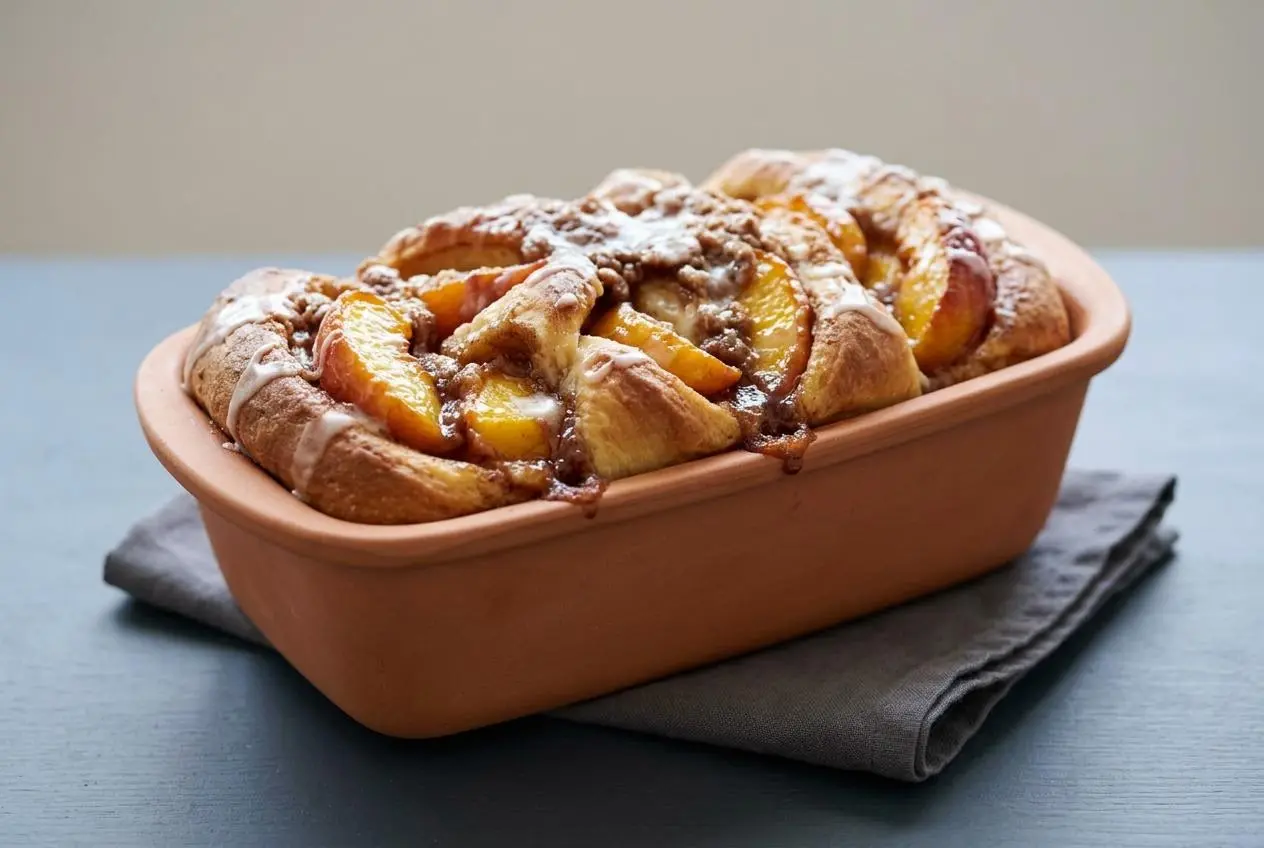
Sourdough peach pull-apart bread is a soft, sweet loaf made with active starter, spiced brown sugar, peaches, streusel, and icing. For the best rise, use a lively starter and dry the peaches well so the layers stay fluffy instead of soggy.
Sourdough Peach Pull-Apart Bread lands somewhere between a sweet loaf and a shareable pastry. You get tender sourdough dough, pockets of cinnamon sugar, and peaches that soften into the layers without disappearing.
It smells incredible while it bakes, like warm fruit, vanilla, and cinnamon drifting through the kitchen. The key trick is simple and worth it: keep the peaches dry.
Set a baking sheet on the rack below the loaf pan to catch any bubbling butter or sugar before it hits the oven floor.
Ingredients and Strategic Flour Choices
Each ingredient earns its place here, building soft structure, rich flavor, warm spice, juicy fruit pockets, and the sturdy layers that make this loaf pull apart cleanly.
Active Sourdough Starter Levain
- 40 grams sourdough starter
- 40 grams all-purpose or bread flour
- 40 grams water
Dough
- 160 grams whole milk
- 120 grams active sourdough starter
- 50 grams granulated sugar
- 5 grams salt
- 1 large egg
- 28 grams unsalted butter
- 375 grams bread flour
- 5 grams vanilla extract
Filling
- 42 grams butter
- 9 grams flour
- 110 grams brown sugar
- 1 teaspoon cinnamon
- ½ teaspoon nutmeg
- 275 grams peaches
Streusel Topping
- 28 grams butter
- 35 grams all-purpose flour
- 55 grams brown sugar
- 1 teaspoon cinnamon
Icing
- 90 grams powdered sugar
- 30 grams milk
- 3 grams vanilla extract
Bread flour matters here because those peach pieces and sugar-heavy layers need strong gluten to stay lifted. All-purpose flour can work in the levain, but the main dough benefits from the extra protein in bread flour, which gives you better stretch, cleaner layers, and less slumping during the final rise.
Whole milk, egg, and butter turn this into an enriched sourdough dough. Milk softens the crumb, the egg adds tenderness and color, and butter rounds out the texture so the loaf stays plush instead of chewy like a rustic boule.
The active sourdough starter brings the rise and a gentle tang that keeps the sweetness balanced. Granulated sugar sweetens the dough, but it also gives the active starter something to feed on during bulk fermentation, which helps this rich dough expand instead of staying heavy.
In the filling, flour helps the melted butter and brown sugar cling to the dough rather than dissolving into a syrupy puddle. Cinnamon and nutmeg warm up the peaches, while the streusel adds a crumbly top that contrasts with the soft interior.
I always choose peaches that feel fragrant and slightly firm, because very soft fruit tends to melt into the filling and release more juice than this dough wants.
How to Bake Sourdough Peach Pull-Apart Bread
Dough and Levain Preparation
- About 4 hours before mixing the dough, feed your sourdough starter or build a levain at a 1:1:1 ratio with the starter, flour, and water.
Let it stand at 77 to 80 degrees F until it looks doubled, bubbly, and airy throughout. - Add the active sourdough starter, warmed milk, bread flour, salt, sugar, egg, butter, and vanilla to the bowl of a stand mixer and knead on low speed for 8 to 10 minutes.
Keep mixing until the dough stretches thin enough to pass the windowpane test and feels smooth instead of shaggy. - Move the dough to a covered container and set it in a warm place for bulk fermentation.
At about 80 degrees F, it should roughly double in 4 to 5 hours and look fuller, softer, and lightly domed.
Assembly and Baking
- Stir together the softened butter, flour, brown sugar, cinnamon, and nutmeg in a small bowl, then peel, chop, and thoroughly dry the peaches with paper towels.
The filling should look spreadable, and the fruit should feel dry on the surface rather than glossy or wet. - Press the risen dough down gently and roll it into a 13.5 by 10 inch rectangle.
Keep the thickness even so the stacked sections bake at the same rate. - Spread the spiced filling over the dough and scatter the dry peaches evenly across the top, blotting away any extra juice if needed.
You want an even layer of fruit without wet patches that can make the strips slide. - Slice the dough into three 4.5 inch strips, stack the strips with the filling side facing up, and cut that stack crosswise into five 2 inch sections.
Work neatly so the layers stay aligned and the filling stays inside the stack. - Turn each section onto its side and arrange the stacks upright in a parchment-lined 9 by 5 inch loaf pan with the fruit layers facing the long side of the pan.
The pieces should sit like shingles, snug but not crushed, so the loaf can puff between the layers. - Cover the pan and let the loaf rise at about 80 degrees F for about 1 hour.
It should look visibly puffy and pillowy before it goes into the oven. - Cut the cold butter into the flour, brown sugar, and cinnamon until coarse crumbs form, then sprinkle the streusel over the top.
The crumbs should stay a little chunky so the topping bakes into a textured crust. - Bake the loaf at 350 degrees F for 75 minutes, leaving it uncovered for the first 45 minutes and loosely tenting it with foil for the final 30 minutes.
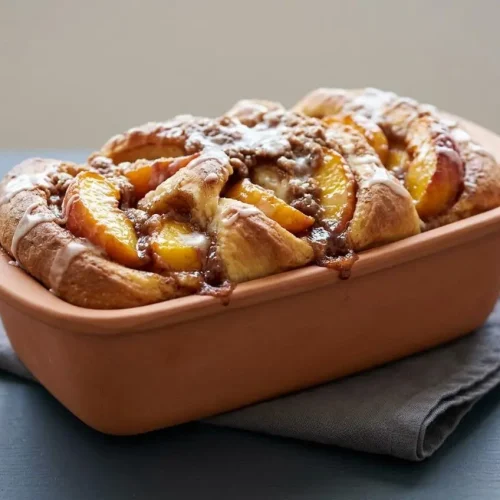
The top should be deep golden, the kitchen should smell like warm cinnamon peaches, and the center should look set rather than damp. - Whisk the powdered sugar, milk, and vanilla extract together, then drizzle the icing over the slightly cooled loaf before serving.
The glaze should run over the ridges and melt lightly into the warm layers.
The windowpane test is the checkpoint that matters most in this dough. Stretch a small piece between your fingers. If it thins into a translucent sheet before tearing, the gluten is strong enough to support the peach filling and the stacked shape. If it rips quickly, keep kneading.
The second rise matters just as much. Don’t bake the loaf while it still looks tight and compact. It should feel soft to the touch and visibly puffed in the pan, or the final crumb can turn dense and a little gummy.
Preparing Your Peaches to Prevent a Runny Filling
Peaches are the best part of this loaf and also the easiest way to derail it. When the fruit is too wet, the brown sugar filling melts into a loose syrup, the dough layers slide, and the center can bake up heavy instead of fluffy.
If you want peeled peaches without wrestling with a paring knife, blanch them. Bring a pot of water to a boil, lower the peaches in briefly, then transfer them to cool water and slip off the skins. After that, chop the fruit and pat it very dry with paper towels before it touches the dough.
Drying is not a fussy extra step here. It is what keeps the filling thick, the layers defined, and the baked loaf pullable instead of puddly.
Roasting Fresh Peaches to Lock in Rich Summer Flavor
If your peaches are especially juicy, roasting is a smart optional move. Spread the slices on a pan and bake them just until they lose some surface moisture and smell sweeter. That quick heat concentrates their flavor and lowers the chance of a watery filling.
Let the peaches cool before adding them to the dough, then blot them again if needed. They should feel tender but still hold their shape. If you enjoy cooked peach flavor in other desserts, smoky grilled peaches are another good reminder of how heat deepens fruit sweetness.
Working with Frozen or Canned Peaches Successfully
Frozen and canned peaches can work, but they need more moisture control than fresh fruit. Thaw frozen peaches completely, drain them well, and press off surface moisture with paper towels before chopping. For canned peaches, drain thoroughly first, then dry them the same way.
Either way, keep the pieces on the firmer side and avoid packing them into the dough while they are slick or dripping. If the fruit leaves moisture on your cutting board, it needs another round with paper towels.
Mastering the Sourdough Pull-Apart Stacking Technique
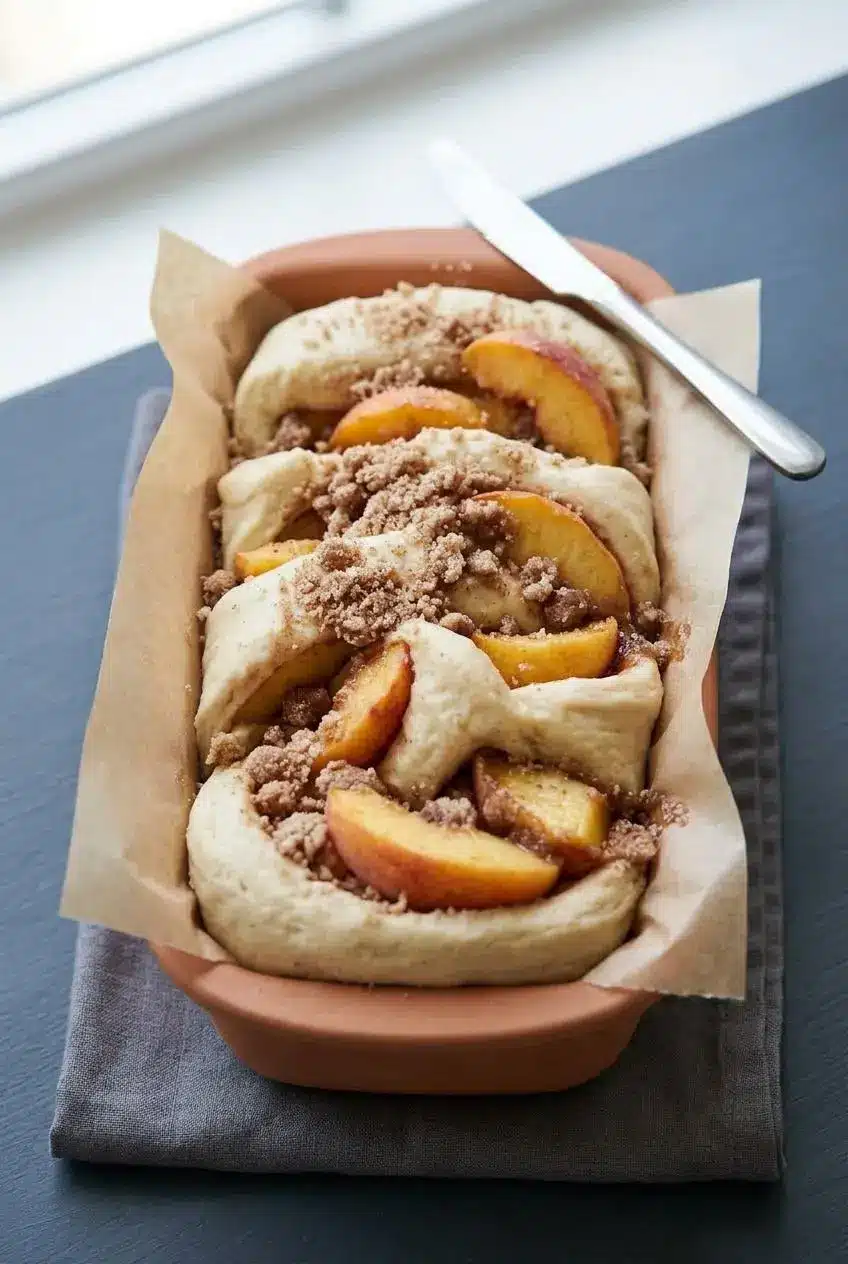
This is the part that makes the loaf look dramatic and bake properly. Once the dough is rolled to 13.5 by 10 inches, think in clean sections rather than random cuts.
First, cut the rectangle into three strips that are each 4.5 inches wide. Lay one strip on top of the next with the filling facing up each time, so you build a layered stack instead of folding the dough over itself.
Next, cut that stack crosswise into five sections that are each 2 inches wide. You’ll end up with chunky layered pieces that are easy to stand upright in the pan.
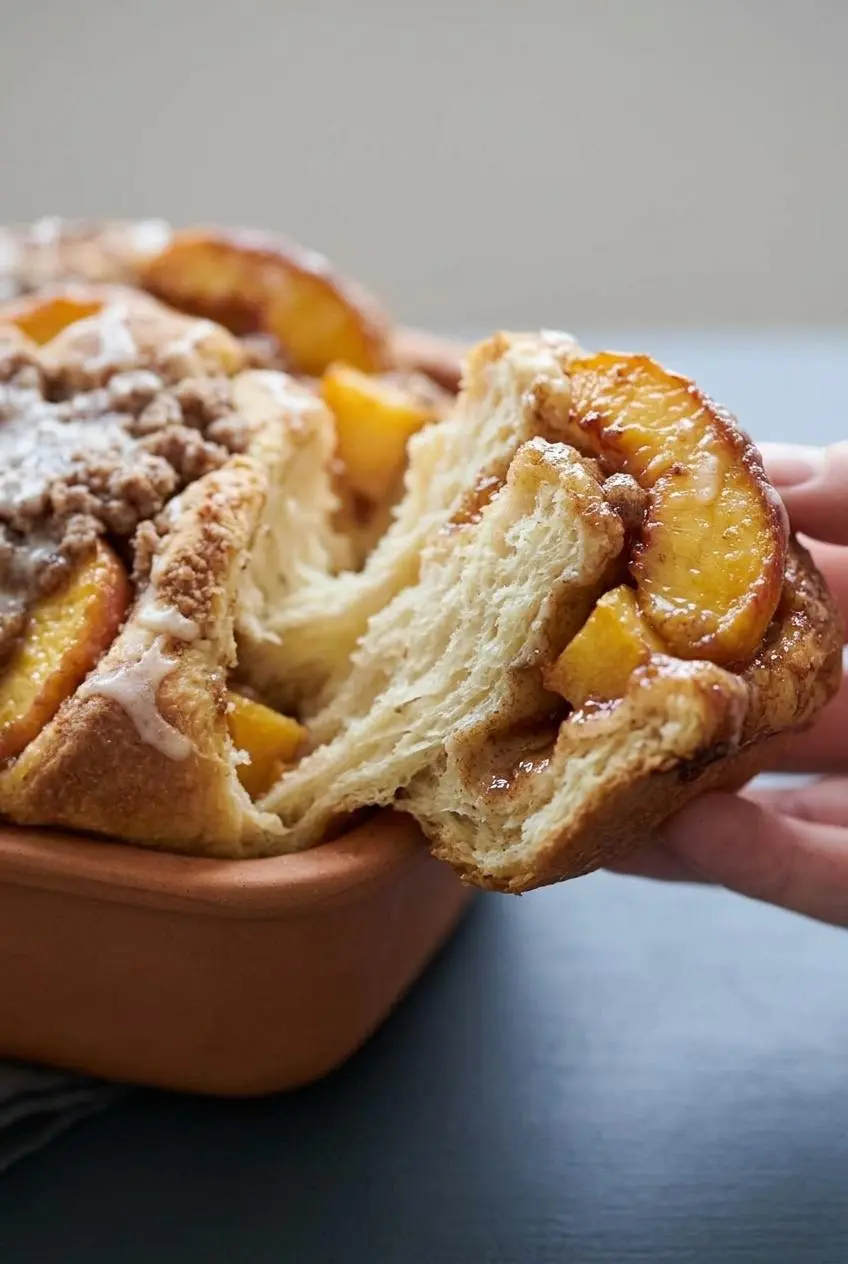
Place each section vertically in the parchment-lined 9 by 5 inch loaf pan, like shingles lined up side by side. Turn them so the exposed peach and cinnamon layers face the long side of the pan. That orientation helps the loaf pull apart in visible sheets rather than tearing into random chunks.
If the stack starts slipping while you cut, chill it for a few minutes or dust the bench lightly with flour. A bench scraper also helps lift the sections cleanly without squeezing out the filling.
Sourdough Rise and Overnight Baking Schedules
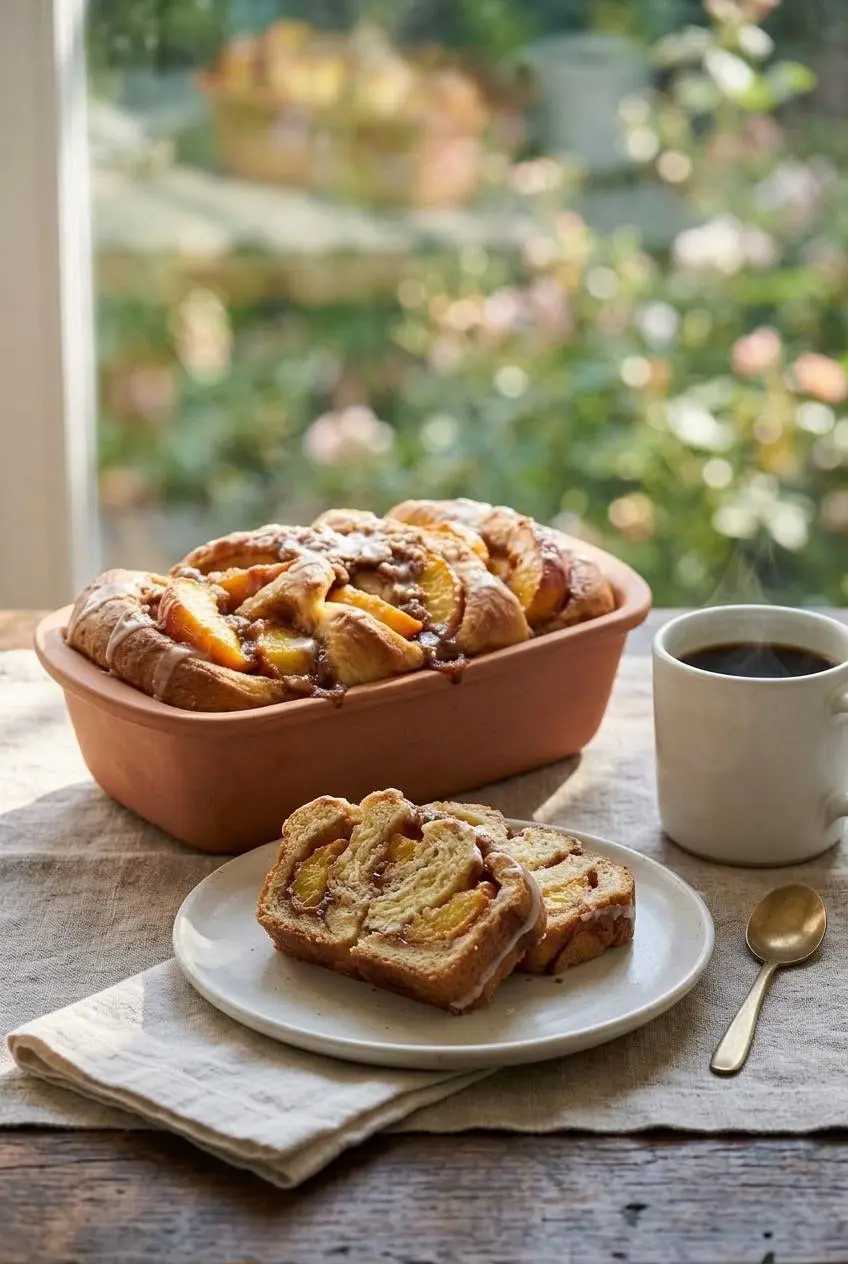
Sweet sourdough dough rises more slowly than lean dough, so visual cues matter more than the clock. Your levain should be fully bubbly and doubled before mixing, the bulk-fermented dough should look expanded and airy, and the shaped loaf should look pillowy in the pan before baking.
Warm room temperature makes a big difference here. Around 80 degrees F, the bulk rise and final proof move much more predictably. In a cool kitchen, expect the dough to need more patience.
If you want to prep the loaf ahead, shape it, place it in the prepared pan, cover it tightly, and refrigerate it for up to 12 hours. Before baking, let it sit at room temperature for 1 to 2 hours so the dough can lose its chill and puff up again. This works especially well if you want the loaf warm in the morning without shaping dough half awake.
Troubleshooting Sourdough Dough and Rise Issues
Most problems with this loaf come down to temperature, moisture, or underdeveloped dough. These fixes help quickly.
- If the dough is rising slowly, move it to a warmer spot. An oven with the light on can act as a gentle proofing chamber without blasting the dough with direct heat.
- If the dough feels too sticky to shape, the usual cause is extra moisture from the starter, the peaches, or a humid kitchen. Dust your hands and work surface lightly with flour, or chill the dough briefly so it firms up.
- If the loaf bakes up dense, the dough likely needed more kneading or more proofing time. The windowpane test is essential because this rich dough needs strong gluten before bulk fermentation starts.
- If the layers slide apart during shaping, the peaches were probably too wet or the filling got too loose. Dry the fruit thoroughly and blot away any visible juice before stacking.
- If the top browns too fast, tent the loaf loosely with foil after 45 minutes. That protects the streusel while the center finishes baking.
- If the bottom of the oven starts catching sugary drips, keep that backup sheet pan on the rack below. It saves cleanup and your patience.
Quick Baking Variations and Discard Options
This loaf is built around active wild yeast, but you’ve got a couple of useful off-ramps when your schedule or flour bin looks different.
Sourdough Discard Peach Quick Bread Alternative
If you want peach flavor without a levain build or long fermentation, turn to a quick bread. Use inactive discard in a batter-style loaf with baking powder as the leavener, and fold in well-dried peaches near the end so they do not sink or water down the crumb.
The texture will be more cake-like and sliceable than layered and pull-apart, so the spice won’t stripe through the loaf in the same dramatic way. Still, it is a good fast option for a summer bake, and a loaf like discard sandwich bread is another handy way to use extra discard when you want something more everyday than dessert bread.
Using Spelt Flour for a Rich Nutty Undertone
You can swap part of the bread flour for spelt flour if you want a nuttier flavor and a slightly more rustic crumb. Keep it as a partial substitution rather than replacing all the bread flour, because spelt develops gluten differently and the dough can feel softer and less elastic.
That means the stacked layers may spread more easily and need gentler handling during shaping. If you try it, watch the dough texture closely and prioritize that windowpane test before the first rise.
If you end up with extra slices or a loaf that baked a touch drier than you hoped, turning it into peach bread pudding is a very good save.
Conclusion
This bread is worth the rise time. You get soft sourdough layers, warm cinnamon, tender peaches, a crumbly streusel top, and glaze that sinks into every ridge.
Keep the peaches dry, give the dough time to turn pillowy, and you’ll be in great shape. If you want a small flavor twist, a little ground cardamom or roasted vanilla bean paste in the filling fits beautifully.
Frequently Asked Questions
Can I let the dough rise overnight in the refrigerator?
Yes. Shape the loaf, place it in the prepared pan, cover it tightly, and refrigerate it for up to 12 hours. Before baking, let it stand at room temperature for 1 to 2 hours. Look for a puffy, relaxed loaf before it goes into the oven.
Why is my pull-apart bread dough too sticky to handle?
Extra moisture is usually the reason, either from humid weather, a looser starter, or peaches that were not dried enough. Dust your hands and work surface lightly with flour instead of kneading in a lot more. If it still feels messy, chill the dough briefly before shaping to make the layers easier to cut and stack.
Do I need to peel the peaches before slicing?
Peeling is recommended if you want the softest, most melting texture inside the loaf. A quick blanch makes peeling much easier. If you like a more rustic texture, you can leave the skins on firm ripe peaches.
How can I prevent the sugar filling from burning in the oven?
Bake the loaf on the center rack so the top is not too close to the heating element. Tent it loosely with foil after 45 minutes of baking. That gives the center time to finish while protecting the streusel and sugar from getting too dark.
Sourdough Peach Pull-Apart Bread

Equipment
- Kitchen scale
- 9×5 loaf pan
Ingredients
Active Sourdough Starter Levain
- 40 grams sourdough starter
- 40 grams all-purpose or bread flour
- 40 grams water
Dough
- 160 grams whole milk
- 120 grams active sourdough starter
- 50 grams granulated sugar
- 5 grams salt
- 1 large egg
- 28 grams unsalted butter
- 375 grams bread flour
- 5 grams vanilla extract
Filling
- 42 grams butter
- 9 grams flour
- 110 grams brown sugar
- 1 teaspoon cinnamon
- ½ teaspoon nutmeg
- 275 grams peaches
Streusel Topping
- 28 grams butter
- 35 grams all-purpose flour
- 55 grams brown sugar
- 1 teaspoon cinnamon
Icing
- 90 grams powdered sugar
- 30 grams milk
- 3 grams vanilla extract
Instructions
Dough and Levain Preparation
- About 4 hours before mixing the dough, feed your sourdough starter or build a levain at a 1:1:1 ratio with the starter, flour, and water. Let it stand at 77 to 80 degrees F until it looks doubled, bubbly, and airy throughout.
- Add the active sourdough starter, warmed milk, bread flour, salt, sugar, egg, butter, and vanilla to the bowl of a stand mixer and knead on low speed for 8 to 10 minutes. Keep mixing until the dough stretches thin enough to pass the windowpane test and feels smooth instead of shaggy.
- Move the dough to a covered container and set it in a warm place for bulk fermentation. At about 80 degrees F, it should roughly double in 4 to 5 hours and look fuller, softer, and lightly domed.
Assembly and Baking
- Stir together the softened butter, flour, brown sugar, cinnamon, and nutmeg in a small bowl, then peel, chop, and thoroughly dry the peaches with paper towels. The filling should look spreadable, and the fruit should feel dry on the surface rather than glossy or wet.
- Press the risen dough down gently and roll it into a 13.5 by 10 inch rectangle. Keep the thickness even so the stacked sections bake at the same rate.
- Spread the spiced filling over the dough and scatter the dry peaches evenly across the top, blotting away any extra juice if needed. You want an even layer of fruit without wet patches that can make the strips slide.
- Slice the dough into three 4.5 inch strips, stack the strips with the filling side facing up, and cut that stack crosswise into five 2 inch sections. Work neatly so the layers stay aligned and the filling stays inside the stack.
- Turn each section onto its side and arrange the stacks upright in a parchment-lined 9 by 5 inch loaf pan with the fruit layers facing the long side of the pan. The pieces should sit like shingles, snug but not crushed, so the loaf can puff between the layers.
- Cover the pan and let the loaf rise at about 80 degrees F for about 1 hour. It should look visibly puffy and pillowy before it goes into the oven.
- Cut the cold butter into the flour, brown sugar, and cinnamon until coarse crumbs form, then sprinkle the streusel over the top. The crumbs should stay a little chunky so the topping bakes into a textured crust.
- Bake the loaf at 350 degrees F for 75 minutes, leaving it uncovered for the first 45 minutes and loosely tenting it with foil for the final 30 minutes. The top should be deep golden, the kitchen should smell like warm cinnamon peaches, and the center should look set rather than damp.
- Whisk the powdered sugar, milk, and vanilla extract together, then drizzle the icing over the slightly cooled loaf before serving. The glaze should run over the ridges and melt lightly into the warm layers.