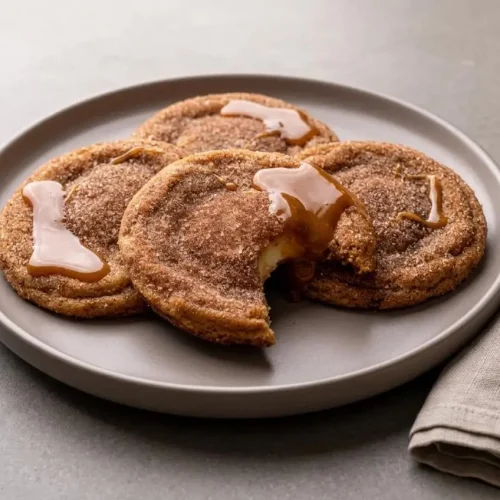
Churro Cheesecake Cookies

Soft, chewy brown butter cookies wrapped around a frozen cheesecake core, baked with a cinnamon sugar coating and finished with rich caramel drizzle.
Equipment
- Stand mixer or handheld mixer
- Heavy saucepan
- large cookie sheet
- Ice cream scoop
- Parchment Paper
- large round cookie cutter
Ingredients
Cookie Dough
- 1/2 Cup Unsalted Brown Butter
- 1/2 Cup + 1 Tbsp Packed Brown Sugar
- 3 Tbsp Sugar
- 1 Large Egg Room Temp
- 1/2 Tsp Vanilla
- 1 1/3 Cups All Purpose Flour Spoon & Leveled
- 1/2 Tsp Baking Soda
- 1/2 Tsp Cinnamon
- 1/4 Tsp Salt
- Store Bought Caramel Sauce
Cheesecake Filling
- 3 oz Cream Cheese
- 1 1/2 Tbsp Sugar
- 1/4 Tsp Vanilla
Cinnamon Sugar
- 1/2 Cup Granulated Sugar
- 4 Tsp Cinnamon
Instructions
Instructions
- Beat the room-temperature cream cheese with the filling sugar and vanilla using a stand mixer or handheld mixer for 2 to 3 minutes. The mixture should look creamy and uniform, without visible lumps.
- Portion the filling into 1/2-tablespoon dollops on parchment paper and freeze for 30 minutes to 1 hour. The portions should feel solid enough to lift without smearing.
- Cube the butter, then stir it continuously in a heavy saucepan over medium heat until the milk solids turn golden brown, and transfer it to a heat-safe bowl. Look beneath the foam for amber specks and a toasted, nutty aroma.
- Once the browned butter reaches room temperature but remains thick and fluid, heat the oven to 350°F and whisk the butter with both dough sugars in a large bowl. The mixture should look evenly blended, without a separate pool of butter.
- Whisk the egg and dough vanilla into the butter mixture. Continue until the egg disappears into a uniform mixture.
- Sift together the flour, baking soda, dough cinnamon, and salt, then fold them into the wet ingredients. Stop when no dry pockets remain and the dough comes together.
- Refrigerate the dough for about 20 minutes only if it feels too soft to shape. It should become pliable and hold its shape, rather than turning hard or brittle.
- Measure dough portions with a 1/4-cup measure or regular ice cream scoop, flatten each with your palm, and set a frozen filling dollop in the center. Keep the dough thickness even so the filling has a sturdy covering underneath.
- Bring the dough edges over the filling and pinch them together, then gently smooth the closed portion into a ball. No cream cheese should remain exposed, and the seam should look fully joined.
- Combine the coating sugar and cinnamon, divide the mixture equally between two dishes, and roll each dough ball in the first dish. Cover the entire surface while leaving the second dish untouched by raw dough.
- Arrange six coated dough balls on a large cookie sheet with generous spaces between them. Each portion needs room to spread without touching its neighbors.
- Bake for 10 minutes, checking for golden-brown bottoms. The edges should look lightly golden while the centers remain soft and puffy.
- Immediately after baking, circle each cookie gently with a large round cutter or the rim of a large measuring cup. A small circular motion nudges uneven edges into a rounder shape without pressing down the center.
- Let the cookies become firm enough to handle, then carefully dip their tops into the reserved cinnamon sugar. Lift them gently because the warm centers leave these cookies softer than ordinary cookies.
- Allow the cookies to cool completely, then drizzle them with store-bought caramel sauce. The cooled dough should support the creamy filling without collapsing when lifted.
Notes
Sealing tip: Ensure the cheesecake portions are frozen solid and enclosed with an even thickness of dough, pinching all seams firmly shut to prevent the filling from leaking out during baking.
Handling tip: Let baked cookies rest until their structure sets before giving them the second cinnamon sugar dip, as warm stuffed cookies are delicate and can break easily.
Storage: Store cooled cookies in a covered container in the refrigerator with parchment paper between layers, and add the caramel drizzle just before serving to preserve the crisp sugar coating.
Nutrition information is an estimate based on common ingredients and serving sizes. Values may vary depending on brands, portions, and substitutions.
Nutrition
Calories: 415kcalCarbohydrates: 57gProtein: 4gFat: 20gSaturated Fat: 12gCholesterol: 65mgSodium: 218mgPotassium: 82mgFiber: 1gSugar: 39gVitamin A: 450IUCalcium: 42mgIron: 1mg
Tried this recipe?Let us know how it was!