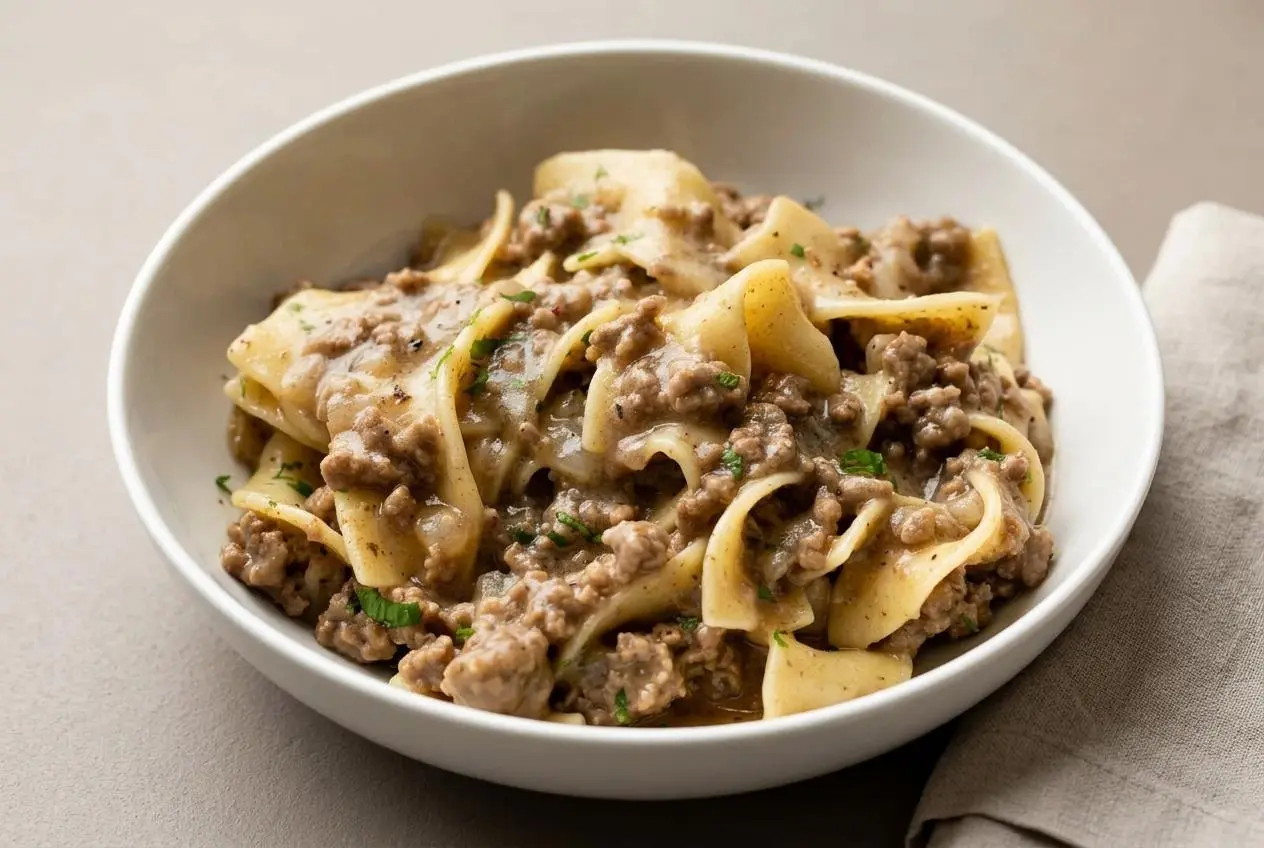
This beef and noodles recipe combines browned ground beef, tender egg noodles, and a rich scratch-made pan gravy for a comforting stovetop dinner ready in 30 minutes.
Sizzling onion, savory beef, and a glossy gravy make this the kind of dinner that feels far more comforting than its quick cook time suggests. The sauce is built in the skillet without canned soup.
The key is timing the noodles so they are still springy when they meet the gravy. That spoon-coating sauce is worth the wait.
Start the noodle water before browning the beef so both components finish at nearly the same time.
Essential Ingredients for Beef and Noodles
Each ingredient brings something useful: beef adds richness, onion and garlic build aroma, flour gives the gravy structure, broth supplies moisture, and egg noodles carry the velvety sauce.
- 2 cups uncooked egg noodles
- 1 pound lean ground beef
- 1 medium onion (chopped)
- 2-3 cloves garlic (minced)
- 1 tablespoon Worcestershire sauce
- 1/4 teaspoon Italian seasoning
- 1/4 cup flour
- 2 cups beef broth
- Salt & pepper (to taste)
Lean ground beef gives the skillet a savory backbone while keeping excess grease manageable. The flour uses the remaining beef drippings to form a roux, turning beef broth into a smooth brown gravy. Worcestershire sauce deepens the beefy flavor, and broad egg noodles catch the sauce in every fold.
I prefer broad egg noodles here because their ruffled edges hold onto thick gravy instead of letting it slide to the bottom of the bowl.
Choosing the Best Cut of Beef
Lean ground beef, especially 90/10, works best when dinner needs to move quickly. It browns fast, leaves enough flavorful drippings for the roux, and breaks into small pieces that distribute evenly through the noodles.
For a more old-fashioned, shredded texture, use cooked pot roast, braised chuck, or tender beef tips. Those meats have already done their slow cooking, so they should be added near the end only long enough to warm through. Cooking them too long in the finished gravy can make the strands dry and stringy.
If using beef with a higher fat percentage, spoon off some drippings after browning but leave enough in the skillet for the flour. Removing every bit of fat leaves the roux dry and makes it harder for the sauce to develop body.
The Secret to Silky Scratch Gravy
A good skillet gravy starts with the browned bits on the pan bottom. Those deep brown flecks are fond, and they dissolve into the broth for fuller flavor. The flour needs direct contact with the beef fat before the liquid goes in, otherwise the gravy can taste starchy or develop lumps.
Cook the flour-coated beef for 1 to 2 minutes, stirring often. Look for a pale golden color and a lightly nutty aroma before adding broth. Then pour in warm broth gradually while stirring steadily, scraping the pan as you go. This slow addition lets the roux absorb liquid evenly and gives the gravy its smooth, glossy finish.
How to Make Beef and Noodles Step-by-Step
This method keeps the noodles separate until the sauce reaches the right consistency, so they stay tender rather than turning soft in the skillet.
- Bring a pot of salted water to a boil, then cook the egg noodles according to the package directions.
Drain them when they are al dente, with a little firmness remaining in the center. - Place the ground beef and chopped onion in a skillet over medium-high heat and cook for about 10 minutes, breaking the beef into small crumbles.
Listen for a steady sizzle and continue until the meat is deeply browned and the pan has browned bits on its surface. - Lower the heat to medium, then stir in the garlic, Worcestershire sauce, and Italian seasoning for 1 minute.
The garlic should smell fragrant without taking on dark color. - Scatter the flour over the beef mixture and stir continuously for 1 to 2 minutes.
The flour should disappear into the drippings and smell lightly toasted rather than raw. - Pour in the beef broth a little at a time while stirring and scraping the skillet bottom.
Keep stirring until the flour fully dissolves and the browned bits blend into the liquid. - Simmer the gravy for 5 to 10 minutes, stirring occasionally, until it reaches your preferred thickness.
The sauce is ready when it clings smoothly to the back of a spoon; add a splash more broth if it tightens too much. - Add the drained egg noodles to the skillet, toss until coated, and season with salt and pepper if needed.
Serve right away while the noodles are springy and the gravy is glossy.
Keep an eye on the skillet during the final simmer. The gravy will continue to thicken slightly as it cools, so stop when it looks a touch looser than the finished consistency you want.
Pro Tips and Troubleshooting for Velvety Gravy
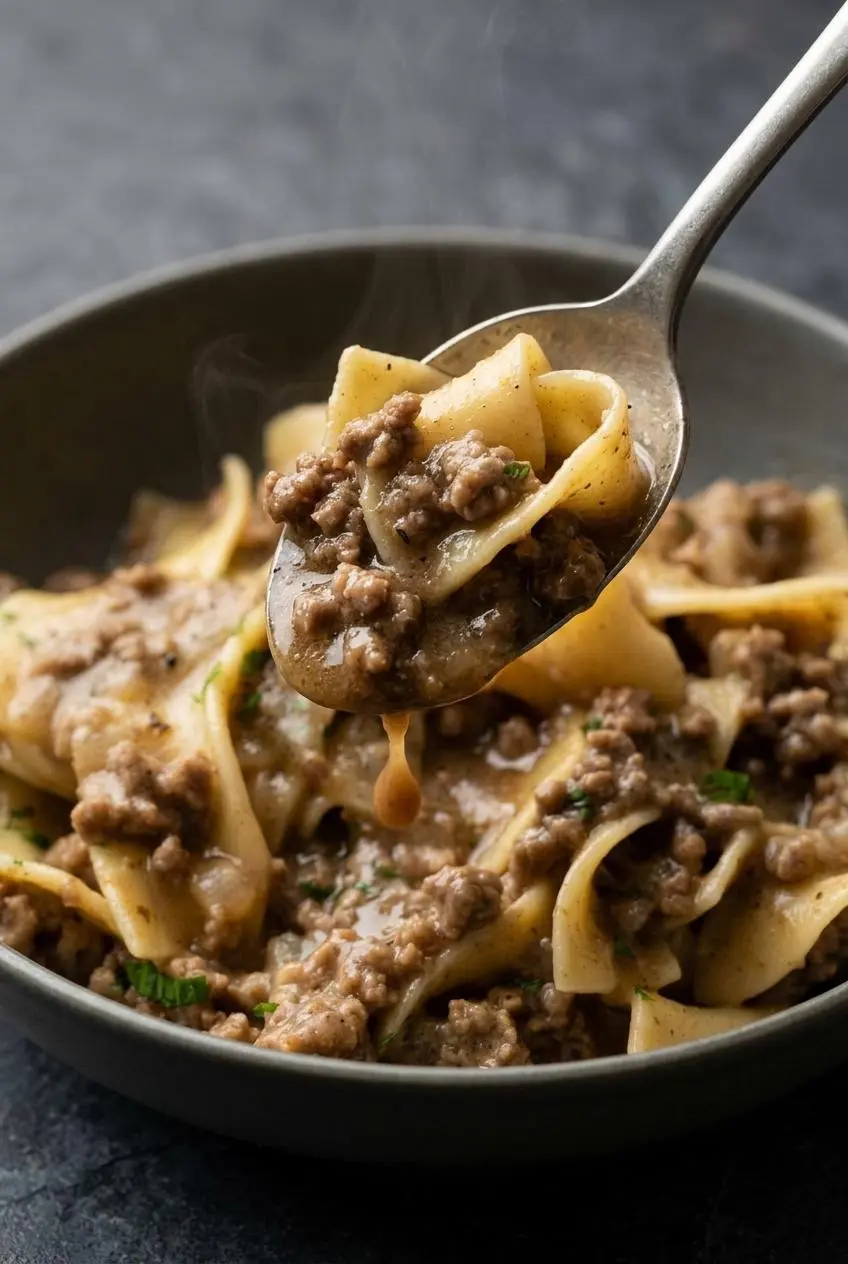
Small adjustments can rescue the sauce before dinner reaches the table. Work with warm broth when possible, since cold liquid can slow the gravy down and make it harder to whisk smooth.
- Gravy too thick: Stir in a small splash of warm beef broth until the sauce loosens. Add it gradually so the gravy stays rich instead of watery.
- Gravy too thin: Let it simmer uncovered a little longer, stirring now and then. The liquid needs time to reduce and activate the flour’s thickening power.
- Greasy pooling on top: This usually means the fat and broth have separated. Whisk in a splash of warm broth over medium heat until the sauce looks unified again.
- Lumps in the gravy: Whisk firmly as broth goes in, paying attention to the skillet corners where flour can collect. A gradual pour is much easier than trying to fix a floury clump later.
- Overly salty flavor: Start with lower-sodium beef broth when possible, then season at the end. Fresh black pepper adds lift without adding more salt.
- Soggy noodles: Cook them only to al dente and toss them with the sauce immediately before serving. Noodles continue absorbing gravy while they sit.
- Gravy looks pasty after resting: Add a little broth and toss gently until the sauce becomes fluid again. The noodles are thirsty, not misbehaving.
Easy Flavor Variations and Meat Swaps
Keep the main skillet as written, then use one of these optional changes when you want a different direction. Add Dijon mustard and smoked paprika with the garlic for gentle tang, a warm color, and a deeper savory edge.
Creamy Beef and Noodles
For a softer, stroganoff-style finish, remove the skillet from the heat before stirring in room-temperature sour cream or softened cream cheese. Fold it in just before adding the noodles so the dairy stays smooth rather than curdling. For another creamy skillet dinner, try this ground beef stroganoff.
Choose sour cream for a tangier sauce or cream cheese for a richer, fuller texture. Either option changes the flavor of the finished dish, so treat it as an optional variation rather than part of the main method.
Using Shredded Pot Roast or Leftover Beef
Cooked shredded pot roast or braised chuck gives this dish a more traditional, slow-cooked character. Instead of browning ground beef, sauté the onion in butter, stir in the flour, and build the gravy with broth. Fold in the shredded cooked beef during the last part of the simmer so it warms gently without losing its tenderness.
This version works particularly well when the beef has flavorful cooking juices clinging to it. Add the meat after the gravy is smooth, rather than boiling it from the start, so the strands stay moist and distinct.
Mushroom and Herb Skillet Addition
- Sauté sliced cremini or button mushrooms with the onion until they are golden and their moisture has cooked away. They add earthy depth and a meatier bite.
- Add sweet peas near the end for a pop of color and mild sweetness against the savory gravy.
- Use a pinch more Italian seasoning if adding mushrooms, letting the herbs support the beef without taking over the sauce.
What to Serve with Beef and Noodles
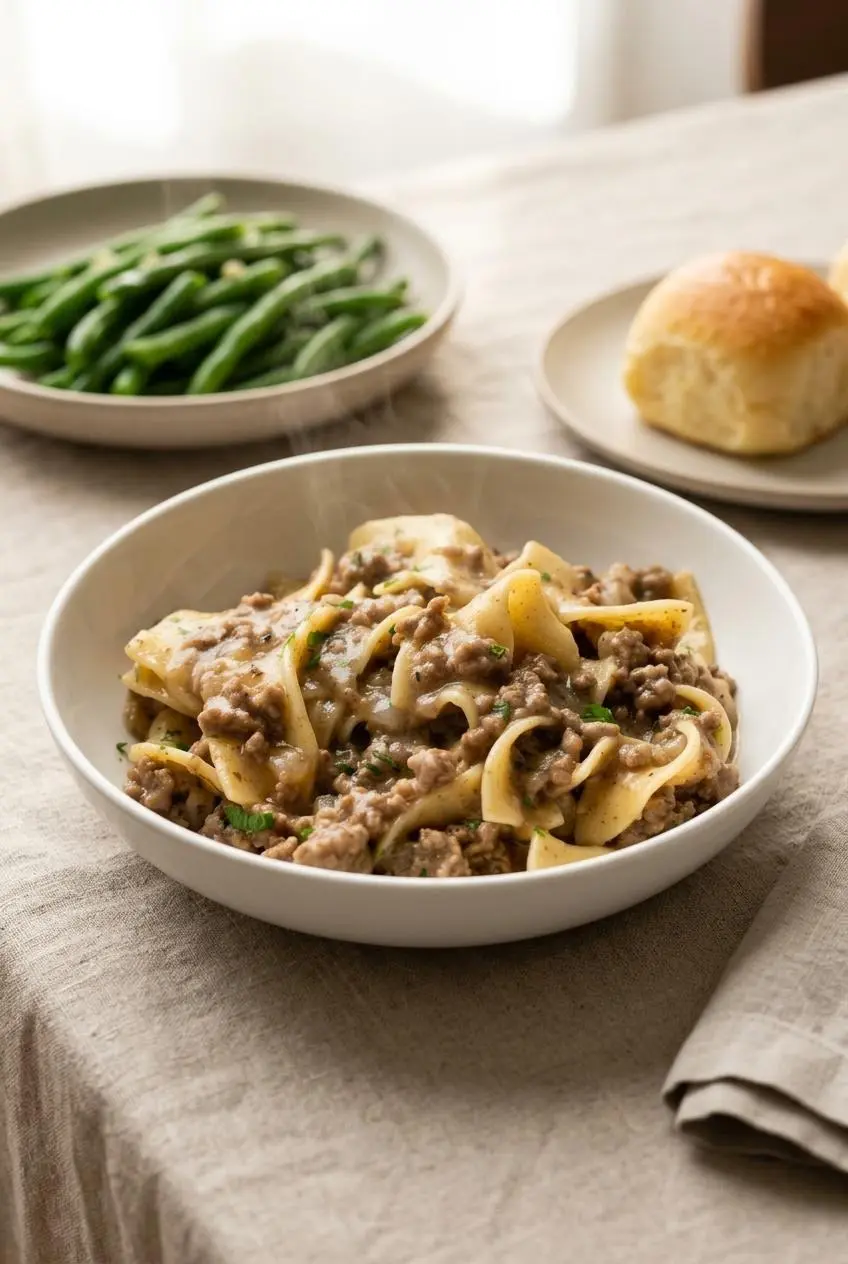
Because the gravy is rich, a fresh or crisp side gives the meal balance. Keep the sides uncomplicated so the beef and noodles stay the center of the plate.
- Serve crisp steamed green beans for a clean, bright contrast.
- Try roasted broccoli with lemon zest for a slightly charred edge and fresh citrus aroma.
- Add a garden salad with a tangy vinaigrette to cut through the savory gravy.
- Set out warm dinner rolls or garlic bread for catching the extra sauce left on the plate.
Storing and Reheating Beef and Noodles
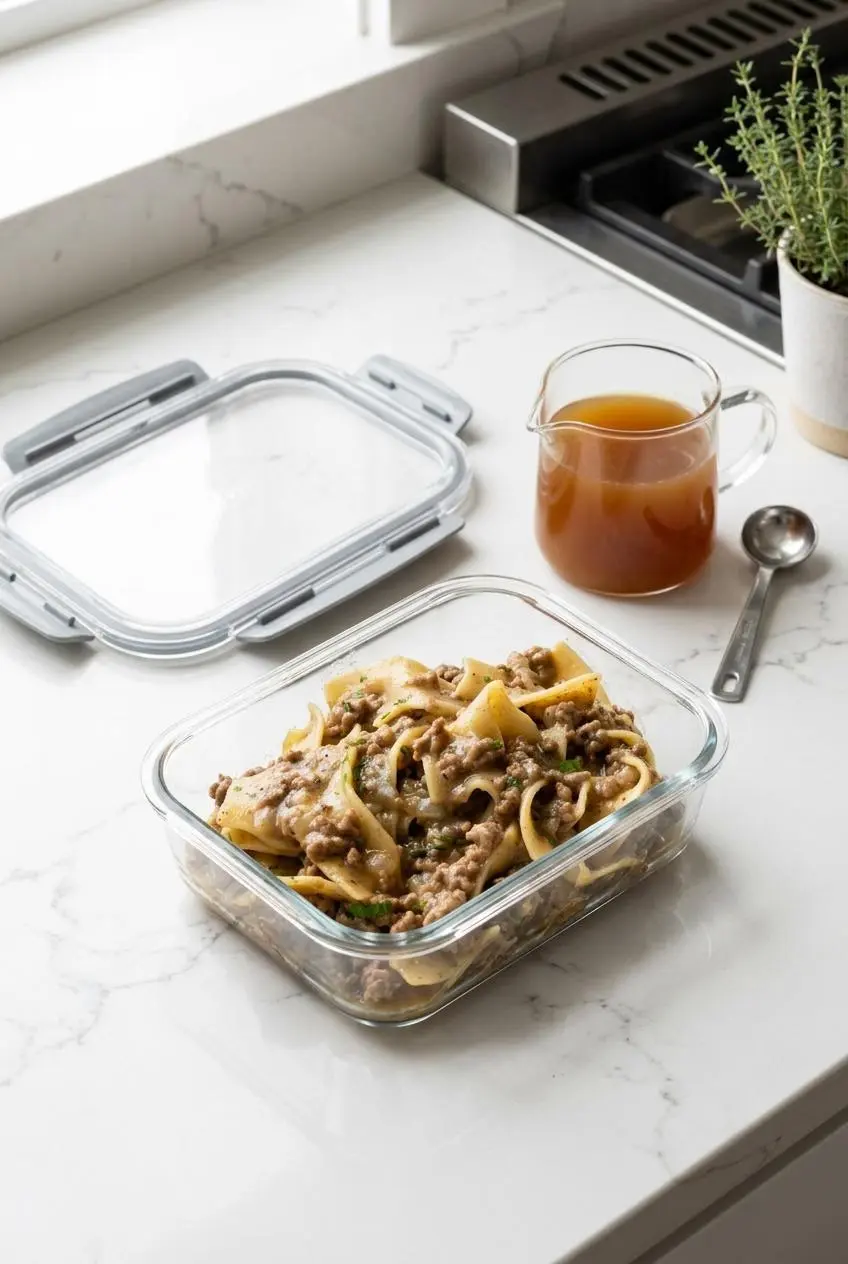
Cool leftovers promptly, transfer them to an airtight container, and keep them chilled. Egg noodles absorb gravy as they sit, so the dish will look thicker when you reheat it.
Warm individual portions gently in a skillet over medium-low heat or in the microwave. Add a splash of beef broth or water, stir carefully, and stop once the gravy looks glossy again. Reheating in smaller portions helps the noodles stay intact instead of breaking apart.
For the best make-ahead texture, prepare the gravy and noodles separately, then combine them close to serving. This gives you more control over the sauce consistency and keeps the noodles from soaking up all the liquid.
Conclusion
This skillet dinner delivers comforting beef, tender noodles, and scratch-made gravy in one satisfying bowl. Browning the meat well and toasting the flour are the two small steps that create the deepest flavor without condensed soup.
Serve it as soon as the noodles are coated and the gravy is hot. That first forkful should be saucy, savory, and completely comforting.
Frequently Asked Questions
What Is the Best Meat to Use for Beef and Noodles?
Lean 90/10 ground beef is the fastest choice for a 30-minute skillet meal. It leaves enough drippings to create a balanced roux without making the gravy overly greasy. Cooked pot roast or slow-braised chuck works well when you want shredded, homestyle beef texture.
Can I Cook Egg Noodles Directly in the Skillet Gravy?
Cooking the noodles separately gives the best control over texture and prevents excess starch from making the gravy gummy. A one-pan approach needs extra broth and frequent stirring so the noodles do not stick or scorch. Add the noodles only once the sauce is smooth, then watch closely because they absorb liquid quickly.
How Do I Make Beef and Noodles Gravy More Flavorful?
Brown the beef thoroughly so the skillet develops flavorful fond. Scrape those browned bits into the broth as you stir in the liquid. Worcestershire sauce, garlic, Italian seasoning, and fresh black pepper all add depth without hiding the beef flavor.
Can You Freeze Cooked Beef and Noodles?
I do not recommend freezing the fully assembled dish because egg noodles can become very soft after thawing. For better texture, keep the gravy and noodles separate when holding portions for later. Cook fresh egg noodles when you are ready to serve the warmed gravy.
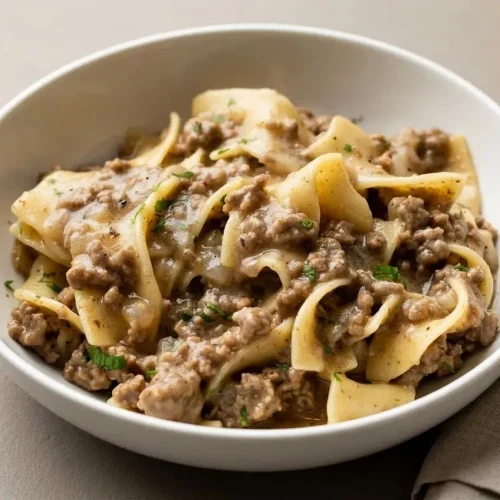
Beef and Noodles Recipe

Equipment
- Garlic Press
- Skillet
- Pot for boiling noodles
Ingredients
- 2 cups uncooked egg noodles
- 1 pound lean ground beef
- 1 medium onion chopped
- 2-3 cloves garlic minced
- 1 tablespoon Worcestershire sauce
- 1/4 teaspoon Italian seasoning
- 1/4 cup flour
- 2 cups beef broth
- Salt & pepper to taste
Instructions
- Bring a pot of salted water to a boil, then cook the egg noodles according to the package directions. Drain them when they are al dente, with a little firmness remaining in the center.
- Place the ground beef and chopped onion in a skillet over medium-high heat and cook for about 10 minutes, breaking the beef into small crumbles. Listen for a steady sizzle and continue until the meat is deeply browned and the pan has browned bits on its surface.
- Lower the heat to medium, then stir in the garlic, Worcestershire sauce, and Italian seasoning for 1 minute. The garlic should smell fragrant without taking on dark color.
- Scatter the flour over the beef mixture and stir continuously for 1 to 2 minutes. The flour should disappear into the drippings and smell lightly toasted rather than raw.
- Pour in the beef broth a little at a time while stirring and scraping the skillet bottom. Keep stirring until the flour fully dissolves and the browned bits blend into the liquid.
- Simmer the gravy for 5 to 10 minutes, stirring occasionally, until it reaches your preferred thickness. The sauce is ready when it clings smoothly to the back of a spoon; add a splash more broth if it tightens too much.
- Add the drained egg noodles to the skillet, toss until coated, and season with salt and pepper if needed. Serve right away while the noodles are springy and the gravy is glossy.