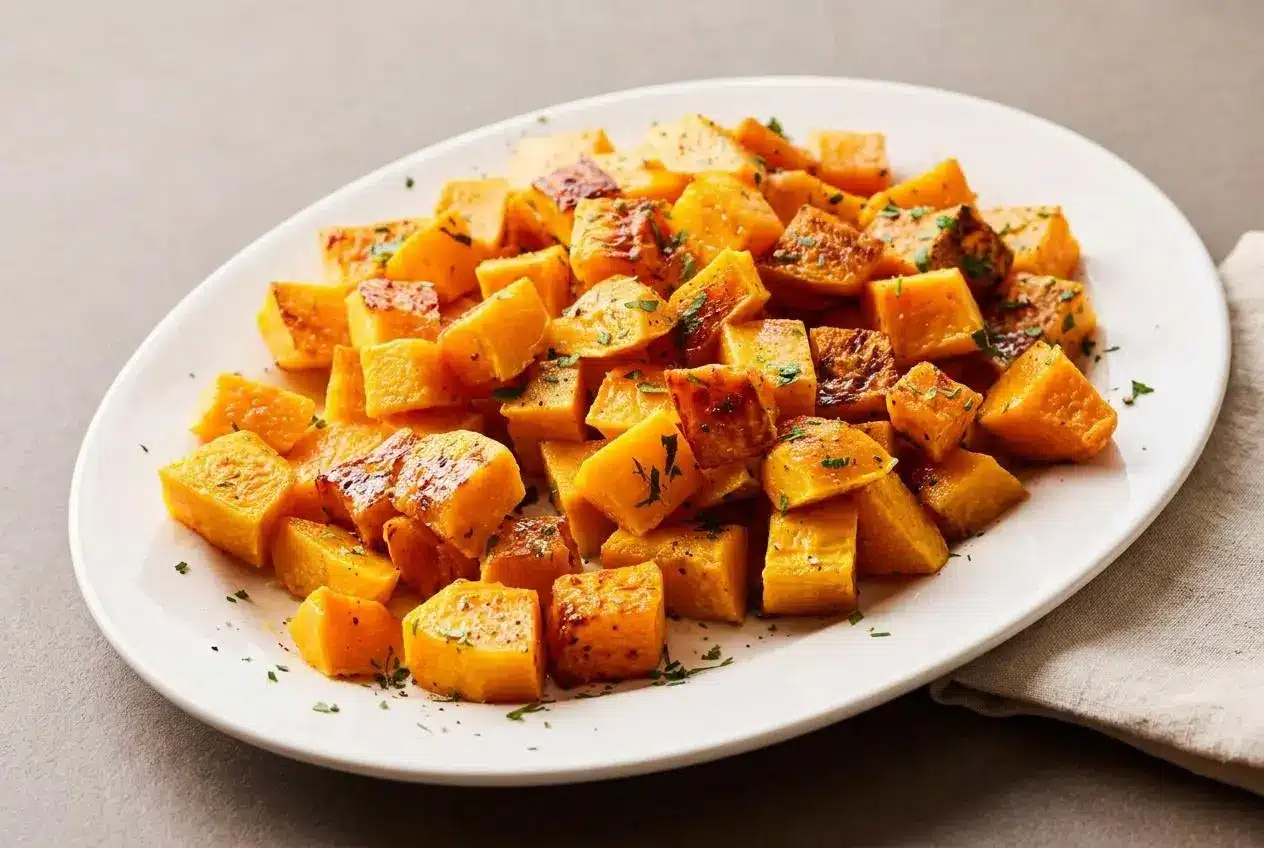
Bake peeled butternut squash cubes at 400°F for 30 to 35 minutes, until fork-tender with golden brown edges. A light coating of olive oil, salt, and pepper helps the cubes brown instead of steam.
Baked butternut squash is a flexible side dish with buttery texture, deep golden sweetness, and crisp-edged corners. It works for weeknight dinners, holiday plates, and warm bowls when you want something cozy without much fuss.
As the squash roasts, its sweet, nutty fragrance starts to fill the kitchen. The real trick is giving every cube room to brown.
Pat freshly cut squash dry before adding oil so moisture does not get in the way of caramelization.
Essential Ingredients and Preparation
Butternut squash brings natural sweetness, olive oil encourages browning, salt sharpens the flavor, pepper adds warmth, and parsley offers a fresh finish.
- 1 butternut squash (peeled, seeds scooped, and cubed)
- Extra-virgin olive oil (for drizzling)
- Sea salt and freshly ground black pepper
- Chopped fresh parsley (optional, for garnish)
Dense winter squash becomes creamy inside as dry oven heat concentrates its natural sugars. Olive oil coats the surfaces so they color evenly, while salt keeps the sweetness from tasting flat. Freshly ground pepper adds a gentle bite, and parsley brightens the finished dish without covering up the squash.
I find that trimming the squash with a sharp chef’s knife before peeling makes the whole job steadier and far less awkward.
Selecting and Peeling Butternut Squash Safely
Choose a squash that feels heavy for its size and has matte, unblemished skin. A firm neck and intact stem end are good signs that it will be easy to cut and roast evenly.
Set the squash on a stable cutting board. Slice off the stem and root ends first, creating two flat surfaces that prevent it from rolling. Stand it upright, then peel downward with a sturdy Y-peeler. Cut the squash where the narrow neck meets the bulb, halve the bulb lengthwise, and scoop out the seeds with a spoon.
Cut the flesh into uniform 1-inch cubes. Pieces that match in size soften and brown at the same pace, while stray tiny cubes can burn before larger chunks become tender. If the peel feels especially tough, pierce the skin with a fork and warm the whole squash briefly in the microwave before peeling. Let it cool enough to handle comfortably before cutting.
Oil Selection and Smoke Points
Extra-virgin olive oil adds a rounded flavor and performs well at this 400°F roasting temperature. Drizzle on enough to give each cube a thin, even sheen. Too little oil can leave pale, dry patches; too much can make the squash feel oily and slow down browning.
Toss the cubes thoroughly so the salt and pepper cling to every surface. The goal is coated, not pooled. If oil gathers in the corners of the pan, the squash is more likely to soften than roast.
How to Bake Butternut Squash Perfectly

High heat and open space on the pan create the contrast that makes roasted squash so appealing: creamy centers with browned, lightly crisp edges.
- Heat the oven to 400°F and cover a large rimmed baking sheet with parchment paper.
The pan should be ready before the squash goes on it, with parchment lying flat and reaching close to the edges. - Arrange the squash cubes on the prepared pan, drizzle with olive oil, season with sea salt and freshly ground black pepper, and toss to coat.
Keep the cubes in one layer with space between them so you hear a gentle sizzle instead of trapping steam. - Roast for 30 to 35 minutes, turning the cubes once around the middle of cooking.
The squash is done when the edges are deep golden brown and a fork or paring knife slides into the center with only slight resistance.
Turn the cubes after about 15 to 20 minutes if one side is browning faster than the other. This exposes a fresh surface to the hot pan and helps the color develop more evenly. A sweet, toasted aroma is a useful cue that the squash sugars are caramelizing.
Use a rimmed sheet pan rather than a deep baking dish. Low sides allow moisture to escape, while high sides hold steam near the cubes. Parchment makes cleanup easier and helps prevent sticking, though a bare metal pan can produce darker contact spots if you watch the squash closely.
Roasting Halves Versus Cubes
Cubes and halves give you very different results, so choose the cut based on how you plan to serve the squash.
- Cubes: Roast in 30 to 35 minutes. They have the most caramelized surface area and hold their shape well for side dishes, salads, and grain bowls.
- Halves: Roast in 45 to 60 minutes. Their flesh turns especially soft and scoopable, with less peeling and cutting before cooking.
- Cleanup: Cubes need more knife work but are ready faster. Halves are easier to prep and are useful when you want mashed or blended squash.
Baking Halved Squash for Purees
For a softer result, cut a butternut squash in half lengthwise and scoop out the seeds. Place the halves cut side down on a lined baking sheet and bake at 400°F for 45 to 60 minutes, until the flesh gives easily when pressed with a fork.
Keeping the cut sides against the pan holds steam beneath the squash, making the flesh velvety and easy to scoop away from the skin. This method is especially handy for soups, mash, pie filling, or a smooth roasted butternut squash soup. There is no need to peel the halves beforehand.
Baking Cubes for Caramelized Edges
One-inch cubes roast faster because hot air reaches more of their surface. Their flat sides make direct contact with the pan, creating richer browning and a firmer bite than halved squash.
Choose cubes when you want distinct pieces rather than a puree. They stay appealing in kale salads, grain bowls, and on a dinner plate where those caramelized edges can shine.
Flavor Variations and Seasoning Ideas
The salt-and-pepper version stays versatile, but optional finishes can steer the squash toward sweet, smoky, or savory meals without changing the main method.
Maple Cinnamon Sweet Roast
For a warm autumn flavor, toss the nearly tender cubes with pure maple syrup and ground cinnamon during the final 5 minutes of roasting. Adding the maple late matters because its sugars can darken quickly on a hot pan.
Watch for a glossy coating rather than a sticky, scorched layer. This variation is especially good beside roasted poultry, tucked into a fall salad, or spooned over yogurt with toasted nuts.
Garlic and Fresh Herb Roast
For a savory direction, add minced garlic, chopped fresh rosemary, and thyme toward the end of cooking. Garlic can turn bitter when it sits on the pan for the entire roast, so give it only enough time to soften and become fragrant.
Whole smashed garlic cloves are another gentle option if you want garlic flavor without small pieces burning. The herbs should smell woodsy and fresh, not dry or acrid.
Smoked Paprika and Citrus Zest Finish
As soon as the squash comes out of the oven, toss it with freshly grated lemon zest and a pinch of smoked paprika. The citrus lifts the squash’s sweetness, while paprika echoes the toasted edges with mild smokiness.
Use the zest while the cubes are hot so its oils bloom across the surface. This finish works particularly well with savory mains and grain-based bowls.
Troubleshooting Common Roasting Mistakes
Most problems with roasted squash come down to moisture, uneven cuts, or a pan that does not give the cubes enough contact with dry heat.
- Soggy or mushy squash: The pan is likely overcrowded, so moisture cannot evaporate. Divide the cubes between pans or roast in batches, leaving visible gaps around each piece.
- Uneven browning: Mixed-size chunks cook at different speeds. Keep cubes close to 1 inch and turn them midway through roasting so all sides get time against the hot pan.
- Burnt tips with firm centers: Smaller pieces or oven hot spots are usually to blame. Move the pan to the center rack, rotate it during cooking, and remove very small pieces if they darken too quickly.
- Watery liquid on the pan: Freshly cut squash can carry surface moisture. Dry the cubes well before adding oil, then spread them out immediately rather than letting them sit in a crowded bowl.
- Pale squash: The oven may not be fully hot, or the cubes may be crowded. Give the oven time to reach temperature and use a broad, light-colored metal sheet pan for more even heat.
- Harsh charred flavor: Dark brown edges are delicious, but blackened corners taste bitter. Pull the pan when the cubes are deeply golden and tender, rather than waiting for every surface to darken.
Storage and Reheating
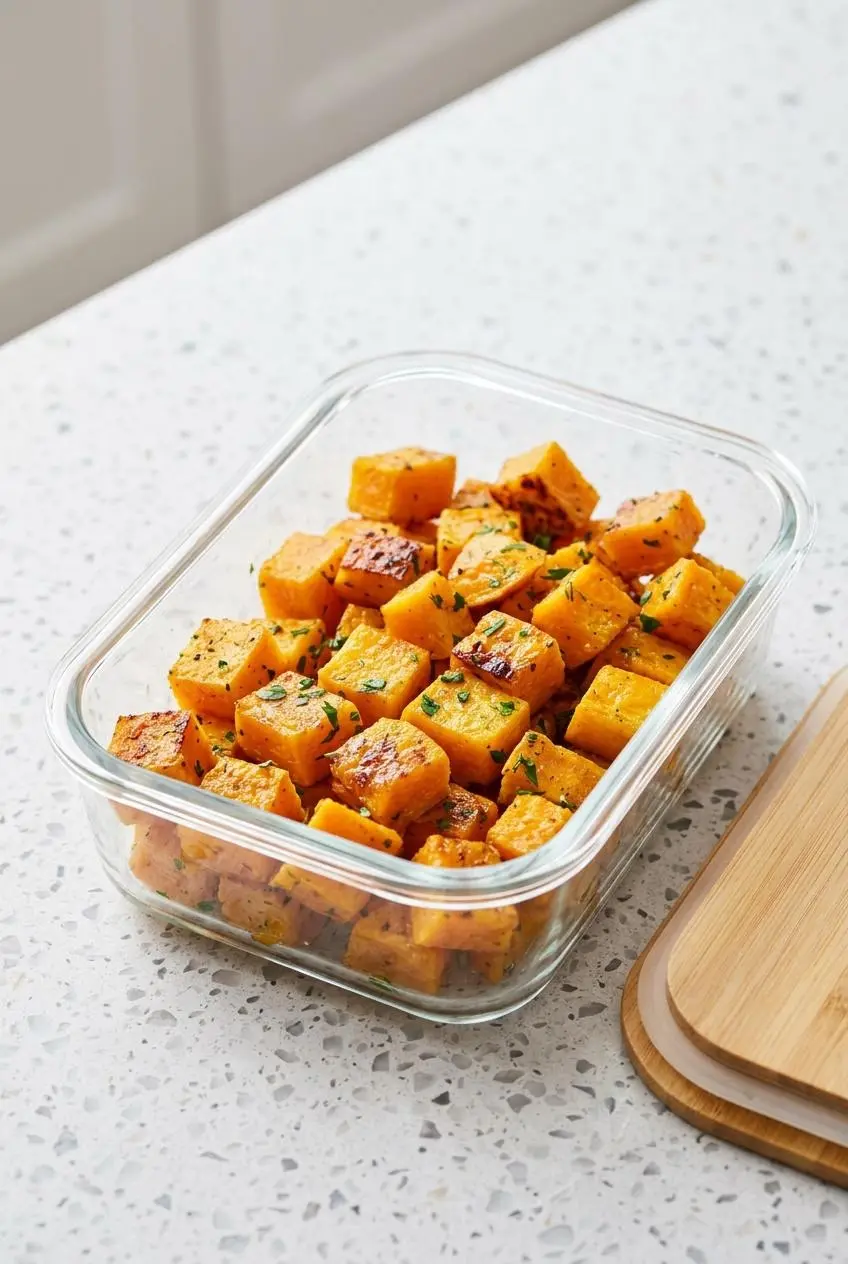
Cool leftover squash before transferring it to an airtight container and keep it chilled. Store the parsley separately when possible, then add it after reheating so it stays fresh and green.
For the best texture, reheat only the portion you plan to eat. Spread the cubes on a sheet pan in a 400°F oven until hot and re-crisped, or warm them in a hot skillet with a light touch of oil. A microwave will heat the squash, but it softens the browned edges.
If moisture collects in the container, blot the cubes before reheating. That small step helps the hot pan restore their roasted surface instead of simply warming them through.
Serving Suggestions for Every Meal
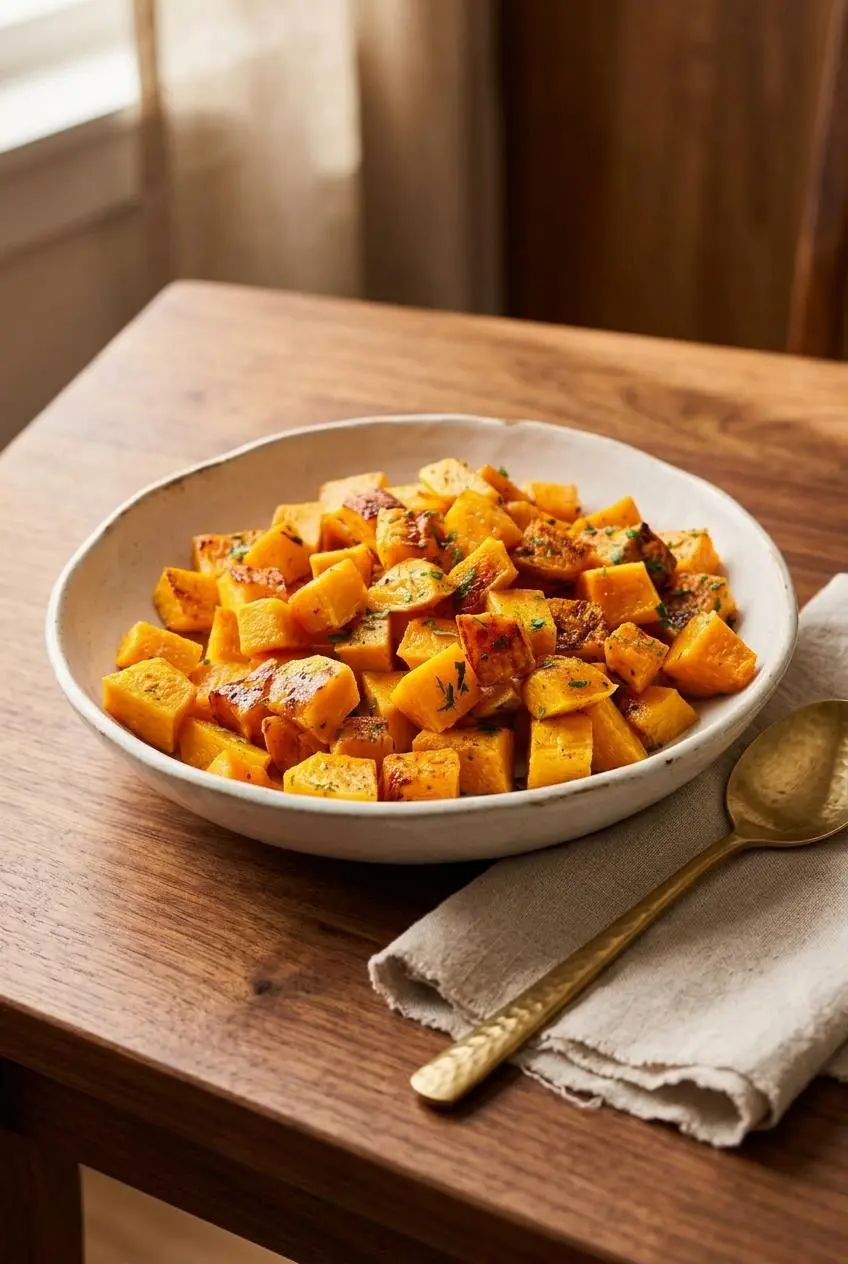
These golden cubes can move easily from a quick dinner side to a more complete meal.
- Fold warm squash into a kale salad with goat cheese and toasted pecans for creamy, tangy, and crunchy contrast.
- Toss it into a quinoa bowl with tahini sauce, greens, and a bright squeeze of lemon.
- Serve it beside juicy baked pork chops for a savory dinner that balances the squash’s natural sweetness.
- Pair it with roasted chicken, turkey, or holiday sides where its caramelized edges bring color to the plate.
- Blend tender leftovers into a creamy vegetable sauce for pasta or spoon them into mashed potatoes for extra richness.
Conclusion
Roasting butternut squash at 400°F brings out its buttery texture and golden sweetness without needing complicated seasoning. Keep the cubes uniform, lightly coated, and well spaced for the best browning.
Once the edges are deeply golden and the centers are fork-tender, you have a side dish that fits almost any cool-weather meal. Give the pan some breathing room, and the squash will do the rest.
Frequently Asked Questions
What Is the Best Oven Temperature for Roasting Butternut Squash?
400°F is an excellent temperature for roasting butternut squash. It browns the exterior efficiently while the inside becomes creamy and tender. At this heat, the natural sugars caramelize without needing a heavy glaze. Keep the cubes spaced apart so the heat can roast rather than steam them.
How Long Does Butternut Squash Take to Roast at 400°F?
One-inch peeled cubes need 30 to 35 minutes at 400°F. Turn them around the middle of cooking for more even browning. Large unpeeled halves need 45 to 60 minutes. Check doneness with a fork or paring knife instead of relying on color alone.
Should Butternut Squash Be Baked Cut Side Up or Cut Side Down?
Place halved butternut squash cut side down on the baking sheet. The cut surface against the pan traps steam and softens the flesh. The squash becomes easy to scoop from the skin once tender. Use this approach when making mash, soup, or other smooth preparations.
Can You Freeze Baked Butternut Squash?
This preparation is best enjoyed fresh or kept chilled as leftovers. Cool the squash before packing it into an airtight container. Reheat portions on a sheet pan or in a skillet to bring back some browned texture. Avoid letting moisture collect around the cubes before reheating.
Do You Need to Peel Butternut Squash Before Baking?
Peel butternut squash when roasting it in bite-sized cubes. The outer skin tends to stay tough on cubed squash. Halved squash does not need peeling because the cooked flesh scoops out easily. Trim both ends first to create a stable base before peeling and cutting.
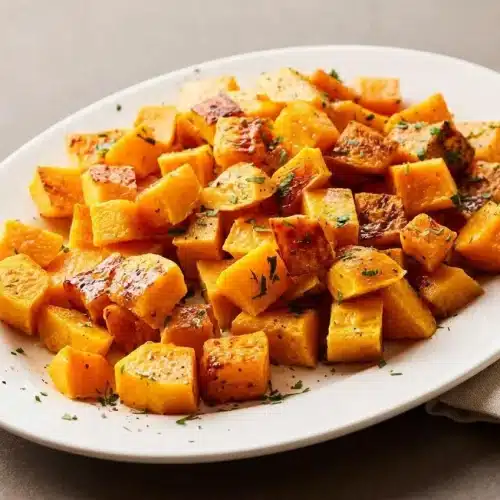
Baked Butternut Squash

Equipment
- Baking Sheets
Ingredients
- 1 butternut squash peeled, seeds scooped, and cubed
- Extra-virgin olive oil for drizzling
- Sea salt and freshly ground black pepper
- Chopped fresh parsley optional, for garnish
Instructions
- Heat the oven to 400°F and cover a large rimmed baking sheet with parchment paper. The pan should be ready before the squash goes on it, with parchment lying flat and reaching close to the edges.
- Arrange the squash cubes on the prepared pan, drizzle with olive oil, season with sea salt and freshly ground black pepper, and toss to coat. Keep the cubes in one layer with space between them so you hear a gentle sizzle instead of trapping steam.
- Roast for 30 to 35 minutes, turning the cubes once around the middle of cooking. The squash is done when the edges are deep golden brown and a fork or paring knife slides into the center with only slight resistance.