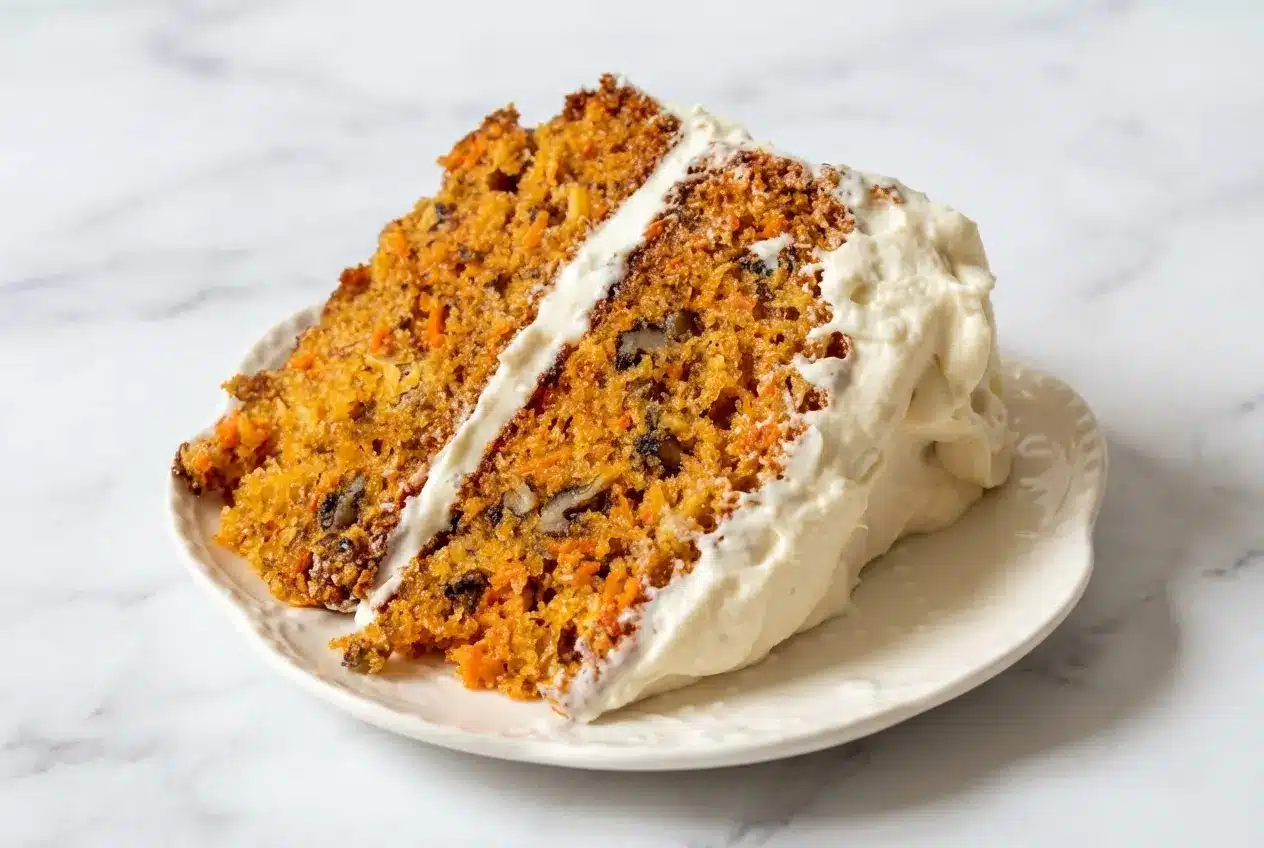
There is something about Amish carrot cake that feels like it belongs on a well-worn kitchen table, right beside a pot of coffee and a stack of dessert plates waiting for family to gather. In my kitchen, this is the kind of cake I bake when I want comfort first, but I still want every bite to taste a little special.
You can expect a deeply moist cake crumb from freshly shredded carrots and crushed pineapple, plus a frosting that goes far beyond the usual. Browned butter gives the cream cheese frosting a toasty, caramel-like richness, and toasted pecans bring the kind of crunch that makes each forkful memorable.
Why You’ll Love This Recipe
Old-fashioned comfort: This cake has that hearty, homespun feel I love in classic bakes, with warm ground cinnamon, a tender crumb, and the kind of flavor that only gets better after a chill in the fridge.
The secret twist: Brown butter cream cheese frosting changes everything. Once I started browning the butter first, I noticed the frosting picked up a deep nutty note that makes this Amish carrot cake taste more layered and bakery-worthy.
Texture that keeps you coming back: Toasted pecans bring a real crunch against the soft, ultra-moist cake crumb. Their flavor gets fuller and richer once toasted, which is why I never skip that step now.
Perfect for sharing: If you enjoy the same rustic charm you find in an Amish applesauce cake, this recipe fits right into that cozy tradition. It is easy enough for a weekend bake, but special enough for holidays, potlucks, and family birthdays.
Ingredients and Substitutions
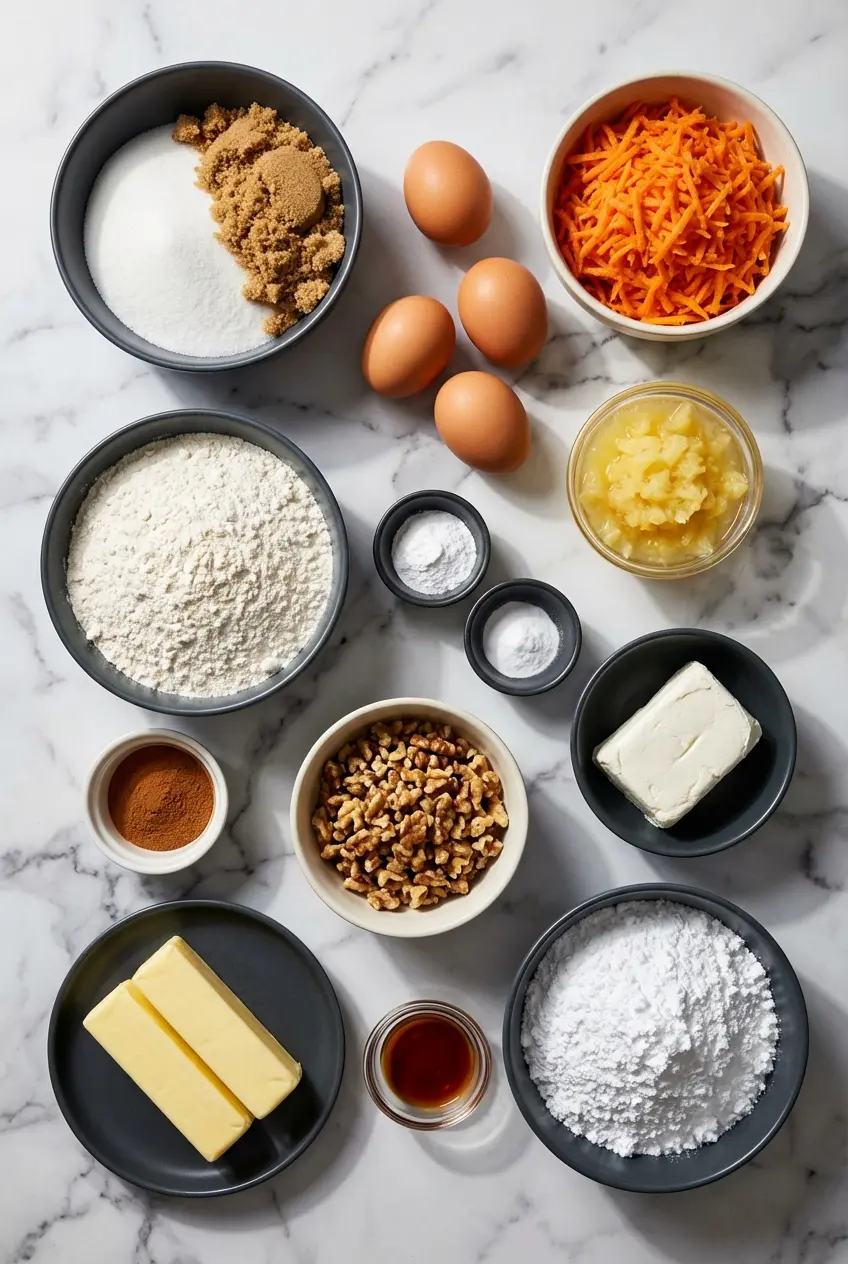
These pantry staples come together into a warmly spiced layer cake with plenty of moisture, balanced sweetness, and a rich cream cheese finish.
Ingredients
Cake:
- 2 c. sugar (or use 1 c. sugar and 1 c. brown sugar)
- 1 1/2 c. vegetable or canola oil
- 4 large eggs
- 2 1/2 c. shredded carrots (approx. 4 large carrots)
- 1 c. crushed pineapple, drained
- 2 c. all-purpose flour
- 2 tsp. baking powder
- 1 1/2 tsp. baking soda
- 1 tsp. salt
- 2 tsp. ground cinnamon
- 3/4 c. chopped pecans or walnuts (optional)
Cream Cheese Frosting:
- 1 pkg. (8oz.) softened cream cheese
- 1 c. softened butter (2 sticks)
- 1 tsp. vanilla extract
- 3 – 3 1/2 c. powdered sugar
- 1/4 tsp. salt
Ingredient Notes & Substitutions
Sugar: For consistent baking, I measure 2 cups sugar as about 400 grams. If you use 1 cup sugar and 1 cup brown sugar, you will get a slightly deeper, more molasses-like sweetness that plays beautifully with the cinnamon.
Freshly shredded carrots: This is one place where fresh matters. I treat 2 1/2 cups shredded carrots as roughly 275 to 300 grams, and I always grate them at home because pre-bagged carrots tend to be thicker, drier, and less sweet.
Crushed pineapple: Drain it very well so the batter stays balanced and the layer cake rises properly. You want the fruit moist, not dripping, because extra liquid can make the center heavy.
All-purpose flour: For accuracy, 2 cups all-purpose flour is about 240 grams in my kitchen. Spoon and level if you are using cups, since packed flour can make the cake denser than it should be.
Vegetable oil: Oil is what gives this cake its tender, lasting moisture. If you want a slightly lighter crumb, you can swap half of the vegetable oil for unsweetened applesauce or plain yogurt without losing the soft texture.
Pecans or walnuts: Chopped pecans are my favorite here because they echo the nutty notes in the frosting, but walnuts work just as well. If you like a fuller texture, golden raisins or a little shredded coconut can be folded in along with the nuts.
Spices: Ground cinnamon is the backbone, but this batter welcomes a little extra warmth. A pinch of cloves, ginger, or nutmeg gives the cake a more autumn-forward flavor without changing its old-fashioned character.
How to Make Amish Carrot Cake
Prep the pans and flavor boosters
- Heat your oven to 350°F. Spray two 9-inch round cake pans with cooking spray, then line the bottoms with parchment paper so the finished layers release cleanly. If you prefer a simpler presentation, a well-greased 9×13-inch pan works too.
- Before you begin the batter, brown the butter for the frosting in a small saucepan over medium heat until it smells nutty and you see golden flecks at the bottom. Let it cool until it firms back up to a soft, spreadable texture. While that cools, toast the chopped pecans briefly in a dry skillet or on a sheet pan until fragrant and lightly deepened in color. That extra heat draws out their natural essential oils, which is exactly what gives them that fuller roasted flavor in the finished cake.
Mix the cake batter
- In a large mixing bowl fitted with a paddle attachment, blend the vegetable oil and sugar until they look evenly combined and glossy. Add the eggs and continue mixing until the batter turns creamy and slightly lighter in color.
- Stir in the freshly shredded carrots and the thoroughly drained crushed pineapple. The batter will look thick, moist, and a little textured at this stage, which is exactly what you want for a tender carrot cake.
- In a separate bowl, whisk together the all-purpose flour, baking powder, baking soda, salt, and ground cinnamon. Add the dry mixture to the wet ingredients and mix only until the flour disappears. Stop as soon as the last streaks are gone so the crumb stays soft instead of turning tough.
- Fold in the toasted chopped pecans, distributing them gently so every slice gets a little crunch without overworking the batter.
Bake and cool
Divide the batter between the prepared pans and bake for 32 to 40 minutes, or until a toothpick inserted in the center comes out clean. The tops should look set and spring back lightly when touched, and the cakes need to cool completely before frosting so the cream cheese frosting stays thick and silky.
Make the frosting and finish the cake
- Beat the softened cream cheese until completely smooth. Add the re-solidified brown butter and beat again until the mixture looks creamy, unified, and free of lumps.
- Mix in the vanilla extract, salt, and powdered sugar, scraping the bowl as needed so everything blends evenly. Beat for about 1 minute, until the frosting becomes fluffy, light, and easy to spread.
- Frost the fully cooled cake, then take in that buttery, toasty aroma before slicing. Between the moist cake crumb, the tangy cream cheese frosting, and the crunch of nuts, this one always disappears fast.
Secrets for a Perfect Crumb
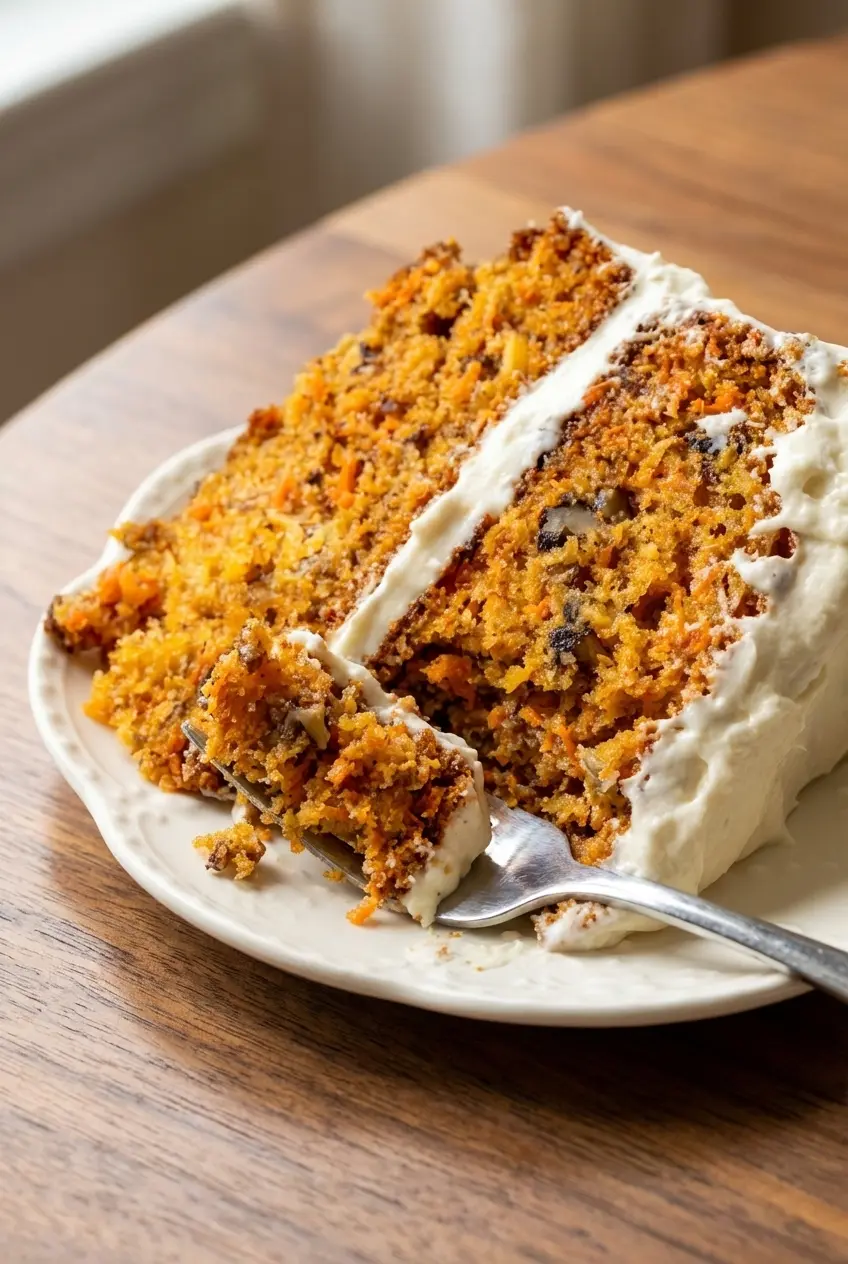
The easiest way to tell when carrot cake is perfectly baked is to use both a toothpick and temperature. I look for an internal temperature of about 205°F to 210°F, which gives you a baked center without drying out the edges.
Draining the crushed pineapple is absolutely essential. If too much juice goes into the batter, the cake can bake up heavy and may even sink through the middle instead of holding that lovely, fluffy-but-substantial texture.
Mixing matters just as much as moisture. Stir the flour in only until the streaks disappear because that is what prevents gluten overdevelopment, and that is the difference between a tender slice and one that feels tight or chewy.
The Science of Pineapple and Baking Soda
This batter is rich with oil, carrots, and fruit, so it needs some real lift to avoid feeling overly dense. The acidity from the crushed pineapple reacts with the baking soda, helping create carbon dioxide bubbles that lighten the crumb as the cake bakes.
That reaction is one reason Amish carrot cake can be both moist and pleasantly fluffy at the same time. If you enjoy the baking chemistry side of things, the chemical reaction between the acidity and baking soda is a great example of how structure and tenderness work together in a heavily loaded batter.
Adapting for a Bundt Pan
This batter can be baked in a Bundt pan if you want a more dramatic presentation. Because the crumb is very moist, grease and flour the pan generously, getting into every curve so the cake releases without tearing.
Bundt cakes usually take longer than two 9-inch layers, so start checking later than you would for the layer cake and rely on both a toothpick and visual cues. The cake is ready when the top feels springy, the edges pull slightly from the pan, and the center tests clean.
Pro Tips & Troubleshooting
Pro Tips
- Bring the cream cheese and butter to room temperature before mixing so the frosting turns out smooth, creamy, and free of little lumps.
- Grate carrots fresh on a box grater for the best moisture and texture. Fresh shreds melt more naturally into the batter and bake up tender.
- Toast the pecans before folding them in to sharpen their flavor and keep their crunch noticeable after baking.
- If you make other cream cheese based bakes, the same room-temperature rule matters just as much in a tender, bakery-style treat like this blueberry coffee cake. A smooth base always gives you a much prettier finish and a better mouthfeel.
Common Mistakes to Avoid
- Using cold cream cheese for the frosting, which leaves the mixture lumpy instead of silky.
- Skipping parchment paper in the bottoms of the pans, which can cause the moist cake layers to stick and break.
- Overmixing once the flour goes in, which can make the layer cake heavy and less tender.
- Leaving too much juice in the crushed pineapple, which can weigh down the batter and lead to sinking.
- Overbaking in a 9×13 pan. Start checking with a toothpick at the 32-minute mark so the cake stays moist.
Serving & Storage
Serving Ideas
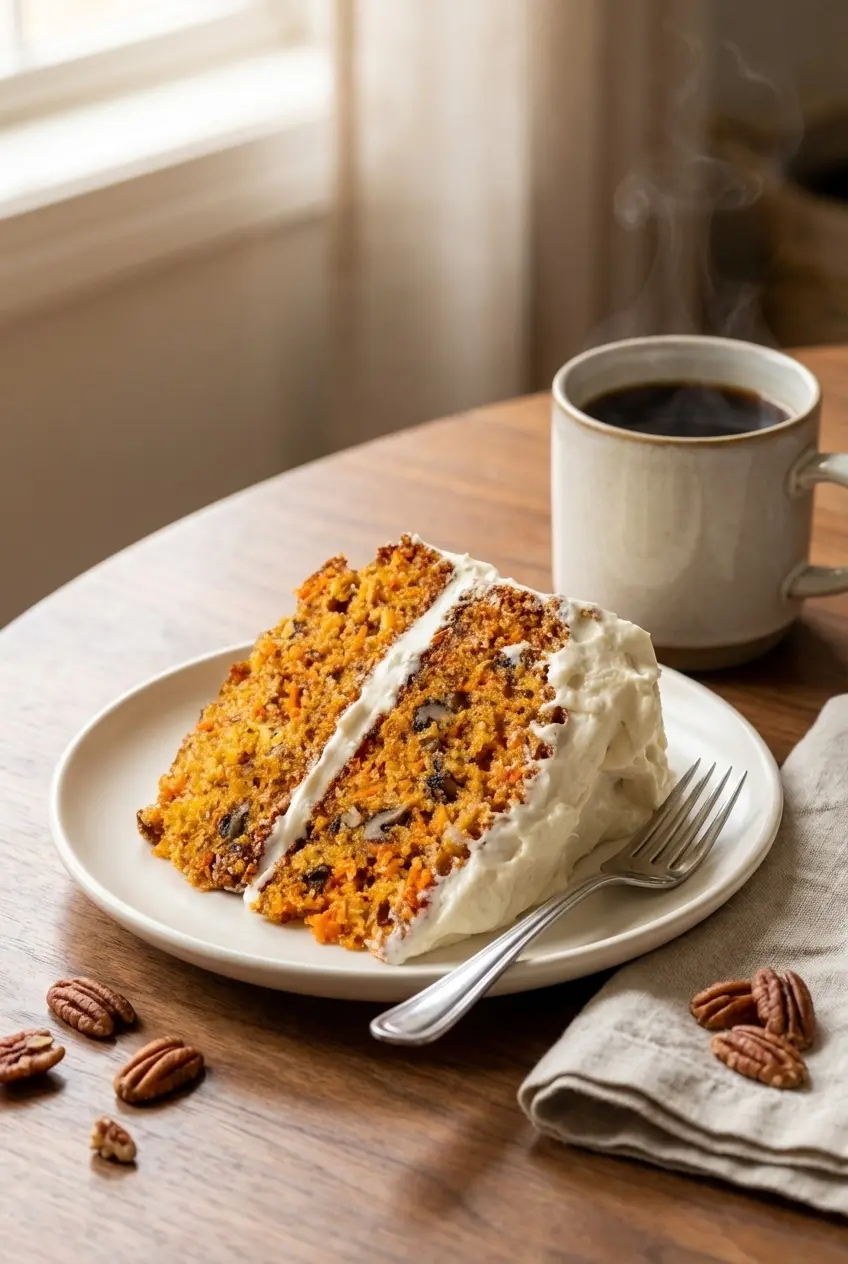
I love finishing the frosted sides with extra crushed pecans and a few caramelized carrot ribbons if I want it to look party-ready. Served cold, this cake has an especially lovely contrast between the creamy frosting and the soft, spiced crumb.
For a cozy dessert spread, I often set out slices with dark roast coffee or strong black tea. If you are building a table full of homemade favorites, a plate of chewy oatmeal cookies fits right in and gives everyone a little something extra to nibble on.
Storage & Make-Ahead
Because of the cream cheese frosting, this cake should be stored in the refrigerator for up to a week. I like to cover it well so the crumb stays moist and the frosting does not dry out.
If you want to get ahead, freeze the unfrosted cake layers tightly wrapped. Once thawed, frost them when fully cool, and the texture stays wonderfully soft.
Moist Old-fashioned Amish Carrot Cake

Equipment
- 9-inch round cake pans
- Parchment Paper
- Small saucepan
- Mixing bowl with paddle attachment
Ingredients
Cake:
- 2 c. sugar (or use 1 c. sugar and 1 c. brown sugar)
- 1 1/2 c. vegetable or canola oil
- 4 large eggs
- 2 1/2 c. shredded carrots (approx. 4 large carrots)
- 1 c. crushed pineapple, drained
- 2 c. all-purpose flour
- 2 tsp. baking powder
- 1 1/2 tsp. baking soda
- 1 tsp. salt
- 2 tsp. ground cinnamon
- 3/4 c. chopped pecans or walnuts (optional)
Cream Cheese Frosting:
- 1 pkg. (8oz.) softened cream cheese
- 1 c. softened butter (2 sticks)
- 1 tsp. vanilla extract
- 3 – 3 1/2 c. powdered sugar
- 1/4 tsp. salt
Instructions
Prep the pans and flavor boosters
- Heat your oven to 350°F. Spray two 9-inch round cake pans with cooking spray, then line the bottoms with parchment paper for easy release.
- In a small saucepan over medium heat, brown the butter for the frosting until it smells nutty and has golden flecks. Set aside to cool and firm back up to a spreadable texture. Toast the pecans in a dry skillet until fragrant.
Mix the cake batter
- Using a paddle attachment, blend the vegetable oil and sugar until combined and glossy. Beat in the eggs until the batter is creamy and light in color.
- Stir in the shredded carrots and the thoroughly drained crushed pineapple until well combined.
- In a separate bowl, whisk the flour, baking powder, baking soda, salt, and cinnamon. Add to the wet ingredients, mixing only until the flour streaks disappear.
- Gently fold in the toasted chopped pecans to distribute them throughout the batter.
Bake and cool
- Divide the batter evenly between the pans. Bake for 32 to 40 minutes, or until a toothpick inserted in the center comes out clean. Cool the layers completely before frosting.
Make the frosting and finish the cake
- Beat the softened cream cheese until smooth. Add the solidified browned butter and beat again until unified and free of lumps.
- Mix in the vanilla, salt, and powdered sugar. Beat for approximately 1 minute until the frosting is light and fluffy.
- Frost the cooled cake layers. For a decorative finish, add extra pecans or caramelized carrot ribbons to the sides.
Notes
Conclusion
This is the kind of cake that wins people over at first bite, moist, warmly spiced, and just a little more special than the usual version. The brown butter cream cheese frosting brings a deep, nutty richness that makes the whole dessert feel unforgettable.
Bake it for a family gathering, a weekend treat, or any day that calls for an old-fashioned slice of comfort. Once you taste those toasted pecans against that soft crumb, you may not want carrot cake any other way.
Frequently Asked Questions
Do I need to refrigerate Amish carrot cake with cream cheese frosting?
Can I make this recipe in a 9×13 pan instead of two round layers?
What is the best way to grate carrots for carrot cake?
Can I freeze this cake ahead of time?
How can I prevent my carrot cake from becoming too dense or sinking?