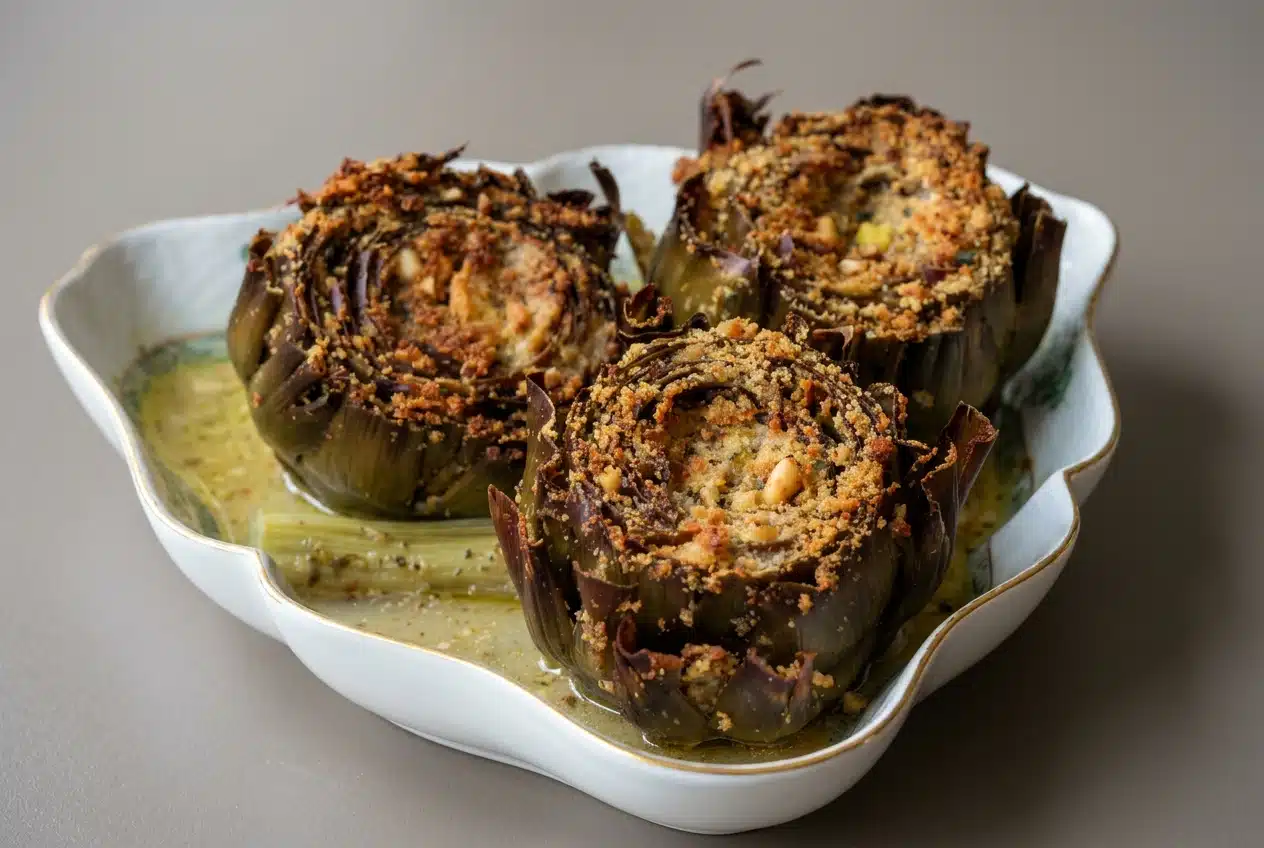
To make stuffed artichokes, trim a whole artichoke, scoop out the fuzzy choke, and tuck savory breadcrumbs into the center and between the leaves. Bake it covered until the leaf bases are tender, then uncover it to brown the stuffing.
A whole artichoke makes a striking appetizer, but the best part is how you eat it. Pull off a leaf and you get a little breadcrumb filling with each bite, long before you reach the heart.
This filling is garlicky and lemony, with toasted pine nuts for crunch and fresh mint to lift the savory Parmesan and anchovy. The best bites hide between the leaves.
Choose a firm green artichoke with compact leaves and, if possible, its stem still attached. Skip any that feel soft or have loose, floppy leaves.
Ingredients and What They Do
The whole artichoke holds the filling in place, while coarse crumbs give it texture. Garlic and olive oil carry the aroma, lemon and herbs brighten the rich ingredients, and Parmesan, anchovy, and salt give the stuffing its savory depth.
- 6 tablespoons extra-virgin olive oil ($0.35)
- 4 cloves garlic, peeled and crushed ($0.32)
- 1 large artichoke ($0.89)
- 3 lemons ($1.35)
- 3 tablespoons coarse dry breadcrumbs ($0.02)
- 1/2 hard-boiled egg, chopped ($0.06)
- 3 tablespoons toasted pine nuts, coarsely chopped ($0.65)
- 1 teaspoon fresh mint, chopped ($0.18)
- 1/2 anchovy fillet, finely chopped ($0.17)
- 1 teaspoon. fresh grated Parmesan cheese ($0.12)
- 1/8 teaspoon crushed red pepper, finely chopped ($0.02)
- 1 tablespoon fresh Italian parsley, chopped ($0.03)
- 1 tablespoon unsalted butter ($0.15)
- Salt ($0.01)
Coarse dry breadcrumbs give the filling some definition: the crumbs inside soften as the artichoke bakes, while those exposed at the top can turn crisp. Chopped hard-boiled egg adds soft, rich bites rather than binding the stuffing, and toasted pine nuts give the mixture a nutty crunch.
Lemon does two jobs. The zest perfumes the crumbs without adding much moisture, while the juice helps keep the cut artichoke from browning and gives the cooking liquid its tang. Mint stands out in the filling, while parsley adds a greener, milder flavor to both the stuffing and the baking dish.
Finely chopped anchovy spreads through the crumbs so you get savory depth without a strong bite of fish. Parmesan adds a nutty edge, and crushed red pepper brings a little heat. The garlic-infused oil carries flavor into the crumbs and the cooking liquid, while the butter melts over the exposed stuffing.
How to Prepare and Cook the Stuffed Artichokes
Think of this as a covered bake for tenderness followed by an uncovered bake for color. Before the artichoke goes into the dish, the two things to get right are a flat bottom that sits steady and open pockets that hold crumbs without the leaves breaking off.
- Combine the crushed garlic and olive oil in a small container and let them infuse in the refrigerator for 30 minutes to 2 hours.
Make the garlic oil for this bake rather than setting it aside for another meal. - Heat the oven to 400 °F and grate 1 teaspoon of zest from one lemon before juicing all the lemons.
Stir half the juice into a large bowl of cool water, keeping the zest, the other half of the juice, and two squeezed lemon halves separate. - Slice off the stem so the artichoke stands upright, then pull away one or two rows of small leaves around the bottom.
Use a serrated knife to cut through the top third so you can reach the center. - Scoop out the fuzzy choke with a teaspoon, stopping when you reach the solid heart underneath.
Dip the artichoke into the lemon water as you work to limit browning, then leave it submerged while you make the filling. - Toss the breadcrumbs with the chopped egg, mint, pine nuts, anchovy, Parmesan, lemon zest, half the crushed red pepper, 2 teaspoons of garlic-infused oil, and a pinch of parsley.
Mix until the oil and seasonings are evenly distributed, then add salt if needed. - Lift the artichoke out of the lemon water and let it drain on a kitchen towel for a few minutes.
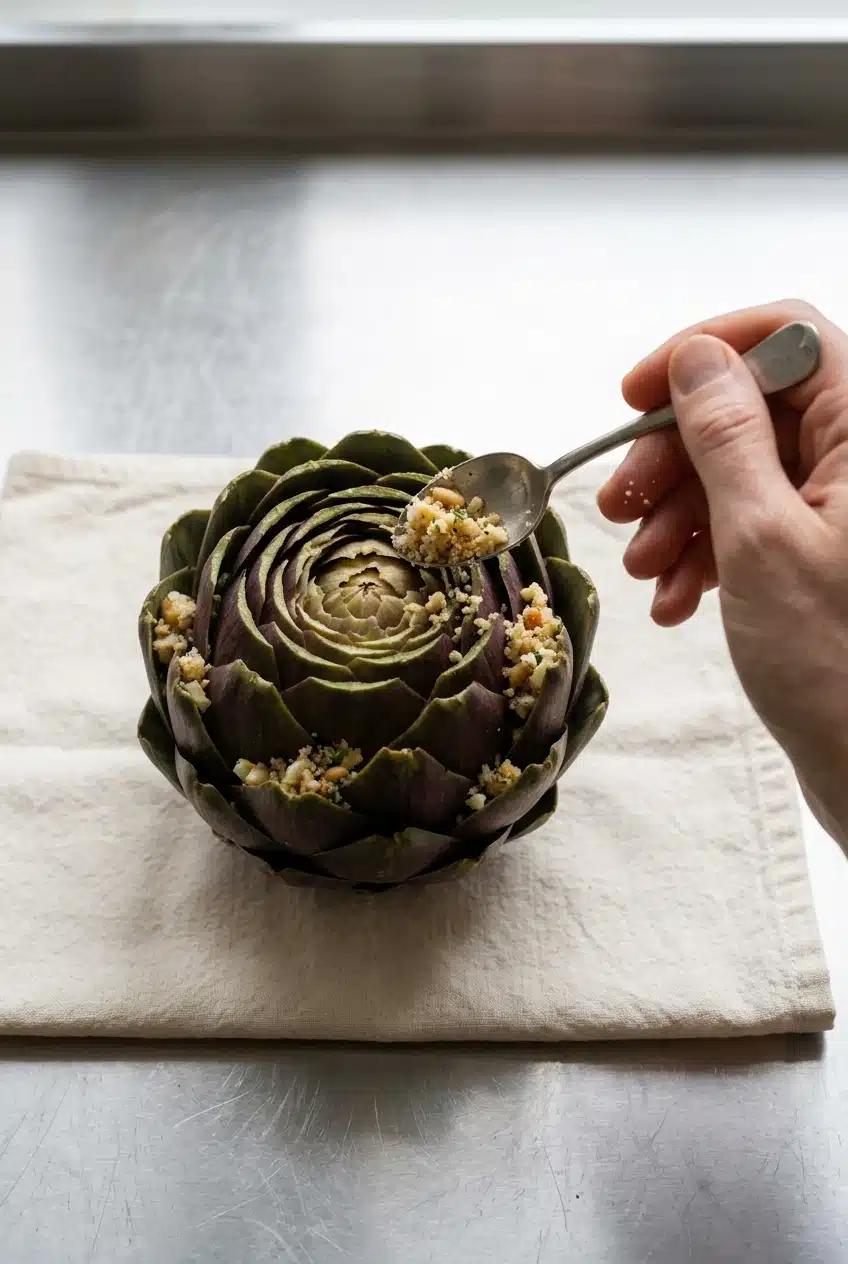
Turn it cut side down and tap it gently against the counter to release water trapped between the leaves. - Ease the leaves outward from the center and tuck the breadcrumb mixture into the gaps as well as the hollow left by the choke.
The leaves should stay attached, with crumbs visible in the spaces between them. - Set the artichoke upright in a small baking dish or soufflé cup and pour in enough fresh water to come one-third of the way up its sides.
Season the water with salt, the remaining crushed red pepper, and 3 tablespoons of garlic-infused oil, then add the remaining parsley and lemon juice. - Dot the top with small pieces of butter, seal the dish tightly with aluminum foil, and poke several small holes in the foil.
Bake for 35 to 45 minutes, until a paring knife slips into a leaf base with only slight resistance. - Take off the foil and return the dish to the oven for about 10 minutes.
Look for a browned breadcrumb surface and an outer leaf that pulls away easily. - Transfer the artichoke to a shallow soup plate.
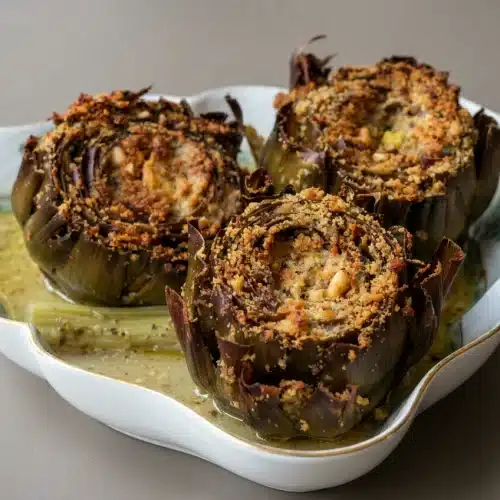
Spoon some of the cooking liquid around the base so the browned crumbs on top stay exposed.
Understand the Leaves, Choke, and Heart
The pointed tips are at the top, but the tender part of each leaf is at its base, where it attaches to the artichoke. Taking off the top third clears the way to the middle. Removing the small leaves near the stem is a separate job: it tidies up the bottom without taking away the larger leaves that will hold the filling.
Once you can see the center, look for the patch of fine fibers. That’s the choke, and it sits right above the heart. You’ll feel the spoon meet a firmer surface once the fuzz is gone. Stop there so the heart stays intact underneath the stuffing.
Make Room for the Filling
Ease the leaves outward just enough to see narrow gaps between overlapping layers. Those gaps are the pockets. You don’t need to fan the artichoke flat or pry every outer leaf wide open. Tuck crumbs into the spaces you can reach, rather than packing everything into the center.
Check for Tender Leaves and a Browned Top
Use the knife test near the bottom of a leaf, where the edible flesh is thickest. Slight resistance feels like a soft catch before the blade slides in. If you have to push firmly, the leaf still needs the covered stage. Once the flesh is tender, the uncovered bake lets the exposed crumbs brown.
Texture Tips and Troubleshooting
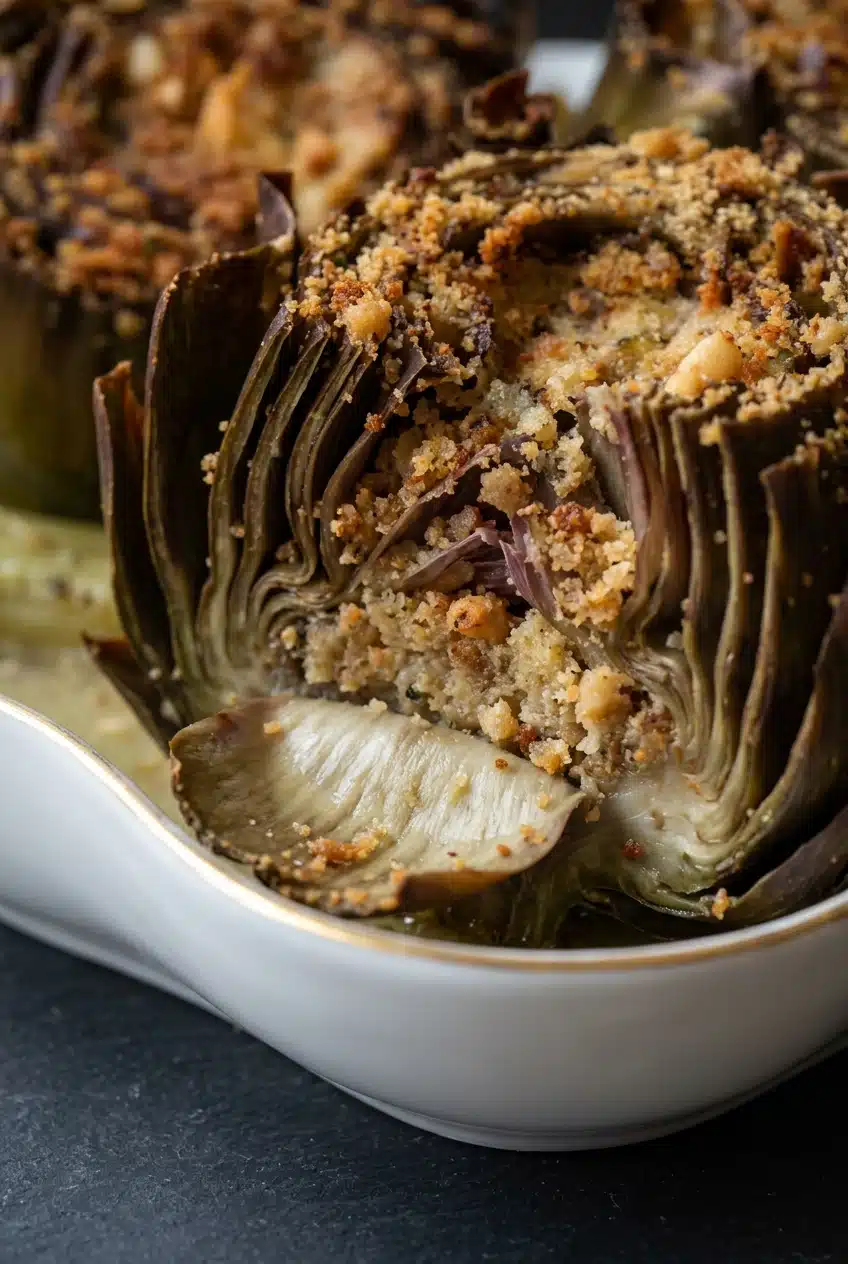
A well-cooked artichoke still stands upright and holds its layers. The leaves should loosen when you tug them, not peel away in a clump when you lift the artichoke.
- Brown crumbs but tough leaves: The top can color before the vegetable softens. Check a leaf base with a paring knife before you remove the foil, rather than using the topping as a cue.
- Filling collects in the middle: The leaf pockets probably weren’t open far enough to catch it. Look for visible gaps as you spread the leaves, then tuck the crumbs into those gaps before filling the hollow.
- The stuffing feels wet throughout: Lemon water can collect deep between the leaves. Drain the artichoke well before stuffing. The filling beneath the surface should stay moist, but the exposed crumbs should look browned and feel crisp.
I’d let each leaf tell you how far it wants to open. A narrow gap is enough for coarse crumbs, and forcing it wider can pull the leaf loose at the bottom.
Optional Cheese Choices and Related Formats
Parmesan and Romano
Parmesan gives this stuffing a nutty, rounded flavor that leaves room for lemon and mint. Romano is an optional direction if you prefer a sharper, saltier cheese, especially Pecorino Romano. That sharper flavor will stand out more alongside the anchovy. The recipe uses Parmesan.
Whole Artichokes vs. Artichoke-Heart Casserole
An artichoke-heart casserole is a separate dish for when you want a scoopable bake without trimming or stuffing a whole artichoke. Hearts give you the tender center, but they don’t have overlapping leaves to hold crumbs. They aren’t a direct substitute here, where the leaves shape both the bake and the way you eat it.
Storing and Reheating Leftovers
Refrigerate leftovers promptly in a covered container. If you have extra cooking liquid, keep it separate so the breadcrumb top doesn’t sit in it. The topping will soften in the refrigerator, so expect a different texture from the one you get straight from the oven.
To warm leftovers, use the oven if you want a drier topping. Spoon the cooking liquid around the artichoke rather than over the crumbs. For the best contrast between the crisp top and the moist filling, plan to serve the artichoke when it comes out of the oven.
How to Serve and Eat the Artichoke
Eating Leaf by Leaf
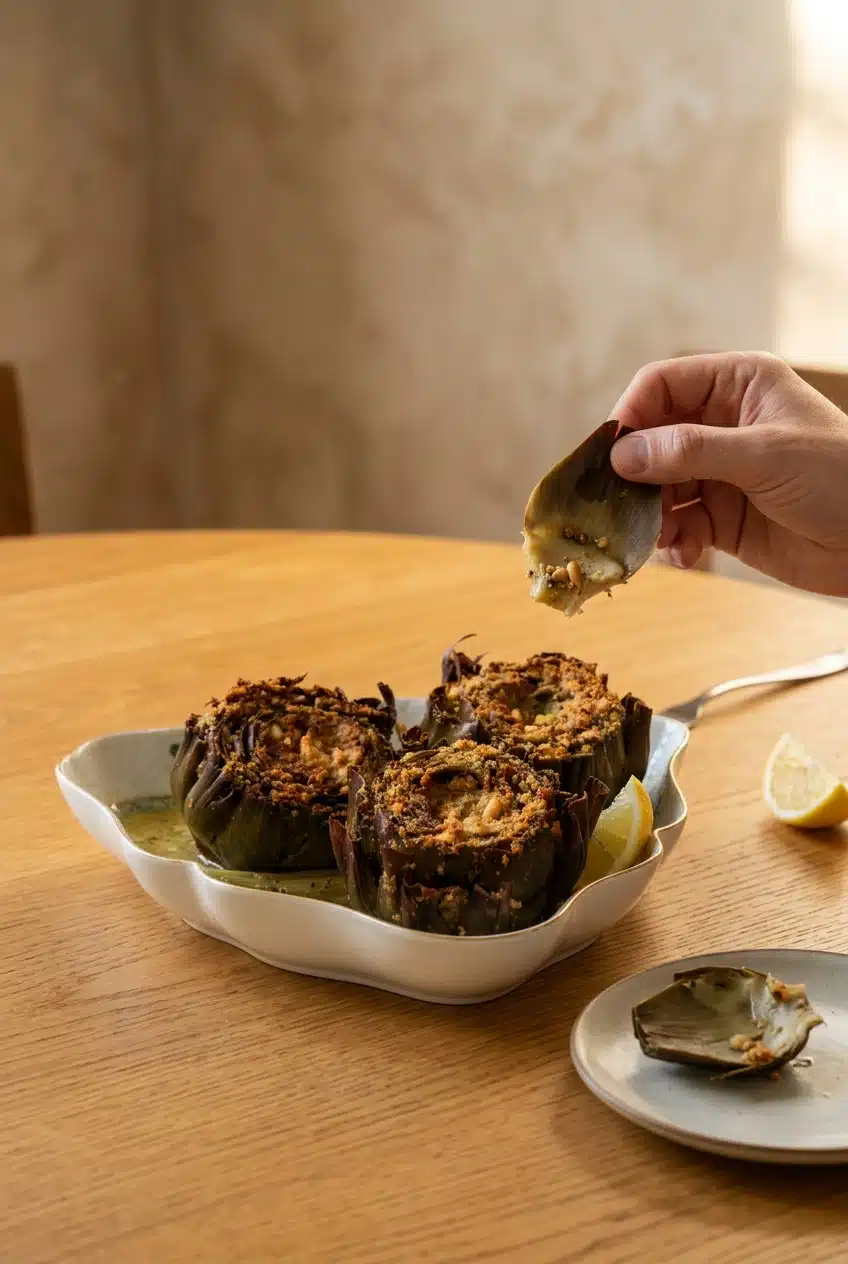
Serve the artichoke upright as a hands-on appetizer, with a small plate nearby for discarded leaves. Start from the outside and pull off a leaf. Hold it by the tip, then draw the fleshy end through your teeth to scrape off the soft flesh and stuffing. Set the tough remainder aside.
The inner leaves are thinner and more delicate. Once you’ve worked your way through them, you’ll reach the heart, the solid piece at the bottom where the leaves were attached. With the fuzzy choke already removed, you can cut the heart into bites with a fork and knife and scoop up any crumbs that fell into the plate.
Simple Pairing Ideas
Offer lemon on the side for anyone who wants a brighter bite. The garlic and herbs go nicely with roasted chicken, and the lemony cooking liquid makes the artichoke a good companion to simply prepared seafood.
Bring It Together
Use the method above to keep the artichoke whole and get the filling into the leaf pockets. Check the flesh with the tip of a knife before you uncover the dish; the color of the crumbs can’t tell you whether the leaves are tender.
Once the top has browned and an outer leaf releases with a gentle tug, bring it to the table. Set out a plate for the leaves and save a bite of the heart for last.
Frequently Asked Questions
How Do I Prepare Whole Artichokes for Stuffing?
Trim the stem flat, remove the small lower leaves, and cut across the top. Scoop out the fuzzy choke without cutting into the heart. Dip the trimmed artichoke in lemon water, then drain it and gently spread the leaves to make room for the filling.
What Cheese Goes Well With Artichokes?
Parmesan is nutty and savory, which works well with the lemon and herbs in this filling. Romano is an optional choice if you want a sharper, saltier flavor.
How Do I Eat a Stuffed Artichoke?
Pull off a leaf and scrape the tender base and filling with your teeth. Discard the tough part of the leaf. Once the leaves are gone, eat the heart underneath.
Are Stuffed Artichokes Best Served Fresh?
Yes, if you want a crisp breadcrumb top. Leftover crumbs soften in the refrigerator, and warming them in the oven can help dry the surface without recreating the freshly baked texture exactly.
Why Does My Stomach Hurt After Eating Artichokes?
Stomach pain after a meal doesn’t tell you whether the artichoke or another ingredient was the cause. If the pain keeps coming back or concerns you, talk with a healthcare professional. It may help to note what you ate and when the symptoms started.
Stuffed Artichokes

Equipment
- Small container
- large bowl
- Serrated Knife
- Teaspoon
- Grater
- Mixing Bowl
- Kitchen towel
- Small baking dish or soufflé cup
- Aluminum Foil
- Paring knife
Ingredients
- 6 tablespoons extra-virgin olive oil ($0.35)
- 4 cloves garlic peeled and crushed ($0.32)
- 1 large artichoke ($0.89)
- 3 lemons ($1.35)
- 3 tablespoons coarse dry breadcrumbs ($0.02)
- 1/2 hard-boiled egg chopped ($0.06)
- 3 tablespoons toasted pine nuts coarsely chopped ($0.65)
- 1 teaspoon fresh mint chopped ($0.18)
- 1/2 anchovy fillet finely chopped ($0.17)
- 1 teaspoon. fresh grated Parmesan cheese ($0.12)
- 1/8 teaspoon crushed red pepper finely chopped ($0.02)
- 1 tablespoon fresh Italian parsley chopped ($0.03)
- 1 tablespoon unsalted butter ($0.15)
- Salt ($0.01)
Instructions
- Combine the crushed garlic and olive oil in a small container and let them infuse in the refrigerator for 30 minutes to 2 hours. Make the garlic oil for this bake rather than setting it aside for another meal.
- Heat the oven to 400 °F and grate 1 teaspoon of zest from one lemon before juicing all the lemons. Stir half the juice into a large bowl of cool water, keeping the zest, the other half of the juice, and two squeezed lemon halves separate.
- Slice off the stem so the artichoke stands upright, then pull away one or two rows of small leaves around the bottom. Use a serrated knife to cut through the top third so you can reach the center.
- Scoop out the fuzzy choke with a teaspoon, stopping when you reach the solid heart underneath. Dip the artichoke into the lemon water as you work to limit browning, then leave it submerged while you make the filling.
- Toss the breadcrumbs with the chopped egg, mint, pine nuts, anchovy, Parmesan, lemon zest, half the crushed red pepper, 2 teaspoons of garlic-infused oil, and a pinch of parsley. Mix until the oil and seasonings are evenly distributed, then add salt if needed.
- Lift the artichoke out of the lemon water and let it drain on a kitchen towel for a few minutes. Turn it cut side down and tap it gently against the counter to release water trapped between the leaves.
- Ease the leaves outward from the center and tuck the breadcrumb mixture into the gaps as well as the hollow left by the choke. The leaves should stay attached, with crumbs visible in the spaces between them.
- Set the artichoke upright in a small baking dish or soufflé cup and pour in enough fresh water to come one-third of the way up its sides. Season the water with salt, the remaining crushed red pepper, and 3 tablespoons of garlic-infused oil, then add the remaining parsley and lemon juice.
- Dot the top with small pieces of butter, seal the dish tightly with aluminum foil, and poke several small holes in the foil. Bake for 35 to 45 minutes, until a paring knife slips into a leaf base with only slight resistance.
- Take off the foil and return the dish to the oven for about 10 minutes. Look for a browned breadcrumb surface and an outer leaf that pulls away easily.
- Transfer the artichoke to a shallow soup plate. Spoon some of the cooking liquid around the base so the browned crumbs on top stay exposed.