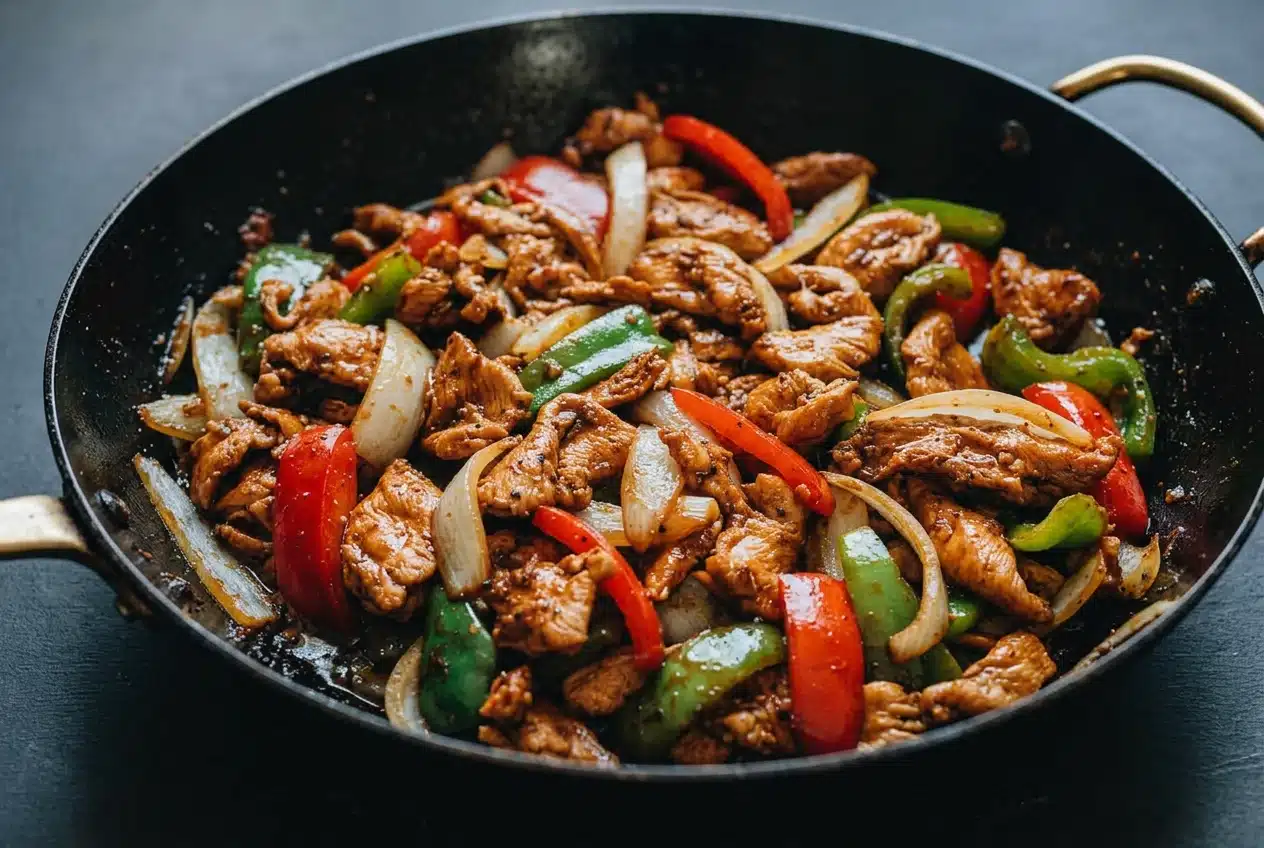
Black pepper chicken is a Chinese-American stir-fry of marinated chicken, onions, and bell peppers in a glossy, savory pepper sauce. The method below walks you through a quick sear, fragrant aromatics, and a sauce that clings to every bite.
This black pepper chicken gets its character from coarsely ground pepper, fresh ginger, garlic, and soy sauce. The vegetables keep their bite, while a thin cornstarch coating helps the chicken stay tender.
A large skillet and organized ingredients make the fast cooking manageable. The key is giving the chicken its own searing stage before bringing everything together. Watch for that glossy finish.
Set the mixed sauce beside the stove before heating the skillet so you can stir it again just before pouring.
Ingredients
Chicken provides the tender center, cornstarch creates a delicate coating, and soy sauces build savory flavor and color. Wine adds aroma, sugar balances the pepper, and ginger, garlic, onions, and bell peppers bring fragrance, sweetness, and crunch.
- 1 lb chicken breasts (or thighs) (, sliced against the grain into 1/4” (5-mm) thick pieces)
- 1 tablespoon light soy sauce ((or soy sauce))
- 1 tablespoon Shaoxing wine ((or dry sherry))
- 1 tablespoon cornstarch
- 1/2 cup chicken broth
- 2 tablespoons light soy sauce ((or soy sauce))
- 2 tablespoons Shaoxing wine ((or dry sherry))
- 2 teaspoons dark soy sauce ((or soy sauce))
- 1 1/2 tablespoons sugar
- 2 teaspoons coarsely ground black pepper
- 1/8 teaspoon salt
- 2 tablespoons peanut oil ((or vegetable oil))
- 1 tablespoon minced ginger
- 2 cloves garlic (, minced)
- 1/2 white onion (, chopped)
- 2 bell peppers (, chopped (I used mixed colors))
The first soy sauce and wine entries belong to the chicken marinade. The broth, remaining soy sauces and wine, sugar, pepper, and salt form the sauce; the oil, aromatics, onion, and peppers handle the skillet stage.
Black Pepper vs. White Pepper
Coarsely ground black pepper brings warm, floral aroma, noticeable bursts of heat, and dark flecks throughout the glaze. Fine black pepper distributes more evenly but gives a less distinct texture. White pepper has an earthier, more pungent character, so it changes the flavor rather than disappearing into the same sauce.
I’d choose coarse black pepper here for the little peppery bursts against the sweet bell peppers, rather than grinding it into a fine powder.
Light Soy Sauce, Dark Soy Sauce, and Shaoxing Wine
Light soy sauce supplies the main savory seasoning. “Light” describes the style, not a reduced-sodium product. Dark soy sauce contributes deeper brown color and a rounder flavor, while Shaoxing wine adds a fermented, aromatic note.
Cornstarch forms the thin coating around the chicken and contributes to the finished sauce’s body. Keep the listed amount intact rather than adding more automatically: the goal is a glaze, not a heavy gravy.
Pantry Substitutions
- Regular soy sauce: The listed alternative works when light or dark soy sauce isn’t available, though the finished color and flavor will differ.
- Dry sherry: This is the listed alternative to Shaoxing wine and keeps an aromatic wine element in the dish.
- Wine-free direction: Broth offers a different flavor direction, but it isn’t a flavor-equivalent replacement for wine or a validated substitution here.
How to Make Black Pepper Chicken
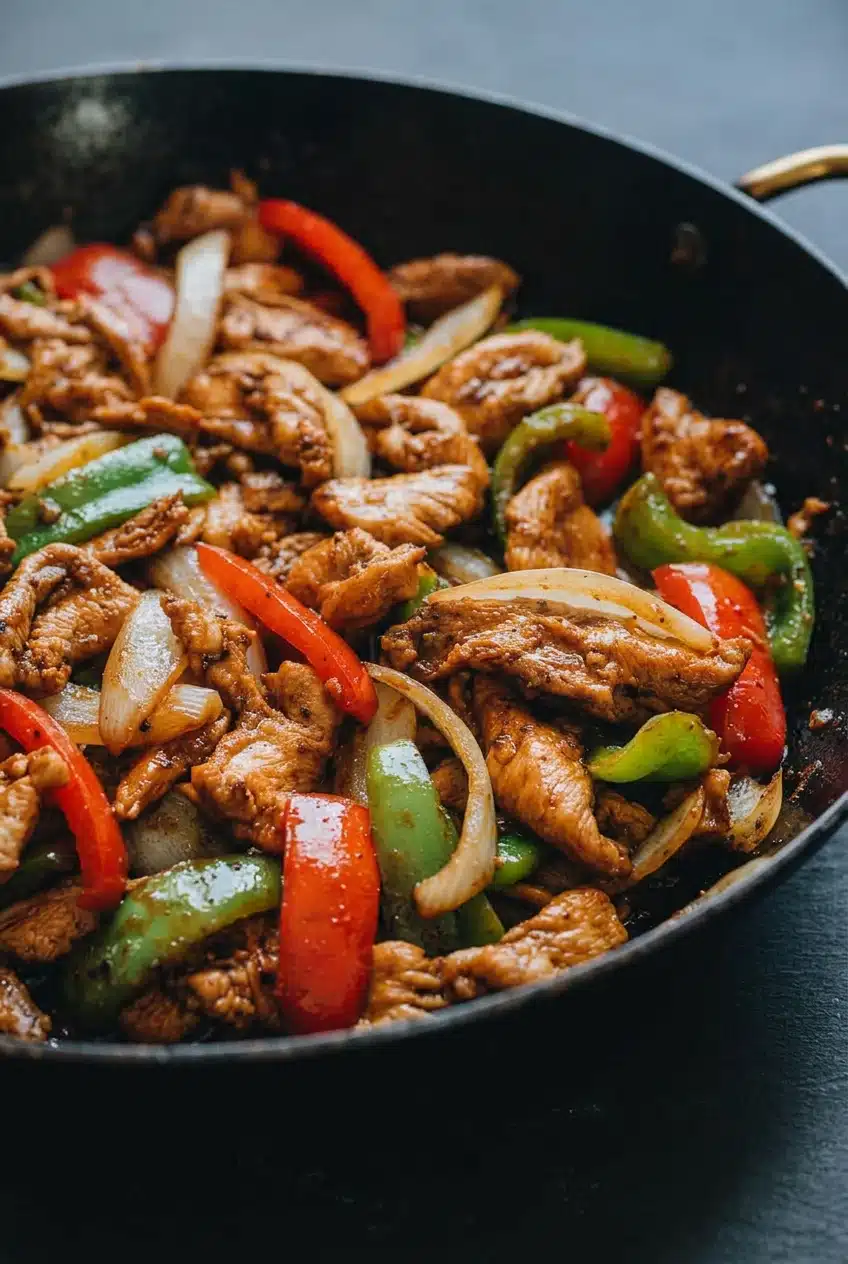
Prepare the ingredients first, then cook without long pauses. The chicken leaves the skillet while you cook the vegetables, which limits its exposure to heat and gives the aromatics room to become fragrant.
- Prep Time
- 20 minutes
- Cook Time
- 5 minutes
- Total Time
- 25 minutes
- Servings
- 4
- Use your hands to gently coat the sliced chicken with the marinade soy sauce, Shaoxing wine, and cornstarch in a medium bowl, then leave it to marinate for 10 to 15 minutes.
A thin film should cover the pieces rather than a thick, doughy coating. - Whisk the sauce ingredients together in a small bowl and place it within reach of the stove.
The pepper should spread throughout the liquid, with no dry seasoning pockets remaining. - Bring 1 tablespoon of oil to heat in a large skillet over medium-high heat, then use a spatula to arrange the chicken across the pan with minimal overlap.
Each piece should contact the hot surface instead of resting in a pile. - Leave the first side to sear for about 1 minute, then turn the pieces and cook for another 30 seconds to 1 minute, stirring occasionally before moving them to a plate.
Look for light browning on both sides while the centers remain partly cooked at this stage. - Pour the remaining 1 tablespoon of oil into the skillet, stir in the ginger and garlic until fragrant, then add the onion and bell peppers and stir-fry for 20 seconds.
The aromatics should smell lively rather than scorched, and the vegetables should retain their crisp character. - Stir the sauce thoroughly again before pouring it into the skillet, then immediately work it through the vegetables with a spatula for a few seconds.
The thickening cue is a glossy consistency that coats the back of a spoon. - Return the chicken to the sauce and toss to coat, ensuring it finishes cooking through before switching off the heat and moving the skillet off the burner.
The glaze should cover the chicken and vegetables evenly, but browning alone does not establish poultry doneness. - Empty the skillet onto a large serving plate immediately and serve the dish hot as a main course.
Prompt transfer keeps the ingredients from continuing to cook against the hot skillet.
- Estimated Calories per Serving
- 269 kcal
- Estimated Sodium per Serving
- 674 mg
Pro Tips and Common Stir-Fry Mistakes
Most problems begin with crowded chicken, disturbed coating, or a sauce that hasn’t been stirred. Use these checkpoints before changing the ingredients.
- Chewy chicken: Uneven pieces and cuts along the grain can give an inconsistent bite. Follow the against-the-grain slicing specification and keep the pieces uniform.
- Pale, steaming chicken: Overlapping pieces trap moisture and reduce contact with the skillet. Spread the chicken promptly across the large pan instead of leaving it heaped in the middle.
- Coating stuck to the pan: Scraping immediately can pull away the cornstarch film. Allow the initial sear to develop before turning the chicken.
- Dry meat or soft peppers: Keeping the chicken in the skillet throughout the vegetable stage extends its cooking. Follow the separate stages and transfer the finished dish out of the pan promptly.
- Uneven or thin sauce: Settled starch and an incomplete final stir can create inconsistent thickening. Stir immediately before pouring, then use the spoon-coating cue rather than judging the sauce while it is still in the bowl.
- Overly thick glaze: Continuing to cook beyond the coating cue can make the sauce cling too heavily. Move into the final toss as soon as the glaze reaches that point.
Pepper intensity is a preference. Keep the listed amount for this version, then use the result to guide a deliberately milder or bolder variation next time.
Takeout Variations and Vegetable Swaps
Keep optional changes separate from the measured recipe so you know which version you’re making. For a different vegetable mix, consider these flavor and texture directions:
- Snap peas: A crisp, sweet alternative for a greener vegetable mix.
- Carrots: An option for more earthy sweetness and color.
- Broccoli: A different texture, with florets that catch the peppery glaze.
Boneless Skinless Chicken Thighs
Thighs are already an alternative in the ingredient list. They offer richer flavor and a softer, more succulent texture, while breasts have a leaner character and firmer bite. Neither choice calls for abandoning the uniform slicing or separate chicken-and-vegetable stages.
Panda Express / Celery-Forward Takeout Style
Celery and oyster sauce can steer the dish toward a familiar celery-forward takeout style. Celery contributes a distinctive crisp, aromatic bite; oyster sauce adds a deeper savory character. These are optional changes to the pepper-and-onion version, not a claim of an exact restaurant copy.
Extra-Spicy Chili and Black Pepper Style
Fresh green chilies or dried red chilies offer heat beyond black pepper’s warm bite. Treat either as an optional flavor direction while keeping the pepper recognizable. For a separate chili-forward dinner, try Szechuan chicken.
Dietary Adaptations and Nutrition Considerations
Review the whole dish when adapting it, including broth, cooking wine, and bottled sauces. A single substitution doesn’t establish that every ingredient meets your needs.
Gluten-Free and Vegetarian Tofu Adaptations
Certified gluten-free tamari is an adaptation to consider for the soy sauces, with careful product-label verification. Dry sherry is already a wine alternative, but neither that choice nor a tamari swap establishes gluten-free suitability for the entire dish; review every packaged ingredient.
Firm tofu offers a vegetarian direction, but swapping only the chicken is incomplete because the sauce includes chicken broth. Review the broth and all sauces too, especially if considering the optional oyster sauce. This is a separate adaptation, not an equivalent method with established timing.
Understanding Calorie and Sodium Factors
The estimates beside the method apply to the listed recipe and serving basis. If you change the chicken, oil, sauce products, or portions, recalculate rather than carrying those estimates over unchanged. Account for rice or noodles separately.
Best Sides to Serve with This Dish
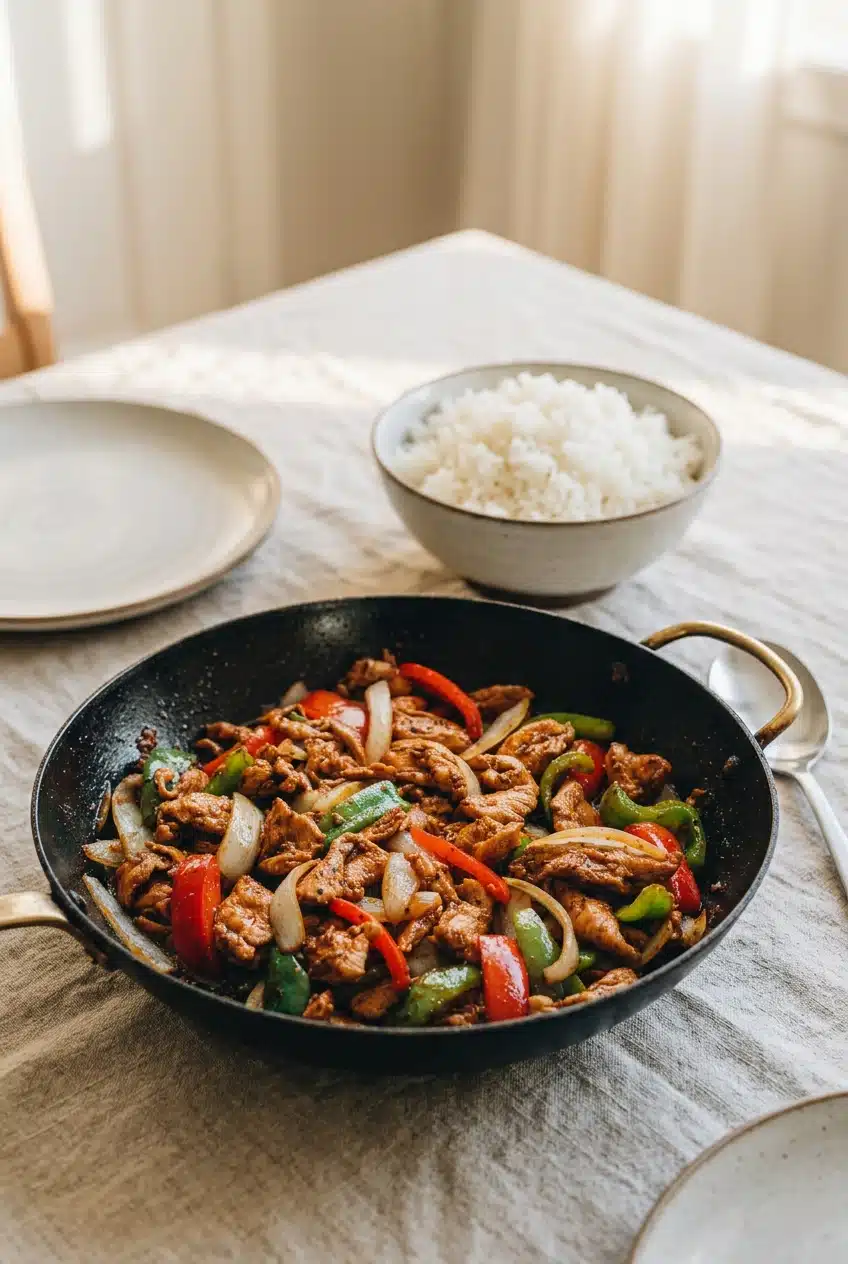
Choose a side that gives the bold sauce somewhere to go without competing with the pepper.
- Steamed jasmine rice or brown rice: Both provide a mellow contrast and catch the glaze.
- Rice noodles or lo mein: Noodles make a satisfying pairing; chicken lo mein can serve as a second dish for a larger takeout-style spread.
- Vegetable fried rice: A savory option when you want more texture alongside the chicken.
- Steamed or stir-fried greens: Their fresh flavor contrasts with the rich, peppery sauce.
Prep Organization and Leftover Planning
Organize the sliced chicken and its marinade, chopped vegetables, aromatics, and mixed sauce as distinct components before cooking. This follows the cooking sequence and prevents a chopping pause while garlic sits in hot oil.
For leftovers, keep the dish covered and chilled rather than treating its freshly cooked serving instructions as storage advice. Confirm appropriate poultry storage and reheating practices before planning leftover meals; no storage duration or reheating schedule is established here.
Bringing Restaurant-Style Flavor Home
The satisfying result comes from a thin chicken coating, a lightly browned sear, and a peppery sauce that coats the back of a spoon. Fresh aromatics and crisp peppers keep that glossy finish lively.
Keep the cooking stages distinct and have the serving plate ready. Once everything comes together, get it out of the hot skillet and enjoy the contrast of tender chicken and crisp vegetables.
Frequently Asked Questions
What Is Black Pepper Chicken Made Of, and How Is It Different From Panda Express Black Pepper Chicken?
This version combines marinated chicken, ginger, garlic, onion, and bell peppers with a soy-based black pepper sauce. Optional celery and oyster sauce move it toward a celery-forward takeout style without making it an exact restaurant copy.
Should I Use Chicken Breasts or Chicken Thighs for Black Pepper Chicken?
Both are listed options: choose breasts for a leaner character or thighs for richer flavor and a softer texture. With either cut, keep the slices uniform and follow the separate searing and vegetable stages.
Does Black Pepper Taste Good on Chicken, and Why Use Coarsely Ground Black Pepper?
Yes. Its warm, floral flavor complements soy sauce, ginger, garlic, and sweet bell peppers. Coarse pepper creates distinct bursts of flavor and visible flecks rather than the even distribution of finely ground pepper.
How Many Calories Are in Black Pepper Chicken?
Use the per-serving estimate beside the method for the listed recipe. Recalculate for ingredient changes, different portions, and any rice or noodles served alongside it.
How Should Leftover Black Pepper Chicken Be Stored and Reheated Safely?
Keep leftovers covered and chilled, and confirm appropriate poultry handling practices before storing or reheating. The cooking instructions do not establish a leftover shelf life or reheating schedule, so don’t use the stir-fry timing for that purpose.
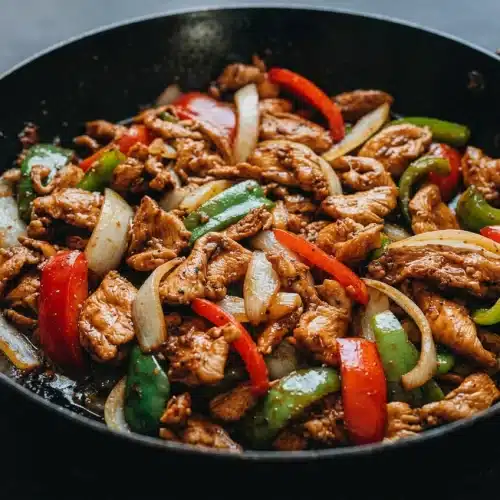
Black Pepper Chicken

Equipment
- Large Skillet
- Spatula
- Medium bowl
- Small bowl
Ingredients
- 1 lb chicken breasts (or thighs) (, sliced against the grain into 1/4” (5-mm) thick pieces)
- 1 tablespoon light soy sauce ((or soy sauce))
- 1 tablespoon Shaoxing wine ((or dry sherry))
- 1 tablespoon cornstarch
- 1/2 cup chicken broth
- 2 tablespoons light soy sauce ((or soy sauce))
- 2 tablespoons Shaoxing wine ((or dry sherry))
- 2 teaspoons dark soy sauce ((or soy sauce))
- 1 1/2 tablespoons sugar
- 2 teaspoons coarsely ground black pepper
- 1/8 teaspoon salt
- 2 tablespoons peanut oil ((or vegetable oil))
- 1 tablespoon minced ginger
- 2 cloves garlic (, minced)
- 1/2 white onion (, chopped)
- 2 bell peppers (, chopped (I used mixed colors))
Instructions
- Use your hands to gently coat the sliced chicken with the marinade soy sauce, Shaoxing wine, and cornstarch in a medium bowl, then leave it to marinate for 10 to 15 minutes. A thin film should cover the pieces rather than a thick, doughy coating.
- Whisk the sauce ingredients together in a small bowl and place it within reach of the stove. The pepper should spread throughout the liquid, with no dry seasoning pockets remaining.
- Bring 1 tablespoon of oil to heat in a large skillet over medium-high heat, then use a spatula to arrange the chicken across the pan with minimal overlap. Each piece should contact the hot surface instead of resting in a pile.
- Leave the first side to sear for about 1 minute, then turn the pieces and cook for another 30 seconds to 1 minute, stirring occasionally before moving them to a plate. Look for light browning on both sides while the centers remain partly cooked at this stage.
- Pour the remaining 1 tablespoon of oil into the skillet, stir in the ginger and garlic until fragrant, then add the onion and bell peppers and stir-fry for 20 seconds. The aromatics should smell lively rather than scorched, and the vegetables should retain their crisp character.
- Stir the sauce thoroughly again before pouring it into the skillet, then immediately work it through the vegetables with a spatula for a few seconds. The thickening cue is a glossy consistency that coats the back of a spoon.
- Return the chicken to the sauce and toss to coat, ensuring it finishes cooking through before switching off the heat and moving the skillet off the burner. The glaze should cover the chicken and vegetables evenly, but browning alone does not establish poultry doneness.
- Empty the skillet onto a large serving plate immediately and serve the dish hot as a main course. Prompt transfer keeps the ingredients from continuing to cook against the hot skillet.