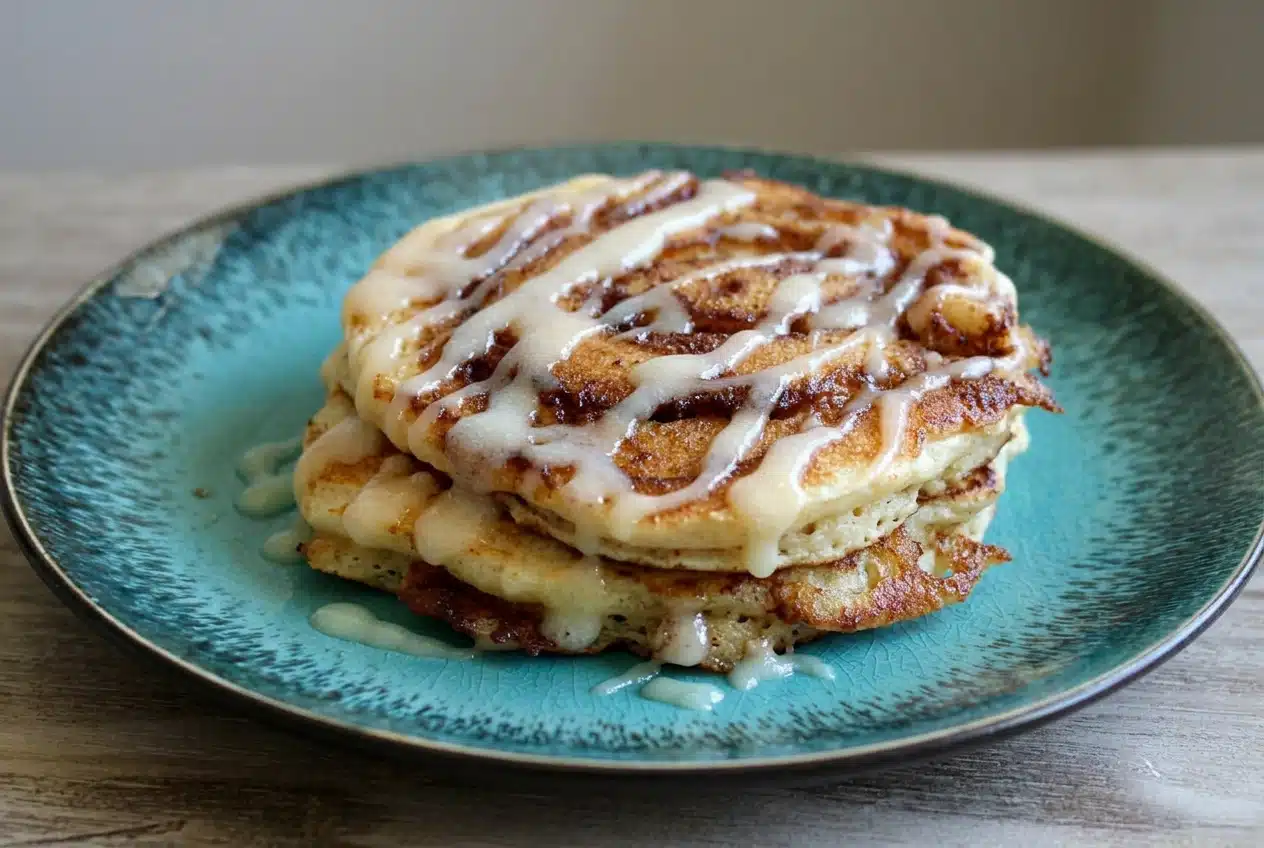
Cinnamon roll pancakes combine fluffy pancakes, a caramelized brown sugar spiral, and warm cream cheese glaze. Pipe the thickened cinnamon filling onto bubbling batter, cook gently, and flip when the underside turns golden for a defined swirl tucked into each pancake.
These pancakes bring cinnamon-roll flavor to a skillet breakfast without yeast dough. The cinnamon filling creates sweet pockets, while the tangy glaze drizzles into the spiral.
The trickiest part is keeping melted sugar where it belongs. Filling consistency and piping timing make that much easier. Watch for the bubbles.
Set the filling bag beside the skillet before cooking so it’s ready when the batter starts bubbling.
Ingredients You Need
Butter gives the swirl richness, brown sugar brings caramel flavor, and cinnamon supplies warmth. Flour and egg build the pancake’s structure, baking powder provides lift, and milk and oil keep the crumb tender. Cream cheese balances the sweet vanilla glaze.
- 4 tablespoons (½ stick) unsalted butter, (just melted (not boiling))
- 6 tablespoons packed light brown sugar
- ½ tablespoon ground cinnamon
- 4 tablespoons (½ stick) unsalted butter
- 2 ounces cream cheese, (at room temperature)
- ¾ cup powdered sugar
- ½ teaspoon vanilla extract
- 1 cup all purpose flour
- 2 teaspoons baking powder
- ½ teaspoon salt
- 1 cup milk
- 1 large egg, (lightly beaten)
- 1 tablespoon canola or vegetable oil
Prep: 25 minutes. Cook: 10 minutes. Total: 35 minutes. Yield: 8 pancakes.
Cinnamon swirl: The first butter portion carries the brown sugar and cinnamon. Just-melted butter gives the mixture time to thicken while you prepare the other components.
Pancake batter: Fresh baking powder matters for lift. Neutral canola or vegetable oil adds tenderness without competing with the cinnamon, while salt keeps the sweetness balanced.
Cream cheese glaze: Room-temperature cream cheese blends more readily into melted butter. Powdered sugar gives the glaze body, and vanilla rounds out its flavor.
I’d leave the small batter lumps alone rather than chase a perfectly smooth mixture; that’s the right stopping point here.
How to Make Cinnamon Roll Pancakes Step by Step
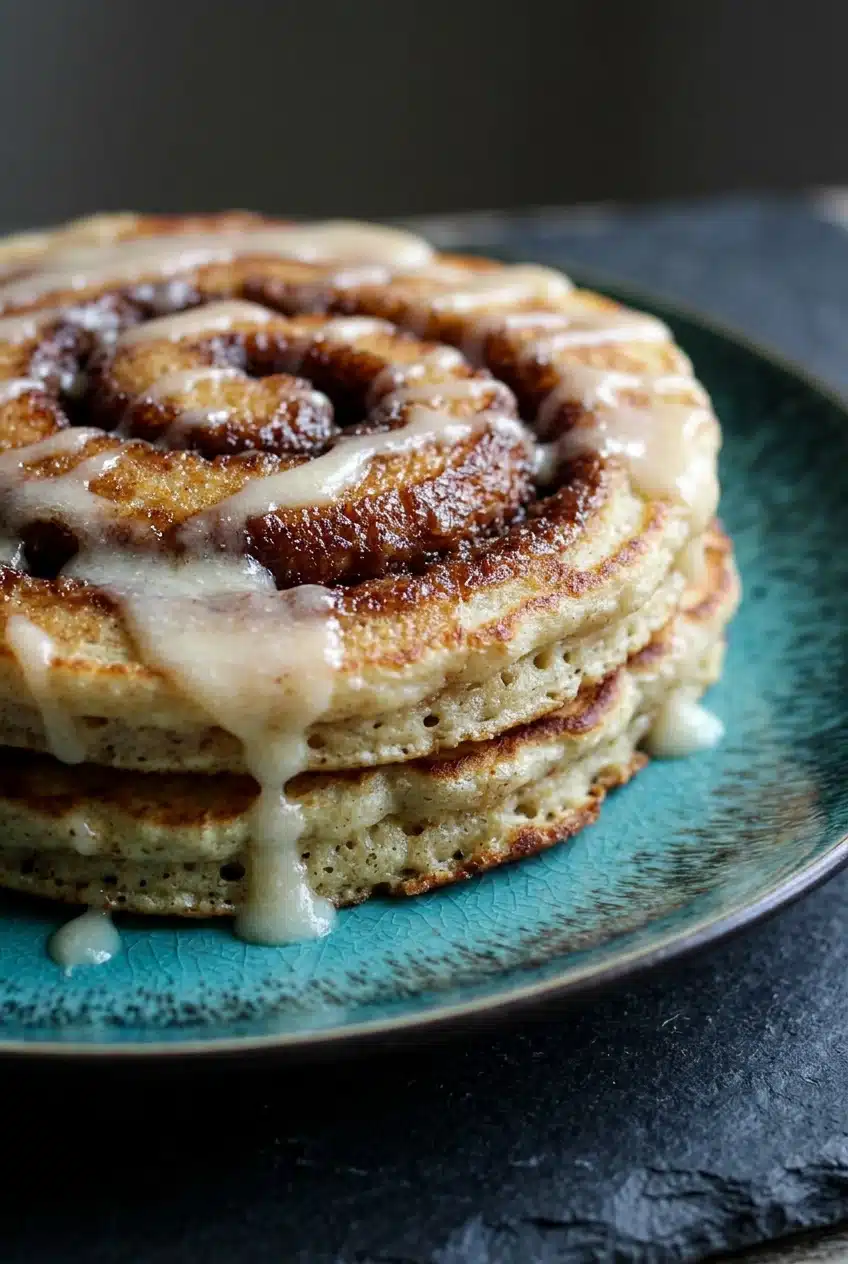
Prepare the filling first, then the glaze, followed by the batter and skillet cooking. That order lets the cinnamon mixture thicken while the other components come together.
Prepare Cinnamon Filling
- Combine the just-melted butter, brown sugar, and cinnamon in a medium bowl, then transfer the mixture to a heavy quart-sized zip-top bag and set it aside.
Before piping, the filling should look like a soft paste rather than a runny pool.
Prepare Glaze
- Melt the glaze butter in a small saucepan over low heat, switch off the burner, and whisk in the room-temperature cream cheese.
A nearly smooth mixture is the goal before adding the sugar. - Sift the powdered sugar directly into the saucepan, stir it through, add the vanilla, and set the glaze aside.
The finished mixture should look creamy and cohesive.
Prepare Pancake Batter
- Distribute the baking powder and salt through the flour with a whisk in a medium bowl, then incorporate the milk, beaten egg, and oil only until no dry flour remains.
Small lumps should remain in the moistened batter.
Cook the Pancakes
- Warm a large nonstick skillet over medium heat, coat it with nonstick spray, and portion the batter with an ice cream scoop or ⅓ cup measure, using its underside to form circles about 4 inches across.
The batter should spread into round pancakes with enough surface for a spiral. - Lower the heat to medium-low, push the filling toward one corner of its bag, and snip that corner open.
The filling should be gathered near the opening for controlled piping. - Wait for surface bubbles, then pipe a spiral from the center outward, leaving a border of plain batter around the edge.
The cinnamon filling should form a distinct line rather than cover the whole pancake. - Allow 2 to 3 minutes of cooking before turning each pancake with a thin, wide metal spatula in a gentle, quick motion.
Popping bubbles and a golden underside signal that the first side is ready. - Cook the second side for another 2 to 3 minutes, then transfer the pancake to a plate with its cinnamon side visible.
Look for a golden second side and a recessed cinnamon spiral on top. - Clear the skillet’s sugar residue with a paper towel and continue cooking the remaining batter and filling, briefly warming the glaze again if necessary before drizzling it over the pancakes.
The glaze should flow across the warm pancakes and into the cinnamon grooves.
Swirl Control and Griddle Troubleshooting Tips
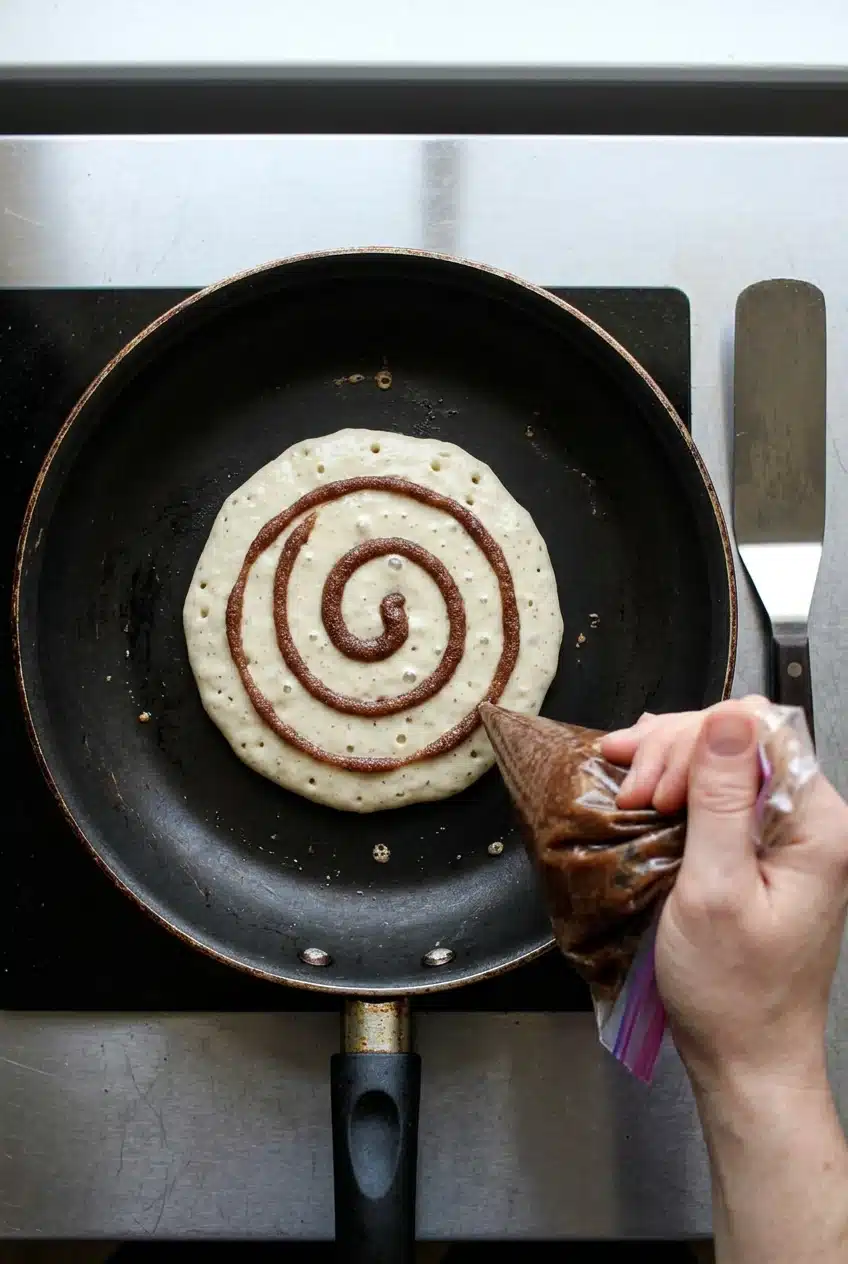
A defined spiral depends on the filling, the batter’s surface, and keeping sugar off the bare skillet.
Why Swirls Leak or Scorch
- The filling spreads into a pool: It’s likely still too warm and fluid; let it thicken slightly before piping so it holds a soft ribbon.
- The spiral runs toward the edge: Piping too early leaves it sitting on loose batter; wait for surface bubbles and stop inside the outer rim.
- The cinnamon tastes scorched: Escaped sugar darkens quickly on the skillet; preserve the medium-to-medium-low heat sequence and keep the filling within the pancake.
A batter-enriched cinnamon swirl is another optional direction, but it’s a different filling formulation. The method above uses butter, brown sugar, and cinnamon without batter mixed into the filling.
Batch Cleanup and Flipping Technique
- Later batches stick or develop dark patches: Residual sugar can scorch beneath fresh batter; wipe the skillet between batches as directed.
- The pancake folds during flipping: Support it with the thin, wide spatula and turn it promptly once the underside is golden.
- The crumb turns dense: Mixing beyond the small-lump stage can toughen the batter; stop once the flour is moistened.
For more help with batter texture, the guide to fluffy homemade pancakes focuses on building a tender crumb.
Easy Variations: Buttermilk, Pancake Mix, and Glaze Swaps
Keep these optional directions separate from the measured scratch recipe above.
Buttermilk Cinnamon Roll Pancakes
Buttermilk or soured milk offers a tangier flavor direction. For a batter developed around buttermilk rather than an improvised substitution, use a dedicated buttermilk pancake recipe.
Cinnamon Roll Pancakes With Pancake Mix
A favorite boxed pancake mix is a convenience option for the pancake component. The cinnamon spiral and cream cheese drizzle supply the signature flavor, while the mix determines the batter’s preparation requirements.
Cinnamon Roll Pancakes Without Cream Cheese
- Vanilla or powdered sugar icing: Choose this for a sweet finish without cream cheese’s tang.
- Maple syrup: Use it as an alternative topping when you don’t want icing.
- Caramel yogurt: Consider it a separate topping possibility, checking its ingredients to suit your preferences.
Dietary Adaptations and Nutrition Considerations
Ingredient changes can affect both texture and nutrition, so treat these as adaptation ideas rather than guaranteed equivalents.
Gluten-Free and Dairy-Free Adaptations
- Gluten-free direction: Consider a gluten-free baking blend intended for pancakes, following its preparation guidance.
- Dairy-free direction: Plant-based milk, butter alternatives, and cream cheese alternatives are possible ingredients to explore.
- Allergy considerations: Check every product label rather than assuming an ingredient swap makes the finished dish suitable.
Different blends and dairy alternatives may change browning, thickness, and glaze consistency. Any nutrition estimate for the measured recipe would also need recalculating after substitutions or topping changes.
Serving Ideas and Cozy Breakfast Pairings
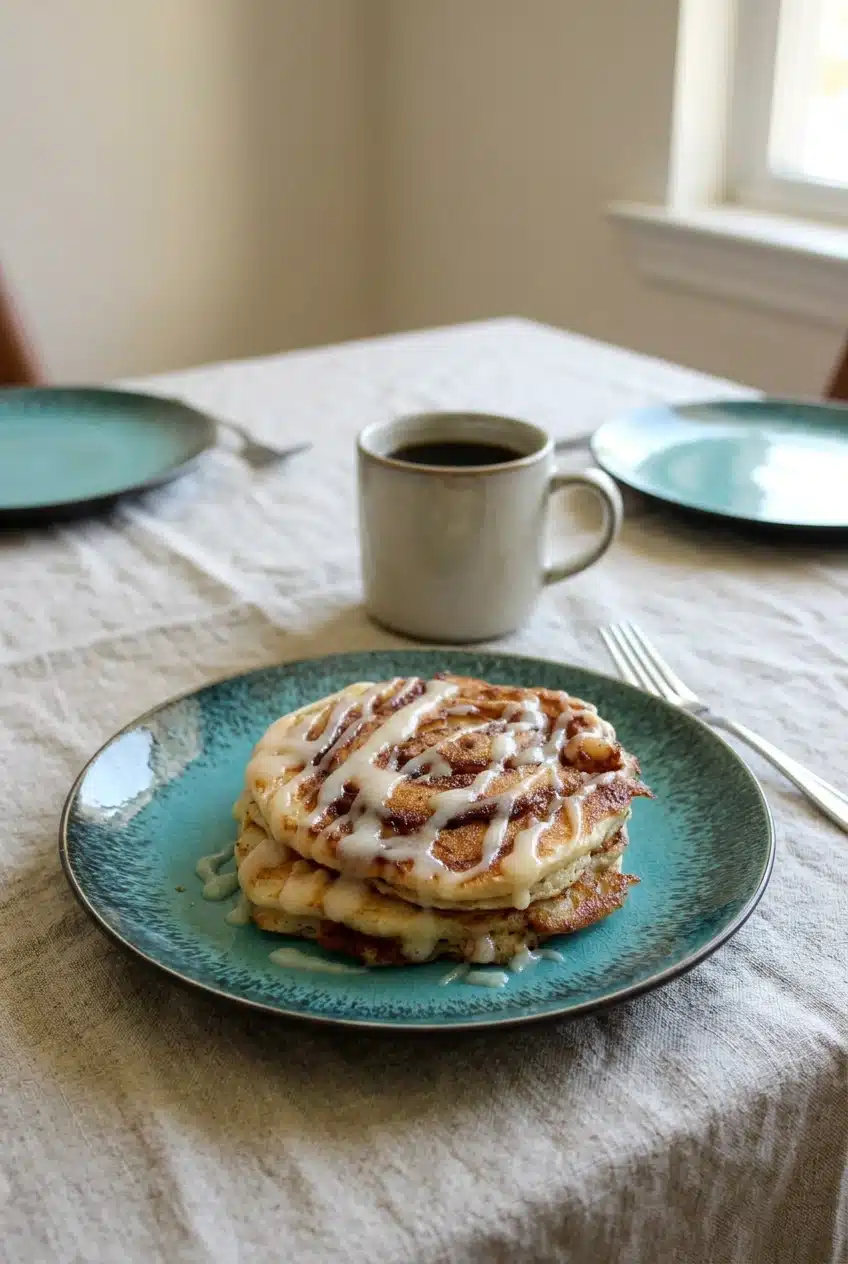
Drizzle the warm glaze over the pancakes so it settles into the cinnamon grooves.
- A sweet finish: Add an optional dusting of powdered sugar instead of piling on more toppings.
- A brunch plate: Pair the pancakes with scrambled eggs or another savory breakfast favorite.
- Something to sip: Serve coffee or a spiced latte alongside.
Planning Prep and Finishing the Glaze
For an organized cooking session, measure the components and clear space beside the skillet before heating it. The filling and glaze come first, leaving you free to focus on the pancakes once the batter is mixed.
Finish each portion with glaze when serving. If the glaze thickens while you cook, the method allows a brief rewarming; this is a finishing step, not a reheating plan for stored leftovers.
Bringing Bakery-Style Pancakes to Your Kitchen
A fluffy pancake, a defined cinnamon spiral, and warm cream cheese glaze give this breakfast its appeal. Surface bubbles are your cue to pipe, not a perfectly smooth or fully set top.
Use the recipe card above for exact quantities and timing. Keep the filling inside the rim, and let that golden underside guide your flip.
Frequently Asked Questions
Can You Make Cinnamon Roll Pancakes With Pancake Mix?
Yes, pancake mix is an optional convenience direction for the batter. Use the mix’s preparation guidance and keep the cinnamon-swirl and glaze style described above.
How Do You Make Cinnamon Roll Pancakes Without Cream Cheese?
Choose vanilla or powdered sugar icing instead of the cream cheese glaze. Maple syrup is another optional finish.
How Do You Keep the Cinnamon Swirl From Leaking or Burning?
Use thickened filling, wait for surface bubbles, and leave a plain batter border. Follow the gentle heat sequence and wipe sugar residue from the skillet between batches.
Are These Pancakes Best Served Fresh?
Serving them freshly cooked gives you the intended warm pancake and flowing glaze combination. The method above focuses on cooking and serving rather than preserving finished pancakes.
How Long Do Leftover Cinnamon Roll Pancakes and Cream Cheese Glaze Stay Fresh?
There isn’t a verified storage duration for this particular pancake-and-glaze combination. Keep leftovers covered and chilled as a precaution, and don’t treat the glaze’s brief finishing rewarm as leftover-handling guidance.
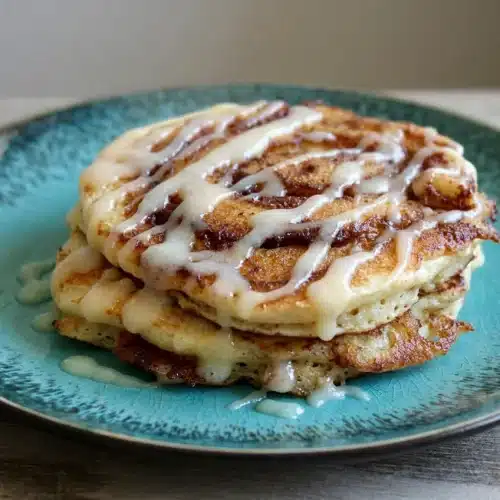
Cinnamon Roll Pancakes

Equipment
- Medium bowl
- Quart-sized zip-top bag
- Small saucepan
- Whisk
- Large nonstick skillet
- Ice cream scoop or ⅓ cup measure
- Thin, wide metal spatula
Ingredients
- 4 tablespoons unsalted butter (½ stick), (just melted (not boiling))
- 6 tablespoons packed light brown sugar
- ½ tablespoon ground cinnamon
- 4 tablespoons unsalted butter (½ stick)
- 2 ounces cream cheese (at room temperature)
- ¾ cup powdered sugar
- ½ teaspoon vanilla extract
- 1 cup all purpose flour
- 2 teaspoons baking powder
- ½ teaspoon salt
- 1 cup milk
- 1 large egg (lightly beaten)
- 1 tablespoon canola or vegetable oil
Instructions
Prepare Cinnamon Filling
- Combine the just-melted butter, brown sugar, and cinnamon in a medium bowl, then transfer the mixture to a heavy quart-sized zip-top bag and set it aside. Before piping, the filling should look like a soft paste rather than a runny pool.
Prepare Glaze
- Melt the glaze butter in a small saucepan over low heat, switch off the burner, and whisk in the room-temperature cream cheese. A nearly smooth mixture is the goal before adding the sugar.
- Sift the powdered sugar directly into the saucepan, stir it through, add the vanilla, and set the glaze aside. The finished mixture should look creamy and cohesive.
Prepare Pancake Batter
- Distribute the baking powder and salt through the flour with a whisk in a medium bowl, then incorporate the milk, beaten egg, and oil only until no dry flour remains. Small lumps should remain in the moistened batter.
Cook the Pancakes
- Warm a large nonstick skillet over medium heat, coat it with nonstick spray, and portion the batter with an ice cream scoop or ⅓ cup measure, using its underside to form circles about 4 inches across. The batter should spread into round pancakes with enough surface for a spiral.
- Lower the heat to medium-low, push the filling toward one corner of its bag, and snip that corner open. The filling should be gathered near the opening for controlled piping.
- Wait for surface bubbles, then pipe a spiral from the center outward, leaving a border of plain batter around the edge. The cinnamon filling should form a distinct line rather than cover the whole pancake.
- Allow 2 to 3 minutes of cooking before turning each pancake with a thin, wide metal spatula in a gentle, quick motion. Popping bubbles and a golden underside signal that the first side is ready.
- Cook the second side for another 2 to 3 minutes, then transfer the pancake to a plate with its cinnamon side visible. Look for a golden second side and a recessed cinnamon spiral on top.
- Clear the skillet’s sugar residue with a paper towel and continue cooking the remaining batter and filling, briefly warming the glaze again if necessary before drizzling it over the pancakes. The glaze should flow across the warm pancakes and into the cinnamon grooves.