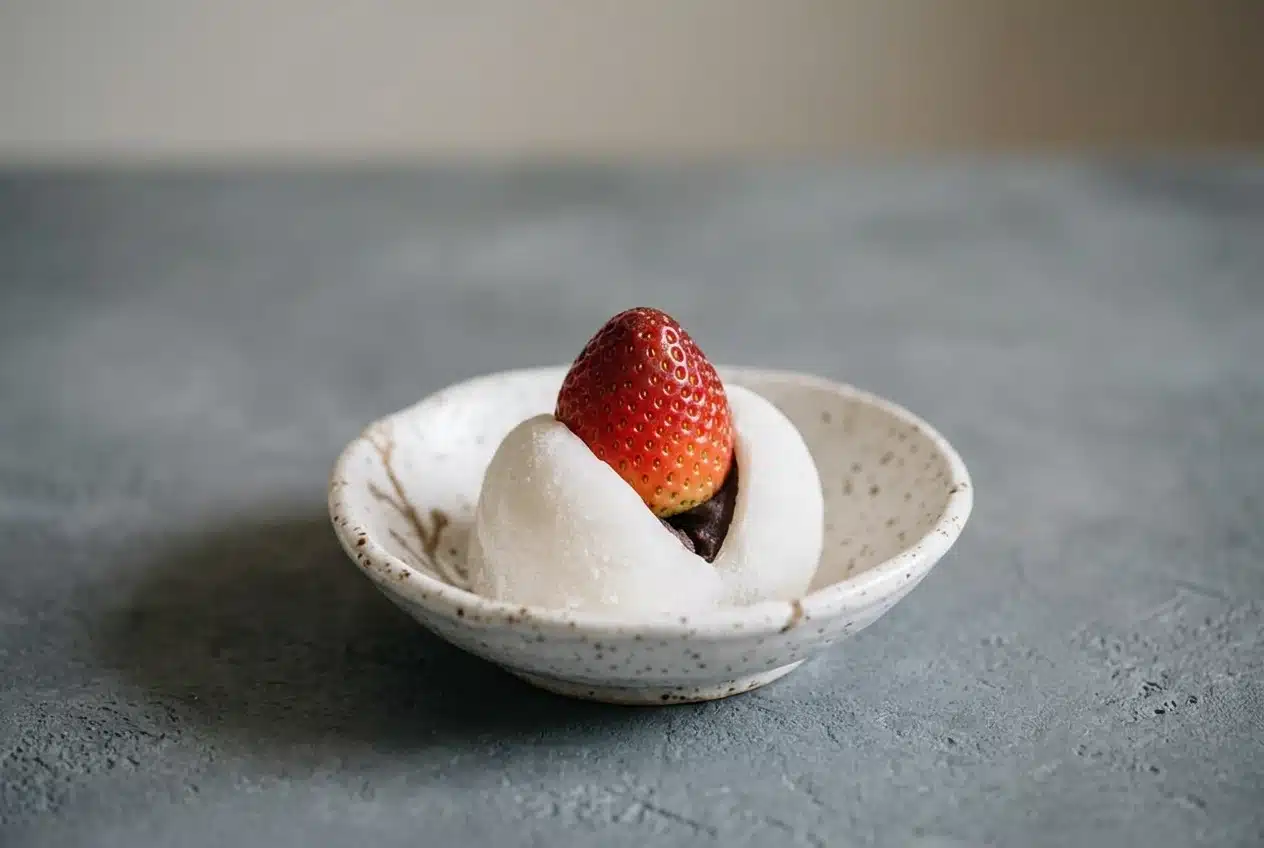
Strawberry daifuku is a Japanese sweet with a whole strawberry and sweet bean paste inside a soft, chewy mochi wrapper. This microwave method walks you through cooking the dough until translucent, then wrapping and sealing each filled round.
A bite of strawberry daifuku brings together tart berry juice, mellow white bean paste, and pillowy rice dough. The filling stays distinct, giving you three contrasting textures rather than one uniform sweetness.
You don’t need mochi-pounding equipment, but you do need the right rice flour and a clear idea of what cooked dough looks like. The glossy finish is your clue.
Keep the potato starch within reach before microwaving the dough so your wrapping surface is ready when you need it.
Essential Ingredients and Flour-to-Bean-Paste Choices
Shiratamako and water form the elastic wrapper, while sugar adds sweetness and helps soften its texture. White bean paste gives the filling creamy structure, strawberries bring tart freshness, and potato starch keeps the sticky dough manageable.
- 180 g Shiratamako
- 30 g sugar
- 200 ml water
- Katakuriko (potato starch *1)
- 180 g sweet white bean paste (*2)
- 6 medium sized strawberry
Shiratamako vs. Mochiko (and Why Regular Rice Flour Fails)
Look for Japanese glutinous rice flour, also called sweet rice flour. Shiratamako usually looks granular rather than powdery, but those granules hydrate in the batter and produce a smooth, springy mochi.
Mochiko comes from the same type of sticky rice but has a finer, powdery appearance. It’s an optional alternative, though its handling and finished chew can differ. This recipe’s microwave schedule is written for shiratamako.
Regular rice flour is not interchangeable here. A package labeled simply “rice flour” may contain non-glutinous rice, which won’t give this wrapper its characteristic stretch. Check the rice type rather than relying on the package color or flour’s appearance.
Smooth Red Bean Paste (Koshian) vs. Sweet White Bean Paste (Shiroan)
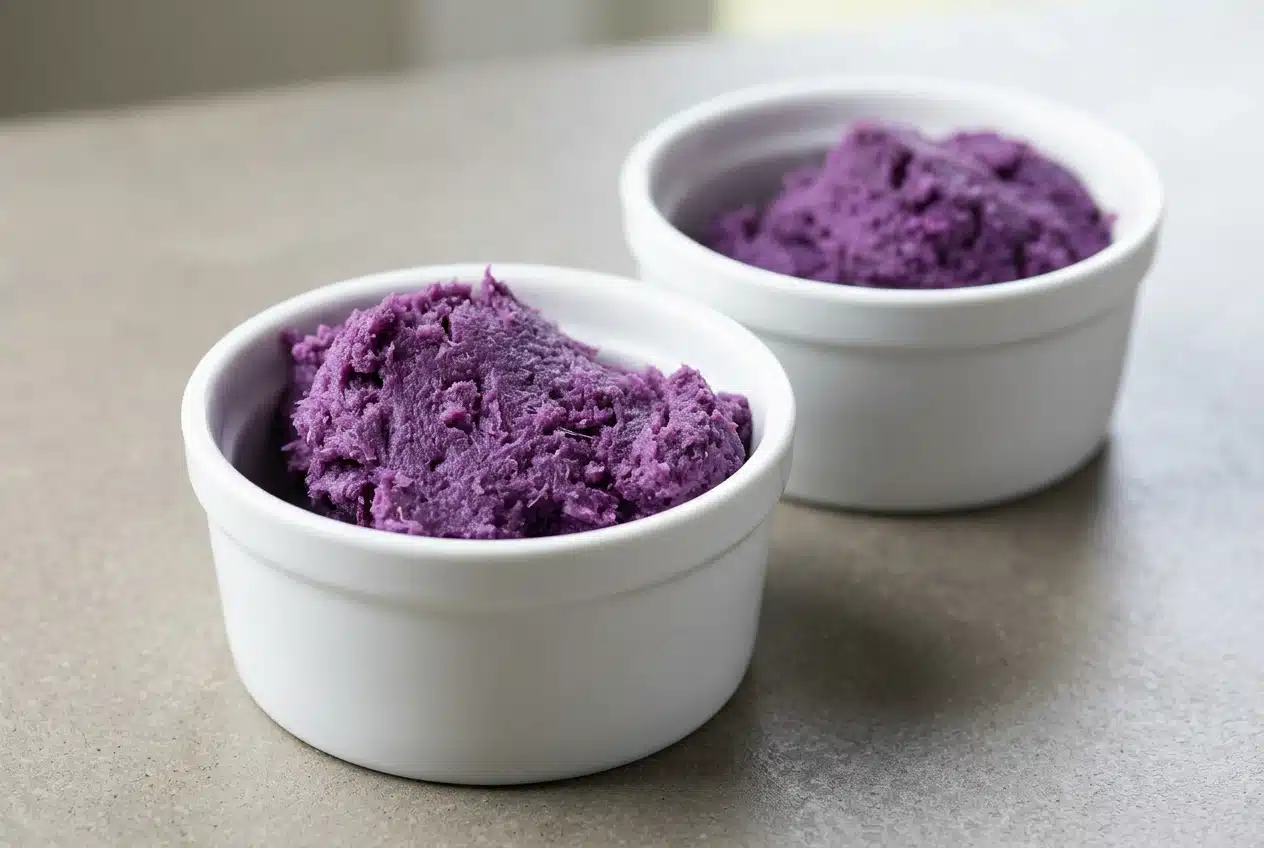
Sweet white bean paste, or shiroan, is the filling used here. Its pale color and mild bean flavor let the strawberry stand out. Choose sweetened paste intended for Japanese confections, not plain mashed white beans.
For an optional red bean version, smooth koshian offers deeper, earthier sweetness and a dark border around the berry. Chunky tsubuan contains pieces of adzuki bean skin, giving a more rustic texture and a less even surface beneath the mochi.
A paste that holds a rounded shape is easier to enclose than one that spreads. Smoothness helps, but consistency matters too: a loose filling can shift while you gather the wrapper.
Choosing Strawberries and Dusting Starch
Choose evenly shaped, ripe medium berries for the recipe. Compact berries are easier to enclose than broad, irregular ones because the dough doesn’t have to stretch around pronounced shoulders or multiple tips.
Katakuriko potato starch provides a dry barrier between mochi, hands, and the rolling mat. It belongs on the outside for handling, not in the batter. Cornstarch is an optional dusting substitute.
I’d choose a compact berry over an impressive oversized one here; a balanced filling makes the wrapping much less fiddly.
The listed ingredients don’t call for dairy or eggs. If you need vegan, dairy-free, or gluten-free suitability, check the labels on the flour, starch, and commercial bean paste rather than assuming every product fits.
How to Make and Wrap Strawberry Daifuku Step by Step
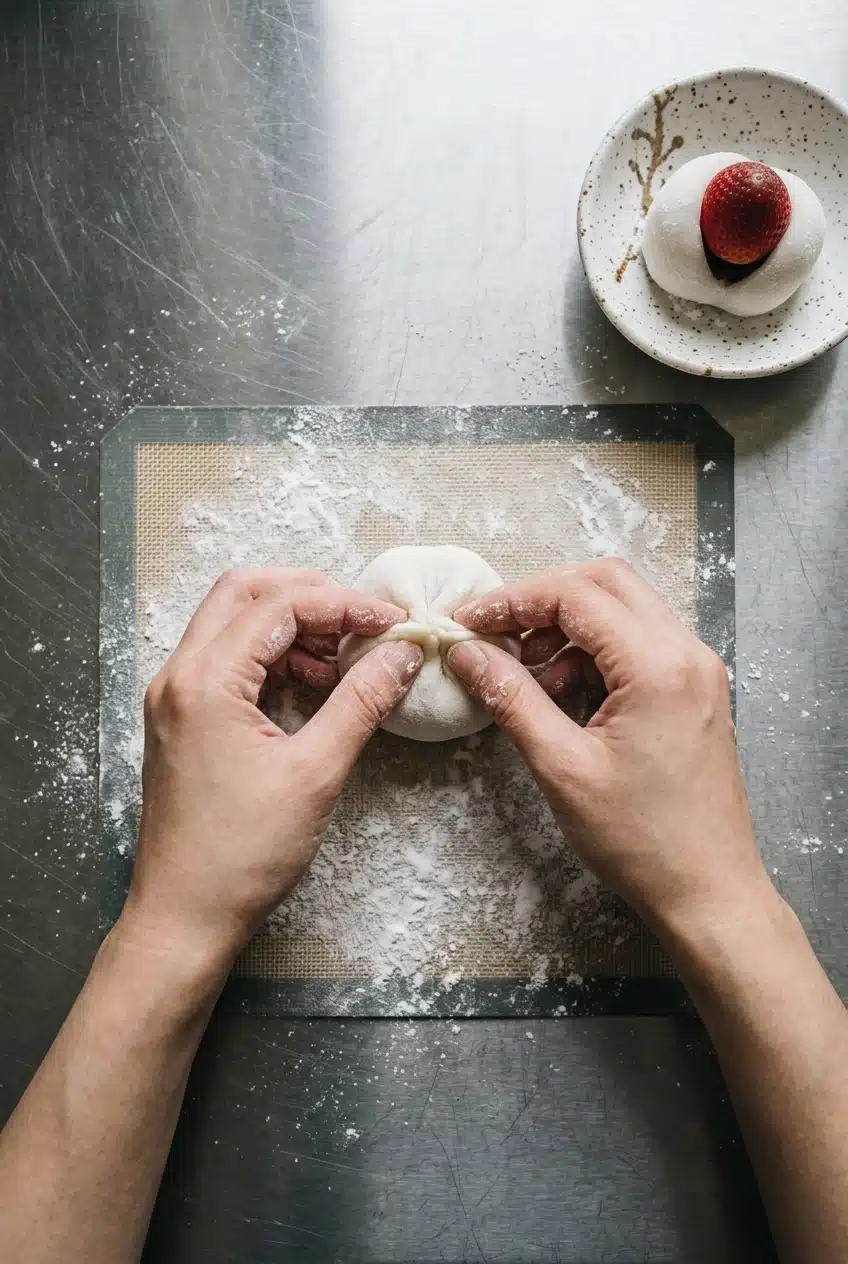
The main checkpoints are an evenly covered berry, translucent cooked mochi, and a fully pinched seam. Follow the heating stages in order, using the dough’s appearance alongside the clock.
Prep: 10 minutes. Cook: 15 minutes. Total: 25 minutes. Yield: 6 daifuku.
- Rinse the strawberries and remove their stems.
Each berry should remain whole beneath its trimmed top. - Portion the white bean paste into 30 g pieces and form each into a ball.
Even portions create a consistent layer around the berries. - Press a paste ball into a flat round and position a strawberry in its middle with the pointed end downward.
The paste should extend around the berry so it can cover the sides. - Bring the paste around the fruit, round the covered berry, and set it aside.
The strawberry should sit inside a continuous bean-paste shell. - Combine the shiratamako, sugar, and water in a large heatproof bowl, stirring thoroughly.
The mixture should look evenly blended rather than separated into dry flour and liquid. - Cover the bowl with cling wrap and microwave for 1 minute and 30 seconds to 2 minutes, depending on your microwave.
Expect a mixture of floury-looking areas and portions beginning to turn sticky and doughlike. - Remove the bowl, work the mixture thoroughly with a wooden spatula, and microwave for another 1 minute.
The dough should now look translucent rather than chalky and opaque. - Spread potato starch generously over the rolling mat and transfer the cooked mochi onto it.
The starch should separate the sticky dough from the mat. - Separate the mochi into 6 portions and roll each into a circle approximately 10 cm across.
Each round should provide enough dough to reach around a filled berry. - Set a bean-paste-covered strawberry in the center of a mochi circle with its tip pointing down.
The broad stem end should face upward toward the edges you will gather. - Coat your hands well with potato starch and bring the wrapper edges up around the filling.
The mochi should surround the paste without leaving an exposed gap at the sides. - Pinch the gathered edges together with starch-dusted fingers and gently round the daifuku.
The meeting point should form a closed seam with no visible filling. - Finish wrapping the remaining covered berries in the same way.
Each finished piece should have a rounded exterior and a sealed opening.
What Is Ichigo Daifuku?
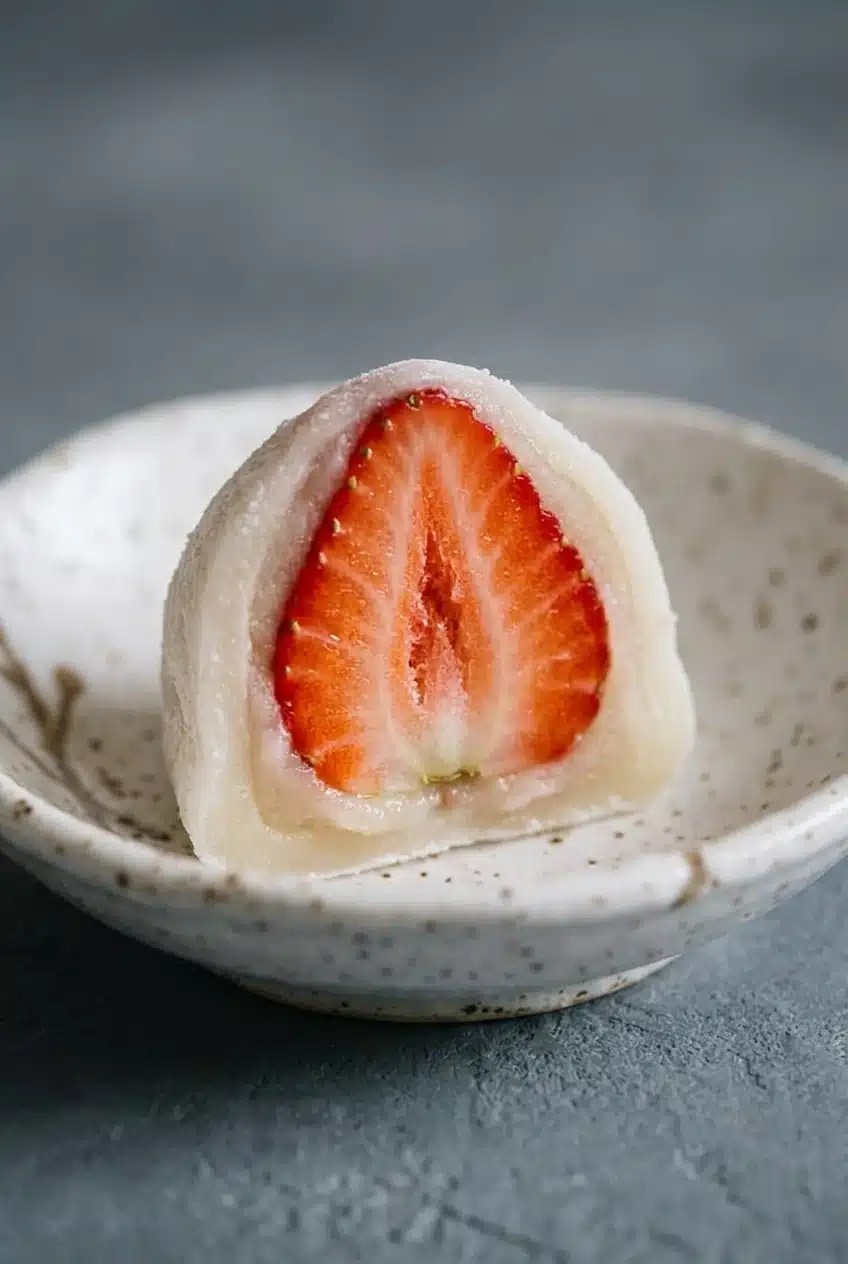
Ichigo means strawberry, and ichigo daifuku is a filled Japanese confection, or wagashi, combining a whole strawberry, sweet bean paste, and soft mochi. The tart fruit cuts through the sweet filling while the wrapper supplies that distinctive stretchy chew.
Mochi is the broader term for Japanese glutinous-rice cake or dough. Traditional mochi uses steamed, pounded rice; flour-based home versions create a related chewy dough with glutinous rice flour. Daifuku is a filled sweet within that broader family.
“Strawberry mochi” often means ichigo daifuku, but it can also describe strawberry-flavored mochi or mochi ice cream. Here, the strawberry is fresh fruit, and the filling is bean paste rather than ice cream.
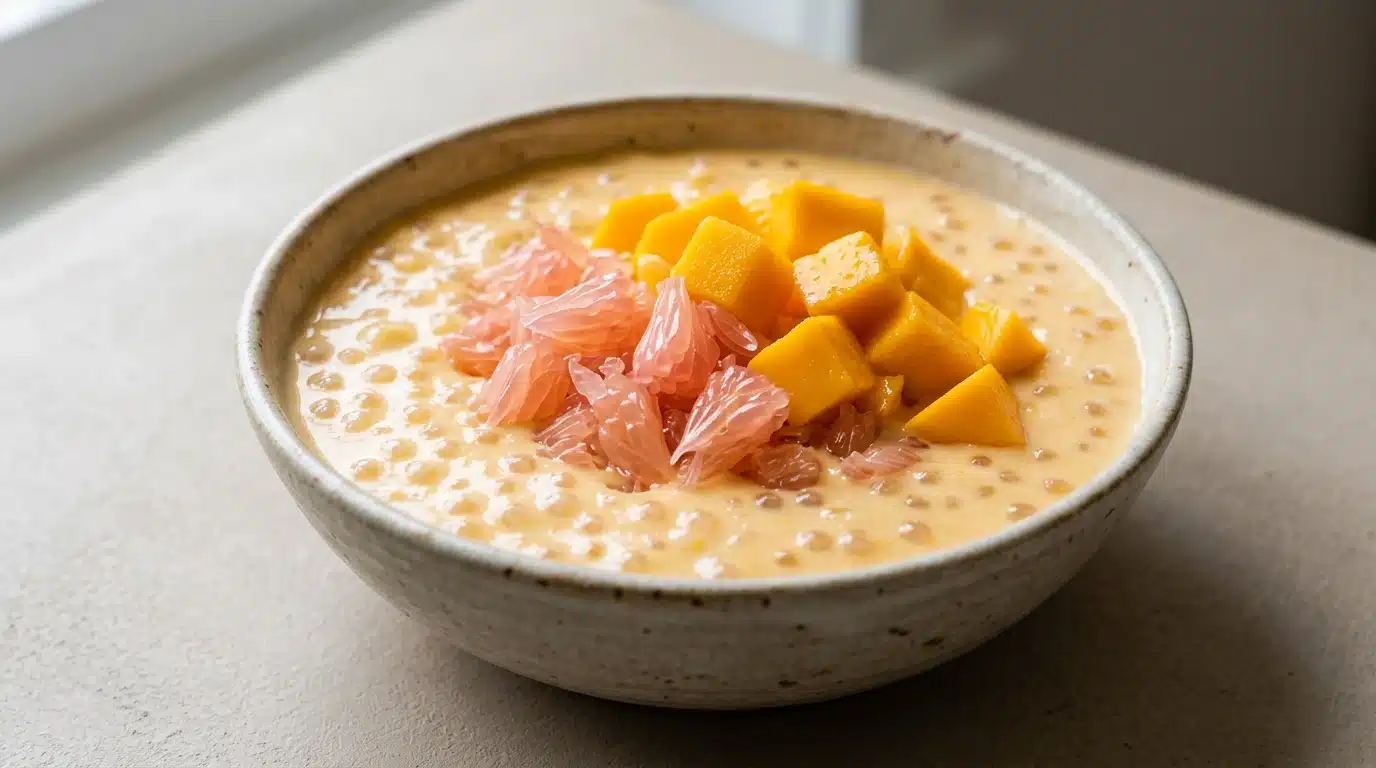
If you enjoy fresh berries paired with a bouncy texture, creamy strawberry sago offers another dessert direction, with chewy pearls instead of a filled wrapper.
Troubleshooting Sticky Dough, Tearing Seams, and Berry Moisture
Some stickiness is normal for mochi. The useful distinction is whether the dough has reached the right appearance and whether the sticking happens on your hands, the mat, or the seam.
- Dough clings to everything: Check that you completed both microwave stages and reached the translucent cue, rather than stopping at the partly floury stage. Dust the mat and your hands generously before handling.
- The wrapper tears over the berry tip: A thin center or an oversized berry may be stretching the dough too far. As an optional shaping adjustment, leave the center slightly thicker than the edges and avoid pulling it tightly over the point.
- The seam keeps opening: Check for exposed filling or trapped paste between the meeting edges. Gather enough dough to bring the edges together without stretching them into a thin, strained join.
- The starch turns gummy near the filling: Surface water or berry juice may be reaching the wrapper. Outside the main method, a useful handling precaution is to pat washed, hulled berries thoroughly dry, especially around the trimmed stem area.
- The filling slides during wrapping: Loose paste and wet fruit make a slippery combination. Choose paste that holds its shape and cover the berry evenly before starting the mochi layer.
- The dough resists stretching: Don’t force a stiff wrapper around a large filling. Organize the portions and filled berries before wrapping so you can move through assembly without unnecessary pauses.
Set aside damaged or especially juicy berries for a different use rather than fighting a wet filling. They may be better suited to fresh strawberry sorbet.
Classic vs. Open-Top Wrapping and Flavor Variations
Keep these optional ideas separate from the shiratamako and white bean paste method above. Change one element at a time so you can judge how the filling, wrapper, and fruit work together.
Tokyo-Style Open-Top Strawberry Daifuku
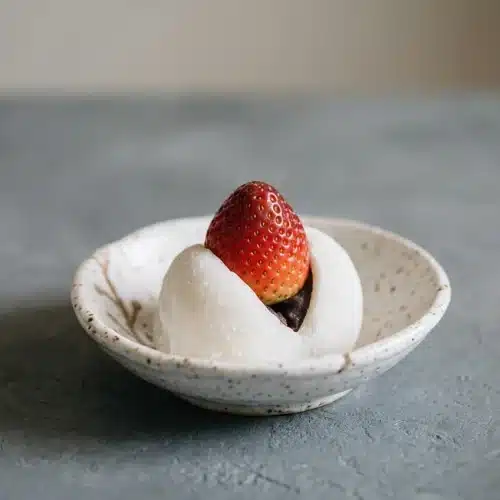
The enclosed version hides the strawberry inside a pale, rounded wrapper. An open-top presentation leaves the fruit visible above the mochi and bean paste, giving the sweet a bright red crown.
This style is worth considering when your strawberries are too large for neat full enclosure. It’s a different presentation, not a reason to force an oversized berry into the dough portions above.
Mochiko Sweet Rice Flour and Kirimochi Rice Block Alternatives
Mochiko is an optional flour direction when shiratamako is unavailable. Use a method developed for mochiko rather than assuming the same hydration and microwave schedule will behave identically.
Kirimochi is packaged rice cake, usually sold in firm blocks, rather than flour. It can provide another starting point for daifuku, but it requires its own preparation method. Don’t substitute the blocks directly into this batter.
Seasonal Fruit Daifuku (Muscat Grape, Kiwi, Mandarin) and Flavored Bean Pastes
For a different flavor direction, consider these optional combinations without changing the official ingredient list:
- Muscat grape: Offers floral sweetness and a compact fruit center.
- Kiwi: Brings a sharper tart contrast and vivid green color.
- Mandarin: Adds a citrusy filling with a different shape and juiciness.
- Matcha an: Introduces a green tea flavor that contrasts with sweet fruit.
- Black sesame an: Gives the filling a roasted, nutty character and darker color.
Make-Ahead Prep and Safe Storage Considerations
For an event, separate component organization from final assembly. Measure the dry ingredients and organize the bean paste before you begin, then leave berry preparation, mochi cooking, and wrapping together in your cooking plan.
Follow the bean paste package’s storage directions for any unused filling. For finished daifuku, use a covered container and keep leftovers chilled as a precaution rather than treating them as a room-temperature display sweet. A specific storage life isn’t established for this recipe, so plan a batch around what you intend to serve.
If the carton contains more suitable fruit than you need, reserve the extras for another project, such as homemade strawberry jam.
What to Serve with Ichigo Daifuku
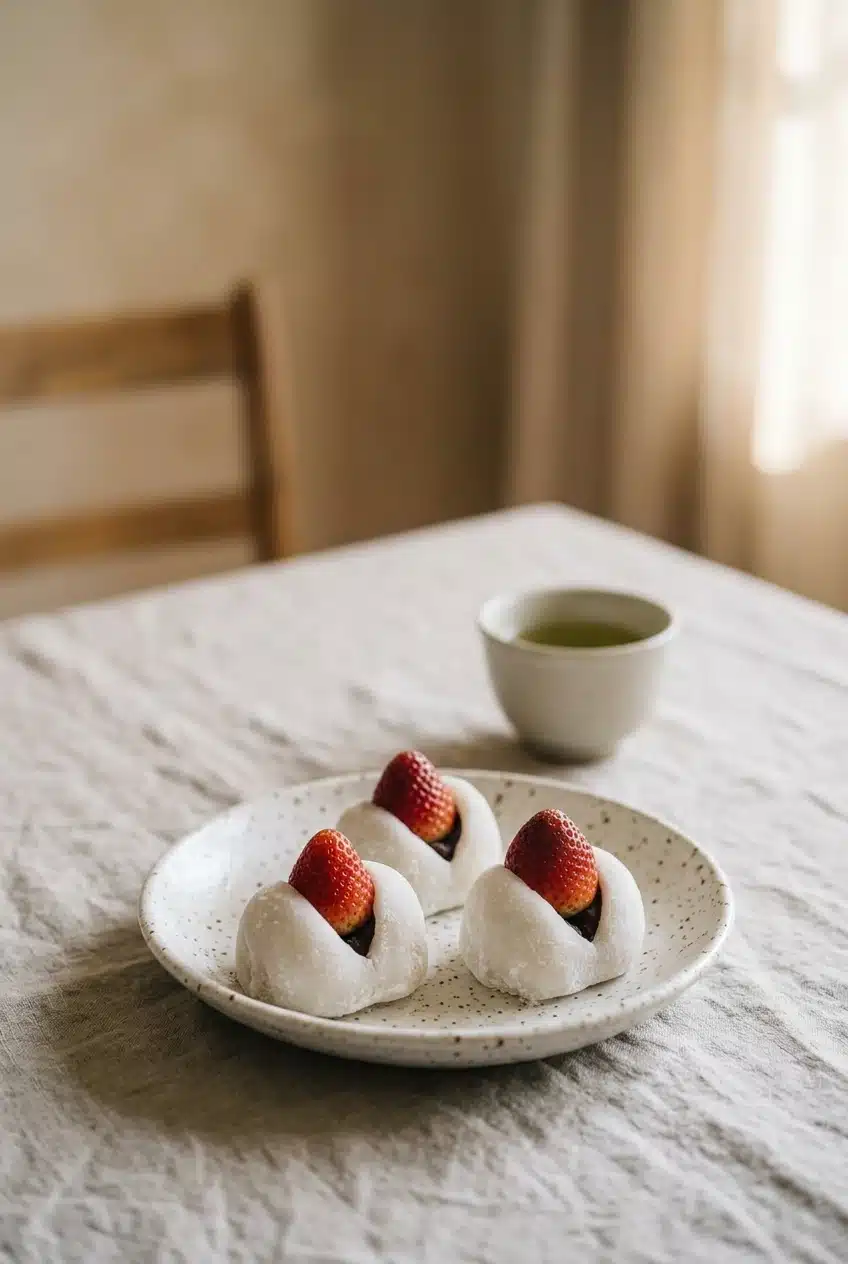
Unsweetened Japanese tea balances the sweet paste without competing with the strawberry. Choose whisked matcha for a pleasantly bitter contrast, sencha for a grassy cup, or hojicha for a roasted aroma.
For a delicate finish, lightly brush away surplus dusting starch. Serve the daifuku whole, or present a halved piece to reveal the berry, bean paste, and mochi layers.
Final Thoughts on Homemade Ichigo Daifuku
The appeal is in the contrast: juicy strawberry, creamy sweet bean paste, and a soft, chewy wrapper. Watch for translucent mochi before you begin shaping.
Choose enclosed rounds for compact berries or an open-top presentation for larger fruit. Let the berry size guide the presentation, and give each seam a careful finish.
Frequently Asked Questions
What Is the Difference Between Daifuku and Mochi?
Mochi is the broader category of chewy Japanese rice cake or dough. Daifuku is a sweet filled mochi, commonly containing bean paste; ichigo daifuku also includes a strawberry.
Can I Substitute Mochiko and Cornstarch for Shiratamako and Potato Starch?
Mochiko is an optional glutinous rice flour alternative, but use a method suited to it rather than assuming identical handling. Cornstarch can replace potato starch for dusting; regular non-glutinous rice flour cannot replace shiratamako here.
Is Strawberry Daifuku Made with White Bean Paste or Red Bean Paste?
Both versions exist. This recipe uses mild, pale shiroan, while optional smooth red koshian gives a deeper bean flavor and darker contrast around the strawberry.
How Do I Stop Strawberry Daifuku from Leaking Juice or Tearing?
Dry the berries thoroughly and cover them evenly with bean paste. Avoid stretching the wrapper’s center too thin, choose berries that fit the dough portions, and gather the edges without pulling them taut.
Can I Make Strawberry Daifuku Ahead of Time and How Should I Store It?
Organize the ingredients separately and plan final wrapping close to serving rather than relying on a holding period. Keep finished leftovers covered and chilled as a precaution; this recipe does not establish an exact storage duration.
What Is Yukimi Daifuku and How Is It Different from Strawberry Daifuku?
Yukimi Daifuku is a Japanese mochi ice cream confection. Strawberry daifuku here contains a fresh whole strawberry and sweet bean paste, not an ice cream center.
Strawberry Daifuku

Equipment
- Large heatproof bowl
- Microwave
- Wooden Spatula
- Rolling mat
Ingredients
- 180 g Shiratamako
- 30 g sugar
- 200 ml water
- Katakuriko (potato starch *1)
- 180 g sweet white bean paste (*2)
- 6 medium sized strawberry
Instructions
- Rinse the strawberries and remove their stems. Each berry should remain whole beneath its trimmed top.
- Portion the white bean paste into 30 g pieces and form each into a ball. Even portions create a consistent layer around the berries.
- Press a paste ball into a flat round and position a strawberry in its middle with the pointed end downward. The paste should extend around the berry so it can cover the sides.
- Bring the paste around the fruit, round the covered berry, and set it aside. The strawberry should sit inside a continuous bean-paste shell.
- Combine the shiratamako, sugar, and water in a large heatproof bowl, stirring thoroughly. The mixture should look evenly blended rather than separated into dry flour and liquid.
- Cover the bowl with cling wrap and microwave for 1 minute and 30 seconds to 2 minutes, depending on your microwave. Expect a mixture of floury-looking areas and portions beginning to turn sticky and doughlike.
- Remove the bowl, work the mixture thoroughly with a wooden spatula, and microwave for another 1 minute. The dough should now look translucent rather than chalky and opaque.
- Spread potato starch generously over the rolling mat and transfer the cooked mochi onto it. The starch should separate the sticky dough from the mat.
- Separate the mochi into 6 portions and roll each into a circle approximately 10 cm across. Each round should provide enough dough to reach around a filled berry.
- Set a bean-paste-covered strawberry in the center of a mochi circle with its tip pointing down. The broad stem end should face upward toward the edges you will gather.
- Coat your hands well with potato starch and bring the wrapper edges up around the filling. The mochi should surround the paste without leaving an exposed gap at the sides.
- Pinch the gathered edges together with starch-dusted fingers and gently round the daifuku. The meeting point should form a closed seam with no visible filling.
- Finish wrapping the remaining covered berries in the same way. Each finished piece should have a rounded exterior and a sealed opening.