Skip to content
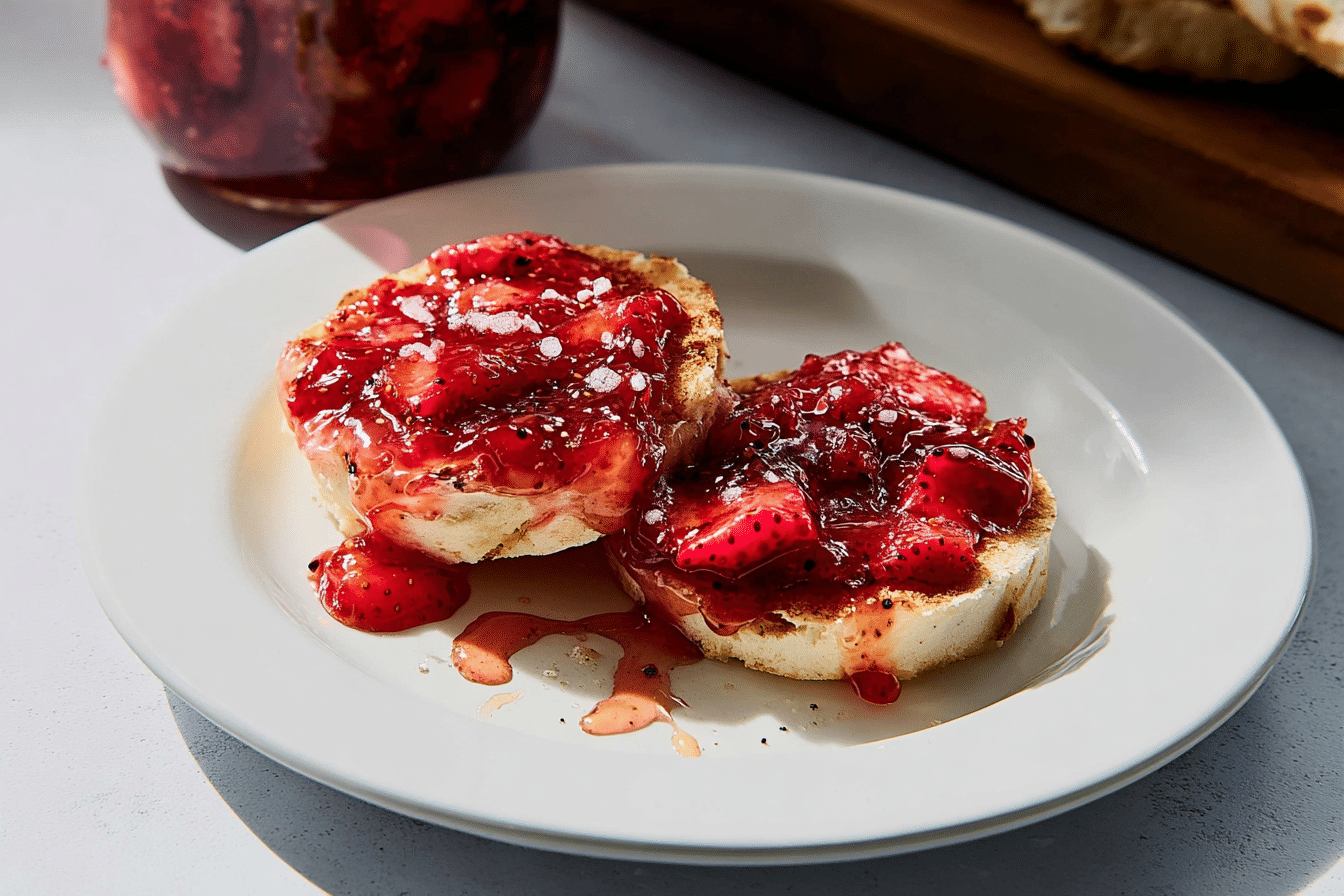
There is nothing like twisting open a jar of homemade strawberry jam and seeing that ruby-red shine catch the light. In my kitchen, the aroma hits first, warm berries, bright lemon, and that unmistakable “summer” perfume, followed by a glossy set that spreads without sliding off your toast.
This strawberry jam recipe is built for home cooks who want dependable results, not guesswork. I will walk you through a professional maceration technique that fixes fruit float and weak sets, plus the practical science of pectin, pH balance, and water-bath canning safety for pantry storage.
Why You’ll Love This Recipe
The Secret Twist: A 24-hour cold maceration with vanilla and sea salt is the move I rely on. It firms up the fruit through maceration, pulls out juice early, and seriously reduces fruit float once the jars are sealed.
Glossy, Reliable Gel Point: Cooking to 220 degrees Fahrenheit gives you that jammy “sheeting” off a spoon. Even without added commercial pectin, the texture sets up thick and spoonable when you respect temperature and acidity.
Flavor That Tastes Expensive: A split vanilla bean and a generous pinch of sea salt round out the lemon’s brightness. If you keep vanilla bean paste on hand, it creates gorgeous aromatic flecks too.
Ingredients and Substitutions
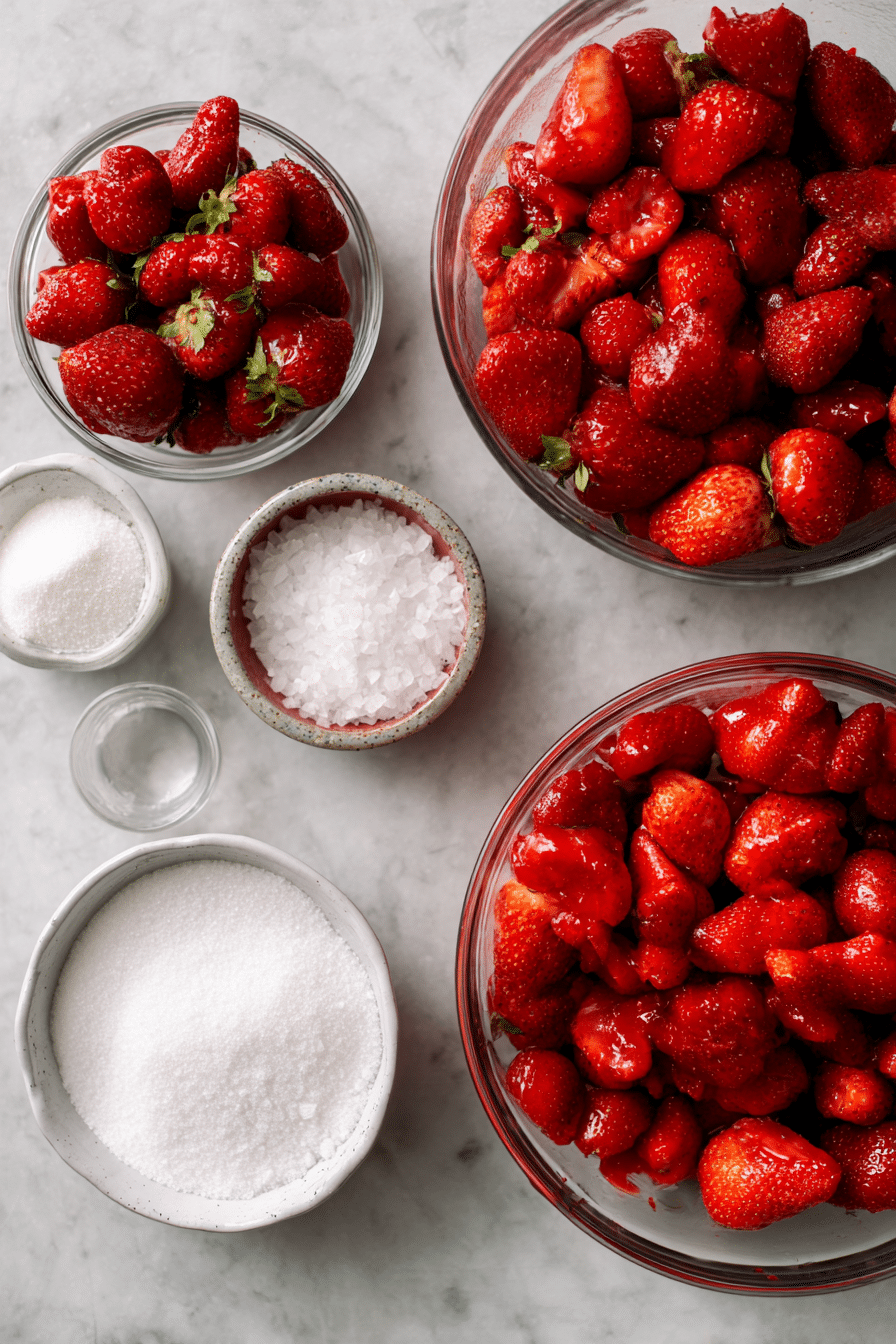
This ingredient list is intentionally short, because the technique does the heavy lifting. Strawberries bring natural pectin, sugar builds body and preservation, and lemon juice locks in the pH balance for a proper set.
Ingredients
- 2 pounds fresh strawberries, hulled
- 4 cups white sugar
- ¼ cup lemon juice
Ingredient Notes & Substitutions
The Strawberry Ratio: I get my best texture using “collective wisdom”, about 75% fully ripe berries for big flavor and about 25% just-ripe berries for higher natural pectin. Overripe or bruised fruit can taste flat and often leads to a weaker gel point.
The Flavor Enhancers: The twist is adding 1 split vanilla bean and a generous pinch of sea salt during the maceration phase, before you cook. The salt acts as a quiet potentiator, it smooths bitterness and makes strawberries taste more like strawberries.
Sugar’s Role: In this pectin-free style, sugar is structure as much as sweetness, it binds water so pectin networks can form. Reducing sugar changes the pH balance and the final set, so if you want “low sugar,” use a dedicated low-sugar pectin like Pomona’s instead of cutting the 4 cups.
How to Make strawberry jam recipe
Prep the Fruit and Measure
- Gather all ingredients and set out your tools so you can work quickly once boiling starts.
- Crush strawberries in a wide bowl in batches until you have 4 cups of mashed strawberries, I like a mix of juicy mash with a few small chunks for texture.
Dissolve the Sugar Gently
Combine mashed strawberries, sugar, and lemon juice in a heavy-bottomed saucepan, then stir over low heat until the sugar fully dissolves and the mixture looks glossy, not grainy.
Boil to the Setting Point
- Increase heat to high, and bring the mixture to a full rolling boil that does not stop when stirred. Continue boiling, stirring often, until it reaches 220 degrees F (105 degrees C), and if foam builds up, I add about 1/4 tsp butter to calm it.
- After 10 to 15 minutes, test doneness by dropping a small spoonful onto a frozen plate. Let it sit for 1 to 2 minutes, if it gels and wrinkles slightly when nudged, it is ready, and if it still looks thin and runny, keep cooking.
Jar, Process, and Rest
- Transfer jam into hot sterile jars, filling to within 1/4 inch of the top for proper headspace. Add lids and screw rings on tightly.
- Place a rack in the bottom of a large stockpot and fill it halfway with water. Bring to a boil and lower jars 2 inches apart into the boiling water using a holder.
- Pour in more boiling water to cover jars by at least 1 inch. Bring to a rolling boil, cover, and process for 10 minutes.
- Remove the jars from the stockpot and let them rest several inches apart for 12 to 24 hours. Store in a cool, dark area once sealed.
- Serve and enjoy!
The Science of the Perfect Set
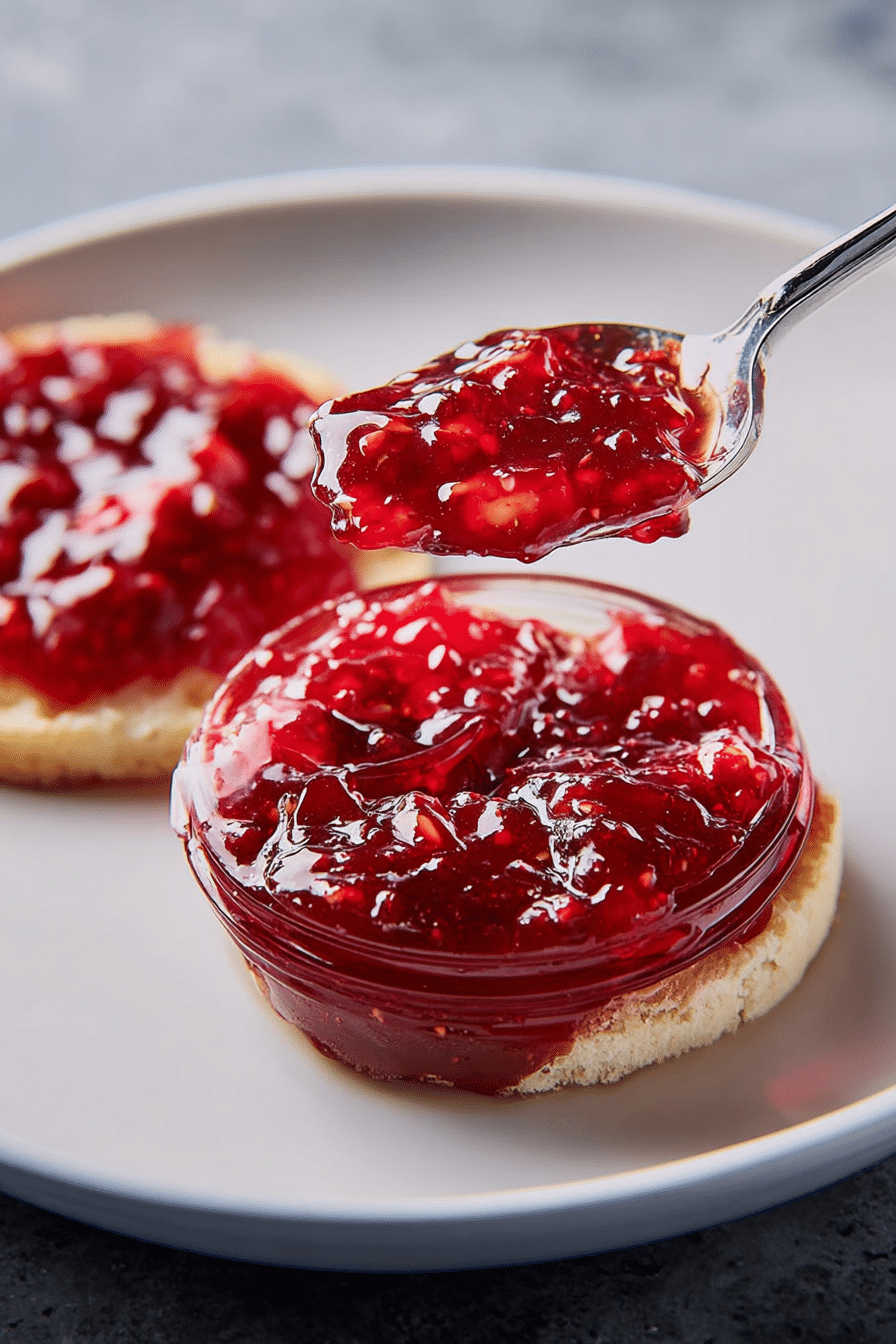
Lemon juice is not just for flavor, it is chemistry. Strawberries contain pectin, but pectin forms a stable network only when acid and sugar are present, that acidity creates the right environment for pectin chains to bond instead of repelling each other.
The 24-hour cold rest is my favorite insurance policy against fruit float. Maceration pulls juice out of the berries early, so the fruit pieces cook more evenly and stay suspended rather than bobbing up in the jar.
That 220 degrees Fahrenheit target is the classic gel point for many jams at sea level. At higher elevations, subtract about 2 degrees for every 1000 feet, because water boils at a lower temperature and your thermometer needs that adjustment.
I use two visual tests when I want certainty. The Frozen Plate Test tells you if it gels after cooling, and the spatula drip test shows “sheeting,” when jam falls in a thick sheet instead of separate drips.
Pro Tips & Troubleshooting
Pro Tips
- A strawberry huller or even a sturdy straw removes tops fast and saves fruit.
- A heavy-bottomed pot, like a Dutch oven, prevents scorching during a rolling boil.
- Sterilization matters, even if you water-bath can, start with hot sterile jars.
- Stir often once the boil starts, sugar can catch on the bottom quickly.
- A tiny pat of butter, about 1/4 tsp, reduces foaming without affecting flavor.
Common Mistakes to Avoid
- Reducing the sugar in a no-pectin jam, it often prevents a proper set.
- Using over-ripe or bruised berries, which can cause off-flavors and weak structure.
- Stirring too little during the boil, which risks scorching and bitter notes.
- Ignoring headspace, the 1/4 inch is critical for a strong vacuum seal.
- Skipping altitude adjustment, which can leave jam runny or overcooked and gummy.
Serving & Storage
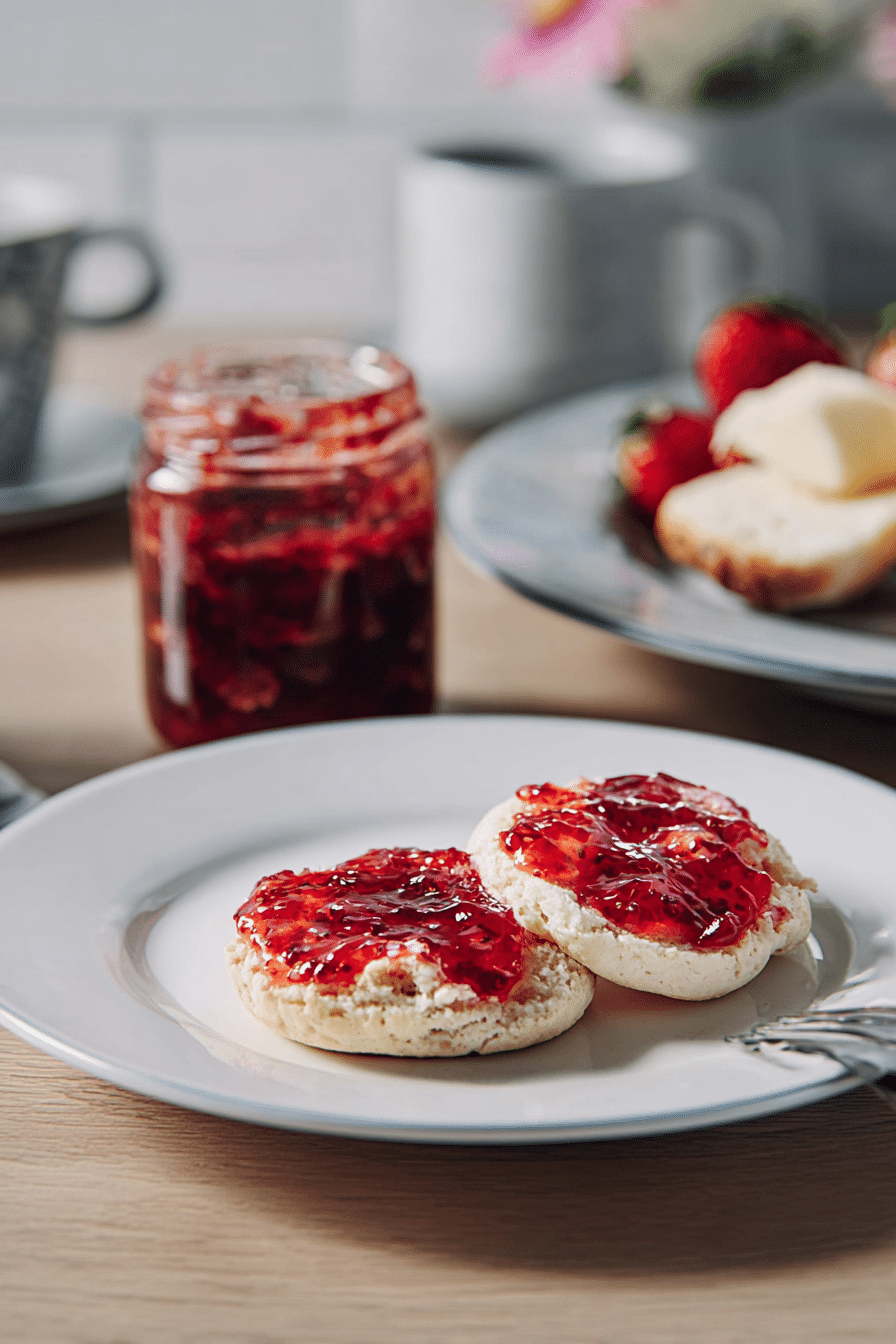
Serving Ideas
I love this jam on warm biscuits where it melts into the crumb. It is also excellent swirled into Greek yogurt, or used as a bright filling for thumbprint cookies.
At brunch, the berry acidity pairs beautifully with cherry scones and a strong cup of coffee. The same tang cuts through spiced batters like pumpkin pancakes when you want a sweet-tart contrast.
For a bakery-style project, the thick set works as a neat filling. A spoonful also adds a fruity center to a copycat Crumbl cookie without soaking into the dough.
Storage and Shelf Life
Pantry storage is the big reward of water-bath canning. For a conservative guideline, 1 year if water-bath processed correctly is the standard I follow for best flavor and quality.
Once opened, keep the jar refrigerated and aim to finish it within about 3 weeks. If you skip processing and just refrigerate, treat it the same way.
This is not a freezer jam, but it freezes well for up to 6 months in freezer-safe jars. Leave extra headspace for expansion, and thaw overnight in the fridge for the cleanest texture.
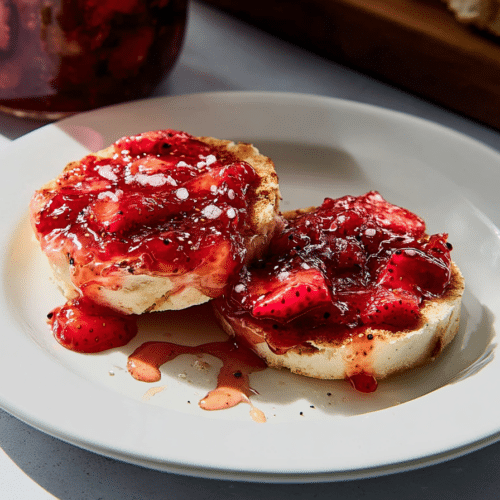
Ultimate strawberry jam recipe

Equipment
- Wide bowl
- Heavy-bottomed saucepan
- Candy or instant-read thermometer
- Frozen plate (for testing)
- Hot sterile jars with lids and rings
- Large Stockpot
- Canning rack
- Jar holder
Ingredients
- 2 pounds fresh strawberries, hulled
- 4 cups white sugar
- 1/4 cup lemon juice
- 1 vanilla bean, split Added during the maceration “secret twist”.
- sea salt A generous pinch, added during the maceration “secret twist”.
- 1/4 teaspoon butter Optional, for foam control during boiling.
Instructions
Prep the Fruit and Measure
- Gather all ingredients and set out your tools so you can work quickly once boiling starts.
- Crush strawberries in a wide bowl in batches until you have 4 cups of mashed strawberries, keeping a mix of juicy mash with a few small chunks for texture.
- Add the split vanilla bean and a generous pinch of sea salt to the strawberries, then cold macerate for 24 hours.
Dissolve the Sugar Gently
- Combine mashed strawberries, sugar, and lemon juice in a heavy-bottomed saucepan, then stir over low heat until the sugar fully dissolves and the mixture looks glossy, not grainy.
Boil to the Setting Point
- Increase heat to high and bring the mixture to a full rolling boil that does not stop when stirred. Boil, stirring often, until it reaches 220°F (105°C). If foam builds up, add about 1/4 tsp butter to calm it.
- After 10 to 15 minutes, test doneness by dropping a small spoonful onto a frozen plate. Let it sit for 1 to 2 minutes; if it gels and wrinkles slightly when nudged, it is ready. If it still looks thin and runny, keep cooking.
Jar, Process, and Rest
- Transfer jam into hot sterile jars, filling to within 1/4 inch of the top for proper headspace. Add lids and screw rings on tightly.
- Place a rack in the bottom of a large stockpot and fill it halfway with water. Bring to a boil and lower jars 2 inches apart into the boiling water using a holder.
- Pour in more boiling water to cover jars by at least 1 inch. Bring to a rolling boil, cover, and process for 10 minutes.
- Remove the jars from the stockpot and let them rest several inches apart for 12 to 24 hours. Store in a cool, dark area once sealed.
- Serve and enjoy!
Notes
Nutrition
Conclusion
The reason this stays my go-to strawberry jam recipe is the 24-hour maceration, it builds flavor, strengthens fruit structure, and helps prevent fruit float in the finished jars. When you respect acidity and temperature, the set becomes predictable and the results are safe for pantry storage.
If you want a fun variation, a small splash of Grand Marnier stirred in at the end tastes like a grown-up dessert. I would love to see your jam-making photos, especially that moment when the spoon starts to sheet.
FAQ
How can I tell if my jam has reached the setting point?
Use both targets: 220 degrees F (105 degrees C) on a thermometer and the Frozen Plate Test. After 10 to 15 minutes of boiling, a spoonful on a frozen plate should gel in 1 to 2 minutes and wrinkle when pushed.
Why is my jam runny and how do I fix it?
Runny jam usually means it did not reach the gel point, or the acidity was too low. You can re-boil it, bring back to a rolling boil, and cook until it hits 220 degrees F, then re-test on a frozen plate.
Can I reduce the sugar in this recipe?
Not reliably, because sugar is a preservative and part of the structure in a no-pectin jam. Cutting it often prevents the set and can affect shelf stability, so use a low-sugar pectin recipe if that is your goal.
What is “fruit float” and how do I stop it?
Fruit float is when strawberry pieces rise to the top of the jar, leaving syrup below. The 24-hour cold maceration helps by drawing out juice and improving suspension, and stirring often during cooking keeps the texture more even.
Is the butter really necessary to add?
No, it is optional and mostly for foam control. About 1/4 tsp helps reduce foaming so you get cleaner jars and a clearer set, without making the jam taste buttery.
How much headspace should I leave in the jar?
Leave 1/4 inch of headspace, as written in the instructions. That small gap is important for creating a strong vacuum seal during water-bath canning.