Tornado potatoes are whole potatoes cut into spirals on skewers, spread apart, and cooked until crisp. This oven version pairs tender centers and browned edges with cheddar, bacon, and lemony sour cream, with no special cutting machine needed.
These loaded tornado potatoes bring the fun of fairground potatoes on a stick to your baking sheet. Thin spiral edges turn crisp while the thicker centers stay fluffy, giving the toppings plenty of little pockets to settle into.
A brief microwave stage makes skewering easier, and the bacon roasts while the potatoes cook. The cutting takes a little patience, but you don’t need perfect spirals. Leave room between the loops.
Set out a stable cutting board and a kitchen towel before microwaving; the potatoes can release hot steam when handled.
Ingredients You Will Need and Why They Matter
Russets provide the fluffy center, olive oil encourages browning, and chili flakes add warmth. Cheddar and bacon bring richness and crunch, while lemon, sour cream, and scallions balance the finished potatoes with tang and freshness.
- 4 (6- to 8-oz.) russet potatoes
- 2 tbsp. extra-virgin olive oil
- 2 tsp. gochugaru or crushed red pepper flakes
- 1 1/2 tsp. kosher salt, divided
- 2 slices thick-cut bacon
- 4 oz. sharp cheddar, finely shredded
- 1/4 c. sour cream
- 1 tbsp. fresh lemon juice
- 2 scallions, sliced into thin rounds
Choose similarly sized russets within the listed weight range so they progress at roughly the same pace. An elongated potato also gives you a clearer path for the skewer than a deeply knobby one. Russets suit the contrast here: fluffy inside, browned along the thin edges.
Gochugaru brings fruity chili warmth and can taste milder than crushed red pepper flakes, although heat varies by product. Neither option guarantees a smoky flavor; the bacon supplies that savory, smoky accent.
Finely shredded sharp cheddar fits between the folds rather than sitting entirely on top. Lemon juice loosens the sour cream into a drizzle, so you don’t have to drag a spoonful across fragile potato edges. Reserve the divided salt: 1 teaspoon seasons the potatoes, and the remaining 1/2 teaspoon goes into the sauce.
I’d choose potatoes with similar thickness, not just similar weight, to make the cutting and roasting more consistent.
How to Make Fully Loaded Tornado Potatoes Step by Step
This recipe makes 4 servings. Allow about 15 minutes for preparation, but leave room for the full roasting window plus the broiler finish rather than counting on a one-hour start-to-finish meal.
- Heat the oven to 425°F with racks positioned in the upper and lower thirds, then fork-pierce the potatoes all over and microwave them on a heatproof plate for about 3 minutes before letting them cool slightly.
They should feel a little softened, not fully cooked, which makes inserting the skewers easier. - Insert a skewer lengthwise through each potato from the bottom, using a towel for hot potatoes, then steady each one on a cutting board and make a thin spiral cut with a tilted chef’s knife while rotating the potato opposite the cutting direction, stopping at the skewer and gently spreading the loops afterward.
Alternatively, make thin diagonal cuts on one side, flip and cut the opposite side down to the skewer, then fan the layers until visible gaps open between them. - Set the skewered potatoes on a baking sheet and rub their exteriors with the olive oil, gochugaru, and 1 teaspoon kosher salt.
Work the coating into accessible folds as you rub so seasoning reaches more than the outermost edges. - Place the sheet on the lower rack and roast for 45 minutes to 1 hour, checking the thickest potato sections with a knife.
The centers are ready when the blade slides through without resistance, regardless of how browned the thin edges look. - During the potato roast, put the bacon on a separate foil-lined baking sheet on the upper rack and cook for 20 to 25 minutes, then let it cool before breaking it into bite-size pieces.
Look for golden color and crisp texture before removing it, well before the potatoes may finish. - Distribute the cheddar across the potatoes and into their folds, switch on the broiler, and broil for 2 to 3 minutes under close observation before letting the potatoes cool slightly.
Stop once the cheese melts, watching for exposed potato edges that begin darkening too quickly. - Stir the sour cream, fresh lemon juice, and remaining 1/2 teaspoon kosher salt together in a small bowl.
The finished mixture should be smooth and loose enough to drizzle over the spirals. - Transfer the potatoes to a platter, spoon the sour cream mixture lightly over them, and scatter the crumbled bacon and sliced scallions across the top.
A light drizzle leaves crisp edges exposed, with the bacon and scallions distributed along each spiral.
Potato thickness and the spacing of your cuts affect roasting progress. Check more than one thick section before adding cheese: a browned outside can hide a firm center, and the short broil won’t finish an undercooked potato.
How to Cut Tornado Potatoes Without a Machine
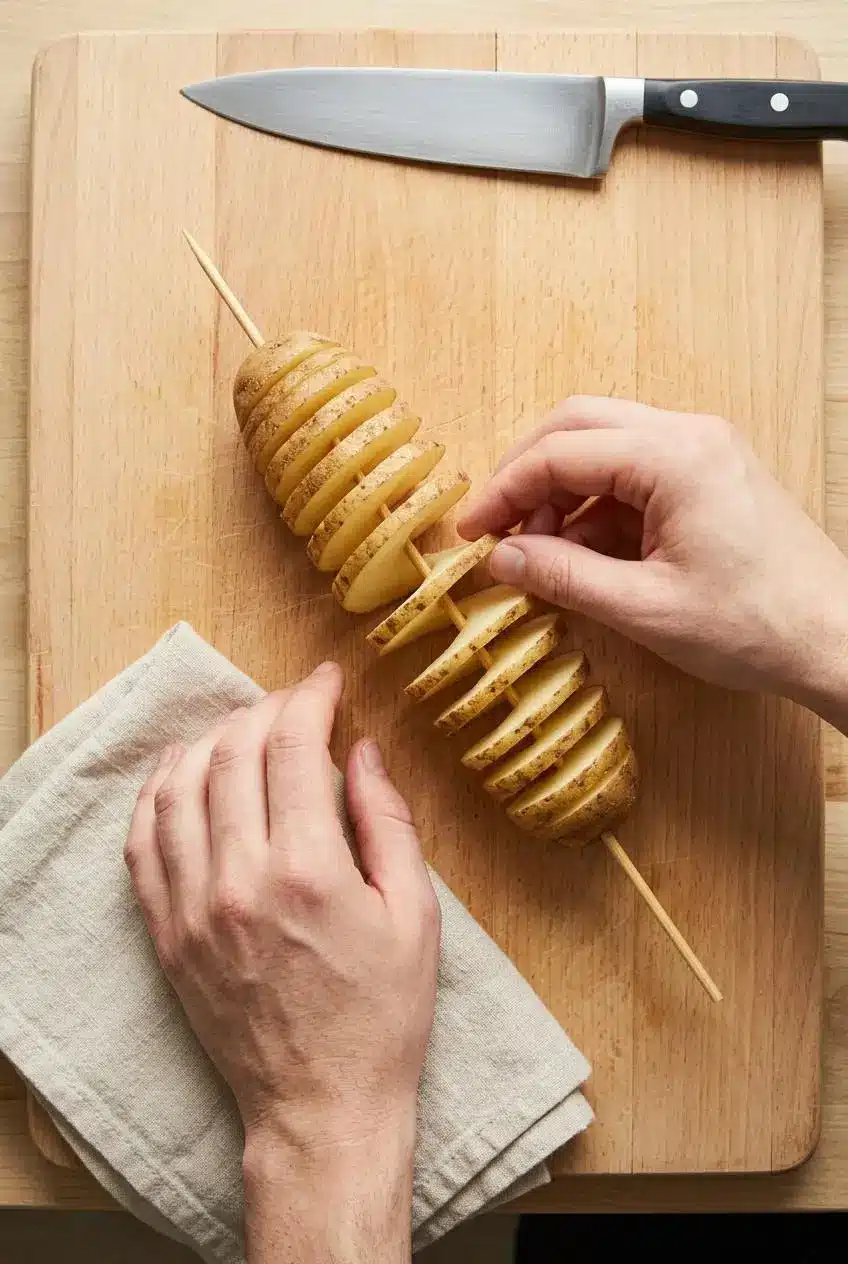
The brief microwave stage softens the potato enough to make skewering less awkward, but it won’t prevent every crack. Keep the potato on the board, protect your hand with a towel when needed, and keep fingers clear of both the knife and the skewer’s exit path. Don’t force a resistant skewer.
Choosing a Skewer That Supports a Russet Potato
Choose a straight, rigid, food-safe skewer that can support the potato without bending. It needs room for the spread-out layers while still fitting your baking sheet.
Wooden skewers offer a practical grip, while metal ones are rigid but become hot during cooking. Check the manufacturer’s oven and broiler suitability before using either type. Soaking a wooden skewer does not establish that it can withstand broiling.
The Continuous Rotating Knife Method
Steady the skewered potato against the board rather than holding it in the air. Keep the knife at a slight, consistent tilt and rotate the potato opposite the direction of the cut, letting the blade follow a thin path around it.
The central skewer marks your cutting limit. You may feel a light tap against wood; stop there rather than pressing harder. Consistent thin cuts matter more than speed because a thick section takes longer to soften than its neighbors.
To open the spiral, ease small sections along the skewer. Don’t pull from both ends and stretch the entire ribbon at once. Aim for an evenly spaced spring with visible gaps between the loops, not the widest possible spiral.
The Diagonal Flip-and-Slice Alternative
If coordinating the continuous cut feels awkward, use the two-sided option within the same cutting stage:
- Make thin diagonal slices along one side of the skewered potato, stopping at the skewer.
- Flip the potato and make diagonal slices along the opposite side, again using the skewer as the limit.
- Gently ease the sections apart, working along the potato instead of tugging on its ends.
This approach offers another way to open the layers, though the result may not form the same uninterrupted ribbon as a continuous rotating cut.
Tips for Extra Crispy Oven-Baked Tornado Potatoes and Troubleshooting

Think crisp roasted edges and fluffy centers, rather than the uniform crunch of a deep-fried spiral. Thin cuts, exposed surfaces, and careful oil distribution make the biggest difference.
- Loops stay tightly pressed together: Closed folds hold moisture and shield the inner surfaces from hot air. Ease neighboring loops apart before roasting, without stretching them until they tear.
- The outside browns but the center resists a knife: Thick cuts cook more slowly. Let the knife test determine readiness within the roasting stage, and wait to add cheese until the thickest sections soften.
- The ribbon breaks while fanning: Pulling too hard can snap the connecting potato. Leave supported sections on the skewer and space them gently; they can still cook, even though you can’t reattach the ribbon.
- Edges look pale: Crowded folds and uneven oil coverage limit browning. Check that the spirals remain open and use the allotted oil across exposed surfaces and reachable folds, keeping the sheet on the lower rack.
- Cheese or tips start scorching: Thin potato edges darken quickly under a broiler. Watch throughout the finish and remove the sheet once the cheese melts rather than waiting for every shred to brown.
If you want browned oven potatoes without the spiral-cutting project, roasted red potatoes offer a less intricate option.
Street Food Seasonings, Grill Options, and Leftover Potato Spirals
Keep alternate seasonings and cooking methods separate from the loaded oven preparation above. You can change the serving style without treating every topping as essential to the spiral-potato format.
Cooking Tornado Potatoes on the Grill
For an optional cookout approach, use indirect heat and aim for tender centers with browned spiral edges. Direct flames can darken the thin tips before the thicker potato cooks through, so use the same knife-resistance check to judge tenderness.
Check that your skewers suit grilling, and protect exposed ends as their manufacturer directs. The oven timing should not serve as a grill schedule.
Classic Korean Street Food Seasoning Ideas
The skewered spiral format is closely associated with South Korean street food. Dry savory seasonings offer a different finish from this cheddar, bacon, and sour cream combination:
- Cheese powder: Adds a savory coating without melted-cheese pockets.
- Onion or garlic powder: Brings aromatic flavor while leaving the spiral edges exposed.
- Paprika or chili powder: Adds pepper flavor and warmth, with heat depending on the product.
These are optional examples, not one universal traditional formula. For another take on the rich cheddar-and-bacon flavor profile, try twice baked potatoes.
Preparing Spirals Before Baking
For the most straightforward handling, cut and season the spirals as part of the cooking session. Cut potatoes can discolor, and the delicate layers become easier to damage with repeated handling.
There isn’t an established advance-preparation window for these softened, hand-cut spirals. Avoid planning a prolonged raw-potato hold or assuming the texture will remain unchanged.
Keeping and Reheating Loaded Potato Spirals
Refrigerate leftovers in a covered, airtight container. Keep reserved sour cream sauce, bacon, and scallions separate when practical so you can add them after warming the potatoes.
Reheat the potato spirals in the oven until thoroughly hot, checking the centers rather than judging by surface browning alone. The oven can restore some edge crispness; a microwave tends to soften the layers. Neither method promises the crunch of a freshly roasted spiral.
Serving Loaded Potato Spirals at Cookouts and Game Day

Serve the finished potatoes while the edges are crisp, with the skewers resting securely on a platter. They fit alongside burgers, hot dogs, or barbecue ribs without needing a separate dipping sauce.
Let the lemon-thinned sour cream fall in light lines over the spirals, then finish with the specified bacon and scallions. Any extra toppings on the side are optional additions, not increases to the recipe quantities. Handle hot skewers carefully, especially metal ones.
Conclusion
Thin cuts and gently separated layers give these loaded potato spirals their contrast of crisp edges and tender centers. Cheddar, bacon, and tangy sour cream finish the job.
Take your time with the cutting and stay close during the broil. An imperfect spiral still earns its place on the platter.
Frequently Asked Questions
What Are Tornado Potatoes?
They’re whole potatoes skewered lengthwise, cut into thin spirals, spread along the stick, and cooked with savory seasonings. This version roasts them in the oven and adds cheddar, bacon, sour cream, and scallions.
How Do You Cut Tornado Potatoes Without a Machine?
Pierce and briefly microwave the potatoes, then carefully insert a central skewer. Use a slightly tilted knife while rotating the potato, stopping at the skewer; alternatively, use diagonal cuts on opposite sides. Fan the layers apart gently in small sections.
How Do You Make Tornado Potatoes Crispy in the Oven?
Make thin cuts, leave visible gaps between loops, and distribute the supplied oil across exposed surfaces. Roast on the lower rack at 425°F for 45 minutes to 1 hour, checking that a knife slides through the thickest sections without resistance before adding cheese.
Are Tornado Potatoes Korean?
Yes, they’re closely associated with South Korean street food. The spiral-on-a-stick format is distinct from this loaded baked-potato-style topping combination.
How Do You Store and Reheat Leftover Tornado Potatoes?
Keep leftovers refrigerated in an airtight container, with reserved toppings separate when practical. Reheat in the oven until thoroughly hot, then add the reserved toppings; microwaving tends to produce softer layers.

Tornado Potatoes

Equipment
- Fork
- heatproof plate
- Microwave
- Skewer
- Towel
- Cutting board
- Chef’s knife
- Baking Sheet
- Foil
- Small bowl
- platter
Ingredients
- 4 (6- to 8-oz.) russet potatoes
- 2 tbsp. extra-virgin olive oil
- 2 tsp. gochugaru or crushed red pepper flakes
- 1 1/2 tsp. kosher salt divided
- 2 slices thick-cut bacon
- 4 oz. sharp cheddar finely shredded
- 1/4 c. sour cream
- 1 tbsp. fresh lemon juice
- 2 scallions sliced into thin rounds
Instructions
- Heat the oven to 425°F with racks positioned in the upper and lower thirds, then fork-pierce the potatoes all over and microwave them on a heatproof plate for about 3 minutes before letting them cool slightly. They should feel a little softened, not fully cooked, which makes inserting the skewers easier.
- Insert a skewer lengthwise through each potato from the bottom, using a towel for hot potatoes, then steady each one on a cutting board and make a thin spiral cut with a tilted chef’s knife while rotating the potato opposite the cutting direction, stopping at the skewer and gently spreading the loops afterward. Alternatively, make thin diagonal cuts on one side, flip and cut the opposite side down to the skewer, then fan the layers until visible gaps open between them.
- Set the skewered potatoes on a baking sheet and rub their exteriors with the olive oil, gochugaru, and 1 teaspoon kosher salt. Work the coating into accessible folds as you rub so seasoning reaches more than the outermost edges.
- Place the sheet on the lower rack and roast for 45 minutes to 1 hour, checking the thickest potato sections with a knife. The centers are ready when the blade slides through without resistance, regardless of how browned the thin edges look.
- During the potato roast, put the bacon on a separate foil-lined baking sheet on the upper rack and cook for 20 to 25 minutes, then let it cool before breaking it into bite-size pieces. Look for golden color and crisp texture before removing it, well before the potatoes may finish.
- Distribute the cheddar across the potatoes and into their folds, switch on the broiler, and broil for 2 to 3 minutes under close observation before letting the potatoes cool slightly. Stop once the cheese melts, watching for exposed potato edges that begin darkening too quickly.
- Stir the sour cream, fresh lemon juice, and remaining 1/2 teaspoon kosher salt together in a small bowl. The finished mixture should be smooth and loose enough to drizzle over the spirals.
- Transfer the potatoes to a platter, spoon the sour cream mixture lightly over them, and scatter the crumbled bacon and sliced scallions across the top. A light drizzle leaves crisp edges exposed, with the bacon and scallions distributed along each spiral.